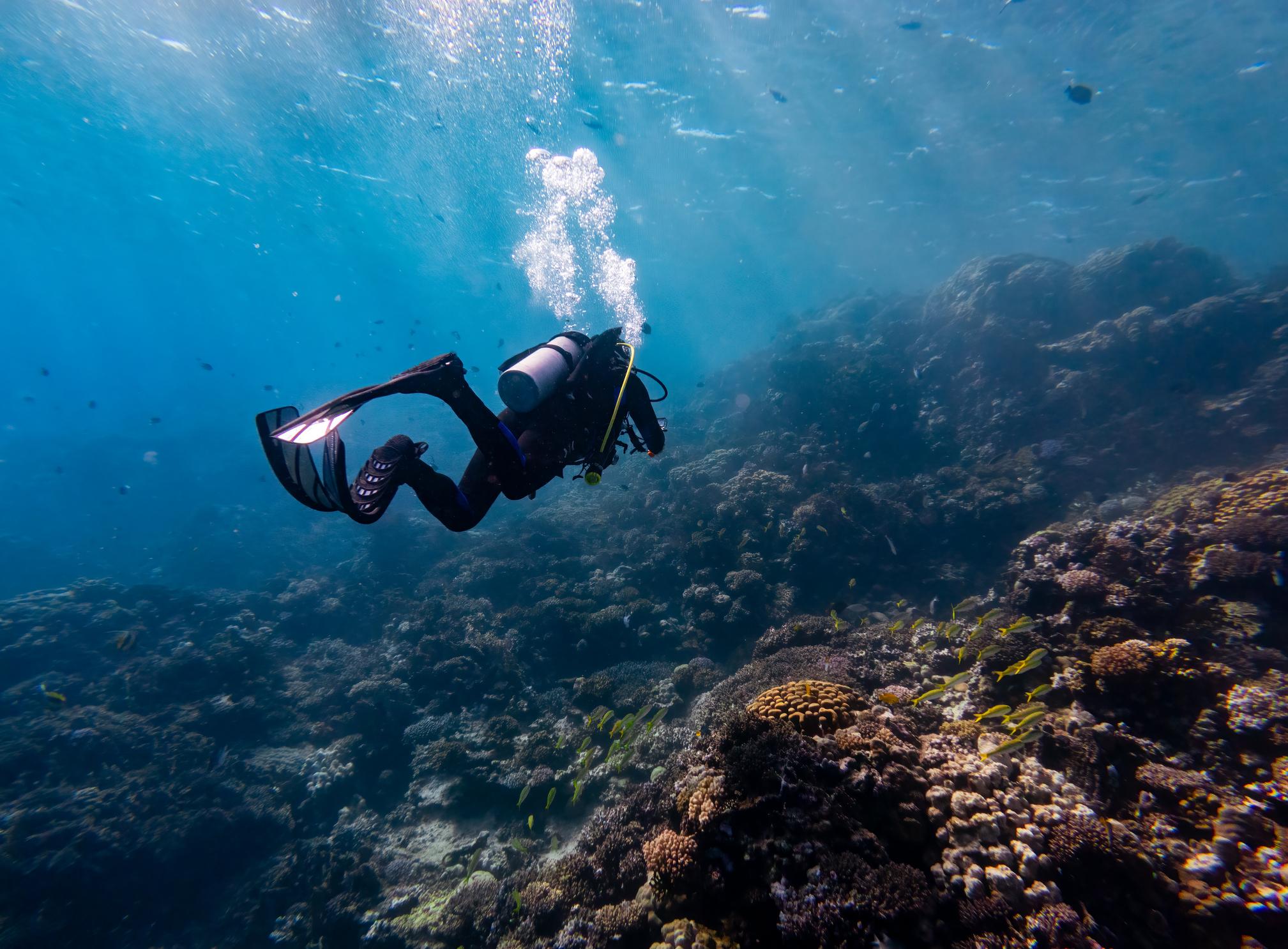
The descent line disappears into green-blue water, and for the first ten metres there is nothing to see but your own bubbles and the diver below you. Then a shape assembles itself out of the haze: a long, straight edge of steel, a mast furred with coral, and an open hold with the cabs of army lorries lined up inside it as if waiting for a driver. By about 15 m you are level with the top of the superstructure of the SS Thistlegorm, a British merchant ship that has been sitting upright on the floor of the northern Red Sea since a German air raid in October 1941.
For many divers the SS Thistlegorm is the reason to come to Egypt at all. It is a cargo ship that sank with its cargo, so motorcycles, trucks, rifles, boots and two steam locomotives are still where wartime stevedores left them, or where the explosion threw them. It is also a demanding dive: deep, often current-swept, crowded at peak times and a long boat ride from anywhere. This guide covers the ship's story, what lies in the holds, the depths and dive plan, the certification you need, day boats from Sharm el-Sheikh and Hurghada against liveaboards, conditions by season, and how to dive it with the respect it deserves.
At a Glance
What it is: a British armed merchant ship, sunk by German bombers in the early hours of 6 October 1941
Where: Sha'ab Ali, in the Strait of Gubal at the mouth of the Gulf of Suez, north-west of Ras Mohammed
Depth: roughly 14 to 16 m at the top of the superstructure, 16 to 18 m on the main deck, about 30 to 32 m on the seabed
Certification: Advanced Open Water or equivalent recommended, and a minimum of 20 logged dives widely required
From Sharm el-Sheikh: around three to four hours each way by day boat
From Hurghada or El Gouna: around three to four hours each way by standard day boat, less by speedboat
Liveaboards: week-long northern Red Sea wreck itineraries from Hurghada or Sharm el-Sheikh, usually with two or three dives on the wreck
Water temperature: about 21 to 22 C (70 to 72 F) in late winter, about 28 C (82 F) in August
Fees: marine park and port fees are included in some trip prices and charged separately on others, so check when booking
Best season: April to November for calmer seas, with spring and autumn the best balance of water temperature and sea state
The Ship and Her Last Voyage
The Thistlegorm was a steamship built by Joseph L. Thompson and Sons in Sunderland, launched on 9 April 1940 and completed that June, about 126 m (415 ft) long. She was one of several Albyn Line ships with Thistle names; gorm is the Gaelic word for blue. Armed with a gun at the stern and a heavy machine gun against aircraft, she made three wartime voyages, to the United States, Argentina and the West Indies, with cargoes that included steel rails, aircraft parts, grain and rum.
On her fourth voyage she left Glasgow on 2 June 1941, bound for Alexandria and loaded with equipment for British and Commonwealth forces in North Africa. With the Mediterranean too dangerous for merchant ships, she sailed the long way round, down the length of Africa and around the Cape of Good Hope, then north up the east coast and into the Red Sea. The supplies were meant for the desert war that would be decided at El Alamein a year later. With the Suez Canal blocked ahead of her, in September 1941 she was held with other ships at Safe Anchorage F in the Strait of Gubal, waiting her turn.
The Night of 6 October 1941
At about 1.30am on 6 October 1941, two German Heinkel He 111 bombers of the Luftwaffe's KG 26, flying from Crete, found the anchored ships. The usual account is that they had been sent to hunt for a large troopship and, failing to find it, attacked the Thistlegorm, the biggest vessel at the anchorage, instead. Two bombs struck hold 4, near the stern, where ammunition was stowed, and the explosion tore through the after part of the ship. She sank within minutes.
Nine men died, four merchant seamen and five naval gunners carried to work her guns, and the rest of the crew were picked up by the cruiser HMS Carlisle. The blast is still legible on the wreck today: the area around the rear hold is a field of twisted plating and scattered munitions, and the stern section has broken away and lies tilted over at an angle to the rest of the hull. Nine deaths is a small number by the standards of that war, but this is a site where people lost their lives, and divers should treat it accordingly.
Cousteau, Then Silence, Then the Dive Boats
The wreck was located in the 1950s by Jacques Cousteau's team aboard Calypso, working from information supplied by local fishermen; accounts of the exact year vary. His divers raised a motorcycle, the captain's safe and the ship's bell, and several dive histories say the Thistlegorm dive appears in The Silent World, the film he made with Louis Malle that won the Palme d'Or at Cannes in 1956. The wreck featured in National Geographic in February 1956, and Cousteau described it in his book The Living Sea. Then, for decades, it was largely left alone, known mainly to local fishermen.
The SS Thistlegorm was rediscovered in the early 1990s, as the young resort of Sharm el-Sheikh grew into a dive centre. The dive boat Poolster, working from directions given by an Israeli fishing captain, is usually credited with bringing divers back, and within a few years the wreck had become one of the most famous wreck dives in the world. That fame has come at a price: anchors, boats tying on to the structure, and divers handling and removing objects have all worn away at a site that had survived half a century largely undisturbed. It is still astonishing, but it is not the wreck Cousteau saw.
What Lies in the Holds
The Thistlegorm was loaded with the stuff of a mechanised army, and its forward holds are the heart of the dive. Most dive briefings describe the cargo deck by deck, though layers have shifted over the years.
- Bedford, Morris and Ford trucks and other military lorries, some with motorcycles still parked in the back
- BSA M20 and Norton 16H motorcycles, rows of them, the single image most divers come for
- Lee-Enfield rifles, Bren guns, crates of ammunition and shells, now fused and concreted
- Wellington boots, radio equipment, aircraft parts and railway wagons
- Universal Carriers, the small tracked vehicles often called Bren carriers
- Two LMS Stanier Class 8F steam locomotives carried as deck cargo for Egypt's railways, thrown clear by the explosion and now lying on the seabed either side of the wreck
The holds are on two levels, a lower hold and a 'tween deck above it, so a hold you enter from the deck at about 17 m continues down to roughly 26 m at its deepest. Light falls away quickly inside, and a torch shows colour on paintwork that has not seen daylight since 1941. Outside, the wreck has become an artificial reef, with batfish, barracuda and tuna commonly reported, lionfish, morays, stonefish and crocodilefish on the plating, and hawksbill turtles from time to time.
Diving the SS Thistlegorm: Depths and Dive Plan
The SS Thistlegorm lies upright on a sandy bottom at about 30 to 32 m, with the highest parts of the superstructure at roughly 14 to 16 m and the main deck at about 16 to 18 m. Boats moor up and divers descend a line to the deck, which keeps groups together if there is current. Most day trips make two dives on the wreck: one around the outside, one into the holds.
The exterior dive usually takes in the bow and its anchor chains, the open holds viewed from above, the locomotives, the blast-torn area aft and, deepest of all, the stern guns and propeller at around 28 to 30 m. The second dive enters the forward holds to see the trucks and motorcycles, and sometimes the bridge area. At 30 m, recreational no-decompression limits on air are only around 20 minutes, which is why many operators recommend nitrox to extend bottom time on the deeper sections. Follow your computer, not the group.
Certification and Experience Needed
Because the deck sits at 16 to 18 m and much of the interest lies deeper, most operators ask for Advanced Open Water or an equivalent qualification. A minimum of 20 logged dives is also widely required for this wreck, a rule liveaboard operators attribute to Egypt's Chamber of Diving and Water Sports, and divers with poor buoyancy can be turned away. Open Water divers certified to 18 m who meet the logbook minimum can see the upper deck and the tops of the holds, but miss most of what makes the wreck special. Many centres run a check dive on a reef first if you have not dived for a while, and that is time well spent rather than an imposition.
Going inside the holds is an overhead environment, even though they are large and open to the surface. Wreck training is sensible, a torch is essential, and good buoyancy matters more than anything, both to protect the wreck and to keep silt from clouding a hold for everyone behind you. If you are not yet certified at all, start gently with our Hurghada introductory dive and work up; our Red Sea diving and snorkelling guide explains the certification path.
Sharm el-Sheikh, Hurghada or a Liveaboard
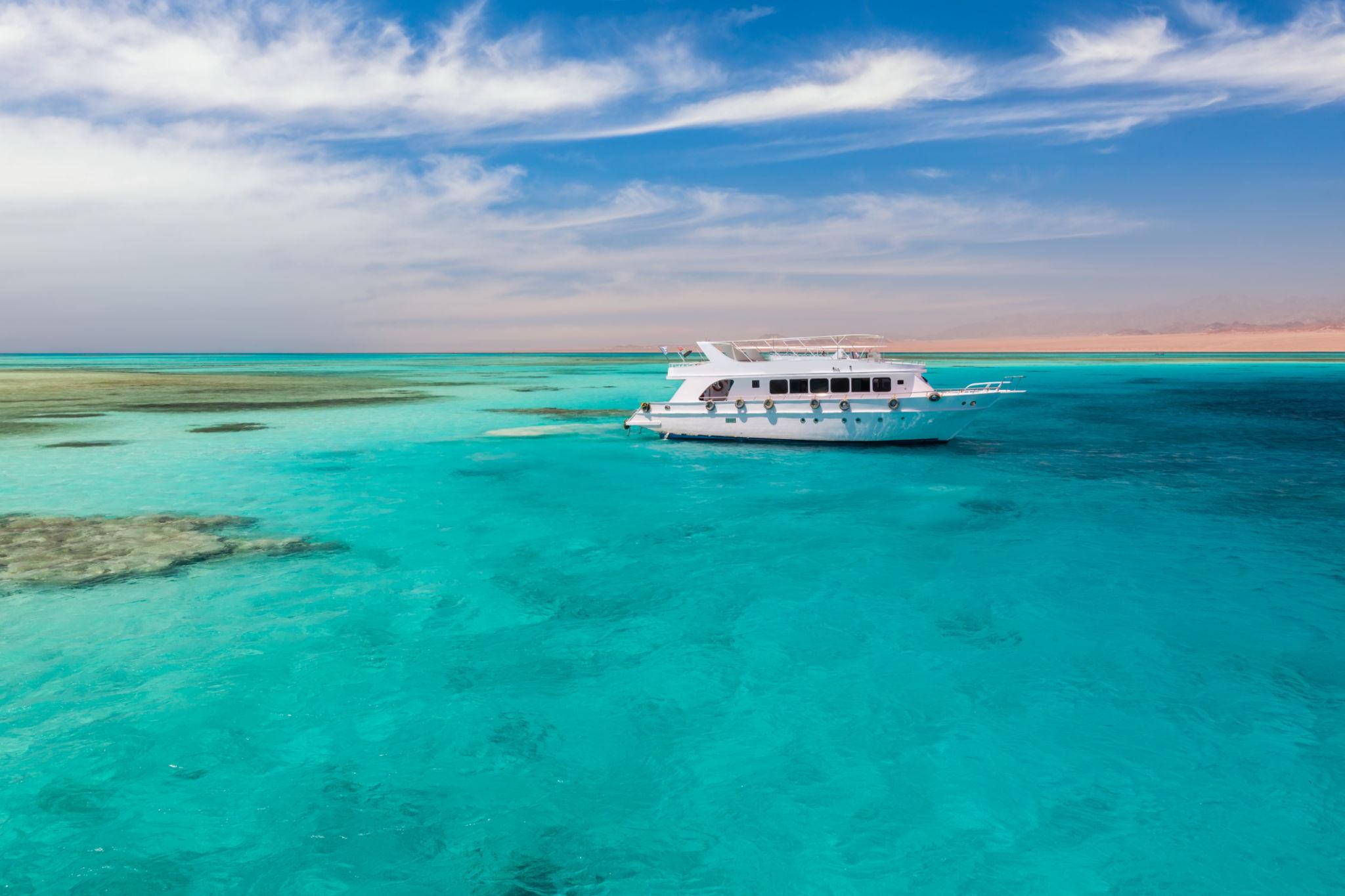
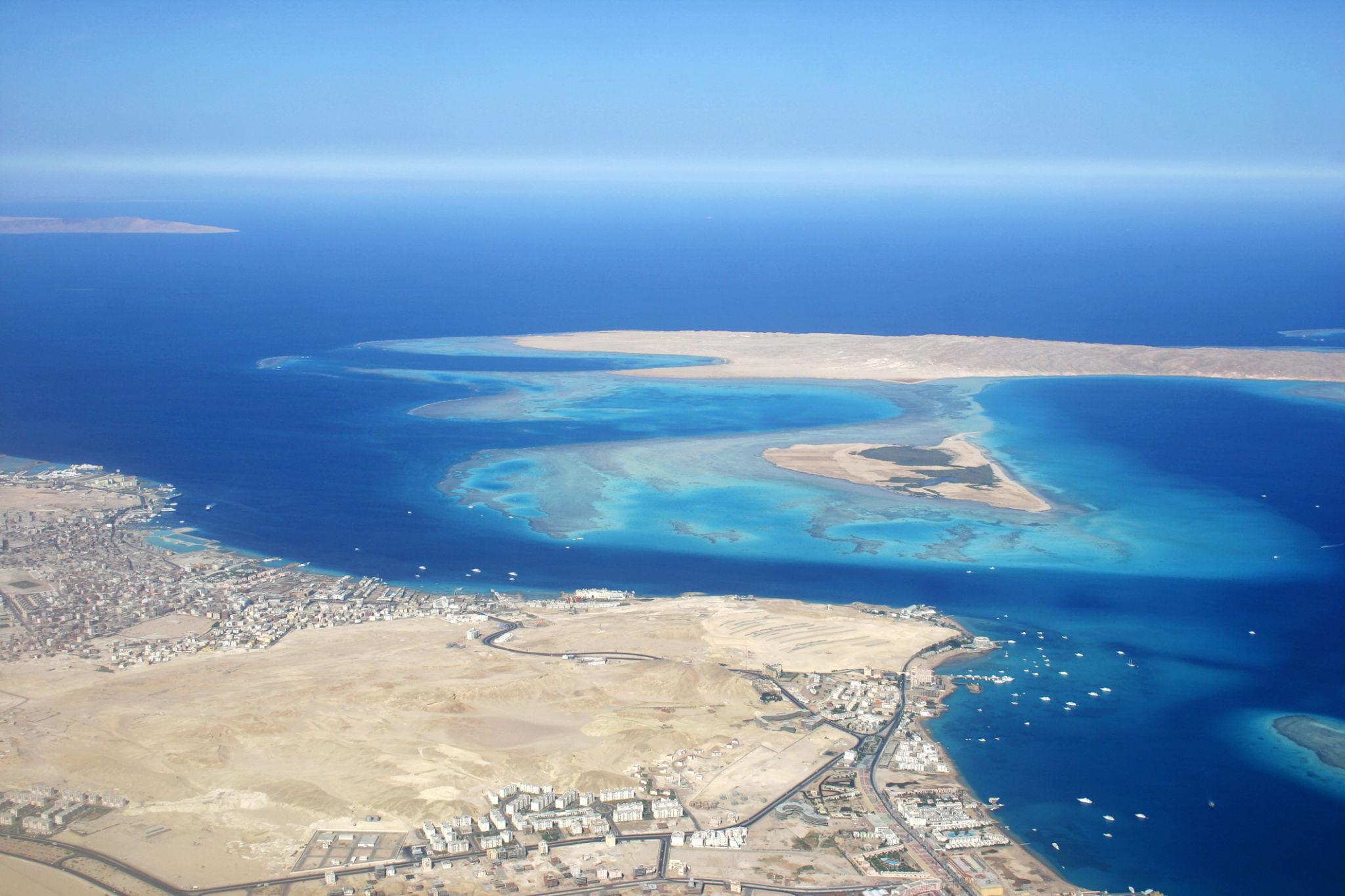
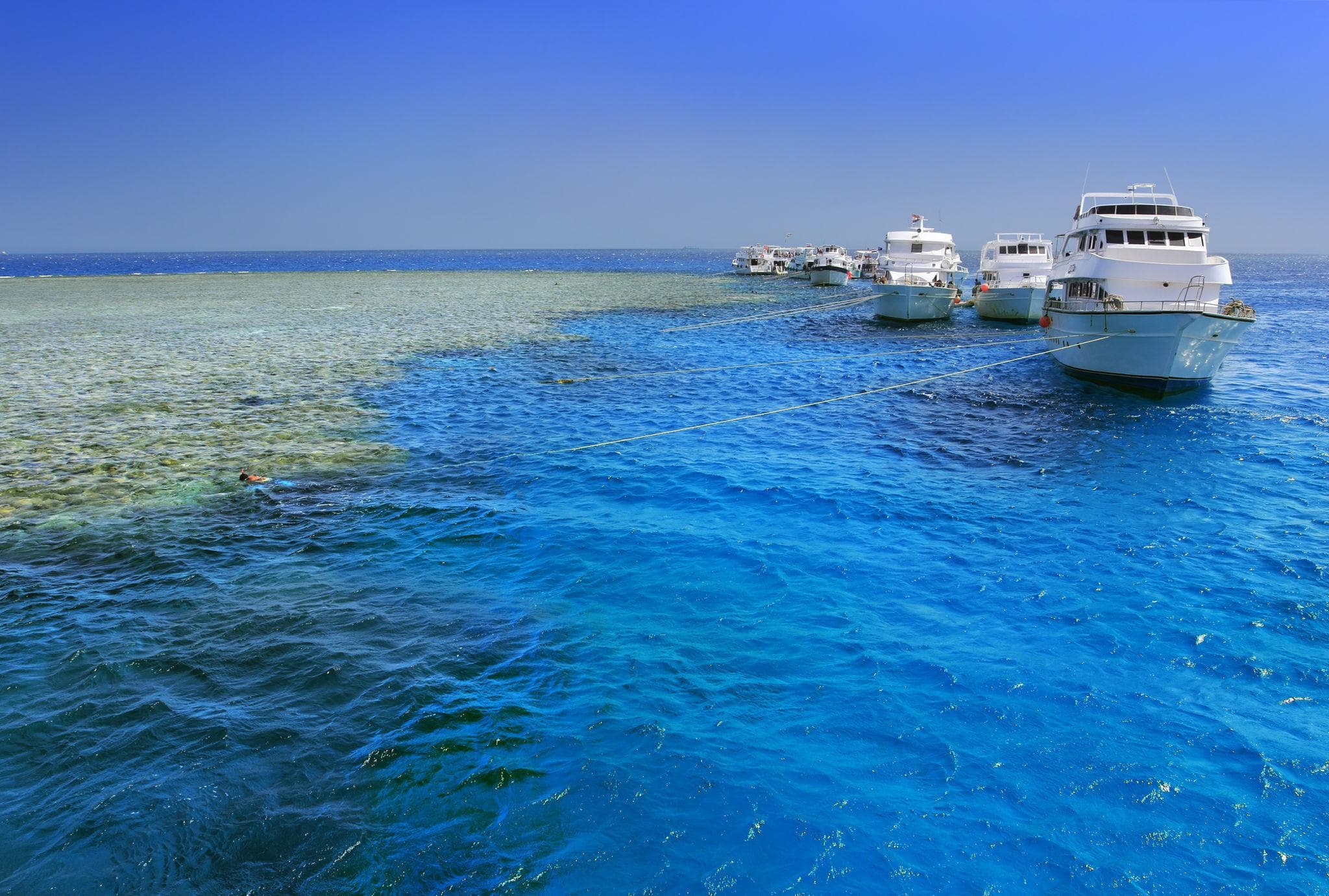
From Sharm el-Sheikh, day boats leave early in the morning, round the tip of the Sinai at Ras Mohammed and head north-west into the Gulf of Suez, a crossing of around three to four hours each way. Some trips add a reef dive or a second wreck on the way back. Some Sharm dive centres ask for a full Egyptian visa for this trip rather than the Sinai-only entry stamp, so check before you book. Sharm makes the most sense if you are also diving Ras Mohammed and the Straits of Tiran, and our Sharm el-Sheikh travel guide covers the resort itself.
From Hurghada and El Gouna on the African side, standard day boats take roughly three to four hours each way and speedboats noticeably less, depending on the sea. El Gouna's dive boats are closest to the Strait of Gubal, which also puts the wreck reef of Abu Nuhas within easy reach. Expect a very early start and a return in the late afternoon or evening; our Hurghada travel guide covers the rest of that coast.
The serious option is a liveaboard, and it suits anyone who wants wrecks rather than a beach holiday. Northern Red Sea wreck itineraries, typically a week from Hurghada, combine the Thistlegorm with Abu Nuhas, Ras Mohammed and often the Rosalie Moller, another wartime cargo ship sunk by the same Luftwaffe unit two nights later, on 8 October 1941. She lies much deeper, with her deck at around 40 m and the seabed at about 50 m, and is strictly for experienced divers. Liveaboards usually schedule two or three dives on the Thistlegorm, and those that stay in the area overnight can dive it early or late, outside the hours of the day boats.
Insider Tip: Beat the Day Boats
The day boats from Sharm and Hurghada tend to arrive in a wave from mid-morning, and on a busy day the wreck can host a crowd at once, with around 200 divers a day an often-quoted figure. If you are on a liveaboard, the earliest and latest dives of the day are the ones to protect. If you are on a day boat, choose an operator that leaves earliest, and on the wreck itself, wait a minute on the deck while a group clears a hold rather than following them in. The difference in visibility is dramatic.
Currents, Conditions and the Best Season
The Strait of Gubal funnels water and wind between the Gulf of Suez and the open Red Sea, so current on the Thistlegorm ranges from none to strong, sometimes changing during a dive. That is why descents follow a line, why you stay on the sheltered side of the hull and why guides watch the surface. The same north-north-west wind that kitesurfers prize builds through the day, especially in summer, and rough seas, which liveaboard operators say are most frequent from December to February, can cancel trips at short notice, so leave a spare day in your plans.
Water temperature on this coast runs from about 21 to 22 C (70 to 72 F) between February and April up to about 28 C (82 F) in August. Long dives at 30 m feel colder than the numbers suggest: a 5 mm full suit suits most of the year, with 7 mm or a hood and vest from December to March, and 3 mm in high summer. Visibility varies with plankton and sediment carried out of the Gulf of Suez, and can be lower than on the reefs of Ras Mohammed. Spring and autumn give the best balance of warm water and manageable seas.
Warning: Insurance, Depth and Overhead Diving
Check your insurance before you book the boat, not after. Ordinary travel policies often cap diving depth at 18 or 30 m, limit you to supervised dives, and exclude overhead environments such as wreck penetration; many also refuse to pay for hyperbaric treatment. Dedicated dive accident cover, or a policy that explicitly names it, is the fix. Recompression chambers operate in Sharm el-Sheikh, Hurghada, Dahab and Marsa Alam, but the Thistlegorm is hours from any of them by boat, which is reason enough to dive conservatively. Our guide to staying healthy in Egypt covers the medical questionnaire and the 24-hour gap before flying.
Good to Know: Fees, Kit and Respectful Diving
Trip prices vary widely with departure point, boat speed and what is included, so compare like with like. Marine park and port fees are bundled into some packages and collected separately, usually in cash, on others, and the amounts change, so ask exactly what is included when you book. Nitrox, a torch and rental equipment may also be extra. Bring a torch even if your guide carries one, and a jacket for the boat ride home.
On the wreck, the rules are simple. Touch nothing, take nothing, and keep fins high and off the cargo, because coral and corroded steel are both fragile. The wreck is treated as a war grave and removing items is prohibited, yet decades of souvenir hunting have already stripped much that was once loose on the decks. Many Egyptian dive centres and protected areas do not allow gloves, which helps keep hands off. Remember the nine men who died here; a moment of quiet on the deck before the ascent is not out of place.
Building a Trip Around the Thistlegorm
A dive on the SS Thistlegorm rewards planning. Base yourself in Sharm el-Sheikh if you want Ras Mohammed and Tiran too, or in Hurghada or El Gouna if you want the African side's wrecks and an easy road link to Luxor, and give yourself enough dive days that a cancellation does not cost you the wreck. Our private Sharm el-Sheikh airport transfer and Hurghada airport transfer take care of arrival on either coast, and snorkellers in the group can spend the wreck day on our Ras Mohammed snorkelling trip instead.
We work with established dive operators on both sides of the Red Sea rather than running boats ourselves, and we can fit dive days around Cairo and the Nile, or a few days in Luxor before you fly home. Tell us your certification level, how many dives you have logged and when you would like to travel through our contact page, and we will suggest the base and the boat that suit you.