From the flat roof of the Alamein Memorial you look south over row after row of pale headstones set into a desert slope, with no lawn and no flower borders, just gravel, low shrubs and the stones themselves. Turn around and the Mediterranean is a strip of improbable turquoise to the north. Between the two, in the autumn of 1942, the Eighth Army and Rommel's Panzerarmee Afrika fought the battle that turned the war in North Africa.
El Alamein is now three places at once. There are the battlefields and memorials, still visited by families tracing a name and by historians walking the ground. There is a Greco-Roman town under the resort strip, where Egyptian archaeologists uncovered eighteen tombs in 2026, some still sealed. And there is New Alamein, a city of towers and beach clubs that fills with Cairo families every summer.
This guide covers all three: what happened here and why, how to visit the cemeteries, memorials and museum, what was found at Marina el-Alamein this year, and how to see it all comfortably as a day trip from Alexandria.
At a Glance
Where: Egypt's Mediterranean coast, about 106 km (66 miles) west of Alexandria and 250 to 300 km from Cairo
The battles: First Alamein, July 1942; Alam el Halfa, from 30 August 1942; Second Alamein, 23 October to 4 November 1942
Commonwealth War Cemetery: about 7,240 Commonwealth burials, nearly 11,900 names of the missing on the Alamein Memorial
German and Italian memorials: a few kilometres west along the coast road, each overlooking the sea
War Museum: founded 1956, renewed 1992 and 2014; reported open daily 9am to 5pm
Marina el-Alamein: Hellenistic to Byzantine town, 44 tombs excavated so far; being prepared for a 2027 public opening
Getting there: by road, roughly two hours from Alexandria or three from Cairo
Best time: October to May for the battlefield; June to September for the beaches
Entry: the war cemetery is free
Why El Alamein Mattered in 1942
Geography made El Alamein. About 64 km (40 miles) south of the railway halt at El Alamein lies the Qattara Depression, a vast basin of salt marsh and soft sand that armoured columns could not cross. Between it and the sea ran the only line in the Western Desert that could not be outflanked from the south, and it stood a little over 100 km from Alexandria and the Suez Canal beyond. Whoever held it held Egypt.
The Eighth Army fell back to that line in the summer of 1942 and stopped Rommel's advance there in the First Battle of El Alamein, fought through July. A renewed Axis attack at Alam el Halfa from 30 August was beaten off. By then Bernard Montgomery commanded the Eighth Army, and he spent September building up men, tanks and supplies while Rommel's forces dug in behind belts of minefields, the so-called Devil's Gardens, sown with roughly half a million mines.
The Second Battle of El Alamein opened at 9.40pm on 23 October with a barrage from about 1,000 guns. The Allies fielded roughly 195,000 men and over 1,000 tanks against about 116,000 men and 547 tanks. Engineers cleared corridors through the mines under fire; the breakthrough Montgomery planned for the first night did not come, and the battle became ten days of attrition until Operation Supercharge, launched in the early hours of 2 November, broke the Axis line. By 4 November Rommel was retreating west. Within a week Churchill told London it was perhaps not the end, nor even the beginning of the end, but the end of the beginning.
The Commonwealth War Cemetery and Alamein Memorial
The El Alamein War Cemetery, maintained by the Commonwealth War Graves Commission (CWGC), lies just west of the town on a reverse slope of the ridge, a 20-hectare desert site designed by Sir Hubert Worthington. It holds about 7,240 Commonwealth burials from every stage of the Western Desert campaigns, some 815 of them unidentified, plus around a hundred war graves of other nationalities. British, Australian, New Zealand, South African, Indian and many other Commonwealth soldiers and airmen lie together, among them four holders of the Victoria Cross.
The memorial that forms the cemetery's northern edge was unveiled on 24 October 1954 by Montgomery himself. Its cloister panels carry nearly 11,900 names of soldiers and airmen with no known grave, the land forces from the campaigns in Egypt and Libya and the air forces from across the Middle East and Mediterranean. A separate Cremation Memorial in the south-eastern corner commemorates just over 600 men cremated in accordance with their faith.
Walk the rows slowly. Many headstones carry a short personal inscription chosen by families, a line that does more than any statistic to explain the place.
Good to Know: Visiting the War Graves
Entry to the cemetery is free, and it is usually open from 9am to 4pm daily. If you are visiting a relative, search the CWGC's online records before you travel: they give the plot, row and grave reference, which saves wandering in the heat.
Dress as you would for any cemetery, keep voices down, and do not climb on the memorial walls or sit on headstones. Laying a small wreath or a few flowers is welcome; leave nothing that will blow away. The light is kindest in the first hour after opening and the last hour before closing.
The German, Italian and Other Memorials
The other memorials are spread along roughly 10 km of the coast road west of the town. Close to the turning for El Alamein stand a Greek memorial and a South African one, with an Australian memorial on the approach to the Commonwealth cemetery. A little further west, an Italian marker records the furthest point of the Axis advance into Egypt.
The German memorial sits on a low ridge north of the road near Tell el-Eisa: an octagonal fortress designed by Robert Tischler, 42 metres across and 12 metres high, with a tower at each corner. It was inaugurated on 28 October 1959 and holds the remains of about 4,200 to 4,300 German soldiers in crypt chambers around an inner courtyard, their names on bronze plaques. It is one of the most austere monuments of its kind anywhere, and the view from its walls over the coast is wide and quiet.
About 5 km further west, the Italian memorial is a tall white tower on a hill overlooking the sea, built between 1954 and 1958 to a design by Paolo Caccia Dominioni, an engineer and writer who had fought in the battle. It holds around 5,200 tombs, many marked ignoto, unknown, and has a chapel and a small museum of maps, photographs and artefacts with labels mostly in Italian. A stone in front carries the Italian phrase that luck failed them, not valour.
The El Alamein War Museum
The museum stands on the edge of town, close to the main battlefield. It was founded on 16 December 1956, renewed in October 1992, fifty years after the battle, and reopened in October 2014 with new displays. Halls are devoted to the Egyptian, Commonwealth, German and Italian experience of the campaign, with a mixed hall of battle models and maps, plus uniforms, medals, weapons and personal effects. Outside, a yard of tanks, guns and trucks, some still bearing battle damage, is what most children remember.
It is reported to open daily from 9am to 5pm, though it has been known to close unexpectedly, so check with your guide on the morning. A restored command bunker sometimes needs a custodian to unlock it. There is a modest admission charge, and fees change often enough that we would not quote one; carry Egyptian pounds. Allow 60 to 90 minutes.
Warning: Stay on the Paths
The minefields of 1942 were never fully cleared. Egypt's World War II mine contamination has been estimated in the millions of devices across the Western Desert, and more than 8,000 people have been killed or injured by them since the war. Clearance programmes have freed large areas around El Alamein for development, but the open desert between and around the memorials is not somewhere to wander.
Keep to paved roads, marked paths and the memorial grounds. Do not drive off-road, do not pick up metal objects, however rusty and harmless they look, and do not follow tracks into the desert for a photograph. Serious battlefield tours that visit sites such as Kidney Ridge go only with specialist drivers on known routes and with military permission. None of this makes a normal visit risky; it simply means the paths are there for a reason.
Marina el-Alamein: The Greco-Roman Town Under the Resort
In 1986 bulldozers preparing the Marina holiday resort uncovered walls and tombs about 100 km west of Alexandria, and the town that emerged has occupied archaeologists ever since. It is widely believed to be ancient Leukaspis, a coastal settlement mentioned by the geographer Strabo. Founded in the Hellenistic period, it flourished under Rome, peaked between the first and third centuries AD, and was still inhabited in the fifth and sixth centuries, when a small church basilica stood in its eastern quarter.
Decades of Polish, American and Egyptian excavation and conservation have revealed more than 50 structures: houses, a town centre with baths, markets and a civic basilica, harbour installations, and a necropolis of rock-cut and built tombs. A lead coffin and mummies were found in one side chamber. An earthquake in the late third century AD has been suggested as the cause of some of the damage. For the wider story of the Ptolemaic and Roman coast, our guide to Cleopatra's history and the collections of the Graeco-Roman Museum in Alexandria give useful context.
The 2026 Discoveries at Marina el-Alamein
On 4 July 2026 the Ministry of Tourism and Antiquities announced that an Egyptian mission led by site director Eman Abdel Khalek had uncovered 18 more tombs, bringing the total excavated at the site to 44. Eleven are rock-cut hypogea reaching about 8 metres below ground; seven are limestone surface tombs. Several burial chambers were still sealed by their original stone slabs.
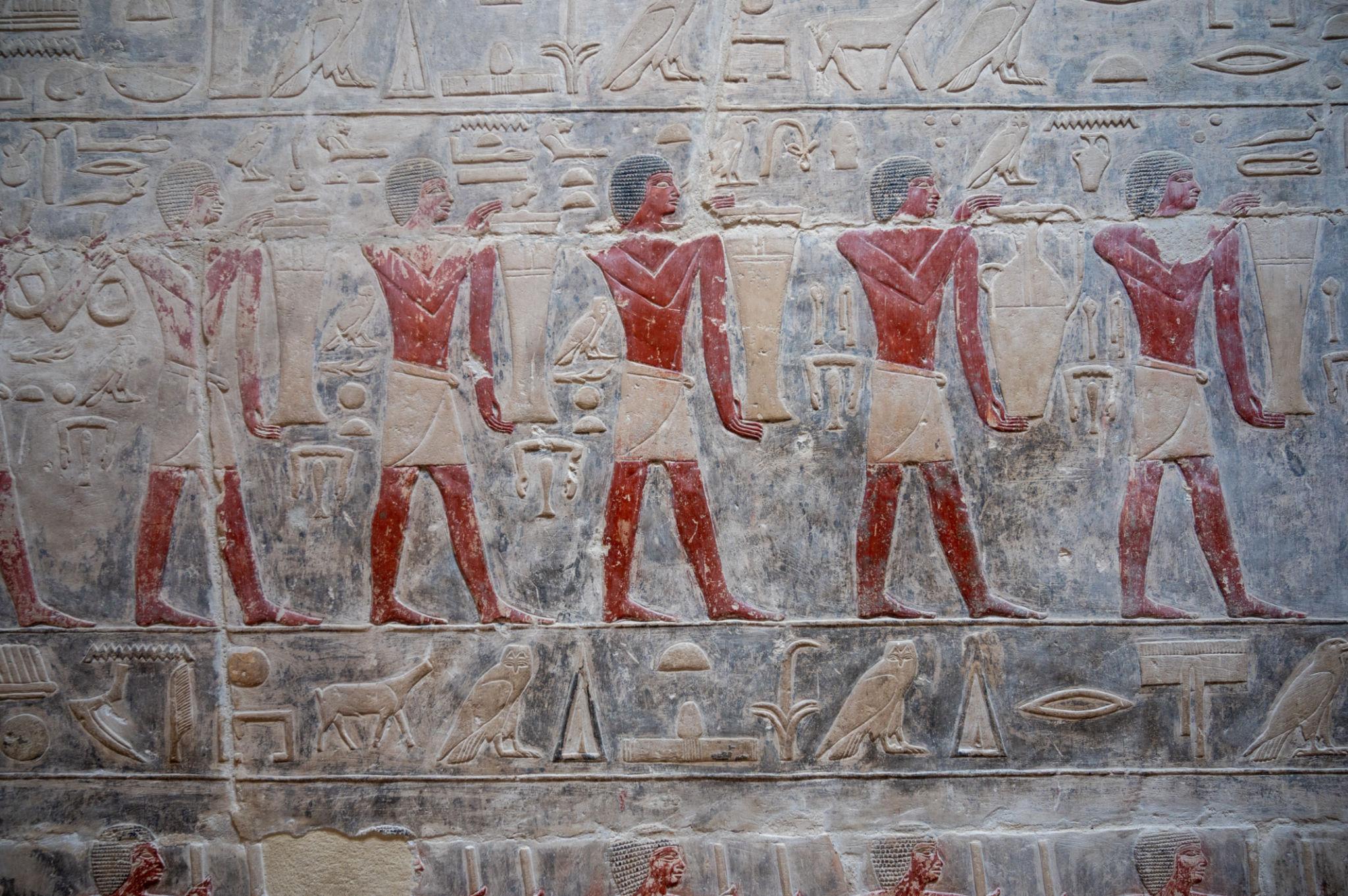
The finds are remarkable. A 2.5-metre granite sarcophagus still had its lid in place, with skeletal remains now under study. Twenty-four gold funerary pieces had been placed in the mouths of the dead, the so-called golden tongues meant to let them speak in the afterlife, alongside a rare gold Eye of Horus amulet. There were plaster sphinx fragments, an unfinished marble statue believed to show Aphrodite, a limestone stela of a seated man holding a bird, a false-door offering altar, glass tear bottles, amphorae and oil lamps, and an old well later converted into a burial shaft. Together they show Egyptian funerary belief and Greek taste sitting side by side, which is the whole character of this coast. Our roundup of Egypt's newest archaeological discoveries puts the find alongside the year's others.
Can you see it? Not routinely, yet. A development project announced alongside the finds includes a visitor centre, electric carts, walking routes, a museum storage building and an open-air theatre, with completion expected in the first half of 2027. Opening dates for Marina el-Alamein have been announced before and slipped, so treat 2027 as a target rather than a promise.
New Alamein and the Summer Coast
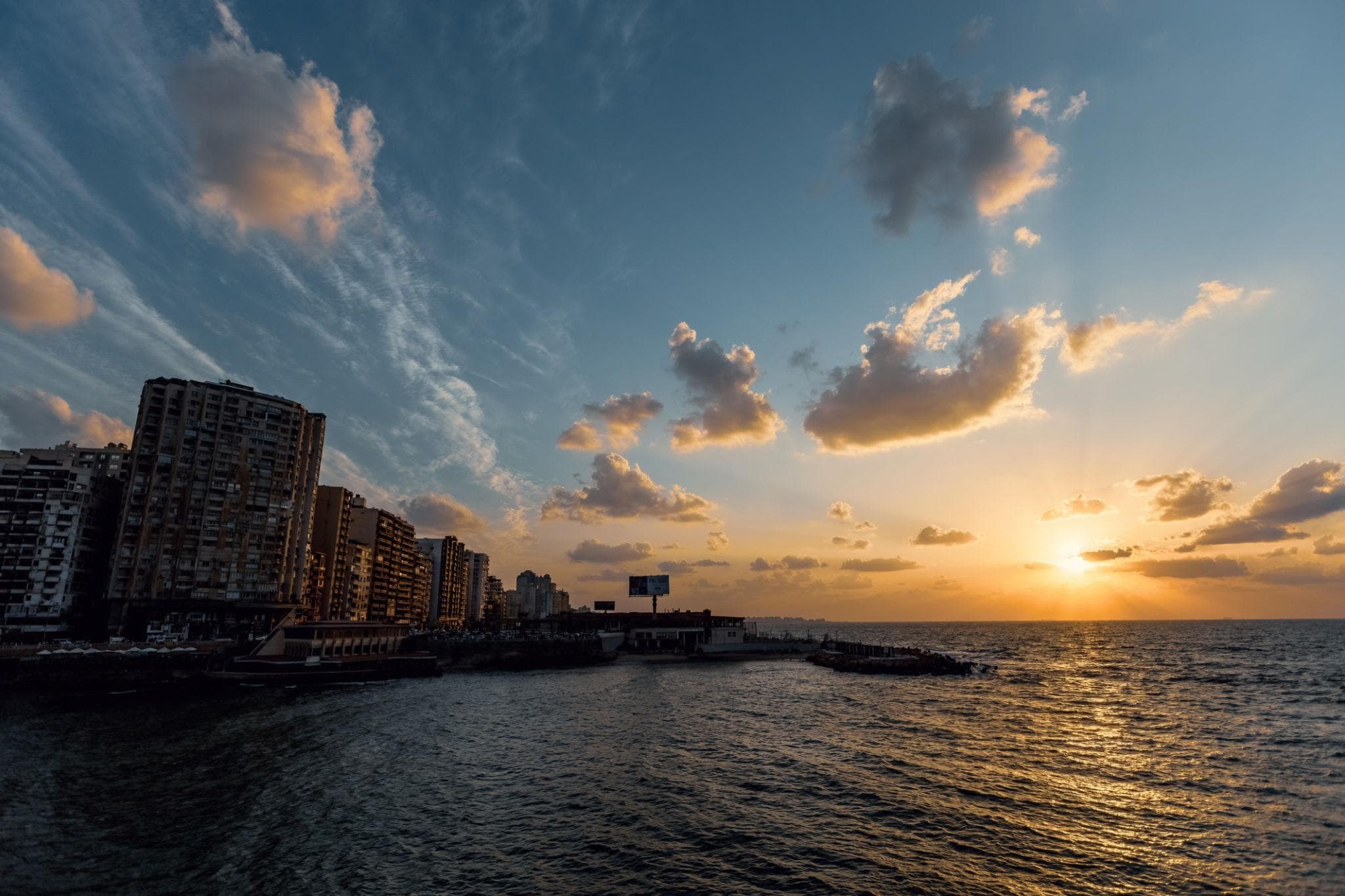
East of the battlefields, New Alamein has grown since the late 2010s into a full city of towers, hotels, a corniche and summer concert venues. The resort coast, the Sahel, runs west from Alexandria with locations given by kilometre marker: the main hub starts around Marina at Km 100, and the upscale beach clubs and gated compounds of Sidi Abdel Rahman and Marassi sit around Km 124 to 144. Much of the shoreline is private, so check day-access rules before you set out with a towel.
Alamein International Airport has become a serious gateway. Fifteen airlines served it in summer 2026, including Etihad, flydubai, Saudia, flynas and Air Cairo, many of them seasonally, and officials expected around 300,000 visitors to Alamein in 2026, up from about 170,000 the year before. Further west, the vast Ras El Hekma development is under construction, with its first district scheduled to open in 2028.
The season is short and intense: roughly mid-June to mid-September, peaking in July, August and the Eid holidays, when prices rise and the coast road clogs at the start and end of every weekend. Outside those months New Alamein is quiet and some venues close, which suits anyone who has come mainly for the history.
When to Visit El Alamein
For the battlefield, the cooler months from October to May are the most comfortable, with mild days and clear light; winter brings wind off the sea and the occasional rainstorm, so pack a layer. Summer is warm and humid rather than scorching, but the memorials have almost no shade, and the coast road is at its busiest. Our Egypt weather month by month guide has the regional detail.
October carries particular weight. Commemorations are held each year around the anniversary of the second battle, organised largely by embassies, and an international memorial service rotates among the German, Italian and Commonwealth sites roughly every three years. On Saturday 17 October 2026, for the 84th anniversary, Greece's deputy defence minister laid a wreath at the Greek memorial for the 89 men of the 1st Greek Brigade who fell in 1942, with the German and Cypriot ambassadors in attendance. Exact dates are announced late, and access to a memorial can be restricted during a formal ceremony, so ask us to check before you set your date.
Pro Tip: Run the Day West to East
Start at the far end and work back towards Alexandria. Leave early, drive straight to the Italian memorial, then take the German memorial, the Commonwealth cemetery and the museum in that order. You reach the most exposed sites while the air is cool, finish at the museum when the sun is highest, and the drive home is already shorter.
For a lunch stop, New Alamein's corniche restaurants and hotels are the easiest choice outside the summer crush. If you have an hour in hand, ask your driver about the Coptic monastery of St Menas, beside the ruins of the early Christian pilgrimage city of Abu Mena, off the highway on the way back, which is worth a detour for anyone interested in late antiquity.
Planning Your Day Trip from Alexandria
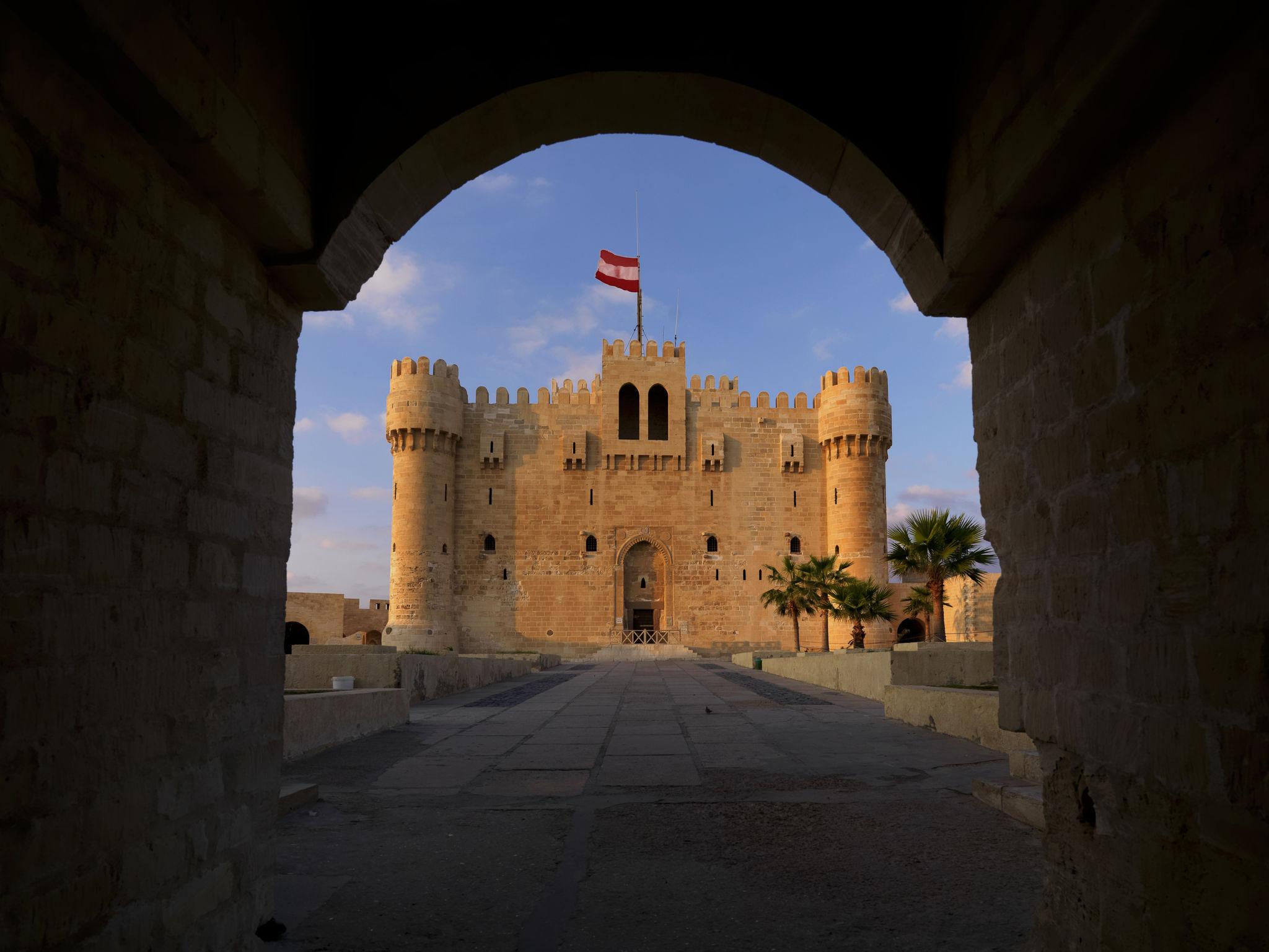
The most comfortable way to see El Alamein is as a long day from Alexandria with a private car and guide: roughly two hours each way, four to five hours at the sites, and back in time for dinner on the Corniche. From Cairo it can be done in a day, at about three hours each way on the desert highways, but you will enjoy it more as part of a night or two on the coast. Combining it with Alexandria itself, the Qaitbay Citadel and the catacombs makes a satisfying two days; our Alexandria day trip guide covers the city.
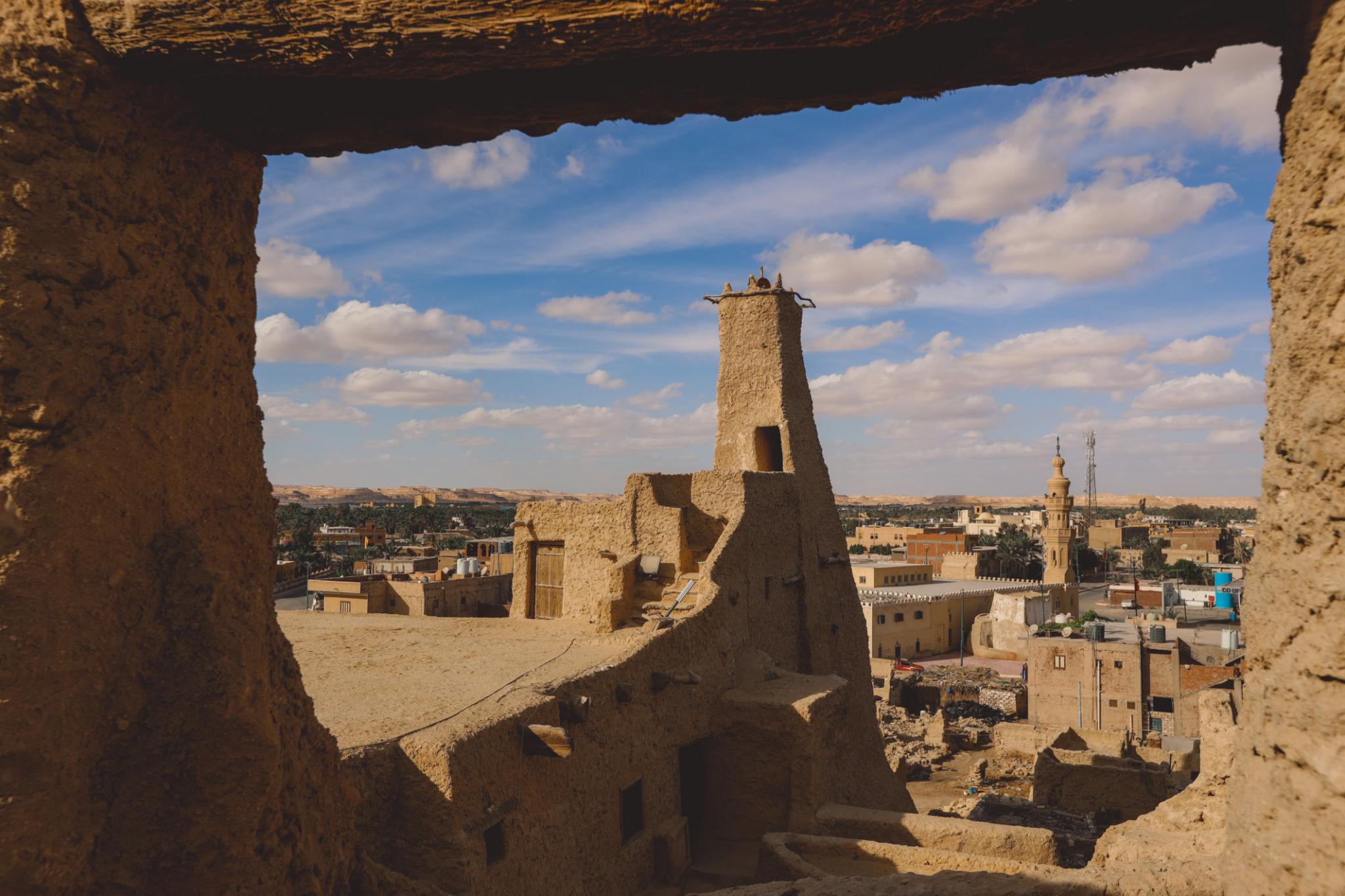
A pre-booked Cairo to Alexandria transfer gets you to the coast without fuss, and our four-day Cairo and Alexandria highlights tour can be extended with a day at El Alamein. Heading on to the desert, El Alamein sits directly on the road west, which is why our Cairo to Siwa private transfer can stop at the cemeteries on the way.
If you are tracing a relative, tell us the name, unit and date of death if you have them, and we will plan the day around that grave. Get in touch and we will take it from there.