The most common medical event on an Egyptian holiday is not exotic and does not make a good story. It is thirty-six hours of stomach trouble around the fourth night, and it comes more often from a lukewarm hotel buffet than from a street cart. The second most common is heat: not collapse, but the slow flattening that turns a good morning in the Valley of the Kings into an afternoon lying down with a headache.
Some of the standard advice has expired. Egypt no longer has malaria. The World Health Organization certified the country malaria-free on 20 October 2024, making Egypt the third country certified in WHO's Eastern Mediterranean Region, after the United Arab Emirates and Morocco, and the first since 2010. Nobody needs prophylaxis for a Nile cruise now. Nothing below replaces a travel clinic appointment four to eight weeks before you fly.
At a Glance
Malaria: none since WHO certification on 20 October 2024, so no prophylaxis
Recommended for most: routine vaccinations up to date, plus hepatitis A and typhoid
Yellow fever: a certificate only if you arrive from, or spent over 12 hours in an airport in, a risk country
Most likely problem: travellers' diarrhoea, usually 24 to 72 hours
Drinking water: bottled or filtered, and be wary of ice outside hotels and restaurants
Emergency numbers: 123 ambulance, 122 police, 126 tourist police
Pharmacies: dense, cheap, often 24-hour, and most medicines sold without a prescription
Do not pack: tramadol, codeine painkillers or ADHD stimulants without prior Ministry of Health permission
Insurance: not required for entry, but needed for evacuation, diving and desert trips
The Vaccinations Worth Having
Nothing is compulsory for a standard tourist arrival, which is not the same as nothing being worth doing. This is what the US CDC and the UK's National Travel Health Network recommended as of 2026.
- Routine vaccinations first: measles, mumps and rubella, diphtheria, tetanus, polio and whooping cough. Measles is the one travel doctors keep flagging.
- Hepatitis A, for every unvaccinated traveller aged one and over. It is food and water borne, and one dose protects within about two weeks.
- Typhoid, for most travellers here, particularly if you are eating widely outside hotels or heading into the oases.
- Hepatitis B, recommended for unvaccinated travellers under 60, and sensible at any age if you might need medical or dental care.
- Rabies, on a risk basis, and the vaccine visitors most often skip when they should not.
The certificate rule sits apart from this. Egypt requires proof of yellow fever vaccination from travellers aged nine months and over arriving from a country with risk of transmission, or who spent more than twelve hours in an airport there. That catches people combining Egypt with East or West Africa or parts of South America. Since 11 July 2016 the certificate has been valid for life, so an old yellow card still counts; keep it with your passport and the paperwork our Egypt visa guide covers.
Two recurring headlines deserve proportion. Poliovirus appeared in Egyptian sewage samples in 2022 and 2023, but the WHO polio emergency committee statement of 4 March 2026 puts Egypt only on the 24-month watch list, not among infected states requiring exit vaccination certificates. H5N1 avian influenza, long entrenched in Egyptian poultry, has caused roughly 200 human cases since 2006, almost all in people handling backyard or market birds: stay out of live poultry markets and eat poultry and eggs cooked through.
Water, Ice and Where Food Goes Wrong
Cairo's water is treated and heavily chlorinated, and millions drink it daily. That is not the same as it suiting a visiting gut trained on a different supply. Bottled water costs cents and is sold in every kiosk; check the seal.
Ice is the overlooked one, since it is usually made from tap water. Hotels, cruise boats and established restaurants use filtered supplies; a roadside juice stand is a different proposition, as are salads rinsed in tap water. Most cases, though, come from food held warm for hours on a buffet rather than from the street, and something cooked to order at a busy stall is safer. That logic shapes how we route our Cairo street food tour.
Travellers' Diarrhoea, Hour by Hour
Assume it may happen and it stops being a crisis. Most episodes settle within 24 to 72 hours, and what matters is fluid and salt, not antibiotics. Oral rehydration salts in a litre of safe water replace losses better than water alone, which leaves you low on sodium. Loperamide has one legitimate use, getting through a transfer or a flight, and is not for use with blood in the stool or a fever.
Standby antibiotics are worth discussing with your own doctor before you travel, especially for longer trips. Practice currently favours azithromycin, 500 mg daily for one to three days or a single 1 g dose, for moderate to severe illness rather than a single loose morning.
See a doctor rather than waiting it out if there is blood in the stool, a fever above about 38.5 C (101 F), vomiting that stops you keeping fluids down, symptoms past three days, or dehydration signs such as scant dark urine and dizziness on standing. Children, older travellers and anyone pregnant should escalate sooner. If it instead grinds on for a week with bloating and sulphurous burps, ask about giardia, which needs a different drug.
Pro Tip: Buy Rehydration Salts on Your First Day
Every pharmacy in Egypt sells oral rehydration sachets for a trivial sum, and the moment you want them is not the moment to go looking. Buy a box on day one and treat them as standard kit: they work as well after a hot morning on the West Bank as after a bad night.
Warning: Medicines You Cannot Legally Bring Into Egypt
This is the part of Egyptian travel health with real legal consequences. Tramadol is routinely prescribed in Europe and North America and is a controlled narcotic here; travellers have been detained for carrying it, and a foreign prescription alone is not a defence. Codeine painkillers, strong sedatives and ADHD stimulants sit in the same restricted category and may need authorisation from Egypt's Ministry of Health before you fly.
The UK Foreign Office puts it bluntly: without the right documentation you will not be allowed to bring the medication in and you may be prosecuted. Carry everything in original packaging in hand luggage, with a doctor's letter naming the condition, the generic drugs, the quantity and personal use.
Heat, Sun, Dust and Eyes
In July and August, Luxor and Aswan average daily highs of 41 to 42 C (106 to 108 F), and the tombs are hotter and stiller than the open air. The summer UV index in the far south reaches 11 or 12, the extreme band, where burn-time tables put unprotected fair skin at around ten minutes. A brimmed hat, sunglasses, long sleeves and high-factor sunscreen do more than any volume of water.
Learn the difference between the two heat illnesses. Heat exhaustion means headache, nausea, clamminess and weakness with a core temperature below 40 C (104 F), and responds to shade, rest, cooling and salted fluids. Heat stroke means a core temperature above 40 C with confusion or altered behaviour, and is an emergency: cool hard with water, wet cloths and ice at the neck, armpits and groin, and call 123. Our summer travel guide covers building the day around a dawn start.
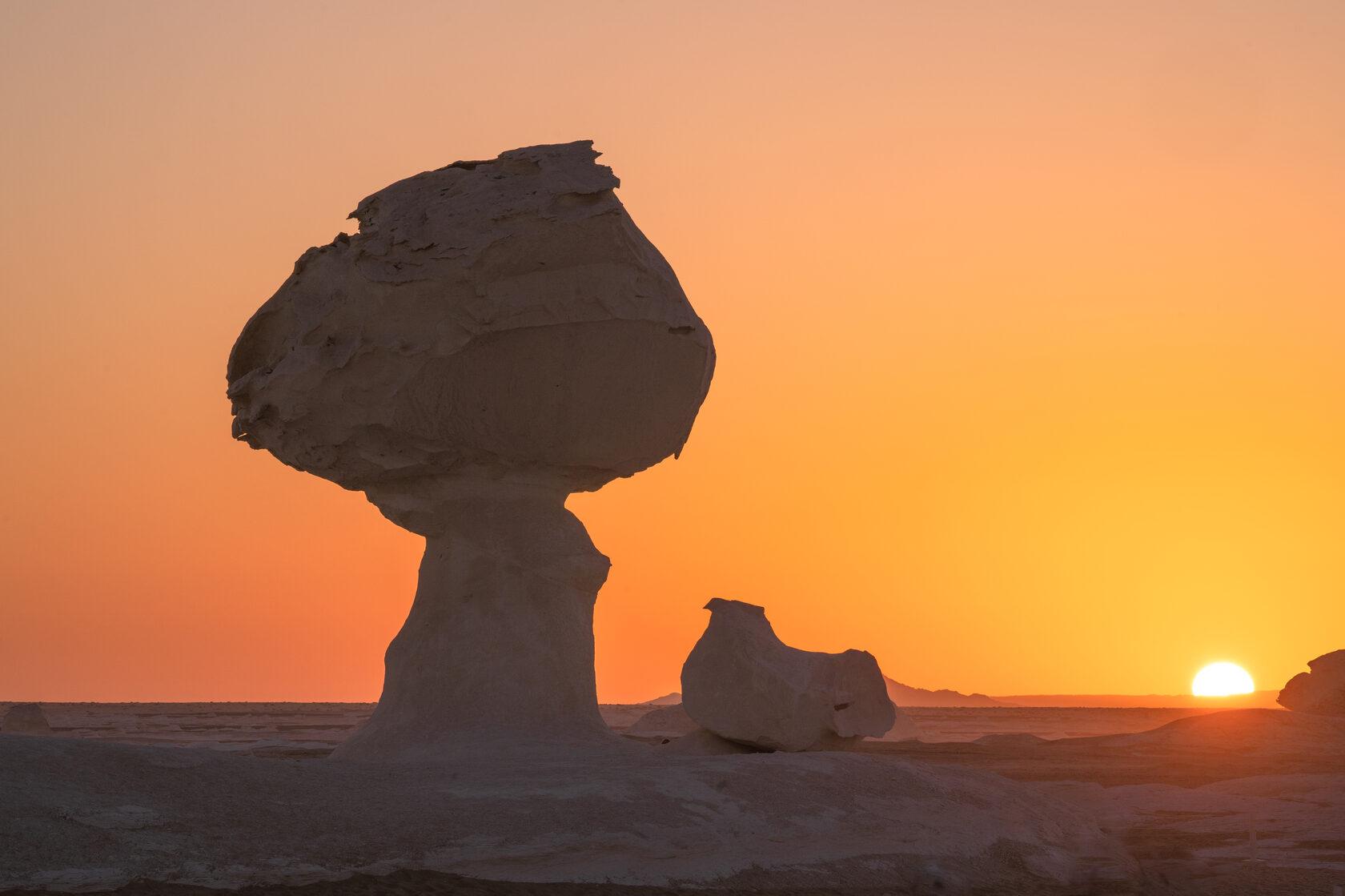
Dust is the other constant, from Cairo's particulate load to the khamsin winds of March to May. Contact lens wearers should pack glasses as a fallback, artificial tears help more than people expect, and a scarf over the face is standard on any desert night, including the one on our White Desert and Black Desert overnight safari.
Why Nobody Here Swims in Still Fresh Water
Bilharzia, or schistosomiasis, is caught through skin contact with fresh water where the host snails live. Both endemic species are present: Schistosoma mansoni in the Nile Delta, Schistosoma haematobium in the valley south of Cairo down towards Aswan. Decades of control have driven prevalence very low, but transmission has not stopped, which is why the advice has not changed.
The risk is wading or swimming in canals, irrigation channels, ditches and lake margins, especially where water is slow and vegetated. It is not a reason to skip a felucca: a boat on the main Nile channel is not exposure, and neither is a chlorinated pool or the Red Sea. It is a reason to keep children out of the canals you pass on a village visit, including around the settlements our Aswan Nubian village felucca tour calls at. Serology is reliable only from six to eight weeks after contact; praziquantel treats it.
Street Dogs, Cats and the Rabies Calculation
The CDC's flat statement about Egypt is that dogs infected with rabies are commonly found here, and the virus circulates in some wildlife too. Cats sleep in every temple precinct and dogs patrol most sites at dusk, and both look approachable. A bite, a scratch that breaks the skin, or a lick on broken skin all count as exposure.
If it happens, wash the wound with soap under running water for a full fifteen minutes, apply iodine or alcohol, and get to a clinic the same day. The complication is rabies immunoglobulin, scarce across much of Africa and Asia and hard to source quickly. A pre-exposure course does not make you immune, but it removes the need for immunoglobulin and shortens post-exposure treatment to two doses. For families with young children, cyclists and long stays, that is the argument for having it done at home.
Good to Know: How Egyptian Pharmacies Work
Egyptian pharmacies are a real convenience. Several chains run 24-hour branches in Cairo, Alexandria and the resort towns, pharmacists commonly speak enough English to help a visitor, and routine drugs cost a fraction of European prices. Most medicines, antibiotics included, are handed over without a prescription.
Two cautions come with that. Being able to buy antibiotics is not a reason to self-prescribe them for what is usually viral, and brand names differ from the ones you know, so carry the generic name of anything you take regularly. A point from the FCDO worth repeating: hotel doctors have been known to overcharge sharply, and the pharmacy outside will supply the same drug for far less.
Doctors, Hospitals and Insurance That Pays
Cairo has the country's deepest medical bench: private hospitals used to foreign patients, English-speaking consultants and intensive care to an international standard. Embassies publish lists of hospitals, physicians and pharmacies their citizens have used, which beats a search engine. Luxor, Hurghada and Sharm el-Sheikh have private hospitals accustomed to insured tourists, but anything complex means a transfer to Cairo, 650 km from Luxor by road or an hour by air.
Expect to pay up front. Private hospitals want a card deposit or cash before treatment and will not bill your home insurer, so keep receipts and call the assistance line early. Where the geography thins out, along the Red Sea coast south of Hurghada and in the Western Desert, a policy is worth its evacuation clause, and our guide to desert safety and permits covers the exclusions that catch desert travellers. It is also the least glamorous argument for a prearranged Cairo airport transfer rather than improvising at 3am.
Diving, the Chamber and the Small Print
Red Sea diving has good emergency infrastructure by regional standards. Recompression chambers operate in Sharm el-Sheikh, where the centre has run since the early 1990s, in Dahab since 2006, and in Hurghada and Marsa Alam, treating a large share of the world's decompression cases.
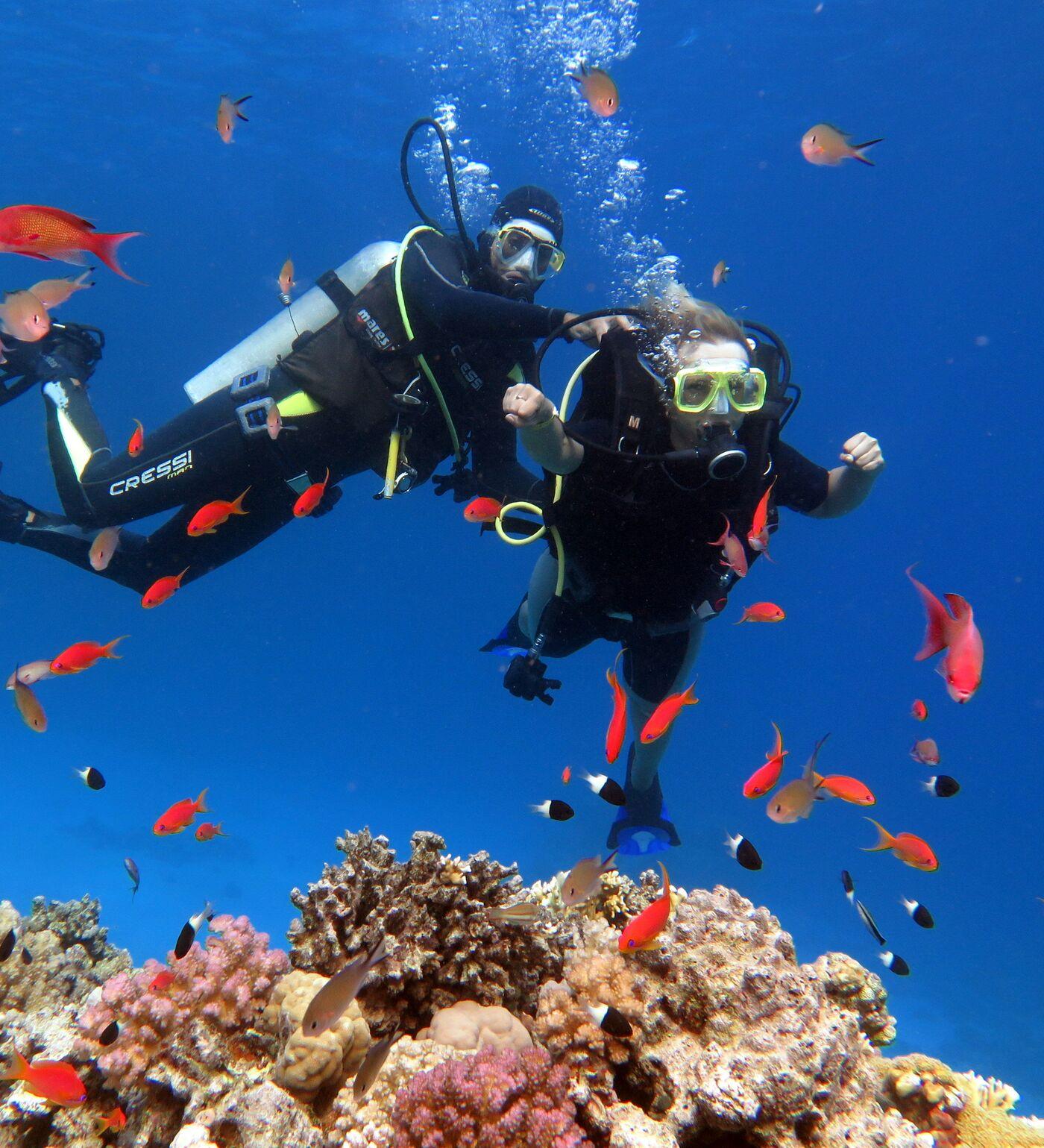
The gap is financial rather than medical. Ordinary travel insurance frequently caps recreational diving at 18 or 30 metres, limits cover to one supervised dive a day, excludes overhead environments such as wreck penetration, and does not pay for hyperbaric treatment at all. Dedicated dive accident cover, or a policy naming hyperbaric treatment, is the fix. Fill in the medical questionnaire honestly, because asthma, heart conditions, recent ear surgery and some medications need a physician's sign-off; do not dive with a chest infection or blocked ears; and leave at least 24 hours between your last dive and a flight. On a first attempt like our Hurghada beginner dive that questionnaire is not a formality, and our Red Sea diving and snorkelling guide explains the certification path.
The Kit We Would Pack
- Oral rehydration sachets, loperamide, paracetamol or ibuprofen, plus any standby antibiotic prescribed at home
- Antihistamine tablets, hydrocortisone cream and antiseptic wipes for bites, stings and scrapes
- High-factor sunscreen, SPF lip balm, sunglasses, a brimmed hat and blister plasters
- Motion sickness tablets for feluccas, dive boats and rough desert tracks
- Prescription medicines in original packaging with the doctor's letter, and spare glasses if you wear lenses
- The insurer's emergency line and policy number, saved offline as well as in email
Before You Fly
Book the travel clinic appointment four to eight weeks out: enough time for hepatitis A to take effect, for a rabies course, and for a Ministry of Health authorisation if you need one. Our full Egypt packing checklist covers everything that is not medical.
Then tell whoever is running your trip what they need to know. Heat tolerance, a heart condition, a knee that will not manage the pre-dawn ascent on a Mount Sinai sunrise trek, an allergy, a medication that must stay refrigerated across four hotels: all of it changes how a day is built, and none of it is awkward to say in advance. It becomes awkward halfway up a hill.