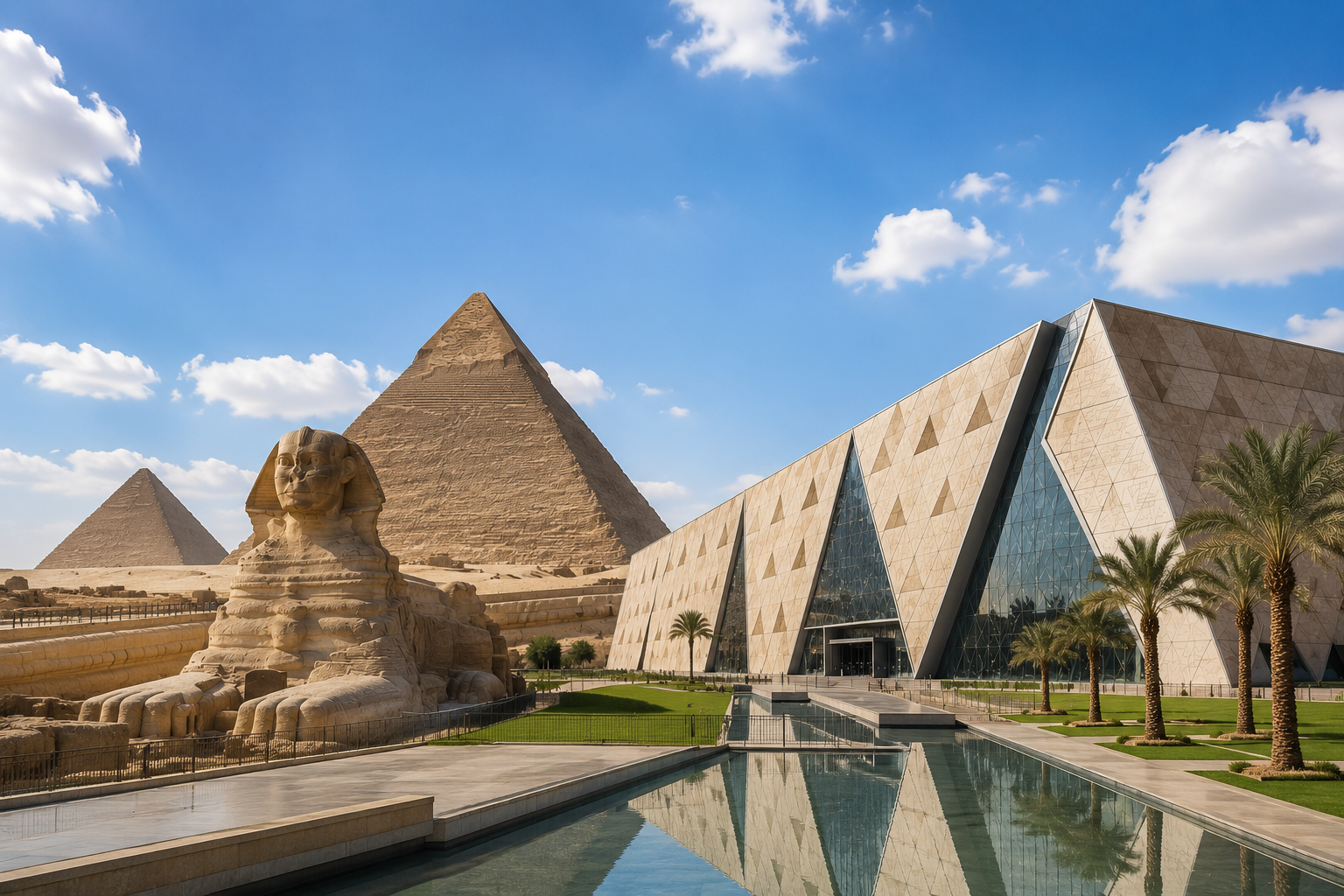
At the Fayoum Road gate on the western side of the Giza plateau, a visit now begins with a paved forecourt, ticket machines, toilets and a free shuttle. Private cars were pushed off the interior road in 2025. Two kilometres away, the Grand Egyptian Museum has step-free entrances, lifts that announce floors aloud, and braille labels.
Then you fly to Luxor, and the tomb you travelled 650 km south to see is reached down a steep wooden ramp with no handrail, then stone steps, then the same climb back out. Nothing about the site can change that. It was cut into a hillside in the fourteenth century BC and it descends because that is what royal tombs do.
That gap is the honest summary of accessible travel in Egypt. New infrastructure is often excellent; three-thousand-year-old infrastructure is not, and never will be. Law No. 10 of 2018 on the Rights of Persons with Disabilities requires planning authorities to check accessibility compliance before issuing a building permit, but it bites on new construction and barely at all on anything older. The official Egyptian term is "people of determination", and site staff use it warmly. Warmth is not a ramp.
At a Glance
Best months: November to March; July and August push Luxor and Aswan to average highs near 41C (106F)
Most workable: the Giza plateau, the Grand Egyptian Museum, NMEC, the Aswan High Dam, Philae once ashore
Least workable: pyramid interiors, most Valley of the Kings tombs, the Alexandria catacombs, Mount Sinai, feluccas
Transport: a private adapted vehicle for the whole trip; no accessible public network to plan around
Tickets: card only at most antiquities sites as of 2026, so carry a working Visa or Mastercard
Giza plateau entry: around 700 EGP (roughly 15 USD) for foreign adults as of 2026
Grand Egyptian Museum entry: around 1,450 EGP (roughly 30 USD), free for visitors with disabilities
Arriving and Getting Around
Cairo Airport Company runs a reduced-mobility service at Terminal 3 with EgyptAir, working from a passenger list supplied in advance. That list is the whole system, so request assistance when you book rather than at check-in, specify whether you need help to the aircraft door or transfer into the seat, and reconfirm a few days ahead. Jet bridges are not universal at Luxor, Aswan and some Sharm gates, so expect a bus and an ambulift. Powered chairs need the battery type and watt-hours declared in writing, and guide dogs fly in the cabin with harness, lead and certificate, though importing one requires an ISO microchip, rabies vaccination and an endorsed health certificate.
After that, no public transport option in Egypt should carry an itinerary. Kerbs are high, pavements are routinely blocked by parked cars, metro lifts exist at some stations and not others, and taxis are ordinary saloons. A small number of operators run vans with hydraulic lifts or heavy ramps and floor securement points, booked by the day. That is the largest cost difference between an accessible trip and a standard one, and what makes the rest possible: a full-day private Cairo and Giza vehicle with driver lets you leave a folded chair, a cool box and medication in the car between stops. Ask for the internal height, the ramp gradient, the securement system and photographs of the actual van, and see our guide to getting around Egypt for the wider network, little of which is step-free.
The Giza Plateau: Genuinely Manageable Now
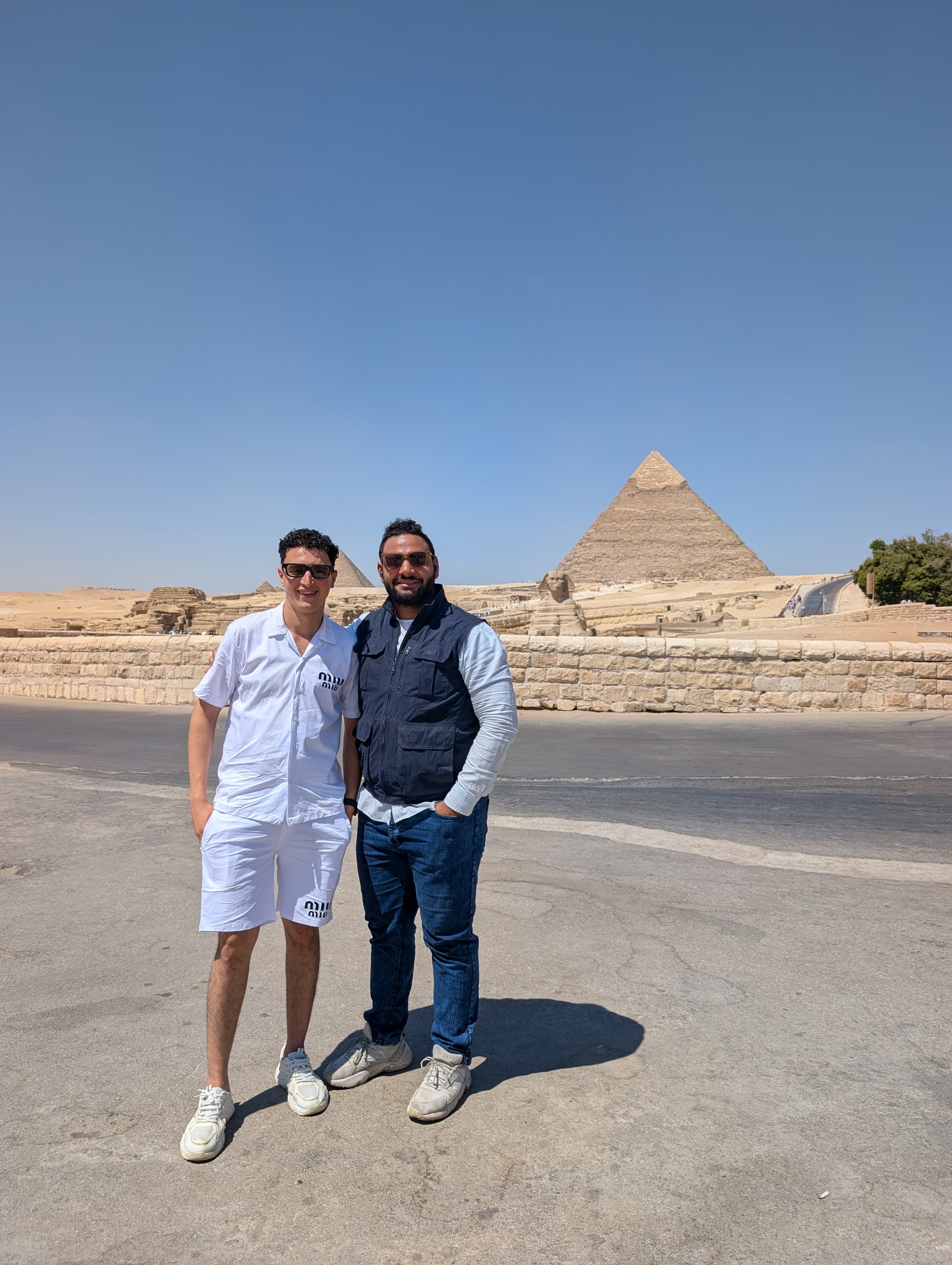
Giza is the best news in Egyptian accessibility, and the change is recent. Orascom Pyramids, which operates visitor services here, put roughly 1.5 billion EGP into a visitor centre, electronic gates and electric shuttle buses, and the Fayoum Road entrance became the main gate in 2025.
Paved paths and boardwalks now link the viewpoints for all three pyramids and the Sphinx, there are panoramic platforms at seated eye level, and the entrance complex has accessible toilets. You can get close enough to put a hand on the Great Pyramid's foundation blocks. Beyond the made surfaces it is soft sand and rubble.
Not every shuttle is step-free. Staff will find one, but that can mean twenty minutes in full sun, which argues for arriving at opening. Interiors are the hard limit: the passage into the Great Pyramid is a low, steep, cramped climb ticketed separately at around 1,500 EGP as of 2026, unviable for wheelchair users and questionable for anyone with a cardiac or respiratory condition.
Museums: The Grand Egyptian Museum Sets the Standard
The Grand Egyptian Museum was designed step-free from the start. Every exhibition floor, the conservation viewing area, the cafes and the restrooms are lift-served, manual wheelchairs are lent free at the main entrance, and golf carts cover the long forecourt. Visitors with disabilities are admitted free, against roughly 1,450 EGP for a foreign adult as of 2026, with an increase announced for late in the year. Book a timed slot online, since on-site sales for foreign visitors have been discontinued, though published closing times vary between sources, most listing roughly 9am to 6pm.
Our full Grand Egyptian Museum guide covers the galleries; pairing the museum with the plateau, as our pyramids and Grand Egyptian Museum day does, gives one fully accessible half-day and one partially accessible one.
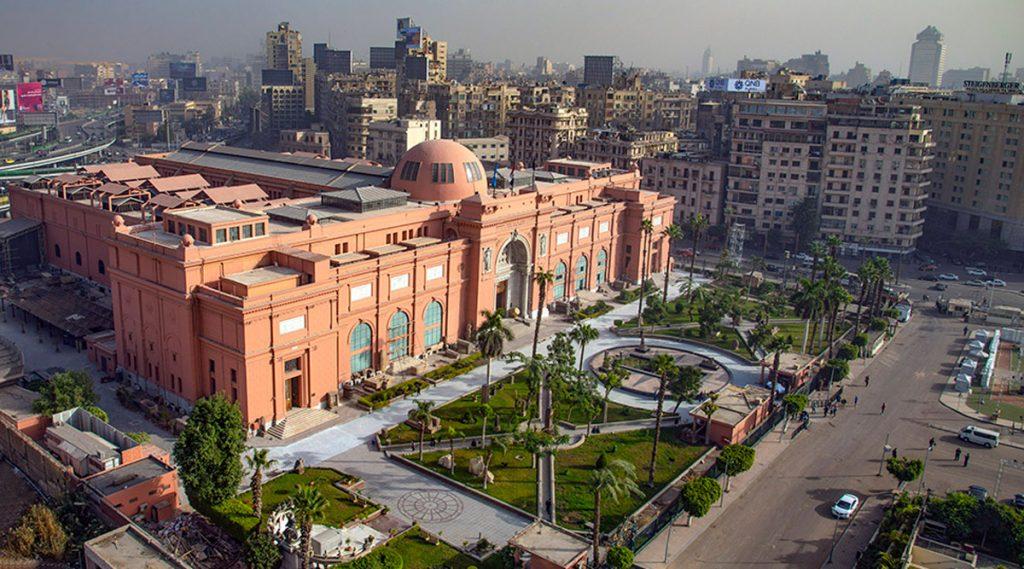
The National Museum of Egyptian Civilization in Fustat is also level and lift-served, and its Royal Mummies Hall presents no access problem at all. The 1902 building on Tahrir Square is the awkward one: there are entrance ramps, but sources disagree about whether a passenger lift is in service. Its ground floor holds the colossal statuary and is broadly rollable, and an Egyptian Museum tour with a guide earns its cost because the guide can rebuild the route around what you can reach.
Luxor: Karnak Yes, Most Tombs No
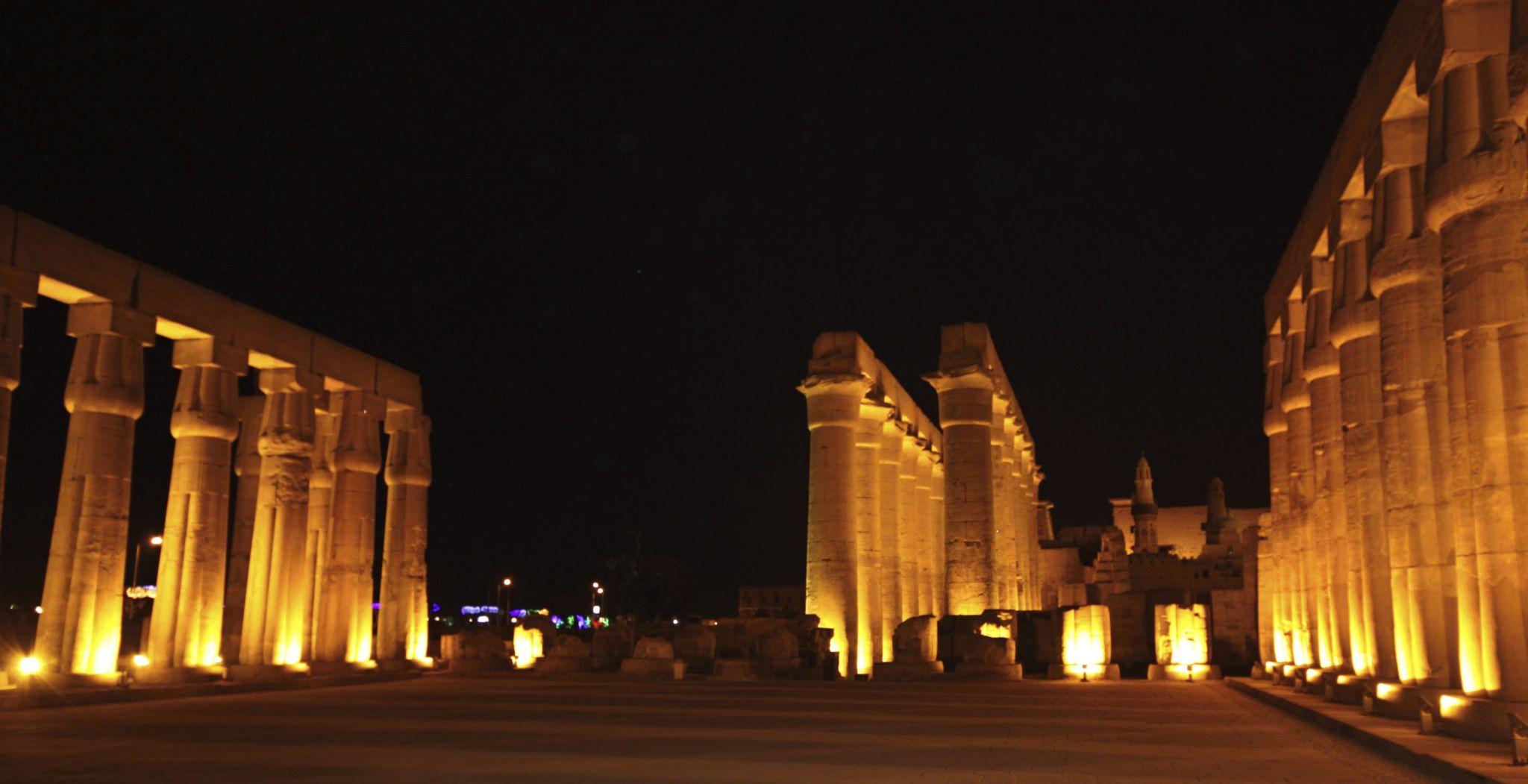
Karnak works better than people expect. The main processional axis, including the Great Hypostyle Hall, is paved and rollable end to end, and holds most of what you came for. The side courts, sacred lake terrace and outer precincts involve steps and loose stone. Luxor Temple has a ramped entrance and a broadly flat main court.
The Valley of the Kings is where honesty matters. The path from the visitor centre is level and the electric tram takes a folding chair, so you can reach the tomb entrances and feel the place. The tombs themselves descend, most by steep wooden ramps and stairs with no alternative route. KV11, Ramesses III, and KV62, Tutankhamun's, have the shortest descents and are the least bad options for someone with limited mobility and a strong companion; for a wheelchair user they remain out of reach. Sources disagree on the base ticket, quoting roughly 450 to 750 EGP for 2026, with extra-fee tombs charged separately.
Hatshepsut's terraced temple at Deir el-Bahri is the West Bank's pleasant surprise: the causeway and the ramps between terraces are long but gradual, and the lower court is reachable. The Ramesseum, Deir el-Medina and most Tombs of the Nobles are not.
Aswan, Philae and Abu Simbel
Aswan is the easiest of the three classic bases. The High Dam is flat, paved and takes ten minutes; the Nubian Museum is lift-served. Philae is a genuinely good visit once ashore, with paved paths through the complex and a ticket around 550 EGP (roughly 11 USD) as of 2026. The barrier is the crossing: a motor launch rising and falling against stone steps, with crew assistance and no fixed ramp. Some crews handle it well, but a private Philae and High Dam morning buys the time a careful transfer needs.
Abu Simbel lies 280 km south of Aswan, about three and a half hours each way by road, and that round trip is itself the access question. The site is good: a paved path curves around the artificial hill to the forecourt, and the colossi are best seen from exactly where a wheelchair can sit, though the interiors have a raised threshold and steps. The alternative is the short flight, and either way an Abu Simbel day trip from Aswan means a pre-dawn start.
Warning: The Places That Will Not Work
- The interiors of the Giza and Dahshur pyramids: low, steep, unlit passages with no alternative route
- Almost every Valley of the Kings and Valley of the Queens tomb, including Nefertari's
- The Catacombs of Kom el-Shoqafa in Alexandria, reached by a spiral staircase around a shaft
- Mount Sinai, whether by the camel path or the 3,750 Steps of Repentance
- Feluccas, boarded by plank onto a moving deck with no rail
- Khan el-Khalili's inner lanes, which are narrow, stepped, crowded and broken-surfaced
If an operator tells you all of these are no problem, they have not thought about it. The right answer is a substitution, not a promise.
Boats, Beds and the Accessible-Room Lottery
A cruise is often the best structural decision an accessible itinerary can make: one unpacking, one bathroom all week, shade, and a bed to retreat to at two in the afternoon. Only a small number of vessels have lifts between decks and cabins built with roll-in showers, so this is a boat-first decision rather than a date-first one.
The obstacle nobody anticipates is mooring. At Luxor, Aswan, Edfu and Kom Ombo, cruise boats tie up two, three and sometimes four abreast, and reaching the quay means crossing through neighbouring boats' lobbies and over gangplanks with a step at each end. A lift inside your own ship does nothing about that. Ask how the operator handles side-by-side mooring, and expect an answer involving crew carrying. Our complete Nile cruise guide covers the choice between motor cruisers and small dahabiyas, which moor independently more often but almost never have lifts.
On land, Egypt has no consistently enforced accessible-room standard, so "accessible" in a booking engine can mean a roll-in shower with grab bars and a transfer bench, or simply a normal room on the ground floor. International chain properties are the most reliable. Ask in writing for the doorway clear width in centimetres, the bathroom threshold lip, the bed height, whether the shower is roll-in or has a rim, and whether grab bars and a shower chair exist. Then ask for photographs taken that week.
Beyond Mobility: Blind, Low-Vision and Deaf Travellers
The Grand Egyptian Museum leads here too: braille labels, tactile replicas of selected statues along the Grand Staircase with braille captions beneath them, braille guides at the welcome desk, and specialist tours for visitors with visual or hearing impairments. Nothing else in Egypt is close, and at most archaeological sites the accommodation is a well-briefed guide rather than installed provision. That guide is worth more than it sounds, because Egyptian temple decoration is relentlessly narrative, and someone who describes reliefs in sequence rather than gesturing at them turns Karnak into something a blind traveller can hold.
Egyptian Sign Language differs from ASL and BSL, and interpreters working in international sign are scarce and must be arranged months ahead. The whispered radio headsets standard on group tours are useless. A private guide who will write, type on a phone, face you when speaking and keep the sun behind you beats any equipment, and a printed glossary of names sent in advance helps, because proper nouns are the hardest part.
Key Point: Heat and Toilets Are Access Issues
Heat is not a comfort question for many disabled travellers but a medical one. People with spinal cord injuries, multiple sclerosis and some cardiac conditions regulate temperature poorly, and Luxor and Aswan average daily highs near 41C (106F) in July and August. November to March is not a preference, it is the practical season. Our guides to travelling in the Egyptian summer and to staying healthy in Egypt cover heat illness in detail.
Accessible toilets exist at the Giza visitor centre, the Grand Egyptian Museum, NMEC and the better hotels. They are scarce at most Upper Egypt sites, where facilities are often a squat pan with no grab rail. Plan the day around known facilities, treat the vehicle as a base, and pace at two major sites a day rather than four.
Pro Tip: How to Brief Your Guide
Send specifics before you arrive, in writing, and keep them concrete. "Limited mobility" tells a guide nothing. "Can walk 50 metres on level ground with a stick, cannot manage more than three steps without a handrail, uses a manual chair for anything longer, needs to sit every 20 minutes, does not tolerate heat above 30C" tells them everything, and lets them redesign the route before you land rather than in the car park.
Say explicitly what you are willing to be assisted with and what you are not, particularly being lifted. Then ask which stops they intend to replace. A guide who has already decided to swap a tomb interior for a longer stop at the Deir el-Bahri terraces has understood the brief.
Planning a Trip That Works
The itinerary that works in Egypt is shorter and slower than the standard one, and it delivers more. Three nights in Cairo with the plateau and the Grand Egyptian Museum, a flight rather than a night train to Luxor, a properly chosen boat for the Nile leg and Aswan at the end is a fortnight's worth of Egypt in nine or ten days. What it needs is decided in advance rather than negotiated at each gate: the vehicle, the boat, the rooms, and a guide told the truth about what you can do. Tell us what your day actually looks like at home, including the parts that are tedious to explain, and we will tell you which stops we would keep, which we would change, and which we would not attempt.