By half past nine on an August morning in the Valley of the Kings, the limestone underfoot is too hot to sit on and the air rising from an open tomb shaft feels like the inside of an oven. Luxor and Aswan both average daily highs above 41 C (106 F) through July and August, and neither sees an overnight low much below 26 C (79 F). Summer in Egypt is not a warmer version of the winter trip. It is a different trip, with a different shape to the day.
It is also the only season when the country's greatest sites are quiet. In the third week of August you can stand in the hypostyle hall at Karnak with a dozen other people, enter a royal tomb without queueing, and pay a fraction of the January room rate. Egyptians do not stop travelling either. They go north to the sea rather than south to the temples, which tells you most of what you need to know.
This guide is about making that trade deliberately. Our month-by-month weather guide covers the other ten months.
At a Glance
Luxor and Aswan: average highs 41 to 42 C (106 to 108 F), overnight lows 26 to 28 C (79 to 82 F)
Cairo: around 35 C (95 F) by day at 58 to 61 percent humidity, which is why it feels heavier
Alexandria: 31 C (88 F) in August, humidity near 71 percent, sea around 26 C (79 F)
Hurghada: 37.5 C (100 F) in August, sea temperature 28 C (82 F)
Site opening: Luxor, the West Bank and Abu Simbel from 6:00, Giza from 7:00, most closing at 17:00
Luxor daylight: sunrise 06:07 on 15 July and 06:22 on 15 August, sunset shortly before 19:45
Sample tickets: Giza plateau 700 EGP (about 14 USD), Valley of the Kings 750 EGP (about 15 USD) as of 2026
Where not to go: the Western Desert oases, and any overnight desert camping
What the Heat Actually Measures
Egypt is long enough that summer means four different things depending on latitude. These are long-term station normals, which matter more than any forecast you read before you fly.
- Aswan is the hottest place in the country: 41.9 C (107 F) in both July and August, overnight lows near 27.8 C (82 F), humidity of only 18 to 21 percent.
- Luxor is barely behind at 41.4 C in July and 41.2 C in August, lows around 25.6 C (78 F), humidity 30 to 33 percent.
- Cairo averages 35.0 C in July and 34.9 C in August but carries far more moisture, at 58 to 61 percent humidity.
- Alexandria is the outlier at 30.5 C in July and 31.0 C in August, cooled by a sea breeze that also pushes humidity to 71 percent.
- Hurghada sits at 37.4 to 37.5 C, warmer on paper than Cairo and far more pleasant in practice, because there is a sea to get into.
Two caveats. The Hurghada figures are 1991 to 2020 normals; the older 1961 to 1990 series for the same station gives 33.3 C, four degrees cooler. And records are not averages: Aswan carries a July record of 51.0 C (123.8 F) against Luxor's 47.8 C, and compilations disagree by several degrees for the same stations.
Dry Heat Inland, Wet Heat on the Coast
Grasp this before booking: 42 C in Aswan and 31 C in Alexandria can feel comparably difficult, for opposite reasons. Aswan's air is desert-dry at under 20 percent humidity, so sweat evaporates the moment it appears. You will not feel wet, you will feel baked, and you will dehydrate faster than you notice.
The Mediterranean coast runs near 71 percent humidity, evaporation slows, and the body's main cooling mechanism loses efficiency. The two climates reward different equipment. Dry heat rewards shade, water and covered skin, so a wide hat and a loose long-sleeved shirt help in Luxor. Humid heat rewards air movement: a breeze, a fan, somewhere to sit.
Rebuilding the Day Around a 5am Start
The Egyptian working day and the sensible visitor's day are the same shape in summer: early, then a long pause, then evening. A nine o'clock start in Luxor wastes the only usable hours the day contains.
- Wake between 4:30 and 5:00. Luxor and West Bank sites open at 6:00, and the first ninety minutes are worth the rest of the day put together.
- Do the hardest walking before 9:30, while the stone still holds some of the night in it.
- Be indoors and horizontal from roughly 11:00 to 16:00. Not a cafe, not one more temple.
- Restart at 16:30, then eat late. Restaurants fill between 21:00 and midnight, one of the real pleasures of the season.
Egypt reinstated daylight saving time in 2023 and runs on UTC+3 from the last Friday of April to the last Thursday of October, which in 2026 means 24 April to 29 October. A 6:00 opening in Luxor really is first light, and the sun does not set until shortly before 19:45 in mid-July.
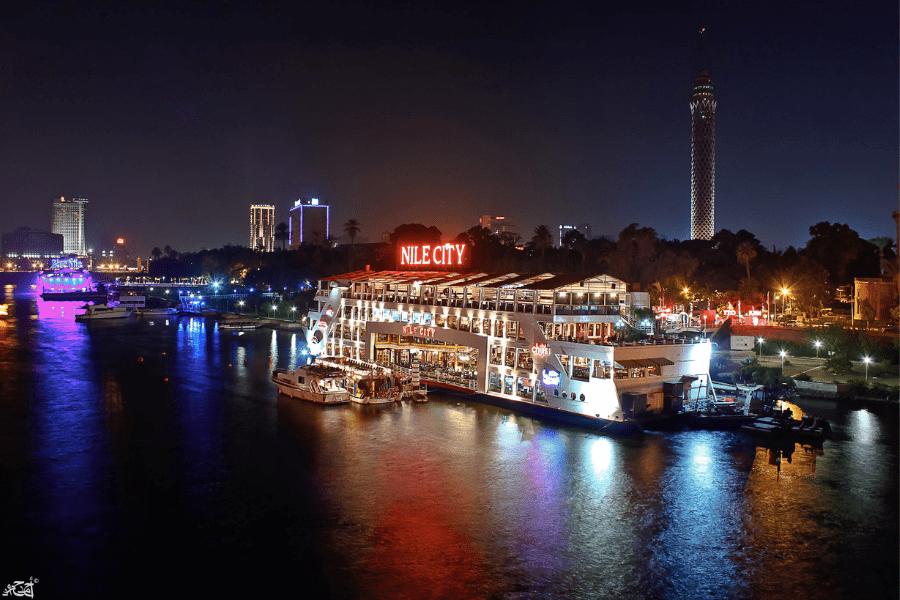
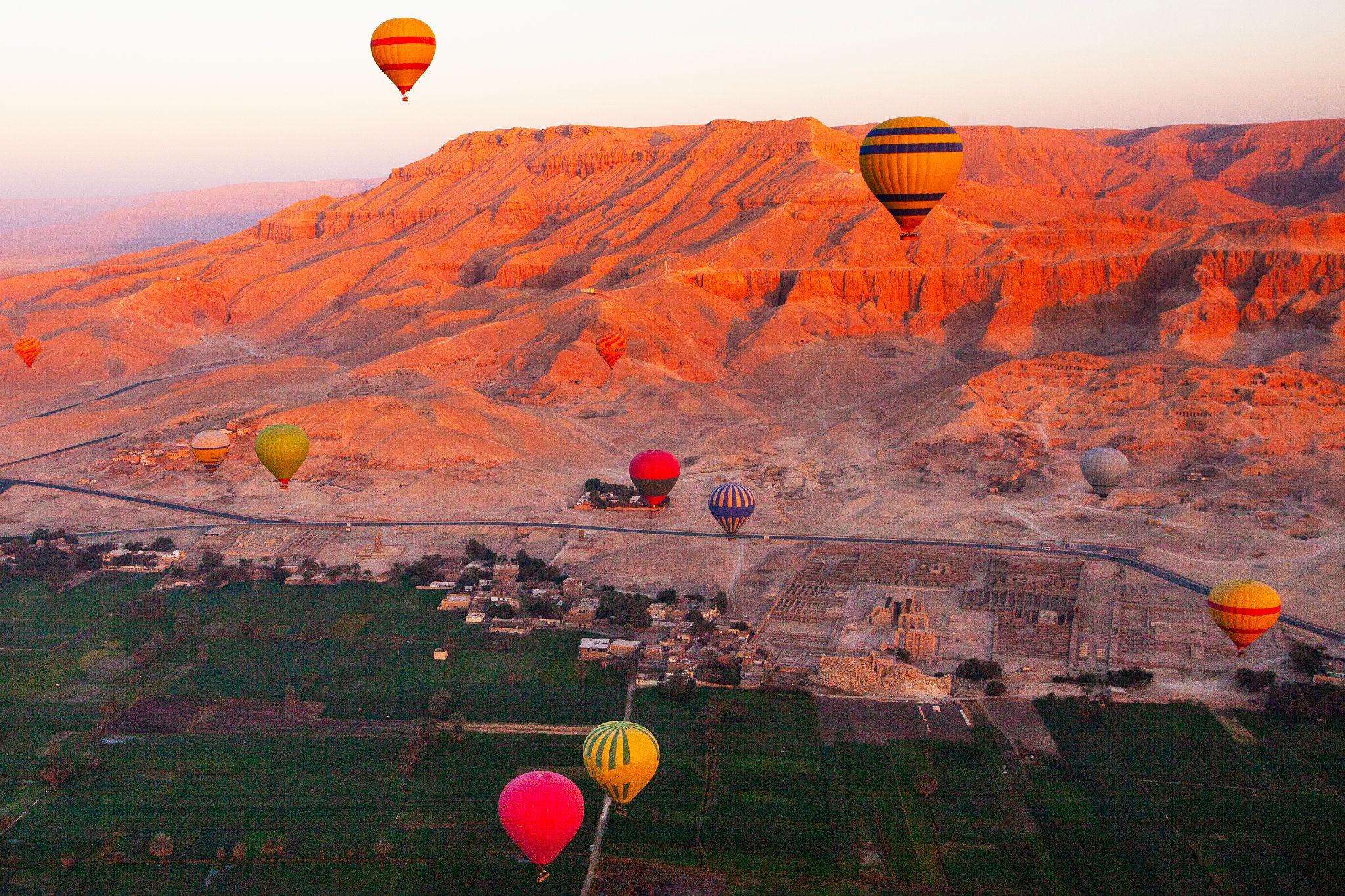
A sunrise balloon flight over the Luxor West Bank improves in summer, because pickup is in the small hours and you are down before the heat arrives. The same logic applies after dark, when a Nile dinner cruise in Cairo puts you on the one surface in the city reliably cooler than everything around it.
Which Sites Hold Up in the Heat and Which Do Not
Some monuments are effectively indoor attractions and some are open stone with no shade, and the difference matters more in August than in any other month.
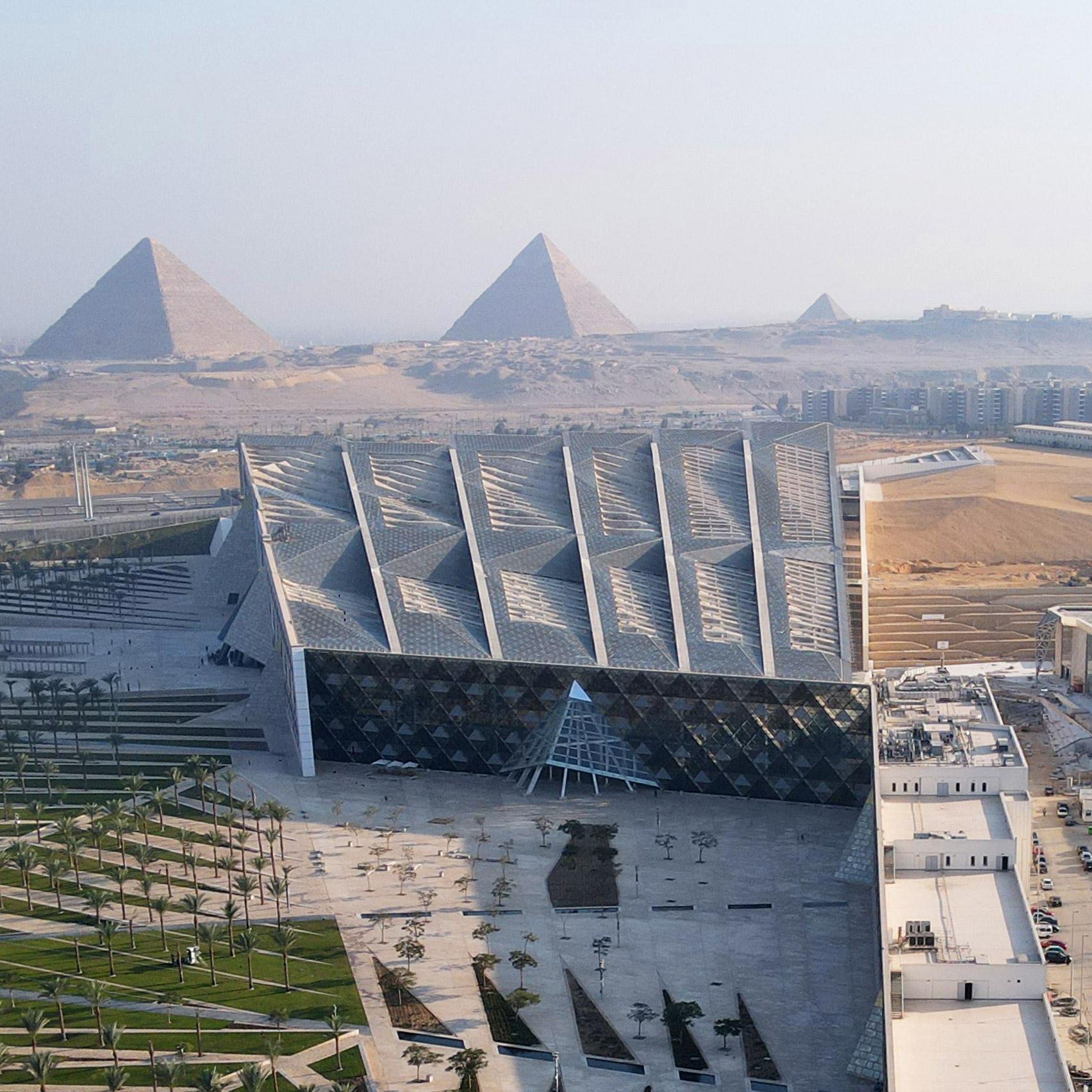
The comfortable option in Cairo is a museum morning. The Grand Egyptian Museum, inaugurated on 1 November 2025, is climate-controlled and large enough to absorb five hours. Its galleries run 9:00 to 18:00 most days but stay open until 21:00 on Wednesdays and Saturdays, which makes those two the best summer days in the city. Pairing an early plateau visit with an air-conditioned afternoon, as a combined pyramids and Grand Egyptian Museum day does, is the strongest structure available: stone at 07:00, galleries by 10:30.
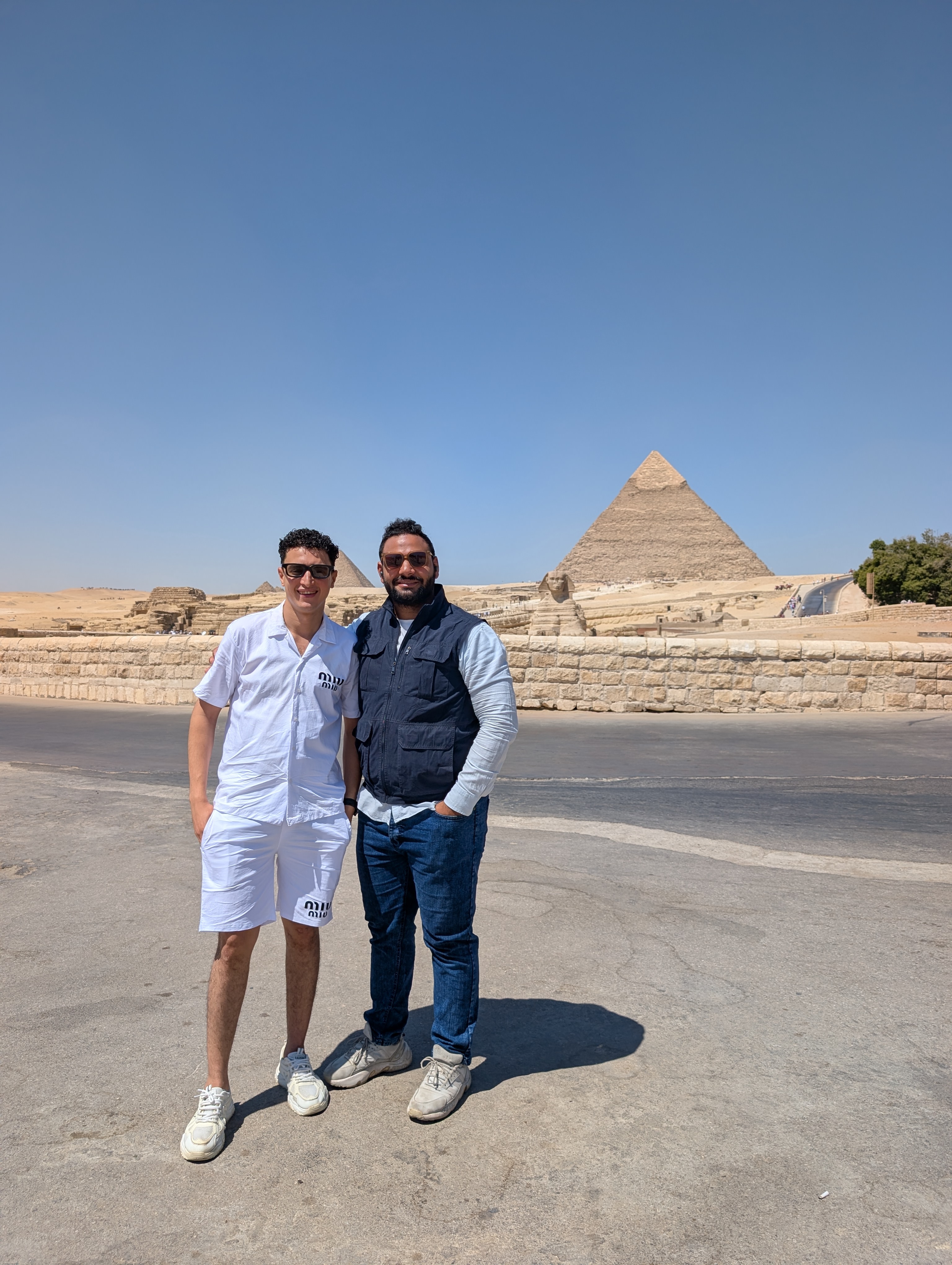
The Giza necropolis opens at 7:00 and costs around 700 EGP (roughly 14 USD) as of 2026, with entry inside the Great Pyramid a further 1,000 EGP. Khufu's interior closes from 12:00 to 13:00 daily, which is the site management's own quiet admission about the middle of the day.
The Valley of the Kings is the hard case. It is a rock amphitheatre that traps and re-radiates heat, and the descending corridors have limited airflow, so deeper tombs can run hotter than the open ground above. The general ticket is around 750 EGP for three tombs, with Tutankhamun separate at about 700 EGP and Seti I at around 2,000 EGP (roughly 40 USD). In August, choose two tombs and do them properly rather than five in a hurry.
The Sites That Reopen in the Evening
This is the most under-used piece of Egyptian summer logistics. Several museums and sites split their day the way you should split yours, closing through the worst of the afternoon and reopening once the sun is low.
- Luxor Museum runs 9:00 to 13:00 and again 17:00 to 20:00, at around 400 EGP (roughly 8 USD) for foreign adults.
- The Mummification Museum in Luxor keeps the same split hours at about 220 EGP.
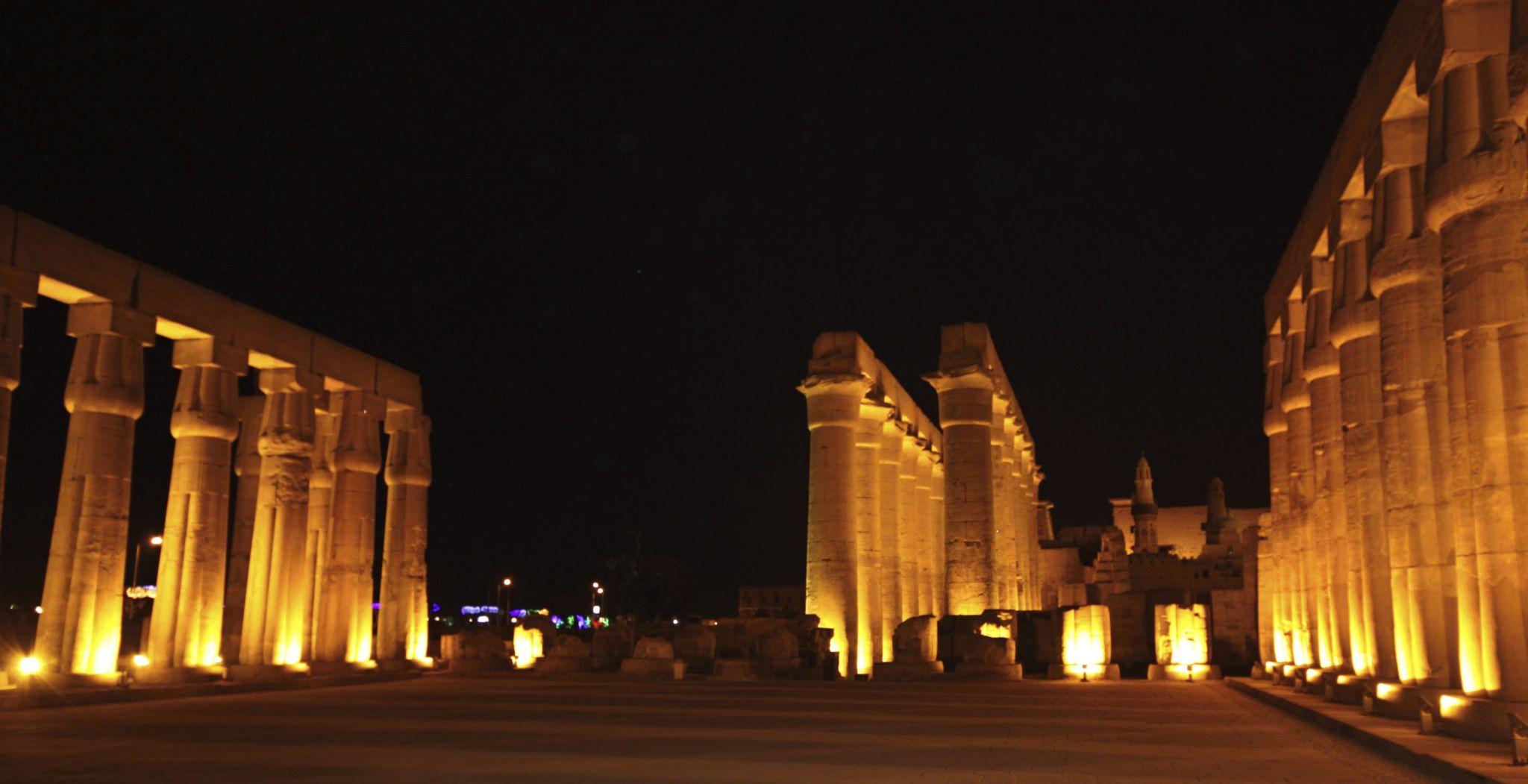
- Luxor Temple stays open until 20:00 for around 500 EGP, which makes it the obvious last stop of a summer day rather than the first.
- Kom Ombo is open until 21:00 at about 450 EGP, and it sits on the river bank, so an evening visit catches the light and the breeze.
- The Nubia Museum in Aswan adds an 18:00 to 21:00 session on Thursdays and Fridays, and the Hurghada and Sharm el-Sheikh museums stay open until 23:00.
Published hours are not always consistent between the ministry's list and what a gatekeeper tells you at the door. Treat the earlier closing time as the real one.
Warning: Heat Illness Announces Itself Quietly
The risk in an Egyptian summer is not discomfort, it is heat illness, and it arrives gradually enough that people talk themselves out of noticing. NHS guidance lists the signs of heat exhaustion as tiredness, dizziness, headache, nausea or vomiting, heavy sweating with pale clammy skin, cramps in the arms, legs or stomach, extreme thirst and irritability.
The response is straightforward: move them somewhere cool, remove unnecessary clothing, give water or an isotonic sports drink, and cool the skin by spraying or sponging with cool water and fanning. They should feel better within about thirty minutes. If they do not, get help.
Heatstroke is different and urgent: a very high temperature, hot skin that is no longer sweating, fast breathing and a racing heartbeat, confusion or restlessness, seizure, or loss of consciousness. That is a medical emergency, not a reason for another bottle of water. Note too that children and older travellers reach trouble sooner than fit adults. Our guide to staying healthy in Egypt covers pharmacies and clinics.
Pro Tip: Freeze Two Bottles of Water Overnight
The hotel freezer is the most under-used amenity in Egypt. Fill two 1.5-litre bottles three-quarters full and freeze them overnight, and by mid-morning at Karnak you have genuinely cold water instead of the tepid stuff sold at the gate, plus ice for the back of your neck. A cheap cotton scarf soaked at any tap does more in dry inland heat than expensive technical fabric, because evaporation does the work rather than the weave.
Why the Western Desert Is the Wrong Call in August
Every summer people ask us about the White Desert or Siwa in July, and the answer is no, for reasons of safety rather than comfort. Siwa averages 37.0 C in August with a station record of 46.2 C, and the deep desert beyond the oases runs hotter still, with no shade, no phone signal and no water beyond what is in the vehicle. A breakdown that is an inconvenience in January becomes serious when help is hours away and there is nowhere to wait it out.
UK government travel advice states plainly that off-road travel requires a qualified guide and a permit from the Ministry of Interior, and permits take time a spontaneous plan does not allow. Reputable operators run the desert circuit from roughly October to April. If Siwa Oasis or the White Desert is why you are coming to Egypt, move the trip rather than the risk, and read our guide to desert safety, permits and choosing an operator first.
What Summer Actually Saves You
The savings are real but not uniform. Upper Egypt hotels and Nile cruise cabins are at their cheapest of the year in July and August, and the gap against Christmas rates is substantial. Two things temper that. Choice narrows, because part of the cruise fleet uses the quiet months for refit. And the discount reverses as you go north: Alexandria and the Mediterranean are in peak domestic season while Egyptian families take their school holidays, so prices there rise rather than fall.
Going North: Alexandria and the Mediterranean
If your dates are fixed and Upper Egypt sounds like too much, point the trip north instead. Alexandria in August averages 31 C with a sea temperature around 26 C and a persistent breeze off the Mediterranean, a different proposition from Luxor. Its ancient sites are compact, which suits the season: the Citadel of Qaitbay costs around 200 EGP and stays open until 19:00, and the Catacombs of Kom el-Shoqafa are underground and cool. A combined Cairo and Alexandria itinerary gives you the pyramids at dawn and the coast for the rest of the trip.
The Red Sea in Summer
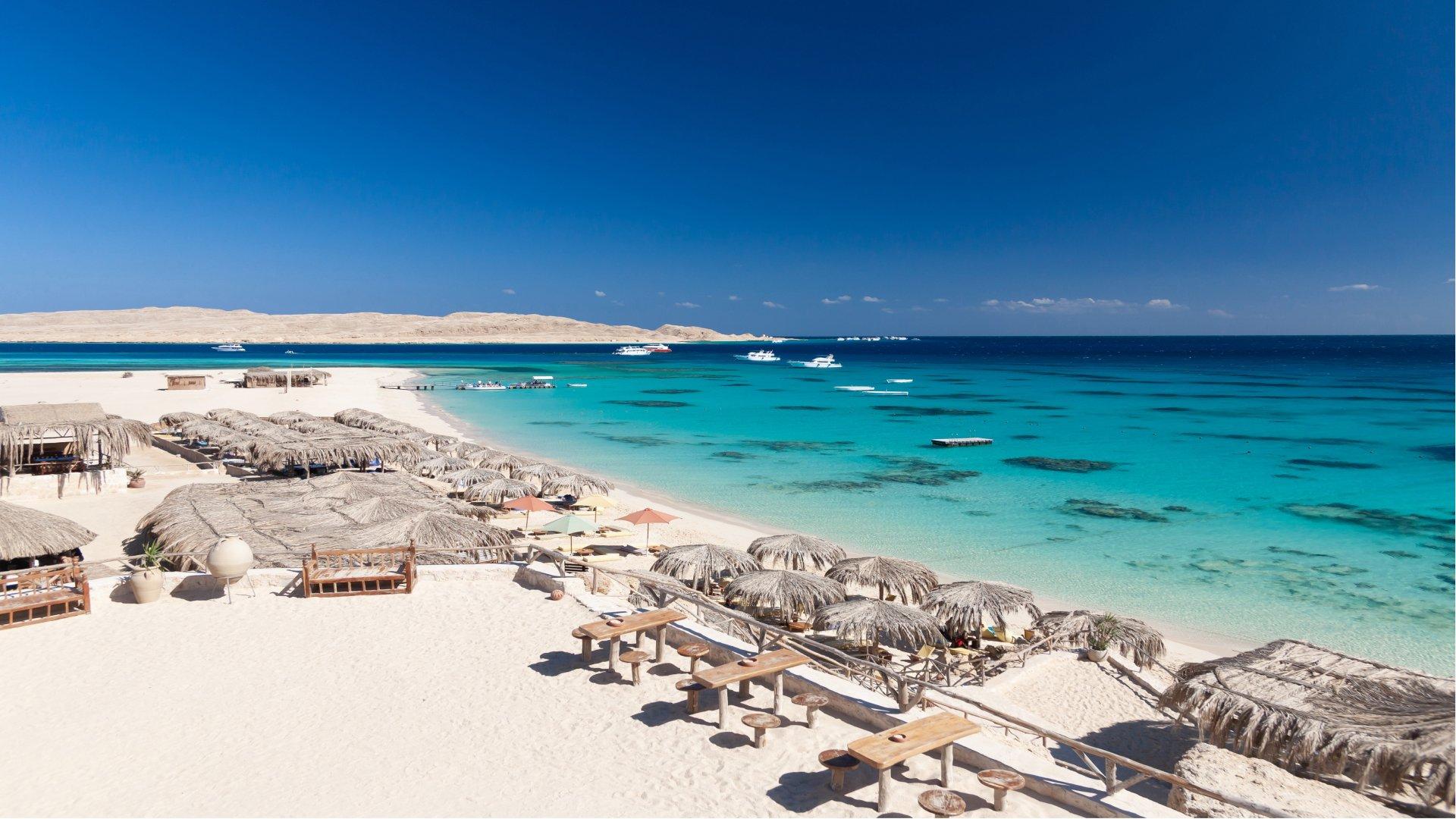
The Red Sea coast is hot on land and close to ideal in the water. Hurghada averages 37.5 C in August with a sea temperature of 28 C, and further south Marsa Alam sits near 35.6 C with the water reaching 29 C, warm enough that plenty of divers skip the wetsuit entirely. Visibility is excellent, and the northerly wind that makes the beach bearable also makes this the strongest season for kitesurfing.
The rhythm is the same as inland: get on the water early. A morning boat out to Giftun Island for snorkelling has you in the sea before the deck becomes uncomfortable and back before the worst of the afternoon. Water this warm also stresses coral, so reef-safe sunscreen and a hands-off approach matter more in August than at any other time.
Planning a July or August Trip
Summer suits a particular traveller: happy to be up before dawn, disciplined about the middle of the day, more interested in an empty Karnak than a comfortable one. It suits repeat visitors, divers, photographers and anyone tied to school holidays. Alexandria and the Red Sea work almost without qualification. It does not suit a first-time march through Upper Egypt, or the desert at all.
If your dates land in July or August, build the itinerary around the heat rather than the map: fewer sites per day, shorter drives, more nights in fewer places, and an honest account of what you will do between eleven and four. Pack for it properly, using our Egypt packing checklist with the hot months in mind, and ask us early which evening openings fall on your dates, because they shift through the season. Get the structure right and August stops being an endurance test. It becomes the quietest look you will ever get at the loudest country in the ancient world.