DestinationsSiwa Oasis

Siwa Oasis

A remote desert paradise near the Libyan border — salt lakes, ancient oracles, and Berber culture.

Best For:Desert adventure, Berber culture & natural springs
Suggested Duration:2–3 days
Location:560 km west of Cairo, near the Libyan border
Getting There:8–9 hours by car from Cairo, or bus from Marsa Matruh
Best Season:October – April
Language:Siwi (Berber) and Arabic

Overview

Siwa Oasis is one of Egypt's most isolated and enchanting settlements, lying deep in the Western Desert near the Libyan border. Famous for its salt lakes, freshwater springs, ancient mud-brick fortress, and the Oracle Temple where Alexander the Great was declared a god, Siwa offers a unique blend of Berber (Amazigh) culture, stunning natural beauty, and ancient history far from the usual tourist trail.

Gallery
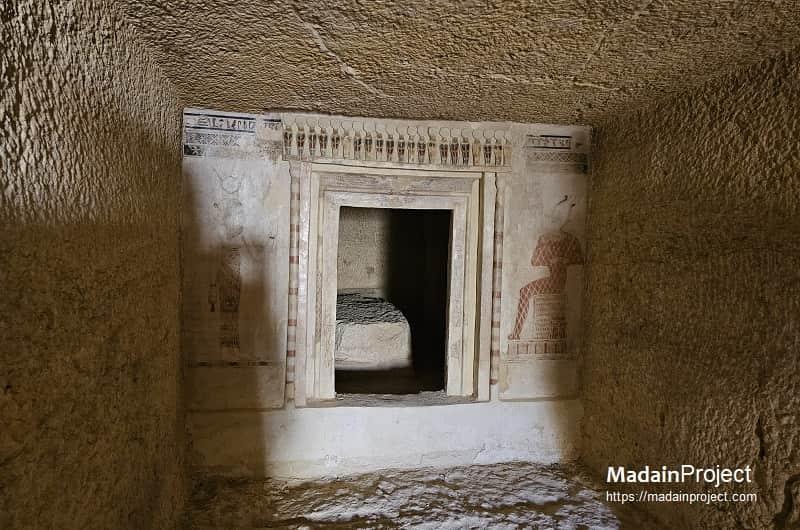
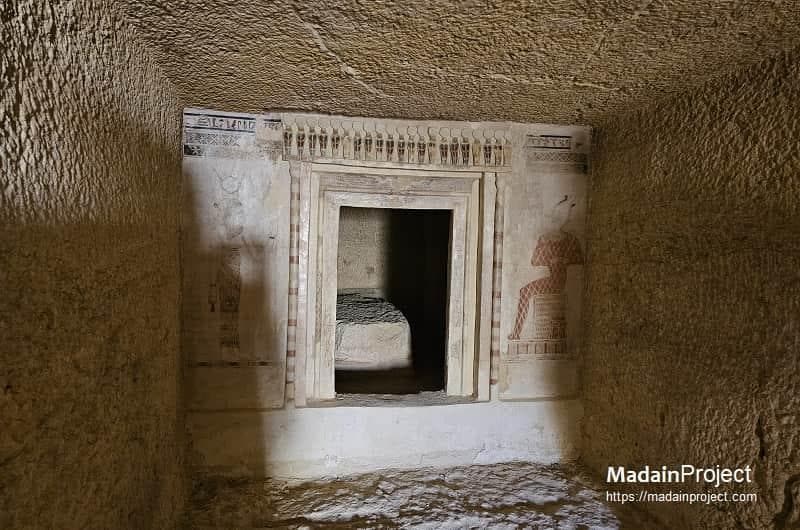
Painted hieroglyphic doorway inside an ancient Egyptian rock-cut tomb at Siwa Oasis
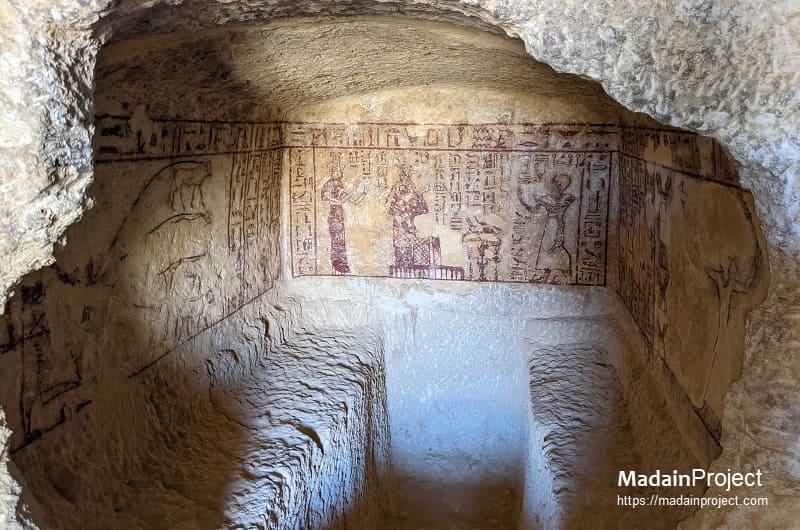
Interior of an ancient Egyptian rock-cut tomb with painted hieroglyphic murals on the back wall.
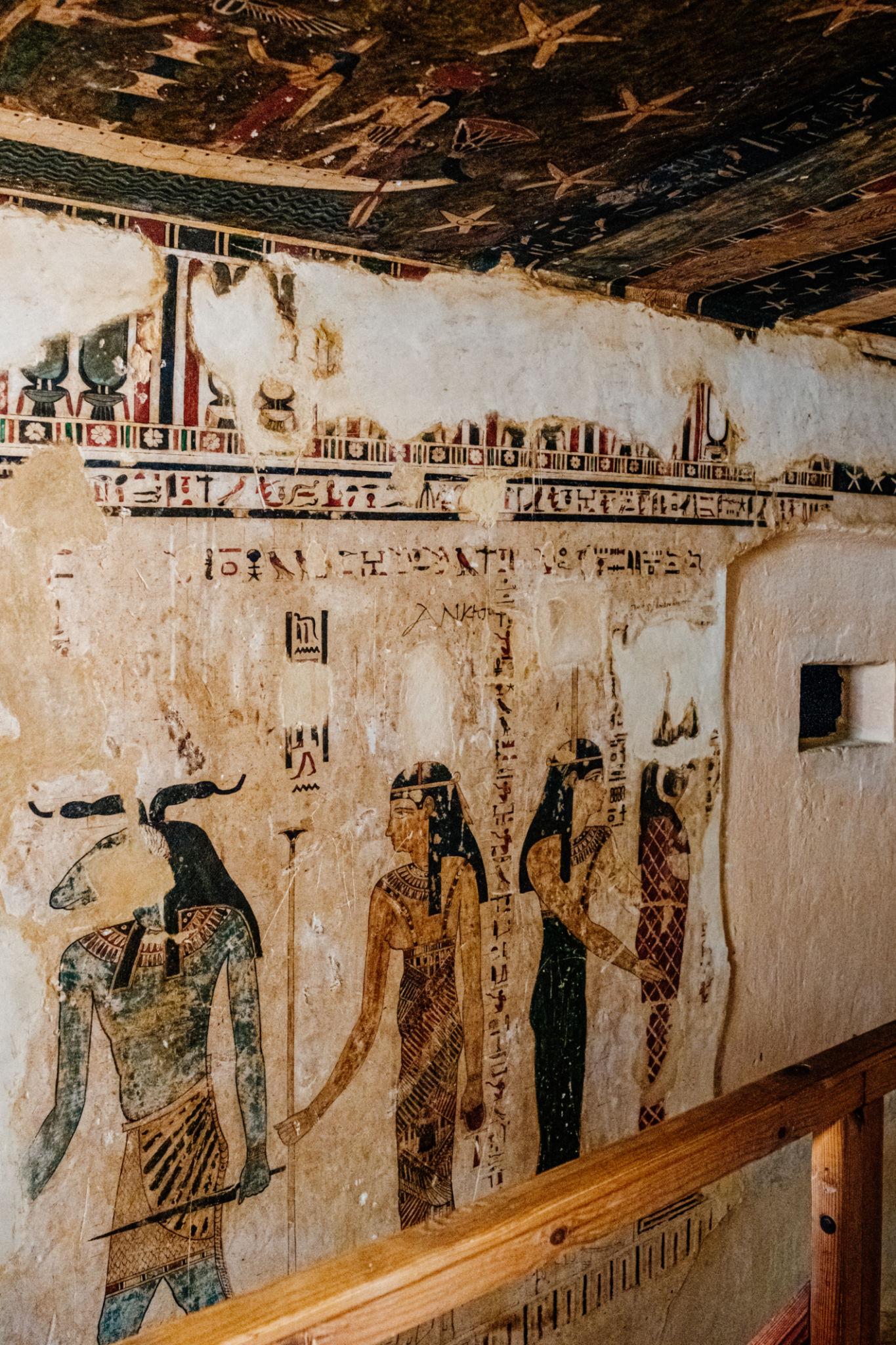
Colorful ancient Egyptian murals with hieroglyphs and deities inside a Siwa tomb
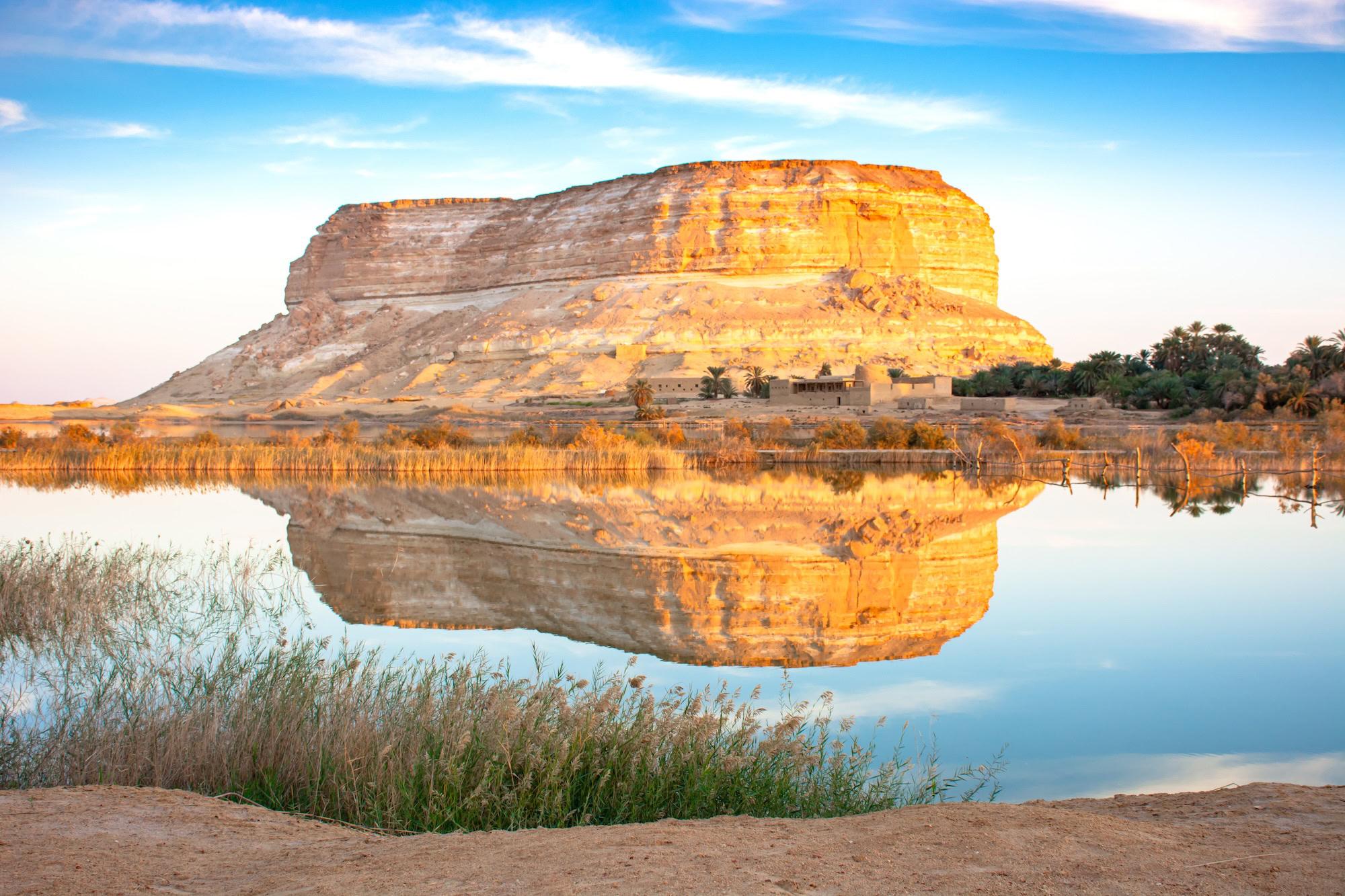
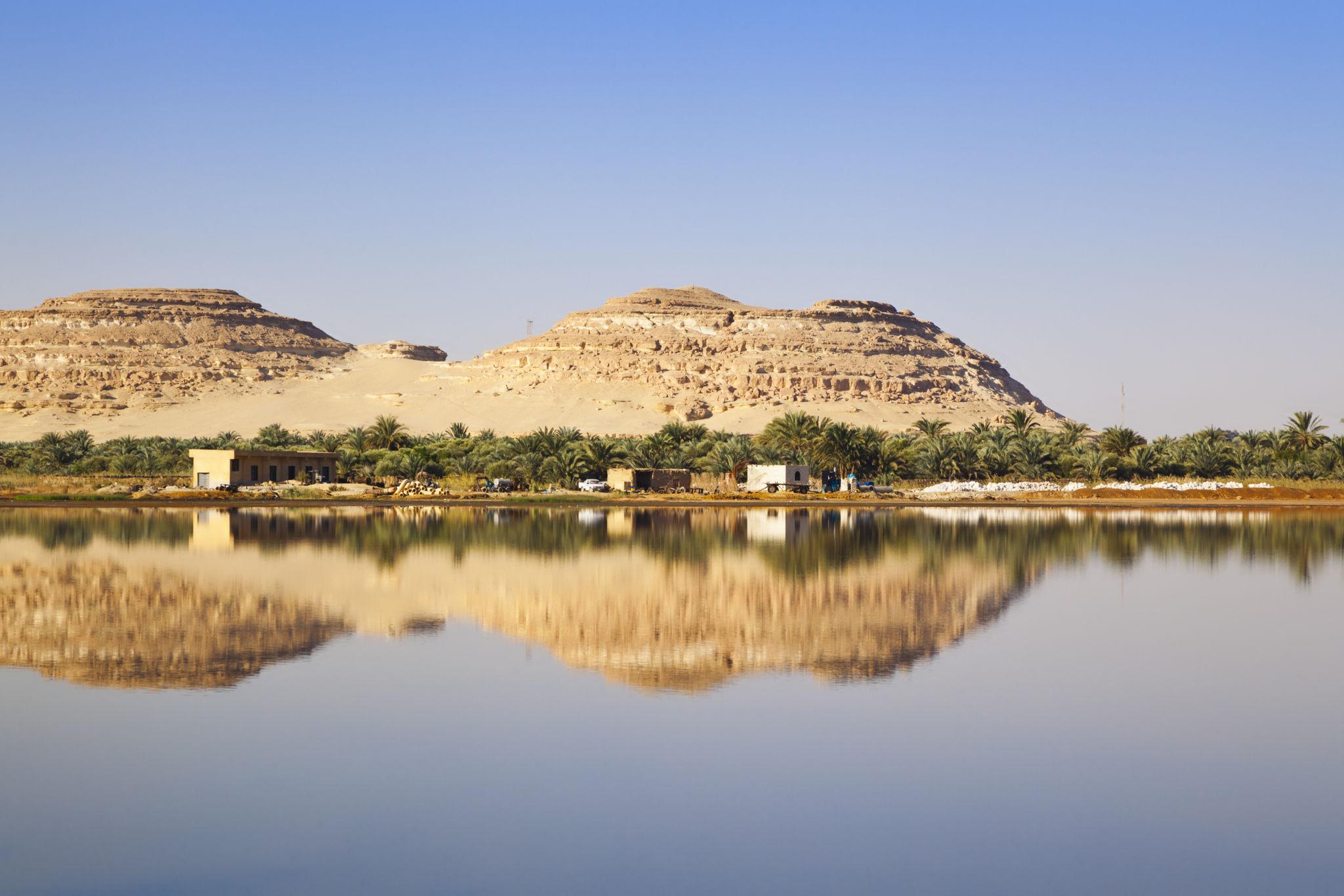
A golden sandstone mesa reflected in a still desert lake at Siwa Oasis, Egypt
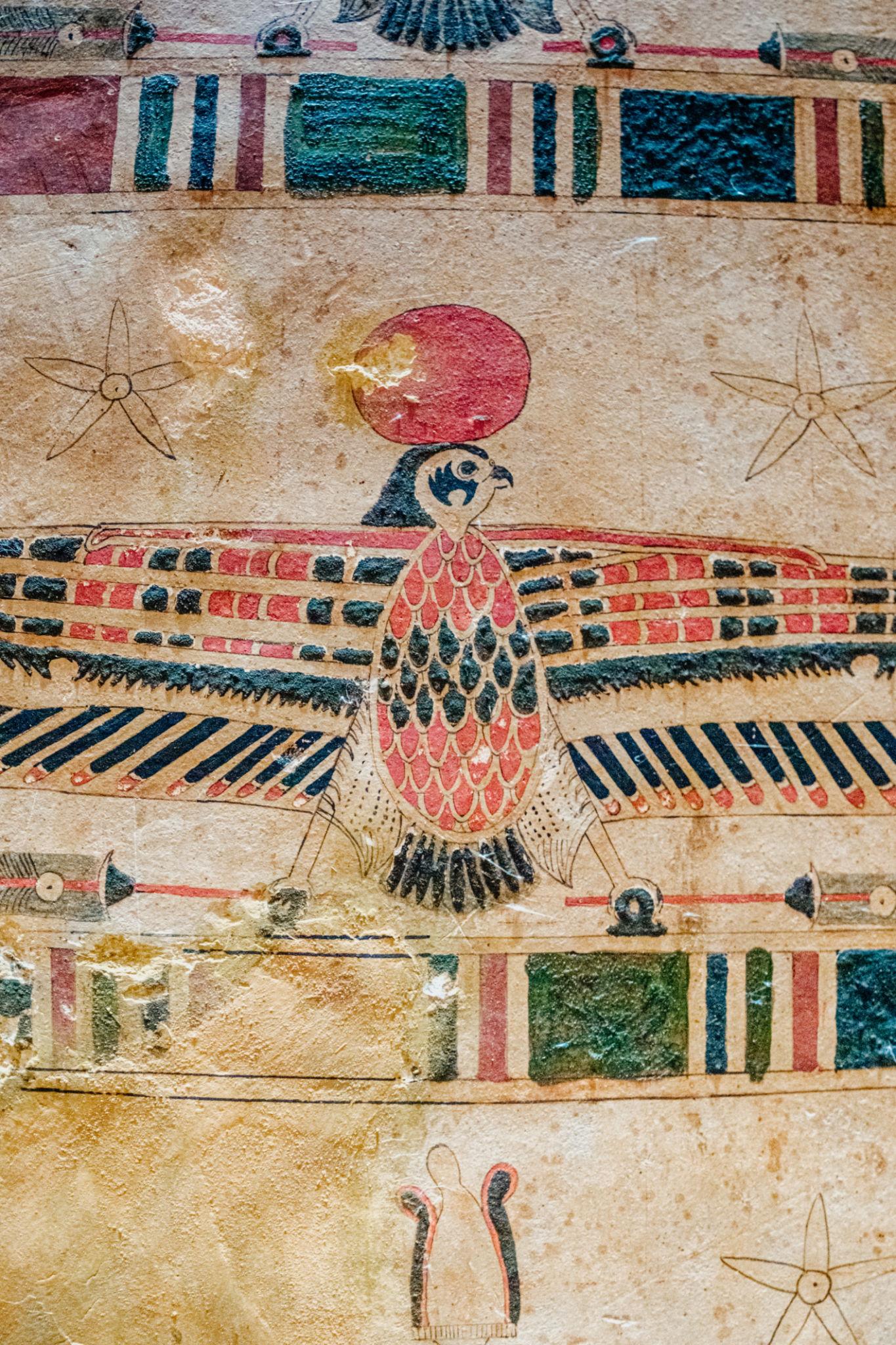
Colorful ancient Egyptian falcon deity with spread wings painted on a sarcophagus surface
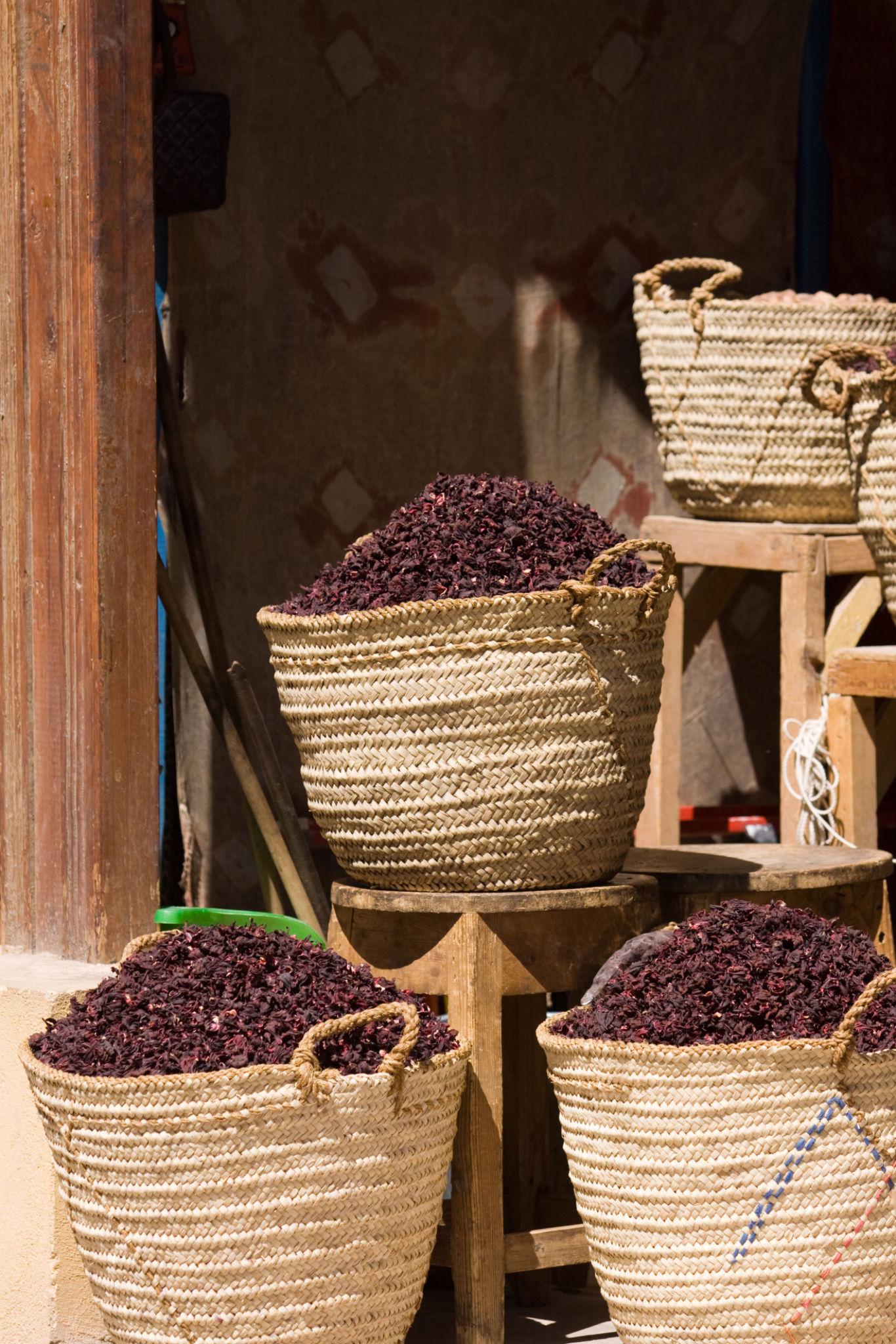
Large woven straw baskets overflowing with dried hibiscus flowers at a Siwa market stall
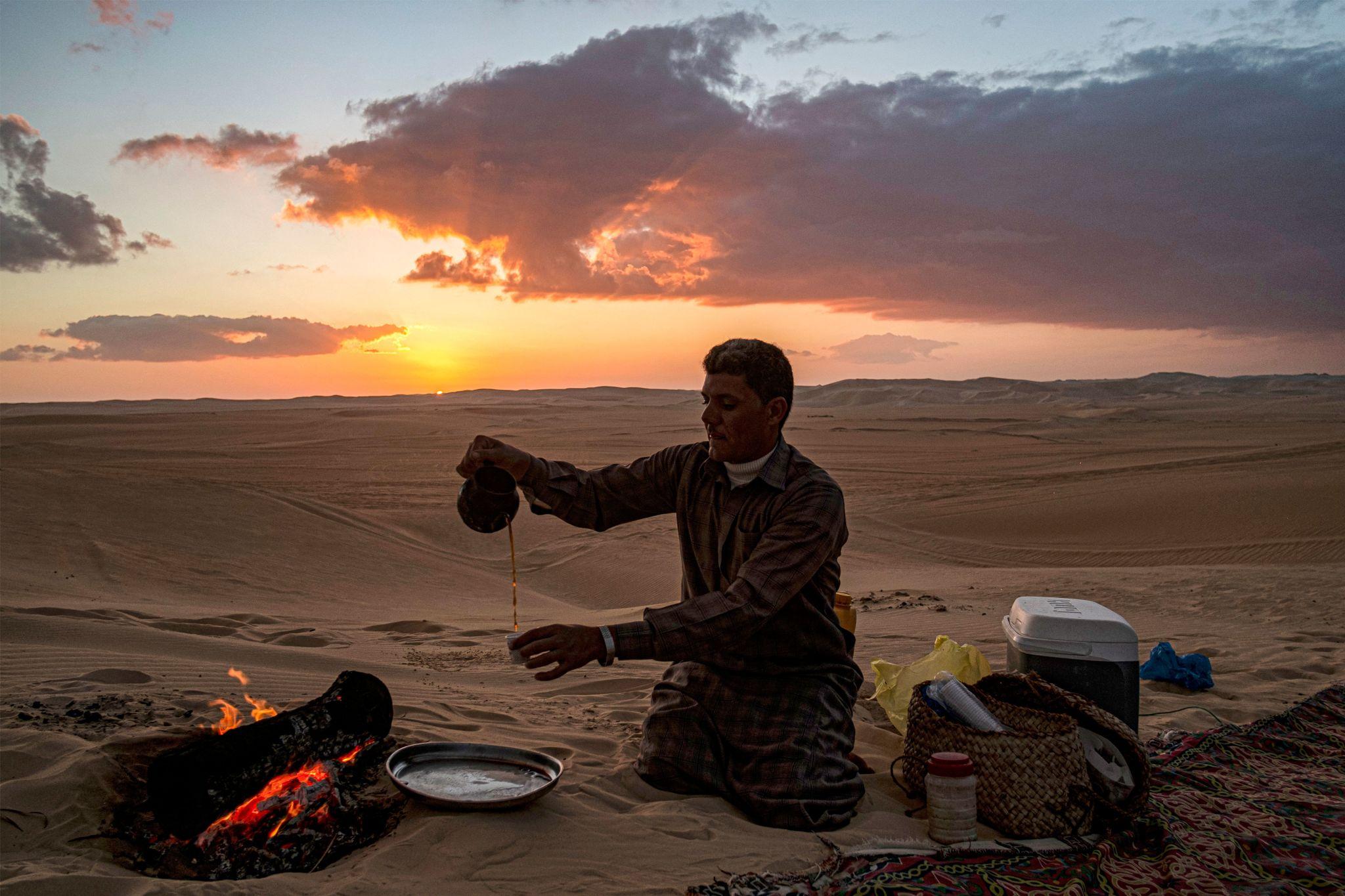
A man pours tea beside a campfire on Siwa's sand dunes at sunset
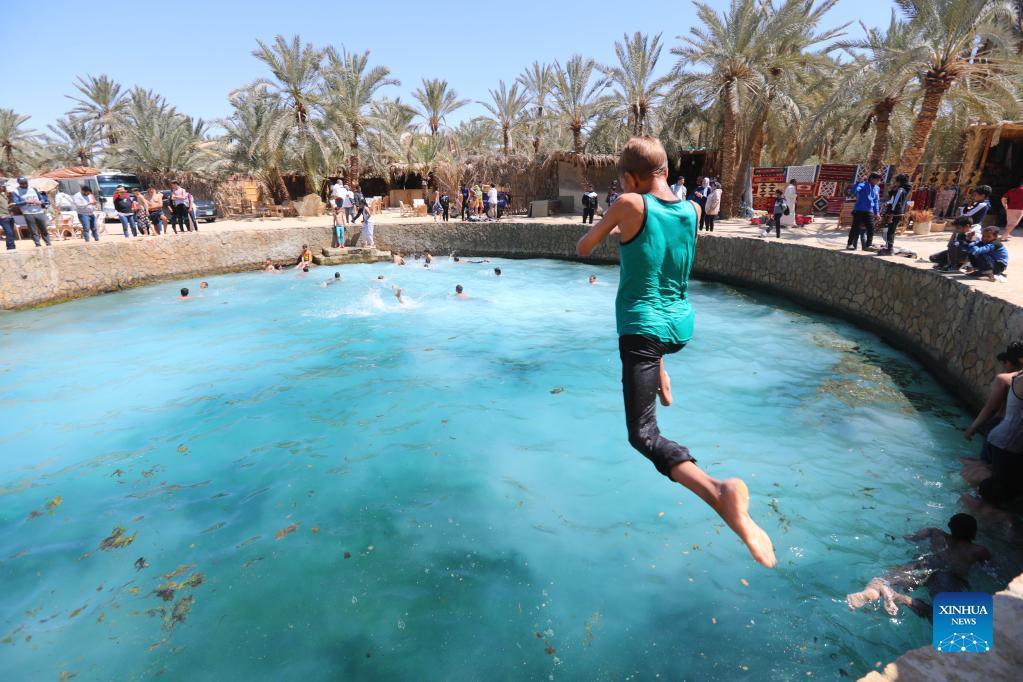
A boy in a green shirt leaps into a turquoise natural spring pool surrounded by palm trees.
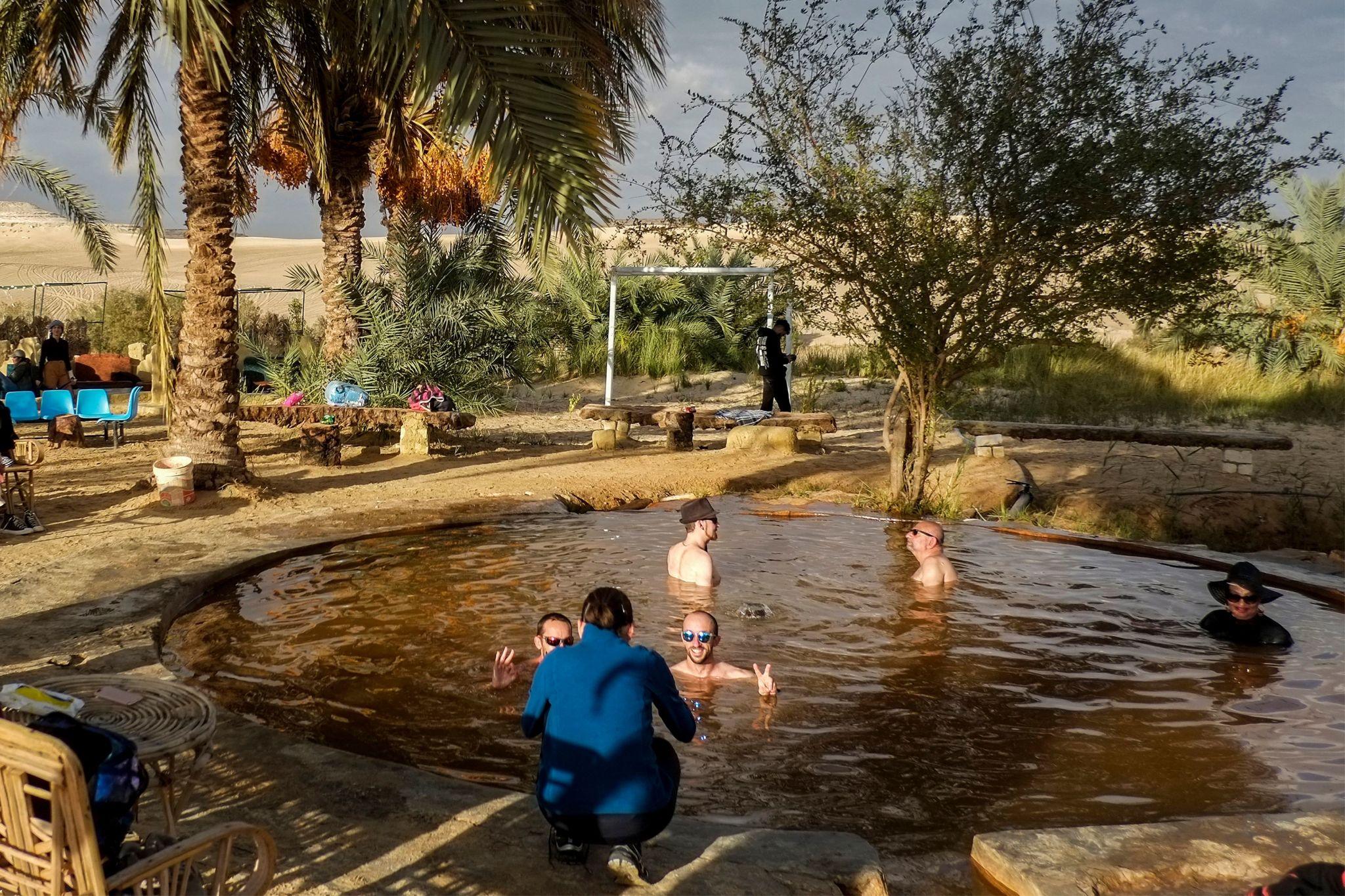
Tourists bathing in a natural hot spring pool surrounded by palm trees and sand dunes
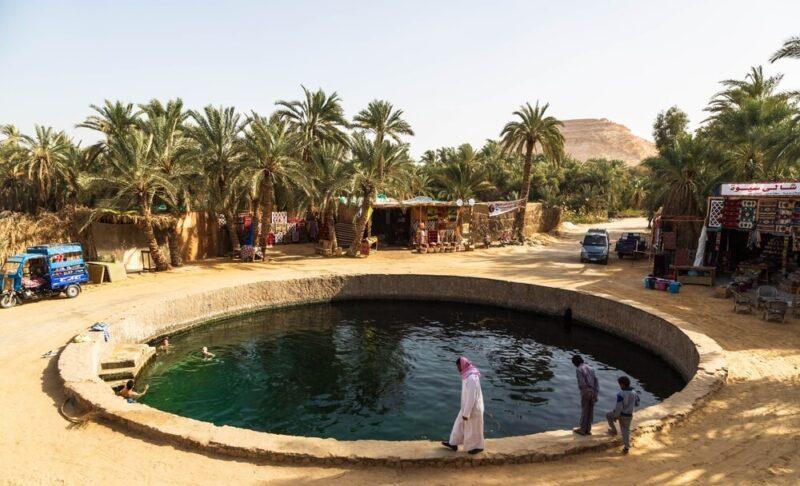
Locals gather around a circular natural spring pool surrounded by palm trees and desert shops.
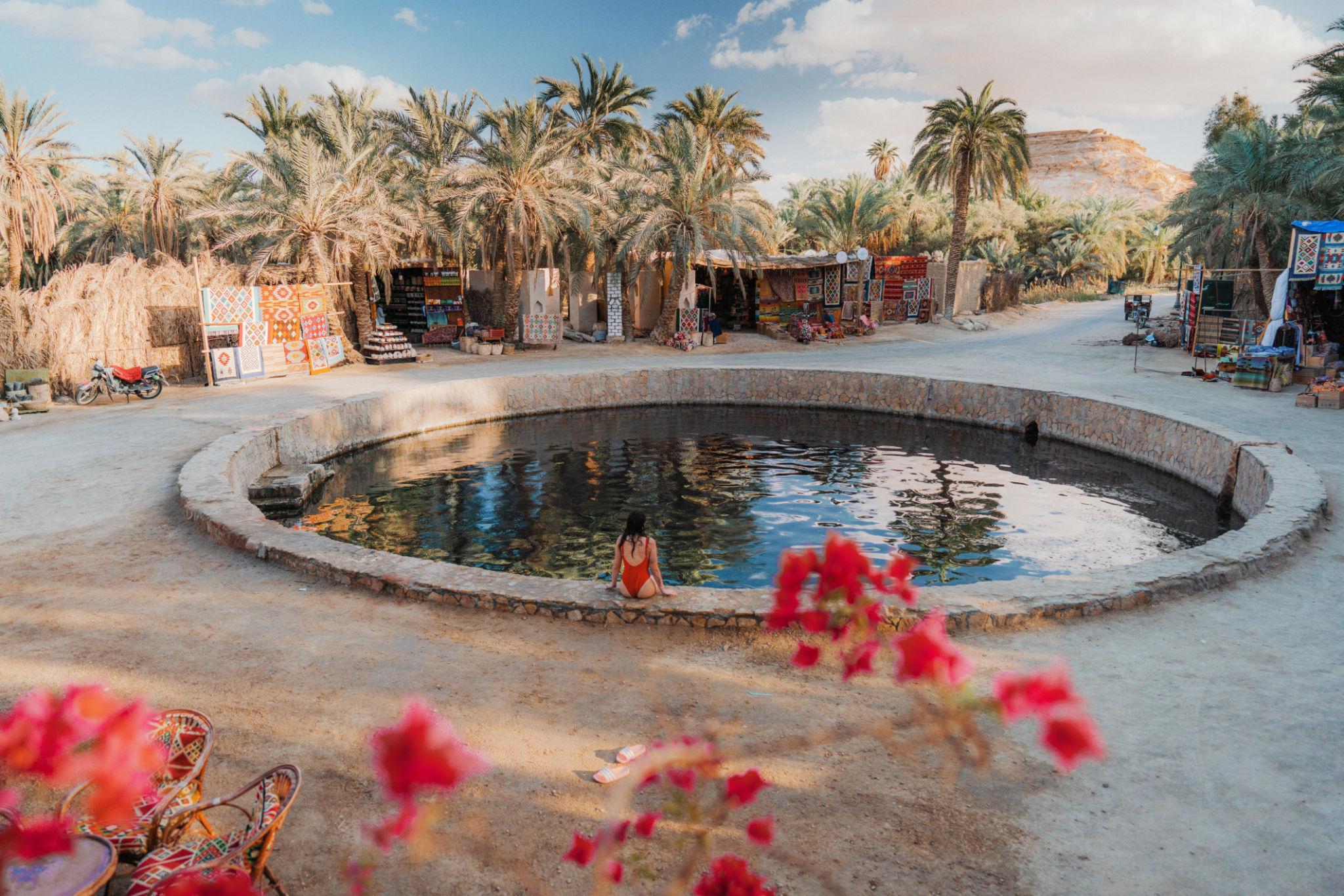
A woman in a red swimsuit sits at the edge of a circular natural spring pool surrounded by palm trees and market stalls
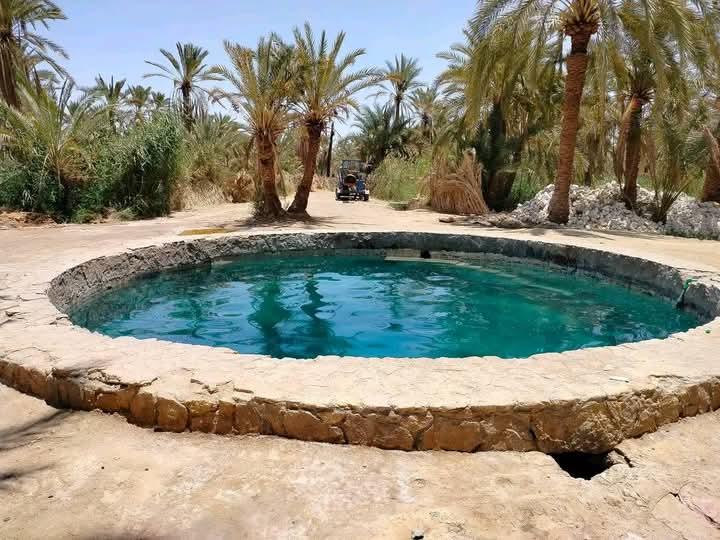
A circular turquoise natural spring pool surrounded by stone walls and palm trees in Siwa Oasis
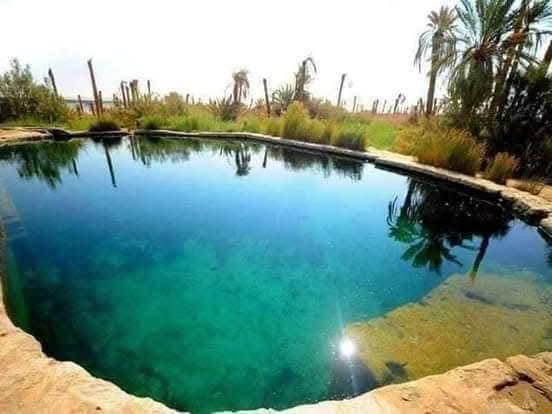
A crystal-clear turquoise natural spring pool surrounded by palm trees in Siwa Oasis
Clear turquoise natural spring pool surrounded by a stone wall and palm trees in Siwa Oasis
Aerial view of a circular turquoise natural spring surrounded by dense date palm trees in Siwa Oasis
A woman in a red swimsuit sits at the edge of a round natural spring pool surrounded by palm trees and colorful market stalls
Weathered Egyptian hieroglyphs carved into a dark stone wall at Siwa Oasis
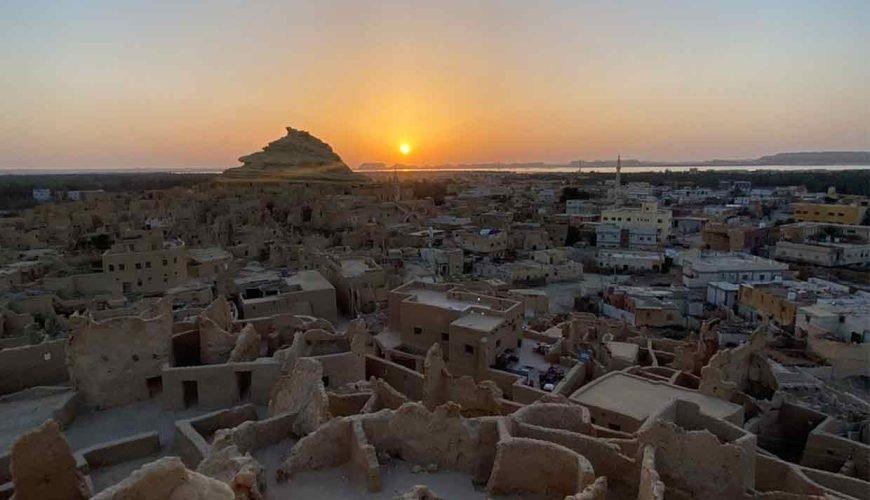
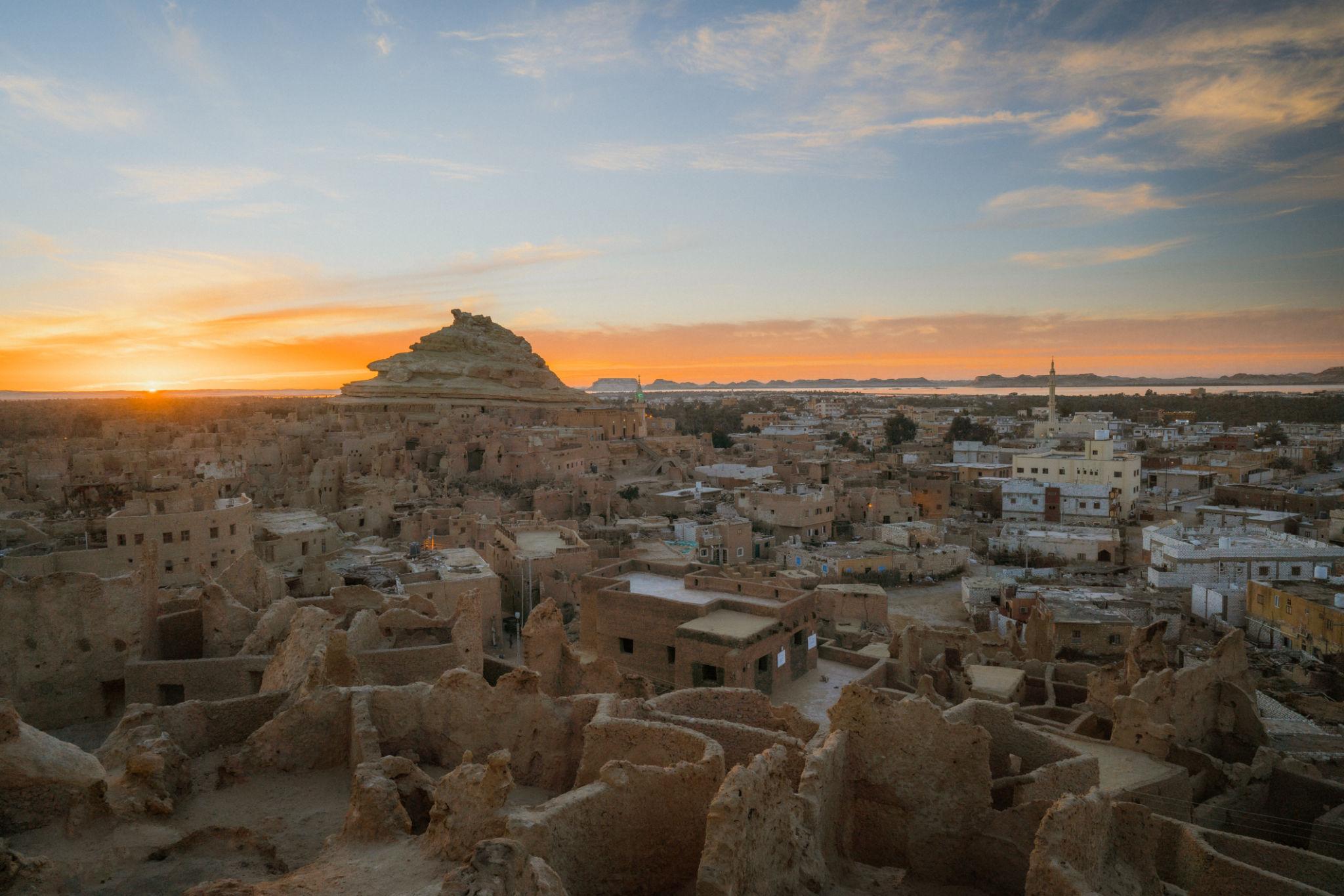
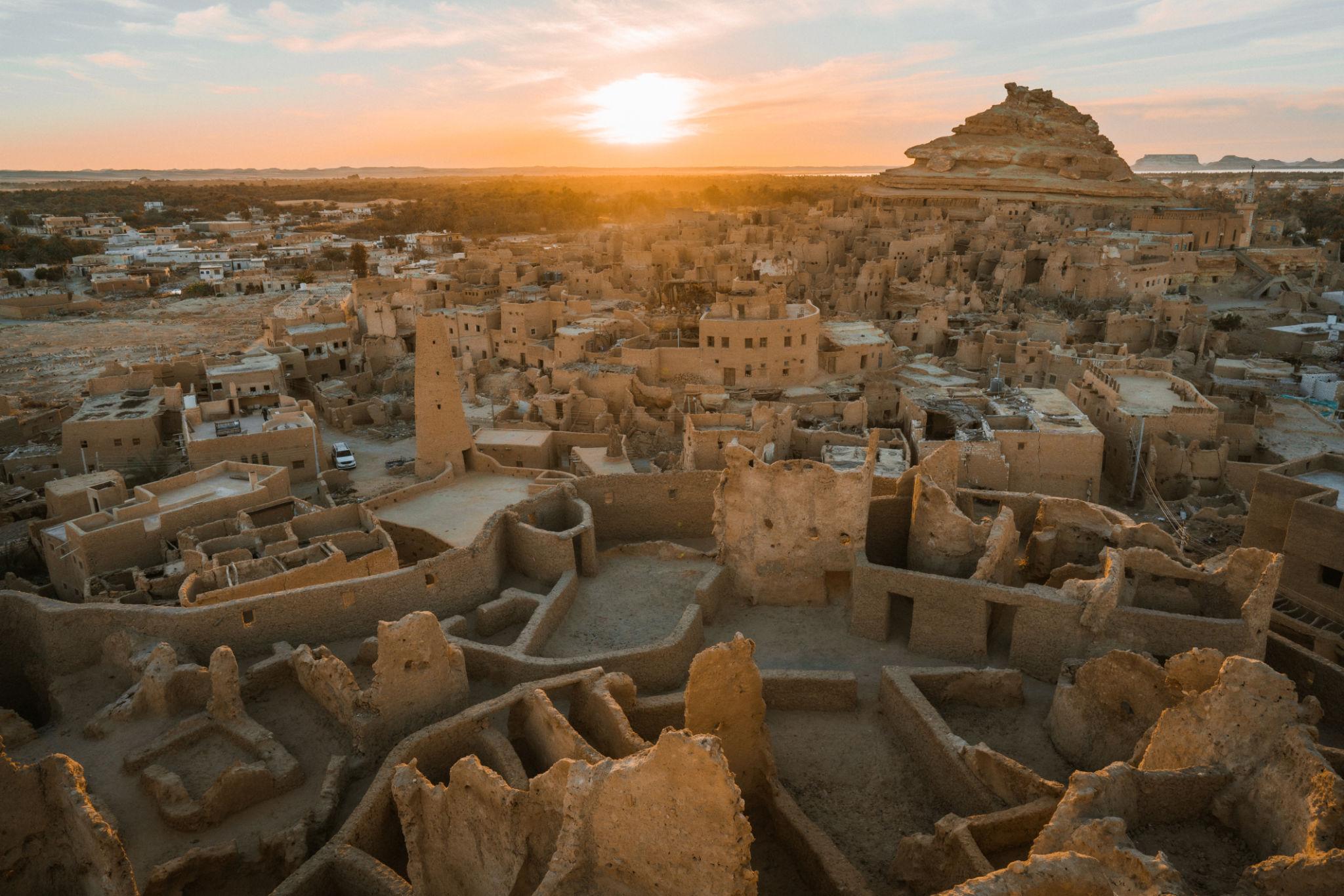
Aerial view of Siwa Oasis mud-brick ruins and town at sunset with rocky outcrop silhouetted
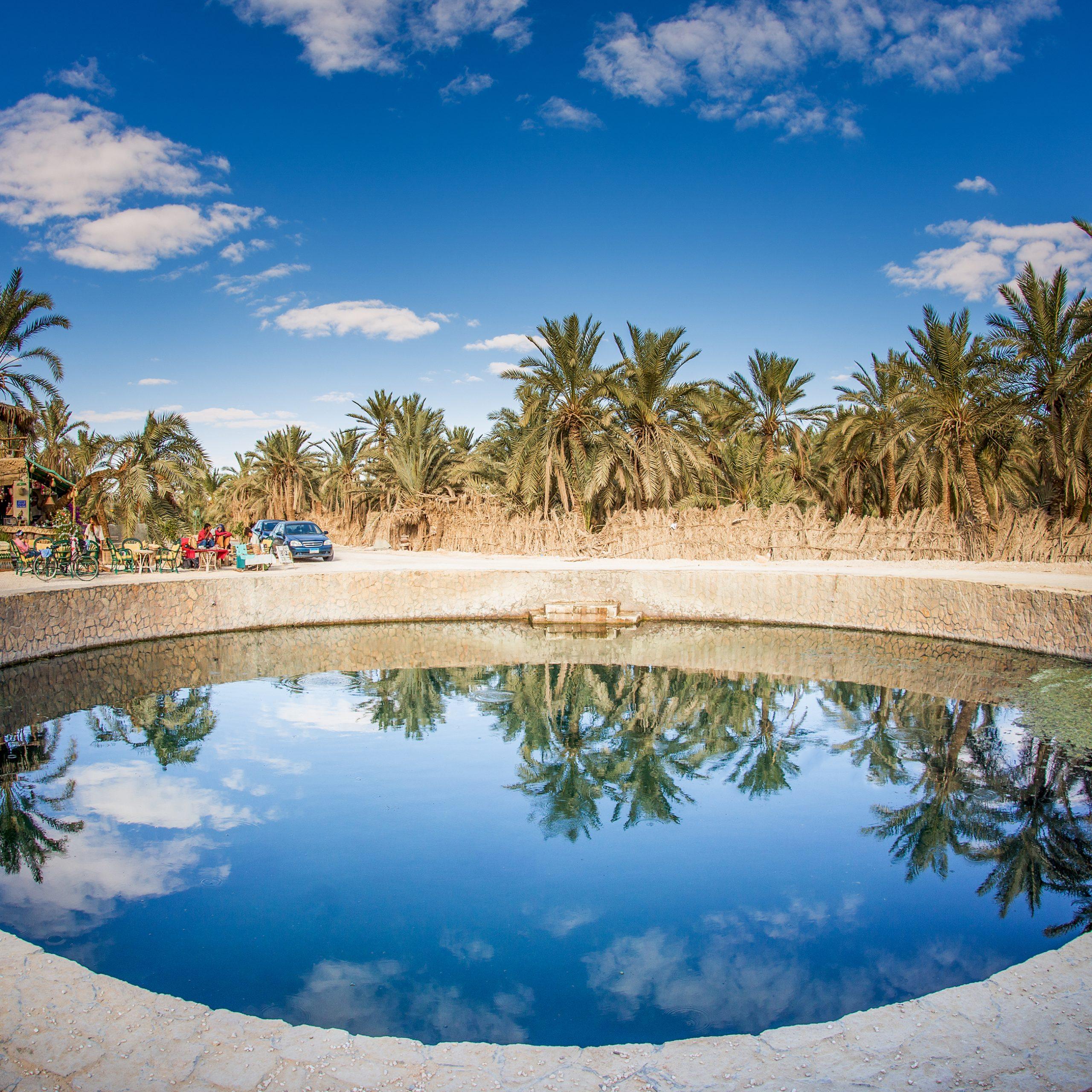
A circular natural spring pool reflecting palm trees and blue sky in Siwa Oasis
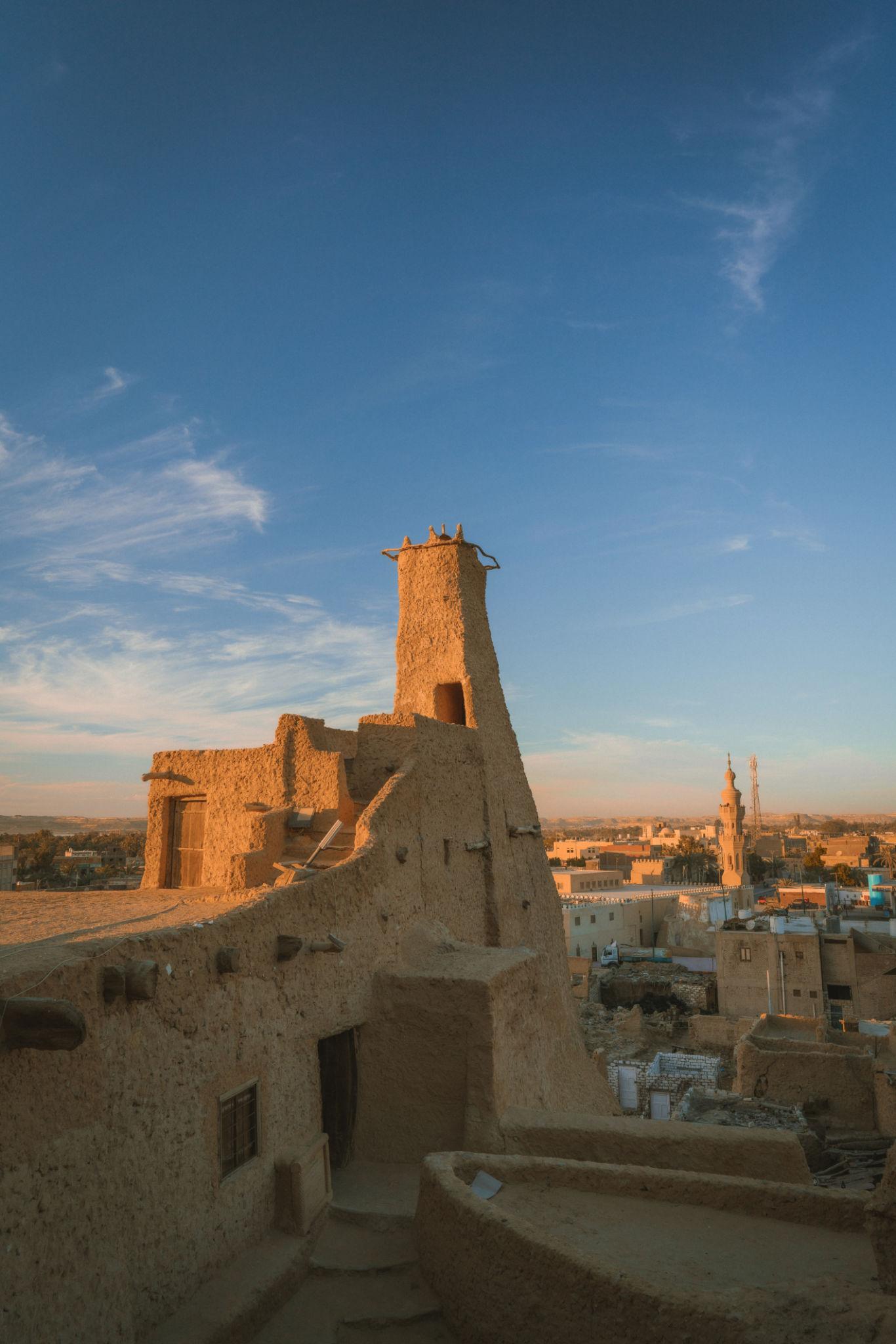
Ancient mud-brick Shali fortress tower glowing at sunset above Siwa Oasis town
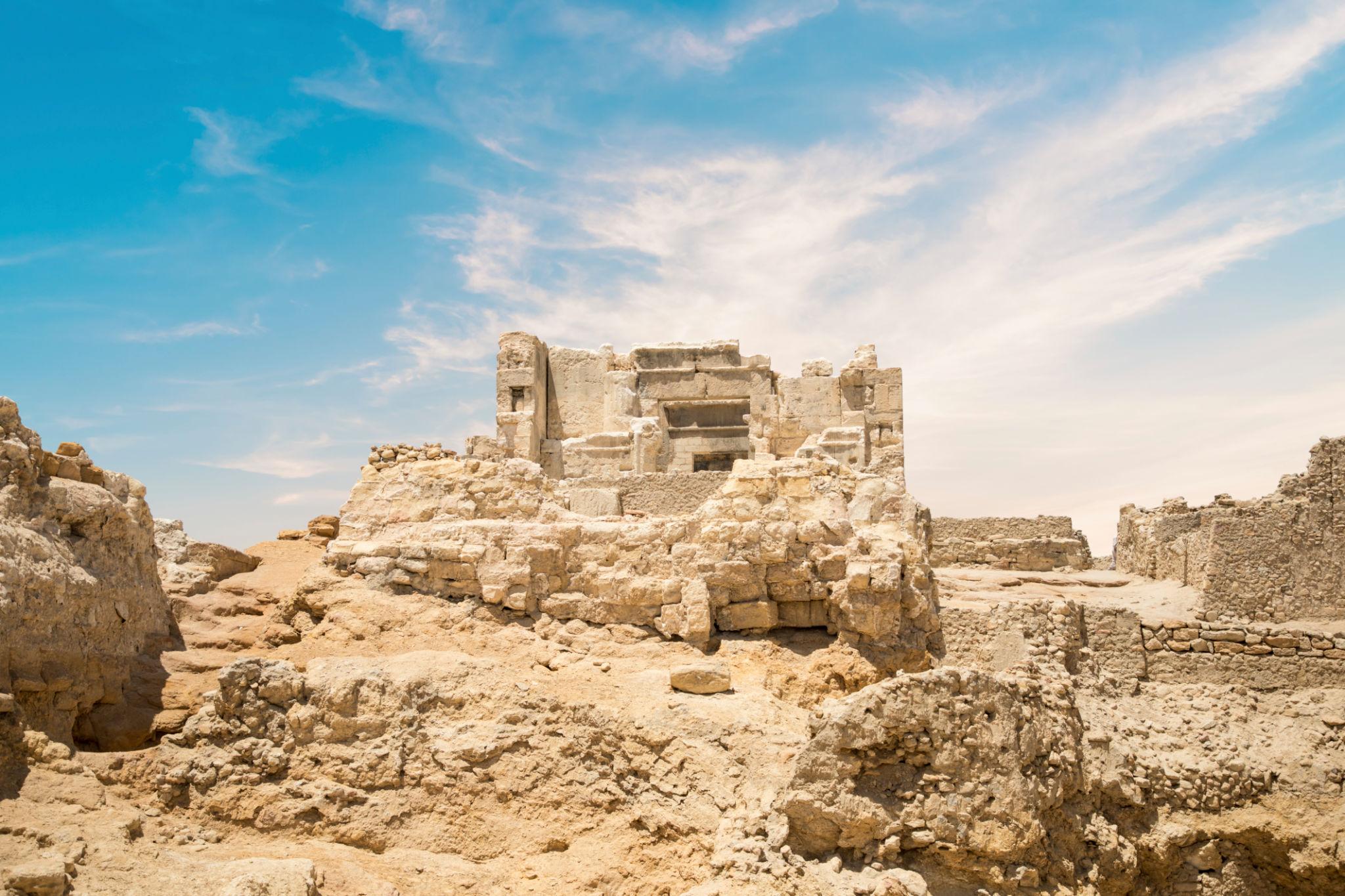
Ancient crumbling stone ruins of the Oracle Temple at Siwa Oasis under a blue sky
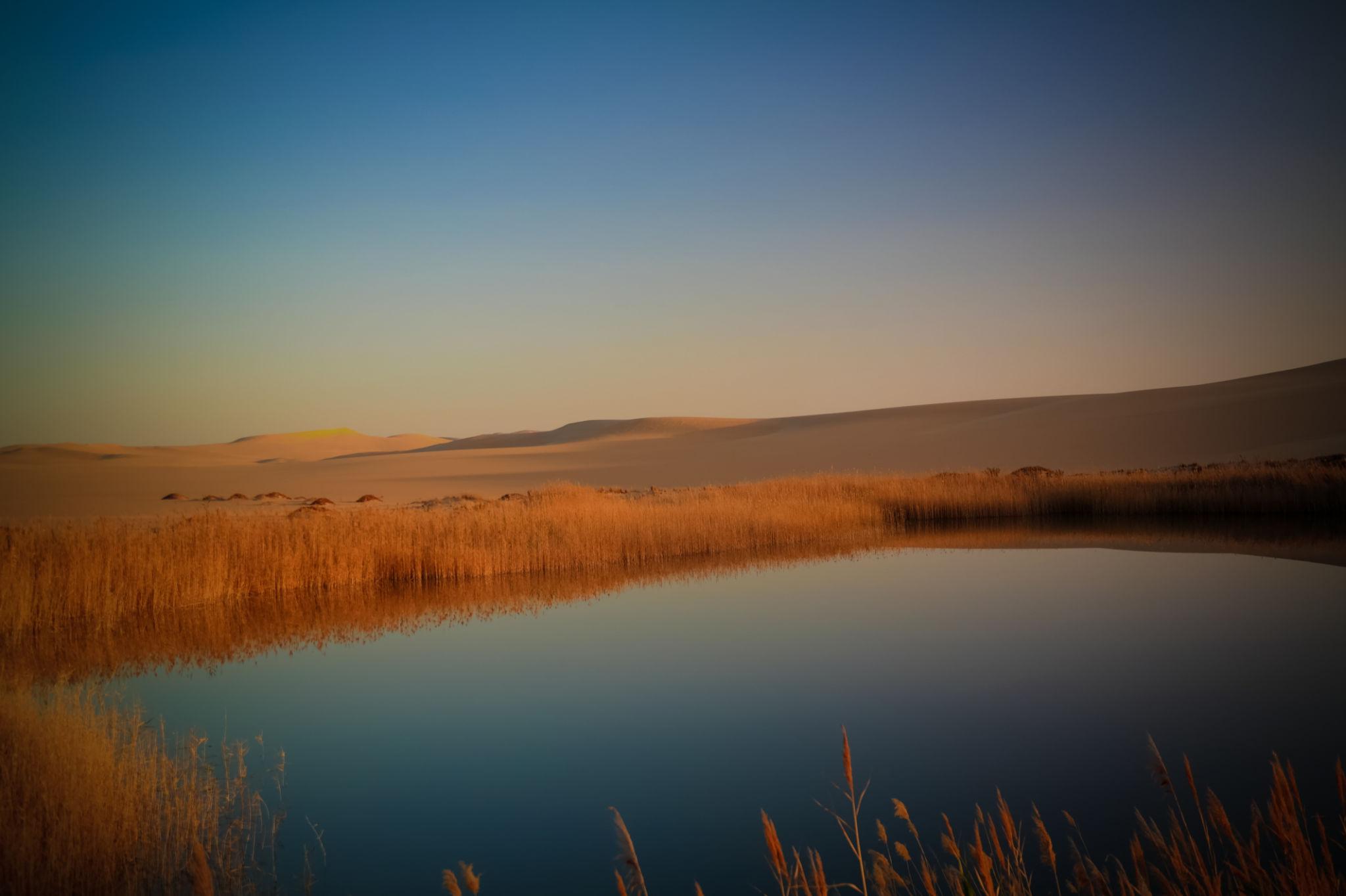
Golden reeds reflect in a still desert lake with sweeping sand dunes behind at dusk
Aerial view of Siwa's mud-brick ruins and town at sunset with a rocky outcrop in the background
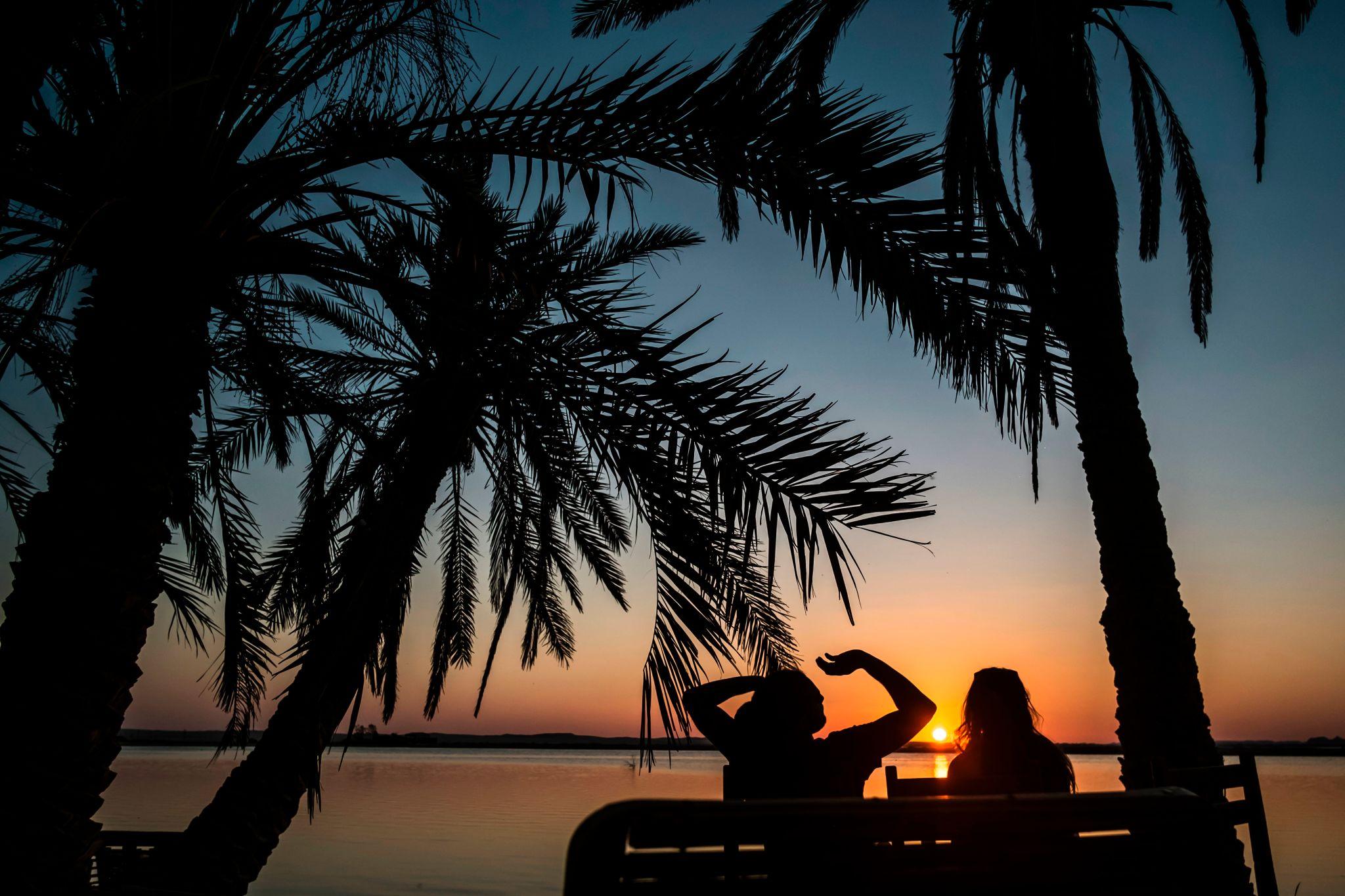
Two people silhouetted against a vivid sunset over Siwa Oasis lake, framed by palm trees
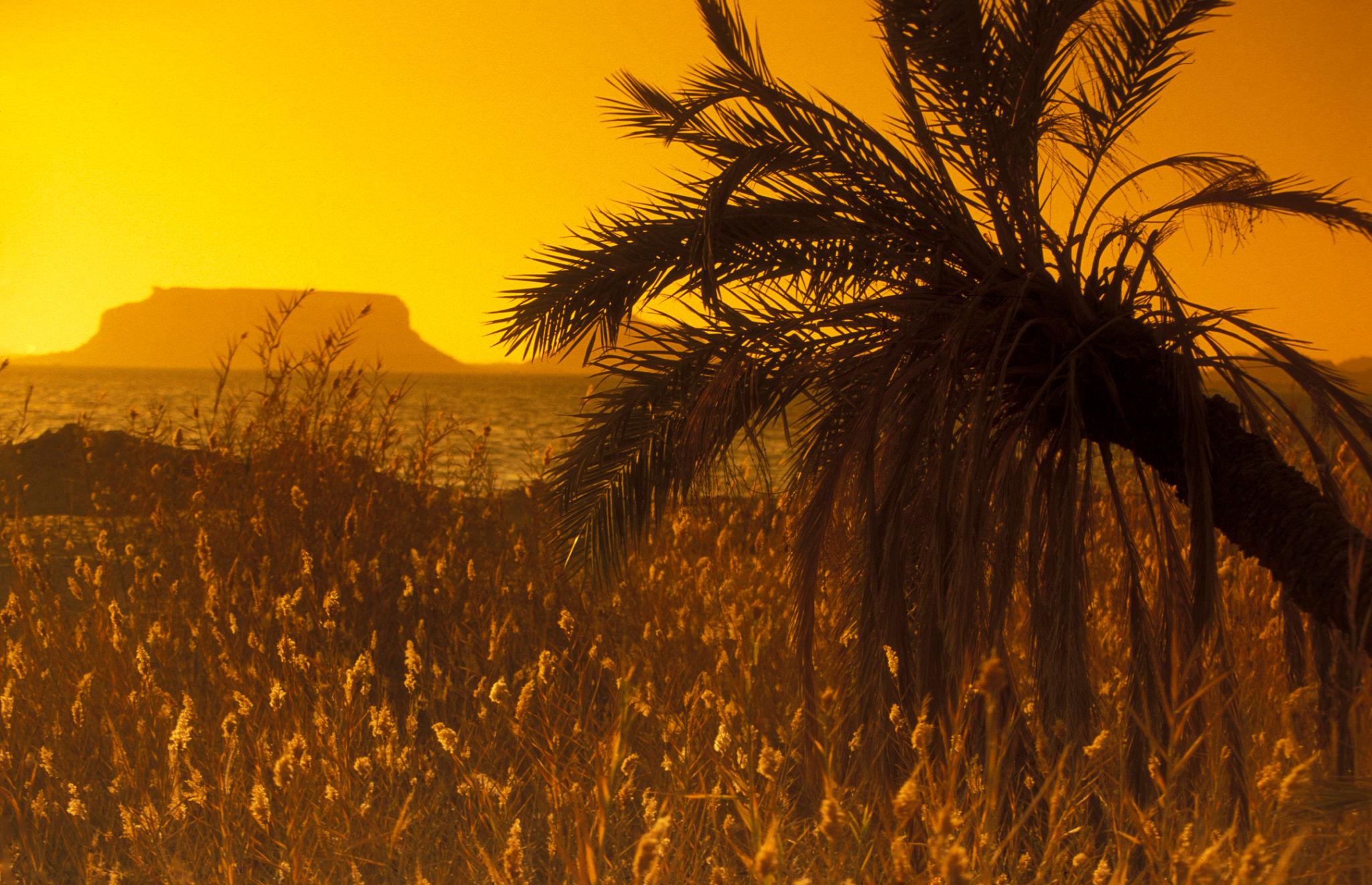
Palm tree and golden reeds silhouetted against a glowing sunset over Siwa's lake
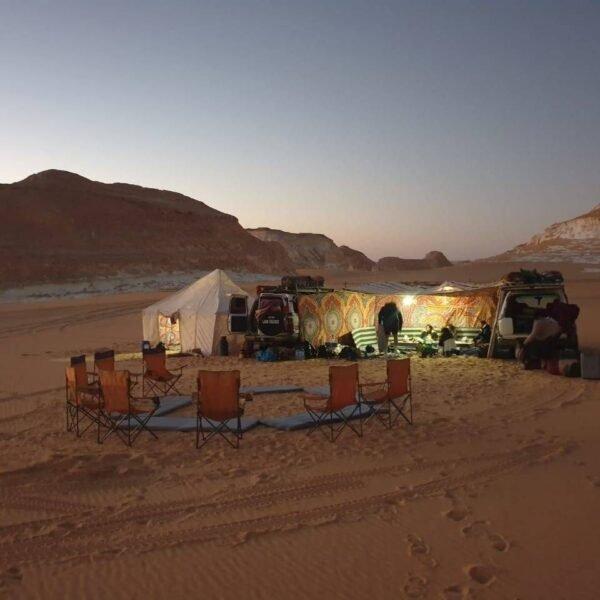
A glowing desert camp with circle of chairs and two 4x4 vehicles at dusk in Siwa.
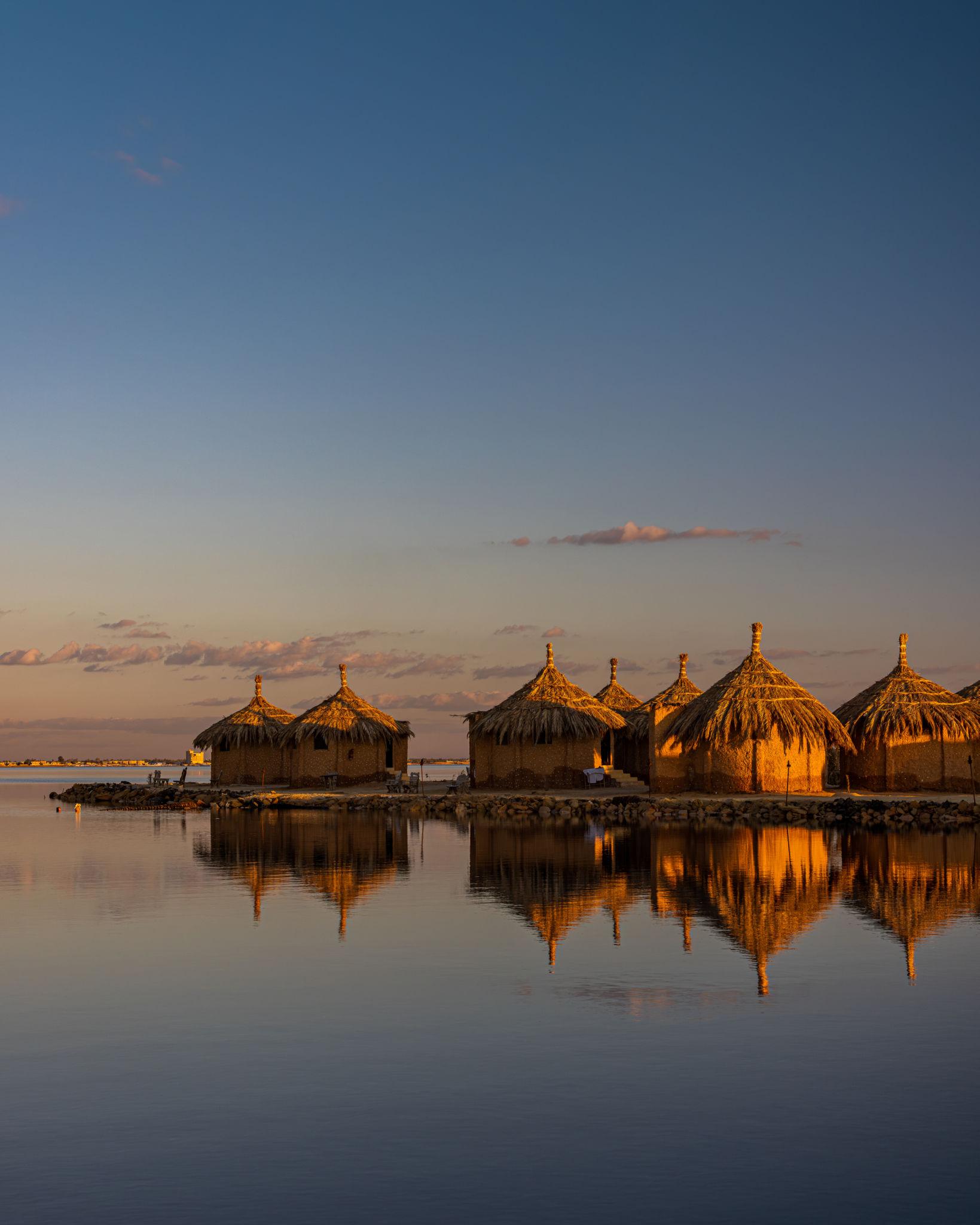
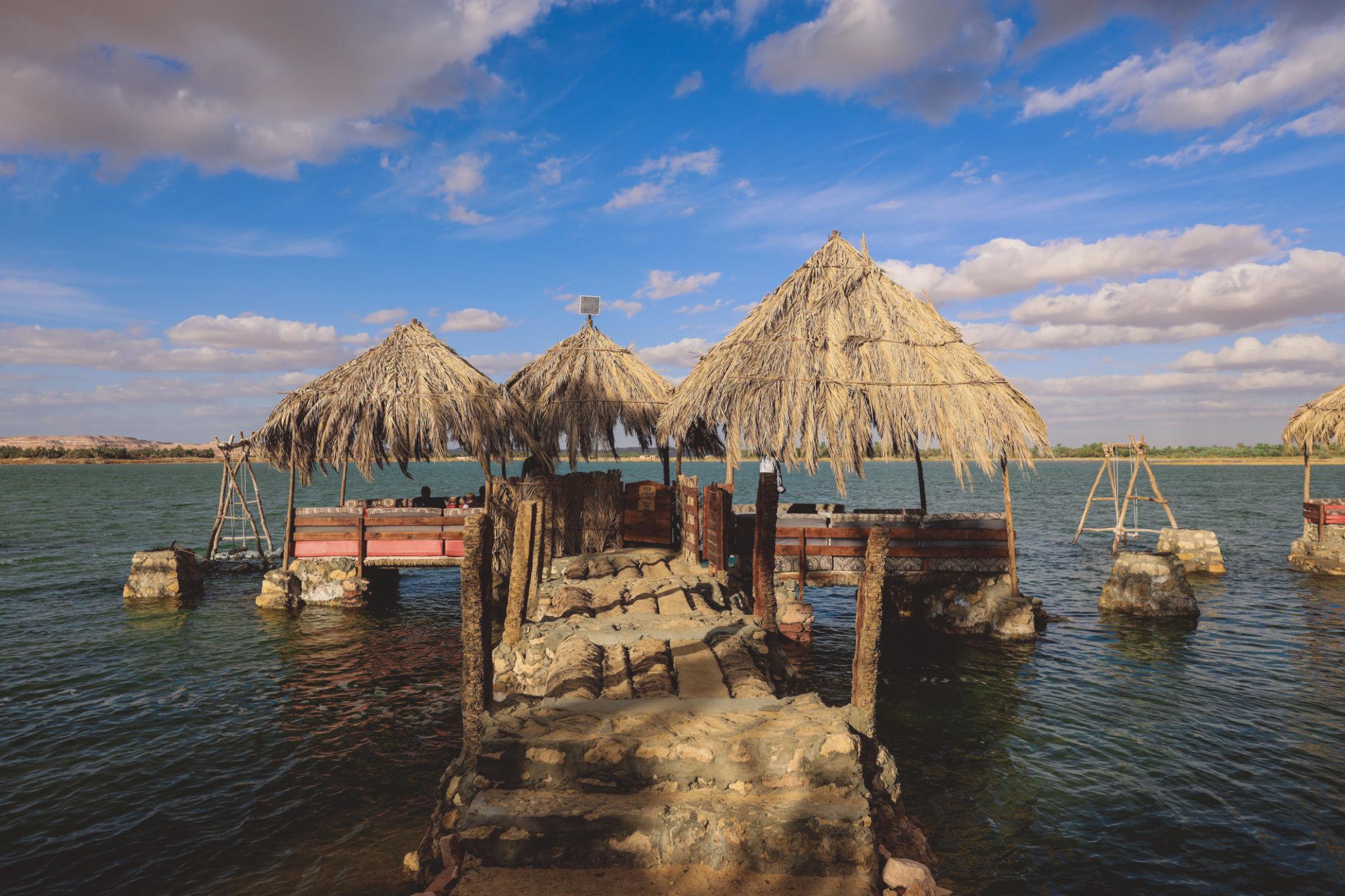
Thatched-roof huts reflected in a calm Siwa lake at sunset
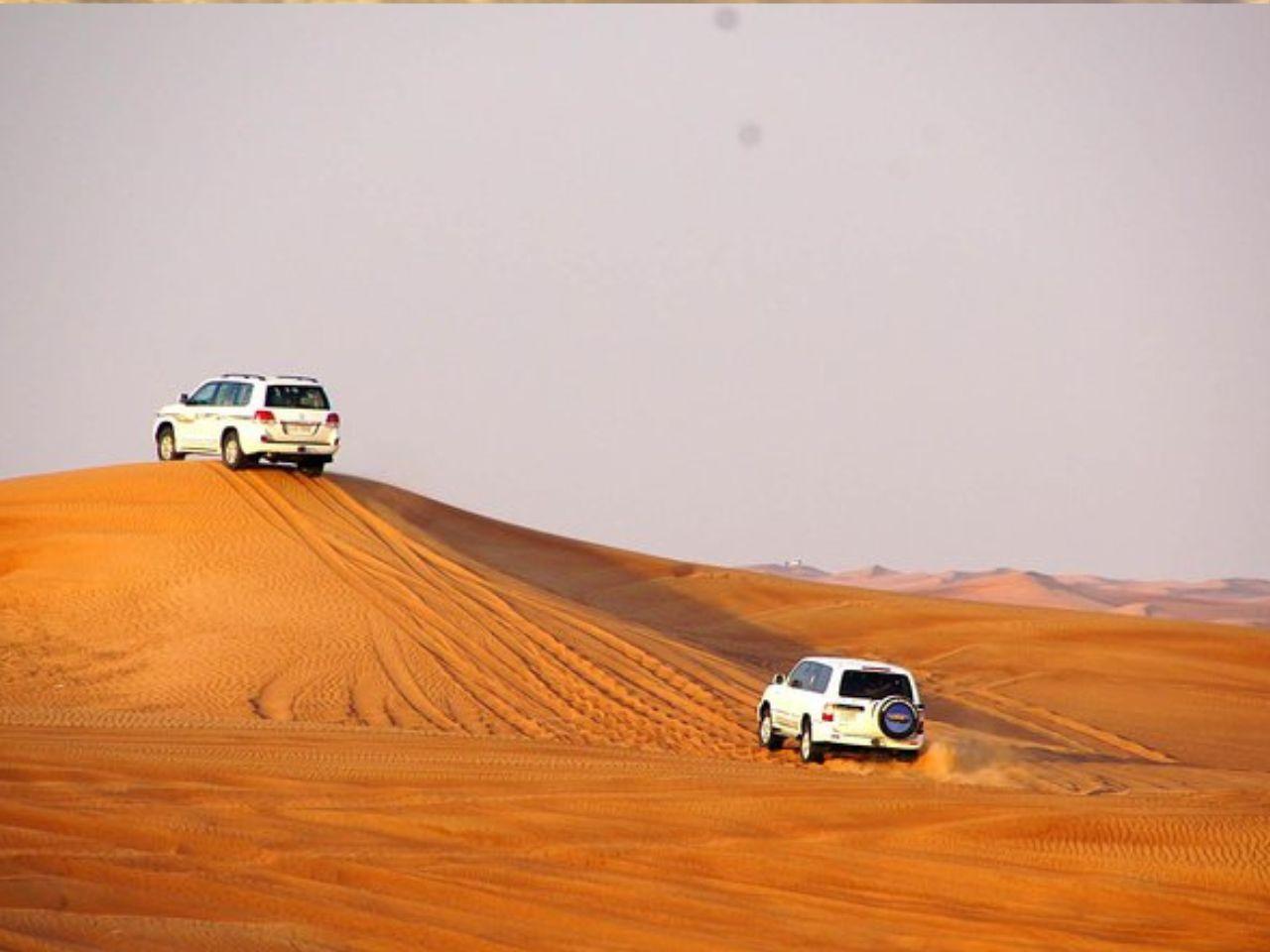
Two white 4x4 SUVs navigating steep orange sand dunes in the Siwa desert
Aerial view of Siwa's ancient mud-brick Shali fortress ruins glowing under a golden sunset
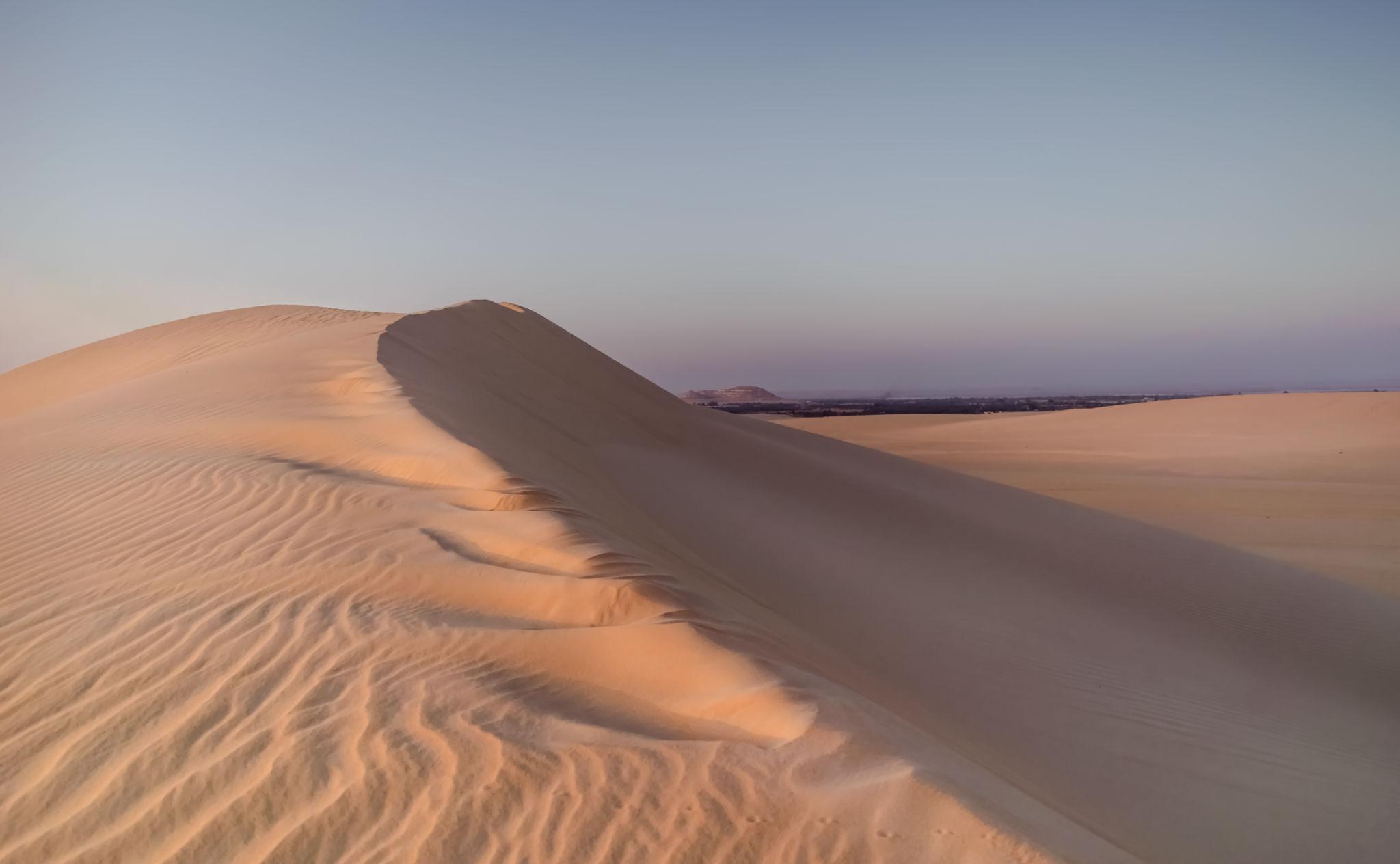
Sweeping golden sand dunes with a sharp shadowed ridge at sunset in Siwa Oasis
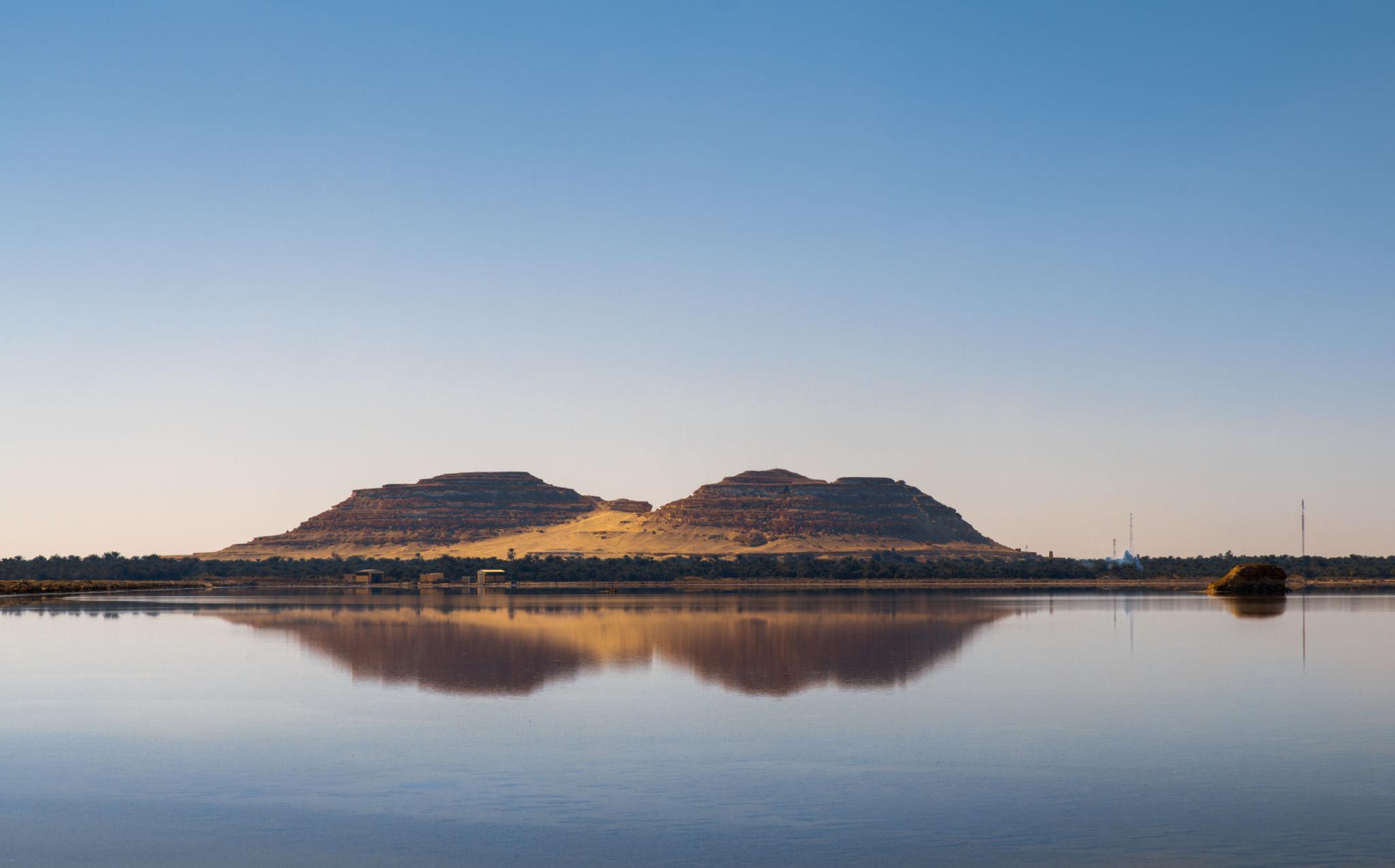
Two flat-topped sandstone buttes reflected in the still waters of a Siwa Oasis lake at dusk
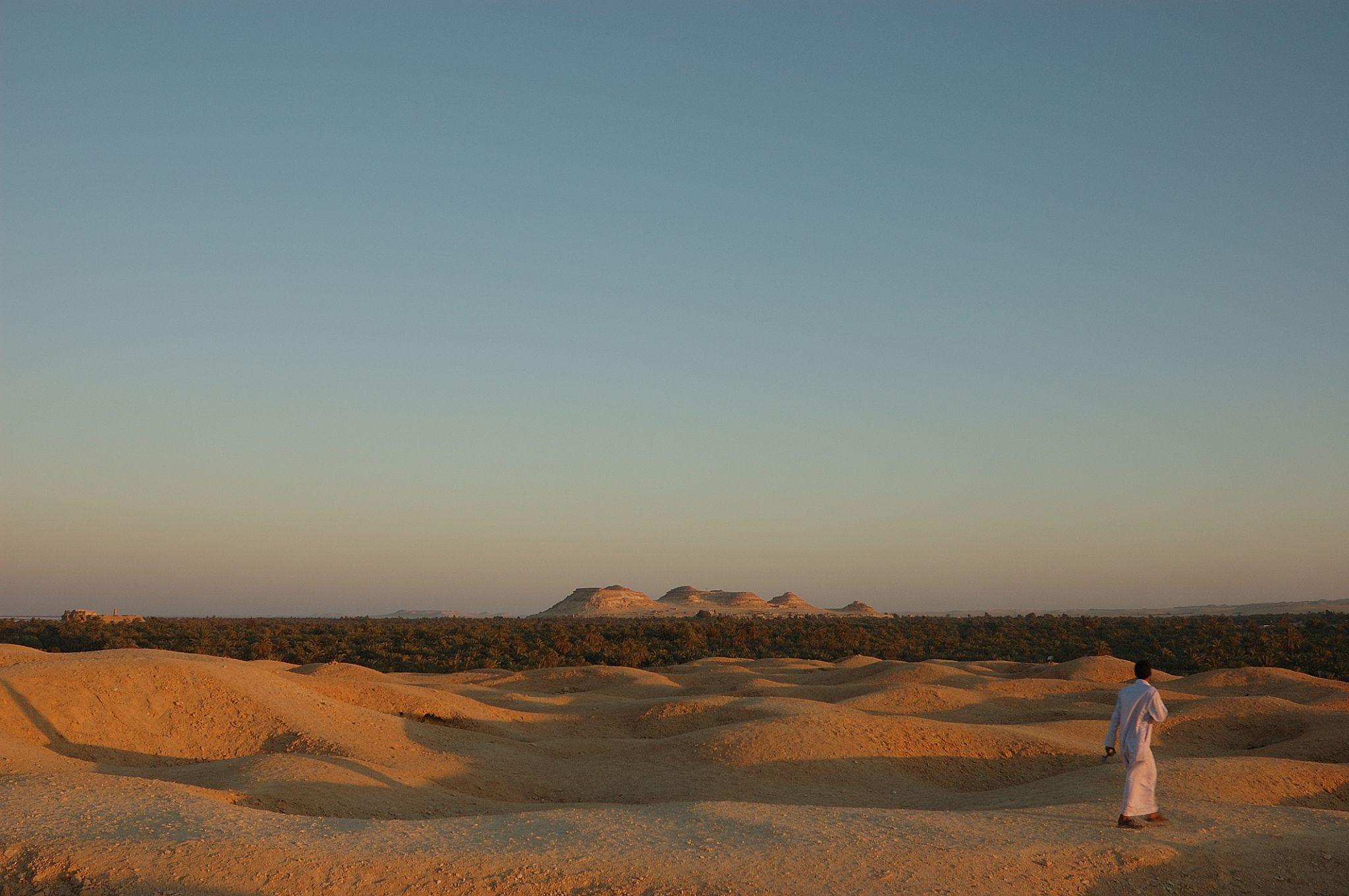
Man in white robe walking on desert hills above Siwa palm groves
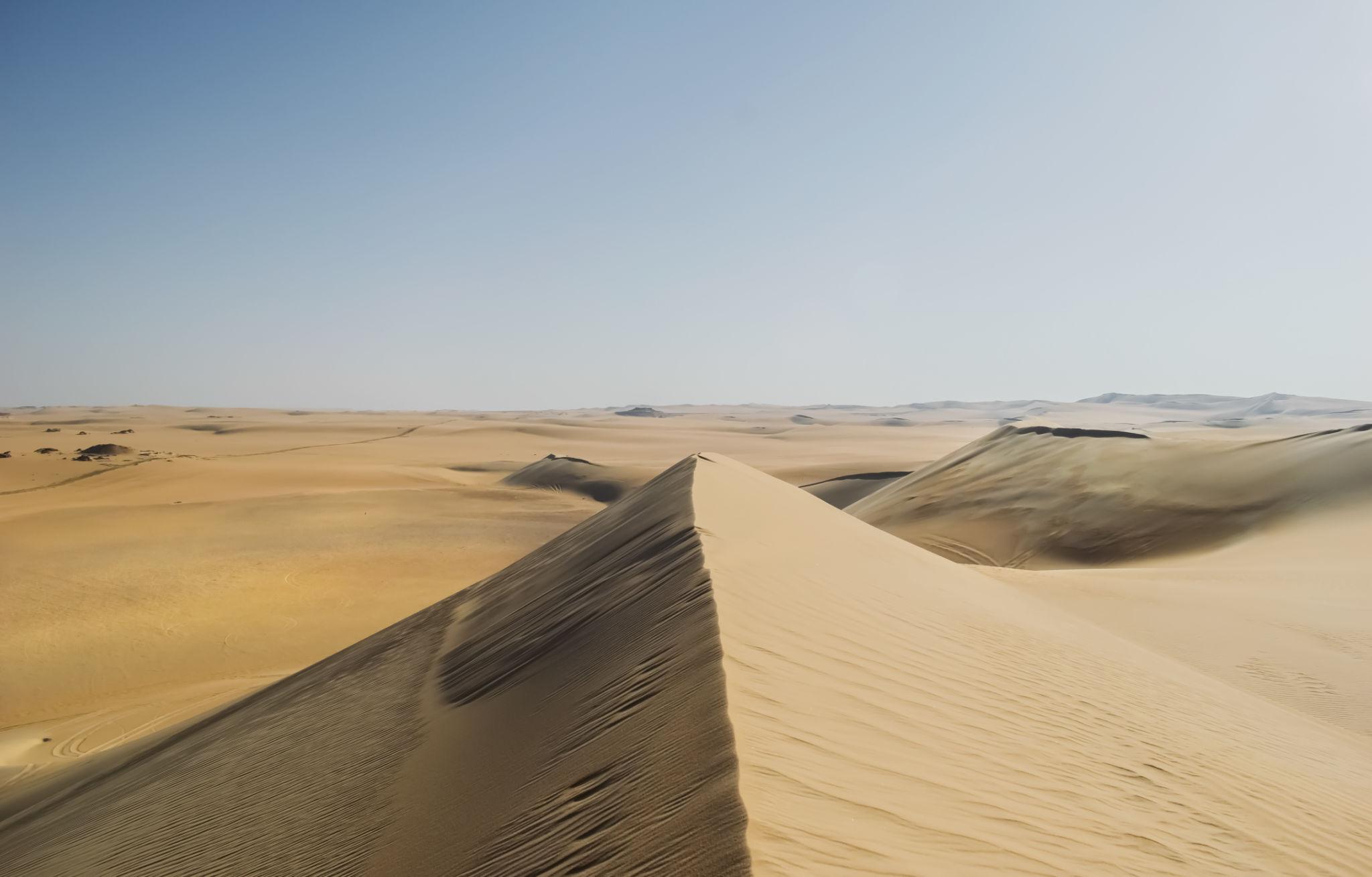
Vast Great Sand Sea dunes stretching to the horizon near Siwa
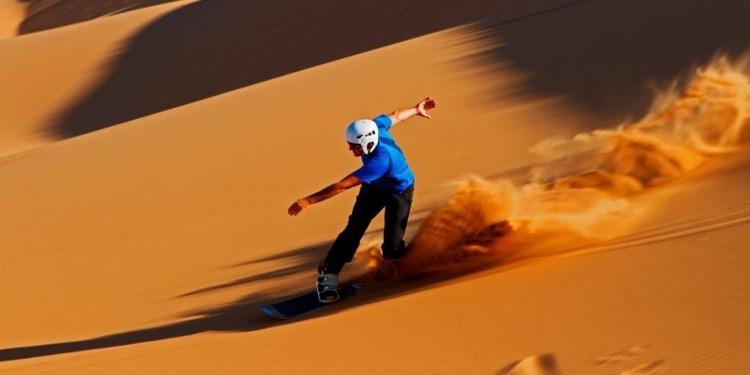
A helmeted sandboarder carves down a steep golden sand dune kicking up a spray of sand
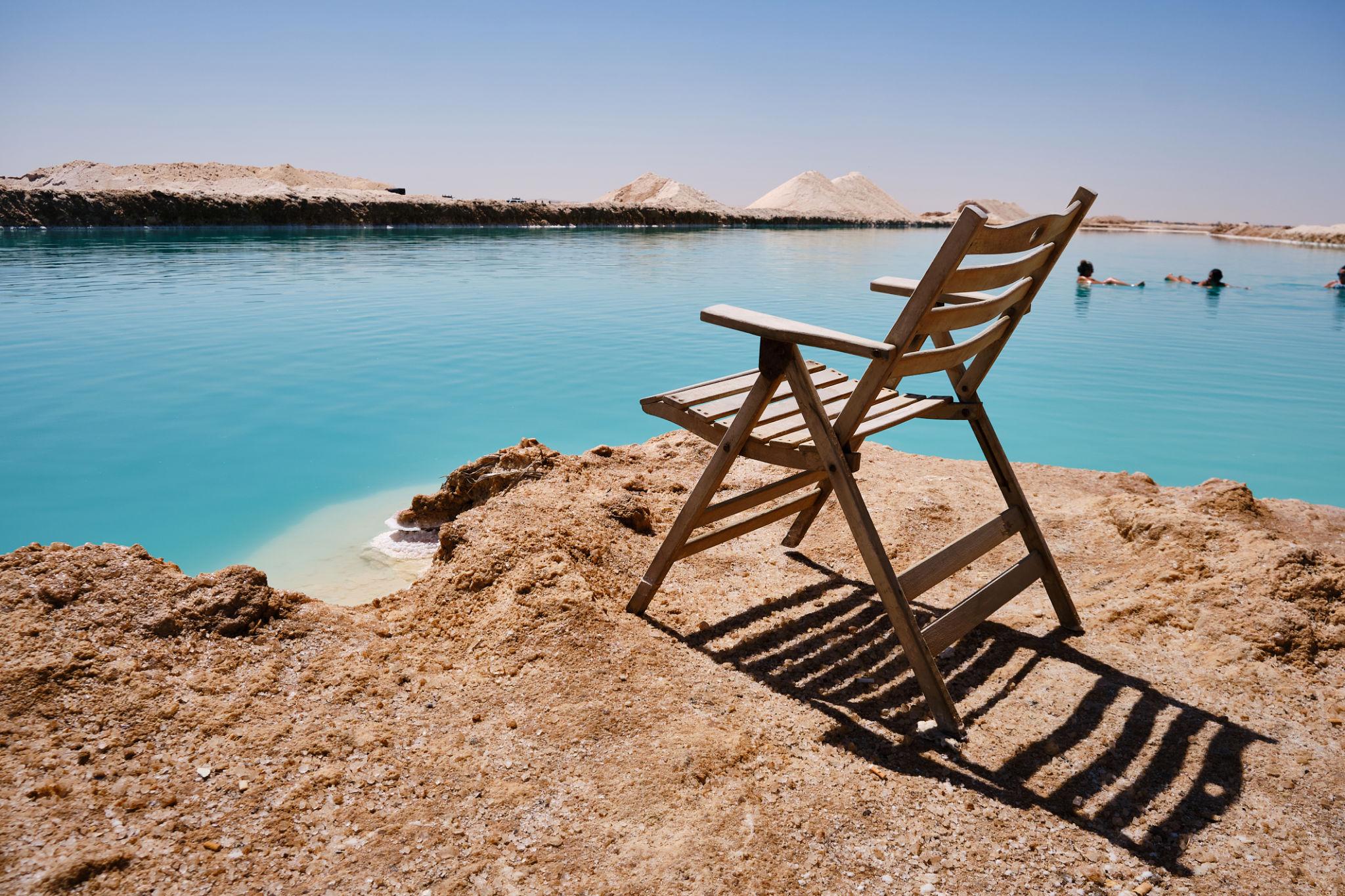
A wooden folding chair overlooking Siwa's turquoise salt lake under a clear desert sky
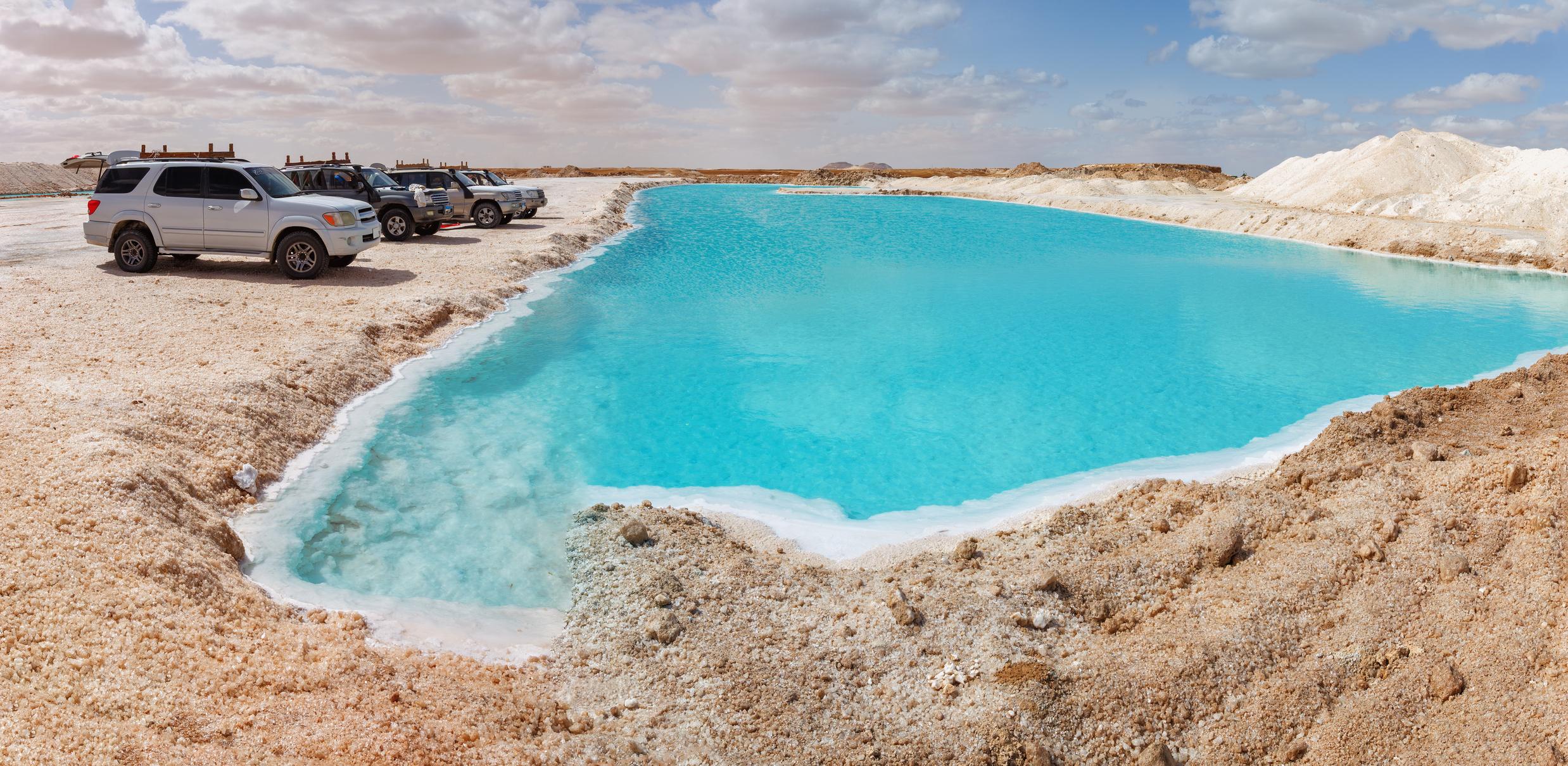
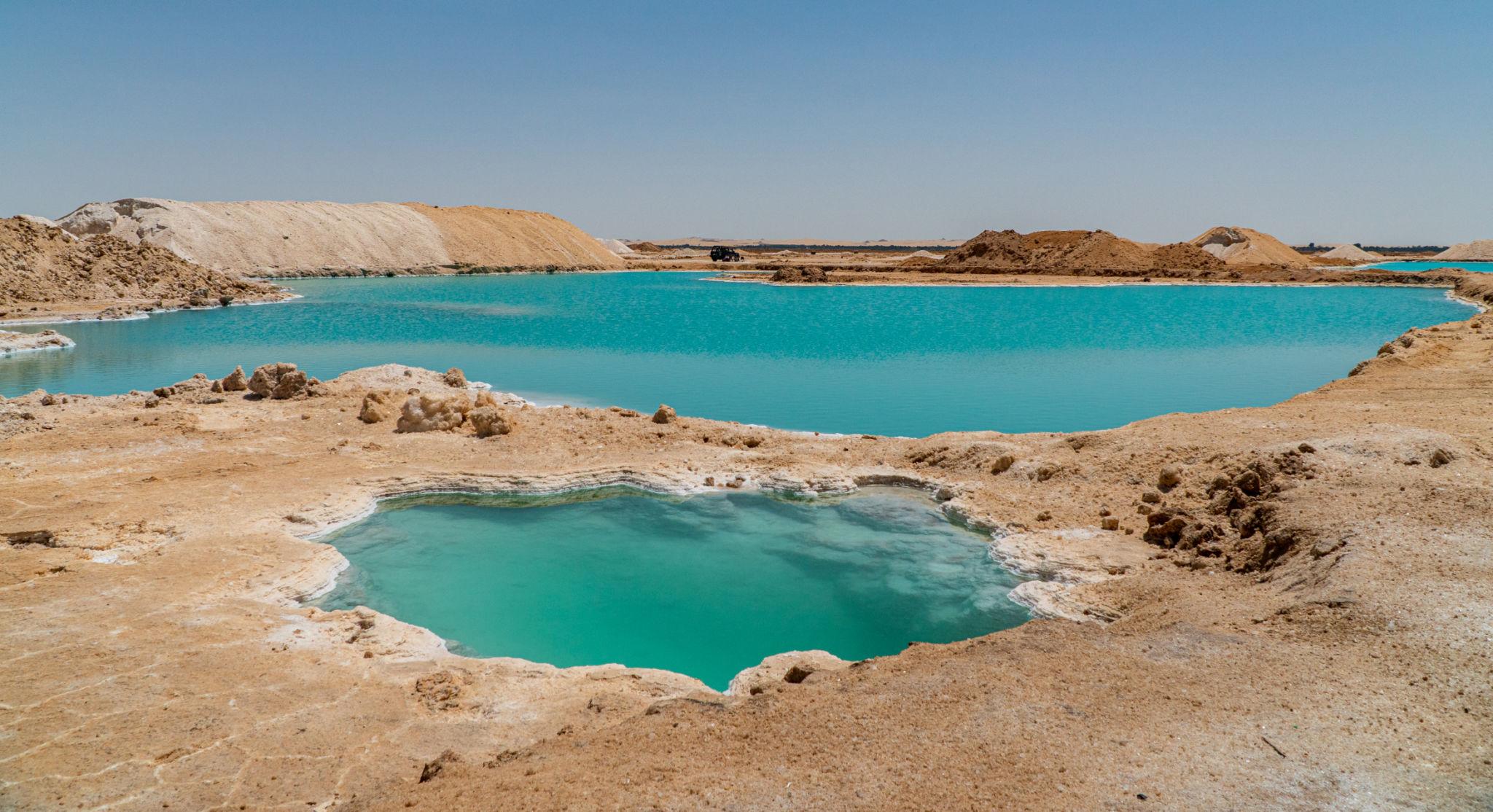
Vivid turquoise salt lake surrounded by white salt flats and parked 4x4s in Siwa Oasis
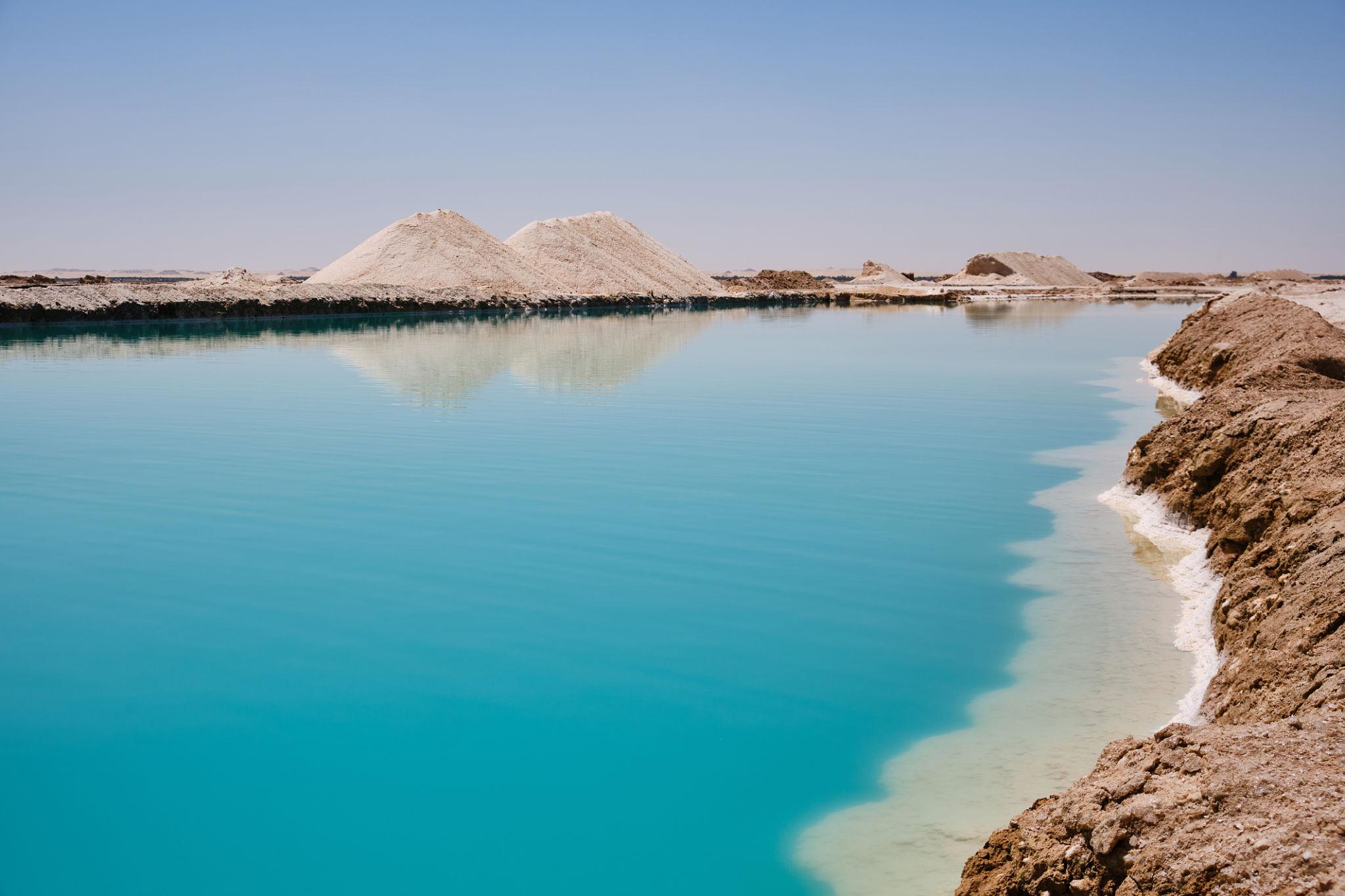
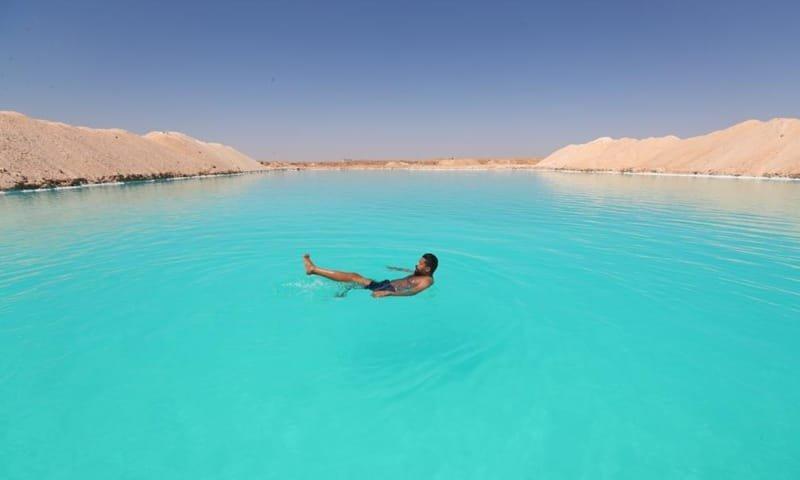
Vivid turquoise salt lake with white salt mounds reflected on the still water in Siwa.
A man floats effortlessly on the vivid turquoise waters of a Siwa salt lake in the desert
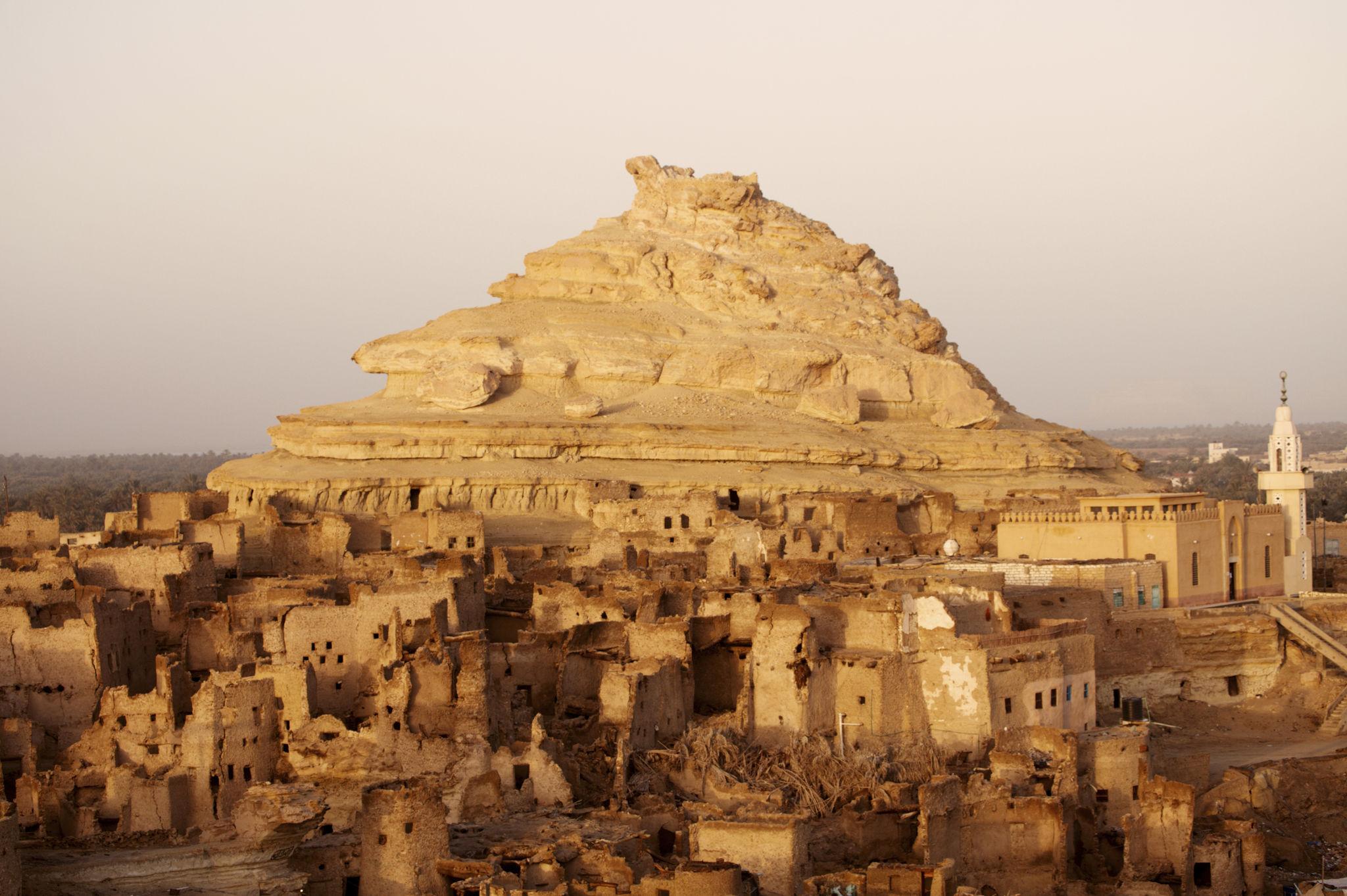
Ancient mud-brick ruins of Shali fortress beneath a layered sandstone rock formation in Siwa Oasis.
Calm salt lake mirrors rocky desert hills and palm trees under a clear blue sky in Siwa Oasis
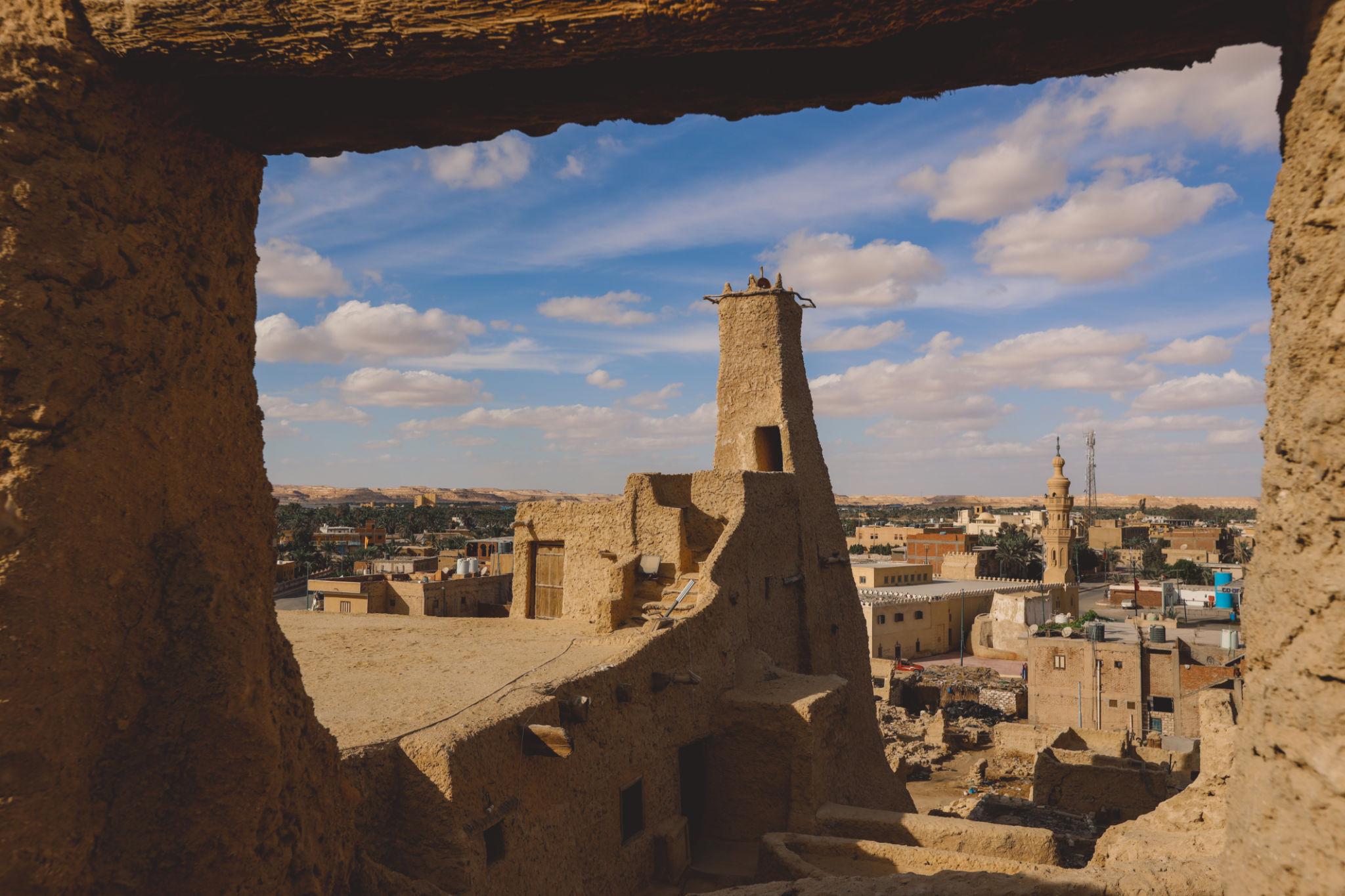
Ancient mud-brick minaret and rooftops of Siwa Oasis framed through a stone window opening
Rustic thatched-roof huts on a stone platform over calm lake waters in Siwa Oasis
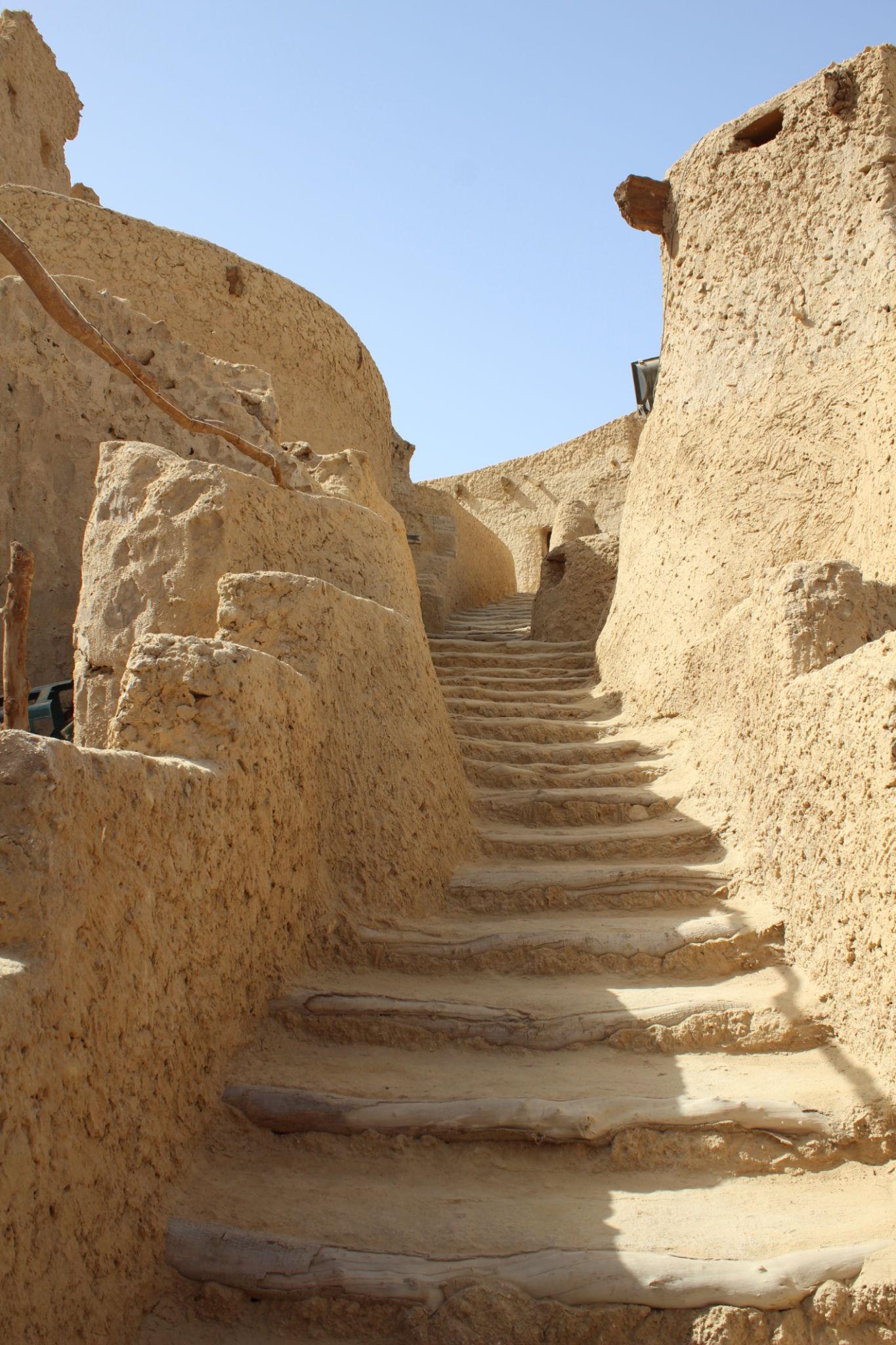
Narrow stone steps rising between eroded mud-brick walls in Siwa's old town under a clear blue sky
Bright turquoise salt lake pools framed by white salt crusts in Siwa
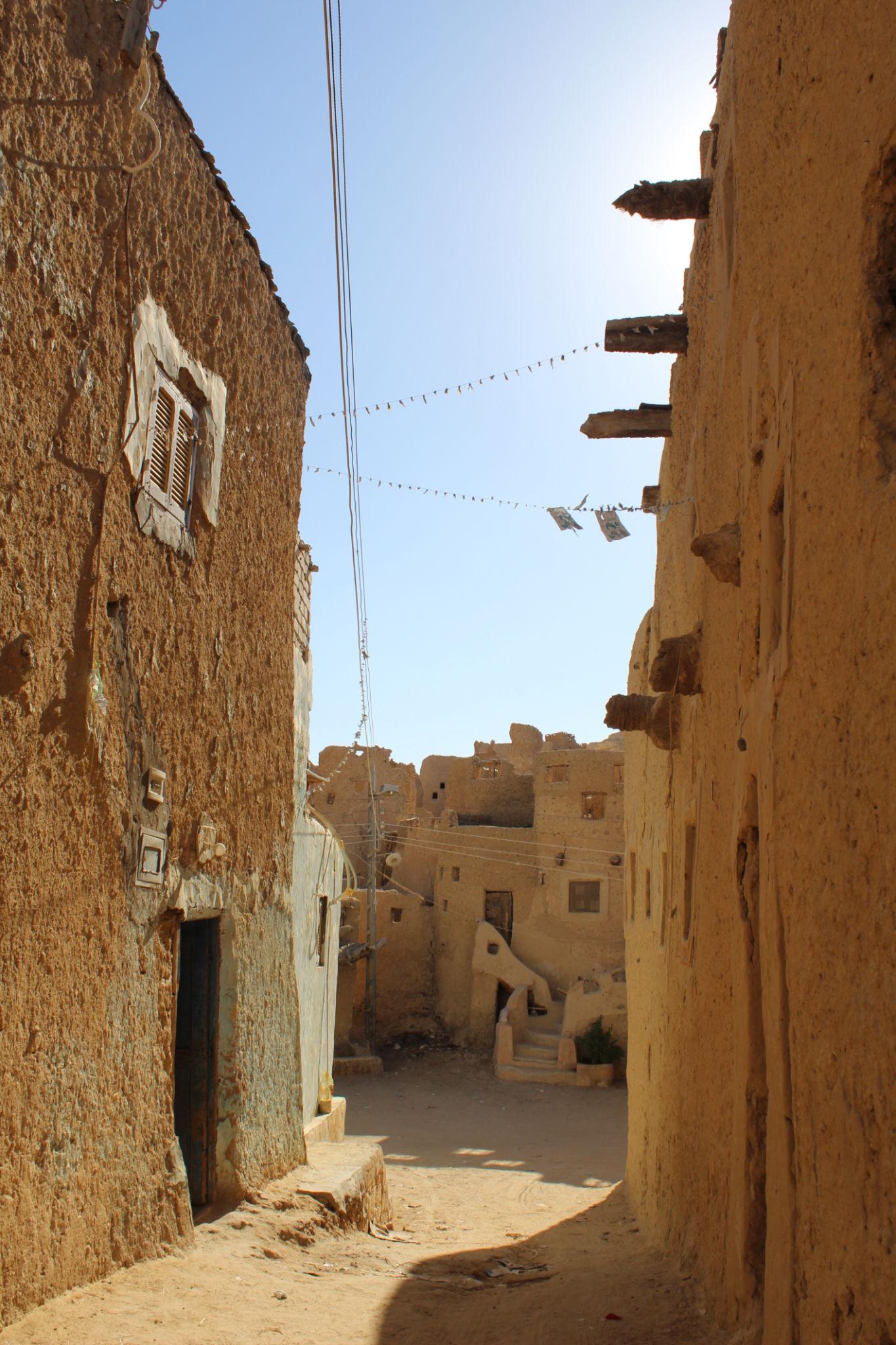
Narrow sandy alley between crumbling mud-brick buildings in Siwa's ancient old town
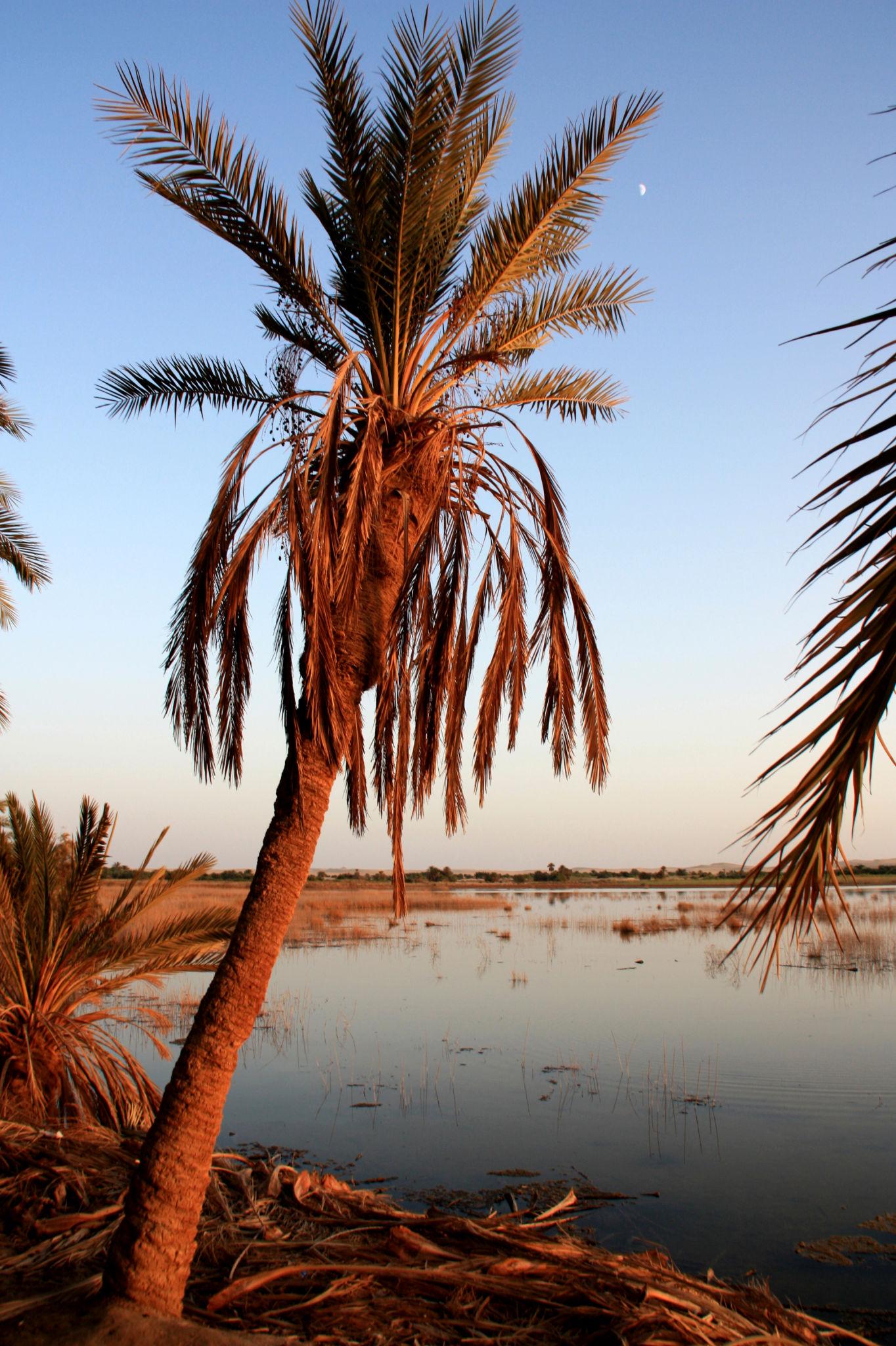
A leaning date palm glowing in warm sunset light beside a still reflective lake at Siwa Oasis
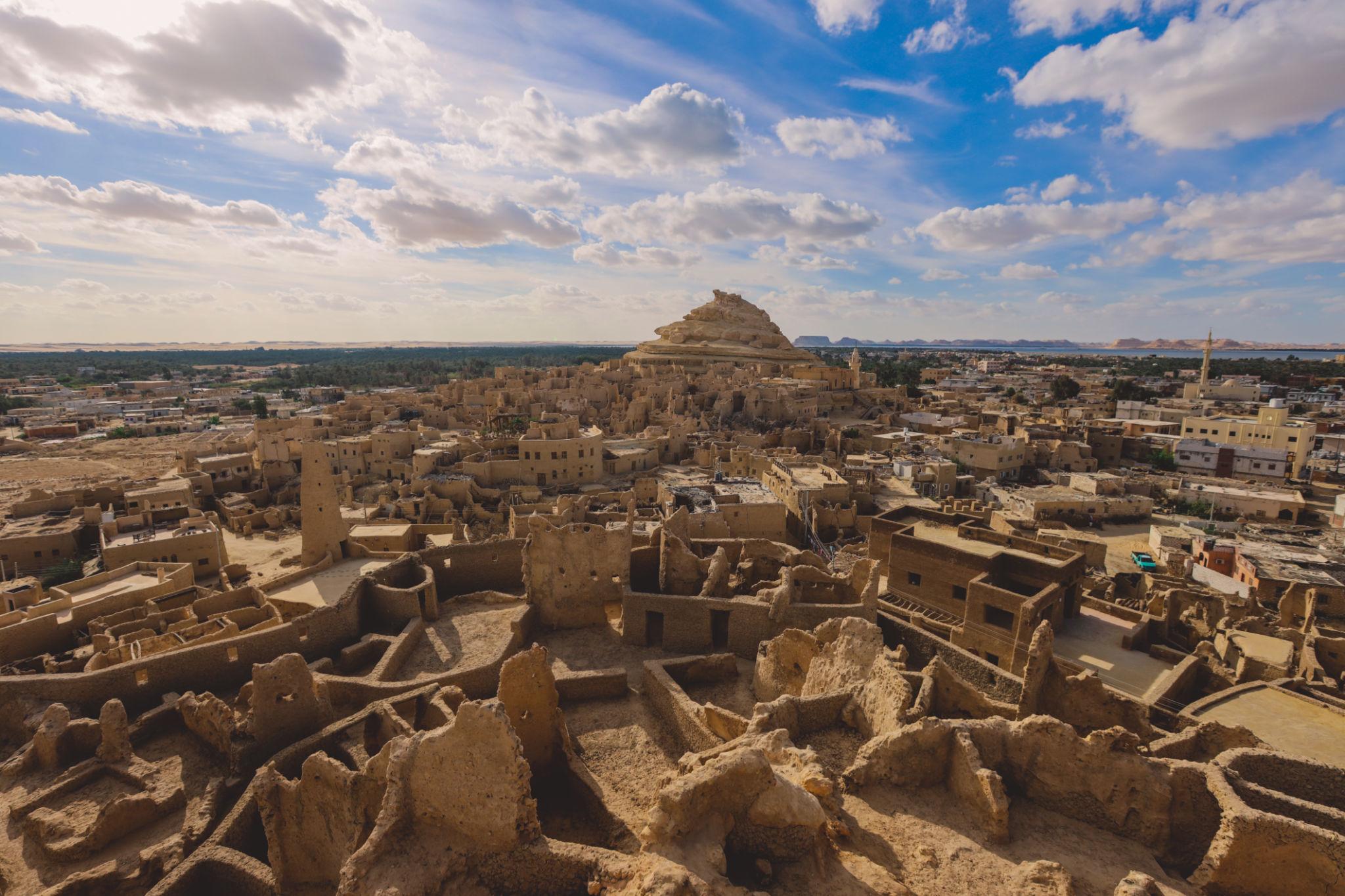
Aerial view of Siwa's ancient mud-brick Shali Fortress ruins rising above the desert oasis town
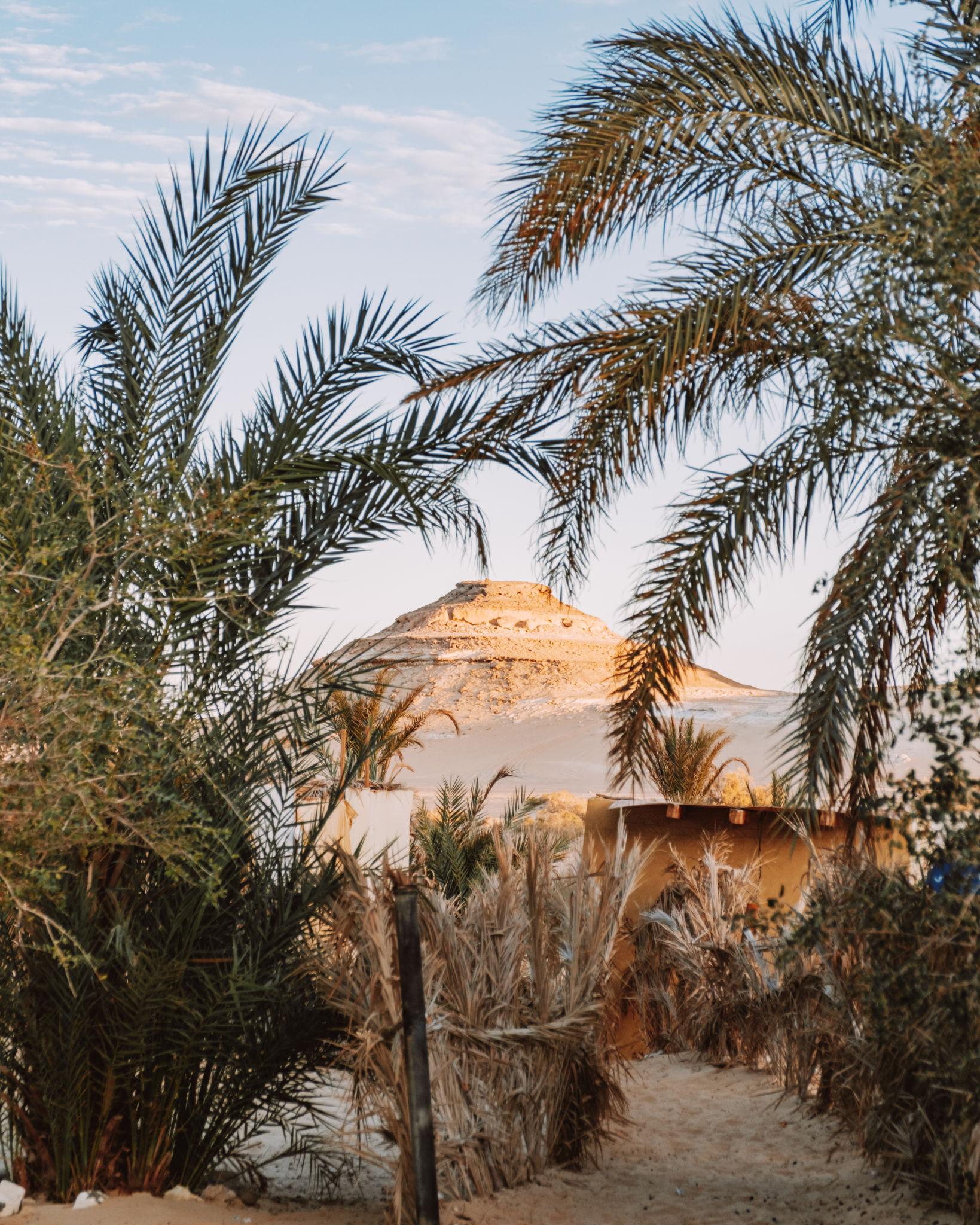
Sandy path through date palms framing a golden sandstone butte in Siwa Oasis
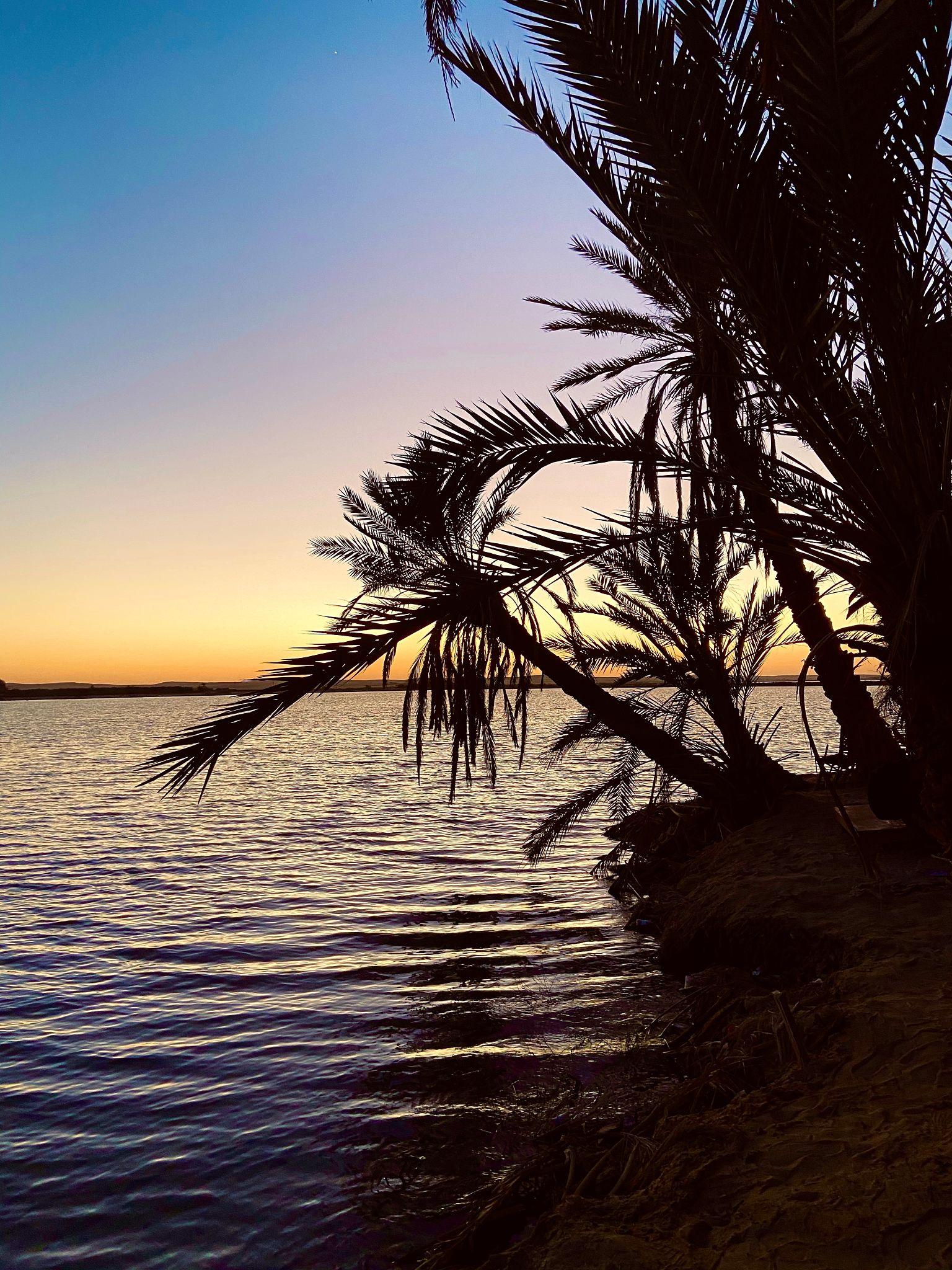
Silhouetted date palms lean over a calm lake at golden sunset in Siwa Oasis
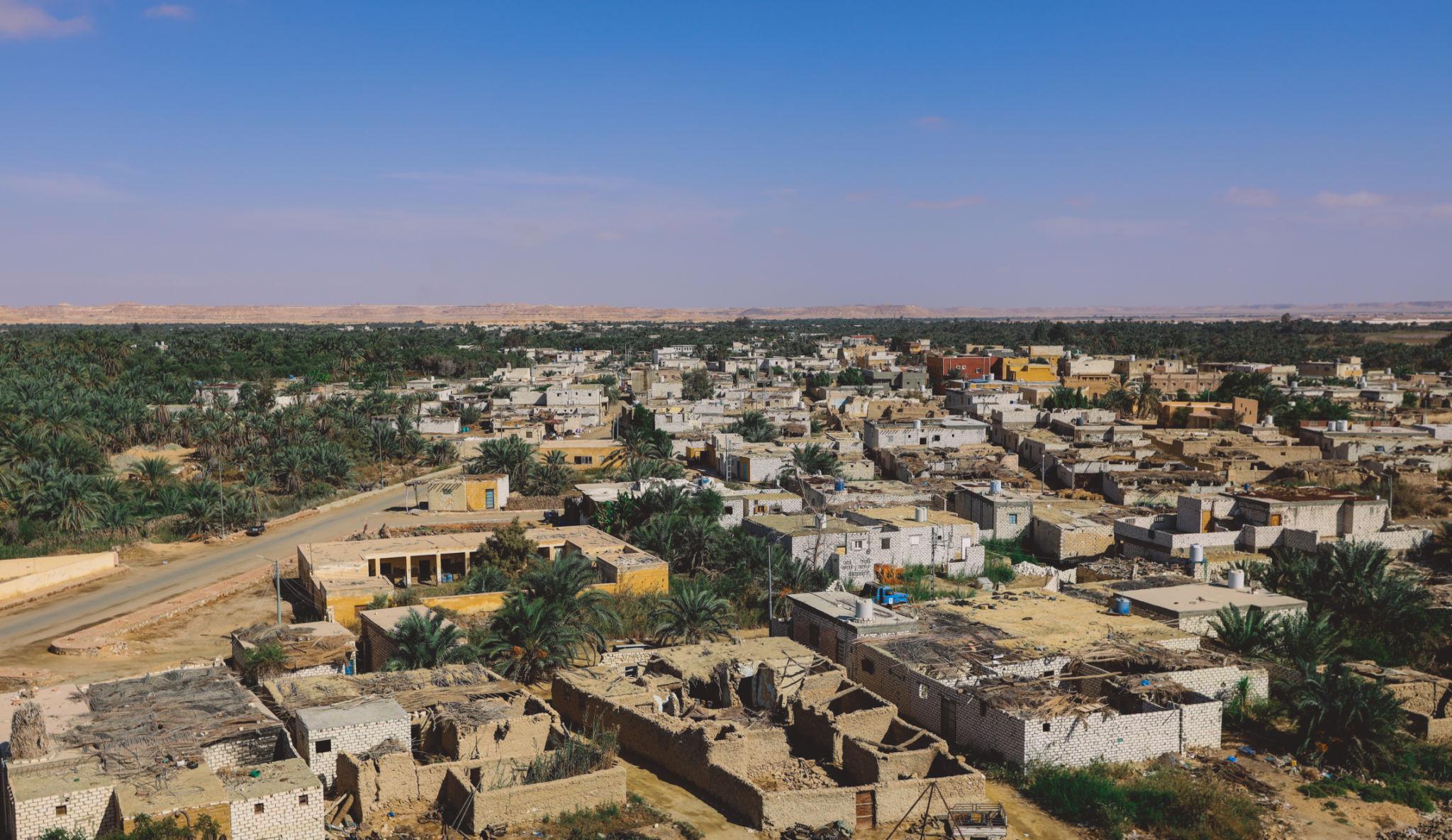
Aerial view of Siwa town rooftops and palm groves under desert hills
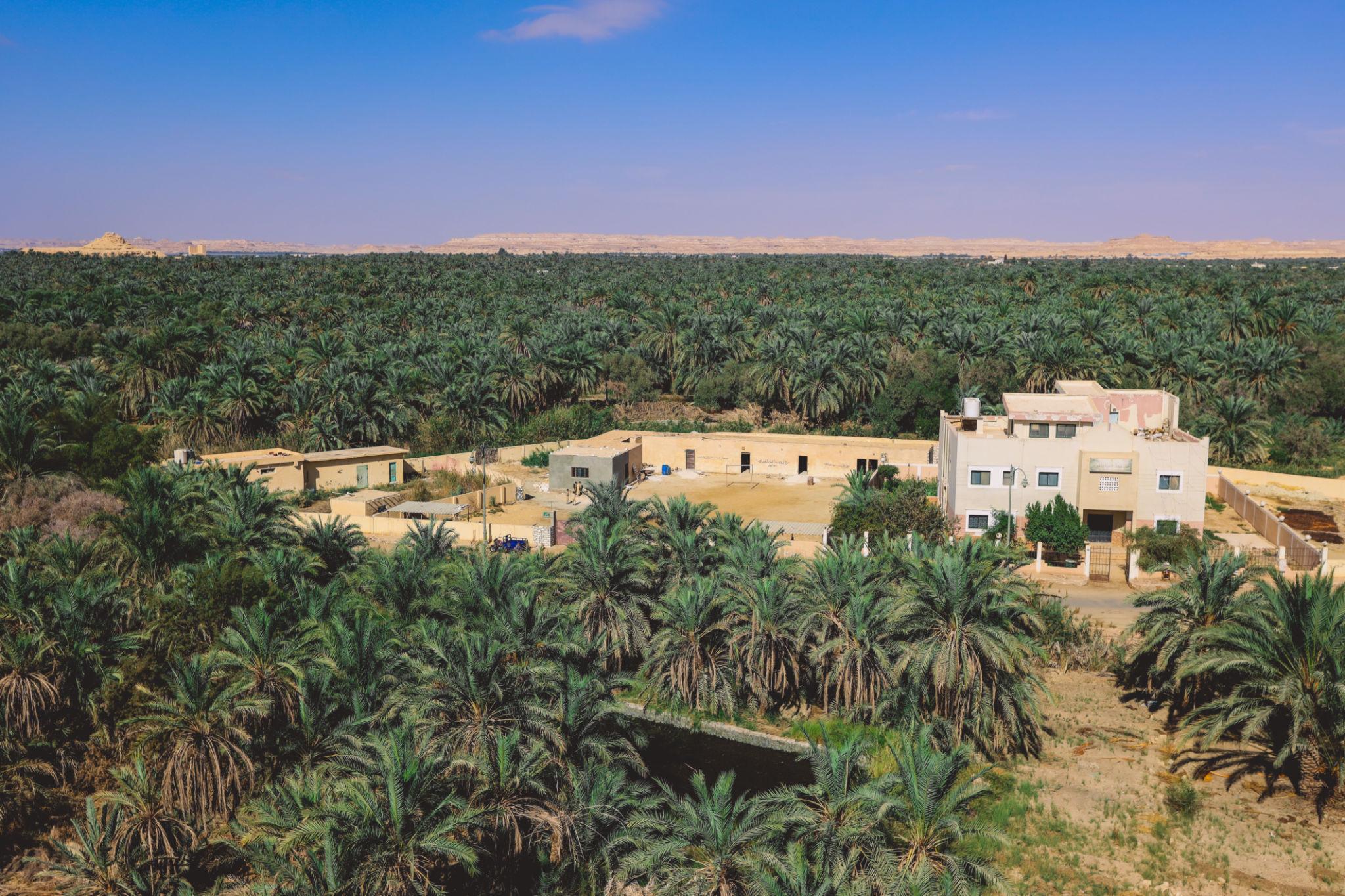
Aerial view of a desert village surrounded by dense palm groves with rocky escarpment beyond
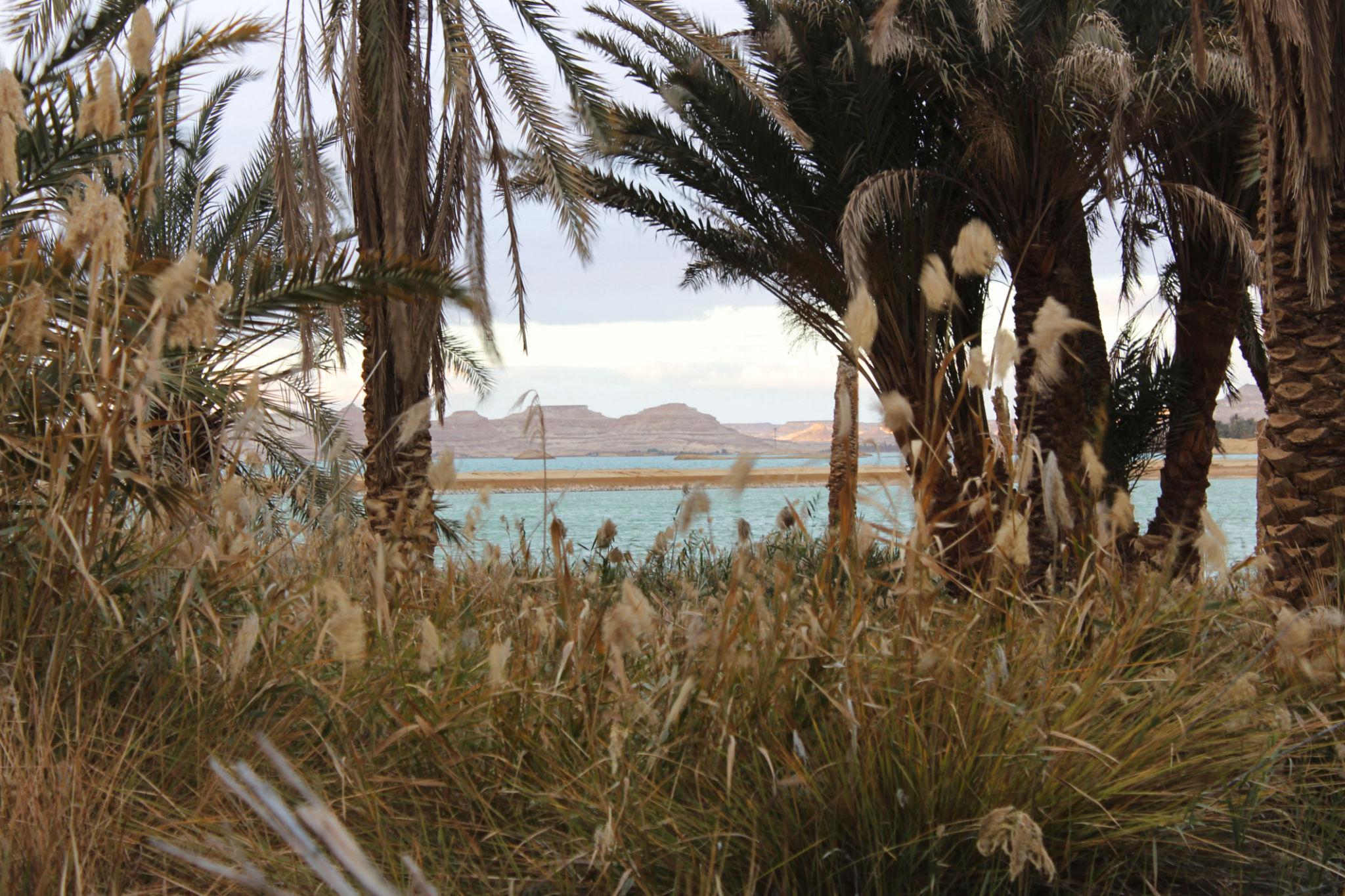
View through palm trees and reeds to a Siwa lake and distant mountains
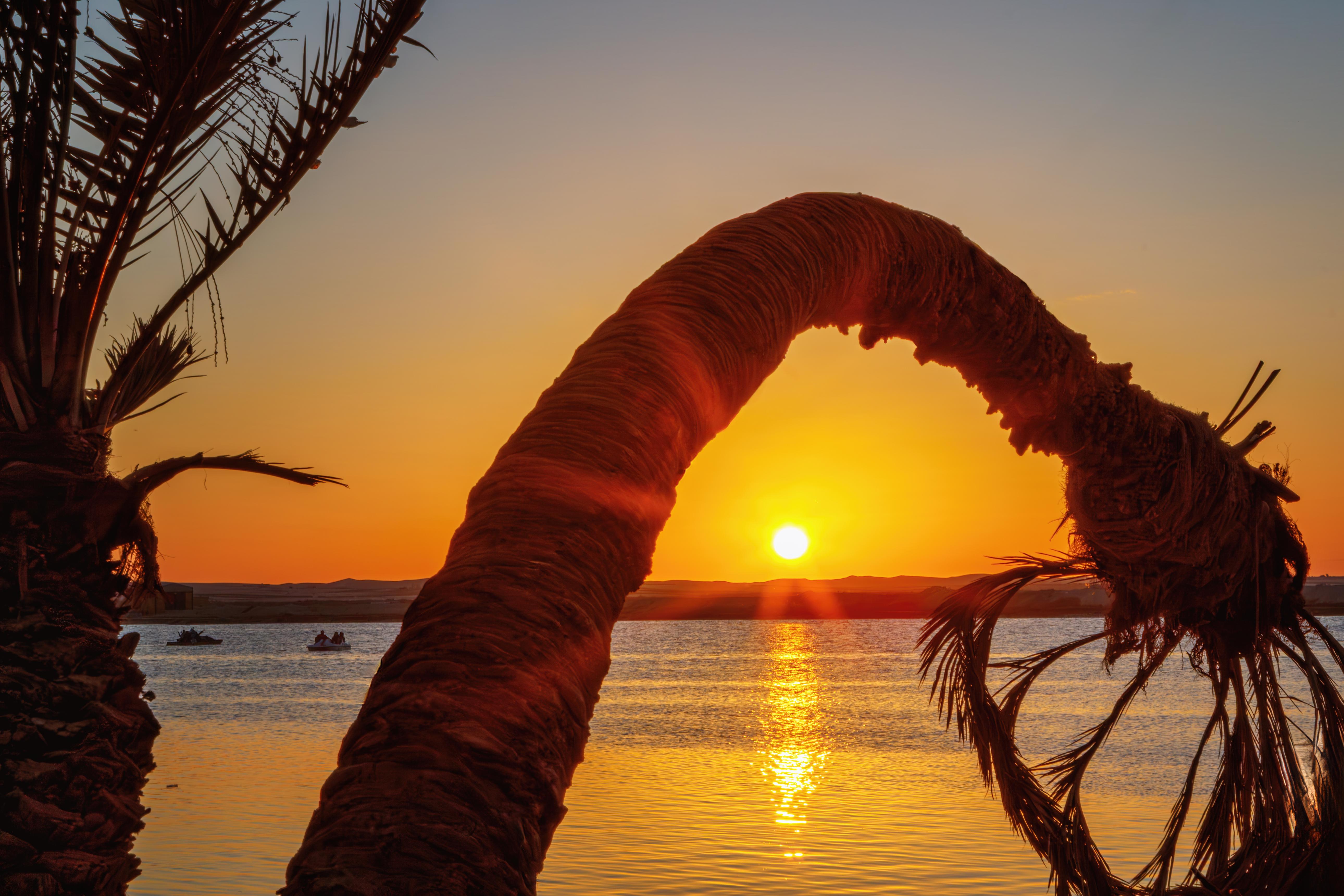
A curved palm trunk frames a golden sunset reflecting over Siwa's lake
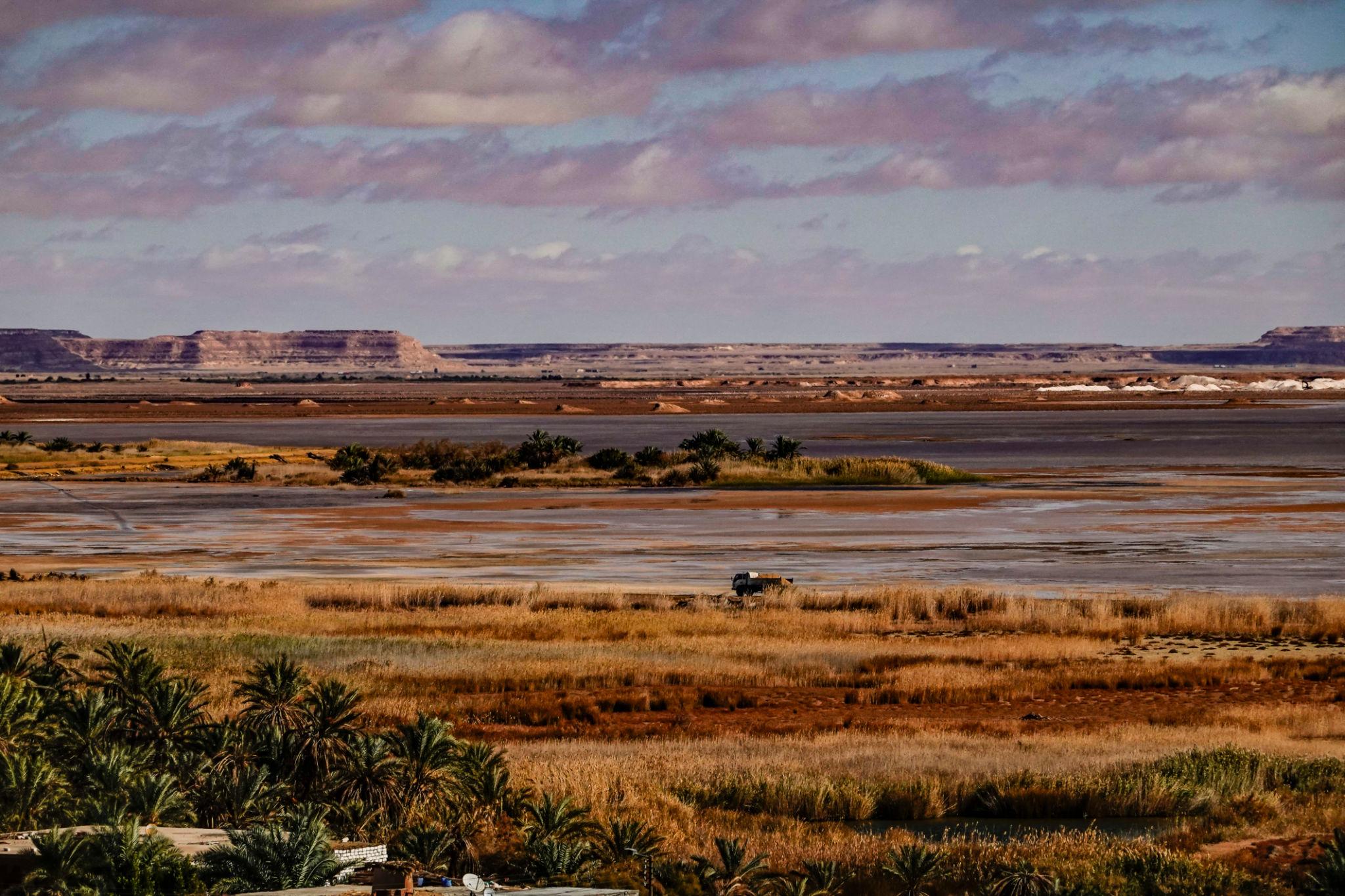
Vast Siwa salt flats with palm groves, golden grass, and flat-topped mesas on the horizon

Historical Background

Siwa has been inhabited for at least 12,000 years. The oasis rose to international fame in 331 BC when Alexander the Great made a grueling journey across the desert to consult the Oracle of Amun at the Temple of Aghurmi. The oracle reportedly confirmed Alexander's divine parentage — a declaration that shaped the rest of his conquests. Throughout history, Siwa's extreme remoteness kept it largely independent from Egyptian central authority. The Siwi people are ethnically Berber (Amazigh), with their own language, customs, and traditions distinct from mainstream Egyptian culture. The old mud-brick town of Shali, built in the 13th century as a defensive fortress, dominated the oasis until heavy rains in 1926 caused much of it to melt. Today, Shali is being carefully restored as a cultural heritage site.
What to See & Do

Temple of the Oracle (Aghurmi)

Perched on a rocky outcrop, this 6th-century BC temple dedicated to Amun is where Alexander the Great received the fateful prophecy confirming his divine status. The ruins offer panoramic views over the palm groves and the surrounding desert. It remains one of the most historically significant oracle sites in the ancient world.

Shali Fortress

The crumbling mud-brick remains of Siwa's medieval fortified town rise from the center of the modern settlement. Built in the 13th century using kershef (salt-rich mud), the labyrinthine ruins are being gradually restored. Climb to the top for sweeping views of the oasis, palm forests, and the surrounding Great Sand Sea.

Springs & Salt Lakes

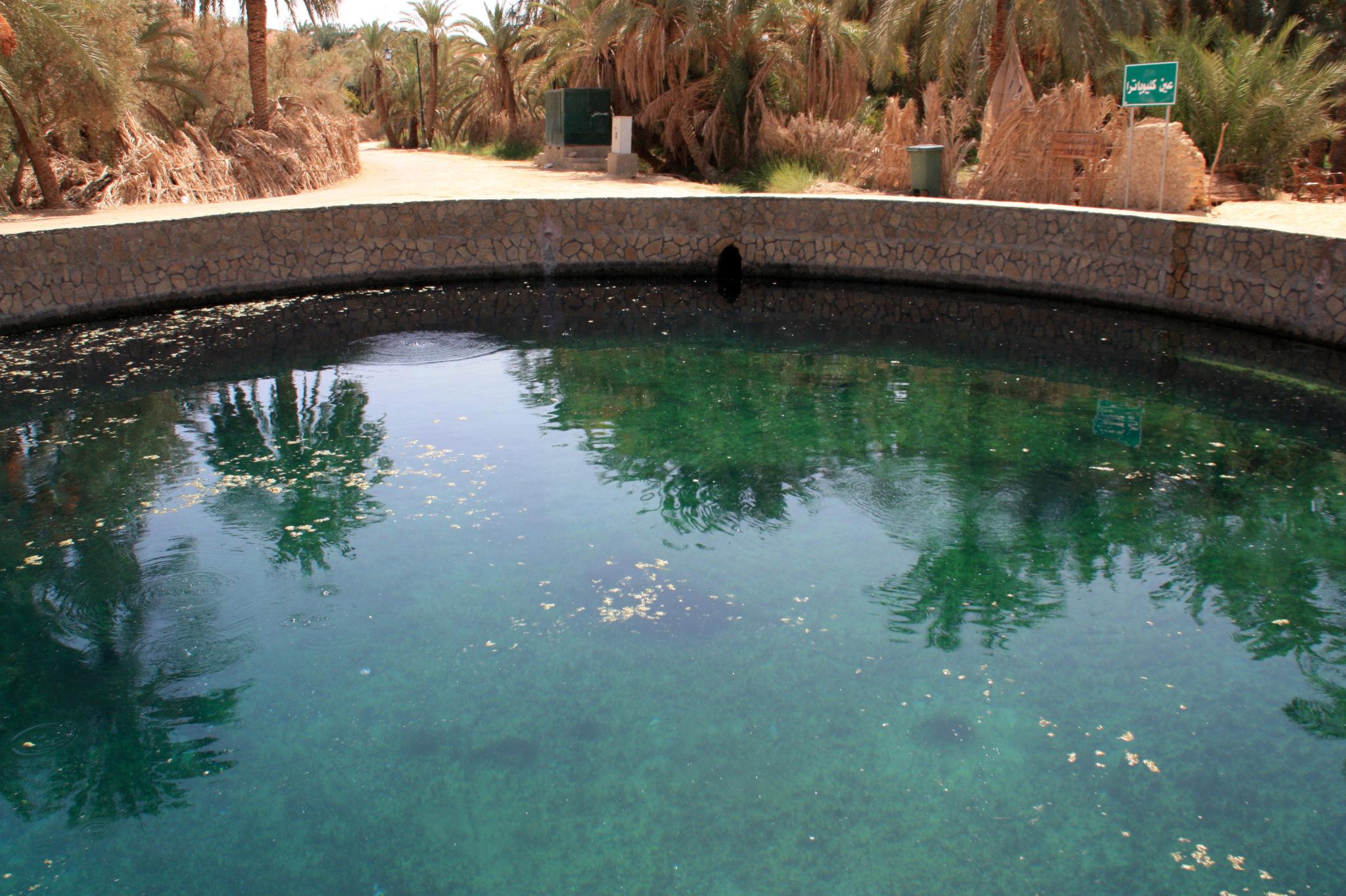
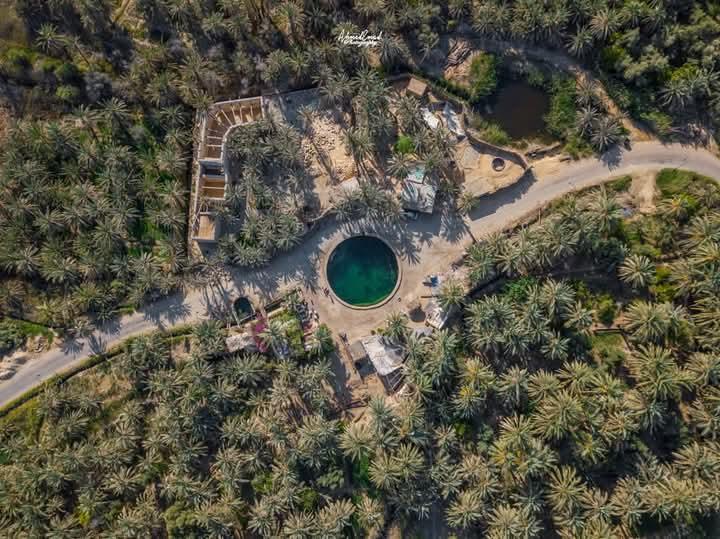
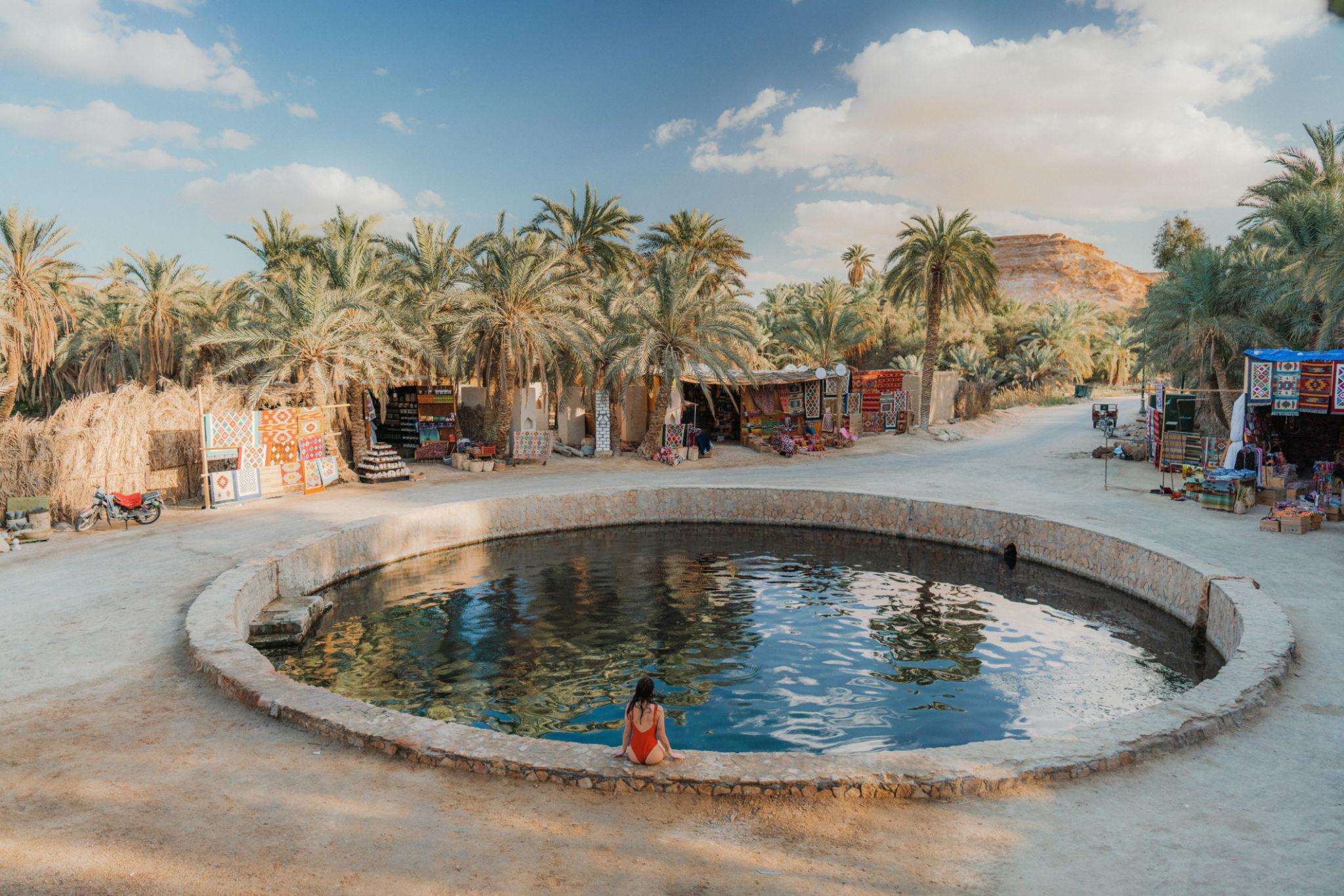
Cleopatra's Spring (Ain Juba) is a natural warm-water pool popular for swimming. The Siwa salt lakes offer a Dead Sea-like floating experience with striking turquoise waters against white salt crusts. Fatnas Island on Lake Birket Siwa is the iconic sunset spot.

Great Sand Sea & Desert Safari

The Great Sand Sea stretches west into Libya — an endless ocean of towering dunes that is one of the world's largest sand deserts. 4x4 desert safaris take you dune-bashing, sandboarding, and to hot springs hidden among the dunes. Overnight desert camping under the stars is unforgettable.

Key Monuments

Food & Dining

Siwi Cuisine

Siwan food is distinct from mainstream Egyptian cuisine. Local specialties include tagella (bread baked in hot sand), date-based dishes, and olive oil from the oasis's abundant groves. Siwa produces some of Egypt's finest dates and olives. Fresh palm juice and hibiscus tea are popular drinks.

Eco-Lodge Dining

Several eco-lodges — notably Adrère Amellal, built entirely from traditional kershef mud — serve organic meals by candlelight (the lodge has no electricity). These lodges offer some of Egypt's most unique dining experiences, combining local ingredients with a magical desert setting.

Best Time to Visit

October to April is the best time, with pleasant daytime temperatures of 20–30°C and cool nights. Spring (March–April) brings occasional sandstorms. Summer is extremely hot (40°C+) and not recommended. The oasis is particularly beautiful during the annual Siwa Festival (Siyaha) in October, a three-day Sufi celebration of peace and reconciliation.

Getting Around

Siwa is small and best explored by bicycle or donkey cart — both are easily rented. The main town is walkable. For the salt lakes, springs, and desert excursions, arrange a 4x4 through your hotel or a local operator. There is no public transport within the oasis. The journey from Cairo is long (8–9 hours by bus or car); an alternative is to fly to Marsa Matruh and drive the remaining 3 hours.

Pro Tips

  • Rent a bicycle — it's the best way to explore the palm groves and reach the springs
  • The salt lakes are most photogenic in the morning when the water is calm and turquoise
  • Siwa is conservative — dress modestly, especially women, out of respect for local customs
  • Fatnas Island at sunset is a must — bring a camera and arrive 30 minutes before
  • Book a desert safari that includes a hot spring stop and overnight camping

Key Locations

  • Temple of the Oracle (Aghurmi)29.2056, 25.5167
  • Shali Fortress29.2028, 25.5194
  • Cleopatra's Spring29.2072, 25.5225
  • Fatnas Island (Fantasy Island)29.1950, 25.4800

Need help planning your trip?

Our Egypt travel experts can create a custom itinerary tailored to your interests.

Get in Touch