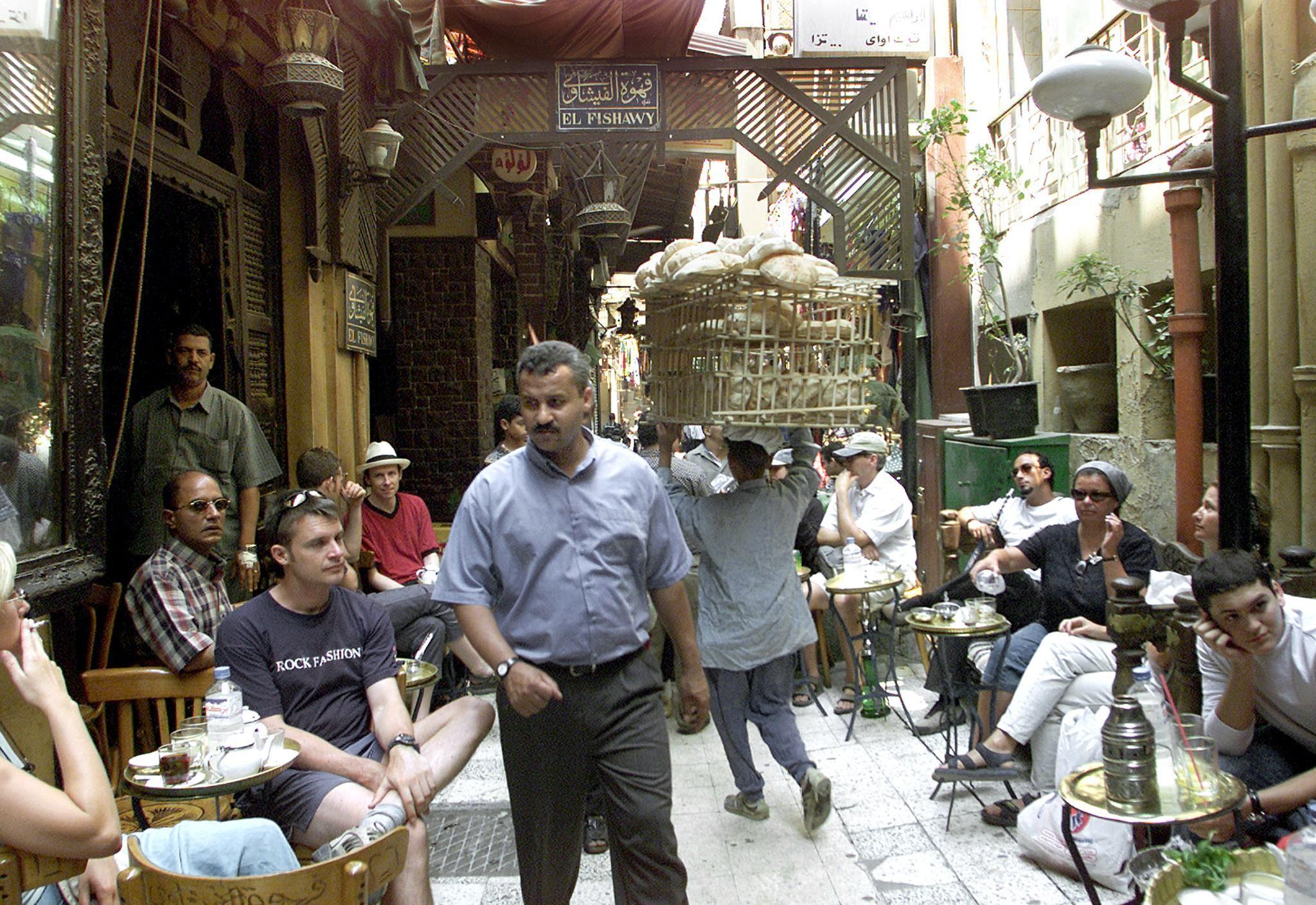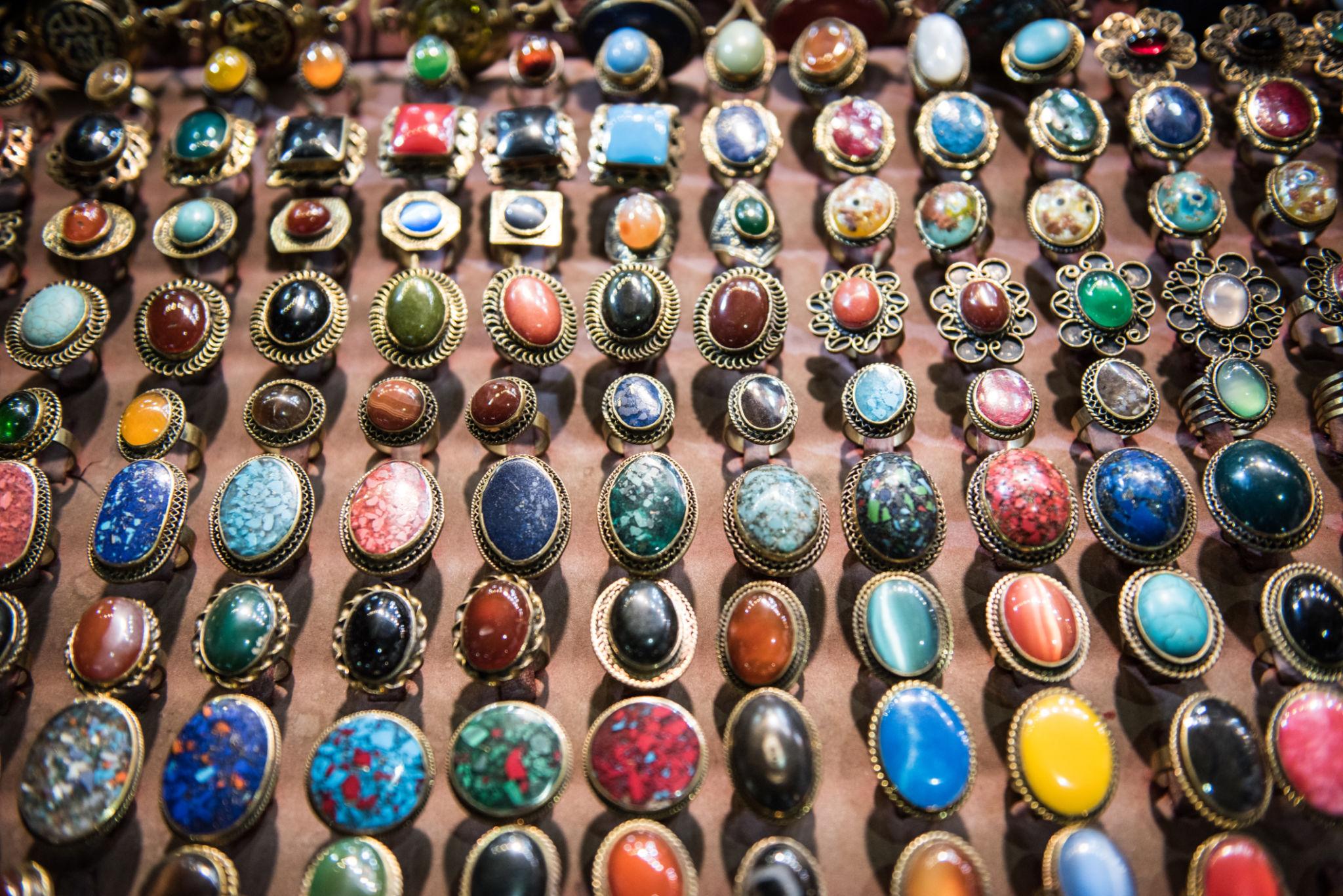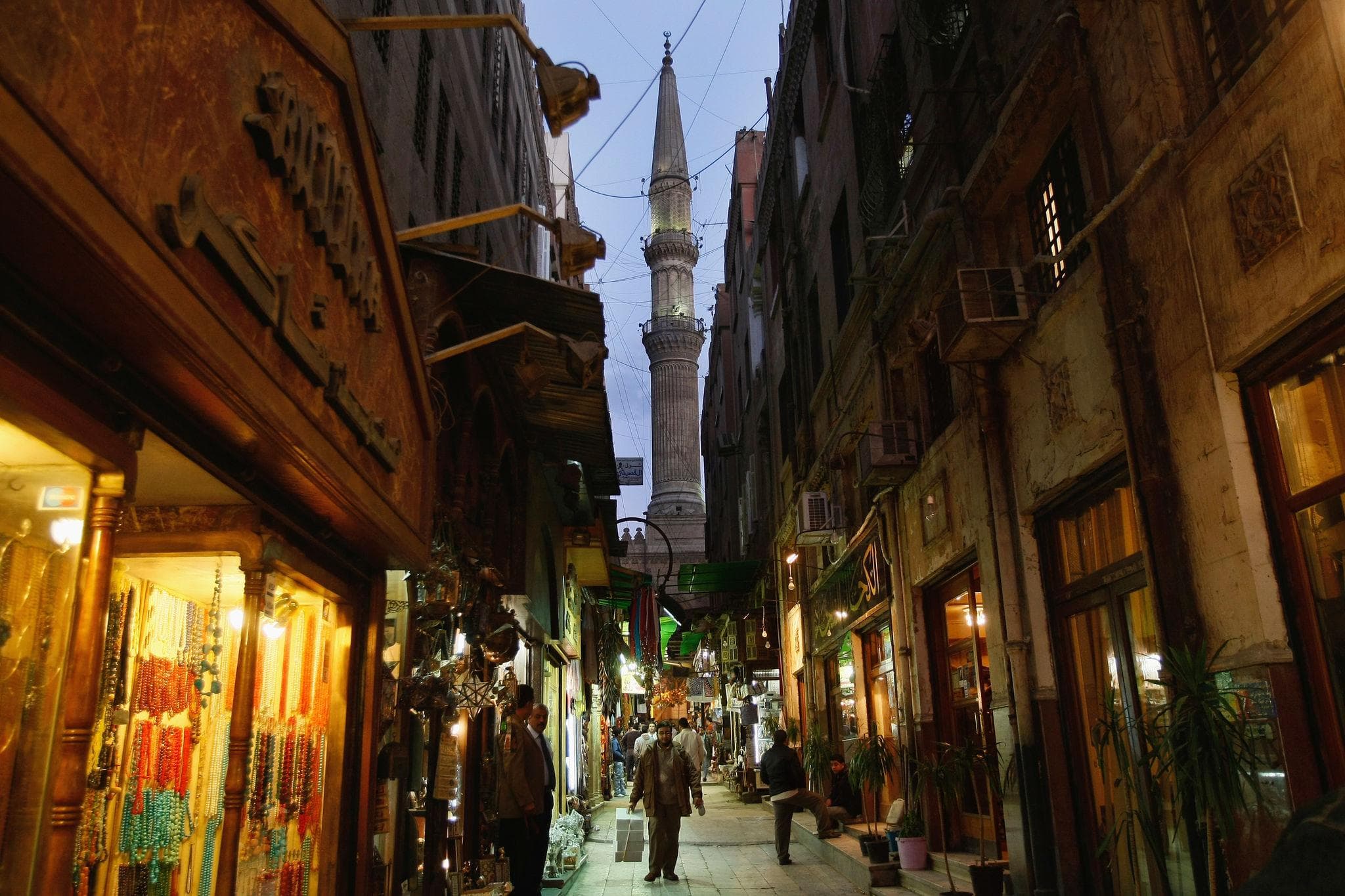
Walk the main lane of Khan el-Khalili and the shopkeepers will try you in English, then Italian, then German, then something hopeful in Japanese. Of all the Egyptian Arabic phrases a visitor can learn, the one that changes the conversation is not in any of those languages. It is "la, shukran", no thank you, said with a smile and the right hand laid briefly on the heart. Nine times out of ten the vendor laughs, answers in Arabic, and lets you pass, a little more interested in you than before.
You do not need fluency to travel in Egypt, and English goes a long way in hotels, on cruise boats and at the big sites. But a handful of words repays the effort many times over: in taxis, in cafés, in the souq, and in the moment a stranger asks where you are from and you can answer in their own language. This guide gives you nearly a hundred of the most useful ones, grouped by situation, with simple pronunciation and the meaning in English, plus enough background to understand why the Arabic you hear in Cairo is not quite the Arabic in a textbook.
At a Glance
Language: Egyptian Arabic, called Masri, is what people speak; Modern Standard Arabic is used for writing, news and formal speech
Most useful word: shukran, thank you
Polite refusal: la, shukran, with a hand on the heart
The Cairo g: the letter jiim is a hard g, so camel is gamal, not jamal
Script: Arabic runs right to left, but numbers inside it run left to right
Prices: often written in Eastern Arabic digits, which take five minutes to learn
English: widely spoken in hotels and at sites, far less in local cafés and taxis
Gender: many phrases change when you speak to a woman or as a woman, marked (m) and (f) below
Upper Egypt: in Luxor and Aswan some sounds change, but Cairo Arabic is understood everywhere
Why Egyptian Arabic Differs From Textbook Arabic
Arabic lives in two registers. Modern Standard Arabic, descended from the classical language of the Quran, is shared across the Arab world and used in newspapers, official signs, sermons and the evening news. Nobody speaks it at the breakfast table. At home and in the street, each country speaks its own dialect, and Egypt's is spoken by more than a hundred million people. Thanks to decades of Egyptian cinema, television and popular song, it is also probably the dialect most widely understood by Arabic speakers elsewhere.
The differences are real enough to confuse a student of the standard language. Cairenes pronounce the letter jiim as a hard g, so the word for camel is gamal and the Arabic for "beautiful" is gameel. The letter qaf usually becomes a glottal stop, the catch in the middle of "uh-oh", so qalb, heart, is said 'alb. The th sound tends to soften to t or s, so three is talata rather than thalatha. And the everyday vocabulary is its own: Egyptians ask "ezzayyak?" for how are you, say feen for where, emta for when, leh for why and dilwa'ti for now. Negation wraps around a verb with ma and sh, which is why "there isn't any" comes out as mafeesh, a word you will hear daily.
One more quirk worth knowing: Egyptians often call Cairo simply Masr, the same word as Egypt itself. When a driver in Luxor says someone has gone to Masr, he usually means the capital.
How to Read the Pronunciation
There is no single official way to write Arabic in Latin letters, and you will see the same word spelled several ways on menus and signs. We use plain English spelling and keep the rules short.
- An apostrophe marks either the glottal stop or the ayn, a tight, throaty sound with no English equivalent; if in doubt, a short pause gets you understood
- kh is the rasping sound in the Scottish loch
- gh is a gargled sound close to the French r
- h is always pronounced, even at the end of a word
- Double letters are held slightly longer, as in the middle of "bookcase"
- Stress usually falls on the long vowel or the second-to-last syllable
Egyptians texting each other often write Arabic in Latin letters with numbers standing in for missing sounds: 3 for the ayn, 2 for the glottal stop, 7 for a breathy h. If someone writes "shokran 3ala kol 7aga", thanks for everything, that is what is going on.
Egyptian Arabic Phrases for Greetings
Egyptians greet properly. A conversation that begins without a greeting feels abrupt, and a good greeting often earns a warmer welcome than the request that follows it.
- salaam 'aleikum: peace be upon you, the universal greeting at any time of day
- wa 'aleikum es-salaam: and upon you peace, the reply
- ahlan or ahlan wa sahlan: hello, welcome
- sabah el-kheir: good morning
- sabah en-noor: morning of light, the reply
- masa' el-kheir: good evening
- masa' en-noor: the reply
- ezzayyak (m) / ezzayyik (f): how are you
- kwayyis (m) / kwayyisa (f), el-hamdu lillah: fine, thank God
- esmak eh (m) / esmik eh (f): what is your name
- esmi Sarah: my name is Sarah
- ana min Ingiltera: I am from England; swap in Amreeka, Almania, Italia, Isbania or el-Yabaan
- forsa sa'eeda: pleased to meet you
- ma'a es-salaama: goodbye
The pattern of greeting and set reply runs through Egyptian life, and the replies matter more than the greetings: answering "sabah el-kheir" with "sabah en-noor" marks you as someone who has made an effort. Our guide to Egyptian culture and etiquette covers handshakes and the rest of the ritual.
Politeness: The Phrases That Open Doors
- shukran: thank you
- shukran gazeelan: thank you very much
- 'afwan: you are welcome; also a polite "pardon"
- min fadlak (m) / min fadlik (f): please
- law samaht (m) / law samahti (f): excuse me, if you would, the everyday way to get attention or soften a request
- 'an iznak (m) / 'an iznik (f): excuse me, when you need to get past
- aiwa: yes
- la: no
- tamam: fine, OK, agreed
- mafeesh mushkila: no problem
- ana asif (m) / ana asfa (f): I am sorry
- ma'lesh: never mind, sorry, it does not matter
- inshallah: God willing
- mashallah: what God has willed, said in admiration
- el-hamdu lillah: thank God
Three of these carry more weight than their translation suggests. Inshallah attaches to anything in the future, from "see you tomorrow" to "your cruise leaves at nine", and it is a statement of humility rather than evasion, although a long pause before it can mean "probably not". Mashallah is said when admiring something, especially a child, and it is good manners to add it after a compliment. Ma'lesh smooths over every small misfortune in Egyptian life, from a missed turning to a spilled tea, and a visitor who uses it gracefully has understood something important about the country.
Taxis, Uber and Asking the Way
Uber and Careem have taken much of the haggling out of getting around Cairo, but drivers often speak little English and the pin on the map is not always where the entrance is. These Egyptian Arabic phrases cover the last hundred metres.
- 'ala feen: where to, as the driver will ask
- 'ayez (m) / 'ayza (f) arooh el-matar: I want to go to the airport
- el-fondo': the hotel
- el-mahatta: the station
- el-ahram: the pyramids
- feen el-mat-haf: where is the museum
- yemeen: right
- shemal: left
- 'ala tool: straight on
- hena: here
- hena kwayyis: here is fine
- nazzilni hena, law samaht: drop me here, please
- shwayya shwayya: slowly, gently
- shaghghal el-'addad, law samaht: turn on the meter, please
In a street taxi, agree the fare before you get in, and have the right money ready, because change is perennially short. Our guide to getting around Egypt covers fares, trains and transfers in detail.
Shopping and Haggling in the Souq
Haggling in Egypt is a conversation, not a contest, and a few phrases in Arabic shift the tone of it immediately. Vendors in Khan el-Khalili have heard every English opening line; very few visitors ask for the last price in Arabic.
- bikam da / bikam di: how much is this; da for a masculine item, di for a feminine one, and da will do when in doubt
- ghali 'awi: very expensive
- rekhees: cheap
- akher kalam: final word, the standard way to ask for the last price
- ana bas batfarrag: I am just looking
- 'ayez (m) / 'ayza (f) da: I want this one
- fi ...: is there, do you have ...
- mafeesh: there is none
- bas: only, that is all, enough
- 'andak fakka (m) / 'andik fakka (f): do you have change
- khalas: done, finished, deal
A sensible opening counter is somewhere around 40 to 50 percent of the first asking price, settling in between, though no rule fits every shop. Walk away politely if the number does not suit you, and never haggle for something you do not want to buy. Our guide to Egypt's markets and bazaars has more on prices and quality, and our Islamic Cairo, Citadel and Khan el-Khalili tour gives you an afternoon in the souq with a guide to coach you through your first deal.
Restaurants, Cafés and Ordering
- el-menu, law samaht: the menu, please
- 'ayez (m) / 'ayza (f) wahid koshari: I would like one koshari
- mayya: water
- mayya ma'daniyya: bottled mineral water
- shai bi-na'na': tea with mint
- 'ahwa: coffee, usually Turkish-style
- sada / 'ala er-riha / mazboot / ziyada: no sugar, a hint, medium, sweet, the four ways to order Egyptian coffee
- min gheir sukkar: without sugar
- 'eish: bread, from the same root as the word for life
- ana nabati (m) / ana nabatiyya (f): I am vegetarian
- min gheir lahma: without meat
- min gheir shatta: without chilli sauce
- lazeez: delicious
- el-hesab, law samaht: the bill, please
- bil-hana wesh-shefa: enjoy your meal, which a host or waiter will say to you
Ordering coffee by sugar level is one of the small pleasures of an Egyptian café, and an "'ahwa mazboot" delivered correctly is a modest triumph. Egypt's vegetarian dishes, ful, ta'ameya, koshari and a table of mezze, make "ana nabati" an easy phrase to live with. Our Cairo street food tour is the best place to practise all of these on people who are happy to help, and our guides to Egyptian food and tea and coffee culture tell you what to order.
Numbers and the Digits on Price Tags
Most prices in tourist areas are written in the Western digits you know, but local menus, market stalls, microbuses and some tickets use Eastern Arabic numerals. They take five minutes to learn and save a great deal of confusion.
- sifr: zero, written ٠, a small dot
- wahid: one, ١
- itnein: two, ٢
- talata: three, ٣
- arba'a: four, ٤, which looks like a backwards 3
- khamsa: five, ٥, a small circle easily mistaken for a zero
- sitta: six, ٦, which looks like a 7
- sab'a: seven, ٧, a V
- tamanya: eight, ٨, an upside-down V
- tis'a: nine, ٩
- 'ashara: ten, ١٠
- 'eshreen: twenty
- khamseen: fifty
- miyya: one hundred
- miteen: two hundred
- alf: one thousand
- gineih: pound, the Egyptian pound
Two things trip visitors up. First, although Arabic text runs right to left, numbers within it are written left to right, so ١٥٠ is 150, exactly as you would read it. Second, the circle that looks like a zero is a five, and the real zero is a dot, which matters when a price tag says ٥٠٠. Prices are spoken as number plus gineih, so "miteen gineih" is 200 pounds. Our money and tipping guide covers the notes themselves.
Saying No Politely
Persistent offers are a fact of life around the big sites, and the most effective response is courteous, brief and repeated. Anger escalates, and silence is read as a negotiating position. A calm "no thank you" in Arabic usually ends the exchange.
- la, shukran: no, thank you
- la, shukran, mish 'ayez (m) / mish 'ayza (f): no thanks, I do not want it
- mish dilwa'ti: not now
- khalas, shukran: that is enough, thank you
- ana mish 'ayez haga (m) / ana mish 'ayza haga (f): I do not want anything
- sibni fi hali, law samaht: leave me in peace, please, firm and for rare occasions
Pair "la, shukran" with a hand briefly on the heart and keep walking; that is the whole technique. Avoid "ba'deen", later, unless you mean it, because a vendor will remember and wait for you. Our Egypt travel safety tips put the hassle in proportion: it is tiring rather than dangerous.
Emergencies and Health
You will probably never need these, which is a good reason to save them on your phone rather than rely on memory.
- el-ha'ooni: help, literally come to my aid
- ana ta'baan (m) / ana ta'baana (f): I am ill, or I am exhausted
- 'ayez (m) / 'ayza (f) doktor: I need a doctor
- feen agzakhana: where is a pharmacy
- mustashfa: hospital
- el-bolees es-siyahi or shortet es-siyaha: the tourist police
- 'andi hasasiyya min el-fool es-sudani: I am allergic to peanuts
- ana tayeh (m) / ana tayha (f): I am lost
- feen el-hammam: where is the toilet
The numbers to save are 123 for an ambulance, 122 for the police and 126 for the tourist police. Pharmacists in Cairo and the resort towns commonly speak some English, and our Egypt health guide explains how pharmacies and hospitals work.
Insider Tip: The Five Words You Will Hear All Day
Learn to recognise these, even if you never say them, and you will follow far more of what goes on around you.
- yalla: come on, let us go, hurry up, the most versatile word in the country
- khalas: done, finished, that is it, enough
- tayyeb: OK, well then, all right
- ma'lesh: never mind, it is fine
- habibi (m) / habibti (f): my dear, used between friends and sometimes, cheerfully, to customers
Good to Know: Gender, Respect and Forms of Address
Arabic marks gender in verbs, adjectives and the word "you". When speaking to a man, use the forms marked (m); to a woman, the forms marked (f), which usually add an i or -ik. When describing yourself as a woman, adjectives usually take an -a: asfa, ta'baana, 'ayza. Egyptians will understand you either way, and getting it wrong is endearing rather than offensive.
Respectful titles make a difference. Hadritak (m) and hadritik (f) are the polite forms of "you". An older man is often addressed as ya hagg, a woman as ya madam, a driver or craftsman as ya osta, and a little flattery comes in ya basha, roughly "sir". In Upper Egypt, including Luxor and Aswan, qaf often becomes a hard g, so 'alb is galb, and in Aswan many people also speak Nubian languages at home, though Arabic is universal.
Practising Before You Go and On the Ground
A few minutes a day for two weeks before departure is enough to master greetings, thank you, numbers and "la, shukran". Say them aloud rather than reading them, and if you learn only five Egyptian Arabic phrases, make them salaam 'aleikum, shukran, la shukran, law samaht and ma'lesh. Egyptians are generous with learners, and a visitor trying a few words is almost always met with delight and a correction delivered with a grin.
The best classroom is the trip itself. Our Cairo street food tour is ordering practice disguised as dinner, and our Aswan Nubian village tour adds a glimpse of Nubian language and hospitality in Aswan. Every one of our Egyptologist guides is happy to coach you between temples, and if you would like a trip planned around a little language as well as the monuments, tell us what you have in mind.