In Egypt, a cup of tea is never just a drink. It is an invitation, an apology, a negotiation, a way of marking time. Step into any neighbourhood in Cairo and you will find men hunched over tiny glasses of amber tea, the rattle of backgammon dice, and the slow blue curl of shisha smoke. This is ahwa culture, the beating social heart of Egyptian daily life, and learning to read it is one of the most rewarding things a traveller can do here.
What "Ahwa" Actually Means
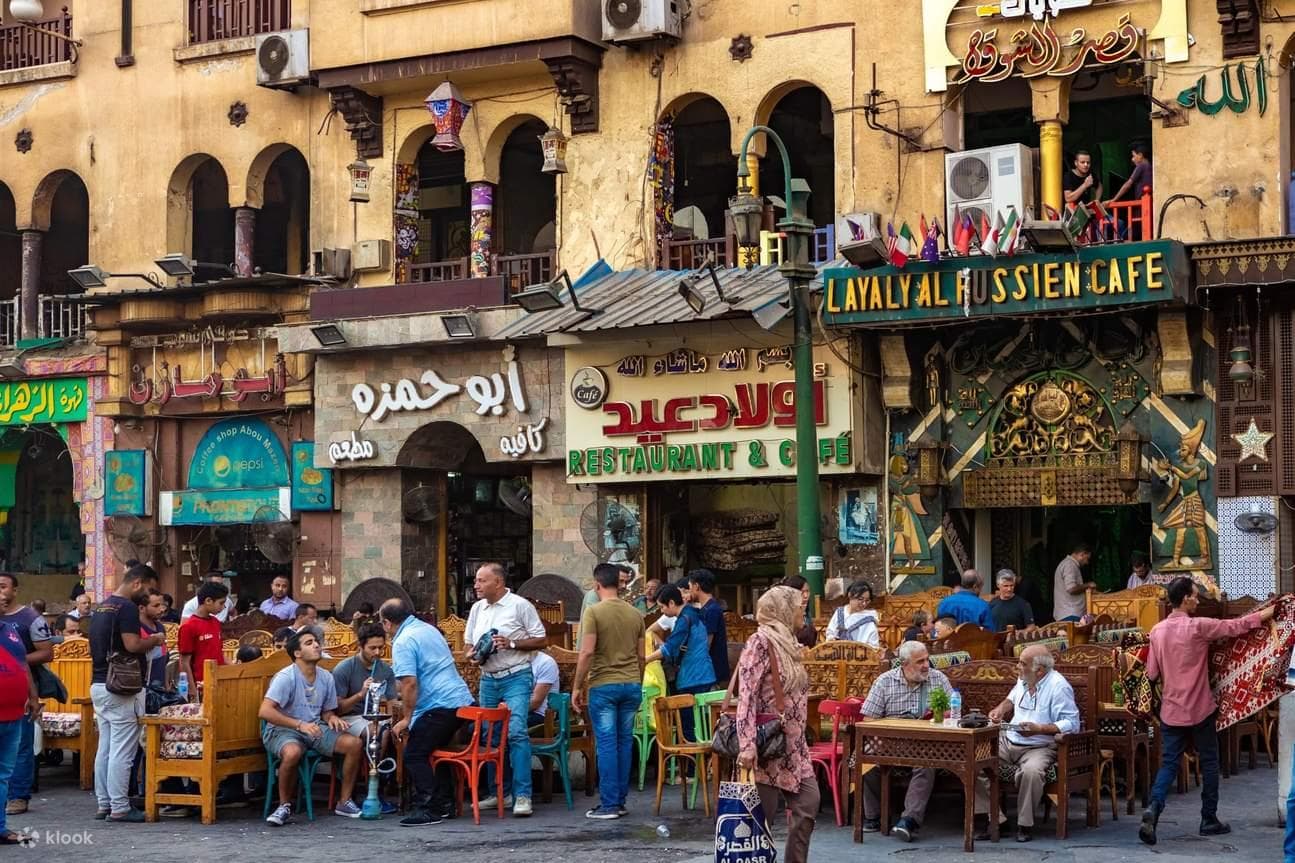
The word *ahwa* (sometimes written *ahwah* or *2ahwa*) is wonderfully slippery. In Egyptian Arabic it means both "coffee" and "the place where you drink it." So when an Egyptian says "let's go to the ahwa," they rarely mean a polished espresso bar. They mean the traditional coffeehouse: a sprawl of low wooden or wicker chairs spilling onto the pavement, marble-topped tables worn smooth by decades of elbows, and a kettle that never quite stops boiling.
These places have been the men's clubs, debating halls and news exchanges of Egypt for centuries. The first coffeehouses appeared in Cairo in the 1500s, and by the time the writer Naguib Mahfouz was setting his novels in the alleys around Khan el-Khalili in the mid-20th century, the ahwa was already a fixed character in Egyptian literature. The most famous of all, El Fishawy, has supposedly been pouring tea without closing for more than 200 years.
Understanding the ahwa is, in a real sense, understanding how Egyptians organise their time and their friendships. Deals are struck here, marriages are arranged, football is dissected goal by goal, and politics is argued in low, careful voices. The ahwa is where a city of more than 20 million people slows down. There is no equivalent in the West to this institution: it is part café, part living room, part town square, and entirely free of any pressure to hurry or to spend much. That accessibility is the point. For the price of a single glass of tea you buy hours of belonging.
Shai: The National Drink
Forget coffee for a moment. The drink Egyptians consume most is *shai* (tea), and they drink an astonishing amount of it. It comes in two main styles.
### Koshary vs. Saiidi
*Shai koshary* is tea brewed gently, the loose leaves or bag steeped in hot water and served with sugar on the side or already sweetened. *Shai saiidi* (Upper Egyptian style) is far stronger, boiled hard until it is almost black and bitter, then loaded with sugar. If you order tea in a village in the south, expect saiidi: it is the rocket fuel of farmers and fishermen.
Egyptian tea is almost always black, often a robust Kenyan or Sri Lankan blend (the local Lipton-style brands are everywhere). Sugar is the default, and "no sugar" (*min gheir sokkar*) tends to genuinely surprise the waiter. A glass of tea at a neighbourhood ahwa costs roughly 10 to 25 EGP (around 0.20 to 0.50 USD as of 2026); in a tourist-facing cafe near Khan el-Khalili it might be 40 to 80 EGP.
### Shai bil Na'na and Other Variations
The most beloved variation is *shai bil na'na*, tea with a generous sprig of fresh mint dropped straight into the glass. In winter you will also see *yansoon* (anise), *helba* (fenugreek, slightly bitter and said to aid digestion), and *karkade* (hibiscus), a tart ruby-red infusion served hot in winter and ice-cold in summer. Karkade is Egypt's signature herbal drink and a wonderful caffeine-free option, often around 15 to 30 EGP.
Coffee, the Turkish Way
When Egyptians do drink coffee, it is *ahwa turki* (Turkish coffee): finely ground beans boiled in a small long-handled pot called a *kanaka* and poured, grounds and all, into a tiny cup. You do not stir it or filter it; you let the silt settle, sip slowly, and stop before you reach the muddy bottom.
The crucial thing to get right is the sugar level, which you must specify when ordering:
- ***Saada*** — no sugar at all, strong and bracing (traditionally drunk at funerals and times of mourning).
- ***Ariha*** or ***mazboot*** — lightly to medium sweetened, the most common choice.
- ***Ziyada*** — extra sweet, almost syrupy.
Many people also ask for it *bil hel*, with cardamom, which gives it a fragrant, slightly perfumed edge. A cup of Turkish coffee runs about 15 to 35 EGP at a local spot. A growing third-wave specialty-coffee scene exists in upscale districts like Zamalek, Maadi and the New Cairo malls, where a flat white will set you back 70 to 130 EGP, much closer to European prices.
There is also a beloved cold cousin worth knowing. In the heat of summer, many cafes serve *sahlab* (a warm, milky orchid-root drink topped with nuts and cinnamon, more a winter treat) and ice-cold *karkade* or fresh sugarcane juice (*asab*) from juice stands rather than ahwas. If you want coffee but find Turkish coffee too intense, ask for *nescafe*, which in Egypt simply means instant coffee with milk and is wildly popular; nobody will judge you for it.
Shisha: The Other Half of the Ritual
You cannot describe ahwa culture without *shisha* (water pipe, also called hookah or *argileh*). The gentle bubbling soundtrack is inseparable from the experience. Tobacco comes in flavours, most popularly *tuffah* (apple, especially the double-apple *tuffahteen*), grape-mint, lemon, and molasses. A waiter circulates with tongs and glowing coals, swapping them out as they cool.
Expect to pay roughly 50 to 120 EGP for a shisha at a traditional ahwa, more in tourist zones. Note that prices and the legality of indoor smoking have tightened in recent years, so many cafes now seat shisha smokers outdoors. If you do not smoke, that is completely fine; nobody will pressure you, and the secondhand smoke is part of the atmosphere whether you partake or not.
How to Order and What It Costs
The rhythm of an ahwa is relaxed. You sit first, then a waiter ambles over. There is rarely a menu at traditional places; you simply call out what you want. A few useful phrases:
- *Shai, min fadlak* — Tea, please.
- *Ahwa mazboot* — Medium-sweet Turkish coffee.
- *Na'na ziyada* — Extra mint.
- *El-hisab, low samaht* — The bill, please.
Tipping is expected but small: rounding up or leaving 5 to 10 EGP per round is normal and appreciated. Be aware that a handful of cafes in heavy tourist areas inflate prices or add vague "service" or "seating" charges. Glance at posted prices if any exist, and at a traditional ahwa it is reasonable to confirm the cost before ordering shisha, which is where the biggest surprises hide.
The Unwritten Social Rules
The traditional ahwa has historically been a male space, and in working-class and rural areas it largely still is. That said, attitudes have shifted enormously in central Cairo, Alexandria and tourist districts, where mixed-gender and family-friendly cafes are now completely normal. Foreign women travellers can sit at most central ahwas without trouble, especially in groups or with a guide, though a deeply local backstreet ahwa may feel conspicuous.
A few etiquette notes: it is polite to greet with *salaam aleikum* when you sit; hosts will often try to pay for your drink and refusing too hard can cause offence (a graceful "thank you, next time" works); and lingering is the whole point. Nobody will rush you to leave. You can nurse one tea for two hours and play backgammon (*tawla*) the entire time.
Where to Experience It in Cairo
The undisputed icon is **El Fishawy**, tucked in a narrow alley inside Khan el-Khalili. It is touristy and pricier than average, but the antique mirrors, brass lamps and centuries of history make it worth one visit. Go mid-morning to beat the crowds, or after dark when it glows.
For something more local, the cafes around **Bab el-Louk** and **Downtown's** historic streets, plus the literary haunts near **Wikalat al-Balah**, offer a more authentic, less polished scene. In Islamic Cairo, the rooftop and street cafes along **Al-Muizz Street** come alive in the cool of evening. For a modern contrast, head to **Zamalek** along 26th of July Street for specialty coffee.
### Best Times to Go
The ahwa is an all-day institution, but it truly comes alive after sunset, especially during **Ramadan**, when cafes fill from after the iftar meal until the pre-dawn *suhoor*, buzzing past 2 or 3 a.m. The cooler months from November to March are the most pleasant for sitting outdoors; in the summer heat, locals shift to the evening and night hours.
A Drink That Explains a Country
More than the pyramids or the museums, an afternoon spent doing nothing in an ahwa, watching the street, sipping sweet tea, listening to dice clack, tells you what Egypt is actually like to live in. It is generous, slow, talkative and endlessly hospitable. Order a *shai bil na'na*, settle into a wobbly chair, and let the city come to you.
Experience It Yourself
The easiest way to fold cafe culture into your trip is after dark, when Cairo is at its most atmospheric. Our Cairo Night City Tour winds through the illuminated streets of Islamic Cairo and Khan el-Khalili, with time to stop at a historic ahwa for tea and shisha, so you can taste the ritual rather than just read about it. Bring your curiosity, an empty stomach, and at least two hours to spare.