The word "pharaoh" conjures gold masks, towering temples, and god-kings buried beneath mountains of stone. But behind the legend stood real rulers who governed the Nile Valley for roughly three thousand years, from the unification of Upper and Lower Egypt around 3100 BCE to Cleopatra's death in 30 BCE. This guide walks you through the most important pharaohs, what they actually achieved, and exactly where you can stand before their monuments today.
What "Pharaoh" Really Meant
The term comes from the Egyptian *per-aa*, meaning "great house" - originally the palace itself, not the person. Only from the New Kingdom (around 1500 BCE) did it become a title for the king. Earlier rulers were simply called *nesu* (king). Egyptians believed the pharaoh was the living embodiment of Horus and, after death, became one with Osiris, lord of the underworld. He was the indispensable link between the gods and humanity, responsible for maintaining *ma'at* - cosmic order, truth, and balance.
This theology had very practical consequences. The king's tomb and mortuary cult were matters of state survival, which is why so much of Egypt's surviving wealth was poured into funerary monuments. Understanding this religious logic is the key to reading everything from the pyramids to the painted tombs of the Valley of the Kings.
Djoser and the First Pyramid (c. 2670 BCE)
The story of monumental Egypt begins with Djoser of the Third Dynasty and his brilliant architect Imhotep, who designed the Step Pyramid at Saqqara - the world's oldest large stone building. It rose in six stacked tiers to about 60 metres. Imhotep was later deified as a god of wisdom and medicine, an almost unheard-of honour for a commoner.
Saqqara lies roughly 30 km south of central Cairo, about a 45-minute drive. Entry to the Saqqara site is around 450 EGP (roughly 9 USD as of 2026), with a separate ticket of about 150 EGP to enter the Step Pyramid's restored interior. It is far quieter than Giza and pairs naturally with nearby Dahshur, home to Sneferu's Bent and Red Pyramids.
Khufu and the Giza Plateau (c. 2580 BCE)
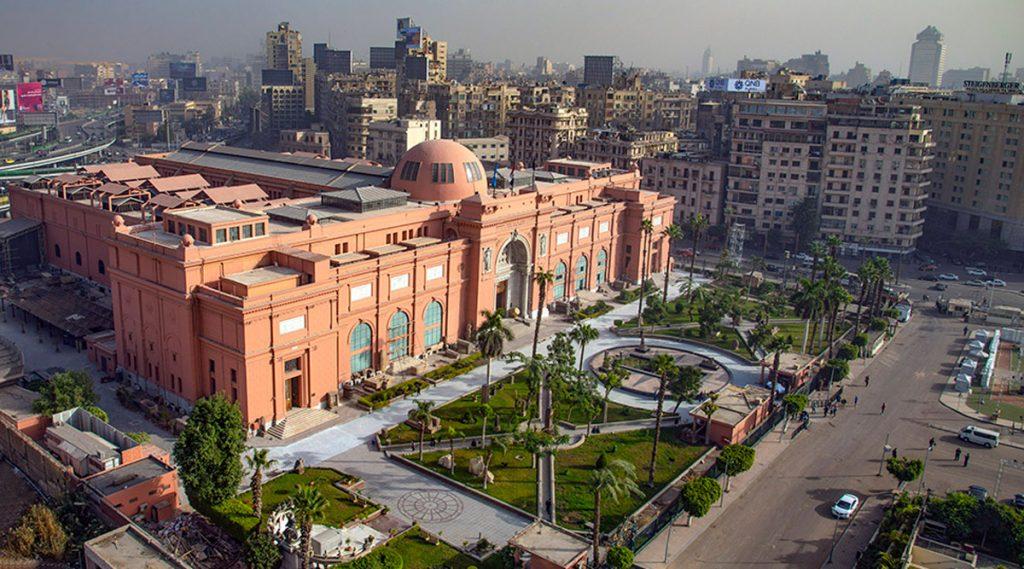
Khufu (Greek: Cheops) of the Fourth Dynasty built the Great Pyramid, the only surviving Wonder of the Ancient World. Originally about 146 metres tall, it held that height record for nearly 3,800 years. We know surprisingly little about Khufu the man - ironically, the only confirmed portrait of him is a tiny ivory statuette just 7.5 cm high, now in the Egyptian Museum.
### Visiting Giza
The Giza plateau opens daily around 7:00 (8:00 in winter) and closes around 17:00. General admission is roughly 700 EGP (about 14 USD). Climbing inside the Great Pyramid costs an extra ticket of around 900 EGP and is not for the claustrophobic - a steep, hunched climb up the Grand Gallery. Khafre's pyramid is cheaper to enter and often nearly empty. Go at opening time to beat both the heat and the tour buses, and budget two to three hours.
Hatshepsut: The Female King (r. c. 1479-1458 BCE)
One of history's most successful female rulers, Hatshepsut took the full titles of a king and was often depicted with the traditional false beard. Her reign was a golden age of trade - including a famous expedition to the land of Punt - and ambitious building. Her mortuary temple at Deir el-Bahari, on Luxor's west bank, is an architectural masterpiece of stacked colonnaded terraces set against a sheer cliff.
The temple is open roughly 6:00 to 17:00; tickets are around 360 EGP (about 7 USD). After her death, her successor Thutmose III attempted to erase her image from monuments - a fact you can still see in the deliberately hacked-out reliefs.
Akhenaten the Heretic (r. c. 1353-1336 BCE)
Akhenaten staged the most radical revolution in Egyptian history, abandoning the traditional gods in favour of a single deity, the Aten (the sun disk). He moved the capital to a brand-new city, Akhetaten (modern Amarna), and overturned centuries of artistic convention. His reign also gave us the iconic bust of his queen, Nefertiti.
After his death the experiment collapsed and his city was abandoned. To see the art of this period, visit the Egyptian Museum in Cairo, which holds colossal, strangely elongated statues of him. Amarna itself, in Middle Egypt, is remote and rarely visited by standard tours.
Tutankhamun and the Untouched Tomb (r. c. 1332-1323 BCE)
Tutankhamun was a minor king who died around age 18, yet he is the most famous pharaoh of all - purely because his tomb (KV62) was found nearly intact by Howard Carter in 1922. The discovery of over 5,000 objects, including the solid-gold death mask, transformed our understanding of royal burial.
### Where to See His Treasures
The full collection now anchors the Grand Egyptian Museum (GEM) near Giza, which displays the complete Tutankhamun trove together for the first time. GEM entry is roughly 1,200 EGP for foreign visitors (about 24 USD). His actual tomb in the Valley of the Kings requires a separate special ticket of around 600 EGP on top of the general Valley ticket - and the tomb is small, so manage your expectations.
Ramesses II: The Great Builder (r. c. 1279-1213 BCE)
If one pharaoh embodies the New Kingdom at its peak, it is Ramesses II - "Ramesses the Great." He reigned for an astonishing 66 years, fathered around 100 children, fought the Hittites at the Battle of Kadesh, and signed the world's first surviving peace treaty. He was also a relentless self-promoter who plastered his cartouche across temples nationwide.
### His Greatest Monuments
His masterpiece is Abu Simbel, two rock-cut temples in the far south guarded by four 20-metre seated colossi. Twice a year, around 22 February and 22 October, sunlight penetrates 60 metres into the inner sanctuary to illuminate the gods. He also expanded the colossal Karnak Temple at Luxor, whose Great Hypostyle Hall - 134 giant columns - remains one of the most overwhelming spaces ever built. His mortuary temple, the Ramesseum, lies on the west bank.
The Valley of the Kings
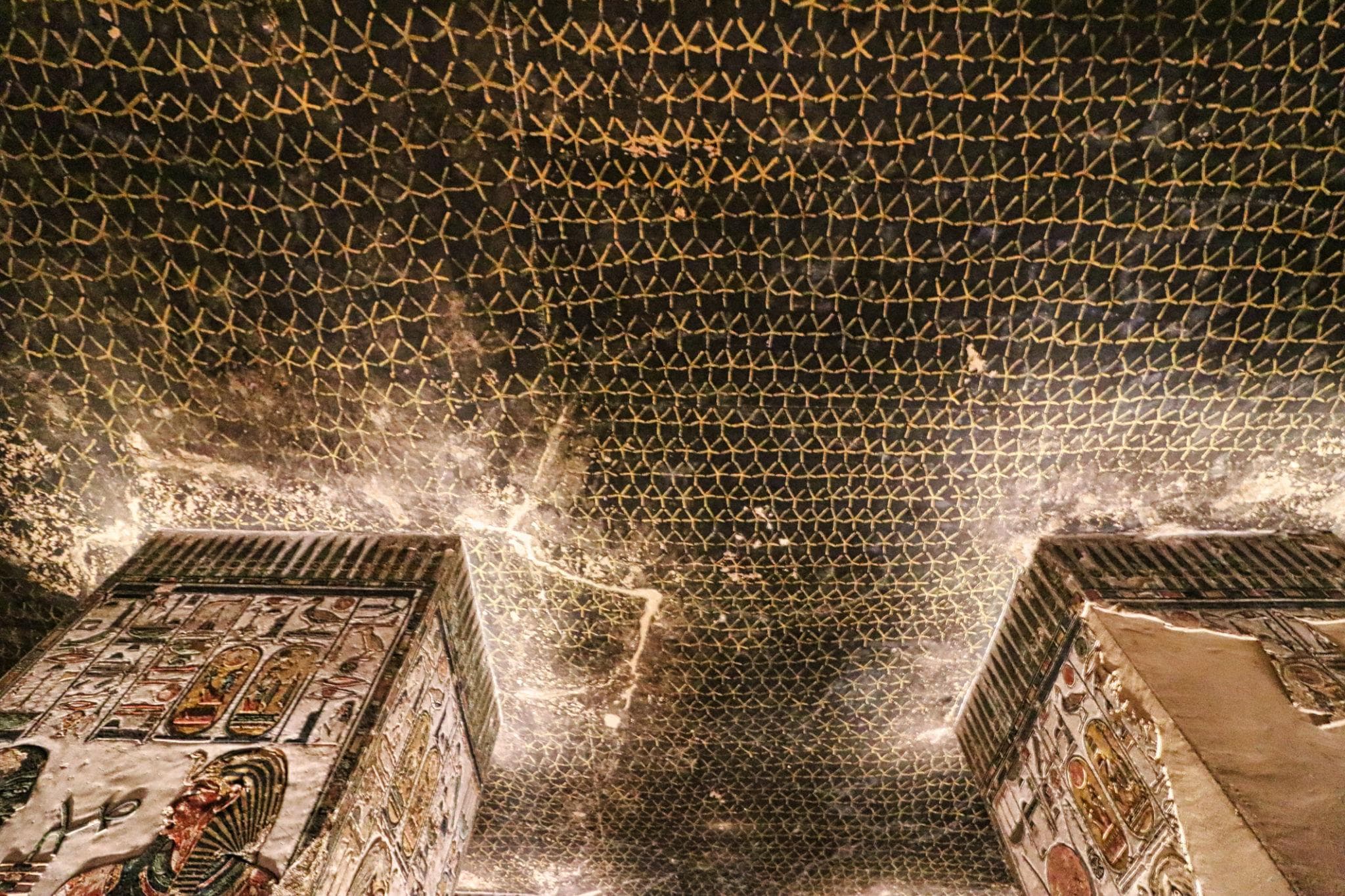
From roughly 1550 to 1070 BCE, pharaohs abandoned pyramids - too obvious for tomb robbers - in favour of hidden rock-cut tombs in a desolate valley on Luxor's west bank. The Valley of the Kings holds 60-plus tombs, their walls covered in vivid funerary texts like the Book of the Dead and the Amduat, with painted ceilings of golden stars on deep blue.
The general ticket (around 550 EGP, about 11 USD) covers any three tombs from the rotating open selection; Seti I's tomb - the longest and finest - and Tutankhamun's require separate premium tickets. A general photography pass costs around 300 EGP. Arrive before 8:00; by mid-morning the unshaded valley exceeds 40 C in summer.
Seti I and the Golden Reliefs
Often overshadowed by his more famous son Ramesses II, Seti I (r. c. 1290-1279 BCE) was arguably a finer patron of art. His tomb in the Valley of the Kings, KV17, is the longest and most exquisitely decorated in the valley, with painted reliefs so crisp they look freshly carved, and a vaulted astronomical ceiling. Long closed for conservation, it now reopens periodically for a premium ticket of around 1,400 EGP (about 28 USD) - expensive, but for many the single most beautiful interior in Egypt. Seti also built the breathtaking Temple of Abydos, whose reliefs include the famous King List naming his royal predecessors.
How to Read a Pharaoh's Names
A practical tip that transforms any temple visit: learn to spot a cartouche, the oval loop of rope that encircles a royal name. Each pharaoh actually had five names, but the two written in cartouches are the throne name and the birth name. Once you can recognise the hieroglyphs for Ramesses or Thutmose, you start seeing them everywhere - and you can tell at a glance who built (or usurped) a given wall. A good Egyptologist guide will teach you a handful of these in minutes, and it genuinely changes how you experience the monuments.
Cleopatra and the End of the Pharaohs
The line of native pharaohs effectively ended in 332 BCE with Alexander the Great's conquest; his general Ptolemy founded a Greek-speaking dynasty that ruled for nearly 300 years. Its last and most famous ruler was Cleopatra VII, whose death in 30 BCE delivered Egypt to Rome. Despite her Greek heritage, she presented herself as a traditional pharaoh and was the only Ptolemy to learn Egyptian. After Rome annexed Egypt, the pharaonic system that had endured for three millennia finally dissolved, though the temples kept functioning for centuries more.
Planning Your Pharaonic Journey
To meet the greatest pharaohs you really need both Cairo (Giza, Saqqara, the museums) and Luxor with Aswan/Abu Simbel in the south. The two are about 650 km apart; a one-hour domestic flight or an overnight train connects them. The cooler months from October to April are by far the most comfortable for the open-air southern sites.
Our 5 Days Cairo, Luxor & Abu Simbel tour is purpose-built for this, stringing together the pyramids, the Valley of the Kings, Karnak, and the colossi of Ramesses II with flights, a private Egyptologist guide, and skip-the-line tickets so you spend your time in front of the monuments rather than in queues.