Walking into an Egyptian bazaar for the first time is a full-body experience: copper hammered into lanterns, pyramids of saffron and hibiscus, the smell of cardamom coffee, and a chorus of shopkeepers who have perfected the art of friendly persuasion over generations. It can be intoxicating or overwhelming, often both. This guide demystifies Egypt's great markets, what to buy, what things actually cost, how to haggle without stress, and how to dodge the well-worn tourist traps, so you come home with treasures rather than regrets.
Khan el-Khalili: The Grand Bazaar of Cairo
Founded in the late 14th century (around 1382) under the Mamluk emir Jaharkas el-Khalili, who built a caravanserai on the site, Khan el-Khalili is the beating heart of Islamic Cairo and one of the oldest continuously operating markets in the world. For centuries it sat at the crossroads of trade routes carrying spices, textiles, and gold between Africa, Arabia, and the Mediterranean, and that mercantile DNA is still visible in the way the lanes cluster by trade, goldsmiths here, spice merchants there, coppersmiths in their own ringing alley. Its labyrinth of alleys near Al-Azhar Mosque and the Al-Hussein Mosque sells everything from mass-produced trinkets to genuine craftsmanship, and the trick is knowing which is which.
### What to see beyond shopping
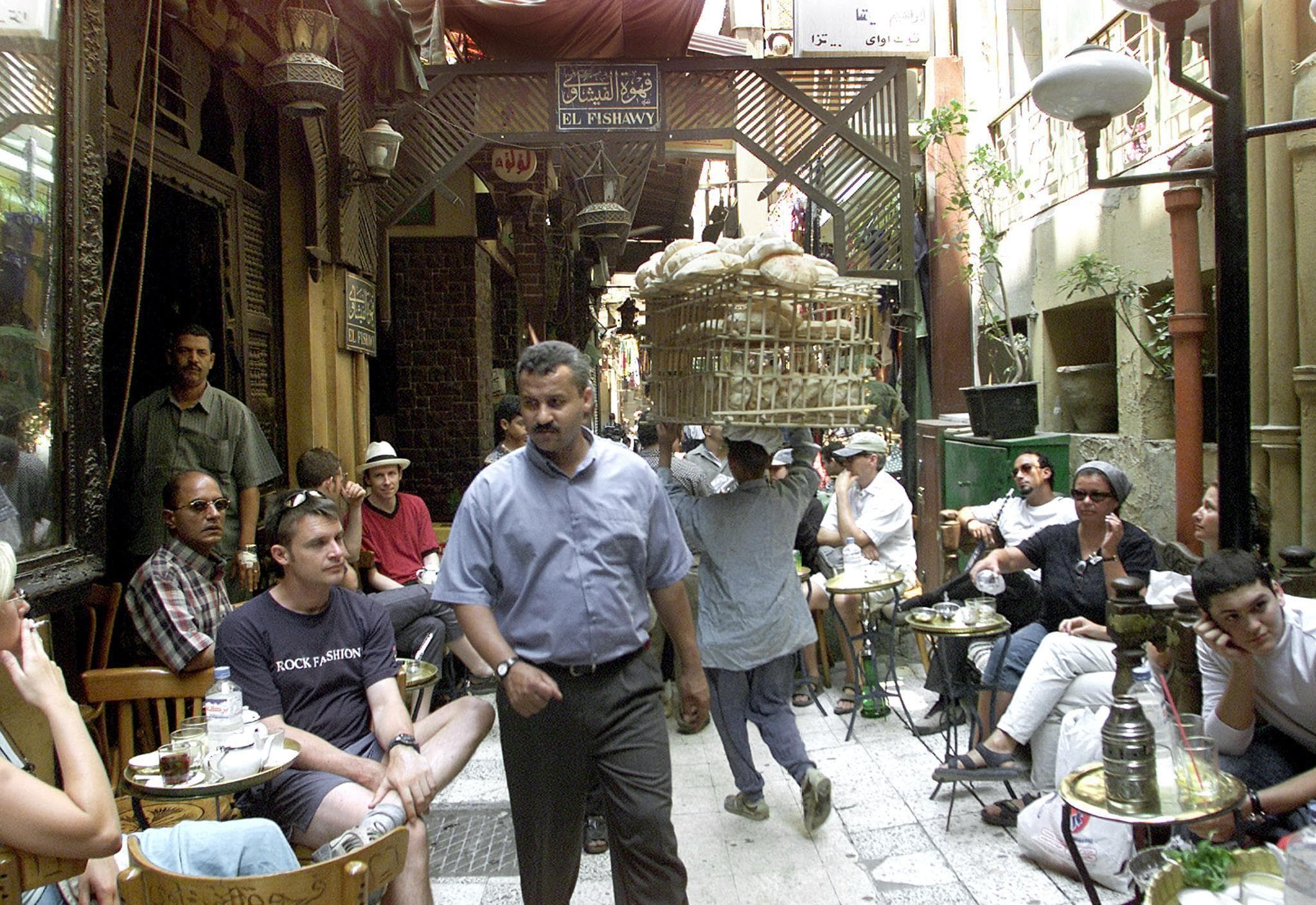
Don't treat it purely as a place to buy. Duck into El Fishawy, a café operating since the 18th century, for a mint tea or shisha amid mirrored walls, it is touristy but atmospheric and worth the slightly inflated prices. Look up at the carved mashrabiya screens and Mamluk-era stone facades. The surrounding district holds the Al-Azhar complex and the medieval gates, making this as much a heritage walk as a shopping trip.
### When to go
Mornings (around 10am–noon) are calmer and better for browsing and unhurried haggling; evenings are atmospheric but packed, especially around the El Hussein square. Most shops open roughly 10am to 10pm or later, many close or reduce hours on Friday mornings for prayers, and during Ramadan the rhythm shifts to a late-night buzz after iftar, when the lanes can stay lively past midnight. Entry is free; it is a public street market, not a ticketed attraction. Getting there is easiest by taxi or ride-hailing app to the El Hussein/Al-Azhar area (a metered or app fare from central Cairo is typically modest, but confirm before riding); the nearest metro stations are a longish walk, so most visitors arrive by car. Give yourself at least two hours, and far longer if you intend to shop seriously.
The Tentmakers' Street (Khayamiya)
A short walk south of Khan el-Khalili, just inside the medieval Bab Zuweila gate, lies Sharia al-Khayamiya, the covered Street of the Tentmakers. This is one of Cairo's most rewarding and least touristy markets, the last place where artisans still hand-stitch khayamiya, the vivid appliqué textiles historically used for ceremonial tents. A small hand-sewn cushion cover might run 300–800 EGP (~6–16 USD), while a large hand-appliquéd wall hanging can reach several thousand. Buying directly from the stitcher supports a dying craft, and the quality gap between hand-sewn and machine-printed imitations is obvious once you look closely.
What to Buy in Egypt
### Genuinely worthwhile
- **Khayamiya appliqué textiles** — cushion covers, wall hangings; a true Egyptian craft.
- **Egyptian cotton** — real long-staple cotton scarves and linens, but beware imitations.
- **Inlaid woodwork and mother-of-pearl boxes** — check the inlay is set, not printed.
- **Spices** — hibiscus (karkade), cumin, dried mint, and saffron (real saffron is costly; cheap "saffron" is usually safflower).
- **Alabaster** — especially near Luxor; hand-carved pieces have slight irregularities.
- **Copper and brass** — lanterns, trays, and coffee pots from the metalworkers' lanes.
- **Perfume oils and shisha** — fun, though pure-essence claims are often exaggerated.
### Approach with caution
Gold and silver should only be bought from reputable jewellers who can show hallmarks; "papyrus" sold cheaply is almost always banana-leaf paper (genuine papyrus is sold in licensed institutes and is more expensive); and "antiques" are almost universally fakes, exporting genuine antiquities is illegal anyway.
The Art of Haggling
Bargaining is expected and, done well, enjoyable. The opening price quoted to a tourist is often two to four times what the seller will accept.
### A simple method
1. Show interest but not desperation, and never name the first number.
2. When pressed, counter at roughly 30–40% of the asking price.
3. Settle somewhere in the middle, often around 50–60% of the original ask.
4. Be ready to walk away politely, this frequently produces the real price as you reach the door.
5. Keep it warm and humorous; aggression backfires, and a smile gets better deals.
A few realities: prices for tea, fixed-price shops, and food are usually not negotiable; haggling over tiny sums to "win" can feel mean for the small savings involved; and once you agree a price, it is bad form to renege. Carry small banknotes, sellers love to claim they have no change as a soft upsell. One insider tip: shopping in the late morning, when a trader is keen for the day's first sale (the "baraka" or blessing of an opening transaction), can yield a better price than the busy evening rush. Another is to pay in cash and in Egyptian pounds rather than dollars or euros, the converted prices quoted in foreign currency are almost always rounded heavily in the seller's favour.
Markets Beyond Cairo
### Aswan's Souk
The Aswan market, running parallel to the Nile along Sharia as-Souk, is many travellers' favourite, more relaxed than Cairo, fragrant with Nubian spices, hibiscus, peanuts, and dyed scarves. It is the best place for karkade and for vivid spices, though the same haggling rules apply. Nubian crafts, woven baskets, and colourful textiles reflect the distinct culture of the south. Late afternoon, as the heat eases, is the pleasant time to browse.
### Luxor and Beyond
Luxor's tourist souk near the temple is convenient but heavily geared to visitors; venture into the local market streets for better prices. The town is also Egypt's centre for alabaster, with workshops on the West Bank near the Valley of the Kings where you can watch pieces being carved and polished by hand, a good way to judge real stone (cool, slightly translucent when held to light) against cheaper resin imitations.
Costs, Tipping, and Money
Markets are overwhelmingly cash economies; many small stalls do not take cards, and ATMs can be scarce inside the bazaar itself, so bring Egyptian pounds in small denominations. As a rough sense of fair prices (as of 2026): a decent quality pashmina-style scarf might settle around 200–500 EGP; a small inlaid box 250–600 EGP; a hand-hammered medium lantern 600–1,500 EGP; 100g of good hibiscus around 50–120 EGP. These are guides, not gospel, quality varies enormously. A small tip is appreciated if a shopkeeper spends real time helping you, and porters or guides expect baksheesh.
Scams and Annoyances to Know
The markets are safe but commercial, and a few tactics recur. The "friendly" stranger who offers to show you a "special" shop is usually earning commission. "Free" gifts pressed into your hand are an obligation hook, decline politely if you don't want to buy. Inflated "first price for my friend" openings are universal. Shops claiming a piece is "antique" or "museum quality" are almost always overselling. And be wary of being steered to a single perfume or papyrus shop by a taxi driver or tout, they get a cut. None of this is dangerous; it just rewards a calm, slightly sceptical mindset.
Etiquette and Photography
Egyptians are warm and generally happy to chat, but a few courtesies smooth the experience. Dress modestly, especially in Islamic Cairo near the mosques (shoulders and knees covered; women may want a light scarf). Always ask before photographing a person or the inside of a shop, some traders ask for a small tip for portraits, which is fair. A few words of Arabic (shukran for thank you, la shukran for no thanks) earns genuine warmth. Greet before you bargain; the relationship comes before the transaction in Egyptian commerce.
Staying Safe and Comfortable
The bazaar alleys are crowded, so keep valuables in a front pocket or zipped bag, opportunistic pickpocketing is the main petty risk. Wear comfortable closed shoes; the lanes are uneven and can be slick. Stay hydrated and take breaks in cafés. If you feel overwhelmed by the attention, it is perfectly fine to keep walking with a polite smile; persistence usually fades once sellers see you are firm.
See It With a Guide
Khan el-Khalili comes most alive after dark, when the lanterns glow and the cafés fill, and exploring it with someone who knows the genuine workshops from the tourist stalls transforms the visit. Our Cairo night city tour weaves the illuminated bazaar and Islamic Cairo into an evening that captures the atmosphere without the hassle of navigating, or haggling, entirely on your own. If your interest leans more historical, pair your market wandering with our guides to Egypt's pharaohs and to Cleopatra for context on the civilisation whose legacy still fills these stalls.