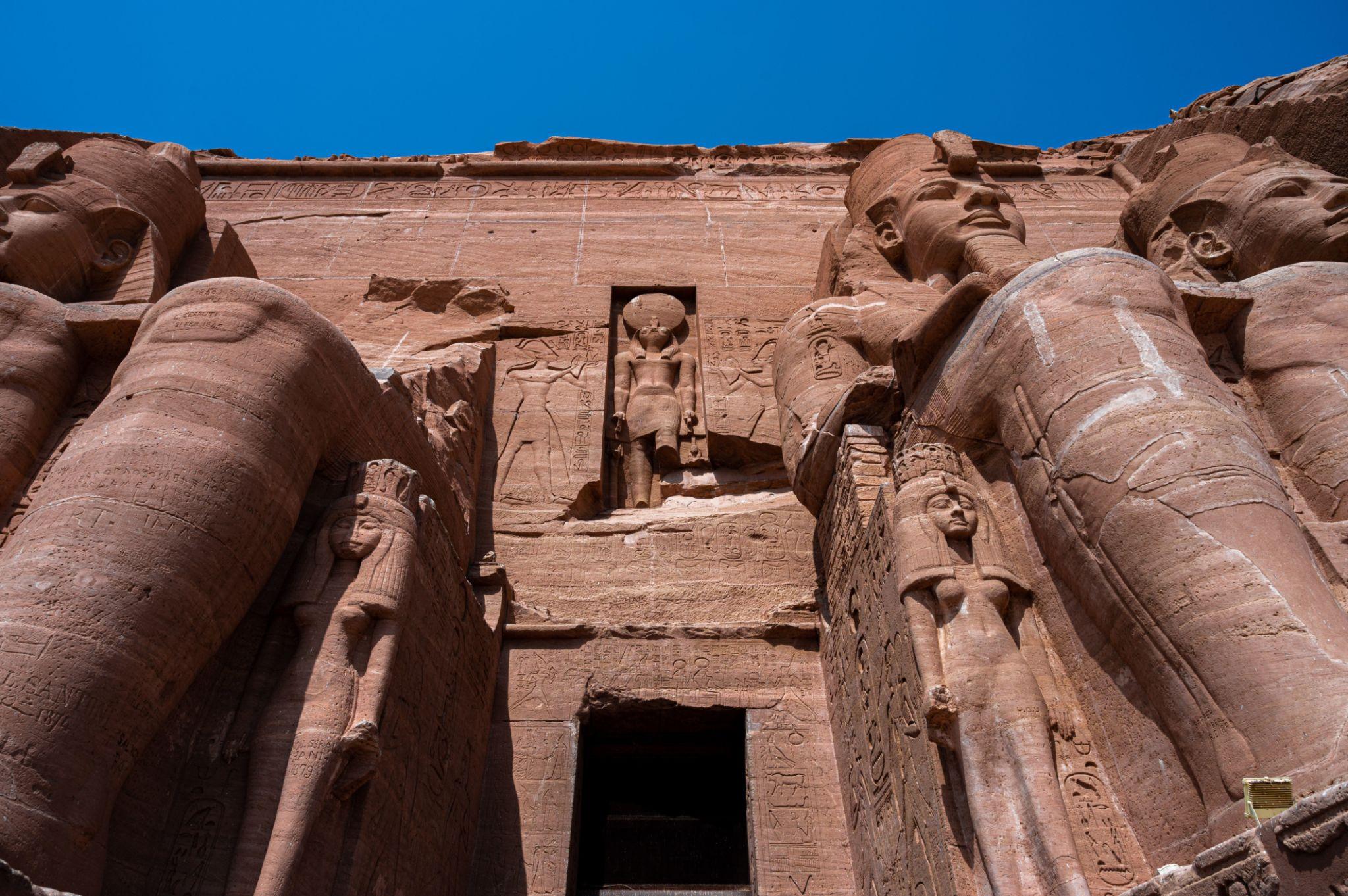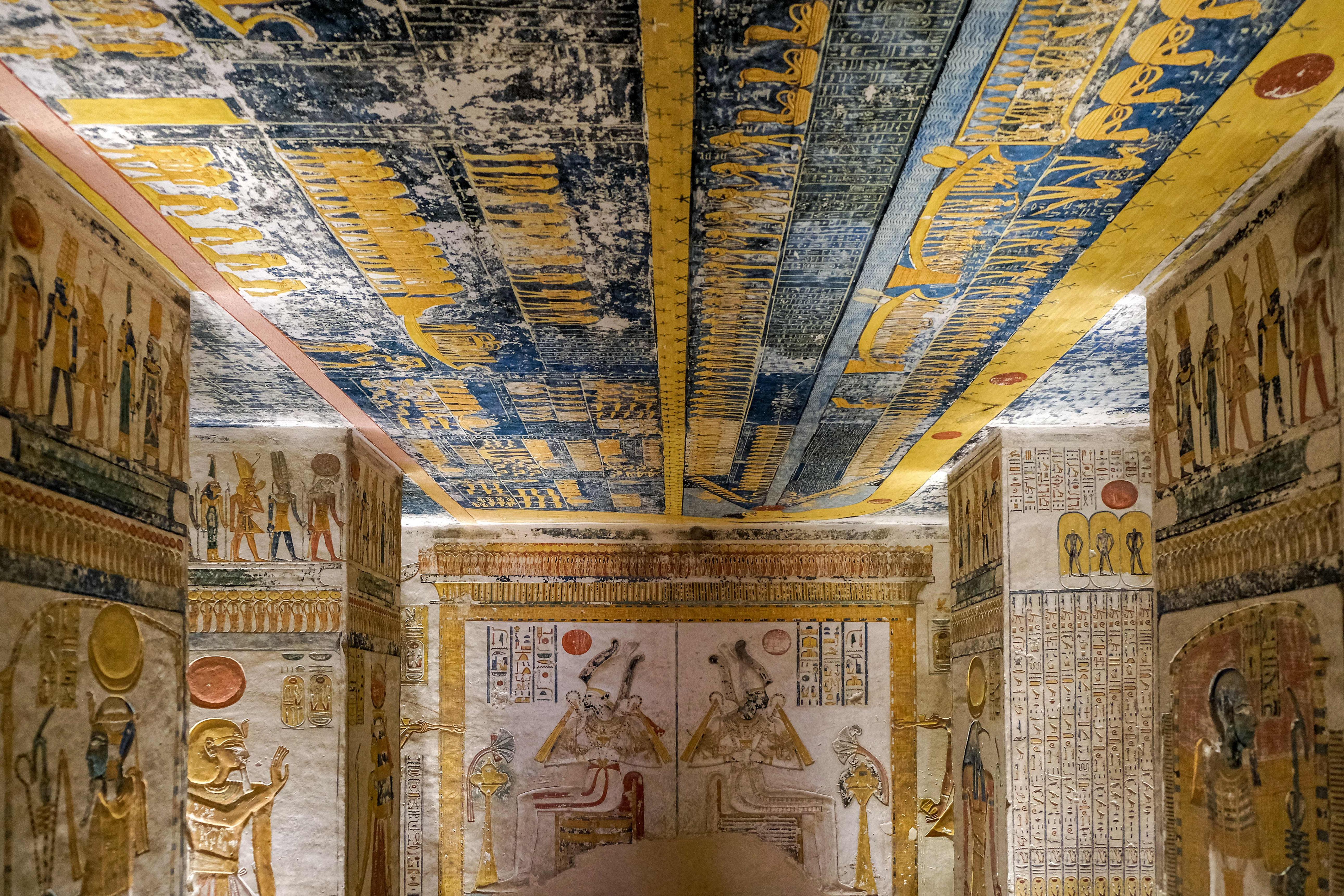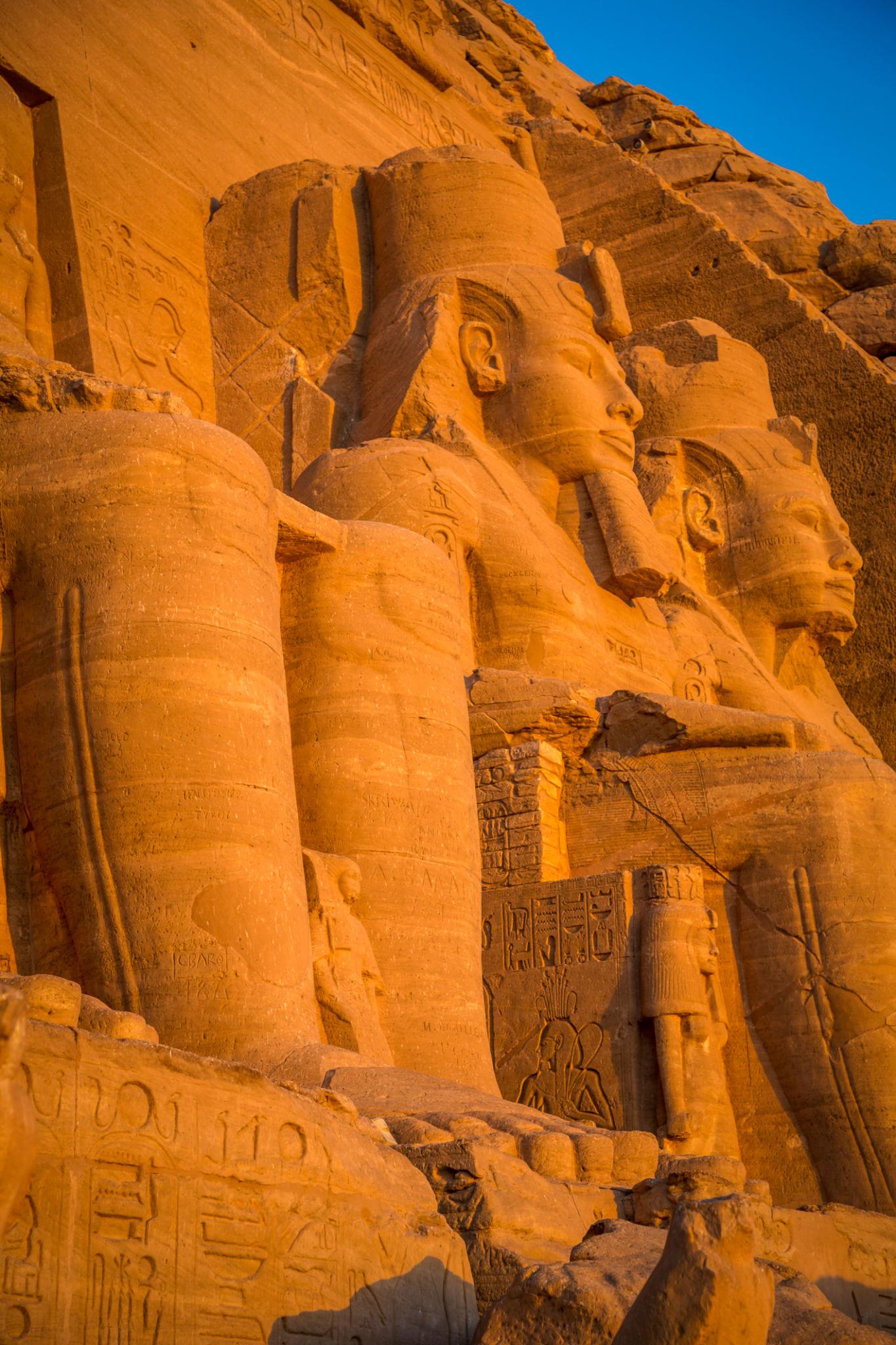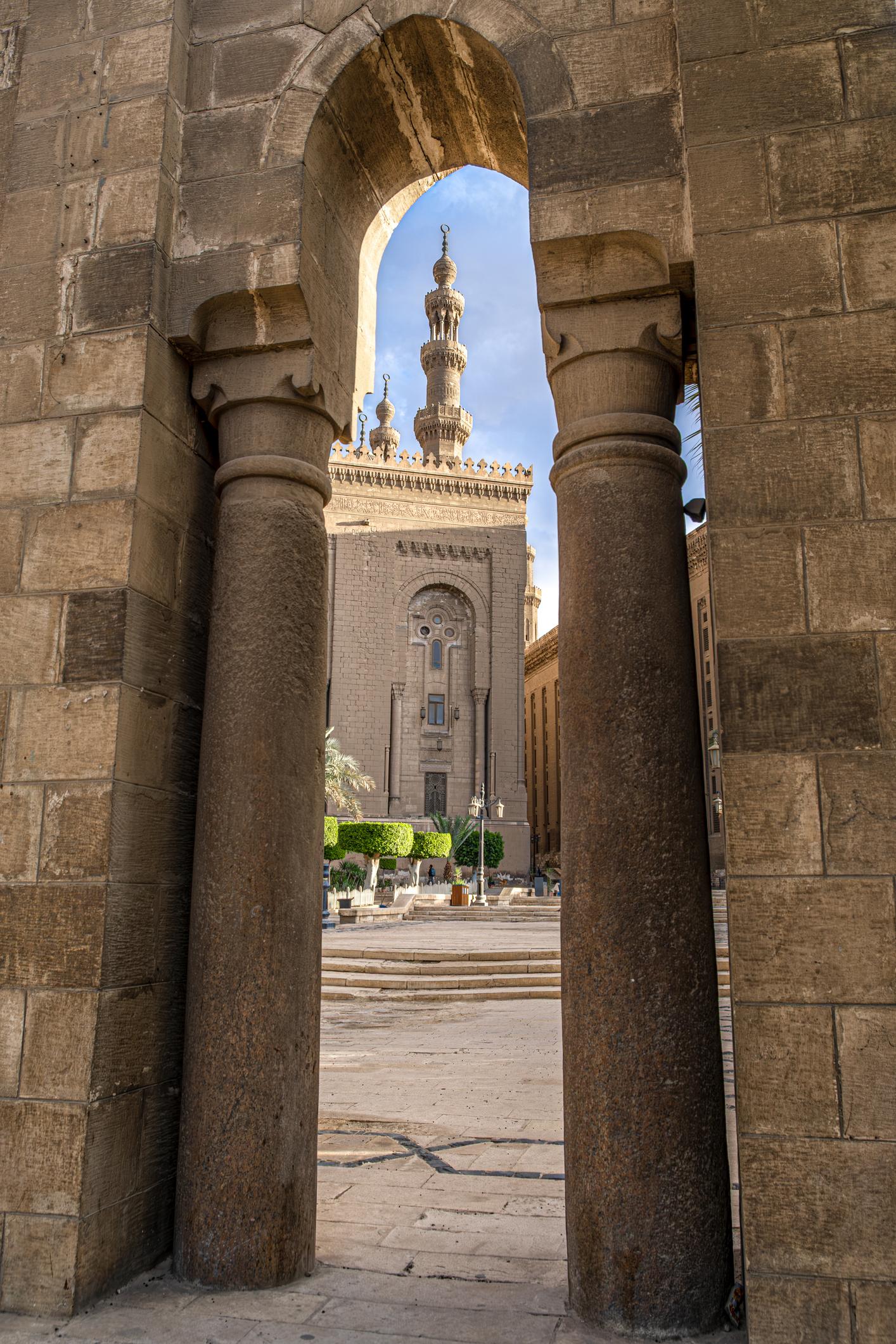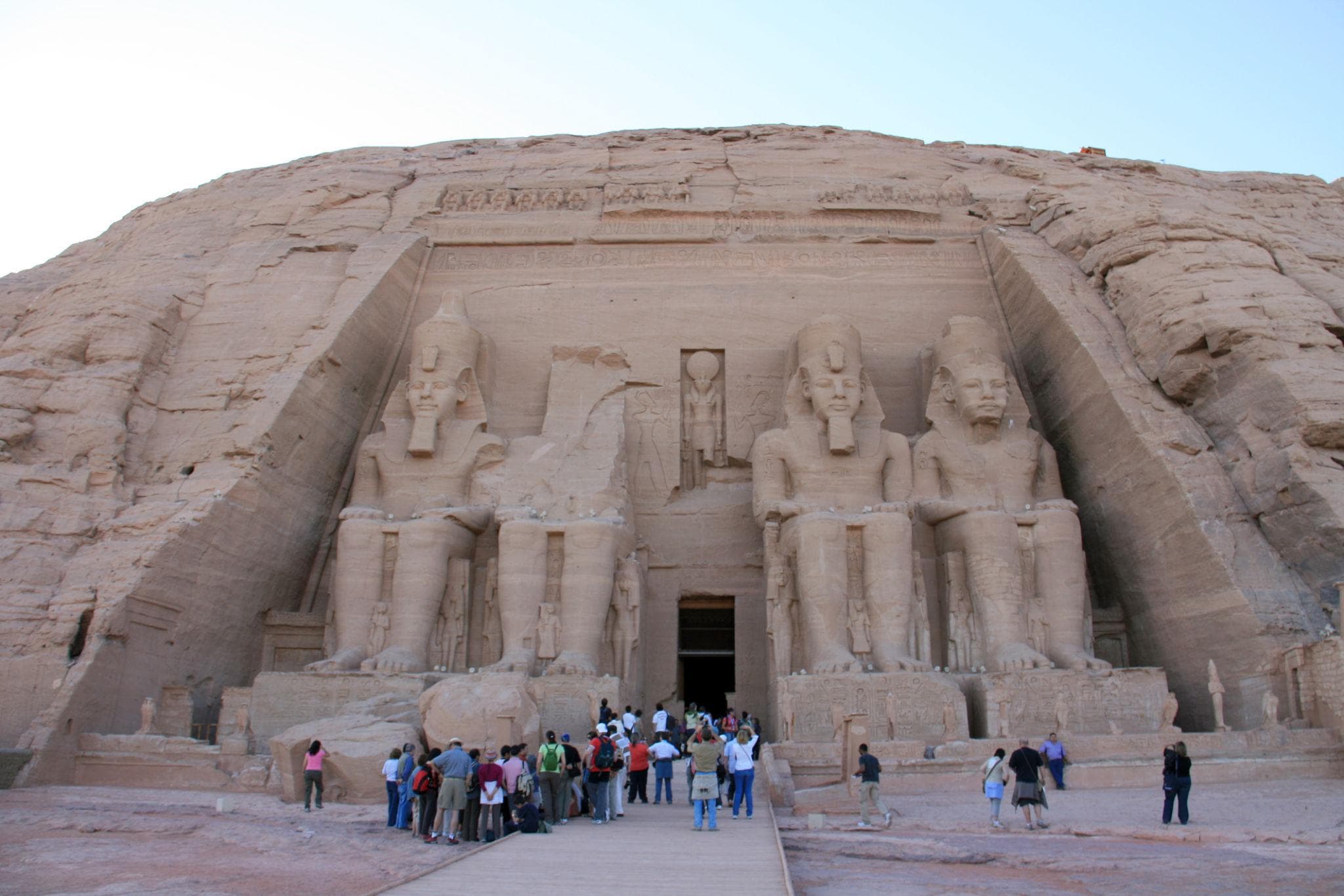
Just before 6am on 22 February 2027, a few thousand people will stand in the dark outside the Great Temple of Abu Simbel, waiting for a shaft of sunlight to travel more than 60 metres into the rock and light three of the four seated gods in the sanctuary. Two weeks earlier, if the crescent moon is sighted on schedule, Cairo's streets will have filled with lanterns for the first night of Ramadan.
Those two moments sum up Egypt events 2027: a year run on three calendars at once, the civil Gregorian year, the lunar Islamic year and the ancient Coptic one, with ancient alignments and modern festivals layered on top. Then there is the one-off: on 2 August, at around one in the afternoon, the sky over Luxor is predicted to go dark for around six minutes, in one of the longest total solar eclipses visible from land this century. This month-by-month calendar sets out what happens when, which dates are fixed and which depend on the moon, and what each one means for a traveller in terms of crowds, closures and prices.
At a Glance
Coptic Christmas: Thursday 7 January, a national holiday
Egyptian Marathon, Luxor: Friday 8 January, starting at Hatshepsut's temple
Abu Simbel sun alignments: Monday 22 February and Friday 22 October, around sunrise
Ramadan: expected from about 8 February to 9 March, subject to moon sighting
Eid al-Fitr: expected around 9 or 10 March
Coptic Easter and Sham el-Nessim: Sunday 2 and Monday 3 May
Eid al-Adha: expected around 16 or 17 May
Total solar eclipse: Monday 2 August, with Luxor close to the centre line
Film festivals: El Gouna usually in October, Cairo usually in November
Fixed national holidays: 7 January, 25 January, 25 April, 1 May, 30 June, 23 July, 6 October
How Egypt's Three Calendars Shape the Year
Most of Egypt's public life runs on the Gregorian calendar, and the fixed national holidays fall on the same date every year. The religious year is different. Islamic feasts follow a lunar calendar about 11 days shorter than the solar year, so Ramadan and the two Eids move earlier each year, and the exact start of each month is confirmed by Egypt's Dar al-Ifta after the new crescent is looked for. Moon-dependent dates in any list of Egypt events 2027, including this one, are astronomical predictions that can shift by a day.
Coptic feasts follow the church's own calendar. Christmas is always 7 January, while Easter moves each year with the Orthodox reckoning, taking Sham el-Nessim, the spring festival held the following Monday, with it. One more wrinkle: the government sometimes moves a fixed holiday to a Thursday or Sunday to create a long weekend, often announcing it only a few weeks ahead. If a specific date matters to your plans, check again closer to the time.
January: Coptic Christmas, a Marathon and the Book Fair
The year opens at the tail of peak season. Coptic Christmas falls on Thursday 7 January, after a 43-day fast and a night of liturgies on the 6th; it is a national holiday, banks and government offices close, and many Egyptian families travel. Our guide to Christmas and New Year in Egypt explains how to experience it respectfully. Monday 25 January is another national holiday, marking both Police Day and the anniversary of the 2011 revolution.
The next morning, Friday 8 January, the 34th Egyptian Marathon starts and finishes at the Temple of Hatshepsut on Luxor's West Bank, with races over 5 km, 12 km, 21 km and the full 42.195 km, all starting at 7am. The course runs past Medinet Habu and the Colossi of Memnon and through West Bank villages, and entry fees as of autumn 2026 run from about 80 to 91 EUR plus a service fee. If you are not running, it is a lively morning to be in Luxor, but expect road closures on the West Bank until midday.
In Cairo, the Cairo International Book Fair has in recent years run from late January into early February in New Cairo, drawing huge local crowds; confirm the 2027 dates once announced. In Luxor, the Moulid of Abu al-Haggag, honouring the town's patron saint, whose mosque sits on top of Luxor Temple, takes place in the Islamic month of Sha'ban, which in 2027 falls from about 9 January to 7 February. After the first ten days of January, the international crowds thin and prices ease, which makes the rest of the month one of the best-value windows of the year.
February: Abu Simbel at Dawn and the Start of Ramadan
On Monday 22 February the sun rises on the axis of the Great Temple at Abu Simbel and lights the statues of Amun-Ra, Ra-Horakhty and the deified Ramesses II in the sanctuary for around 20 minutes, while Ptah, a god linked with the underworld, stays in shadow. Festival-day tickets for foreign adults were reported at 1,200 EGP in 2026, against 750 EGP on a normal day (about 22 and 14 USD), and Aswan hotels fill early. The light also reaches the sanctuary, a little off-centre, for a day or two either side, with far fewer people. Our guide to the Abu Simbel Sun Festival explains the options, and our Abu Simbel day trip from Aswan can be timed for the alignment.
Ramadan 1448 is expected to begin on or around Monday 8 February, which means the February alignment falls inside the holy month this year. Mid-February also brings European half-term holidays, so the Nile Valley is busier in that week than in the weeks around it.
Good to Know: Travelling During Ramadan 2027
Ramadan is expected to run from about 8 February to 9 March 2027. It changes the rhythm of the day more than the availability of anything. Archaeological sites and museums stay open, but museums often close in mid-afternoon and opening hours at some sites are shortened, so the mornings are the time for sightseeing. Offices and banks work short days, and traffic is at its worst in the hour before iftar, the sunset meal, which in Cairo falls at roughly 5.45 to 6pm through the month.
The evenings are the reward. Streets are strung with fanous lanterns, Ramadan tents serve iftar and suhoor in hotels and historic houses, and the old quarters around Al-Azhar and Khan el-Khalili stay busy until the small hours. Eat and drink discreetly in public during daylight, out of courtesy rather than legal necessity. Our guide to visiting Egypt during Ramadan covers the details.
March and April: Eid al-Fitr and Spring Weather
Ramadan ends with Eid al-Fitr, expected on or around 9 or 10 March depending on the moon. The government usually declares a holiday of three days or more, and this is one of the big domestic travel moments of the year: trains, coaches and Red Sea resorts fill with Egyptian families, and Cairo's parks and Nile promenades are packed. Sites remain open but are busier with local visitors, and families give children new clothes and small gifts of money.
April is the warm end of the high season. The south heats up quickly, with Luxor and Aswan reaching the mid-30s Celsius (mid-90s Fahrenheit) on some afternoons by the end of the month, while the Red Sea is warming and the desert is still comfortable by day. This is also the season of the khamsin, the hot, dust-laden wind that can blow for a day or two at a time between March and May. Sinai Liberation Day, Sunday 25 April, is a national holiday marking the final Israeli withdrawal from Sinai in 1982.
May: Coptic Easter, Sham el-Nessim and Eid al-Adha
May 2027 is unusually crowded with holidays. Labour Day on Saturday 1 May is followed by Coptic Easter on Sunday 2 May and Sham el-Nessim on Monday 3 May. Sham el-Nessim is a festival of spring with roots that Egyptians trace to pharaonic times, celebrated by Muslims and Christians alike: families pack picnics, head for the parks, the Nile banks and the zoo, and eat feseekh, salted fermented mullet, with spring onions and coloured eggs. It is a cheerful day to be out, but every green space in Cairo will be full.
Eid al-Adha, the Feast of the Sacrifice, is expected around 16 or 17 May, preceded by the Day of Arafat. The holiday commonly runs four or five days, it is the year's other big getaway, and you may see livestock sold in city streets in the days before. Book trains, domestic flights and coastal hotels early if your trip overlaps.
Warning: Avoid Booking Blind Around Eid
The two Eids and Sham el-Nessim are wonderful to witness, but they are hard on a tight itinerary. Sleeper trains, domestic flights and Red Sea hotels sell out to Egyptian travellers, prices at coastal resorts rise, and popular sites such as the Giza plateau and the Cairo museums see their largest local crowds. Because the Eid dates are only confirmed a day or so before, give yourself a buffer: avoid scheduling a long transfer, an international flight connection or a single irreplaceable visit on the first day of Eid, and book anything you cannot do without well in advance.
June to August: Islamic New Year, the Flood and an Eclipse
Summer belongs to the domestic traveller. The Islamic New Year of 1449 is expected around 6 June, a quiet public holiday, followed by 30 June, which marks the 2013 protests, and Revolution Day on Friday 23 July, commemorating the 1952 revolution. The Mediterranean north coast is at its busiest, while the south is very hot, with Luxor and Aswan regularly above 40C (104F). Our guide to Egypt in summer explains how to make it work.
The Prophet's Birthday, Mawlid al-Nabi, is expected around 14 or 15 August, a public holiday when sweet shops fill with halawet el-moulid, the sugar and nut confections made only for the season, and sugar dolls for children. Mid-August is also traditionally when Egyptians mark Wafaa el-Nil, the old celebration of the Nile flood, now a modest cultural occasion rather than the great festival it once was.
Did You Know: A Six-Minute Eclipse Over Luxor
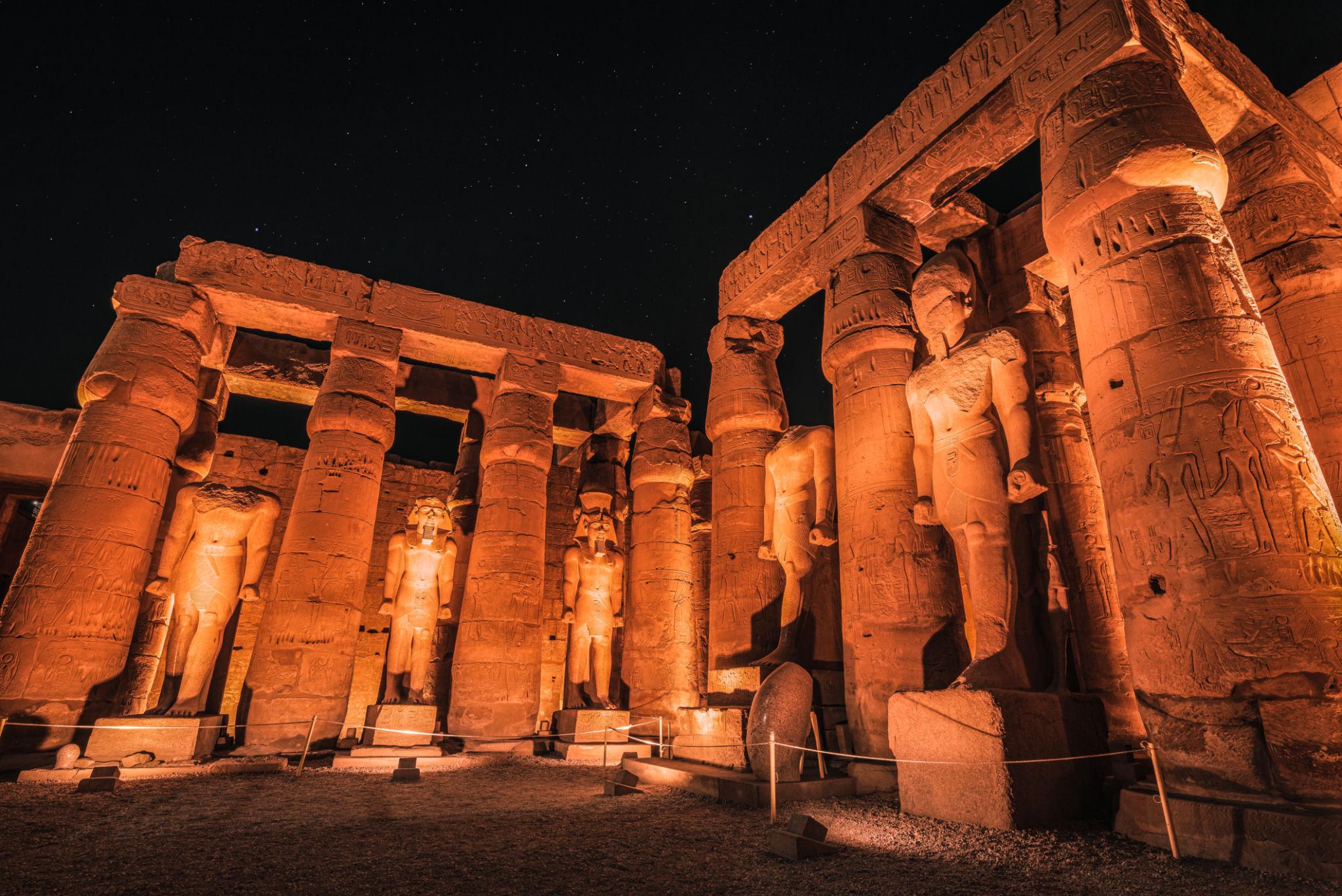
On Monday 2 August 2027 a total solar eclipse will cross North Africa and Arabia, and the point of greatest eclipse lies in southern Egypt, close to Luxor. Totality there is predicted to last around six minutes, among the longest anywhere on land this century, with the moon's shadow arriving around the middle of the day. The temples of Karnak and Luxor, already aligned with the sun, will make an extraordinary setting.
It is also the hottest time of the year, and accommodation in Luxor is expected to fill long in advance. If you want to be there, plan now, book refundable rooms early, carry certified eclipse glasses, and build the rest of the trip around early mornings and long afternoon rests. We will publish detailed advice closer to the date.
September and October: Film, Moulids and Abu Simbel Again
September is hot but the season is turning, and by October the south is comfortable again. Armed Forces Day, Wednesday 6 October, marks the crossing of the Suez Canal in the 1973 war and is a national holiday. The El Gouna Film Festival, on the Red Sea north of Hurghada, has held its recent editions in the second half of October (in 2026, from 15 to 23 October); the 2027 dates had not been announced as of autumn 2026. Our El Gouna travel guide covers the resort itself.
Friday 22 October brings the second Abu Simbel alignment, more crowded than February's because it falls in high season. October is also moulid season in the Delta: the Moulid of Sayyid Ahmad al-Badawi in Tanta, about 90 km north of Cairo, is one of the largest religious gatherings in Egypt, with crowds commonly reported in the hundreds of thousands, and dates fixed locally each year. In Siwa, the Siyaha festival of feasting and reconciliation falls around the October full moon, which in 2027 is in mid-month, with dates set locally and announced late. In recent autumns the Giza plateau has also hosted Forever Is Now, a large contemporary art exhibition staged by Art D'Egypte around the pyramids; check whether a 2027 edition is confirmed before planning around it.
November and December: Cairo's Festival and the Festive Season
The Cairo International Film Festival, founded in 1976 and one of the few in the region with FIAPF A-category accreditation, is based at the Cairo Opera House. The 47th edition runs from 11 to 20 November 2026, and the next is expected, as usual, in November 2027. Many screenings are open to the public, which makes it an easy evening out for visitors. Music lovers should also watch for the Cairo Jazz Festival, whose 2027 dates had not been announced at the time of writing.
November is our favourite month in the year: warm days, a calm Red Sea and crowds that have not yet peaked. December then builds towards the festive fortnight, when hotel and cruise prices can climb 30 to 50 per cent above autumn levels. Christmas Day, Saturday 25 December 2027, is not a public holiday in Egypt. Our guide to Egypt in winter covers the season month by month.
Insider Tip: What Actually Closes on a Holiday
The good news about public holidays in Egypt is that the things visitors come to see rarely close. Archaeological sites, the major museums, hotels, restaurants and Nile cruises generally operate as normal, although they are busier with Egyptian visitors. What closes are banks, government offices, many local shops and, on religious holidays, some smaller businesses. Visa extensions, bank errands and anything involving officialdom should be done on ordinary weekdays, and remember that Friday is the main weekly day off, with Saturday the second.
Planning Around the Egypt Events 2027 Calendar
The richest itineraries hang one or two events on a well-paced trip rather than chasing everything. A February trip can combine the Abu Simbel alignment with a Nile cruise between Luxor and Aswan and evenings in Ramadan Cairo. A January trip can take in Coptic Christmas in Old Cairo and the marathon morning in Luxor, followed by a full West Bank day. The eclipse is a trip of its own.
Whatever date catches your eye on the Egypt events 2027 calendar, the logistics around it matter more than the event itself: hotels, trains and transfers fill first. Tell us which dates interest you, and we will tell you honestly how busy they will be and how to shape a trip around them.