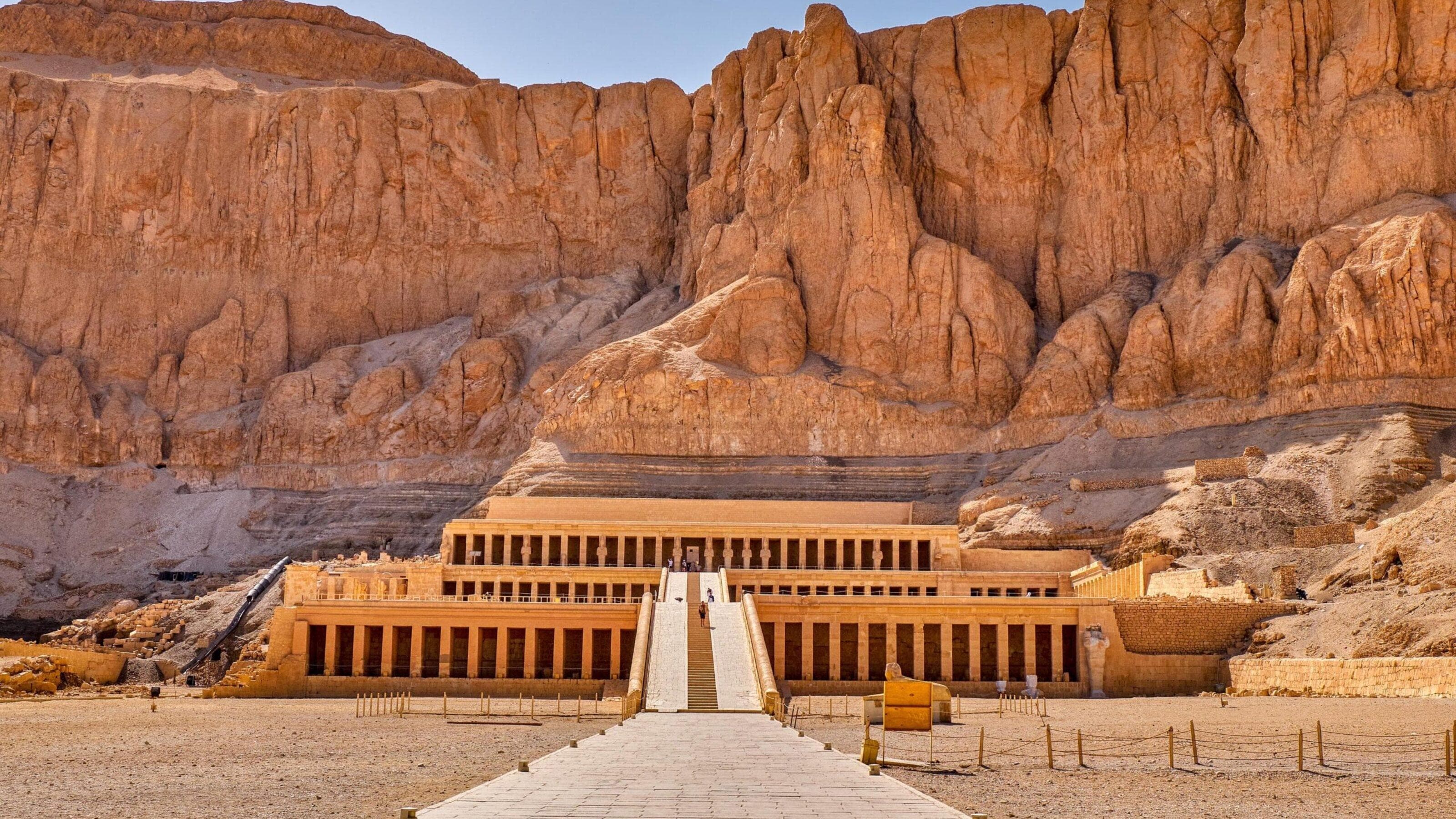
Temple of Hatshepsut
The terraced mortuary temple of Egypt's greatest female pharaoh — carved into the cliffs of Deir el-Bahari.
6 AM – 5 PM440 EGP (foreign visitor)25.7381, 32.6071
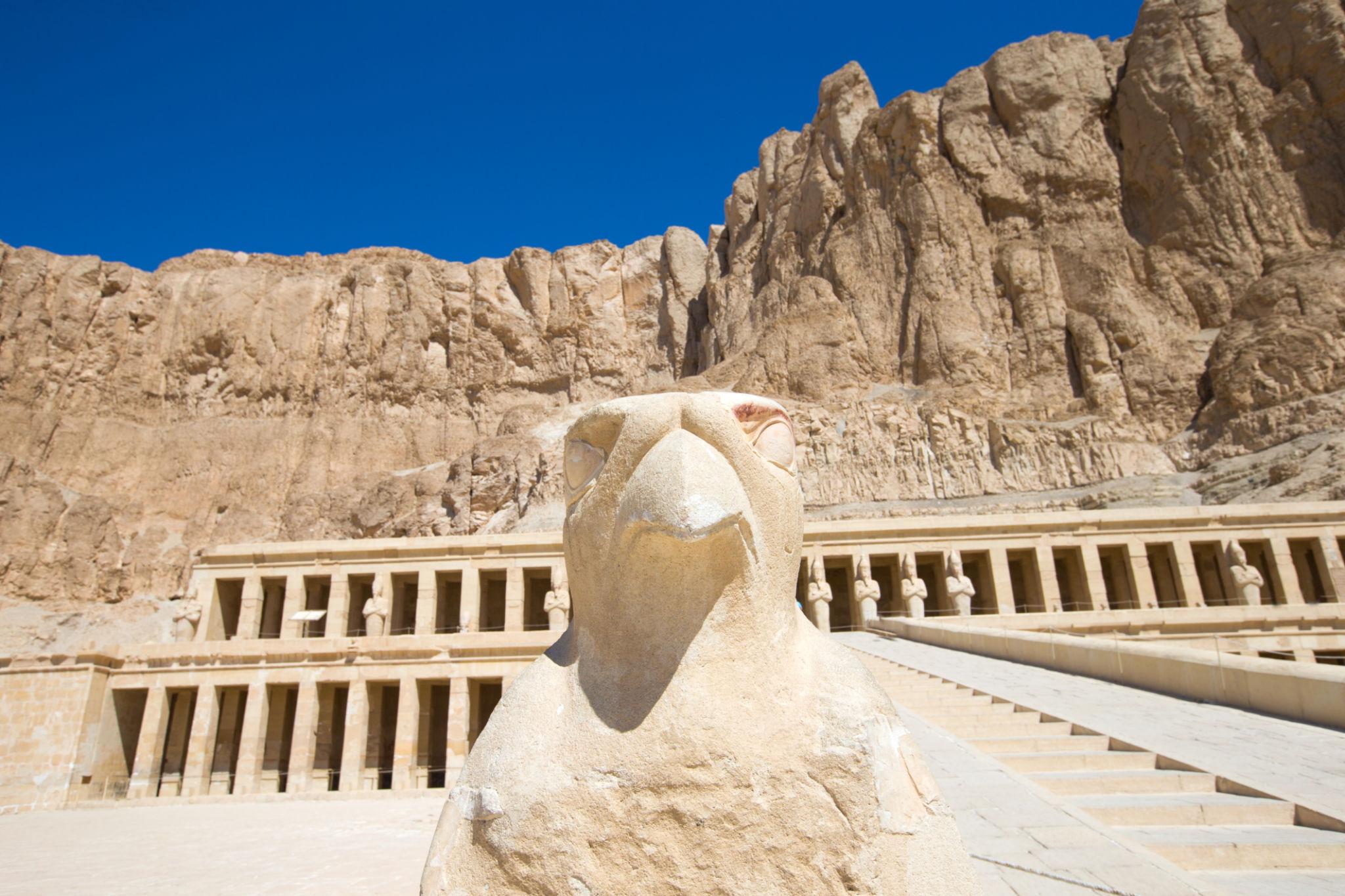
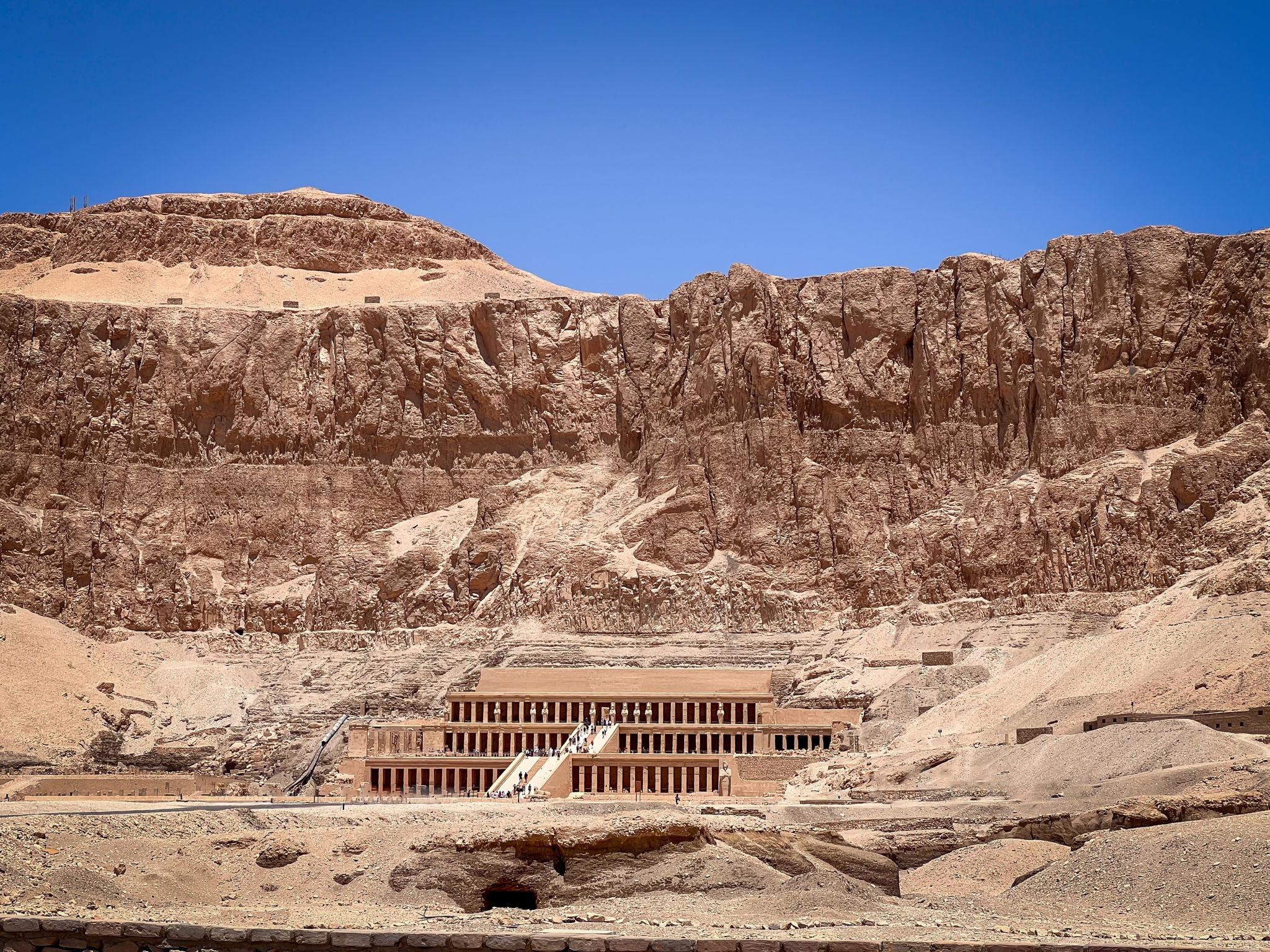
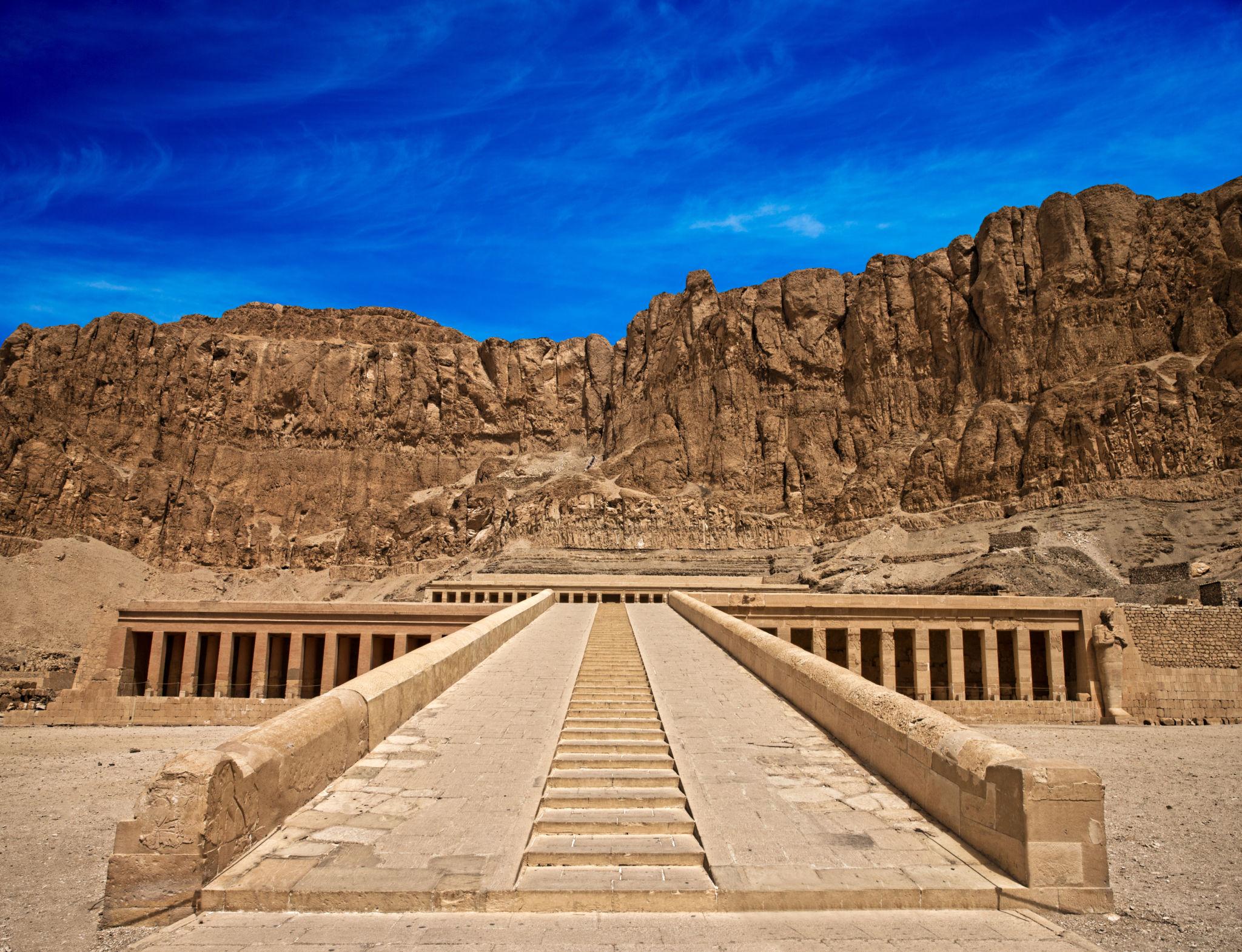
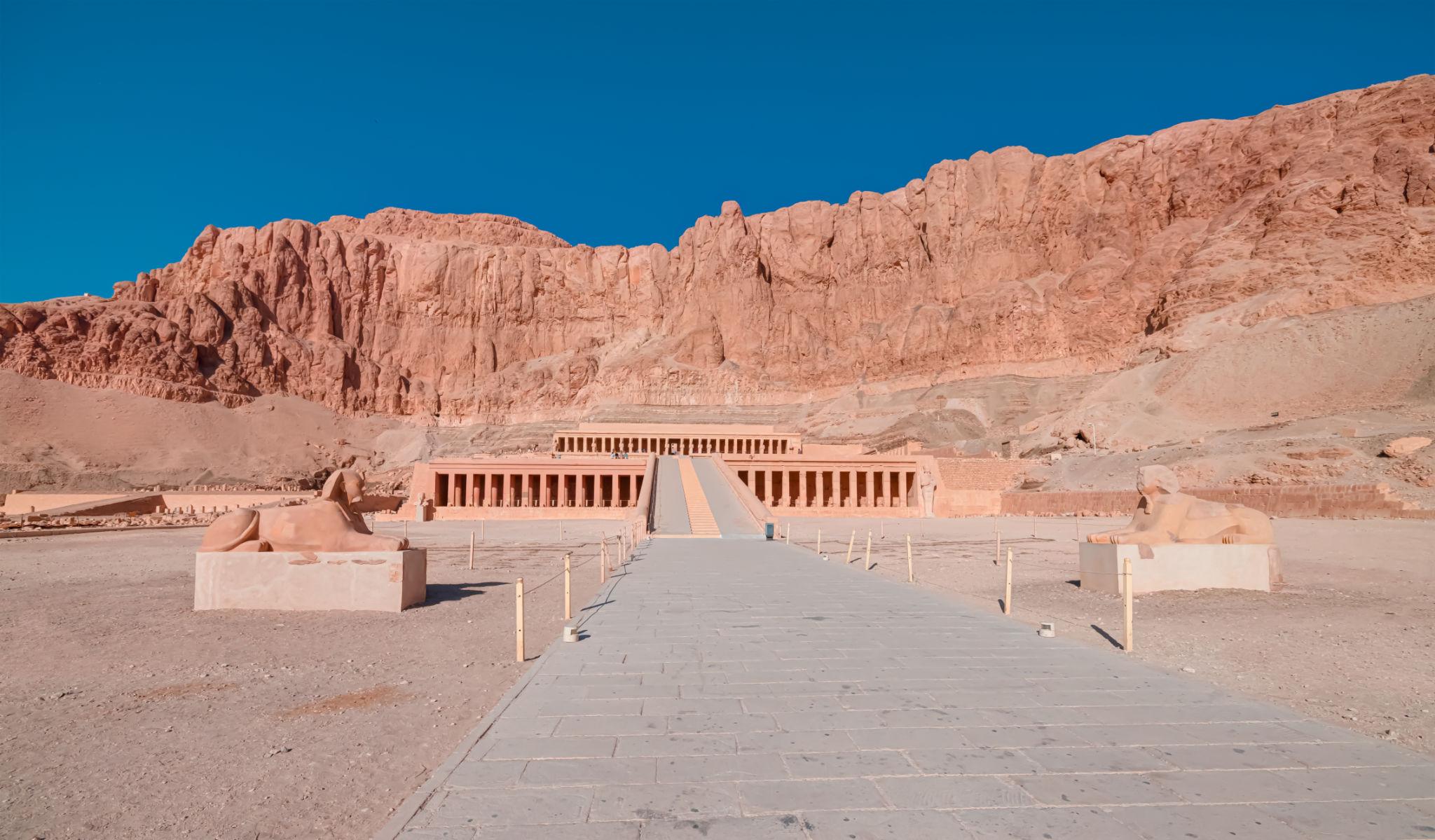
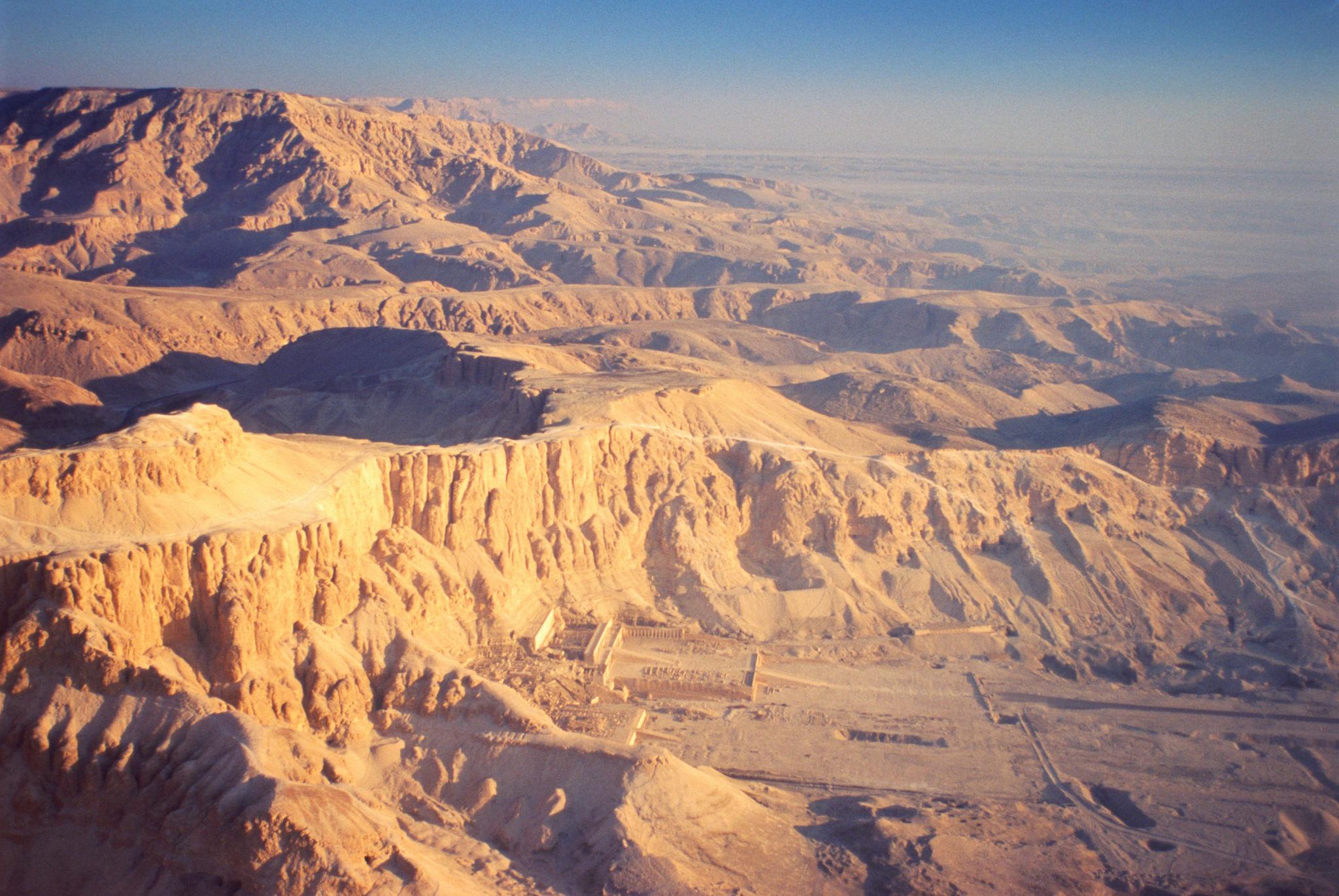
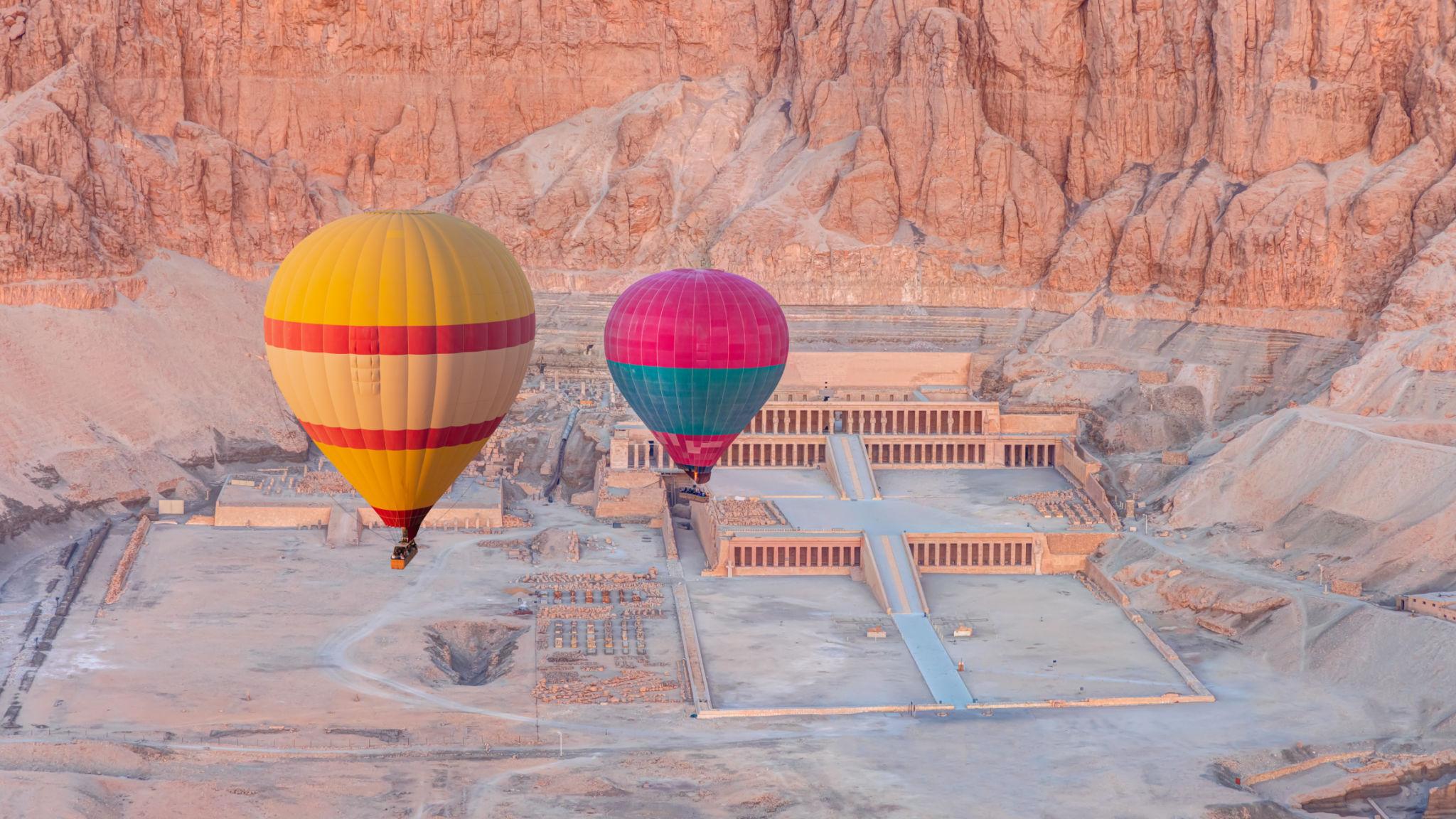
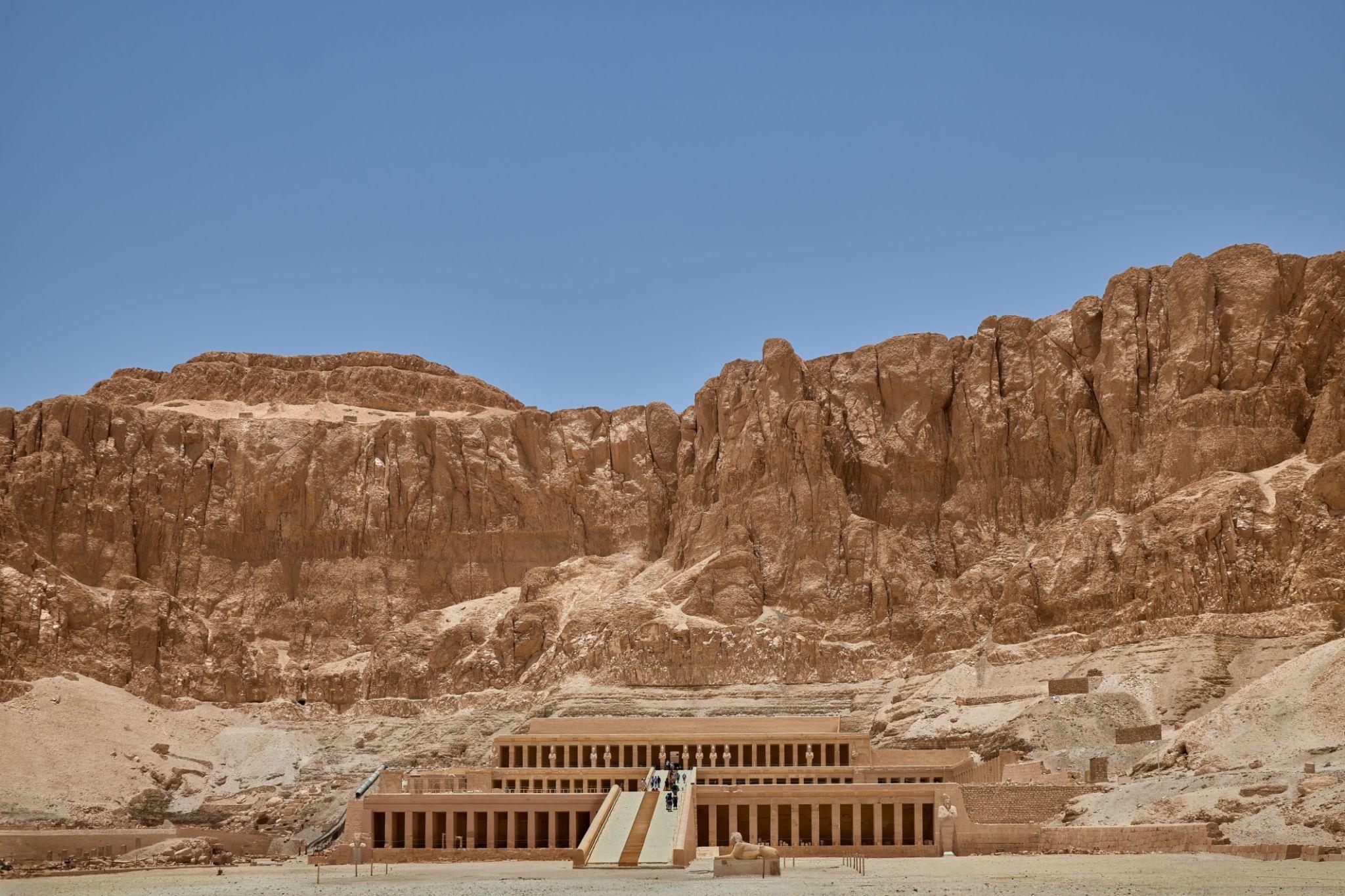
The Mortuary Temple of Hatshepsut at Deir el-Bahari is a masterpiece of ancient architecture, rising in three terraced colonnades against the dramatic limestone cliffs of the Theban west bank. Built by the architect Senenmut for Pharaoh Hatshepsut — one of the most powerful women in the ancient world — it is considered one of the finest temples in Egypt and a marvel of engineering and design.
Gallery
Why Visit
Dramatic terraces carved into towering desert cliffs
Celebrates Egypt's greatest female pharaoh and her extraordinary reign
Reliefs depicting a legendary expedition to the mysterious land of Punt
What to See
The Three Terraces
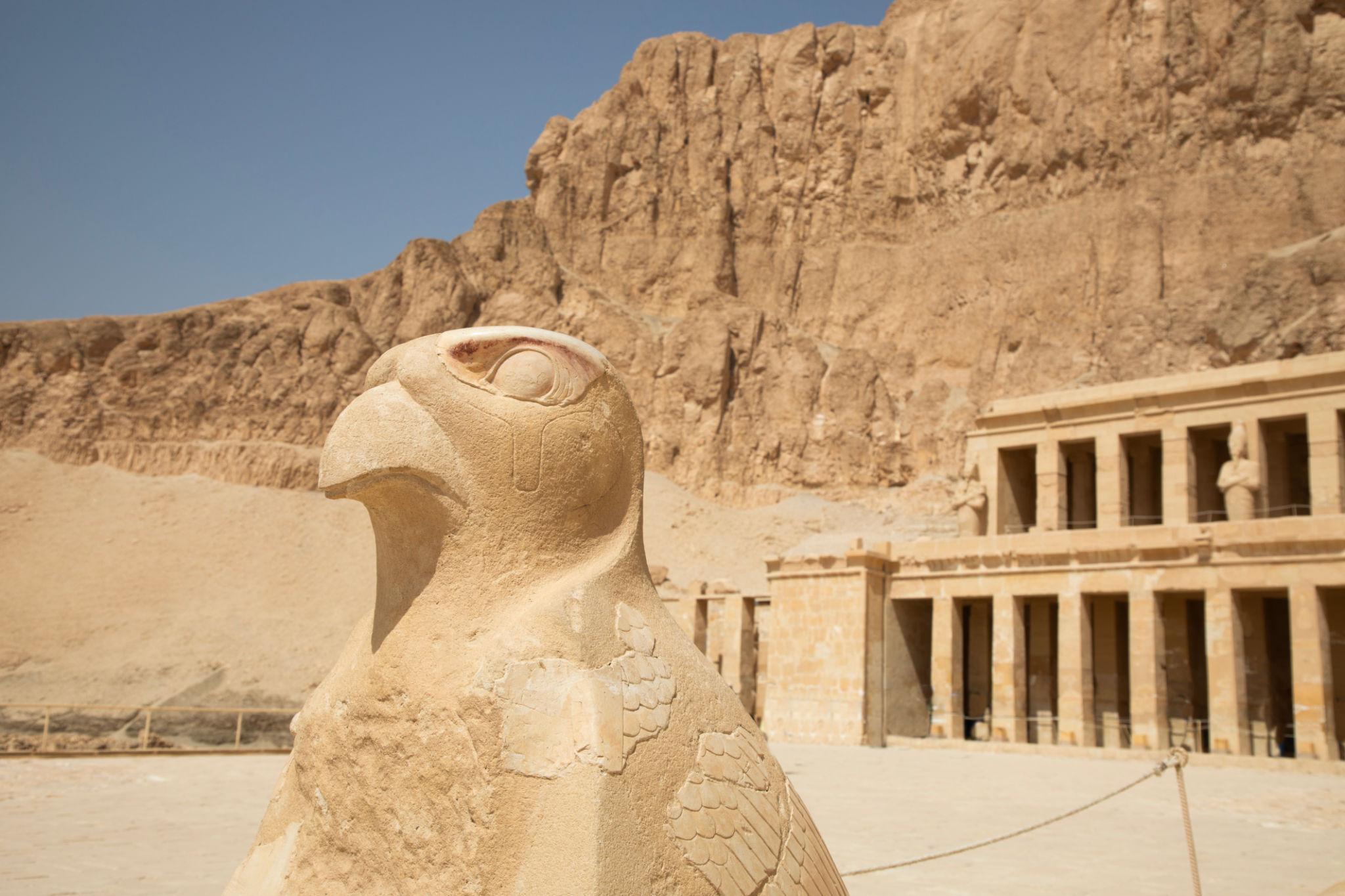
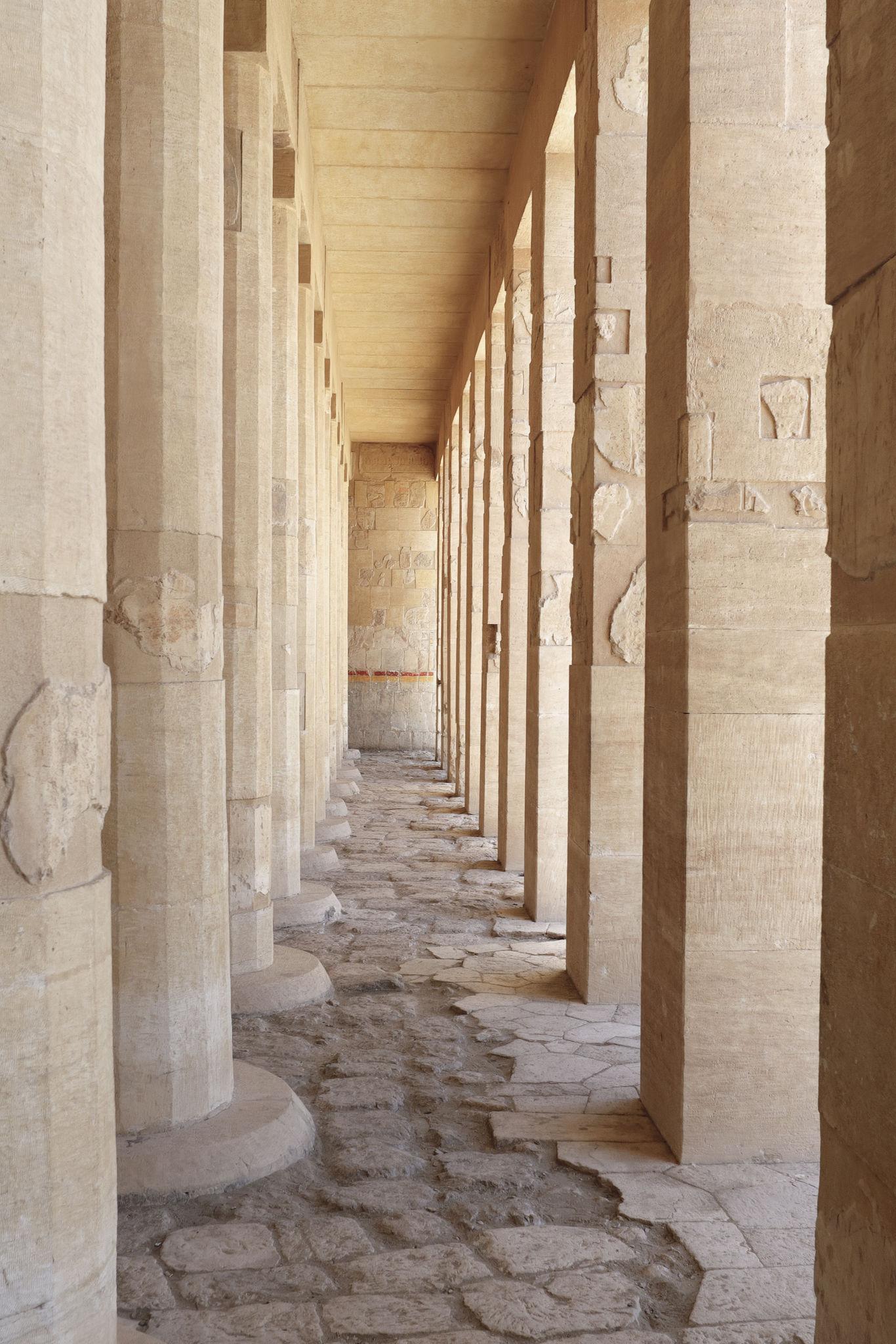
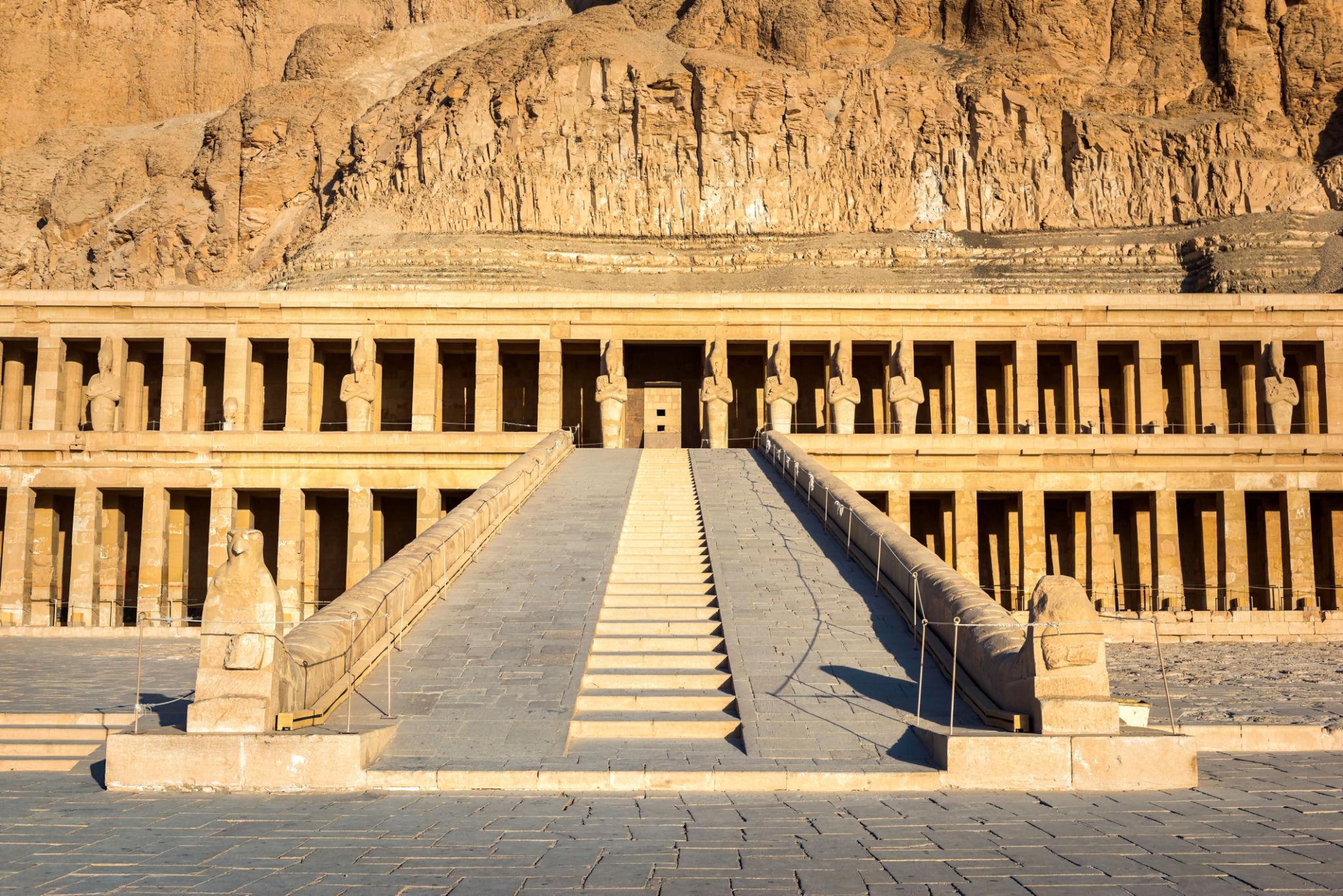
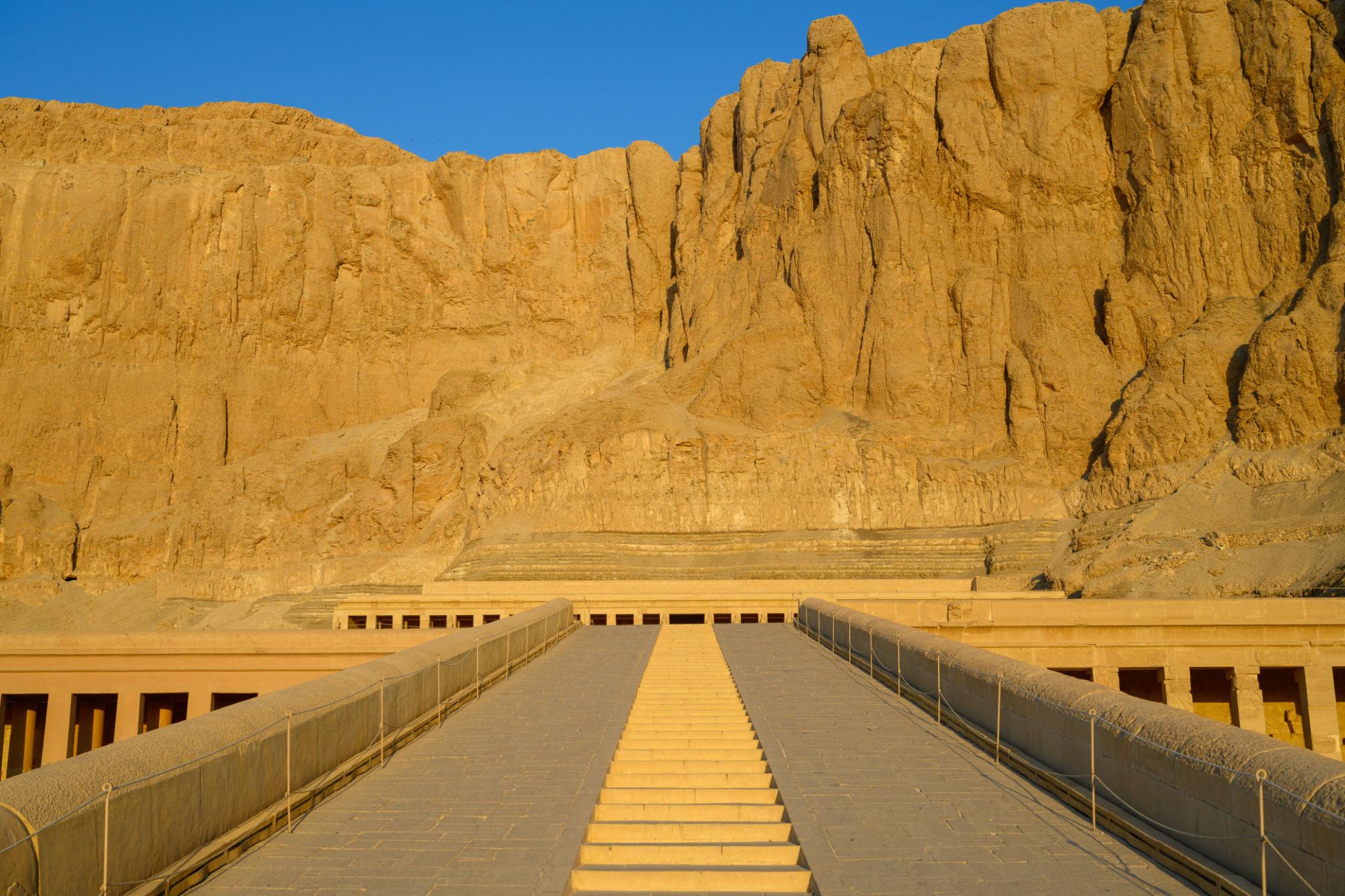
The temple rises in three elegant platforms connected by long ceremonial ramps, each terrace lined with square pillars and colonnades that create a rhythmic horizontal counterpoint to the soaring vertical cliffs behind. The architecture is uniquely modern in feeling — its clean lines, symmetry, and integration with the natural landscape led 20th-century architects to compare it to Frank Lloyd Wright's work, and it is often called the most beautiful building in ancient Egypt. Each terrace served a different ritual function: the lower terrace featured gardens with exotic myrrh trees brought from Punt, the middle terrace housed the chapels of Hathor and Anubis, and the upper terrace held the main sanctuary carved into the living rock of the cliff. The approach up the ramps, with the cliff walls closing in above and the Nile Valley falling away below, creates a dramatic crescendo of architectural and spiritual experience.
Punt Colonnade
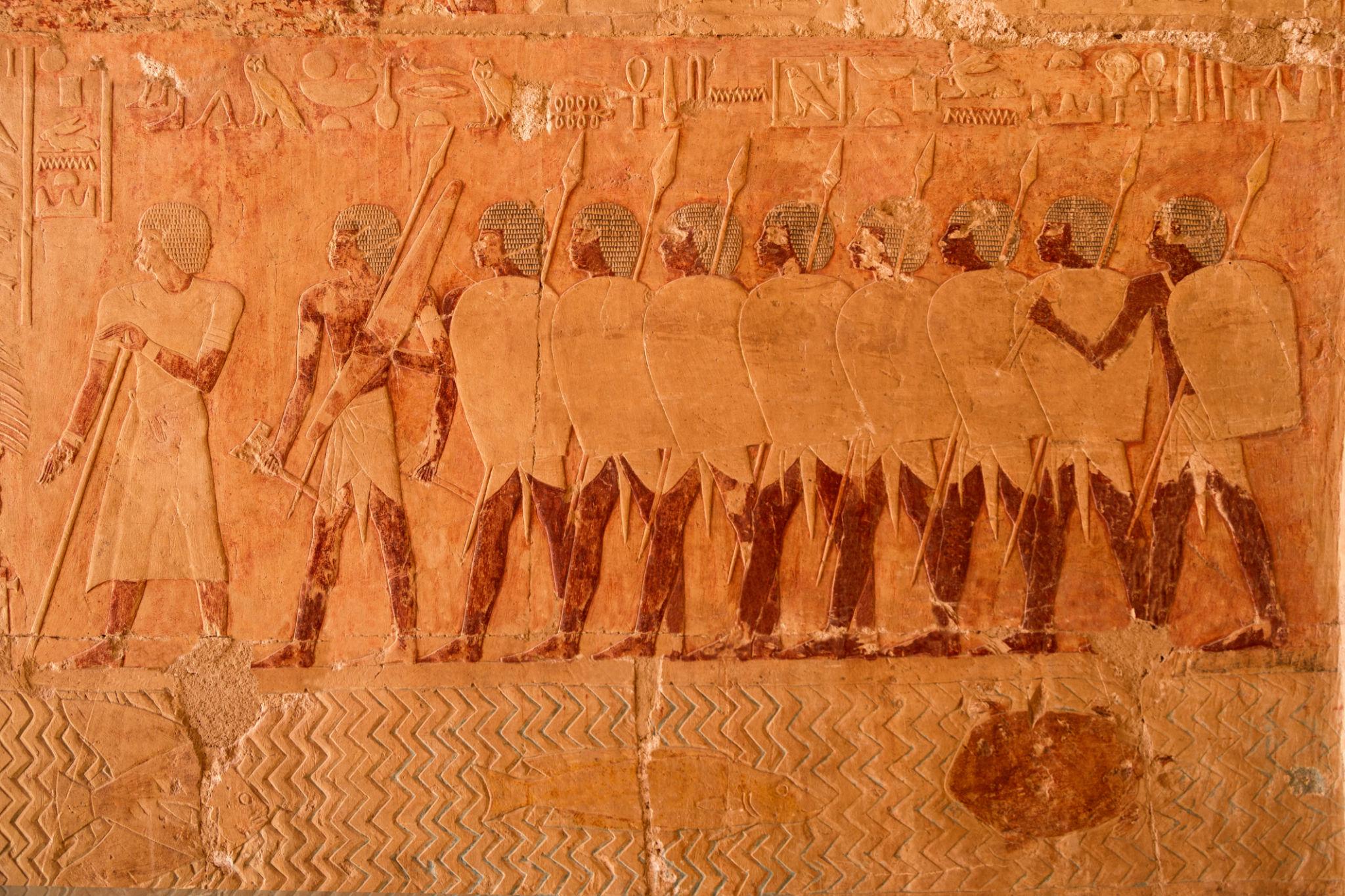
Some of the most vivid and informative reliefs in all of Egyptian art, depicting Hatshepsut's famous trading expedition to the mysterious land of Punt (possibly located in modern Somalia, Eritrea, or coastal Sudan) — one of the great adventures of the ancient world. The reliefs show the Egyptian fleet sailing across the Red Sea, arriving at Punt's stilted villages, trading for exotic goods — myrrh trees, ebony, gold, ivory, and live baboons — and meeting the notably corpulent Queen of Punt, Ati, whose distinctive body shape has fascinated scholars for over a century. The scenes are remarkably detailed, depicting Punt's flora, fauna, and architecture with an almost documentary precision that provides the only surviving visual record of this distant land. Hatshepsut proudly recorded this expedition as one of her greatest achievements, using it to justify her legitimacy as pharaoh by proving that the gods favored her reign with successful ventures to distant lands.
Chapel of Hathor
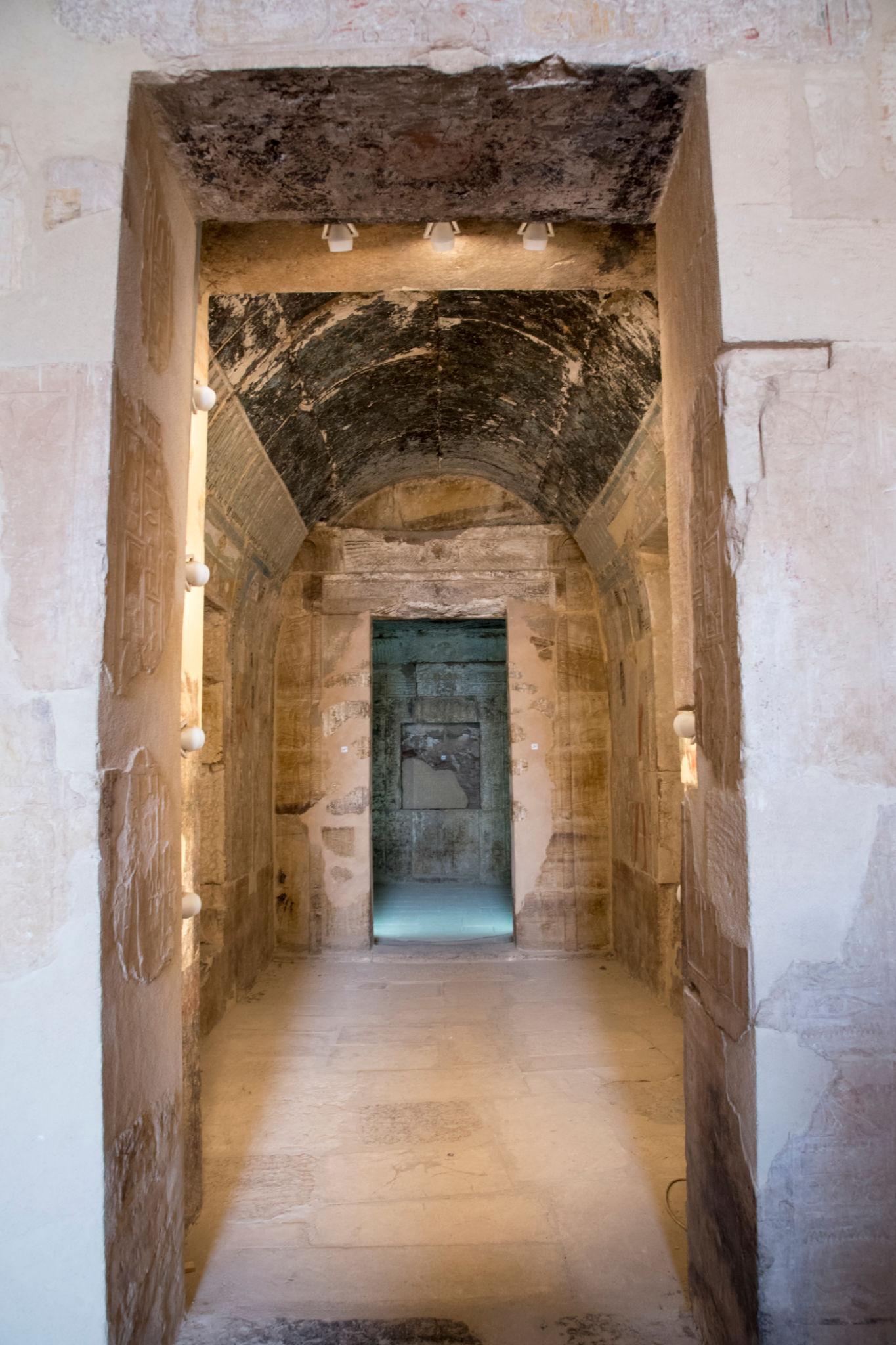
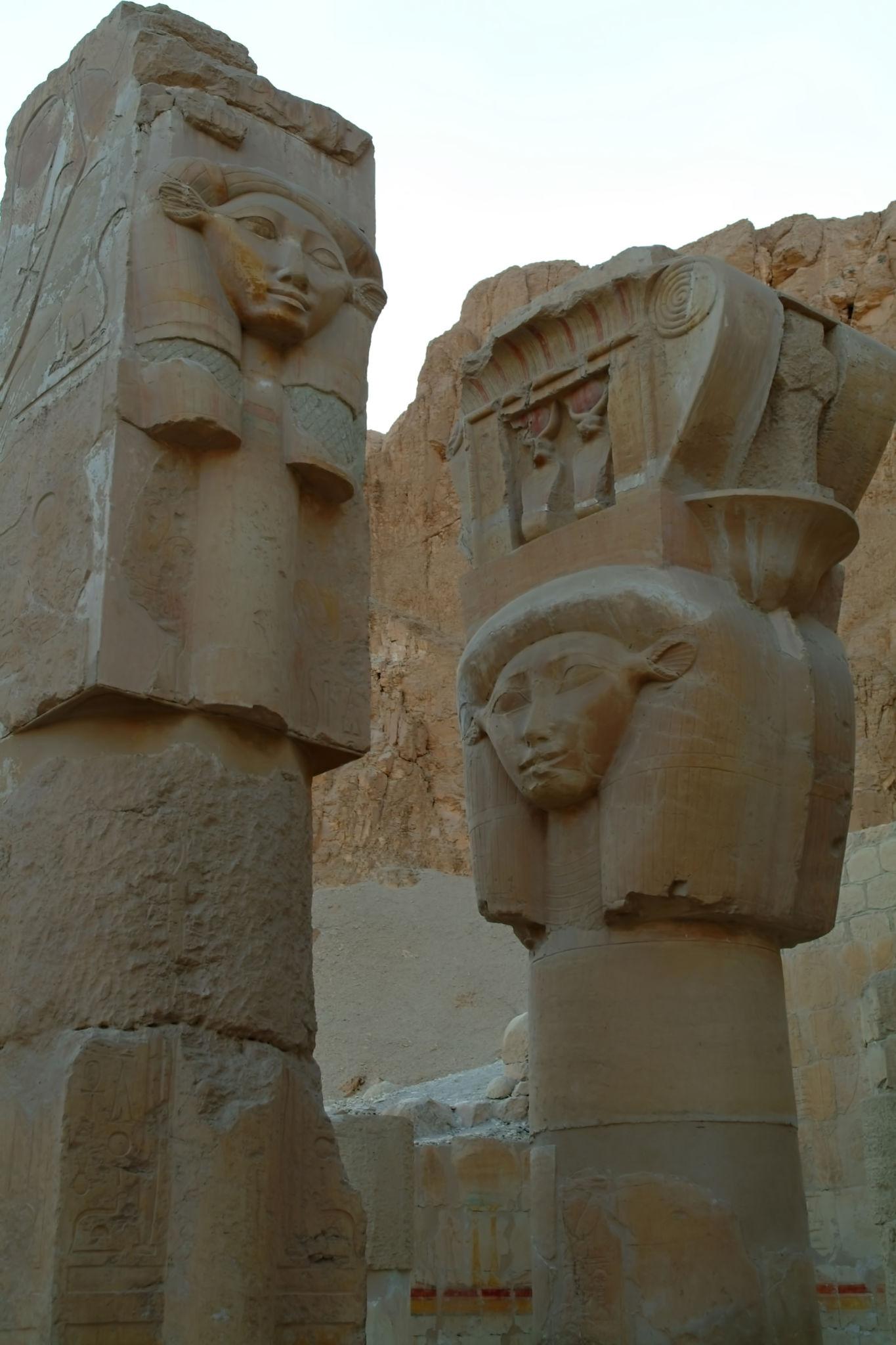
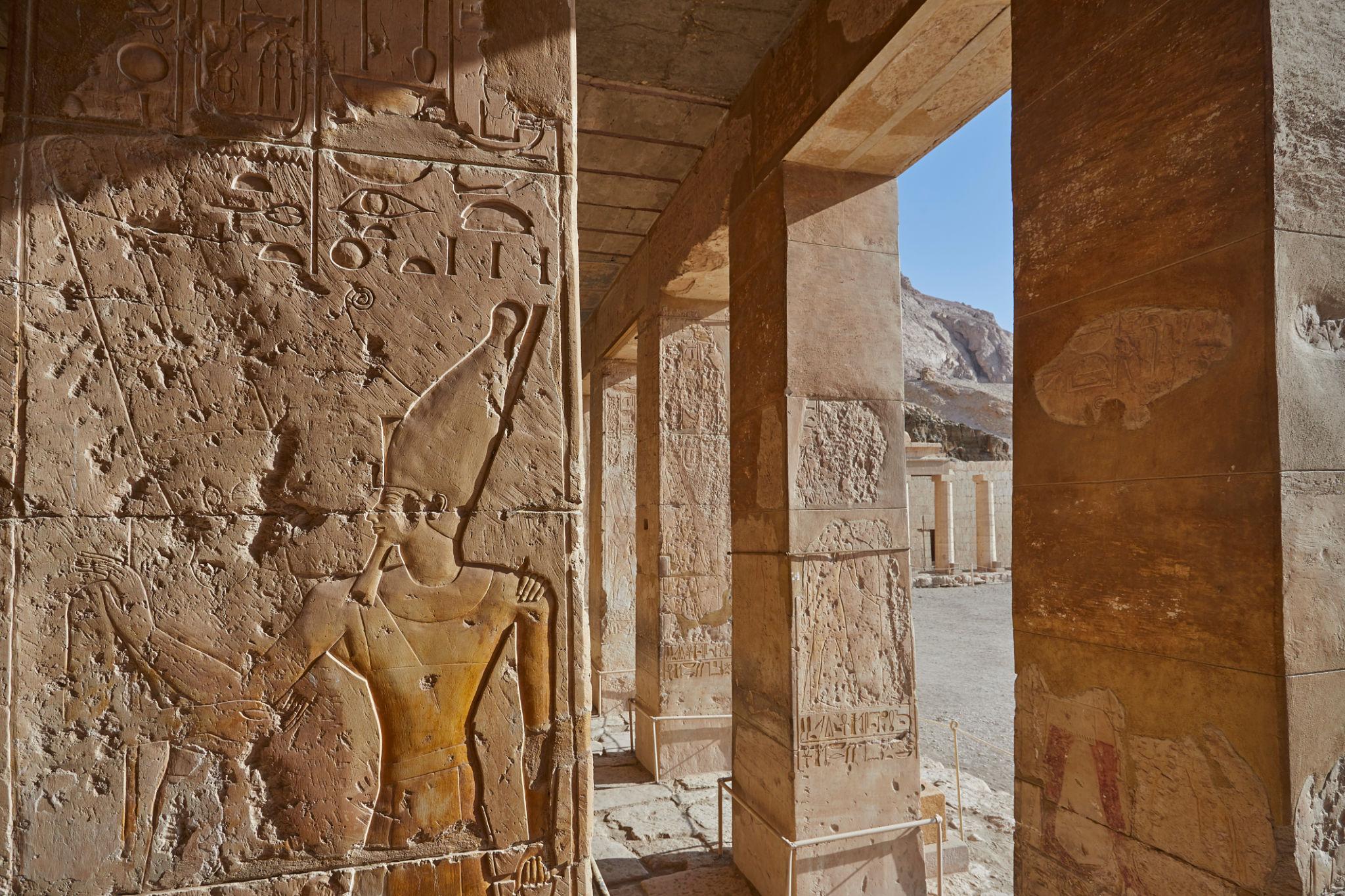
A richly decorated chapel dedicated to the cow goddess Hathor, featuring distinctive Hathor-headed columns with the goddess's face carved on all four sides — her wide eyes, cow ears, and gentle smile creating a serene atmosphere quite different from the rest of the temple. The chapel retains some of the most vibrant surviving painted reliefs at Deir el-Bahari, including a famous scene of the cow goddess Hathor tenderly licking the hand of Hatshepsut — a powerful image of divine nurturing and maternal legitimacy that reinforced the queen's claim to the throne. The inner rooms show additional scenes of Hatshepsut making offerings and receiving blessings, with traces of original blue, red, and gold paint that hint at the dazzling polychrome appearance these chapels once had. The Hathor chapel is often quieter than the main temple areas, offering an intimate moment with some of the finest art from Hatshepsut's reign.
Osiris Statues
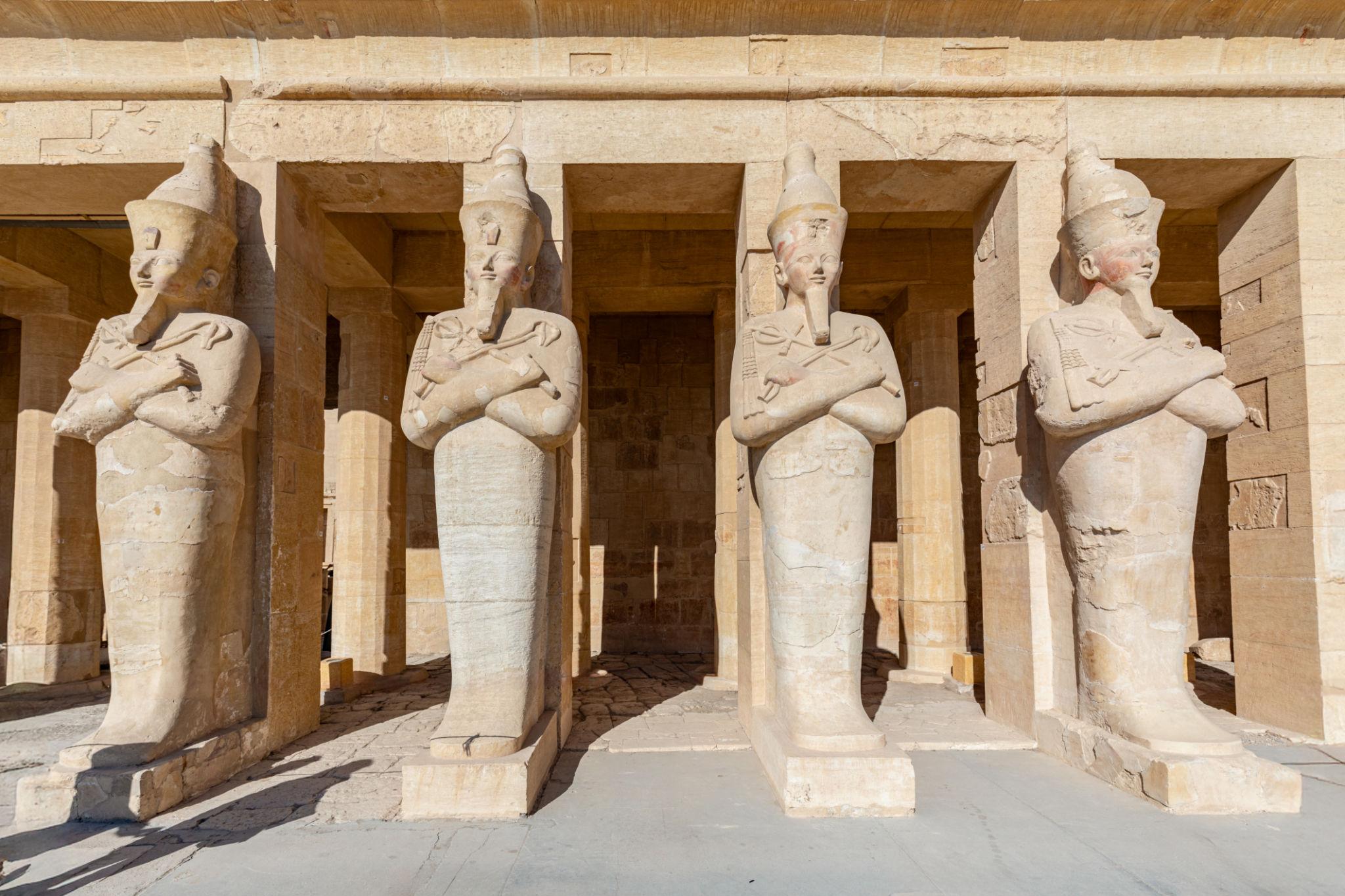
Large painted statues of Hatshepsut depicted in the form of Osiris — god of the dead and resurrection — line the pillars of the upper terrace, showing the queen-pharaoh with the crossed arms, crook, and flail of kingship and the mummiform body of Osiris. The statues were originally brightly painted, with red-brown skin, white wrappings, and vivid blue and gold regalia, fragments of which can still be detected. Many were intentionally toppled and smashed by her stepson and successor Thutmose III, who systematically attacked her monuments after her death in an effort to erase her unprecedented reign from history — their broken and reassembled state today bears witness to this ancient political vendetta. The surviving statues, reassembled by Polish archaeologists over decades of meticulous work, show Hatshepsut with the idealized male pharaonic physique and false beard that she deliberately adopted to legitimize her rule in a deeply patriarchal society.
Historical Details
Hatshepsut's Reign
Hatshepsut ruled as pharaoh for about 22 years (c. 1479–1458 BC), one of the longest and most prosperous reigns of the 18th Dynasty, during which Egypt enjoyed peace, flourishing trade, and an extraordinary building program. Originally serving as regent for her young stepson Thutmose III, she took the extraordinary step of declaring herself pharaoh — adopting full royal regalia including the ceremonial false beard, the double crown, and the male royal titles. Rather than focusing on military conquest, she emphasized trade, diplomacy, and monumental building, commissioning not only this temple but also obelisks at Karnak and monuments across Egypt. Her reign is increasingly recognized as one of the most successful in Egyptian history, and she is widely considered the most powerful woman in the ancient world before Cleopatra.
Erasure & Rediscovery
After Hatshepsut's death around 1458 BC, her stepson and successor Thutmose III — who had spent over two decades in her shadow waiting to rule independently — launched a systematic campaign to erase her from history, defacing her cartouches, toppling her statues, and walling up her obelisks at Karnak. The campaign was not immediate (it began around 20 years after her death), leading some scholars to suggest it was motivated not by personal hatred but by a political need to ensure a smooth succession for his own son by eliminating the precedent of a female pharaoh. Despite this concerted erasure, enough evidence survived — in overlooked inscriptions, protected reliefs, and archaeological fragments — for modern Egyptologists to reconstruct her remarkable story. The irony is profound: Thutmose III's attempt to erase Hatshepsut made her one of the most studied and celebrated rulers in Egyptian history.
Visitor Tips
- Arrive early — the temple faces east and is best photographed in morning light
- The site is fully exposed with no shade; bring sun protection and water
- Combine with the Valley of the Kings — they are separated by just one hill
Opening Hours
6 AM – 5 PM
Entry Fee
440 EGP (foreign visitor)
Period
New Kingdom, c. 1470 BC
Built By
Pharaoh Hatshepsut (architect: Senenmut)