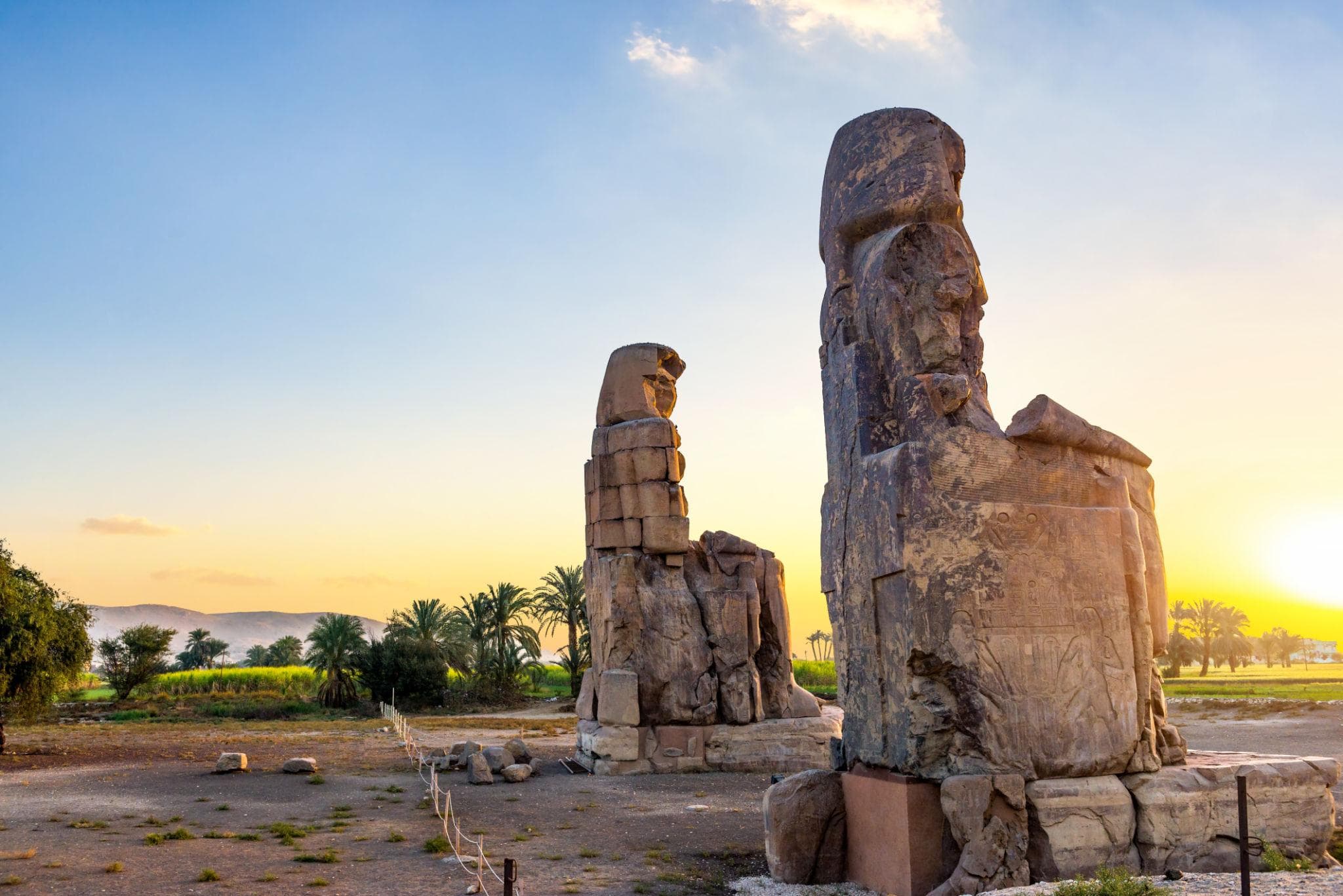
Colossi of Memnon
Two massive stone statues of Pharaoh Amenhotep III — silent guardians of the Theban Necropolis.
6 AM – 5 PMFree (open-access roadside monument)25.7205, 32.6104
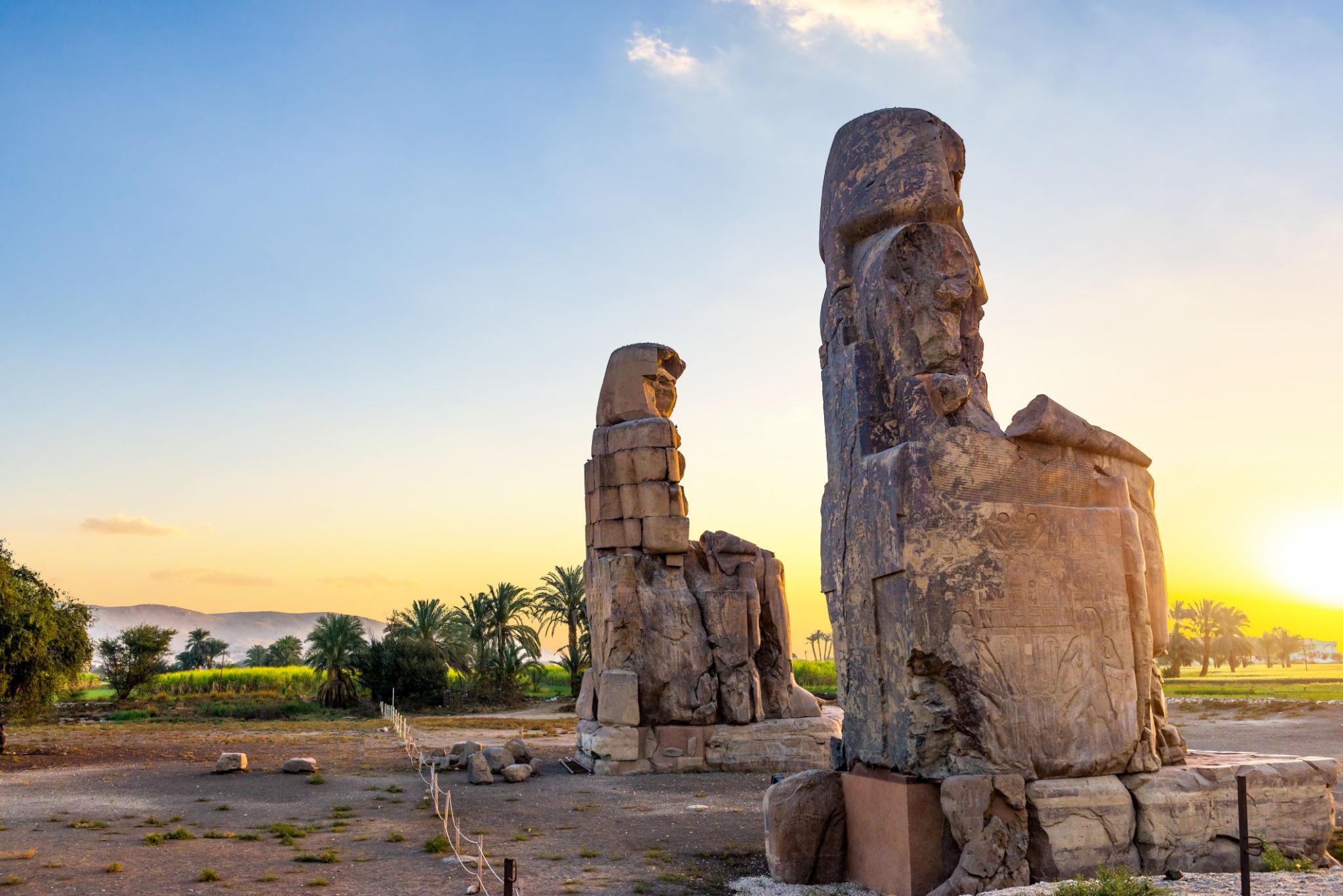
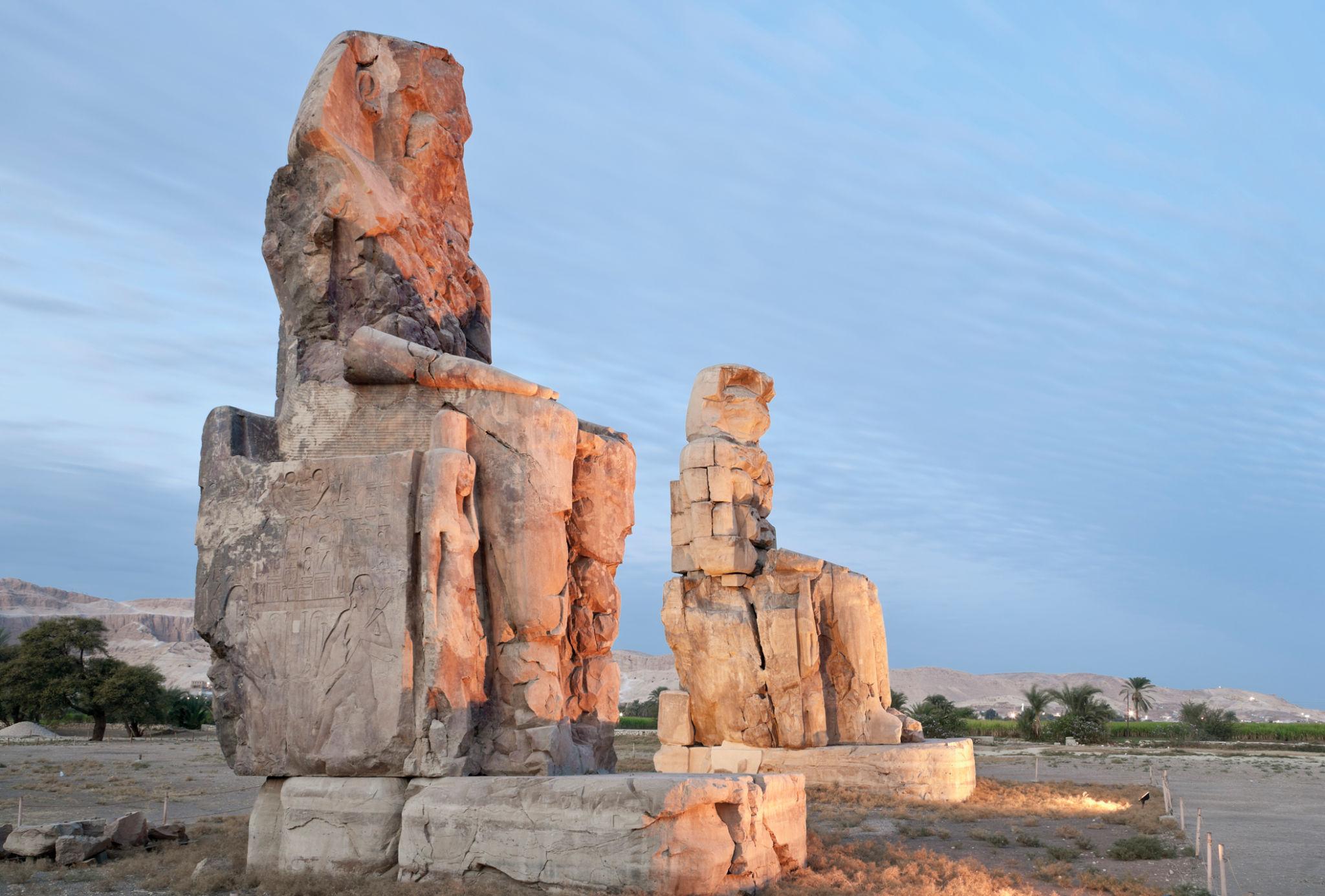
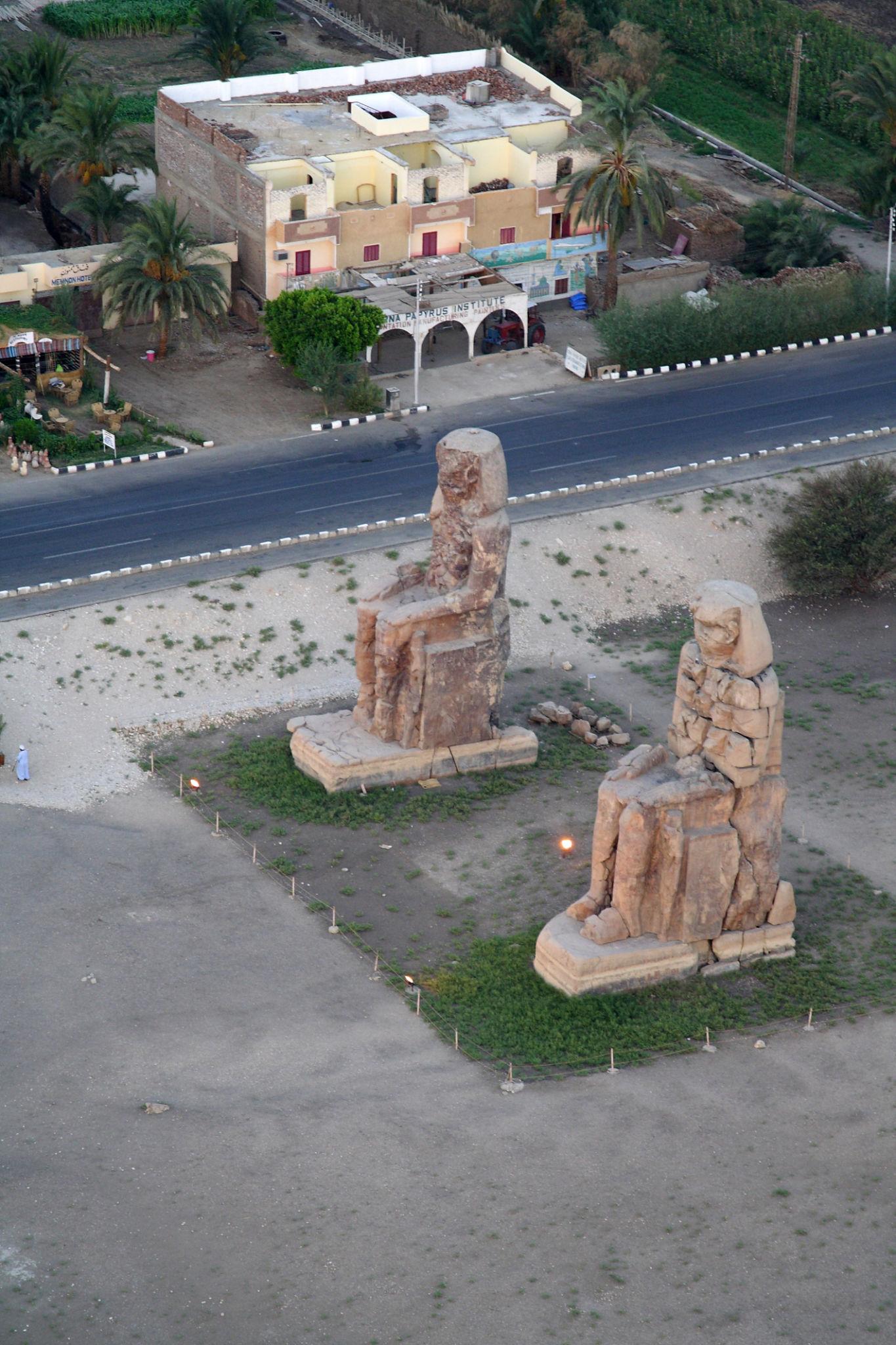
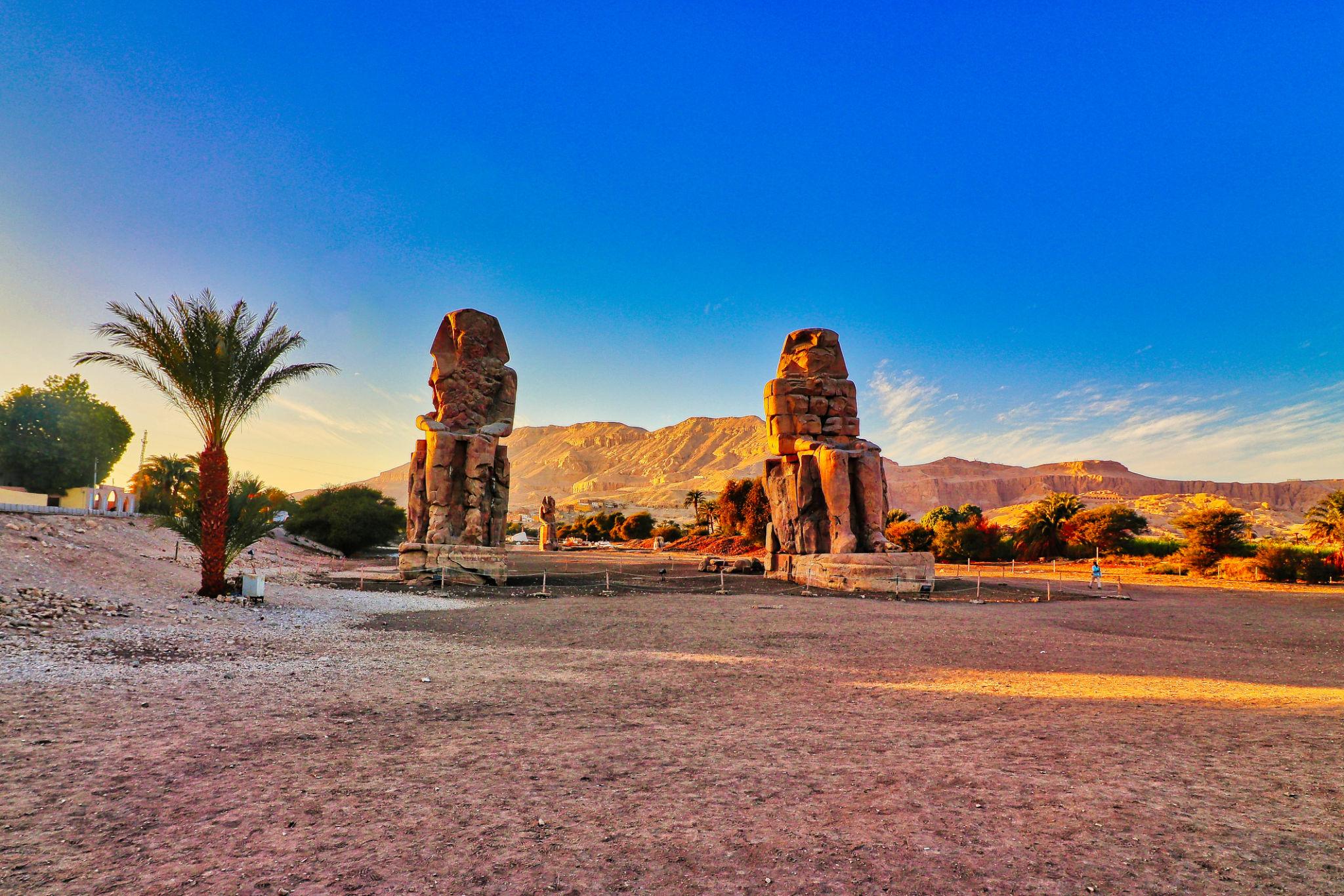
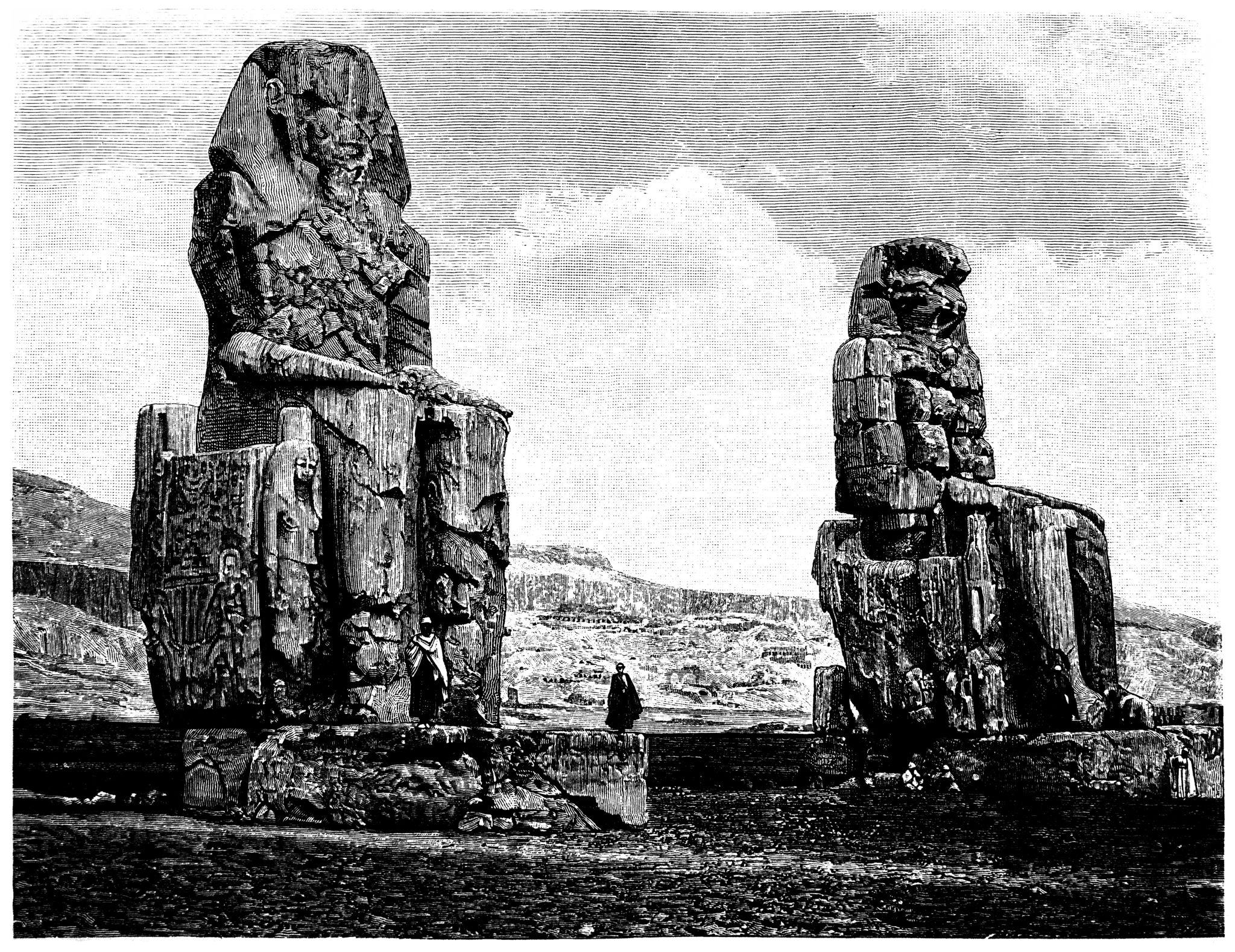
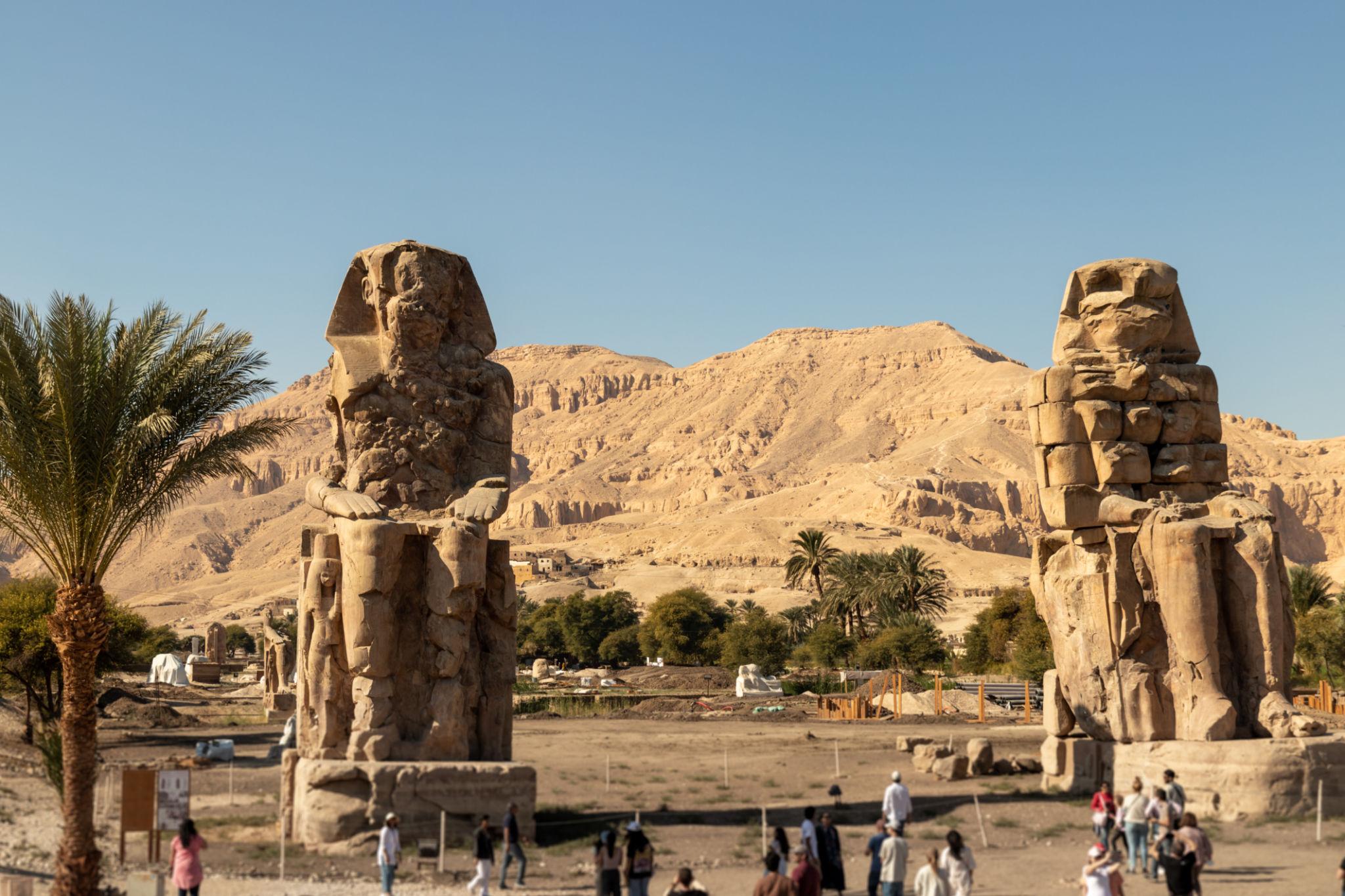
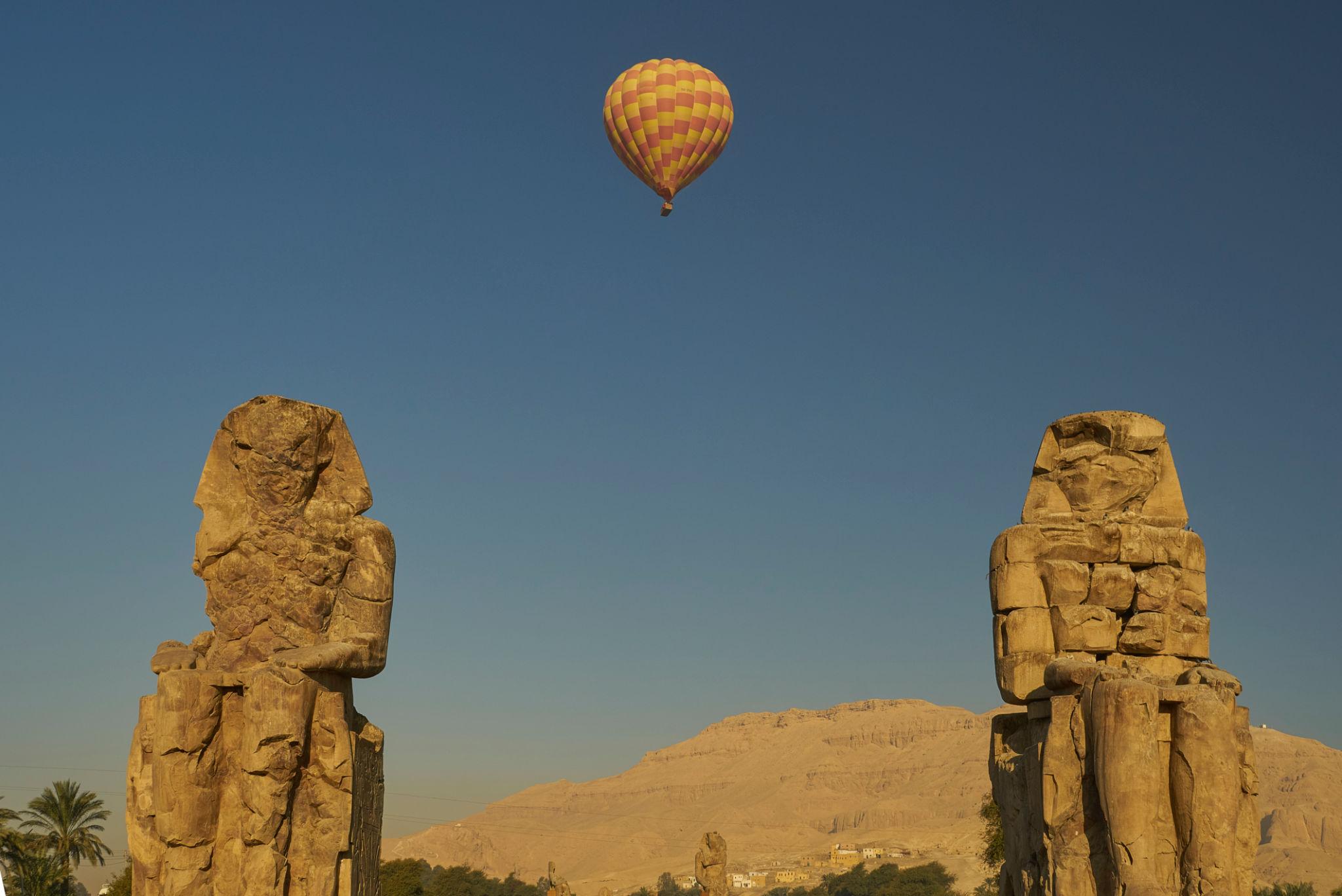
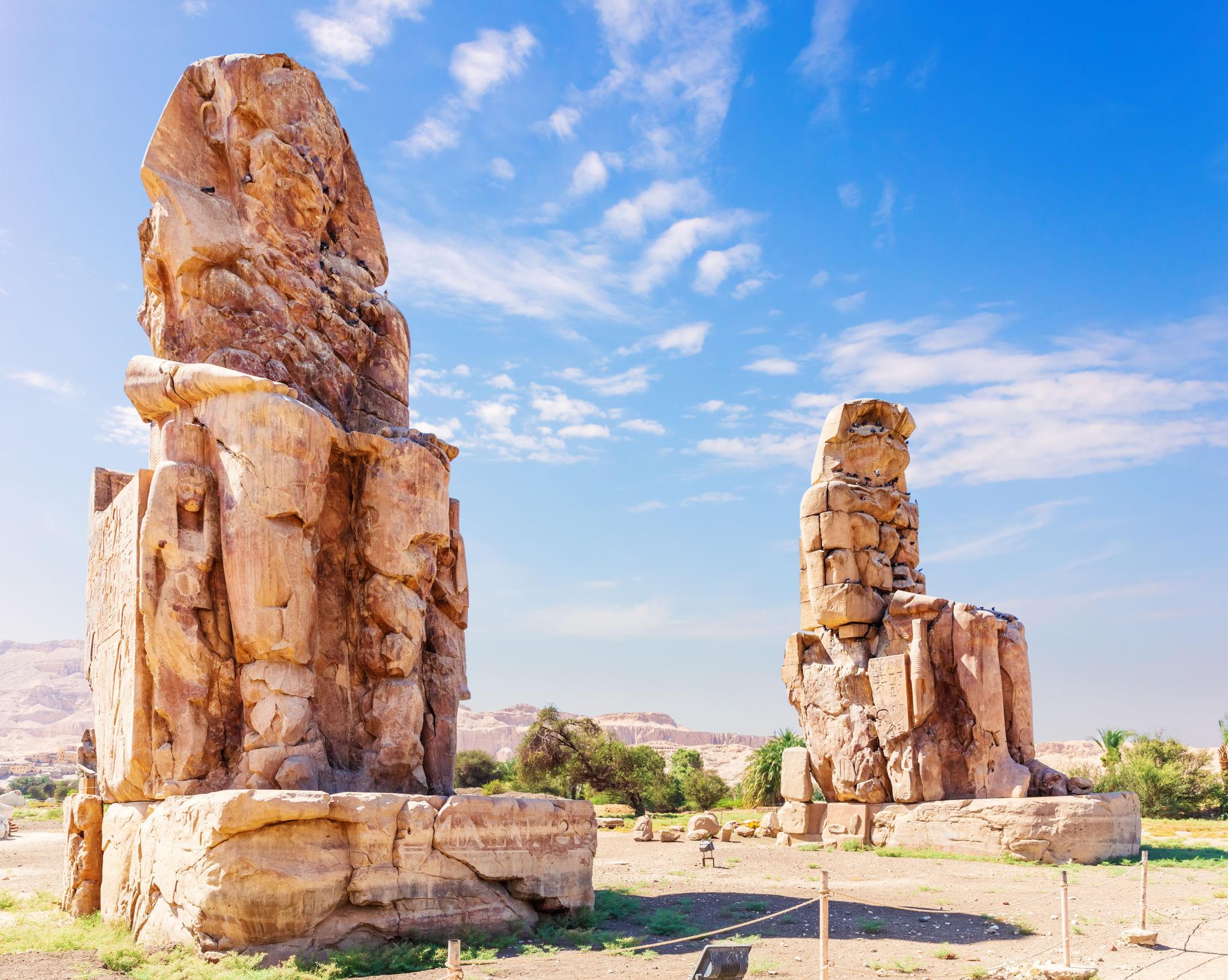
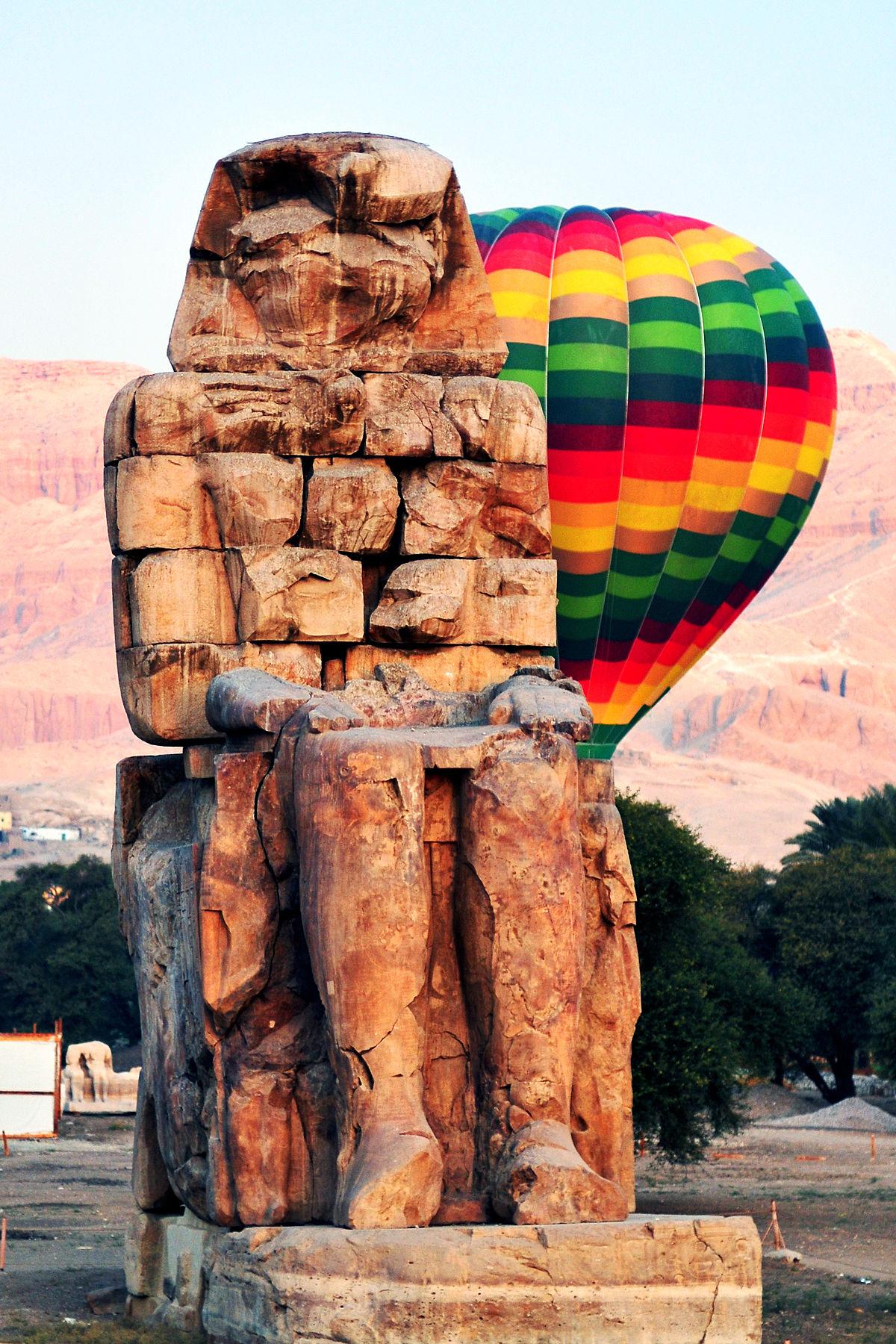
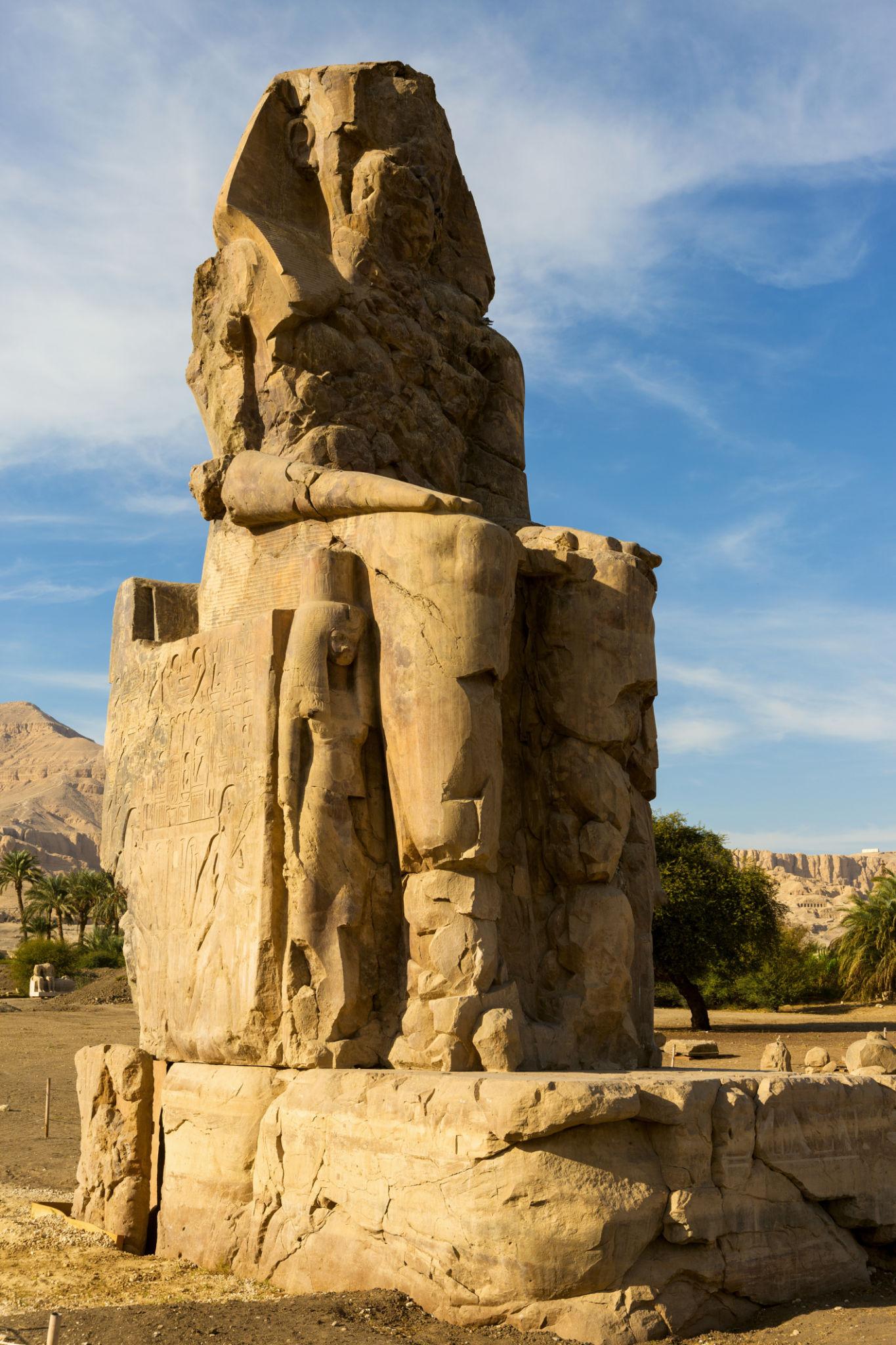
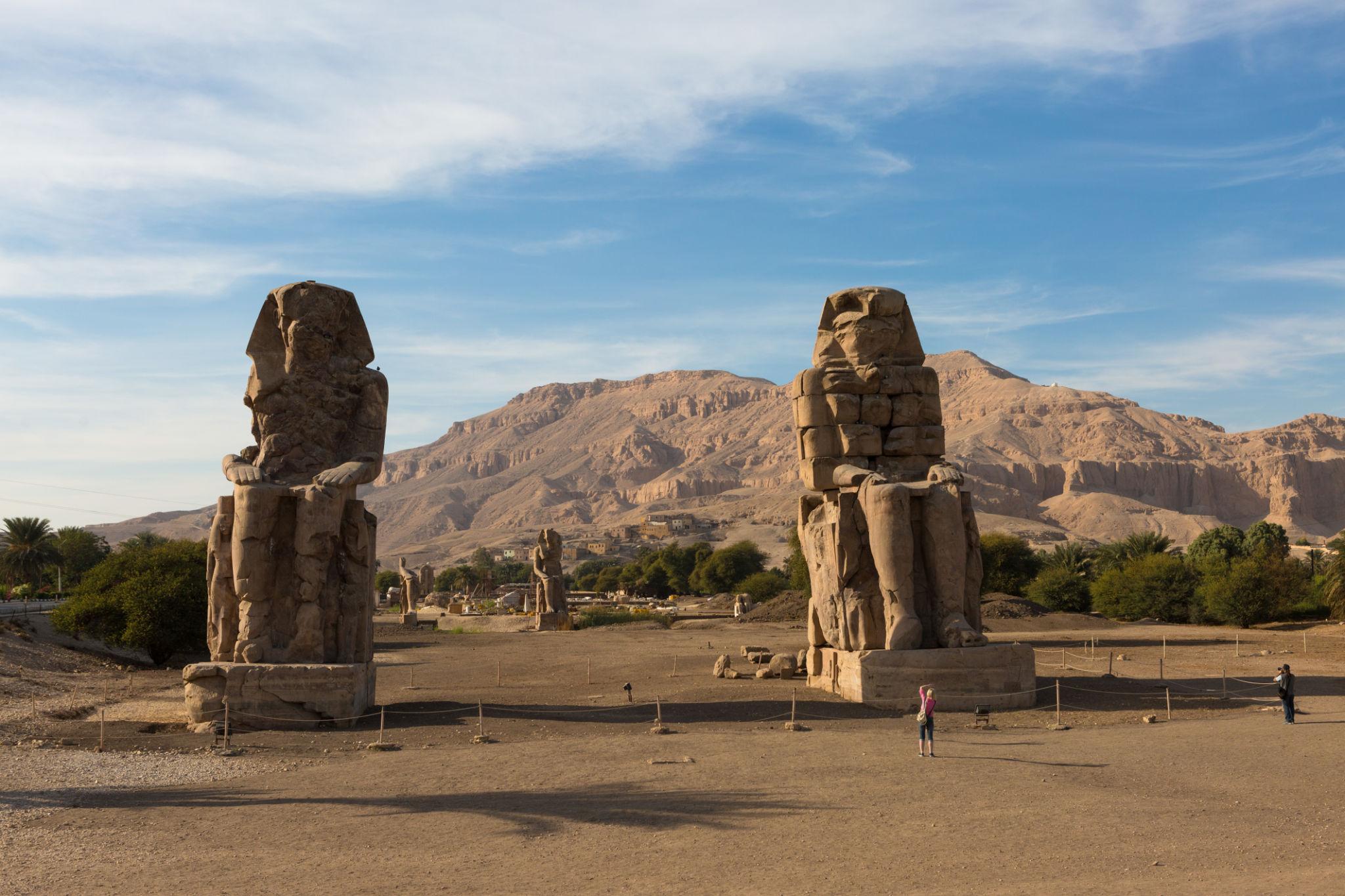
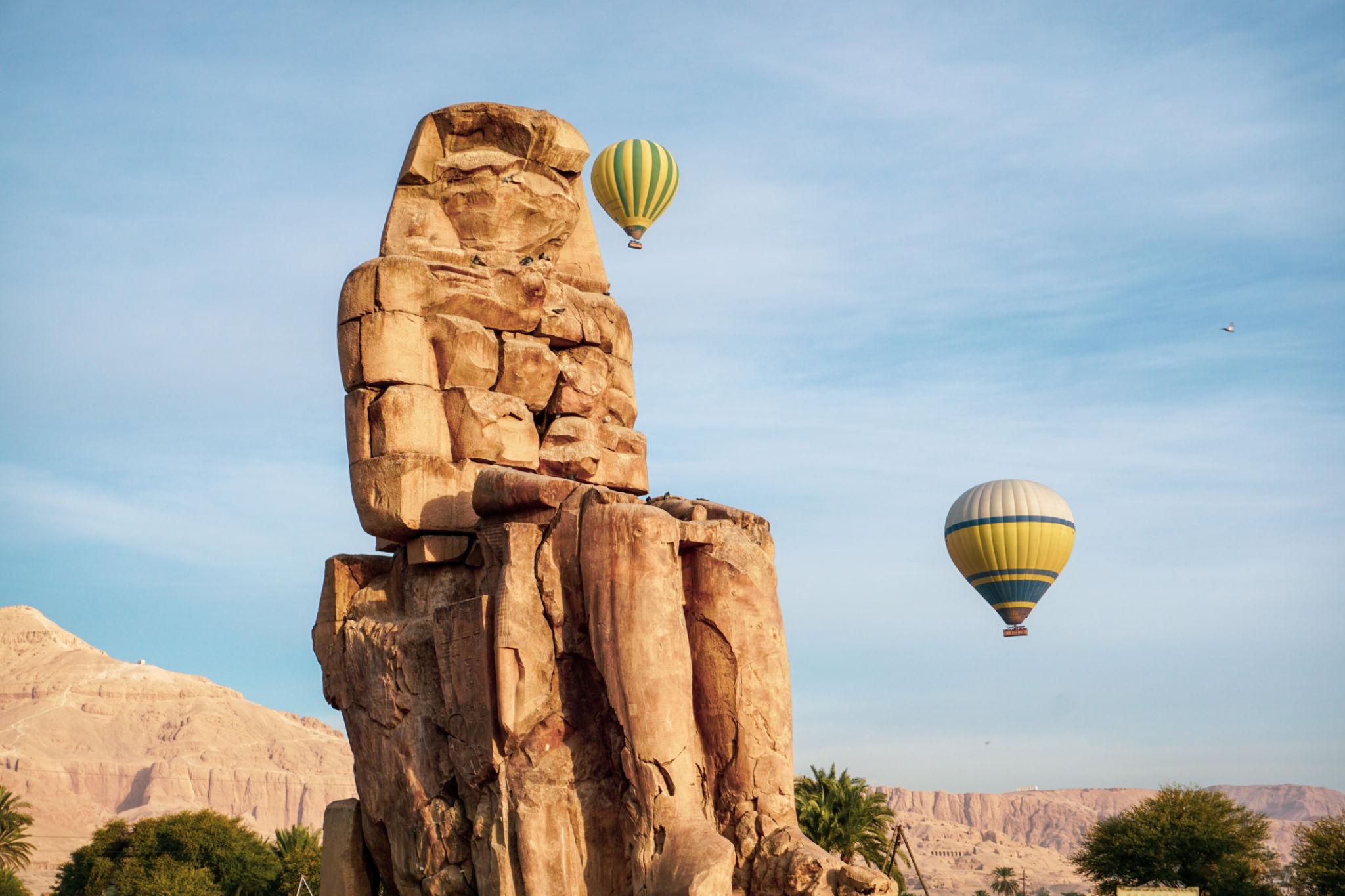
The Colossi of Memnon are two enormous stone statues of Pharaoh Amenhotep III, standing 18 meters tall on the west bank of the Nile at Luxor. They are all that remains of what was once the largest mortuary temple in Egypt. In antiquity, one of the statues was famous for 'singing' at dawn — a phenomenon caused by temperature changes — which drew visitors from across the Roman Empire.
Gallery
Why Visit
Two 18-meter giants standing alone in open farmland — a surreal sight
Free to visit and easily combined with the Valley of the Kings
The 'singing' statue was a bucket-list destination for ancient Roman tourists
What to See
The Two Colossi
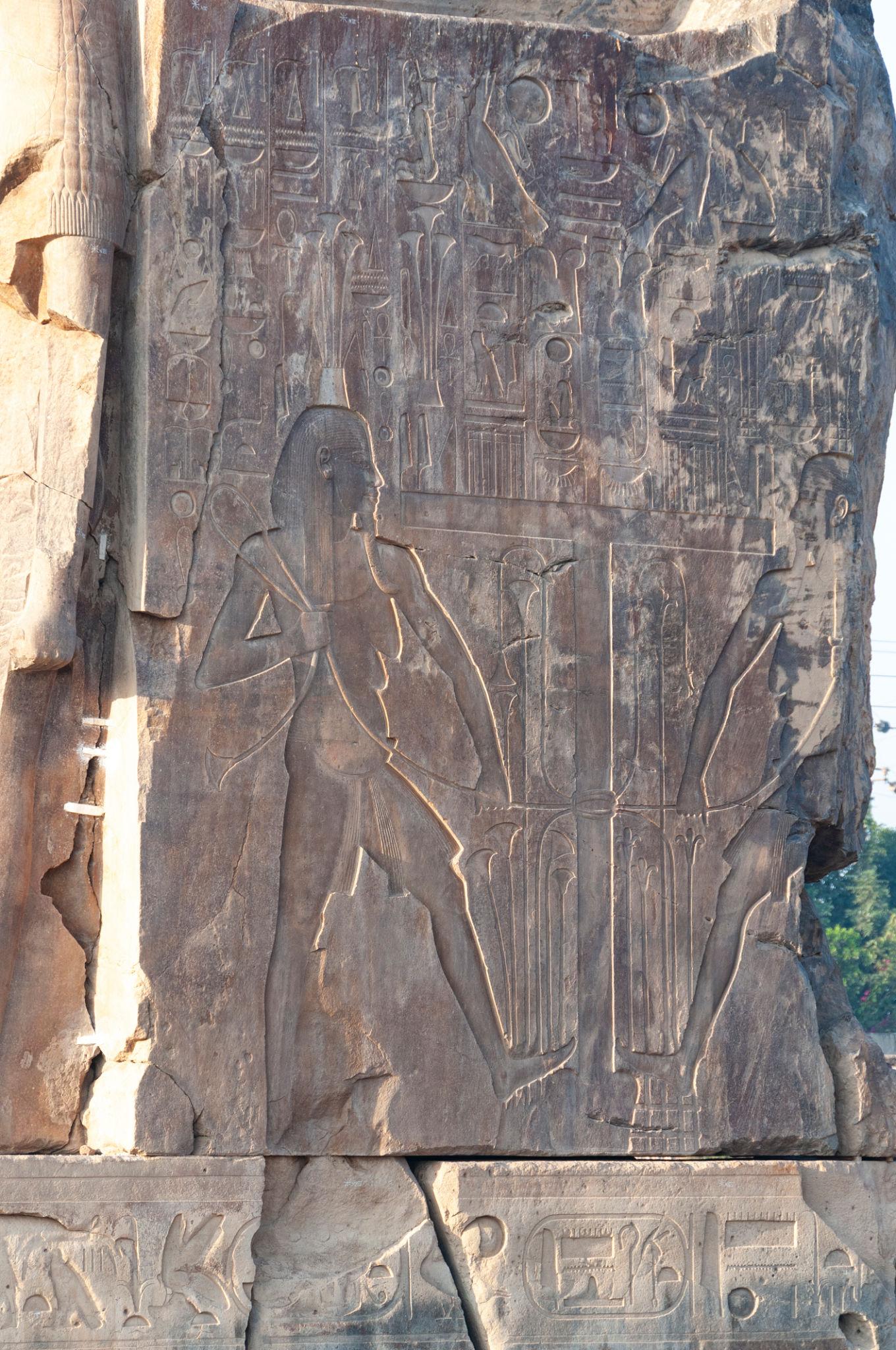
Each statue depicts Amenhotep III seated on a throne, flanked by smaller figures of his wife Queen Tiy and his mother Mutemwiya at his feet — a conventional composition executed on a staggering scale. Carved from single blocks of quartzite sandstone quarried near modern-day Cairo and transported 700 kilometers upriver, each statue weighs approximately 720 tons and stands 18 meters tall, making them among the heaviest single-stone sculptures ever created. Despite millennia of erosion, earthquakes, and flooding, the sheer mass and presence of the colossi remain overwhelming — they dominate the flat agricultural landscape of the west bank, rising abruptly from sugar cane fields and creating one of the most surreal sights in Egypt. The side panels of the thrones are carved with the symbolic unification of Upper and Lower Egypt — the lotus and papyrus intertwined — a detail easily missed amid the spectacle of the colossi themselves.
Ongoing Excavations
Behind the colossi, a major archaeological project led by Armenian-German Egyptologist Hourig Sourouzian has been systematically uncovering the remains of Amenhotep III's vast mortuary temple since 1998 — a temple that was originally larger than Karnak and the most impressive funerary complex in all of Thebes. Hundreds of magnificent statues and fragments have been recovered from the waterlogged ground, including colossal figures of the king, sphinxes, and representations of the goddess Sekhmet — many in remarkably good condition despite being buried for millennia. The excavation has revealed that the temple contained multiple courtyards, a massive hypostyle hall, and an elaborate system of canals connecting it to the Nile. The ongoing work means that each visit may reveal newly uncovered treasures, and the site is gradually being transformed from a two-statue photo stop into one of the west bank's most significant archaeological destinations.
Historical Details
The Singing Statue
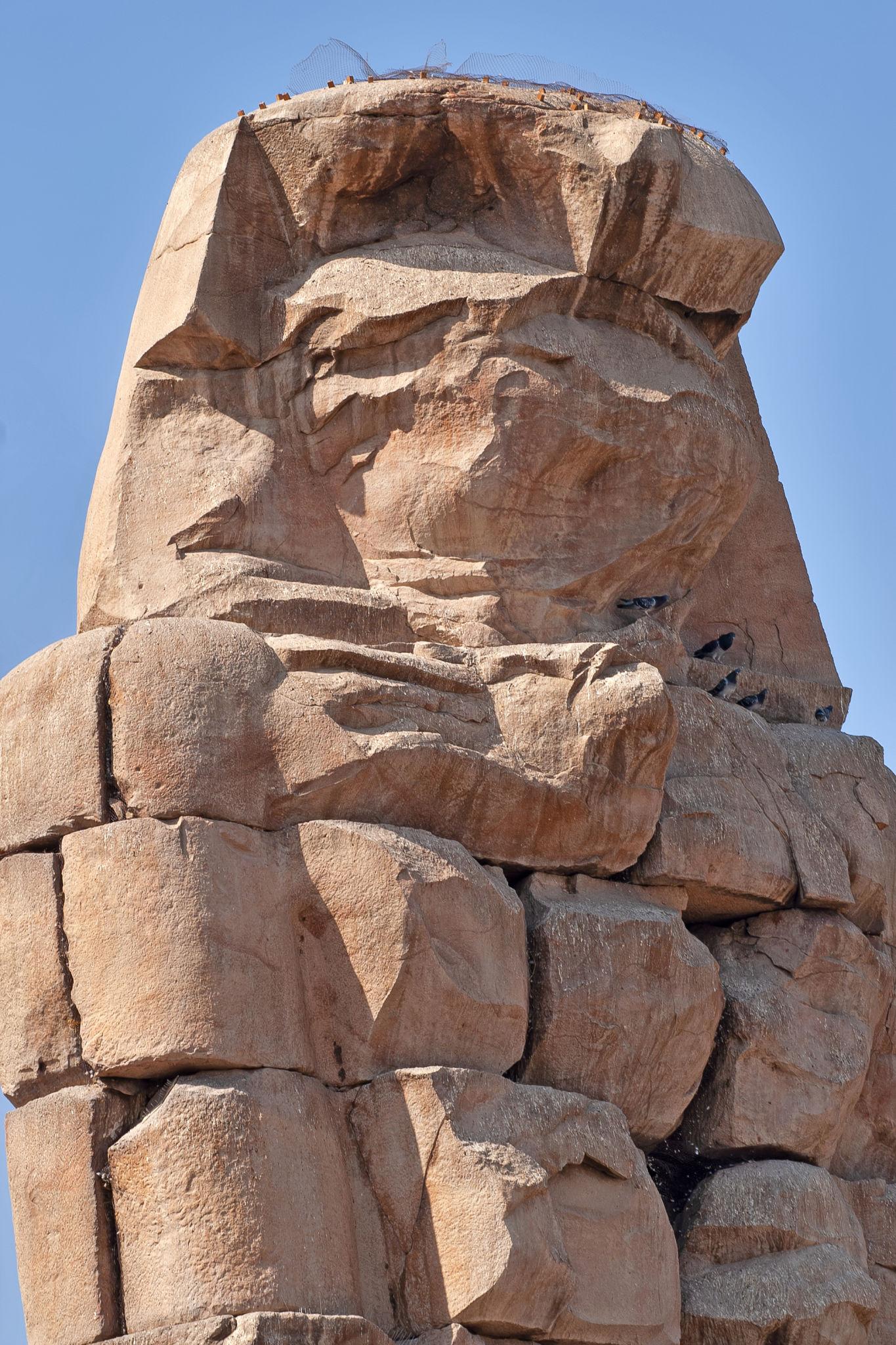
After a devastating earthquake in 27 BC cracked the northern colossus through its upper body, it began emitting a haunting bell-like or whistling sound at dawn — a phenomenon likely caused by the expansion of dew-dampened stone as the rising sun heated the fractured surface. The ancient Greeks and Romans, however, attributed the sound to the mythical Ethiopian king Memnon, son of the dawn goddess Eos, greeting his mother each morning — and the statues became one of the ancient world's most famous tourist attractions. Roman-era graffiti from visitors (including Emperor Hadrian in 130 AD) still cover the lower portions of the statues, recording their awe at hearing the 'voice.' When Roman emperor Septimius Severus ordered the statue repaired around 199 AD, the crack was sealed and the singing stopped forever — an ancient case of well-meaning conservation destroying the very phenomenon it sought to preserve.
Lost Temple
The mortuary temple that once stood behind the colossi was the largest and most opulent mortuary temple ever built in Egypt — larger even than Karnak, with a footprint covering approximately 350,000 square meters. Built on low-lying ground near the Nile, it was repeatedly damaged by annual floods that undermined its foundations, and major earthquakes further accelerated its collapse. Later pharaohs, particularly Merenptah (Ramesses II's successor), salvaged the temple's fine stone blocks, columns, and statues for their own construction projects, systematically dismantling one of Egypt's greatest architectural achievements. The ongoing excavations are slowly revealing the scale of what was lost, and scholars now believe the temple contained more colossal statuary than any other single building in the ancient world.
Visitor Tips
- Stop here on the way to the Valley of the Kings — it only takes 10–15 minutes
- Best photographed in the early morning with the sun behind you
- No entrance fee — the statues stand in an open field beside the road
Opening Hours
6 AM – 5 PM
Entry Fee
Free (open-access roadside monument)
Period
New Kingdom, c. 1350 BC
Built By
Pharaoh Amenhotep III