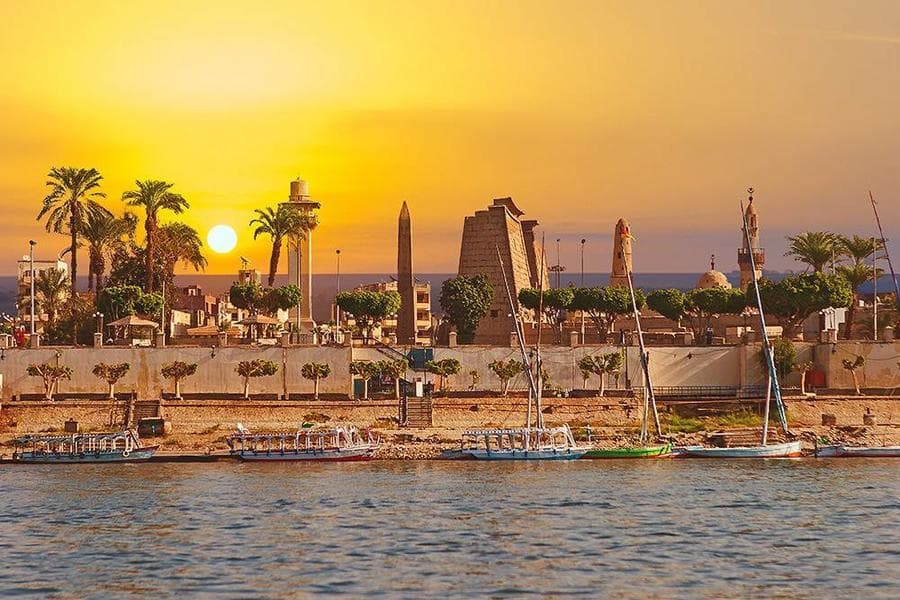
Luxor sits on a bend of the Nile roughly 650 kilometres south of Cairo, and is routinely said to hold about a third of the world's surviving ancient monuments. Nobody has produced a defensible source for that figure, and we would not repeat it as fact. What is beyond argument is that no other place packs this much standing pharaonic architecture into one municipality: two enormous temple complexes on one bank, a royal necropolis and six mortuary temples on the other, half a million people in between.
The ancient Egyptians called it Waset, the Greeks Thebes; the modern Arabic al-Uqsur means "the palaces", borrowed from the Latin castrum after the Roman fort built into the temple precinct. This guide covers how to split your days, what everything costs in 2026, which extra-fee tombs repay the money, and how to handle the part of Luxor nobody enjoys.
At a Glance
Where: Upper Egypt, on both banks of the Nile, roughly 650 km south of Cairo
Getting there: About 1 hour by air from Cairo, or 10 to 11 hours on the overnight sleeper
Minimum stay: Two full days, three if you can, four if you want day trips
Best months: November to March, when daytime highs sit around 23 to 30°C (73 to 86°F)
Valley of the Kings: 750 EGP (roughly 15 USD) for three tombs, as of 2026
Luxor Pass: 130 USD standard, 250 USD premium, five consecutive days
Payment: Card only at almost every ticket window since the cashless rollout
Opening hours: Most sites 6am to 5pm; Luxor Temple stays open into the evening
The Two Banks and How to Split Your Days
Thebes was organised around a theological division that still governs your itinerary. The East Bank, where the sun rises, was the city of the living: temples to Amun, the administration, the houses. The West Bank, where it sets, was the realm of the dead.
Give the West Bank your mornings, because the tombs are unshaded, unventilated and genuinely unpleasant after 11am from March onwards. Give the East Bank your late afternoons, because Luxor Temple is floodlit after dark and Karnak takes low sun beautifully. Do not attempt both on day one.
The East Bank: Karnak, Luxor Temple and the Avenue of Sphinxes
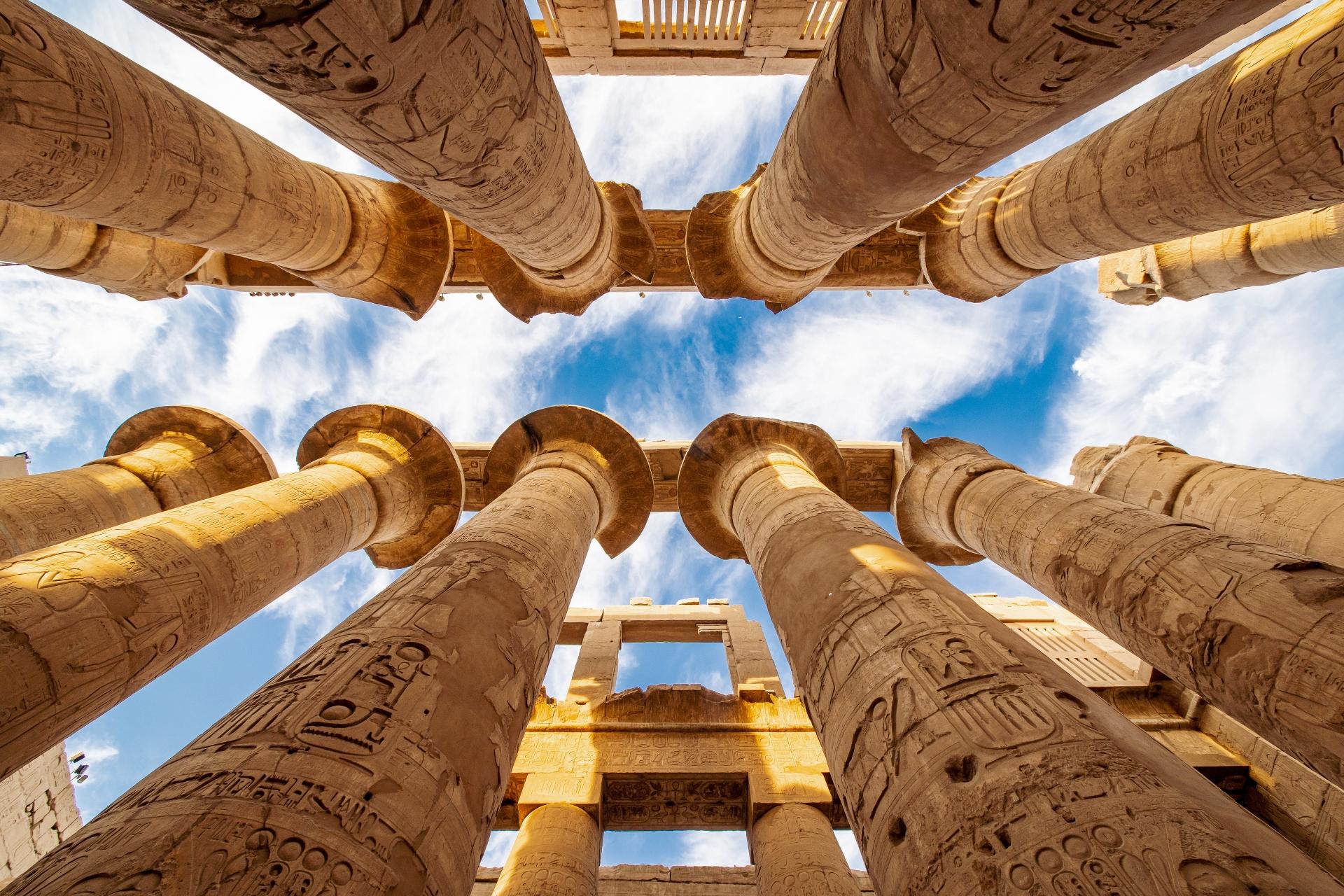
Karnak is not a temple but a precinct of them, built and rebuilt across roughly two thousand years by more than thirty rulers. The Great Hypostyle Hall alone, its 134 columns raised under Seti I and Ramesses II of the 19th Dynasty, would justify the trip. Foreign adult entry is 600 EGP (around 12 USD) as of 2026, and includes the Open-Air Museum in the northwest corner, which almost everyone walks past despite its White Chapel of Senusret I.
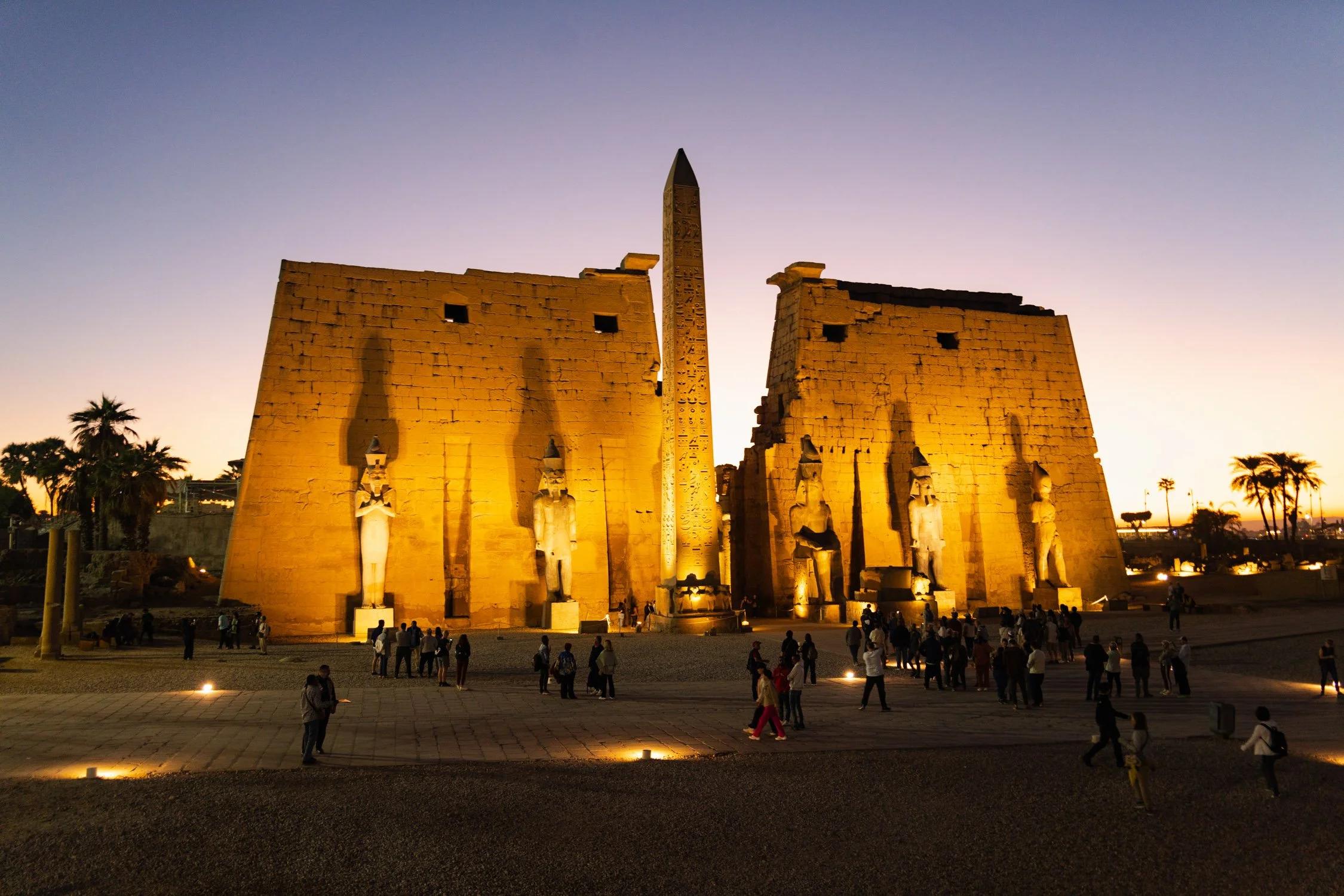
Luxor Temple, 2.7 km south, is a more comprehensible building: begun by Amenhotep III, extended by Ramesses II, converted into a church, then topped by the still-functioning Mosque of Abu al-Haggag. Entry is around 500 EGP (roughly 10 USD). It is the one major Egyptian site open into the night, generally to about 9pm, and the evening visit is a wholly different experience, as our guide to Luxor Temple after dark sets out.
Between them runs the Avenue of Sphinxes, the processional road along which the barque of Amun travelled during the Opet Festival. It reopened on 25 November 2021 and now runs the full 2.7 km with more than a thousand statues, most of the surviving human-headed ones dating to Nectanebo I of the 30th Dynasty rather than the New Kingdom. Walking it takes about 40 minutes, best done in the last hour of daylight. A guided run at Karnak and Luxor Temple in the late afternoon covers both plus the avenue without the midday heat.
The Two Museums Most Visitors Skip
The Luxor Museum, on the Corniche between the temples, is the best small museum in Egypt and half empty most days. Its centrepiece is the Luxor Temple cachette, statues found buried under the temple court in 1989, including a near-perfect calcite double statue of Amenhotep III with the crocodile god Sobek. There is also a reconstructed wall of talatat, the small standardised blocks from Akhenaten's dismantled Karnak buildings, recovered from inside a later pylon where they had been reused as rubble, plus the mummies of Ahmose I and Ramesses I. Entry is about 400 EGP.
The Mummification Museum, a few hundred metres north on the same riverfront, is small, old-fashioned and worth an hour: embalming tools, canopic equipment, mummified cats and a Nile crocodile, and the mummy of Maserharti, a 21st-Dynasty High Priest of Amun. Entry is about 220 EGP. The Ministry lists its hours as 9am to 2pm and 5pm to 9pm; the Luxor Museum keeps a similar split, though published closing times vary, so treat the evening session as the reliable one.
The West Bank: Which Extra Tickets Are Worth It
The Valley of the Kings holds more than sixty numbered tombs, cut between roughly 1539 and 1075 BCE for rulers of the 18th to 20th Dynasties. The general ticket is 750 EGP (about 15 USD) and admits you to three tombs from a rotating list posted at the gate. Three sit outside it.
Ramesses V and VI (KV9): around 220 EGP extra, roughly 4.50 USD, and the best value at any Egyptian site. Its astronomical ceiling, with the doubled figure of the sky goddess Nut, is the finest painted surface in the valley.
Tutankhamun (KV62): an extra 700 to 750 EGP, sources disagreeing on the figure. The tomb is tiny and the treasures are in Cairo, but the mummy is still here in a climate-controlled case.
Seti I (KV17): around 2,000 EGP, about 40 USD. The longest and most elaborately decorated tomb in the valley, reopened after a long restoration. Egyptologists pay it without blinking; casual visitors need not.
Beyond the valley, Hatshepsut's terraced temple at Deir el-Bahari is around 440 EGP and the quieter western sites around 220 EGP each. Medinet Habu, with its Sea Peoples reliefs and surviving ceiling paint, is the one to choose if you add just one. The Tombs of the Nobles are ticketed in small groups from around 120 EGP and hold the best-preserved painted scenes of daily life in Egypt; the Colossi of Memnon are free. A half-day at Medinet Habu, the Ramesseum and Deir el-Medina is the best antidote to Valley of the Kings crowds, and our Valley of the Kings guide goes tomb by tomb.
Insider Tip: Do the Maths on the Luxor Pass
The Luxor Pass costs 130 USD standard or 250 USD premium, runs five consecutive days and covers both banks. Premium adds Seti I and Nefertari; standard excludes both. Under-30s with a student card pay 70 and 130 USD.
Two full days covering the Valley of the Kings, Karnak, Luxor Temple, Hatshepsut, three or four western temples and both museums lands around 3,000 to 3,500 EGP, close to the standard pass. Three days at that intensity and the pass wins; one day and it does not. Passes are issued at designated offices rather than site gates; bring your passport and a passport photograph, and note that payment has historically been in cash dollars or euros.
Crossing the River and Getting Around the West Bank
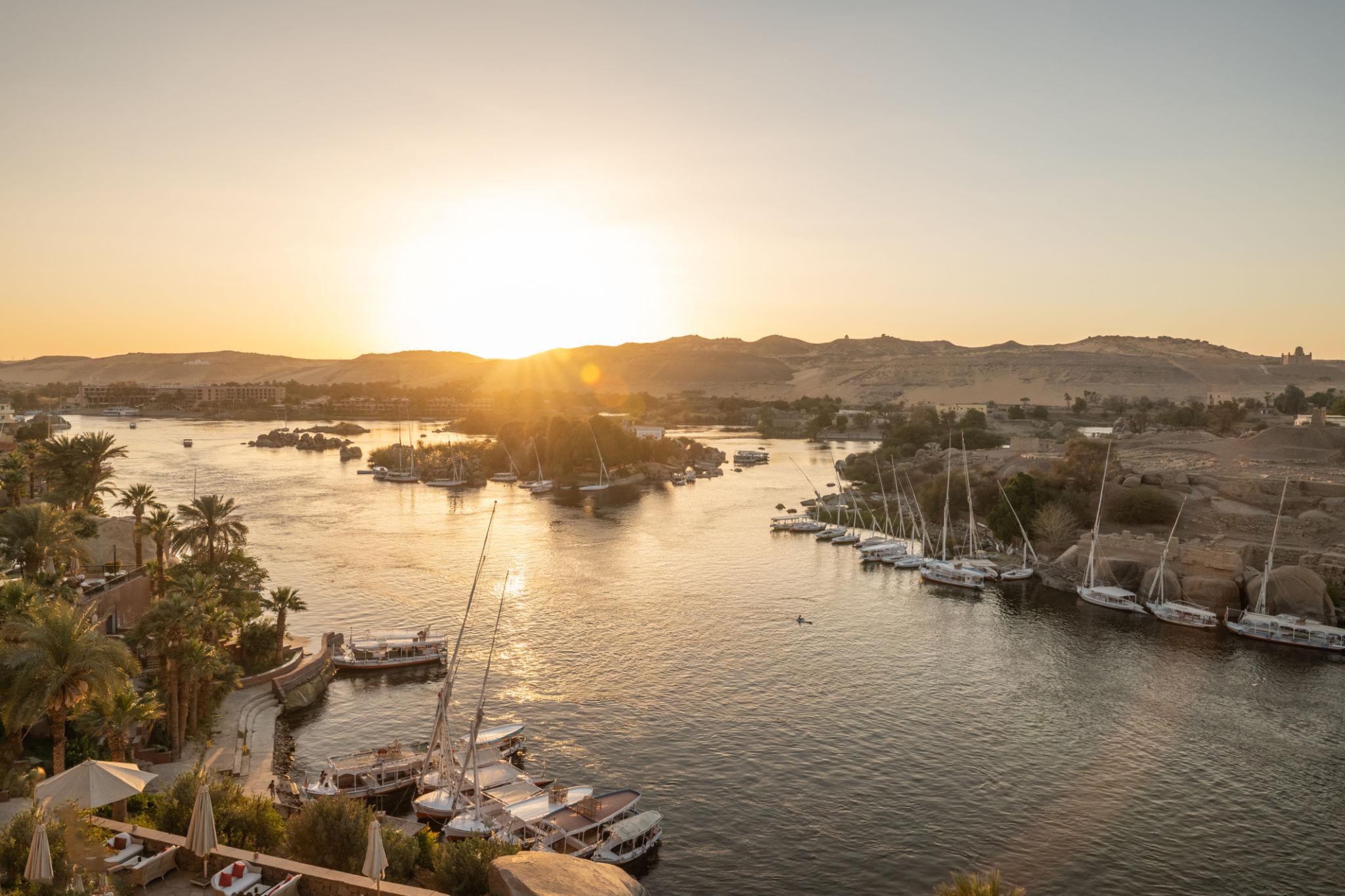
The public ferry from the Corniche opposite Luxor Temple takes five to ten minutes and runs frequently from early morning until well after dark. Egyptians pay a few pounds; foreigners are usually asked 10 to 20 EGP. It takes pedestrians, bicycles and motorbikes but not cars, and private motorboats cross on demand from the same steps for roughly 50 to 100 EGP.
Cars must use the bridge, roughly 7 km south of the centre, making a taxi crossing a 30 to 40 minute detour each way. Hence the case for hiring one driver for the whole West Bank day; expect 400 to 1,000 EGP.
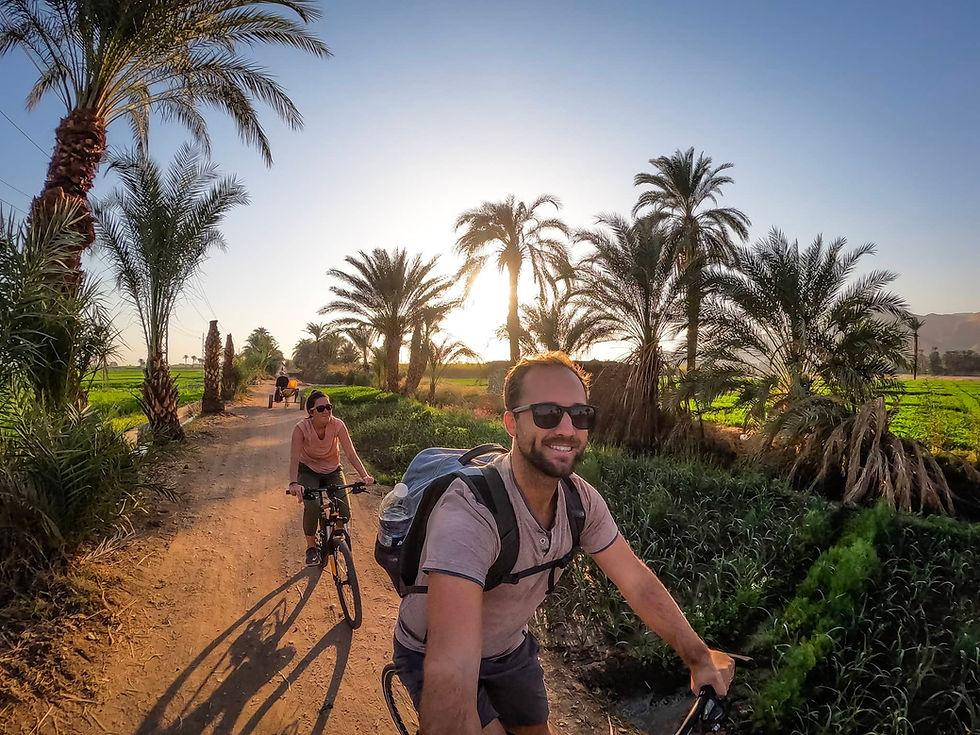
Bicycles rent for around 100 to 150 EGP a day and are the best way to cover the flat ground between the Colossi, the Ramesseum and Medinet Habu, but not the way to reach the Valley of the Kings, which sits up a long exposed climb. A guided West Bank cycling route solves that by pairing village roads with transport for the hill.
Where to Base Yourself
The East Bank Corniche is the practical default: walking distance to Luxor Temple, the museums and the souk, 3 km from Karnak, with Nile-view rooms at every price tier and the historic riverfront hotels at the top end.
The West Bank is quieter, cheaper and far less hassled. Guesthouses cluster in Gezira, Ramla and Al-Ba'irat, mostly small and family-run, with rooftops looking over sugarcane to the Theban cliffs. You wake already on the correct side of the river for a 6am start, which is worth more than it sounds; the tradeoff is limited evening dining and a ferry timetable that shapes your night. With three or more nights, split between the banks.
Warning: Card-Only Ticketing and Tombs That Close Without Notice
Egypt has moved its major archaeological sites to cashless ticketing and Luxor is now almost entirely card-only at the gate. Bring a Visa or Mastercard, tell your bank you are travelling, and carry a second card, because terminals fail often enough that arriving with only one is a real risk. Tickets can also be bought ahead through the Ministry's portal, which issues a QR code.
Individual tombs close for conservation with little warning. Nefertari's tomb in the Valley of the Queens is the clearest case: closed in 2024, and as of 2026 sources flatly contradict each other about whether it has reopened, some listing a 2,000 to 2,500 EGP ticket, others reporting it still shut. Confirm on the day, and treat the premium pass as a gamble if Nefertari is your reason for buying it.
Dealing With the Hassle
Luxor has a deserved reputation as the most persistently commercial place in Egypt for visitors. Calèche drivers, felucca captains, alabaster shops and taxi drivers work the Corniche continuously, and the standard move is a friendly opening that becomes a fare dispute later: a price agreed at the start, re-described at the end as per person or per hour.
Agree the total out loud, for the whole vehicle and the whole journey, and photograph the number for longer hires. Carry small notes, because "no change" is a negotiating position. A calm "la, shukran" and continued walking beats engagement. Guardians inside tombs point out a detail and then expect payment, so decline help you did not ask for. None of it is dangerous, and it is much lighter on the West Bank. Our guide to baksheesh and tipping gives the going rates.
When to Come: Luxor Month by Month
Luxor is a desert city with effectively no rainfall, so heat is the only variable that matters. Average daily highs run about 23°C (73°F) in January, 30°C (86°F) in March and 35°C (95°F) in April, then stay above 39°C (102°F) from May through September, peaking near 41.5°C (107°F) in July. December and January nights drop to 7 or 8°C (45 to 47°F), which surprises people who packed only for the day.
November to February is the comfortable window and also the busiest; March and October are the best compromise. April, May and late September are manageable if you finish by 11am. June to August suits travellers who do not mind heat, and rewards them with low prices and empty tombs.
Getting to Luxor
Flights from Cairo take about an hour into Luxor International, 6 km east of the centre, which also handles seasonal European charters and Red Sea connections.
The overnight sleeper runs 10 to 11 hours and now departs from Bashtil, the Cairo Upper Egypt station opened in October 2024, not from Ramses as older guidebooks state; beds cost roughly 60 to 100 USD per person by class. Day trains take 10 to 12 hours for far less, though foreigners generally book through agencies. By road, Hurghada is 280 to 300 km and about four and a half hours; Aswan is 220 km and three and a half hours, or three to four days by cruise boat via Edfu and Kom Ombo.
Two, Three and Four Days in Luxor
Two days: West Bank on the first morning for the Valley of the Kings with the Ramesses VI supplement, Hatshepsut and the Colossi; rest in the afternoon; Karnak late and Luxor Temple after dark. Second day: Medinet Habu, the Ramesseum and Deir el-Medina, then the Luxor Museum in the evening. A long day covering both banks with a guide compresses this if two days is all you have.
Three days: add a third morning for the Tombs of the Nobles and the Valley of the Queens, and a third evening for the Mummification Museum and the Avenue of Sphinxes walk. A sunrise balloon flight fits either morning; our complete balloon guide covers the 4am start.
Four days: use the fourth for a day trip north to Dendera, which has the best-preserved temple ceiling in Egypt, or on to Abydos for the Seti I temple and the King List.
Planning Your Days
The mistake we see most often is treating Luxor as a stopover between a Cairo flight and a Nile cruise, giving it a day and a half, then wondering why the tombs blurred together. Two full days is the floor. Three lets you cross twice, which is when the West Bank stops being a checklist and becomes a landscape: mortuary temples along the cultivation edge, tombs in the cliff behind them, desert immediately above.
Come in the cool months, start at six, keep your afternoons free, and give one evening to the East Bank after the tour buses have gone.