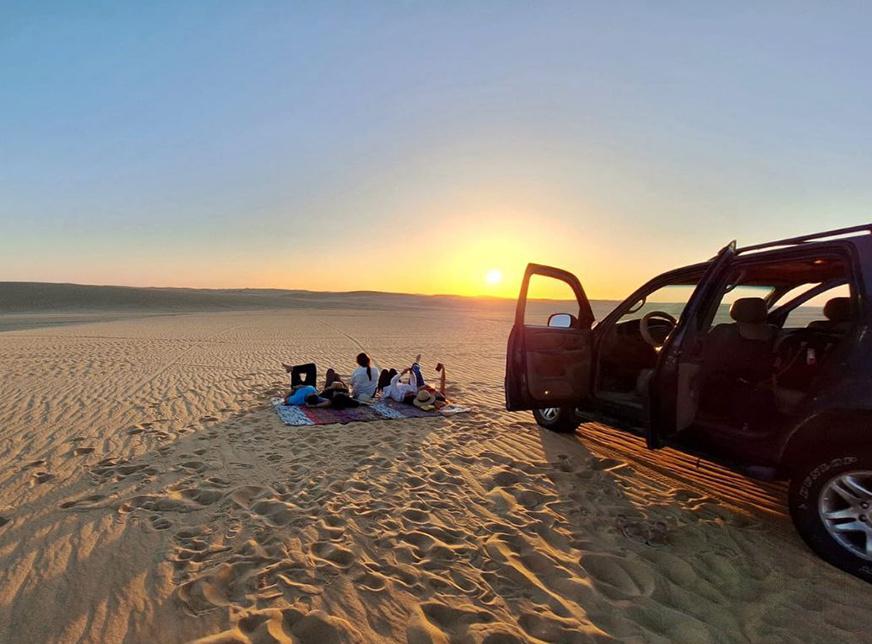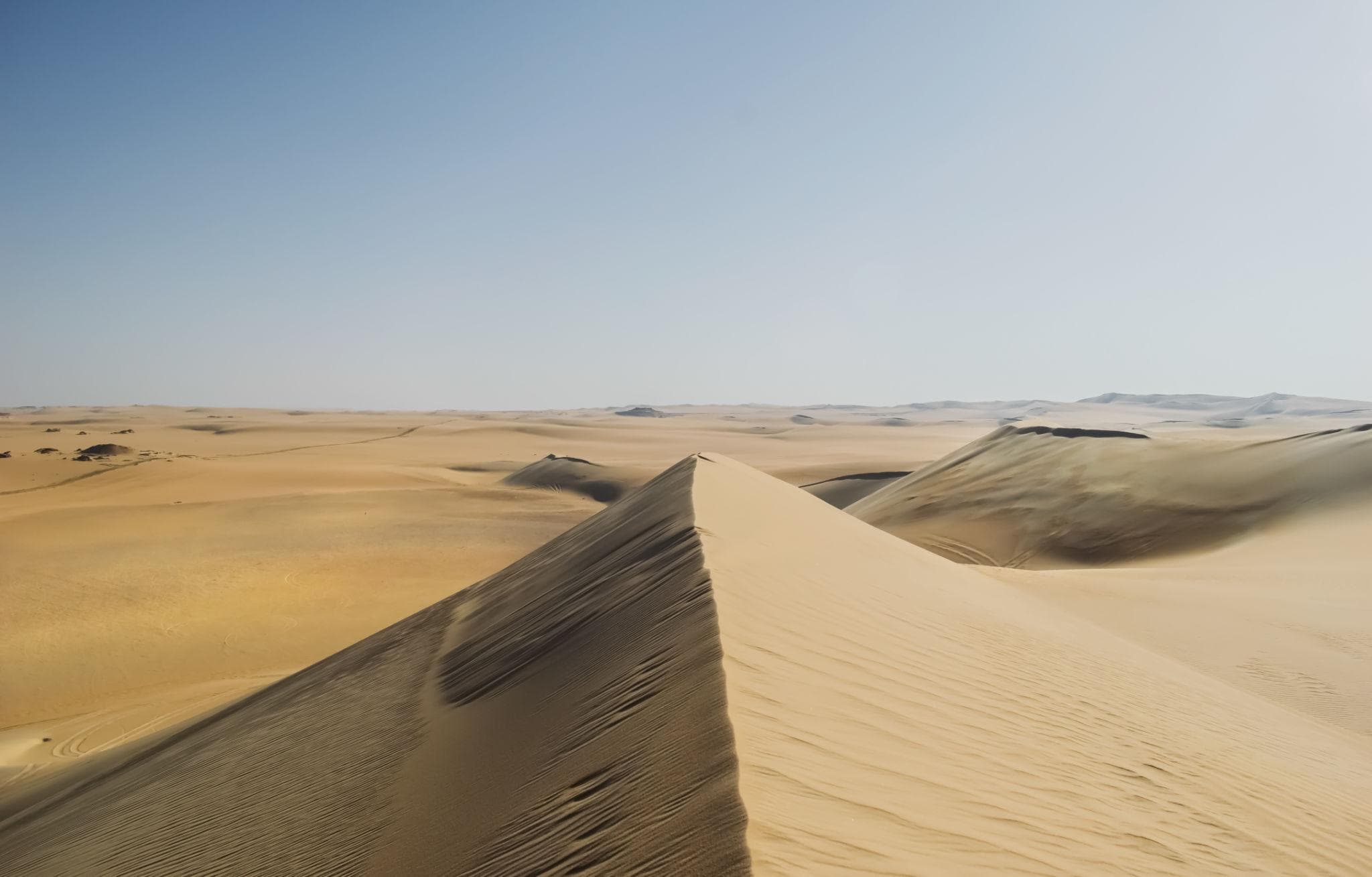
A short drive southwest of Siwa town the asphalt gives out, the palm belt thins to nothing, and the ground ahead turns into a pale corrugated ocean. Your driver stops, gets out, and lets the air out of all four tyres until the sidewalls bulge. That five-minute pause at the sand line is the actual border of the Great Sand Sea, and everything past it behaves by different rules.
This is one of the largest continuous dune fields on the planet: roughly 72,000 square kilometres, running about 650 km north to south and 300 km east to west, spilling over the frontier into eastern Libya and adjoining the Calanshio Sand Sea to the north. Almost none of it has ever been driven.
Most visitors meet it as a single afternoon trip out of Siwa, usually sold as the Bir Wahed safari. That trip is genuinely worth doing. It is also the shallowest possible edge of something enormous, and it helps to know which parts of the legend you are actually seeing and which lie hundreds of kilometres beyond the last checkpoint.
At a Glance
Where it begins: roughly 15 km southwest of Siwa town, at the well known as Bir Wahed
Size: about 72,000 sq km, some 650 km north to south by 300 km east to west
Dune type: long north-south sand ridges, with two large areas of megadunes
Getting to Siwa: 750 to 800 km by road from Cairo (8 to 10 hours), or about 300 km from Marsa Matruh
Standard trip: an afternoon 4WD safari of roughly four to six hours, back after sunset
Typical cost: around 700 to 1,500 EGP per person (roughly 14 to 30 USD) as of mid-2026
Permit: yes. Off-road travel requires a qualified guide and a permit, arranged by your operator
Best months: October to April
Vehicle: 4WD with an experienced local driver, never a self-drive rental
Not included, despite the stories: the silica glass field, some 600 km further south
What the Great Sand Sea Actually Is
The sand here is organised, not random. Prevailing winds have combed it into long ridges running roughly north to south, uninterrupted for tens of kilometres, with flat sand and gravel corridors in between. That geometry is the whole story of desert travel out here: moving along the grain is manageable, and moving across it is what breaks expeditions.
Published dune heights vary widely depending on which ridge and which survey you read, so treat any single figure with suspicion. What matters in a vehicle is simpler: the ridges are high enough, and steep enough on one flank, that you cannot see the far side until you are committed to it.
Gerhard Rohlfs found this out in the 1870s. His expedition of about 90 men and 100 camels, under the patronage of Isma'il Pasha, left Dakhla in 1874 for Kufra and was stopped by ridges the loaded camels could not climb. That February a freak downpour let them restock water; they built a cairn and named the spot Regenfeld, rain field. Pushed northwest along easier ground, Rohlfs gave up on Kufra and came out at Siwa.
Where Siwa Sits Against It
Siwa is a long depression, about 80 km end to end and up to 20 km wide, with its floor around 19 metres below sea level. Roughly 200 springs feed the palm and olive groves, a chain of salt lakes sits in the lowland, some 25,000 people live here, and the Libyan border is about 50 km west. Our Siwa Oasis destination page and the longer Siwa travel guide cover the oasis itself.
One number worth clearing up: reference works often give Siwa as 560 km from Cairo, which is the straight line. By road it is 750 to 800 km and eight to ten hours, usually via the coast to Marsa Matruh and then inland.
The Bir Wahed Afternoon, Step by Step
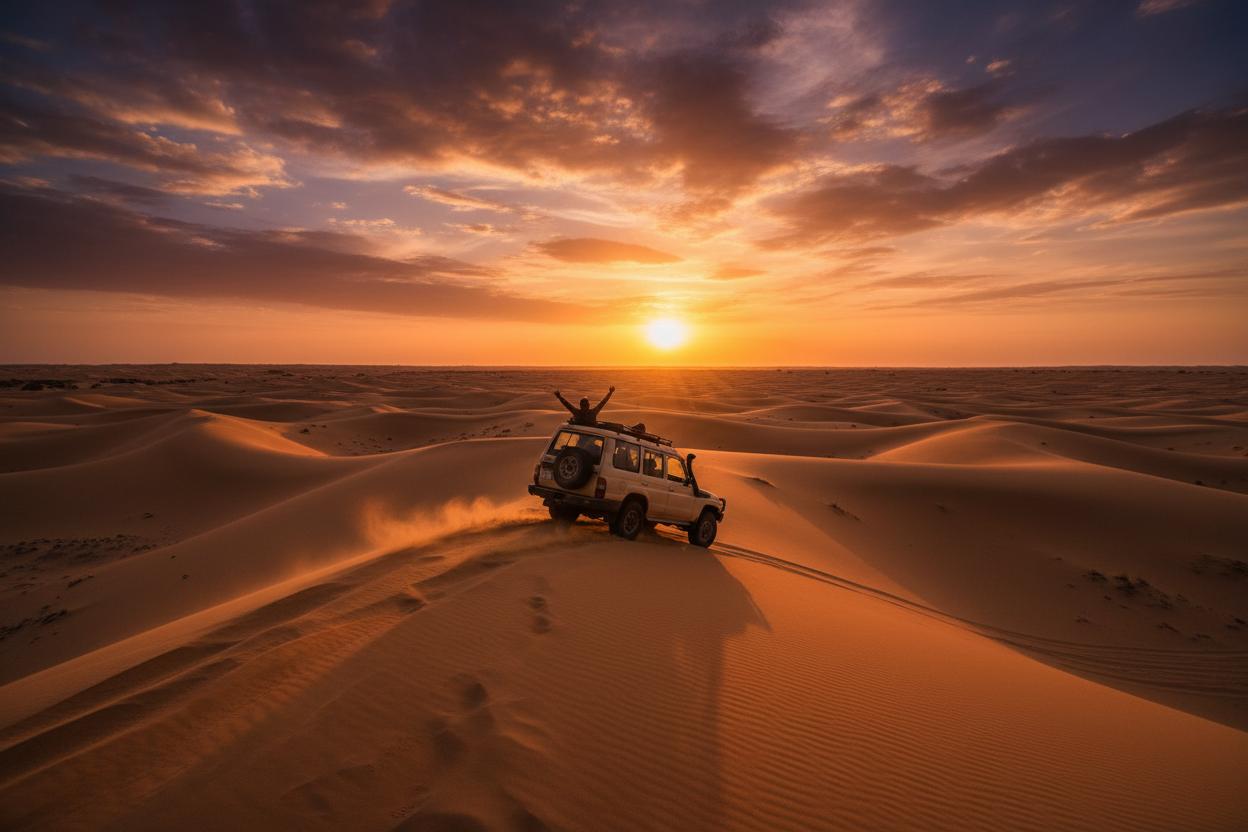
Bir Wahed means, plainly, well number one. Trips leave Siwa in mid-afternoon in a Land Cruiser or similar, deflate at the sand line, then spend the next hour running the ridges. Drivers climb at an angle, crest slowly, and descend straight down the fall line, because a vehicle tips sideways far more easily than it tips forward. It is exhilarating and, done properly, it is also boring in the best sense: no drama, no stuck vehicle, no shouting.
The stops are usually a tall dune for sandboarding, then the spring. Bir Wahed's hot pool is a small sulphurous basin ringed with reeds, uncomfortable at midday and close to perfect at dusk, and it bears no resemblance to the tidy stone bath of Cleopatra's Spring back in the oasis. A short walk away lies a cold freshwater lake, the strangest sight of the day: clear water, reeds, dragonflies, and dunes on every horizon. Most trips finish with tea brewed over a fire on a crest as the sun drops.
Sandboarding here is the plywood variety, sitting or standing, not anything with proper bindings. Expect grazes if you fall and sand in every seam of your clothing for days.
Pro Tip for Timing the Safari
Take the afternoon departure rather than a morning one. Low sun is what makes the dunes legible, cutting the ridges into light and shadow; at midday the same landscape photographs as a flat white smear and the hot spring is unbearable. Book it for your second day in Siwa, because a Bir Wahed run straight after a ten-hour drive from Cairo wastes both. Bring your own towel and dry clothes, since most operators supply neither and the temperature falls sharply once the sun is down.
Fossils, Silica Glass and What You Will Not See
The desert around Siwa was seabed. The Miocene marine beds of this region carry echinoderms, bivalves, gastropods and bryozoans, and on some safari routes fragments lie loose on the surface where the wind has stripped the sand back.
The silica glass is a different matter, and it is the most common misunderstanding about this trip. Libyan Desert Glass, the translucent yellow-green natural glass made almost entirely of silica, is not found near Siwa. Its scatter field lies in the far southwestern corner of the sand sea, out towards the Gilf Kebir plateau, which we cover in the guide to Gilf Kebir and the Cave of Swimmers. The glass formed about 29 million years ago. Researchers argued for years over whether a ground impact or an atmospheric airburst made it, and the balance has recently tipped: zircon grains in the glass preserve structures that only form from reidite, a mineral so far found only at meteorite impact sites, though no parent crater has been identified. A scarab carved from this glass sits at the centre of one of Tutankhamun's pectorals, now displayed with the rest of the collection at the Grand Egyptian Museum.
Whatever you find out there, leave it: removing fossils or glass from protected desert is prohibited, and the fragments mean nothing in a drawer at home.
Half a Day, a Night, or a Real Expedition
The afternoon safari gives you the dunes, the spring and a sunset. An overnight adds what no day trip can: full dark, total silence, and no light pollution on any horizon. Our two-day Siwa desert safari builds in that night under canvas, while the three-day Siwa adventure pairs the sand sea with the salt lakes and the old town, an honest length for somewhere this far from anywhere.
Beyond that sits a category most travellers never encounter: multi-vehicle crossings of a week or more, carrying their own fuel and water. It is the terrain Pat Clayton spent nearly twenty years mapping for the Egyptian Survey in the 1920s and 1930s, work that put him in the Long Range Desert Group when the war came. Those routes are still driven, but by a handful of specialist outfits under separate permits, not as a bookable holiday.
What the Trip Costs
A shared afternoon safari from Siwa typically runs around 700 to 1,500 EGP per person as of mid-2026, roughly 14 to 30 USD at the rate of about 50 EGP to the dollar in August 2026. Quotes vary enormously, partly because some are priced per person and some per vehicle, and the same afternoon sold privately through an international platform can list at several times that.
Ticketed sites in Siwa are steadier, and published by the Ministry of Tourism and Antiquities. The Temple of Aghurmi, better known as the Temple of the Oracle, and the rock-cut tombs of Gabal al-Mawta are each 120 EGP for foreign visitors, about 2.40 USD, with student tickets at half that and gates open from 9am to 5pm. Agree the safari price and the vehicle before you set off, and carry cash, because card facilities in Siwa are close to nonexistent.
Why Dune Driving Needs a Local Driver
Soft sand is unforgiving of small mistakes. Deflating the tyres floats the vehicle instead of letting it dig in, which makes the compressor that reinflates them not optional kit but the thing that gets you home. Cresting a ridge blind, without knowing whether the far side drops two metres or twenty, is how vehicles roll. Ridge lines also shift, so a line driven last month may not exist this month.
A properly equipped Siwa operator will have, at minimum:
- Two vehicles travelling together, or a clear plan for what happens if one fails
- A long-handled shovel, sand ladders or recovery boards, and a working compressor
- Spare fuel and considerably more water than the trip should need
- GPS, plus a driver who knows the corridors without it
- A satellite phone or radio, since mobile signal disappears within minutes of leaving town
Our guide to desert safety, permits and choosing an operator covers how to check all of this before money changes hands. The cheapest quote in the square is cheap for a reason, usually one vehicle and no recovery gear.
Warning: Permits, Checkpoints and the Libyan Border
Siwa itself is open to visitors, but the dunes are not. UK government advice is explicit that anyone travelling off road in Egypt should use a qualified guide and obtain a permit from the Ministry of Interior. In practice your operator files it, using passport copies handed over at least a day ahead, so same-day requests often fail.
The border matters. The Foreign, Commonwealth and Development Office advises against all travel to within 20 km of the Egypt-Libya border, and against all but essential travel to the area west of the Nile Valley and Delta, with named exceptions that include the town of Siwa. It also advises against all but essential travel on the road between Al Bawiti in Bahariya and Siwa, and in the desert near the start of that road, so do not plan a direct crossing between the two oases. Check your own government's current advice before booking, since these designations change.
There is a hard reason for the strictness. On 13 September 2015, a joint Egyptian police and army unit fired on a tourist convoy in the Western Desert after mistaking it for militants, killing twelve people, eight of them Mexican visitors and four Egyptians, and injuring ten more. Permits and route approval exist because of that. Going around a checkpoint puts you and your driver at real risk.
Best Months and What the Thermometer Does
October to April is the season. In October, average daily highs at Siwa sit near 30.5°C (87°F) with nights around 15.5°C (60°F). January is the coldest month, averaging highs of about 19.3°C (67°F) and lows near 5.6°C (42°F), and out in open sand it feels colder still. July averages 37.5°C (100°F) by day and 21.7°C (71°F) at night, and the region's record stands at 48.2°C (119°F). Rainfall is about 9 mm a year, roughly one wet day.
Two seasonal caveats. Spring, roughly March to May, brings the khamsin, a hot sand-laden wind that can shut down visibility and cancel trips outright, so leave slack in your dates. And if the night sky is your reason for going, aim for the days around new moon; a full moon over the dunes is beautiful, but it erases the Milky Way.
What to Carry Into the Dunes
- A scarf or shemagh you can pull over your face when the wind lifts
- Sunglasses, high-factor sunscreen, a brimmed hat, and closed shoes for boarding
- A warm layer for the drive back after sunset, even in October
- Swimwear, a towel and dry clothes, since the spring and the lake are the point
- More water than you think, a power bank, and your camera in a sealed bag
Our desert safari packing guide goes further, particularly for overnight trips, where the day-to-night temperature swing does the real damage.
Planning the Trip
The hardest part of the Great Sand Sea is not the sand, it is the 750 to 800 km between Cairo and Siwa. A private road transfer removes most of the friction and lets you break the drive on the coast; our Cairo to Siwa transfer handles it door to door. Give yourself two nights in the oasis as a minimum, three if you want the sand sea, the salt lakes and an unhurried evening in the ruins of Shali Fortress.
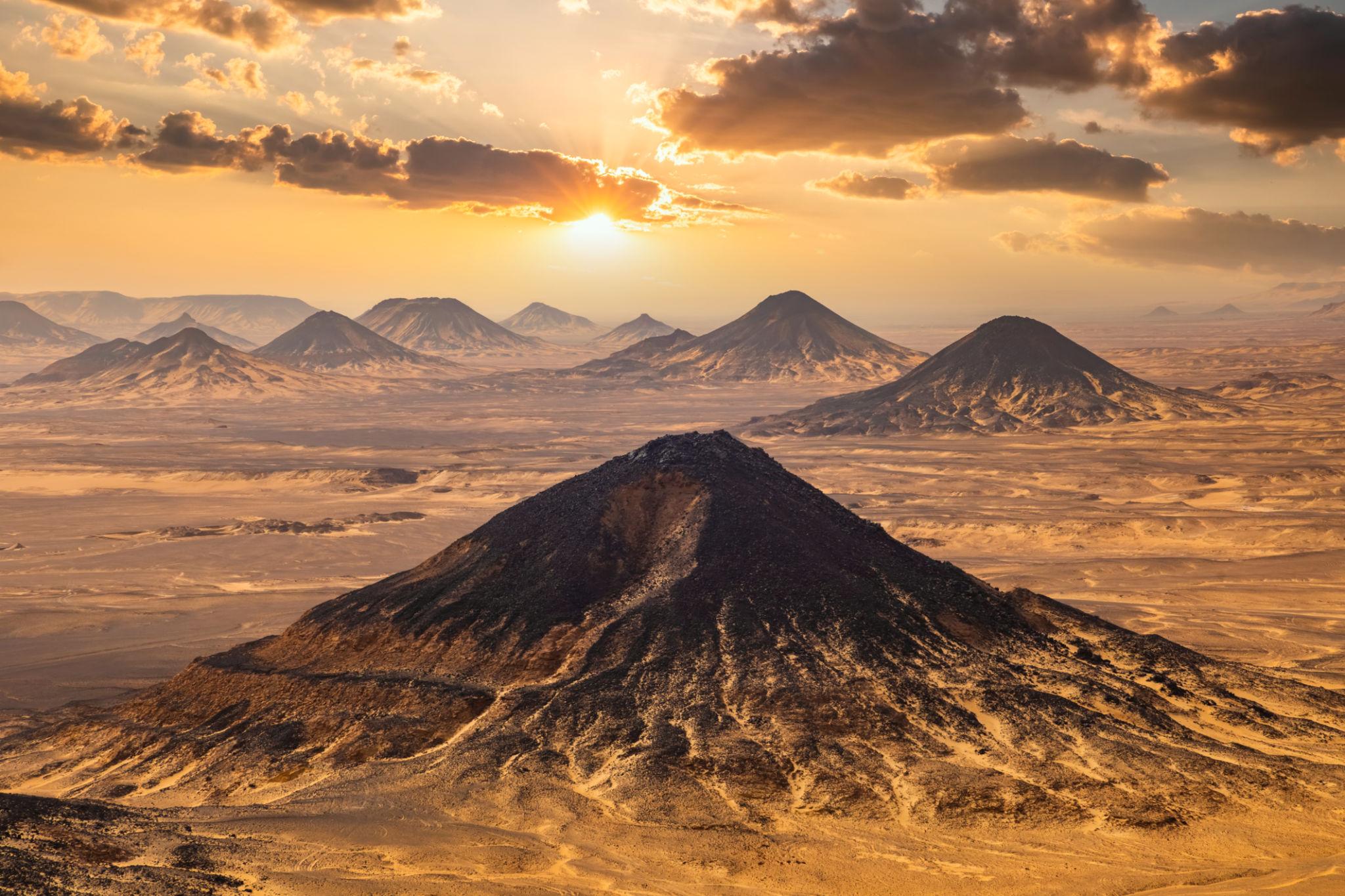
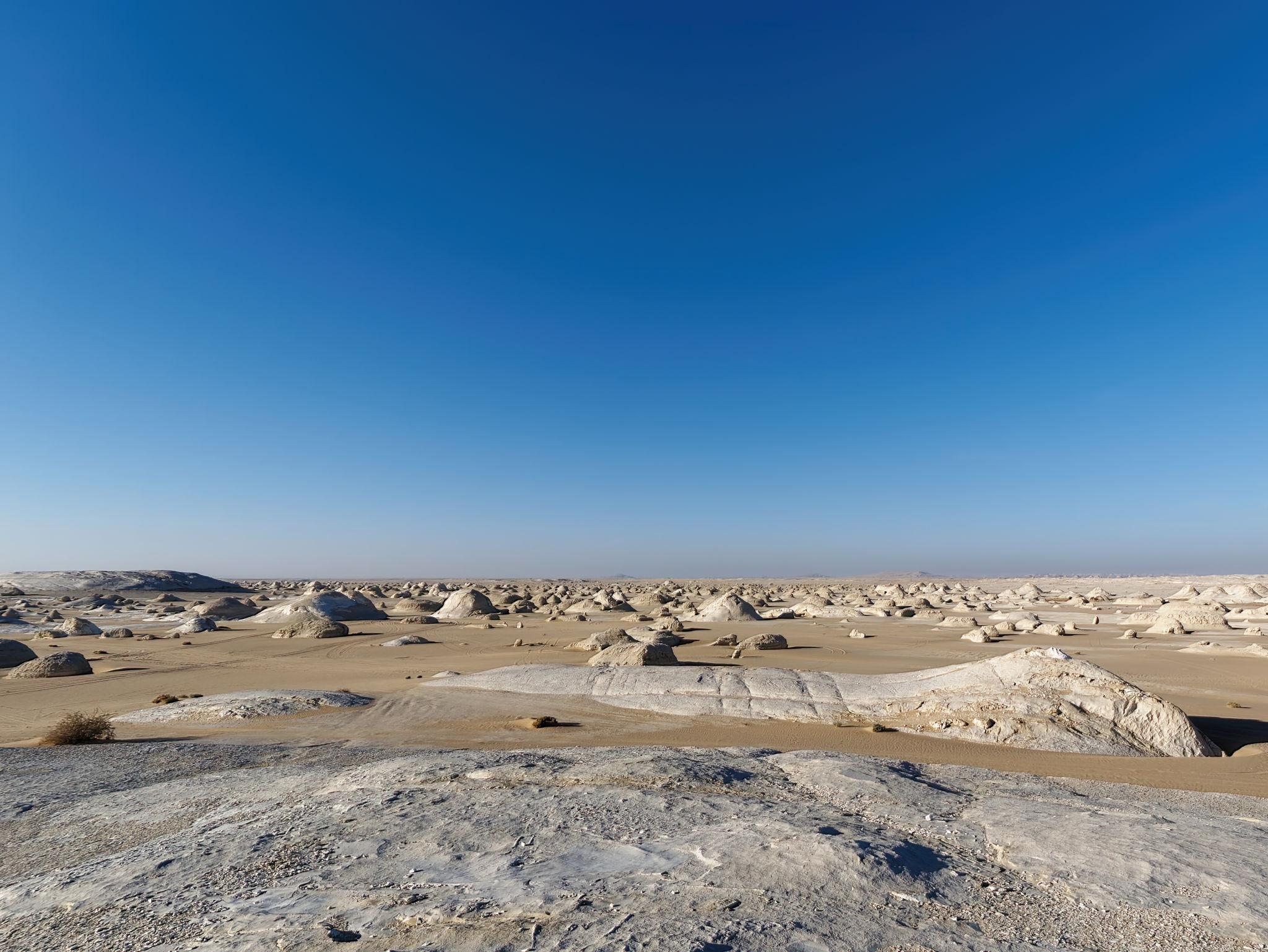
Weighing this against Egypt's other flagship desert trip, the chalk formations of the White Desert overnight safari sit far closer to Cairo and slot into a short itinerary more easily. They are also a completely different landscape. The Great Sand Sea asks for two long driving days and gives back something no other Egyptian desert does: a horizon with nothing on it at all.