Almost every overnight desert trip has one person who is cold by nine in the evening. They packed for Egypt as a hot country, which it certainly is, and did not pack for the collapse in temperature that arrives with darkness in a place with no cloud cover and almost no humidity to hold the day's heat. They spend the night wrapped in borrowed Bedouin blankets, and they are still cold at four in the morning.
That single fact is why a general Egypt packing list will not serve you on a desert safari. An overnight in the White Desert, a run into the dunes west of Siwa, or a night under canvas in Sinai puts you somewhere with no shops, no sockets, no reliable phone signal and, for long stretches of the day, no shade at all. Whatever you did not bring, you do without until you are back on tarmac.
What follows is gear-level and specific to overnight desert trips rather than to Egypt in general; our complete Egypt packing checklist covers the broader country list, and this guide assumes it.
At a Glance
The core problem: a 15 to 25 degree C swing between afternoon and pre-dawn, occasionally more
Water: 4 litres per person per day as a floor, 6 or more in shoulder-season heat
Absolute non-negotiables: headlamp, warm mid-layer, closed shoes, SPF lip balm, cash in small notes
Usually provided: tent, mattress, blankets or a sleeping bag, all meals, drinking water
Never provided: toilet, shower, mains power, phone signal, medication
Permits: arranged by your operator, but a passport copy is usually wanted 24 to 48 hours ahead
Camping season: October to April; June to September is genuinely hazardous in the open desert
Exchange rate: roughly 50 EGP to 1 USD as of August 2026
Why the Night Gets So Cold
Sand and chalk hold almost no heat, and dry air holds even less. The result is one of the largest daily temperature ranges on the planet: the Sahara commonly swings 15 to 25 degrees C (27 to 45 F) between afternoon peak and dawn low, and on clear winter nights the gap can be larger still.
At Farafra, the gateway town for the White Desert, January daytime highs sit around 15 to 22 degrees C (59 to 72 F) while the mean daily minimum is about 4 degrees C (39 F), with recorded lows below freezing. Even in October and March, expect camp temperatures of 5 to 10 degrees C (41 to 50 F) once the sun is down. The drive out from Bahariya Oasis can be shirtsleeve weather, and the same evening will have you reaching for a hat.
The Layering System That Actually Works
Three layers, added and removed through the day, handle everything the Western Desert throws at you. Cotton is the weak point: it soaks up sweat, then chills you the moment the temperature drops. Pack synthetic or merino next to skin.
- A thermal base layer, top and bottom. This is the item people leave at home and regret.
- A fleece or light down mid-layer for the evening.
- A windproof outer shell. Wind, not cold, is what strips heat out of you at a desert camp.
- Long, light, quick-drying trousers rather than shorts: sun off your legs by day, sand out of everything by night.
- Two long-sleeved shirts in pale colours.
For December and January add a warm hat and thin gloves. Nobody has ever complained about carrying gloves they did not use on a trip like the White Desert and Black Desert overnight safari; plenty of people have shivered without them.
Head, Face and Sun
A baseball cap protects your forehead and nothing else. The desert standard is a square cotton scarf roughly 107 cm on each side, known as a shemagh, a keffiyeh, a kufiya or a hatta depending on who you ask. Folded into a triangle and wrapped, it shades your neck and ears, filters blown sand out of your breathing and doubles as a scarf after dark. Any oasis market sells them cheaply, and your crew will show you how to tie one.
Sun protection is the item travellers most consistently under-buy. UV in Egypt reaches the extreme end of the index from April to October, and in the White Desert the chalk reflects light straight back up, so the burn arrives under your chin, on your nose and behind your ears. Take SPF 50 or higher, broad-spectrum, and reapply after every sweat. Sunglasses need genuine UV filtering rather than dark plastic; glare off white limestone at midday is punishing.
Footwear for Sand, Rock and Camp
You will walk on soft dune sand, sharp broken chalk and flint, and gravel around camp. Closed walking shoes or light boots cover all three. Sandals in soft sand are fine for ten minutes and miserable for an hour, and open toes and flint edges are a poor combination.
Bring a second, looser pair for camp, so you have something to slip on when you get up at two in the morning to look at the sky. Gaiters are overkill, but tuck your trousers into your socks on a dune day and you will empty far less sand out afterwards.
Water, Salt and How Much Is Enough
Operators supply bottled water, but the quantity varies, so confirm it when you book. Treat 4 litres per person per day as the minimum on a winter trip. In hotter conditions, or if you are walking dunes, the working figure is closer to a litre per hour of activity, which puts a full day at 6 litres or more.
Water alone is not enough. You lose salt as fast as you lose fluid, and drinking heavily without replacing electrolytes leaves you headachy and weak. Oral rehydration sachets weigh nothing and are sold in every Egyptian pharmacy for a few pounds. Carry a refillable two-litre bottle and drink steadily.
Warning: Khamsin Season and Blown Sand
Between March and May, most often in April, Egypt gets the khamsin — the name comes from the Arabic for fifty, the rough length in days of the window when it blows. It is a hot, sand-laden southerly wind that can gust ferociously, drop visibility to almost nothing and lift air temperatures by 20 degrees C within a couple of hours.
A khamsin is a weather event rather than a season and usually passes within a day or two, but it can cancel or reroute a trip at short notice. If you are travelling in spring, build a spare day into the itinerary and carry a scarf you can breathe through. Contact-lens wearers should pack glasses as a backup. Sealing electronics into zip-lock bags before the wind arrives is far easier than cleaning them afterwards.
Power, Light and Keeping a Phone Alive
There is no mains power at a desert camp. A headlamp is the single most useful object in your bag, and a backup torch costs nothing to carry. Bring spare batteries.
A power bank of 20,000 mAh or more will see a phone and a camera through two nights. Cold flattens lithium batteries fast, so sleep with phone and camera batteries inside your sleeping bag rather than in a pocket outside it. Egypt runs on 220 volts at 50 Hz with Type C and F sockets, so pack a European-style adapter for the hotels either side.
Do not expect signal. Vodafone has the widest rural footprint and you will generally get service in Bahariya, Farafra and Siwa town, but the White Desert itself has effectively none. Download offline maps before you leave the tarmac.
Pro Tip: Keeping Sand Out of a Camera
Fine desert dust is abrasive, and the worst damage happens in the two seconds a camera body is open. If you can, take one lens and leave it on. If you must swap, turn your back to the wind, switch the camera off, crouch and hold the body facing downwards, and do it inside an opened jacket or a large plastic bag.
Carry a rocket blower rather than a cloth, since rubbing grit across a lens is how you scratch coatings. A cheap UV filter earns its place as a sacrificial layer, and the camera should live in a zipped bag whenever it is not in your hands.
Sleeping in a Bedouin Camp, and the Toilet Question
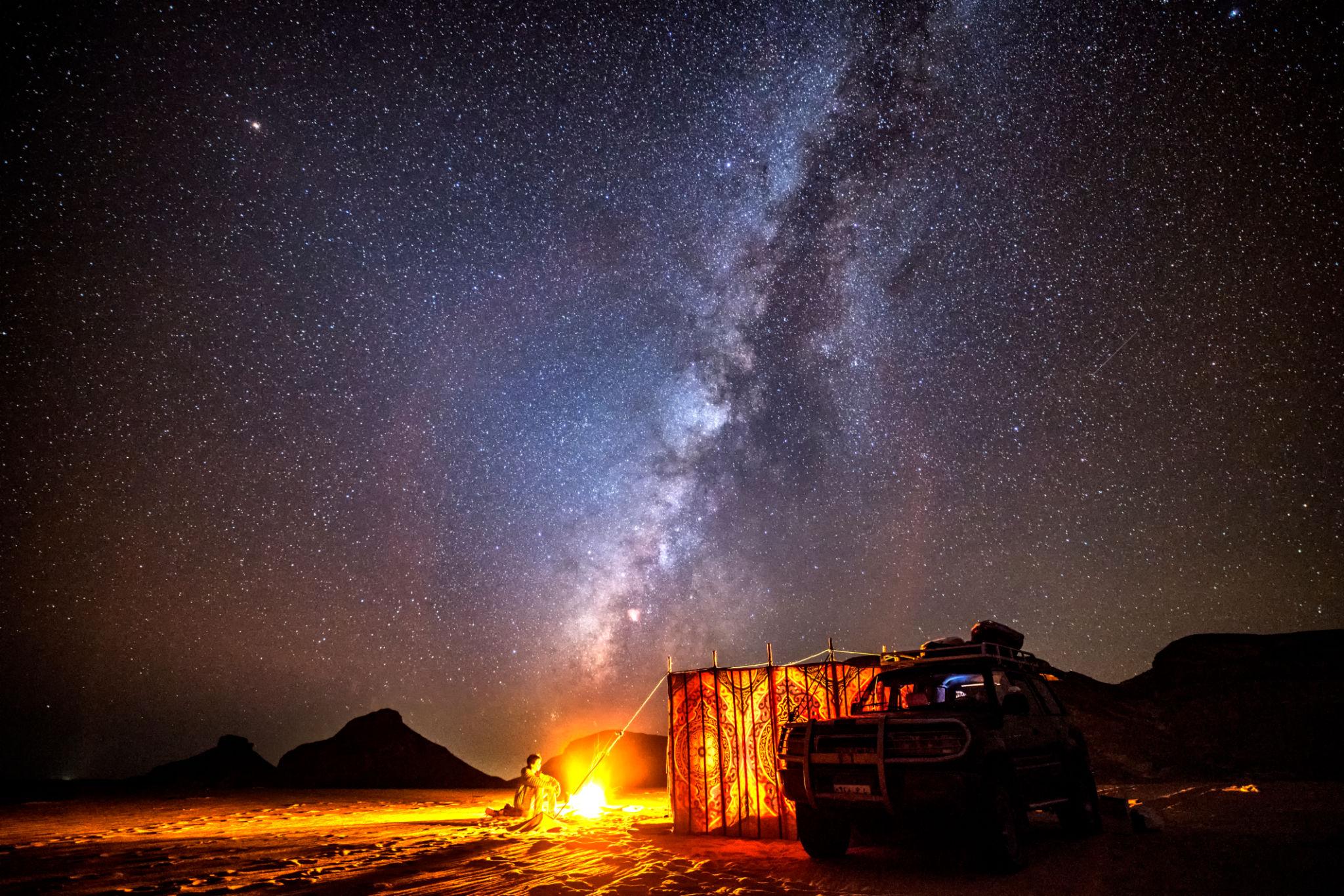
Most operators set up a low windbreak, lay out foam mattresses and heavy blankets, and cook over a fire. Tents are simple two-person domes, though many people sleep in the open, which is better when the wind is calm. Ask before booking exactly what bedding is included: the difference between a proper sleeping bag and two thin blankets is the difference between a good night and a long one. A silk or cotton sleeping-bag liner weighs almost nothing, adds a few degrees of warmth and settles the hygiene question. If you bring your own bag, choose one rated 6 to 8 degrees C below the coldest night you expect.
The toilet is a rock and a torch. Bring your own toilet paper, a sealable bag to carry it out in, hand sanitiser and a small trowel; in arid ground, buried paper does not break down and simply reappears with the next wind. Wet wipes replace a shower. None of this is as grim as it sounds, and our full guide to camping in the White Desert describes a night in camp.
First Aid, Medication and Money
Carry your own small kit rather than relying on the vehicle's: blister plasters, painkillers, antihistamines, antiseptic wipes and any prescription medication in its original packaging, with a spare day's supply in case the trip runs long. Add rehydration salts, eye drops and something for an unsettled stomach. Medical facilities in the oases are basic and the nearest hospital can be hours away, one reason to read our notes on desert permits, heat and choosing an operator before committing to a route.
Cash is the other thing people get wrong. Egypt's major monuments moved almost entirely to card payment during 2026, which lulls travellers into leaving cash behind, but there is no card machine in the desert and no ATM past the last oasis town. Bring small notes for park fees, drinks in Bahariya or Farafra, and tips for the crew, which are customary and genuinely earned; our guide to money and tipping in Egypt suggests sensible amounts. Carry your passport, since permits and checkpoints are passport-based, plus a photograph of it on your phone.
What Not to Bring
Leave the drone at home. Drones are effectively illegal for visitors, there is no tourist permit pathway, customs screening at Cairo and the Red Sea airports routinely flags and confiscates them, and penalties run to fines in the tens of thousands of Egyptian pounds. Photographing military checkpoints on desert roads is a similarly bad idea.
Also leave hard-shell suitcases, wretched in a 4x4 and worse in sand, along with jewellery, anything valuable you would hate to lose in a dune, and single-voltage appliances that will never see a socket. And resist collecting: taking chalk, crystals or fossils out of protected areas is prohibited and fined, and the White Desert has been protected since 2002 precisely because visitors were carting it away piece by piece.
The Copy-Paste Checklist
For one night in the desert between October and April, with an operator providing tents, bedding and food. Strip it back for a day trip; add a second set of layers for longer.
- Thermal base layer, top and bottom
- Fleece or light down mid-layer, plus a windproof shell
- Long quick-drying trousers and two long-sleeved shirts
- Warm hat and thin gloves for December to February
- Shemagh or wide-brimmed sun hat, and UV sunglasses
- Closed walking shoes, loose shoes for camp, spare socks
- SPF 50+ sunscreen and SPF lip balm
- Oral rehydration salts or electrolyte tablets
- Personal medication plus a spare day's supply
- Blister plasters, painkillers, antihistamines, antiseptic wipes, eye drops
- Hand sanitiser, wet wipes, toilet paper, sealable waste bag, small trowel
- Headlamp with spare batteries, plus a backup torch
- Power bank of 20,000 mAh or more, and the right cables
- Refillable two-litre water bottle
- Zip-lock or dry bags for camera, phone and documents
- Sleeping-bag liner
- Cash in small notes, passport, and a phone photo of the passport
Matching the List to Your Trip
The list above is built around the Western Desert, but it flexes. For Siwa, add swimwear and a quick-dry towel for the springs and salt lakes; a two-day trip such as the Siwa overnight desert safari usually includes a dip. The deep dunes of the Great Sand Sea near the Libyan border sit under tighter permit rules than Siwa itself, so your operator will want passport details well in advance.
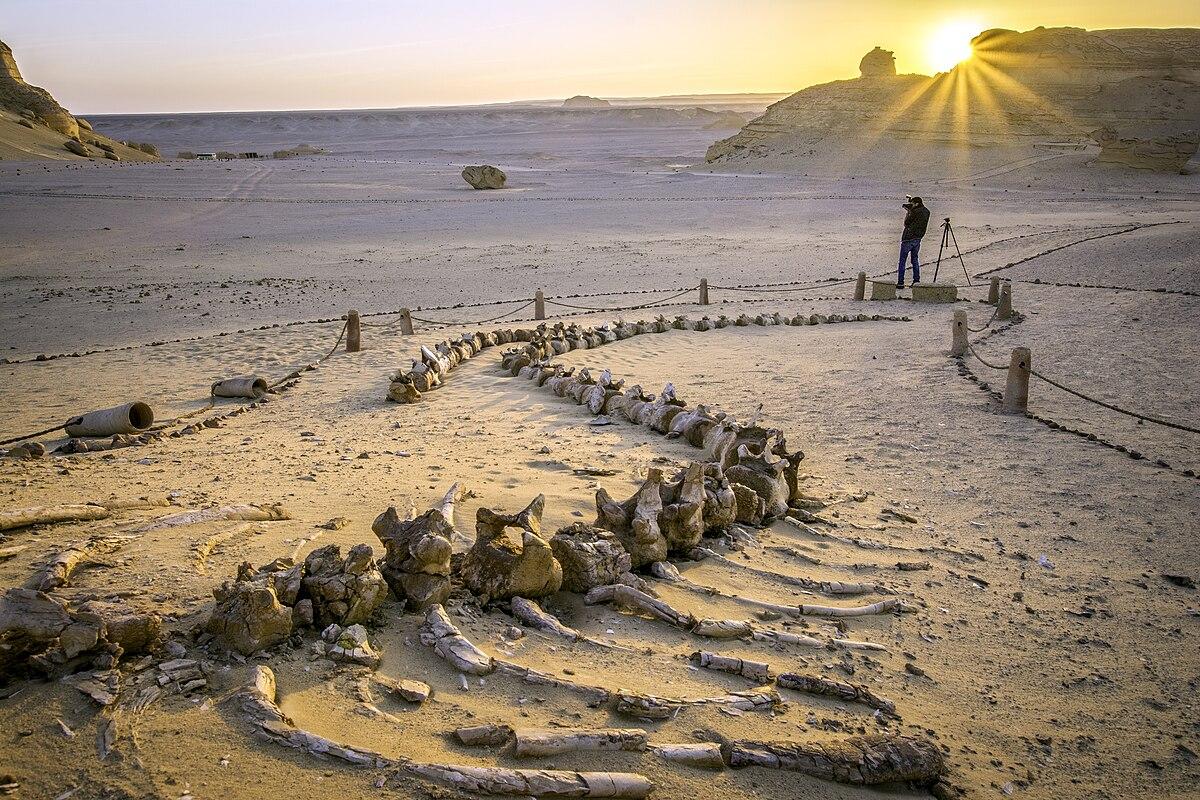
For Sinai, warmth outranks everything. Mount Sinai's summit stands at 2,285 metres and can sit close to freezing at dawn even in July, some 15 to 20 degrees C colder than the base, which is why the Mount Sinai sunrise trek is a hat-and-gloves affair year-round. For a Fayoum day out to Wadi Al-Hitan, where the fossil whales lie in open desert about 45 km from Fayoum city, you can travel far lighter: sun protection, water, closed shoes and a windbreaker cover a trip like the Fayoum and Whale Valley day trip comfortably.
Whichever direction you go, pack for the night rather than for the photograph. The daytime desert is easy to dress for. It is the hours after the fire dies down, when the temperature keeps falling and the sky fills up, that reward the traveller who brought the extra layer.