There is a corner of the Egyptian Sahara that looks less like Earth than the surface of a frozen moon: a plain of chalk-white limestone eroded into mushrooms, tents, chickens, and sphinxes, glowing pink at sunset and ghostly blue under a full moon. This is the White Desert, and spending a night camped among its formations is one of the most unforgettable things you can do in Egypt. Here is exactly how to do it.
What the White Desert Actually Is
The White Desert (Sahara el Beyda) is a national park covering roughly 3,000 square kilometres on the floor of an ancient seabed. The pale spires are limestone left behind as softer rock blew away over millions of years; sandstorms keep sculpting them, so the "mushrooms" and "meringues" slowly change shape across decades. The park splits into two zones, the older grey-white New Valley sector and the dramatic bright-white formations near Farafra, and good operators take you to the most photogenic clusters such as the famous Mushroom and Chicken rock.
It is protected, so removing rock, driving off marked tracks, or littering is prohibited and fined. That protection is exactly why it still feels pristine.
The geology rewards a little curiosity. The chalk dates to the late Cretaceous, when this whole region lay beneath the Tethys Sea, and you can still find fossilised sea urchins, shells, and shark teeth scattered across the desert floor. The dark flint nodules embedded in some formations were prized by prehistoric people for tools, and Neolithic settlements once ringed the now-dry lakes nearby. Standing among the white shapes at dusk, it is easy to forget you are looking at a seabed turned inside out by 80 million years of wind and water.
Getting There: The Route from Cairo
The White Desert is not a day trip from Cairo. The realistic gateway is Bahariya Oasis, about 365 km southwest of Cairo, a 4-5 hour drive along a single good desert highway. Almost everyone overnights or at least regroups in Bahariya, swaps into a 4x4, and enters the desert from there; the formations begin roughly 130-180 km further south toward Farafra.
There is a public bus from Cairo to Bahariya (a few departures daily, very cheap, around 150-250 EGP or USD 3-5), but you still need a 4x4 and a licensed guide to enter the park, so most travellers book the whole thing as a package from Cairo or Bahariya. Self-driving into the dunes is genuinely dangerous and discouraged.
The Classic Overnight Safari
The standard trip is a one-night desert safari, and it is plenty for most people, though two nights let you slow down. A typical itinerary:
### Day 1
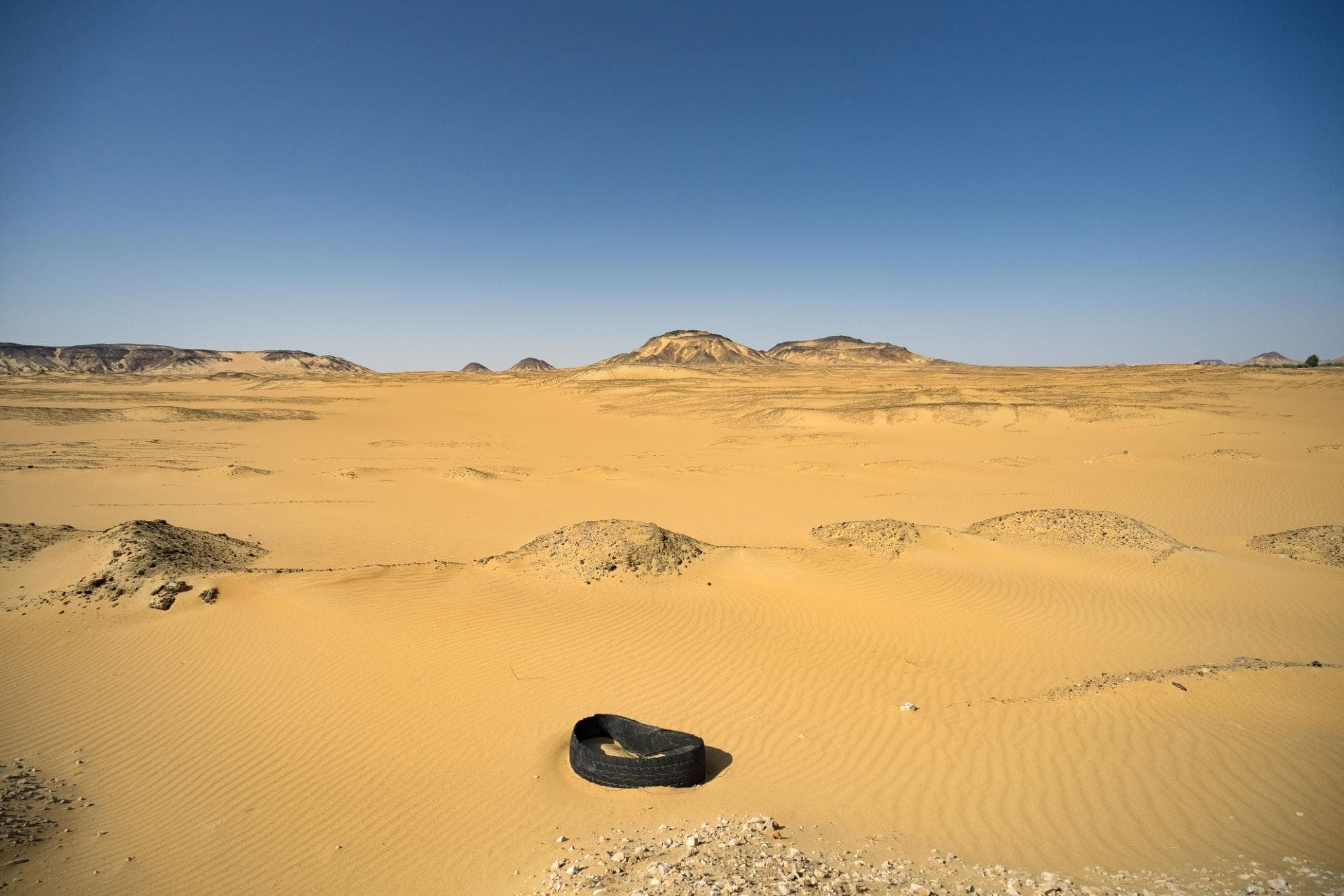
Morning pickup and the drive to Bahariya, often with a stop for lunch. In the afternoon you transfer to a 4x4 and begin the desert crossing, pausing at the Black Desert, where volcanic dolerite caps the hills in dark rubble, and at Crystal Mountain, a ridge studded with quartz and barite crystals that sparkle in the sun. By late afternoon you reach the White Desert proper, set up camp among the formations, and watch the chalk turn gold then rose as the sun drops.
### Day 2
A cold desert dawn, sunrise over the rocks, breakfast, and time to wander and photograph before the light hardens. You then drive back out, usually returning to Cairo by evening. Operators who include a swim at Bahariya's hot springs on the way back make the long drive far more bearable.
If you can spare a second night, many trips add the **Agabat Valley**, a stunning amphitheatre of cliffs and dunes between Bahariya and Farafra that some travellers find even more cinematic than the White Desert itself, plus more time for stargazing and a slower pace. Two nights also let you explore Bahariya proper: the Golden Mummies museum, the tombs of the nobles, and the Temple of Alexander the Great are all worth an hour each.
Camping: What a Night Is Really Like
This is wild camping, not a fixed lodge. Your Bedouin crew sets up a low windbreak, lays out mattresses and blankets, and cooks dinner over a fire, typically grilled chicken, rice, vegetable tagine, and sweet Bedouin tea. You sleep either in a simple two-person tent or, better, on a mattress in the open air. There are no toilets, showers, or electricity; the "bathroom" is a discreet rock and a torch.
The payoff is the sky. With zero light pollution, the Milky Way is genuinely overwhelming, and desert foxes (fennecs) often pad into camp after dark hoping for scraps. It is silent in a way cities never are.
A word on comfort and expectations: this is rustic by design, and that is the point. There is no Wi-Fi, no menu, and no privacy beyond a tent flap. Couples and solo travellers manage easily, and families with older children often love it, but very young children, anyone with serious mobility needs, or travellers who cannot do without a bathroom should consider a daytime visit and a hotel in Bahariya instead. If you want a small upgrade, some operators offer a more comfortable "glamping" setup with proper cots, larger tents, and a portable toilet for a higher fee; ask when booking.
What to Pack
The desert is brutally hot by day and can drop below 5 degrees C at night in winter, so layers are non-negotiable.
- **Warm layers**: fleece, hat, and even gloves for winter nights; a windproof jacket year-round.
- **Sun protection**: high-SPF sunscreen, sunglasses, a wide-brim hat, and a scarf for blowing sand.
- **Closed shoes** plus sandals for camp.
- **A torch or headlamp**, a power bank (no charging out there), and plenty of water beyond what is provided.
- **Wet wipes and hand sanitiser** in place of showers, plus any personal medication.
Leave valuables in Bahariya or Cairo; you do not need them and they are easy to lose in sand.
Costs and What Is Included
As of 2026, a one-night White Desert safari from Cairo typically runs roughly USD 120-220 per person (about 6,000-11,000 EGP) depending on group size and comfort level, and from Bahariya itself often less. That price usually includes the 4x4, an English-speaking driver-guide, camping gear, meals, and the park entry fee, which is around 100-200 EGP (USD 2-4) per person.
Confirm exactly what is covered: park fees, water quantity, sleeping bags versus thin blankets, and whether transport from Cairo is included or extra. Solo travellers pay more, so joining a small group is the cheapest route. Tipping the Bedouin crew (roughly 100-200 EGP per traveller) is customary and appreciated.
Budget travellers can shave costs by taking the public bus to Bahariya and arranging the safari locally, which often brings the per-person price down significantly; the trade-off is less certainty about vehicle condition and guide quality. Whichever way you book, agree the full price and exactly what it includes in writing before you set off, and carry enough cash, as there are no card facilities or ATMs once you leave Bahariya.
Best Time to Go
October to April is the season; days are warm rather than scorching and nights are crisp but tolerable. December and January are the most popular and also the coldest after dark, so pack accordingly. Avoid May to September, when daytime heat in the open desert can exceed 40 degrees C and camping becomes genuinely uncomfortable. Spring can bring the khamsin, a hot sand-laden wind, which occasionally disrupts trips, so build in a little flexibility. A full moon turns the formations luminous and ghostly and is magical to camp under, but if you want the densest possible stars and the clearest Milky Way, aim instead for the days around the new moon and check a lunar calendar before you book.
Safety, Scams, and Responsible Travel
Go only with a licensed operator and a guide who knows the terrain; people do get lost or stuck in soft sand, and there is no phone signal across most of the park. Check that your vehicle carries extra fuel, water, and recovery gear. Avoid the cheapest unvetted touts in Bahariya, who sometimes cut corners on safety or permits.
Travel lightly: take all rubbish out, never chip souvenirs off the formations, and keep to existing tracks. The White Desert survives precisely because visitors respect it.
Pairing It with the Wider Western Desert
If you have more time, the White Desert pairs beautifully with a longer western-oasis loop. Adventurous travellers continue toward Siwa, the remote palm-fringed oasis near the Libyan border famous for its salt lakes and the Oracle of Amun. Our Cairo to Siwa transfer makes the long haul comfortable and can be combined with a Bahariya and White Desert leg, turning a single surreal night into a full grand tour of Egypt's western wilderness.
For ideas on shorter escapes closer to the capital, see our guide to Cairo day trips, and if you want to balance desert grit with seaside calm, the easygoing Red Sea town in our Dahab guide is a natural next stop.