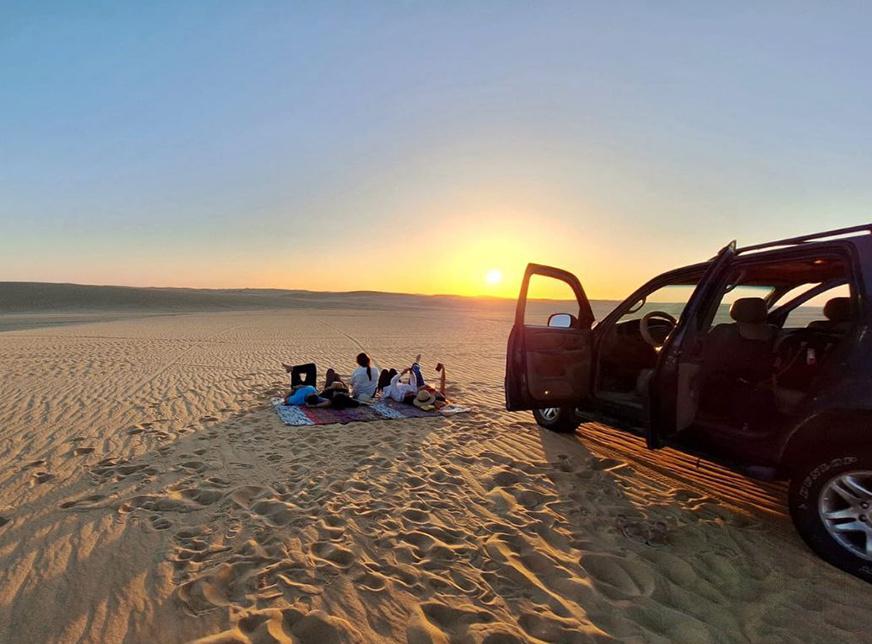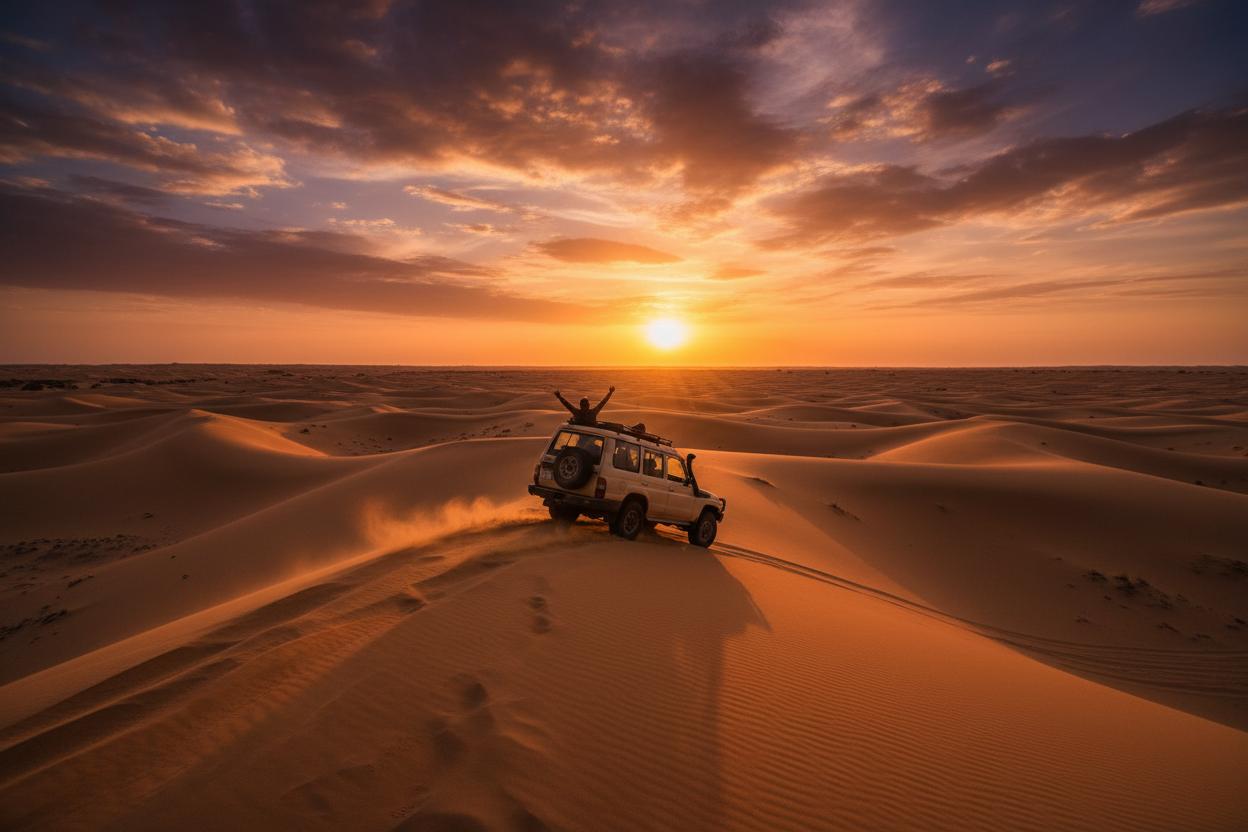
Somewhere southwest of Siwa your driver stops on a ridge, walks to the edge, looks down a while, and hands you a plank. On most Egyptian trips that plank is plywood with white laminate glued underneath, and the wax that comes with it is a candle stub. No bindings, no metal edges, no lift. What there is, if the guide has chosen the face well, is thirty metres of clean sand sitting at exactly the angle at which sand stops holding itself up.
That is sandboarding in Egypt as almost everyone experiences it: twenty minutes bolted onto a 4WD safari, not a sport with a season pass. It is good fun, and routinely oversold in listings showing riders carving down a 140-metre wall. Sand is not snow, plywood is not a snowboard, and the walk back up takes several times longer than the ride down.
At a Glance
Best dunes: the Great Sand Sea southwest of Siwa, the Wadi El Rayan dunes in Fayoum, the Sinai dunes near Dahab
Easiest from Cairo: Fayoum, about 100 km to Faiyum city and roughly three hours to the dunes beyond it
Furthest: Siwa, 750 to 800 km by road from Cairo, eight to ten hours
Season: October to April, with December to March the most comfortable window
Typical cost: bundled into a safari. A Siwa sunset safari runs around 700 to 1,500 EGP per person, roughly 14 to 30 USD, as of mid-2026
Fayoum park fees: 10 USD at Wadi El Rayan, 15 USD at Wadi El Hitan for foreigners; 25 and 50 EGP for Egyptians, in force since 15 December 2025
Board supplied: plywood with a laminate base and no bindings
Permit: yes for off-road travel. A qualified guide and a Ministry of Interior permit, arranged by your operator
The hard part: climbing back up a soft slope in the sun, repeatedly
Why Sand Does Not Behave Like Snow
A dune's steep side, the slip face, is not a design choice. Dry sand piles up until it reaches its angle of repose, about 34 degrees, then avalanches back to that angle. Every ridable face in Egypt is therefore roughly the same steepness, which is why a small dune and a huge one feel similar underfoot. Size changes only how long the ride lasts.
Friction is the other difference. Snow melts under pressure and the board glides on a film of water. Sand does not, so a board fights dry grain-on-base drag the whole way down. That is why sandboard bases are hard plastic laminate, formica or laminex, rather than the soft sintered plastic of a snowboard.
Moisture matters too. Damp sand holds an angle closer to 45 degrees and clings to a waxed base, which is why a face that rode beautifully at dusk can feel like glue after a cold night. Siwa records around 9 mm of rain a year, so wet sand is rare.
The Great Sand Sea Outside Siwa
This is the serious one. The Great Sand Sea, Bahr al-Rimal al-Azam in Arabic, covers some 72,000 square kilometres of long north-south ridges running from Egypt into eastern Libya. Afternoon safaris out of Siwa Oasis start at the sand line about 15 km southwest of town, near the well called Bir Wahed; the boarding stop comes after the tyres are deflated and before the hot spring.
Tour material almost universally quotes dunes "reaching 140 metres" here. That figure describes the tallest seif ridges in the sand sea as a whole, not the face you will stand on. Slopes used on a commercial safari are far smaller, typically twenty to fifty metres, which is what you want when the return trip is on foot.
What Siwa gives you that nowhere else does is scale and silence. Our two-day Siwa desert safari puts the boarding stop inside a night in the dunes, and the three-day Siwa adventure adds the salt lakes and the old town so the drive earns its keep. For the wider geography, see our Great Sand Sea guide.
Fayoum: The Dunes You Can Reach Before Lunch
Fayoum is the answer for anyone with one spare day in Cairo. Faiyum city sits about 100 km southwest of the capital, and the dune country lies beyond it around the two lakes of Wadi El Rayan, a Ramsar site of roughly 175,790 hectares designated in June 2012. Most Fayoum sandboarding happens on the dune field near Gebel el-Mudawara, the rounded mountain above the lower lake, and on the dunes ringing the Magic Lake.
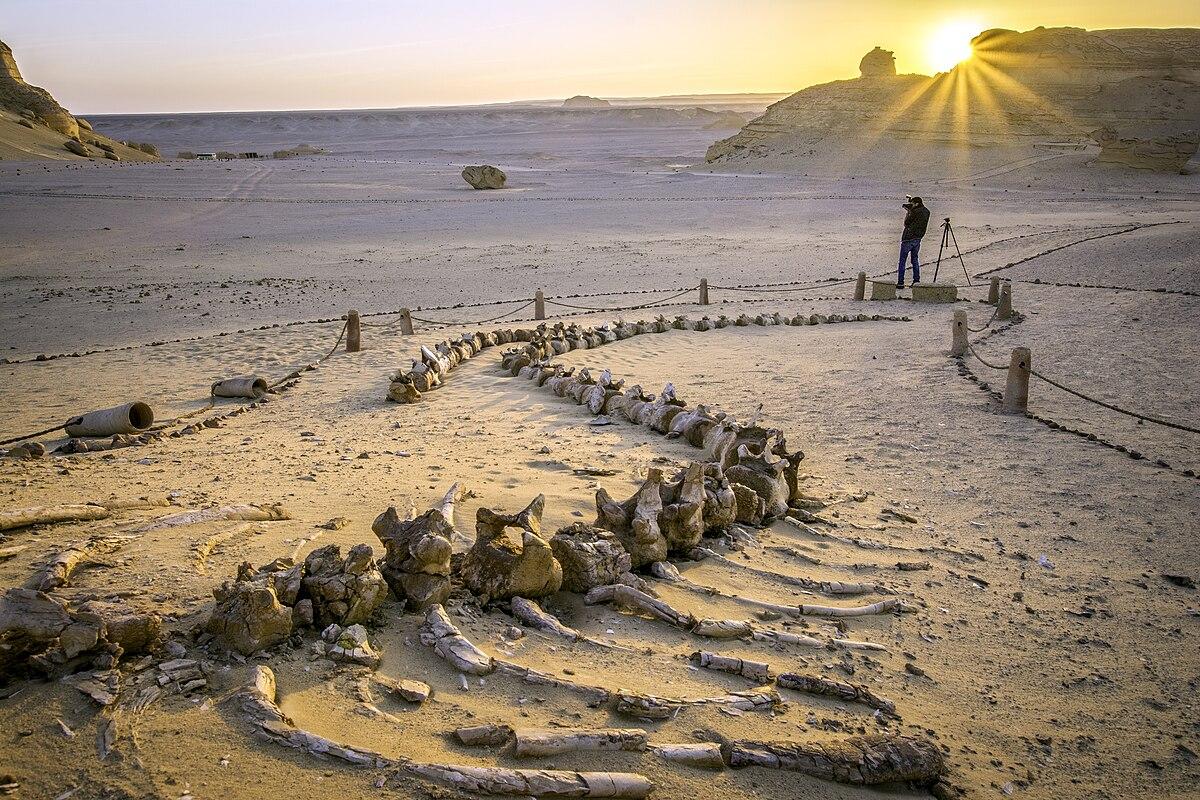
The faces are gentler and shorter than Siwa's, which suits beginners, and the surroundings do half the work. Wadi El Hitan, the Valley of the Whales, sits in the same protected area about 150 km from Cairo, with 40-million-year-old Eocene whale skeletons. Our Fayoum and Wadi El Hitan day trip covers fossil valley and desert together, and the wider Fayoum guide has the lakes and Roman sites.
Fayoum's park fees were restated in dollars from 15 December 2025: 10 USD at Wadi El Rayan and 15 USD at Wadi El Hitan for foreigners, against 25 and 50 EGP for Egyptians. Older write-ups quoting 450 to 600 EGP are not wrong, just pre-conversion at the mid-2026 rate of roughly 48 to 50 pounds to the dollar. Carry cash.
Bahariya, Sinai and the Rest of the Map
Bahariya, 365 km southwest of Cairo, has dunes but is not primarily a boarding destination. Sandboarding is thrown into most White Desert and Black Desert overnight safaris as a mid-afternoon stop between the volcanic hills and the chalk. Pleasant, not a reason to book.
Sinai is the least-known option and the most useful for anyone already on the Red Sea. Operators out of Dahab run day safaris to the Hadouda and El Safra dunes in the desert between Dahab and St Catherine, with heights commonly given as around 150 metres, a figure that circulates mostly through tour listings and should be treated as indicative. Anyone doing the Mount Sinai sunrise trek is already in the right corner of the peninsula. The Qattaniya dunes are also sold as a short escape from Cairo, roughly 80 km out, though accounts of where they sit vary.
The Boards You Will Actually Be Handed
- A plywood terrain board with a laminate base, no bindings, sometimes a rope handle at the nose. This is the Egyptian standard and it works.
- A moulded plastic sled or cut-down bodyboard, handed out at the softer Fayoum and Bahariya stops. Fine sitting, useless standing.
- A real sandboard with foot straps. Rare, and usually a guide's own.
If you are serious about standing, your own board is the only reliable way to get bindings on your feet in Egypt. A snowboard is the wrong tool: the base is too soft and the dune will strip it.
Pro Tip: Wax Thin and Wax Often
An unwaxed board on Egyptian sand barely moves. The wax that works is paraffin-based, and a plain household candle is the field substitute every Bedouin driver carries. Rub it on in short streaks from nose to tail until a faint dotted film appears, and stop there. Excess wax increases drag rather than reducing it, because the surplus picks up grains and turns to paste. A light coat reapplied every run or two beats a thick one.
Wax the base every time you reach the top. Fifteen seconds, and it is the difference between a run and a shuffle.
Sitting, Lying and Standing
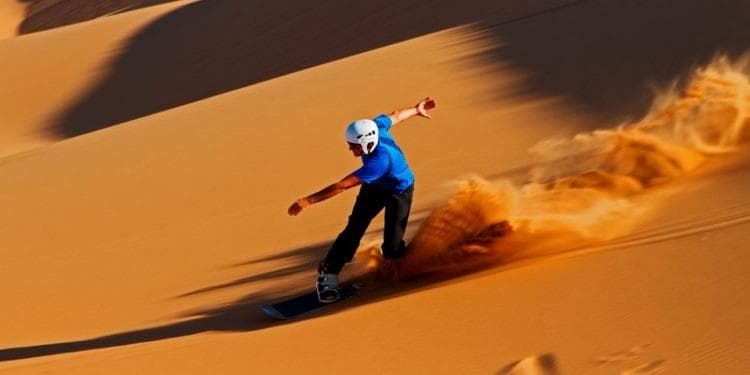
Almost every first run in Egypt is a sitting run. You sit on the tail with your heels dug in as brakes, hold the nose rope if there is one, and steer by shifting your weight. Lying face-down is faster and far more committing, since your face is thirty centimetres from a surface that removes skin.
Standing is harder than on snow for one reason: with no bindings you cannot pull the board back under you when it slides out. You need a face steep enough to beat the friction, a soft run-out, and a stance closer to surfing than snowboarding. Most people manage a straight standing run by the fourth or fifth attempt and never get further, which is a good afternoon. The sand-skiing record, set by Henrik May in Namibia in 2010, is 92.12 km/h on a purpose-built run; you will do a small fraction of that.
Reading the Sand, and Why the Advice Contradicts Itself
You will be told that morning sand is faster, and there is something to it. Overnight the wind drops, the slip face avalanches into a clean smooth plane, and nobody has churned it into ruts. Cool sand also keeps paraffin hard rather than tacky, and the first line of the day is noticeably quicker than the same face at four.
The counter-argument comes from the sandboarding world itself, where the long-standing view is that old, worn sand runs faster than fresh, because fresh angular grains behave like ball bearings under the base. Both can be true: one describes grain condition, the other surface condition. The face matters more than the hour. Look for a slip face that is unrippled and continuous, ending in soft sand rather than gravel.
Warning: The Steep Face Is Where People Get Hurt
The dune is not the risk; bad judgement on it is. A slip face is convex at the top, so you cannot see the bottom from the drop-in, and what looks like continuous sand can end in hard-packed gravel, a buried rock or a vehicle track. Walk the face before you ride it, every time.
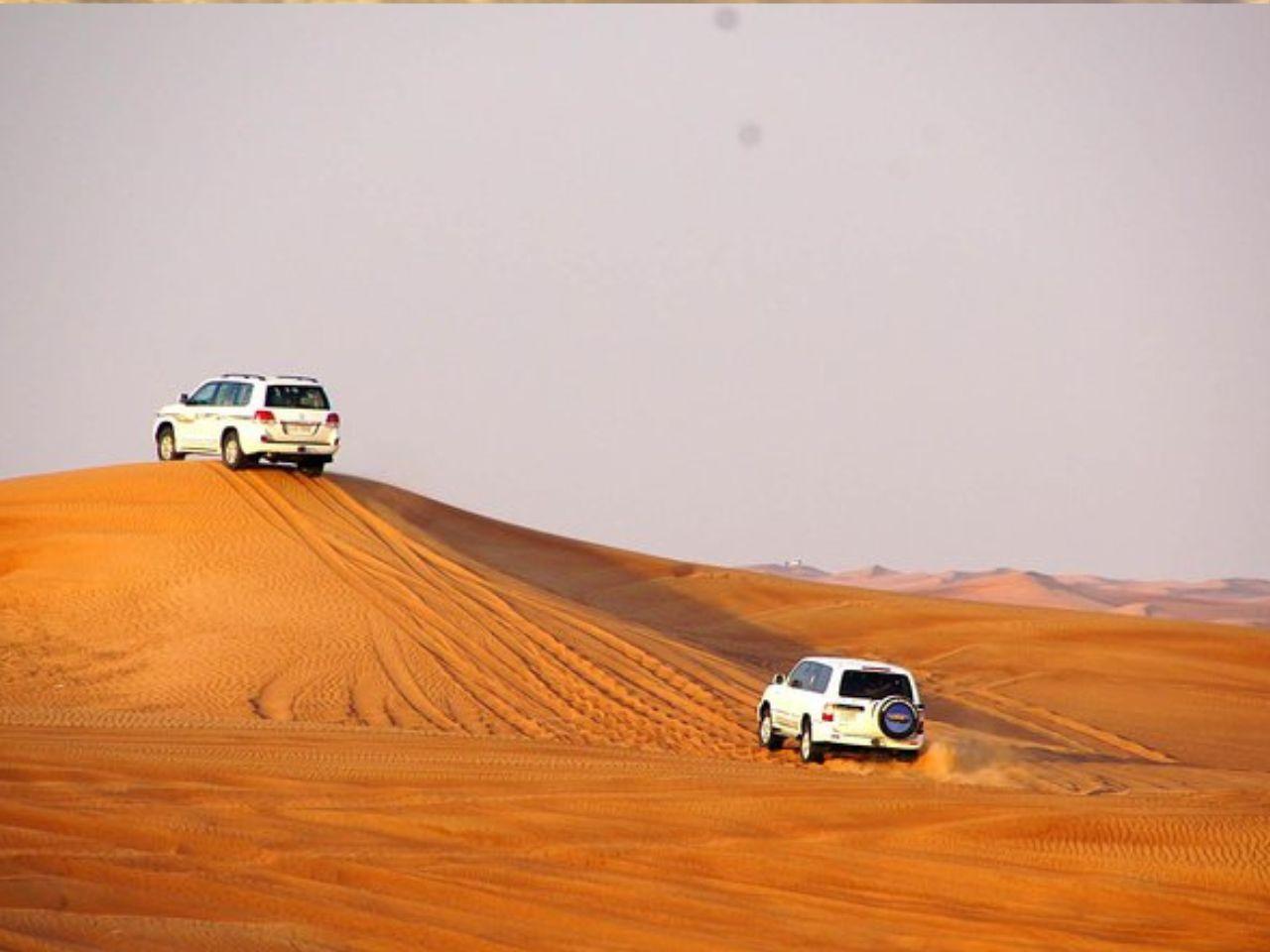
- Never ride a line where 4WDs are driving, and never ride toward a blind crest.
- Wear eye protection. Sand in the eyes is the commonest complaint, and a fall at speed puts it there.
- Helmets and pads are almost never supplied in Egypt. Bring your own to stand on a big face.
- Watch the climb, not the descent. Walking a soft slope repeatedly in direct sun is where heat exhaustion starts, and surface sand runs far hotter than the air.
- There is no rescue helicopter over the Great Sand Sea, and no phone signal minutes after leaving Siwa.
Egypt also requires paperwork. UK government advice is explicit that anyone travelling off road should use a qualified guide and obtain a permit from the Ministry of Interior, and reputable Siwa safaris list that permit as included. Our guide to desert safety, permits and choosing an operator covers how to check it.
What to Wear and What to Leave in the Car
- Closed shoes you can empty easily. Trainers over ankle socks beat sandals and beat boots.
- Long sleeves and trousers. Sand at speed abrades bare skin, and the sun is relentless.
- Wraparound sunglasses at minimum, ski goggles if you have them.
- Nothing loose in your pockets. Phones and keys disappear into a dune permanently.
- A sealed bag for your camera; fine sand destroys lens mechanisms.
Our desert safari packing guide goes further for overnight trips, where the day-to-night swing does more damage than the sand.
Is It Included in the Price?
Usually, yes. Sandboarding is standard on Siwa sunset safaris, most Fayoum day trips and Bahariya overnight packages, with the board treated as equipment rather than an extra. Very few operators sell it standalone: a board is worthless without the 4WD that reaches the dune. Packaging is what varies. The same Siwa afternoon that sells locally for 700 to 1,500 EGP per person lists at 75 EUR or more through international platforms, and a Cairo Fayoum day trip including transport, park fees and boards is advertised from around 60 USD per person as of 2026. Confirm three things: how many boards are included, whether park and permit fees are covered, and whether the price is per person or per vehicle.
Good to Know: What a First Run Is Actually Like
You climb for four or five minutes, arrive out of breath, and find the face looks far steeper from above than it did from the car. The first sitting run lasts perhaps eight to twelve seconds, quieter than you expect, closer to a hiss than a rush, and stops abruptly in soft sand. Then you walk back up, and that is the real work. A realistic session is six to ten runs before your legs decide the tea and the sunset are more appealing.
You may also hear the dunes. Booming sand, produced when rounded silica grains between 0.1 and 0.5 mm avalanche at the right humidity, registers around 450 Hz and can reach 105 decibels, a low rumble like a distant aircraft. No guide can promise it.
Season, Heat and Planning Around the Dunes
October to April, and within that December to March. In January, Siwa averages daily highs near 19.3°C (67°F) and lows around 5.6°C (42°F), with Fayoum a degree or two warmer. July averages 37.5°C (100°F) at Siwa and 37.2°C (99°F) at Faiyum, against a regional record of 48.2°C (119°F); repeated climbs in that heat are dangerous, not merely unpleasant. Spring brings the khamsin, the hot sand-laden wind that can cancel a safari outright, so leave slack between March and May.
If Fayoum is your target, a day out of Cairo is enough. If it is Siwa, budget properly: two nights in the oasis at a minimum, three if you want the sand sea and the salt lakes, plus eight to ten hours of road at each end. Our Cairo to Siwa private transfer handles that haul door to door and lets you break the drive on the coast, which is the difference between arriving ready to climb a dune and arriving ready for bed. Bring a candle.