Barely two hours southwest of Cairo, the Fayoum depression feels like a different Egypt entirely: a vast natural oasis fed not by the Nile's main channel but by an ancient canal, ringed by lakes, dunes, waterfalls, pottery villages and ruins that span pharaonic, Greek and Roman eras. It is the easiest genuine escape from the capital, and yet most short-stay visitors never make it here. This guide covers what to see, how long to stay, when to go, and how to turn Fayoum into one of the most rewarding days or weekends of your whole trip.
What and Where Is Fayoum?
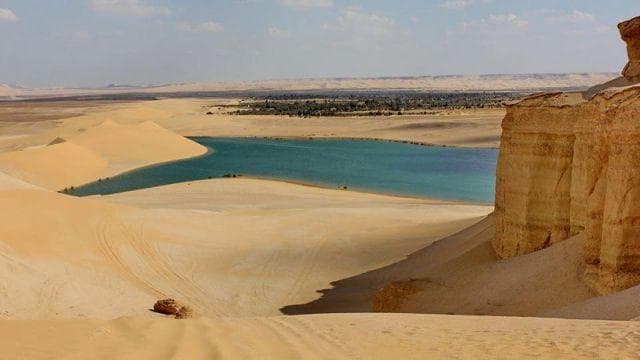
Fayoum is a fertile depression about 80 kilometres southwest of Cairo, centred on the city of Medinet el-Fayoum and the large salt lake of Lake Qarun. Unlike Egypt's other oases, which are isolated in the deep Western Desert, Fayoum sits close to the Nile Valley and is fed by the Bahr Yusuf, a branch canal that diverts Nile water into the depression. The result is a green, agricultural bowl of farmland, palm groves and waterways surrounded by stark desert and dramatic geology.
The wider Fayoum region has been inhabited for millennia. It was a favoured area of the Middle Kingdom pharaohs, a centre of Greco-Roman settlement, and the source of the famous Fayoum mummy portraits, those startlingly lifelike painted faces now in museums worldwide.
Getting There from Cairo
The drive from central Cairo to Fayoum city takes roughly 1.5 to 2 hours via the desert road, covering about 100 to 110 kilometres. From Giza it can be even quicker. The most comfortable option is a private car or organised day tour, which lets you cover the scattered sights (lake, waterfalls, ruins and villages all lie well apart) without depending on sparse local transport.
Budget travellers can take a microbus or service taxi from Cairo's Moneeb area to Fayoum for a small fare, but getting between the individual sites once there is difficult without your own wheels. For the desert attractions, Wadi El-Rayan and beyond, a 4x4 or a driver who knows the tracks is essential.
Lake Qarun: The Ancient Inland Sea
Lake Qarun is the heart of Fayoum, a saltwater lake roughly 40 kilometres long and one of the oldest lakes in the world, a shrunken remnant of the vast prehistoric Lake Moeris. In antiquity it was far larger and central to the region's prosperity.
Today it draws birdwatchers, anglers and day-trippers. Migratory birds, including flamingos in season, gather along its shores between autumn and spring. Simple lakeside restaurants serve fresh fish, and you can hire a small boat for a gentle cruise. The northern shore is wilder and more scenic; the southern shore holds most of the restaurants and the faded mid-century resort architecture. Sunset over the water, framed by desert hills, is the classic Fayoum image.
Wadi El-Rayan: Egypt's Desert Waterfalls
Perhaps the most surprising sight in the region is Wadi El-Rayan, a protected area of two man-made lakes connected by Egypt's only waterfalls. Created in the 1970s to channel agricultural drainage water, the lakes are now a thriving wetland and the falls, though modest in height, are a genuine novelty in this arid land.
### What to do at Wadi El-Rayan
You can picnic by the falls, swim in the cooler months, climb the nearby dunes for sweeping views, and try sandboarding down the slopes. The protected area also shelters birds, gazelles and the rare slender-horned gazelle. Entry to the protected area runs roughly 450 to 600 EGP for foreign visitors as of 2026 (about 9 to 12 USD), and the same ticket zone gives access toward the famous fossil valley deeper in the desert.
Wadi Al-Hitan: The Valley of the Whales
Deep within the Wadi El-Rayan protected area lies Wadi Al-Hitan, Egypt's only natural UNESCO World Heritage Site, where 40-million-year-old whale fossils lie scattered across the sand. The drive from the main Fayoum area takes around 1.5 to 2 hours over rough desert track, so it is best treated as its own dedicated outing or an overnight camping trip rather than a quick add-on. If you have the time, it is one of the most extraordinary places in Egypt.
Greco-Roman and Pharaonic Sites
### Qasr Qarun
At the western end of Lake Qarun stands Qasr Qarun, a remarkably well-preserved Ptolemaic-era temple dedicated to the crocodile god Sobek, dating to around the 4th century BC. You can explore its dim chambers, underground crypts and rooftop, with views over the desert and the ruins of the ancient town of Dionysias. It receives few visitors, so you often have it almost to yourself. Entry is modest, in the region of 60 to 100 EGP for foreigners.
### Karanis (Kom Aushim)
Near the entrance to Fayoum from Cairo lie the extensive ruins of Karanis, a Greco-Roman farming town with two temples and a small on-site museum. It is an easy first stop on the way in.
### Pyramids and the Labyrinth
Fayoum has its own pyramids, including the largely collapsed mudbrick pyramid of Hawara, built by the 12th-dynasty pharaoh Amenemhat III, once attached to the legendary Labyrinth described by Herodotus. The nearby pyramid of el-Lahun and the obelisk of Senusret I add to the region's Middle Kingdom heritage.
Tunis Village: Pottery and Quiet
On a ridge above Lake Qarun sits Tunis Village, Fayoum's bohemian heart and Egypt's pottery capital. Founded as an artists' retreat decades ago, it is now dotted with pottery studios, a respected pottery school, craft shops and charming guesthouses and eco-lodges. It is the ideal base for an overnight stay: peaceful, scenic, with good home-style food and a relaxed pace. The annual Tunis Pottery Festival, usually held in autumn, fills the village with workshops and stalls.
How Long to Stay and Sample Itineraries
### One long day
Doable but rushed. A typical day trip from Cairo covers Lake Qarun, Wadi El-Rayan waterfalls and dunes, and perhaps Qasr Qarun, returning to Cairo by evening. You will not have time for Wadi Al-Hitan.
### A weekend (recommended)
Two days lets you breathe. **Day 1**: drive from Cairo, stop at Karanis, lunch by Lake Qarun, afternoon at Wadi El-Rayan, overnight in Tunis Village. **Day 2**: a full desert excursion to Wadi Al-Hitan, or pottery and the lake at a slower pace, then back to Cairo.
### Three days
Adds time for the pyramids, more of the villages, birdwatching, and a proper desert camp under the stars.
Best Time to Visit
The ideal season is October to April, when daytime temperatures are comfortable, often 18 to 27 degrees Celsius. Winter is excellent for the desert and for migratory birds on Lake Qarun. Avoid the peak of summer (June to August), when temperatures regularly exceed 38 to 40 degrees and the exposed desert sites become punishing. Spring can bring the dusty khamaseen winds. Egyptian weekends (Friday and Saturday) and public holidays see local crowds at the waterfalls, so a weekday visit is calmer.
Costs, Tips and Practicalities
- **Budget**: a private day tour from Cairo varies widely; independent travel with a microbus and local taxis is far cheaper but less flexible.
- **Entry fees**: the Wadi El-Rayan protected area is the main cost (roughly 450 to 600 EGP for foreigners); individual monuments like Qasr Qarun are modest.
- **Cash**: carry Egyptian pounds; cards are rarely accepted outside the city.
- **Food**: fresh lake fish at Qarun, home cooking in Tunis Village; bring snacks and plenty of water for the desert.
- **What to skip**: if time is tight, the collapsed pyramids appeal mainly to dedicated history enthusiasts; prioritise the lake, waterfalls and Tunis Village.
- **Insider tip**: stay overnight in Tunis Village rather than racing back to Cairo. Watching the sunset over Lake Qarun and waking to the quiet of the oasis is what transforms Fayoum from a sightseeing checklist into a real getaway.
Is Fayoum Worth It?
Fayoum rewards travellers who want a different side of Egypt: nature, geology, crafts and quiet ruins rather than blockbuster monuments. It is ideal for a second visit to the country, for families wanting variety, for photographers, and for anyone craving a break from Cairo's intensity. First-timers on a very tight schedule may prefer to prioritise Giza and Luxor, but if you have even two spare days, Fayoum delivers an experience few tourists ever see.
Plan Your Fayoum Getaway
Because Fayoum's highlights are spread across lake, desert and farmland, reliable transport makes or breaks the trip. Our Cairo and Giza full-day private transfer provides a comfortable vehicle and a driver who can shape the day around the oasis, the waterfalls and the ancient sites, leaving you free to soak it all in. For more inspiration beyond the capital, see our guide to Cairo day trips, and if you are dreaming of the sea afterward, our laid-back guide to Dahab. Fayoum proves that some of Egypt's most memorable experiences lie just beyond the pyramids.