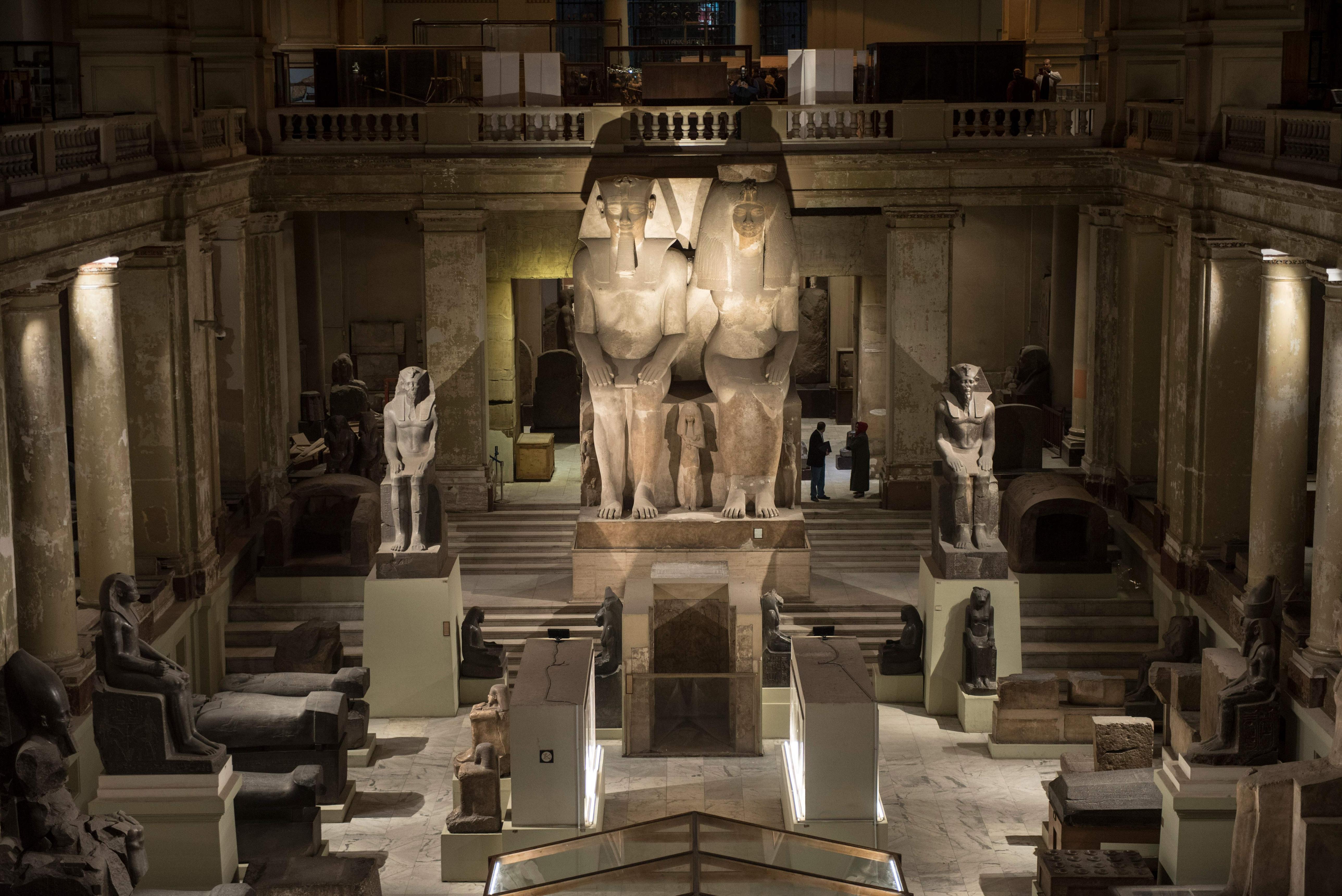
Stand in the atrium of the old museum on Tahrir Square and look up. Amenhotep III and his queen Tiye sit side by side at the far end, seven metres of limestone, with three of their daughters at their feet, and the light falls grey and soft through a skylight that has done the job since 1902. There are no queues at the cases, and for the first time in living memory nobody at the Egyptian Museum Cairo is hurrying upstairs to find Tutankhamun.
He has gone. In 2025 the last of his treasures left for the Grand Egyptian Museum at Giza, following the royal mummies, which went to Fustat in 2021. So the question we hear most from travellers planning a few days in the capital is whether the old building on Tahrir is still worth a morning. Our answer is yes, for reasons that have nothing to do with nostalgia. This guide covers what is still on display in autumn 2026, how to see the best of it in two to three hours, tickets and opening hours, and how to fold it into a day Downtown.
At a Glance
Location: north side of Tahrir Square, Downtown Cairo, beside Sadat metro station
Opened: 15 November 1902, in a building by the French architect Marcel Dourgnon
Opening hours: daily, 9am to 5pm, with the last ticket sold at about 4pm, as of autumn 2026
Tickets: 550 EGP for foreign adults and 275 EGP for students, as of autumn 2026 (about 10 and 5 USD)
Payment: card only at the window
Time needed: two to three hours for the highlights, half a day if you read the labels
On display: roughly 45,000 objects, according to the museum's director in early 2026
No longer here: Tutankhamun's treasures (now at the Grand Egyptian Museum) and the royal mummies (now at NMEC)
Best time: at opening, or after about 2pm when the morning tour groups have moved on
What Left, and Where It Went
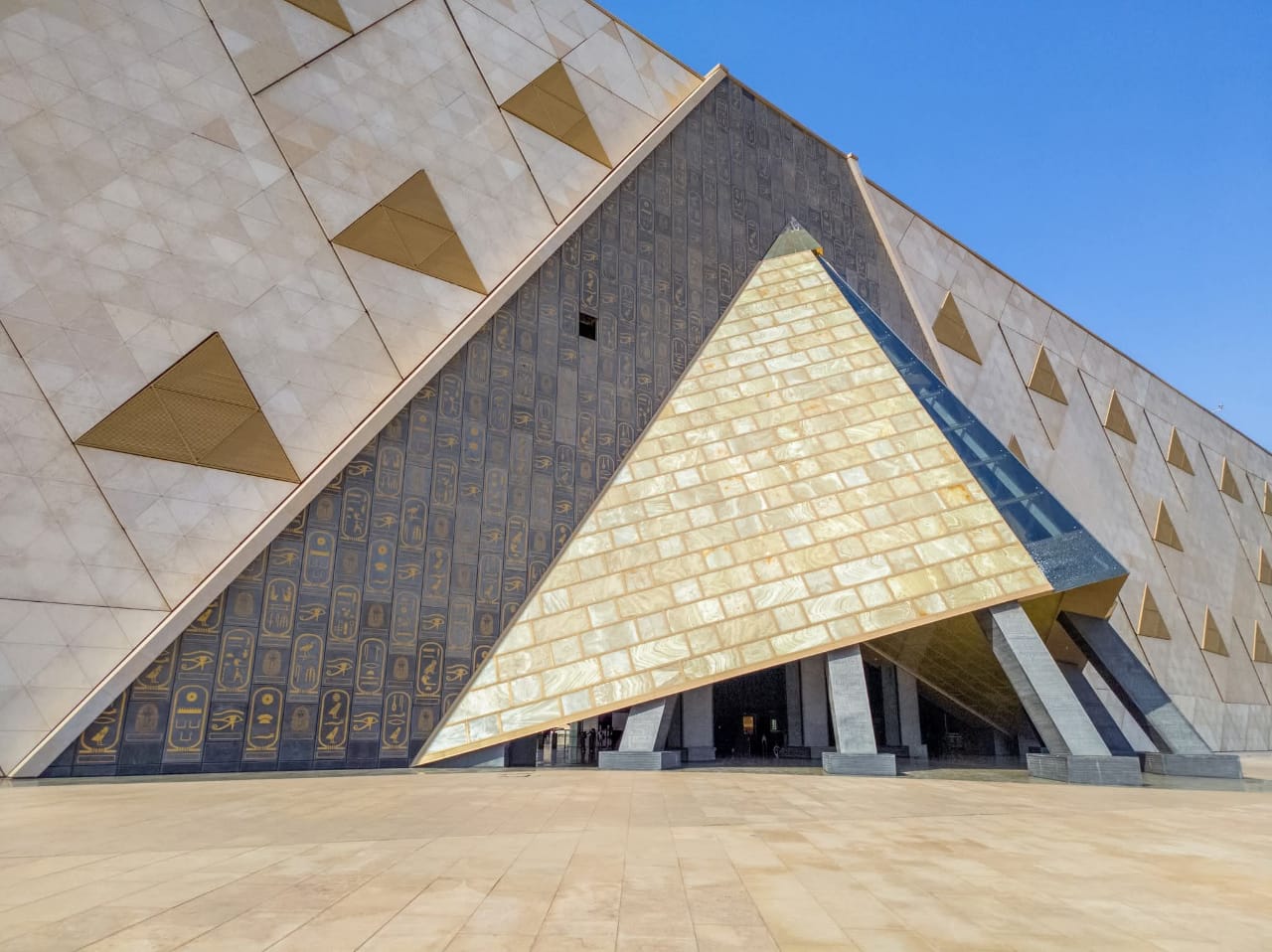
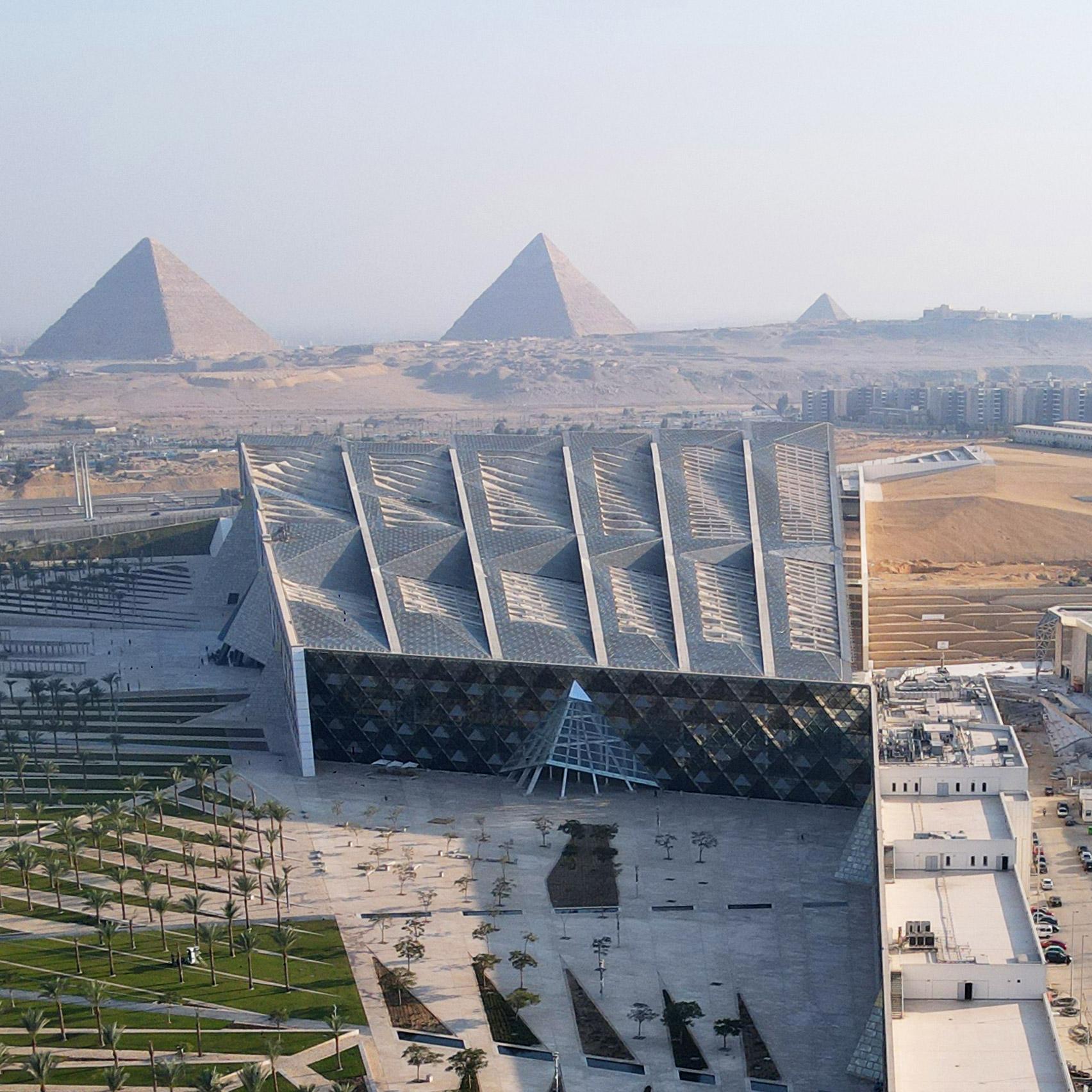
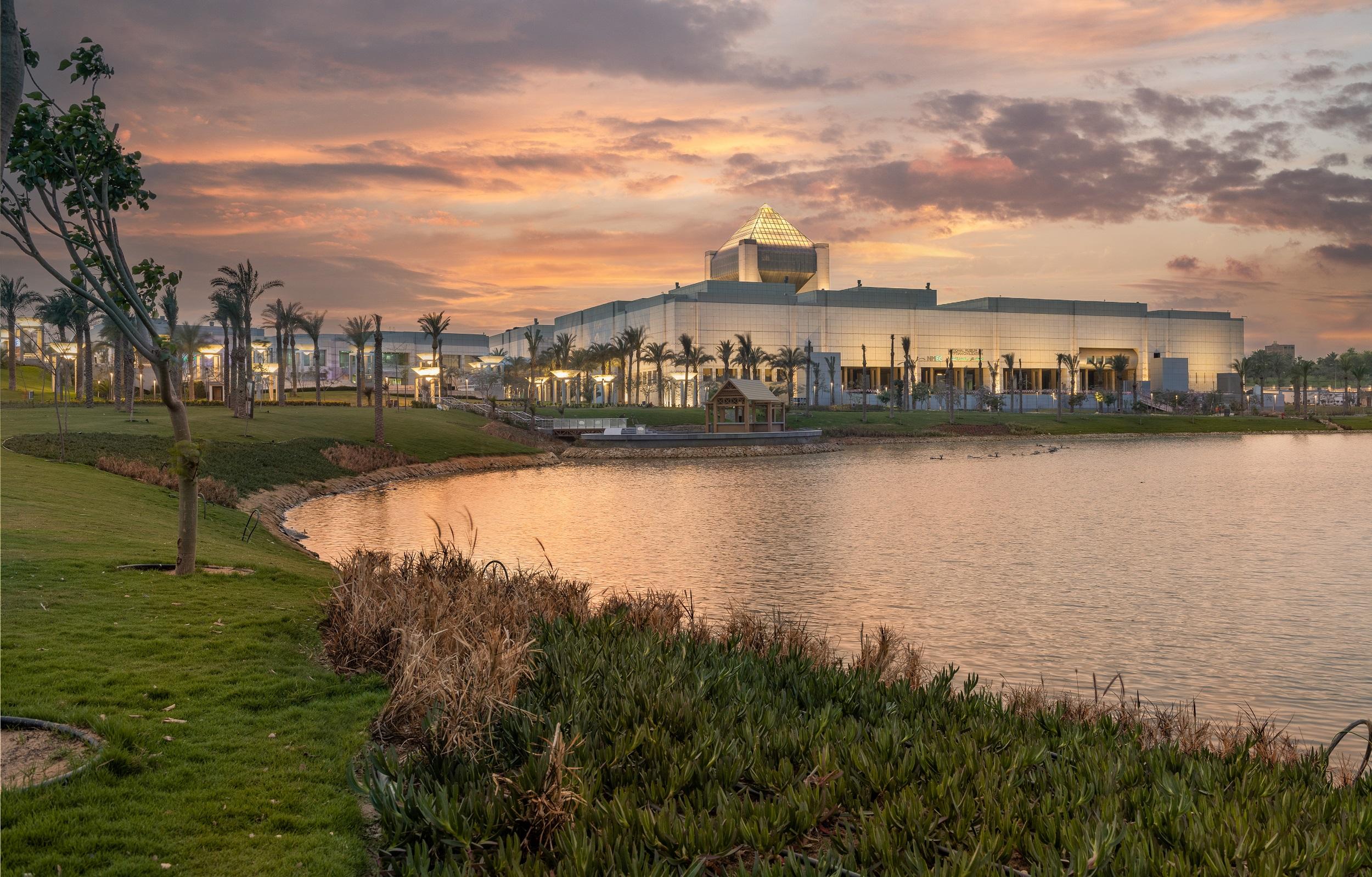
Two moves changed the museum. On 3 April 2021 the Pharaohs' Golden Parade carried 22 royal mummies, including Ramesses II, Seti I and Hatshepsut, across the city to the National Museum of Egyptian Civilization at Fustat. Then, over several years, Tutankhamun's tomb contents went to Giza in stages; the gallery that held the last of them closed on 20 October 2025, ahead of the Grand Egyptian Museum's full opening in November. A number of colossal statues and other pieces went to Giza too, and the mummies are now the centrepiece of the National Museum of Egyptian Civilization.
What stayed is the rest of the reference collection that made this the world's foremost museum of Egyptian antiquities for most of the twentieth century, and it is enormous. The director, Professor Ali Abdel Halim Ali, put the catalogue at about 120,000 objects in a January 2026 interview, with around 45,000 on show at any one time. Even a long visit barely scratches it. Our complete guide to the Grand Egyptian Museum covers the new building; this one is about the old.
The Egyptian Museum Cairo Ground Floor: Stone and Kings
The ground floor runs roughly clockwise in time, starting to the left of the entrance with the earliest material, and almost every room holds something that appears in textbooks. Start with the Narmer Palette, a slab of greywacke 64 cm high found at Hierakonpolis in 1898 and dated to around 3100 BC. On one face a king in the white crown of Upper Egypt smites an enemy; on the other he wears the red crown of the north. It is the closest thing Egypt has to a founding document, and it is still here.
The Old Kingdom rooms beyond it are the museum's strongest suit. The seated statue of Khafre, carved from a dark, flecked gneiss that guides usually call diorite, has the falcon god Horus wrapping his wings around the back of the king's head. Nearby are the painted limestone pair of Rahotep and Nofret, whose quartz and crystal eyes still unsettle people after 4,500 years, the wooden figure the excavators' workmen nicknamed Sheikh el-Balad because he looked like their village headman, and a cross-legged seated scribe. Look too for the Menkaure triads, found by George Reisner in the king's valley temple at Giza in 1908, which show the king flanked by Hathor and a regional deity in a hard grey stone with a finish like polished slate. They have long been among the set pieces of these rooms, though some large Old Kingdom statues have gone to Giza and a few cases have shifted.
Look also for the seated limestone statue of Djoser, often described as the oldest known life-size Egyptian statue, found in its sealed chamber beside the Step Pyramid, and the tiny ivory figure of Khufu, about 7.5 cm tall and the only complete statue of the man who built the Great Pyramid.
Amarna: The Revolution in a Single Room
At the back of the ground floor, the Amarna room holds the strangest art Egypt ever produced. Akhenaten, who in the fourteenth century BC set aside the old gods for the single disc of the Aten and moved the capital to a new city in Middle Egypt, had himself portrayed with a long face, heavy lips, a narrow chest and wide hips. The colossal sandstone statues from his temple at Karnak make the point at a scale you cannot ignore; these colossi are now divided between Tahrir and other museums, so the number on show here varies.
Smaller pieces carry the mood of the period: a limestone relief of the king and Nefertiti offering to the Aten, its rays ending in tiny hands, and family scenes that no earlier pharaoh would have allowed. The unfinished quartzite head of Nefertiti, with its sculptor's guide lines still on the stone, has long been one of the quiet stars of this part of the museum. Our article on Tell el-Amarna and Akhenaten's lost capital explains what happened, and the Amarna day tour from Minya takes you to the city itself.
Upstairs: Tanis Gold and the Treasure of Yuya and Tjuyu
Climb to the upper floor for the two collections that most visitors now come for. The Tanis treasure belongs to kings of the 21st and 22nd Dynasties, buried in the Delta city of Tanis and found intact by the French archaeologist Pierre Montet in 1939 and 1940, just as the Second World War swallowed the news. The centrepiece is the funerary mask of Psusennes I, gold inlaid with lapis lazuli and glass, 48 cm high. Beside it is his silver coffin, and silver was rarer than gold in Egypt, hence his modern nickname, the silver pharaoh. Gold masks of Amenemope and Sheshonq, bracelets, pectorals and vessels fill the room.
Down the corridor is the burial of Yuya and Tjuyu, the parents of Queen Tiye and so the great-grandparents of Tutankhamun, found largely intact in the Valley of the Kings in 1905. Their gilded coffins and cartonnage masks are here, along with furniture and a long Book of the Dead papyrus. Their mummies, unlike the royal ones, stayed at Tahrir, and their faces are worth the climb. For many visitors this upper floor is a fair substitute for what moved to Giza: the same century, the same craftsmen's workshops, and almost no crowd.
The rest of the upper floor rewards anyone with an hour to spare. Over the decades it has held the room of animal mummies, with cats, crocodiles and a baboon prepared as carefully as any noble, painted coffins stacked in long corridors, wooden models of boats, granaries and workshops from Middle Kingdom tombs, and Roman-era mummy portraits from the Fayoum. Some of these rooms are being rearranged under the renovation programme, so treat them as a bonus rather than a promise.
Did You Know: The Museum Has a Grave in Its Garden
Auguste Mariette, the French Egyptologist who founded the Egyptian Antiquities Service and the first national museum at Boulaq in 1858, asked to be buried with his collection. When it moved to Tahrir, his sarcophagus came too, and it now lies in the front garden, surrounded by busts of the Egyptologists who followed him.
The collection itself had three homes before this one. Mariette's Boulaq museum was flooded by the Nile in 1878, and around 1890 the objects moved to a former khedivial palace in Giza before the purpose-built museum opened on Tahrir Square in November 1902.
How to See It in Two to Three Hours
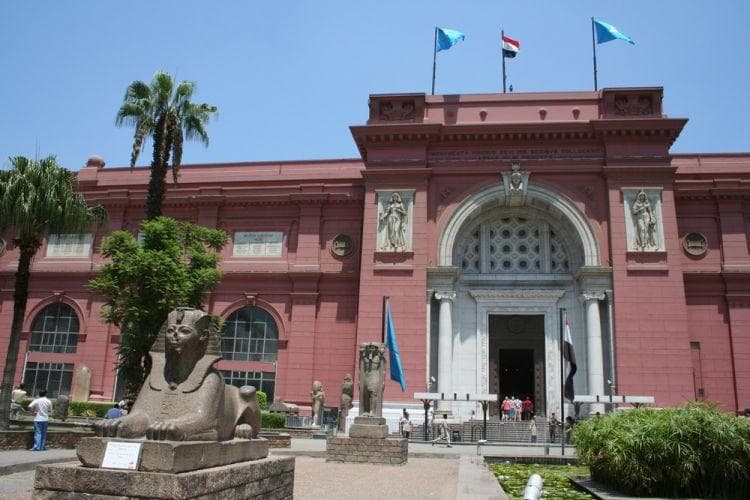
Before you go in, give the building itself a minute from the garden. Dourgnon's salmon-pink facade is a piece of Beaux-Arts confidence, with the names of the great nineteenth-century Egyptologists carved along it, and the museum was one of the earliest large buildings in Egypt to use reinforced concrete. It was designed as a museum from the first drawing, which is why the light and the sightlines still work.
Then arrive at the gate at nine, go through security, and resist the temptation to wander. Spend your first hour on the ground floor in strict order: the Narmer Palette, the Old Kingdom statues, then the atrium with Amenhotep III and Tiye, and the Amarna room at the back. That hour takes you across almost three thousand years.
Then go upstairs for the Tanis treasure and Yuya and Tjuyu, which need forty-five minutes between them. With the time left, walk the upper corridors, where the cases of coffins, papyri, model boats and funerary figures tell you more about how ordinary Egyptians expected to live forever than any single masterpiece. If the stairs are a problem, a freight-style lift is tucked away to the right of the Narmer Palette; ask a guard. A specialist guide makes a real difference here, because labels in some rooms are still sparse, and our guides tend to follow almost exactly this route.
Tickets, Opening Hours and Cameras
As of autumn 2026, entry costs 550 EGP for foreign adults and 275 EGP for students with a valid international student card, with children under six free. The windows take cards only, so carry a Visa or Mastercard that works abroad. The museum opens daily from 9am to 5pm, with the last ticket sold at about 4pm; hours shorten during Ramadan, typically to 9am to 4pm. Prices across Egypt's state sites change frequently, so our guide to Egypt ticket prices is worth a look before you go.
Photography for personal use with a phone is generally allowed without flash. Rules on dedicated cameras, video and tripods have changed several times over the years, so check at the ticket window. Bags are scanned at the entrance, and large luggage should stay in your hotel or car.
Warning: Scams Around Tahrir Square
The area around the museum has its own small economy of friendly strangers. The commonest line is that the museum is closed for prayer, lunch or a holiday, followed by an offer to take you to a nearby shop or papyrus institute until it reopens. It is not closed; walk straight to the gate.
Others offer to guide you inside for a fee, or wait outside with an unofficial taxi and an inflated fare. Licensed guides carry ministry cards, and ride-hailing apps work well from Tahrir. Our list of common Egypt travel mistakes covers the wider repertoire.
Tahrir or the Grand Egyptian Museum
If you have time for only one, choose the Grand Egyptian Museum. It holds Tutankhamun, Khufu's boat and a modern display that tells the whole story in one building. But the two are not rivals. The new museum was designed for large-scale storytelling; the old one keeps the reference collection, the Old Kingdom masterpieces, the Tanis gold and Yuya and Tjuyu, and the atmosphere of a museum that has barely changed its cases in decades, which some visitors love and others find tired. Seeing both is the best answer: the Egyptian Museum Cairo built in 1902 explains much of what you see at Giza, because so many of the objects now at Giza spent a century in these rooms.
A phased renovation is under way, building on a European Union funded programme with five European museums, including the Louvre and the British Museum, whose first phase was inaugurated in February 2023. Some displays have new lighting and labels; some rooms may be closed or roped off on the day you visit. The director has said the focus for 2026 is digital projects and interactive displays, with the basement turned into a space for research and specialist exhibitions.
Our Pick: A Downtown Day Around the Museum
The museum sits at one end of Downtown, Khedive Ismail's grid of nineteenth-century boulevards. After a morning inside, walk to Talaat Harb Square, about ten minutes away, past the faded belle-epoque facades, and stop for coffee at one of the old cafes. Lunch on koshary at one of the long-running places on the side streets, then cross Qasr el-Nil Bridge to Gezira and Zamalek for the afternoon.
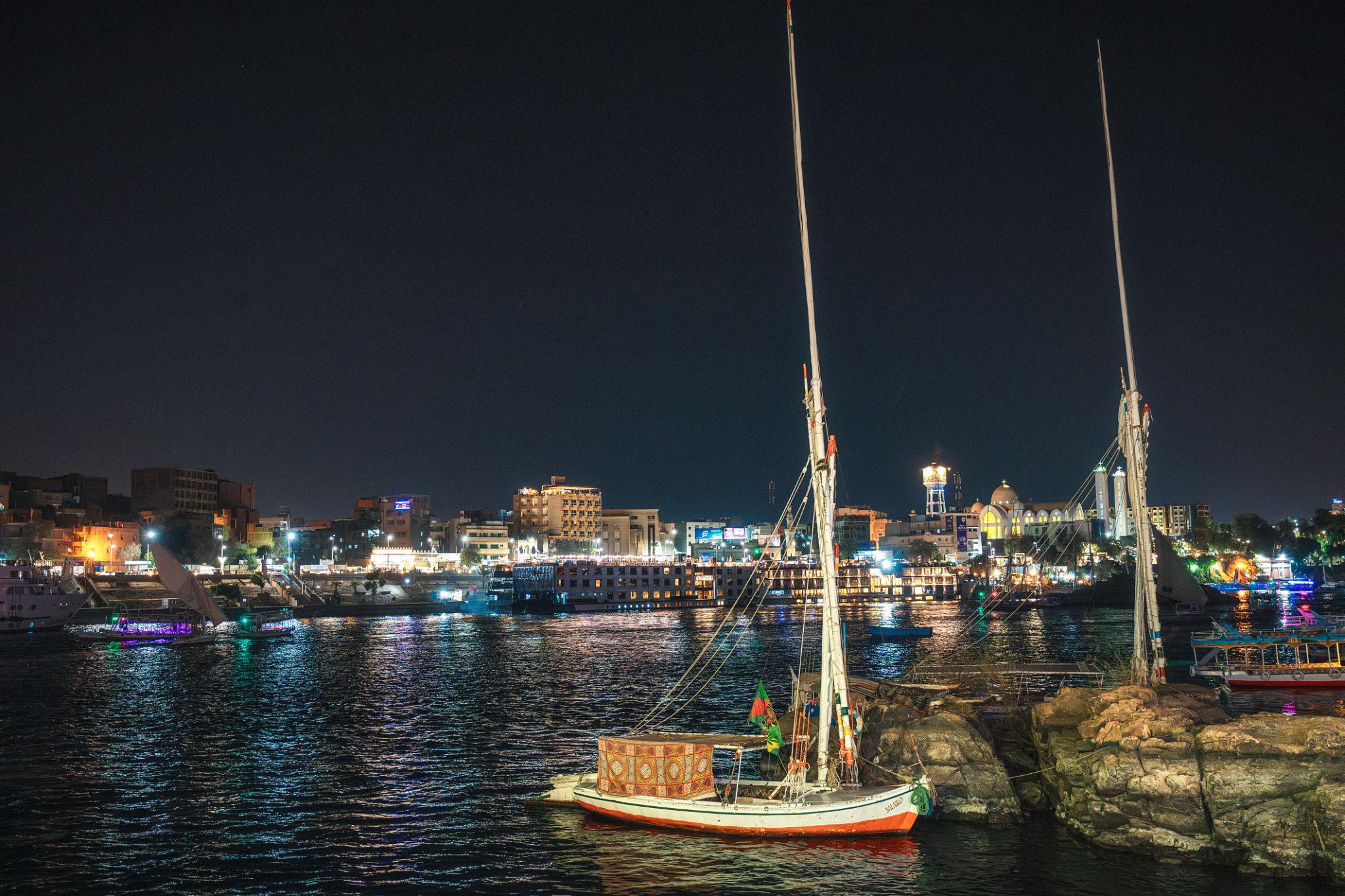
Our walking guide to Downtown Cairo and Zamalek lays out the route with timings. In the evening a Nile dinner cruise makes an easy end to the day.
Planning Your Visit to the Egyptian Museum Cairo
The museum fits naturally into a three or four day stay in the capital. On a tight schedule, pair it with the Grand Egyptian Museum on consecutive days, Giza first for the full story, Tahrir second for the details. On a longer stay, give it a quiet morning on its own, when you have the energy to read the cases. Our plan for three days in Cairo shows how both museums, the pyramids and the medieval city fit together, and our guide to the National Museum of Egyptian Civilization covers where the royal mummies went.
If you would like an Egyptologist to walk you through the collection, our guided Egyptian Museum tour pairs easily with an afternoon Downtown, and our page on the Egyptian Museum in Tahrir has background reading for the night before. Or simply send us your dates and we will suggest how to fit the old museum into the rest of your trip.