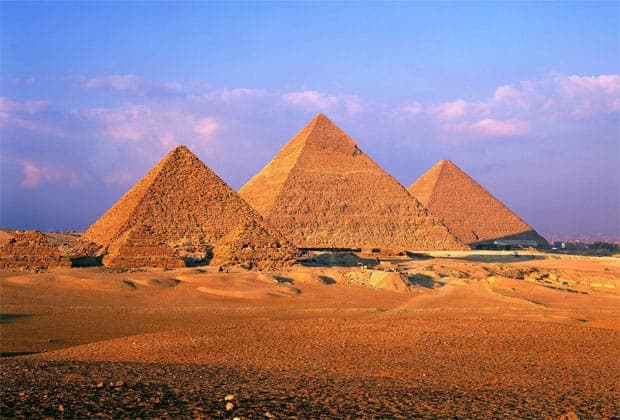
In the first hour after the gates open, the Giza plateau is the colour of weak tea, the early shuttle buses run half empty, and the loudest thing near the Great Pyramid is a guard's radio. By eleven the same patch of limestone holds several thousand people, and the car park at the visitor centre is lined with coaches. Most of what separates a good 3 days in Cairo from an exhausting one comes down to that kind of timing: where you are at which hour, and how much of each day you lose in traffic between sights that look close together on a map.
The practicalities have also changed a great deal in the last eighteen months. The Grand Egyptian Museum opened in full in November 2025 with the complete Tutankhamun collection, the old pyramid gate beside the Mena House closed in favour of a new entrance on the Fayoum road, and most ticket windows stopped taking cash. This itinerary is built for Cairo as it works in autumn 2026: three full days, each one geographically tight, with honest notes on where to sleep, what to eat, and how to stretch or squeeze the plan.
At a Glance
Day one: the Giza plateau at opening, the Grand Egyptian Museum in the afternoon
Day two: Saqqara, Dahshur and Memphis, or Islamic Cairo if you would rather swap pyramids for minarets
Day three: Coptic Cairo, the Citadel, a felucca at sunset and Khan el-Khalili after dark
Giza plateau ticket: 700 EGP for foreign adults, 350 EGP for students, as of autumn 2026 (about 13 and 6 USD)
Grand Egyptian Museum: 1,830 EGP for foreign adults from 1 November 2026 (about 33 USD), booked online in advance
Payment: card only at most state ticket windows, so carry a Visa or Mastercard that works abroad
Best months: October to April, with late October and November close to ideal
Where to base yourself: Zamalek or Downtown for balance, Giza if the pyramids and the museum matter most
Getting around: a private car and driver for days one and two, ride-hailing and the metro for day three
Before You Start: Traffic, Tickets and Cards
The single rule that makes Cairo work is one cluster per day. Giza and the Grand Egyptian Museum sit on the western edge of the city; Saqqara, Dahshur and Memphis lie 30 to 40 km south of the centre; Coptic Cairo, the Citadel and the medieval city run in a rough line on the east bank. Downtown to the pyramids is only about 15 km, but it takes 30 to 45 minutes outside rush hour and well over an hour inside it. Crossing the city twice in a day is how people end up seeing two sights instead of five.
Tickets are the second thing to sort before you land. The Grand Egyptian Museum sells foreign visitors timed entry slots through its official website rather than at the door, and Giza plateau tickets can be bought online through the Ministry of Tourism and Antiquities portal or from machines at the new visitor centre. At the Citadel, the Egyptian Museum and most other state sites the windows now take cards only. Prices move often, and the museum rise on 1 November 2026 will not be the last; our guide to Egypt ticket prices keeps the current figures in one place.
Day One: The Pyramids of Giza and the GEM
Be at the plateau when it opens. The Ministry's own listing gives 8am to 4pm, while many visitors this year report the gates opening at 7am, so plan on the earlier time and check the evening before. The main entrance is now the visitor centre on the Fayoum road, on the south side of the site, where there are ticket machines, toilets, lockers and a short film. Private cars and tour coaches no longer drive onto the plateau; instead a fleet of free electric shuttle buses runs a hop-on, hop-off loop between the panorama viewpoint, the three pyramids and the Sphinx.
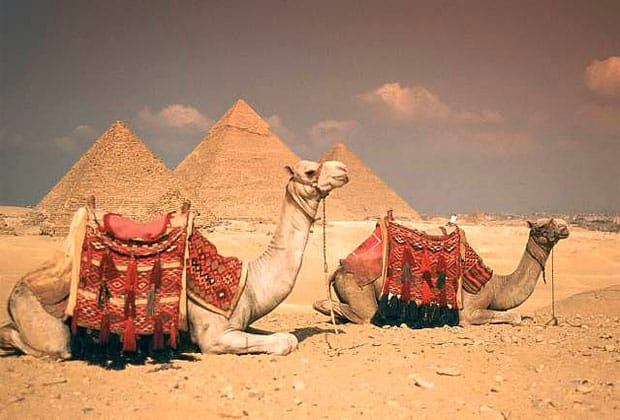
Take the shuttle to the panorama first, while the light is low and the horizon is clear, then work back towards the Pyramids of Giza themselves. Going inside the Great Pyramid costs an extra 1,500 EGP (about 27 USD) and is sold in limited numbers that can run out by mid-morning in peak season. Khafre's interior is a fraction of the price at around 280 EGP, usually quieter, and leads down to a plain chamber that still holds the king's granite sarcophagus. Finish at the Sphinx and the Valley Temple of Khafre, which is also where most people leave. Two and a half to three hours is enough for the plateau, and our complete guide to visiting the pyramids covers the interiors and viewpoints in detail.
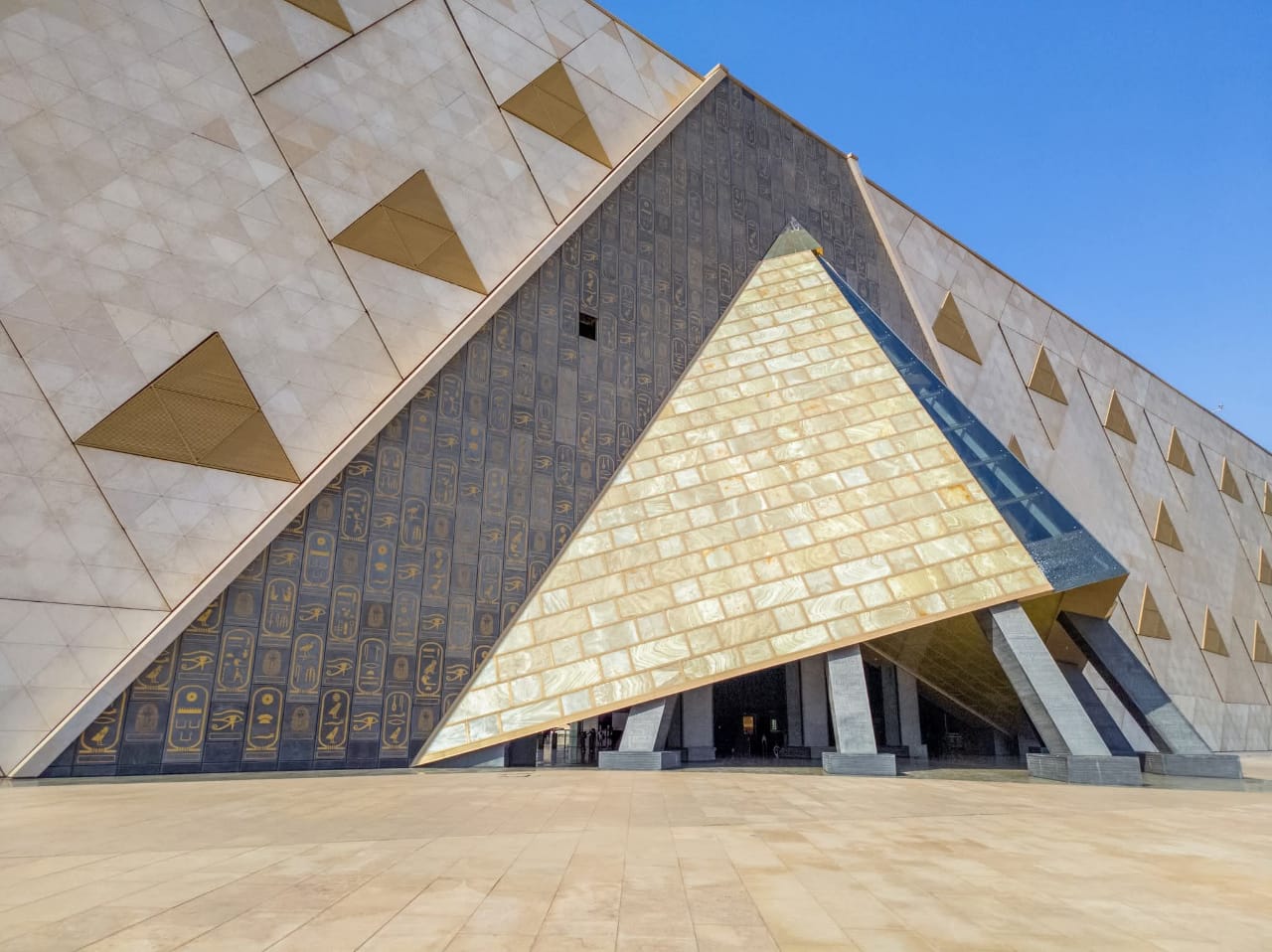
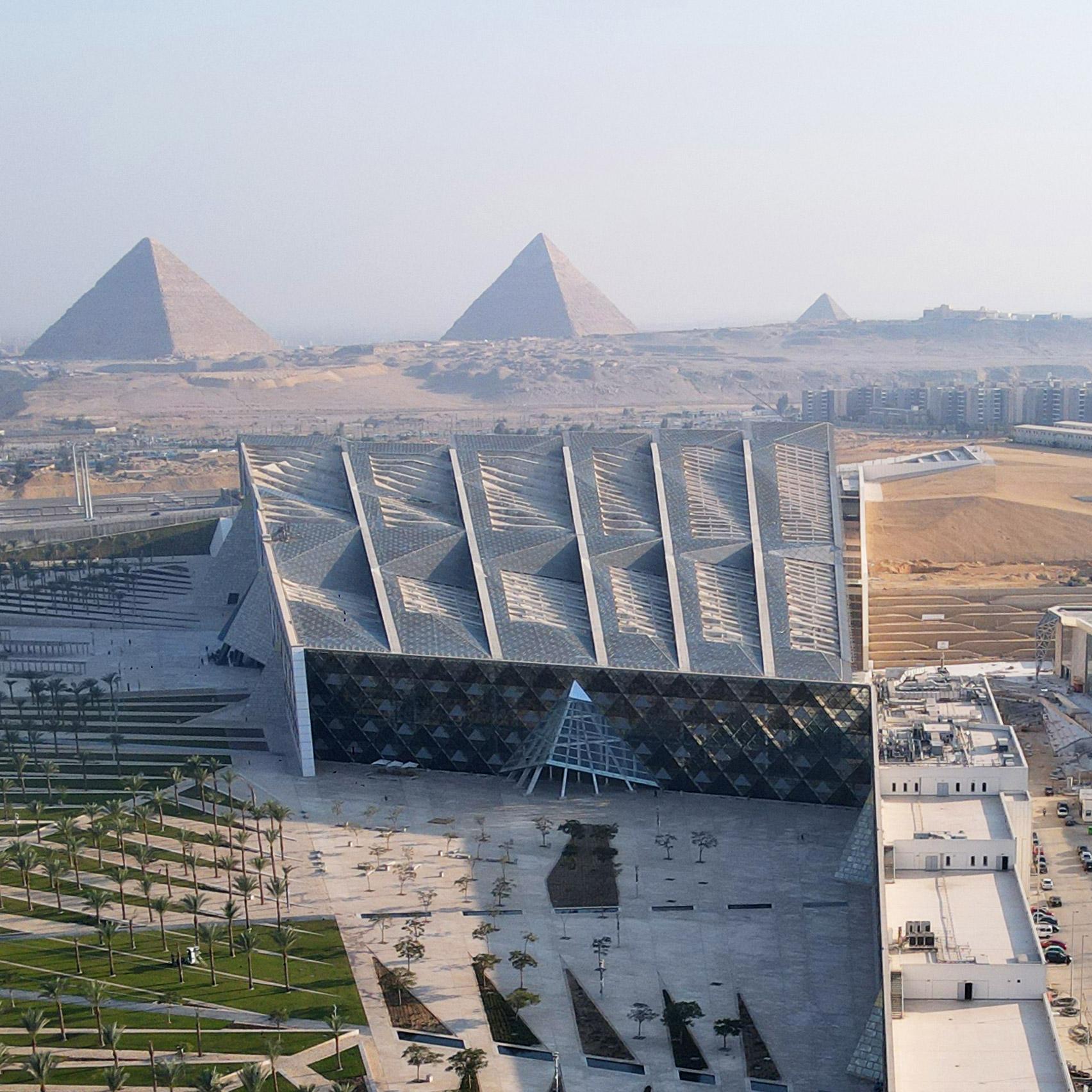
Lunch at the museum, which is about 2 km away and has several places to eat inside the complex. Then give the Grand Egyptian Museum the whole afternoon. Ramesses II stands 11 metres tall in the atrium, the Grand Staircase climbs six storeys past more than 60 statues and sarcophagi to a view of the pyramids, and the two Tutankhamun galleries show all 5,398 objects from his tomb together for the first time since Howard Carter emptied it. Allow three and a half to four hours. The galleries are open 9am to 6pm with last tickets at 5pm, except on Wednesdays and Saturdays, when they stay open until 9pm. A private pyramids and GEM day with an Egyptologist handles the tickets, the slot and the driver in one go.
Insider Tip: Put Day One on a Wednesday or Saturday
The late opening on Wednesdays and Saturdays changes the shape of day one completely. You can spend a slow morning on the plateau, take a long lunch out of the heat, and walk into the Tutankhamun galleries at four o'clock as the morning coach groups are leaving, with five hours ahead of you instead of two.
Two other small things save time. Book your museum slot and your plateau ticket before you arrive, since queuing at the visitor centre machines behind a tour group can eat a surprising amount of your morning. And if you want a camel or horse ride, use only the licensed handlers in the designated zones and agree the full price, including the return, before you get on.
Day Two: Saqqara, Dahshur and Memphis
Day two is the one many visitors skip, and often the one they later wish they had not. Saqqara, about 30 km south of central Cairo, is where the pyramid began: the Step Pyramid of Djoser, raised around 2670 BC and about 62 metres high, is often described as the oldest monumental stone building in the world. Around it lie Old Kingdom tombs whose painted and carved walls show butchers, boat builders, dancers and cattle crossing canals, in the tombs of Ti, Kagemni and Mereruka among others, though which ones are open varies from season to season. Start at the small Imhotep Museum by the entrance, then allow at least two hours on site. Expect to pay 600 EGP for the main Saqqara area ticket as of autumn 2026, with the Step Pyramid's interior and some tombs and burial galleries ticketed separately; our Saqqara and Step Pyramid guide explains which add-ons are worth the money.
Dahshur, about 10 km further south, is the antidote to Giza's crowds. On many mornings you share the desert with a few dozen people and the odd guard. The Bent Pyramid shows the moment its builders changed angle halfway up, and the Red Pyramid next to it lets you climb down a long, low passage into three corbelled chambers. The air inside is close and sometimes carries a faint smell of ammonia, but for many visitors it is the best pyramid interior near Cairo, and it costs a fraction of Khufu's.
Memphis, the ancient capital, now survives as a palm-shaded open-air museum at Mit Rahina, with a colossal fallen statue of Ramesses II and an alabaster sphinx. Thirty to forty-five minutes is plenty. Most drivers start at Dahshur and work north, which puts you at Saqqara at midday, when the open site is hottest and the tombs feel coolest. Lunch at one of the farm restaurants along the Saqqara road, where bread comes out of the oven as you sit down.
Day Two, Another Way: Islamic Cairo
If one morning of pyramids is enough, give the second day to the medieval city instead and push Saqqara to a fourth day. Start at Bab al-Futuh in the north and walk south along Al-Muizz Street, past the Qalawun complex with its hospital and mausoleum, the House of Suhaymi, and a run of Mamluk facades that holds more medieval architecture than almost any street in the Islamic world. Cut east to Al-Azhar Mosque, founded in 970, then on to Bab Zuweila, where you can climb the twin minarets above the gate for a view over the rooftops.
End at Al-Azhar Park on the hill to the east for sunset, which for a small entry fee gives one of the best views in Cairo. Our walk through Islamic Cairo has the full route. Day three then runs as below, minus Khan el-Khalili, which you will already have walked through.
Day Three: Old Cairo, the Citadel and the Khan
Start early in Coptic Cairo, which the metro reaches more easily than a car: Mar Girgis station on Line 1 opens almost directly onto the old Roman fortress of Babylon. Inside its walls sit the Hanging Church, built over the fortress gatehouse, the church of Abu Serga, where tradition places the Holy Family's refuge, the Ben Ezra Synagogue and the Coptic Museum. The churches are free to enter; the museum charges a modest fee. Two hours covers it at a steady pace, and our Coptic Cairo guide adds the lanes and cemeteries most people miss.
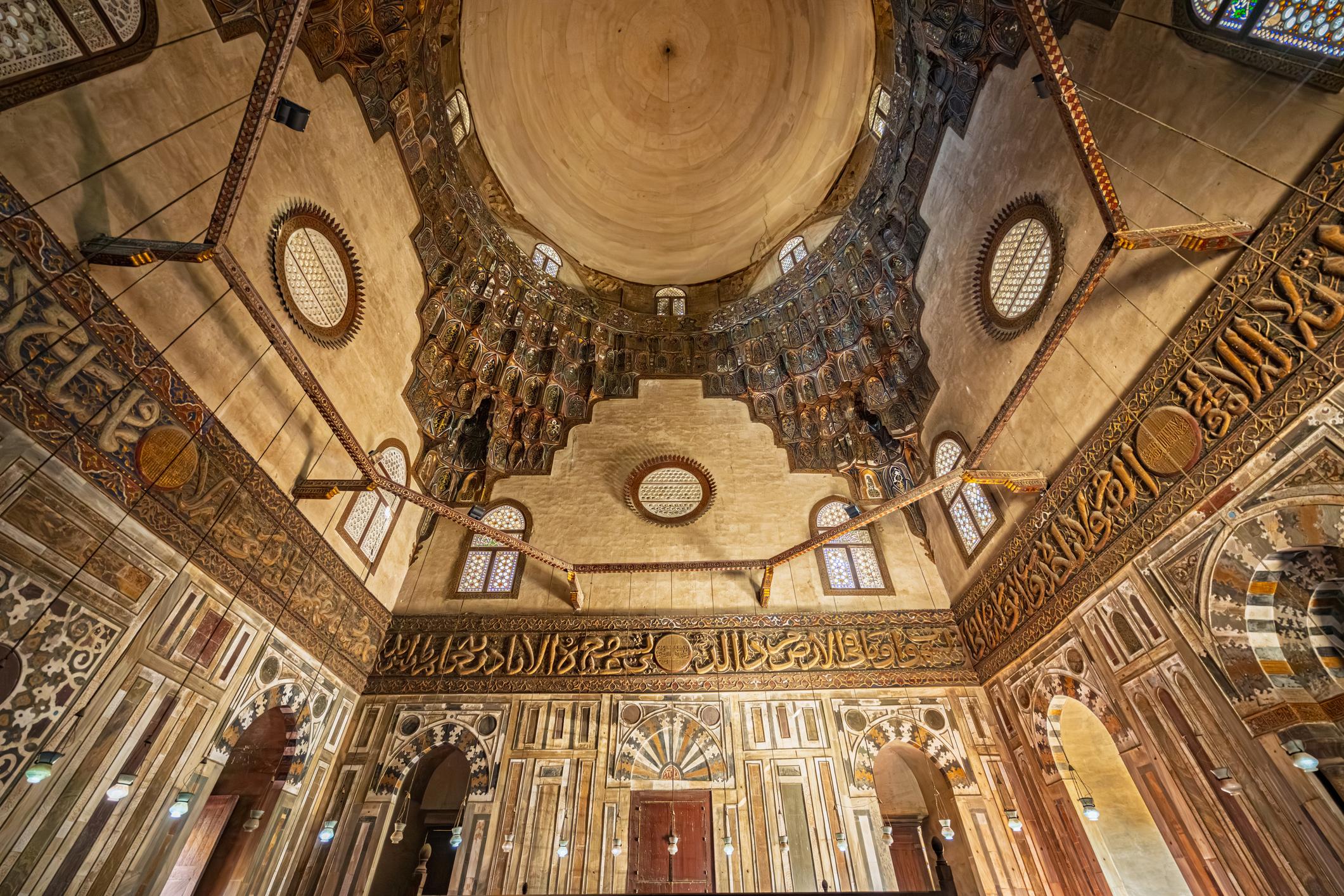
If the royal mummies matter more to you than the Citadel, the National Museum of Egyptian Civilization is five to ten minutes away and our guide to NMEC and its mummies hall explains how to slot it in. Otherwise take a car up to the Citadel of Saladin, around 550 EGP for foreign adults as of autumn 2026. One ticket covers the Mosque of Muhammad Ali, the earlier Mosque of al-Nasir Muhammad, the museums and the terrace beside the Alabaster Mosque, where on a clear day the pyramids show on the western horizon. Leave time to walk down to the Mosque of Sultan Hassan and the Al-Rifai Mosque facing it, two of the great buildings of Cairo.
In the late afternoon take a felucca from one of the landings along the Corniche in Garden City or on the Giza bank. Boats are hired by the hour, prices are agreed before you step aboard, and an hour is right: in winter the sun sets around five, and watching it from the water as the call to prayer starts across the city is the scene people describe for years. Then head to Khan el-Khalili for the evening, when the lanes are lit, the shopkeepers are at their most relaxed, and a glass of mint tea at El Fishawy costs very little.
Warning: The Mistakes That Cost Half a Day
- Arriving at a ticket window with only cash. Most state sites are card only, and the nearest ATM will not help.
- Turning up at the Grand Egyptian Museum without a booking. Foreign visitors need a timed slot bought online in advance.
- Planning the Citadel or any mosque for Friday midday. The Mosque of Muhammad Ali closes for about 90 minutes around Friday prayers and for shorter spells at each daily prayer.
- Accepting help from a stranger at the Giza gate who says the ticket office is closed. It is not, and the detour ends at a stable or a perfume shop.
- Agreeing to a stop at a papyrus or carpet institute on the way to Saqqara. These are commission stops, and they eat an hour you will want back.
Where to Stay: Giza, Zamalek or Downtown
Giza puts you minutes from the plateau and the museum, and several hotels have rooms that look straight at the pyramids. It is also the natural base if you arrive at Sphinx International Airport on the western edge of the city. The trade-off is everything else: from Giza, Coptic Cairo and the Citadel are 45 minutes to over an hour away, and the evenings are quieter.
Zamalek, on its island in the Nile, is leafy, walkable by Cairo standards and full of restaurants, galleries and cafes, with easy access to both banks. Downtown and Garden City offer the big Nile-front hotels, the Egyptian Museum on the doorstep and the metro, at the cost of more noise. For a first visit of three nights, we would usually suggest Zamalek or a Nile-side hotel in Garden City, and moving to Giza only if day one is the reason you came.
Eating Well Across 3 Days in Cairo
Breakfast the way Cairenes do: ful medames, stewed fava beans with oil and cumin, with ta'meya, the Egyptian falafel made from green fava beans rather than chickpeas. At lunch, a bowl of koshary, the layered rice, lentils and pasta under spiced tomato sauce and crisp onions, is the national fast food; Abou Tarek Downtown has served it for decades. In the evening look for molokhia, a deep green soup of jute leaves, or stuffed pigeon, which tastes far better than it sounds.
Grilled meat restaurants on the Saqqara road suit day two, the Zamalek cafes suit day three, and the Khan is for tea and sweets rather than dinner. Our guide to Egyptian dishes worth trying has the full list, including the desserts.
Good to Know: Hot Days, Wet Days and Children
Cairo sees only a handful of rainy days a year, mostly between December and February. If one lands on your trip, move the museums to that day: the Grand Egyptian Museum, the National Museum of Egyptian Civilization and the old Egyptian Museum in Tahrir can fill it between them. From May to September, do the plateau and Saqqara at opening, retreat indoors from noon, and save the Citadel and the felucca for the last two hours of light.
Children tend to love the Red Pyramid's passage, the shuttle buses and the felucca, and lose patience in the second hour of any gallery. The Grand Egyptian Museum has a dedicated Children's Museum for ages six to twelve, ticketed separately. Keep days shorter than you would for adults, and build in an afternoon by a hotel pool.
Adapting the Plan for Two or Four Days
With two days, keep day one exactly as written and compress the rest into day two: Saqqara at opening, back into the city by early afternoon, Coptic Cairo, then Khan el-Khalili in the evening. You lose Dahshur and the Citadel, and the second day is long, but it works.
With four days, the plan relaxes. Give day two to Saqqara, Dahshur and Memphis, day three to Islamic Cairo, and day four to Coptic Cairo, the National Museum of Egyptian Civilization and the Citadel. If you have seen the Tutankhamun galleries and want more, the original Egyptian Museum on Tahrir Square still holds the Narmer Palette, the Tanis gold and the treasure of Yuya and Tjuyu; our Egyptian Museum in Tahrir guide explains why it still earns its morning.
Planning Your 3 Days in Cairo
The order above is how we would plan 3 days in Cairo for most first-time visitors, but it bends easily around flight times, Fridays and the days the museum stays open late. A guide matters most on day one and in the medieval city, where the stories behind the stone are the point; Coptic Cairo and the Khan are easy to enjoy on your own.
If you would like a hand, our Islamic Cairo, Citadel and Khan el-Khalili tour and our Old Cairo and Coptic quarter tour slot straight into days two and three. Or tell us your dates, your hotel and what matters most to you, and we will suggest the order that suits your 3 days in Cairo.