Most visitors race straight to the Giza Plateau and never learn that the pyramid idea was born 20 kilometres to the south, at a windswept desert necropolis called Saqqara. Here, around 2670 BCE, the architect Imhotep stacked six mastabas into the world's first monumental stone building: the Step Pyramid of Djoser. Saqqara is older, quieter, and in many ways richer than Giza, and it rewards anyone willing to spend half a day among its tombs, its sand, and its silence.
Why Saqqara Matters
Saqqara was the principal burial ground for Memphis, Egypt's first capital, and it stayed in use for more than 3,000 years, from the First Dynasty down into the Roman period. That longevity is the point: almost no other site on earth records such a continuous span of a single civilisation. You can stand beside a Third Dynasty pyramid, walk into a Fifth Dynasty noble's tomb covered in market and hunting scenes, and then descend into Late Period burial shafts, all within a single morning.
The Step Pyramid is the headline, but Saqqara holds at least 11 royal pyramids, hundreds of private tombs, and a sacred-animal necropolis. In the last decade it has also become the most active dig in Egypt, producing painted coffins, sealed shafts, and gilded mummies almost every season, so the on-site offering keeps changing.
The name itself probably derives from Sokar, the falcon-headed god of the Memphite necropolis, a hint at how sacred this ground was considered. Memphis sat at the apex of the Nile Delta where Upper and Lower Egypt meet, and Saqqara on the desert escarpment above it became the city's eternal mirror: the living below, the dead above. Understanding that relationship is the key to reading the site, because almost everything here was built to keep the memory and the spirit of the dead alive for eternity.
The Step Pyramid of Djoser
The Step Pyramid of Djoser rises about 60 metres in six unequal tiers and is, by broad consensus, the oldest large-scale cut-stone structure in the world. Before Imhotep, kings were buried under flat mud-brick mastabas. Imhotep's leap, stacking ever-smaller stone mastabas, was so revolutionary that he was later deified as a god of wisdom and medicine, one of very few non-royal Egyptians to earn that honour.
A long restoration that ran for roughly 14 years reopened the monument in 2020, and you can now enter the pyramid itself. Inside, a steep modern walkway descends toward the central burial shaft, a vertical pit some 28 metres deep cut into the bedrock, beneath which a granite burial vault was sealed. Lighting is dim and the passages are tight, so skip the interior if you are claustrophobic; the architecture above ground is the real reward.
Djoser reigned in the Third Dynasty for perhaps 19 years and was likely the king who consolidated the early state, with the resources and the centralised labour to attempt something this ambitious. A statue base from the complex carries both his name and Imhotep's, the latter described as overseer, sculptor, and chief carpenter, an almost unheard-of acknowledgement of an architect alongside a pharaoh. The original limestone statue of Djoser found in the serdab (a sealed chamber beside the pyramid) is now in the Egyptian Museum; what you see on-site is a replica, still staring out through two eye-holes toward the northern stars.
### The Djoser Funerary Complex
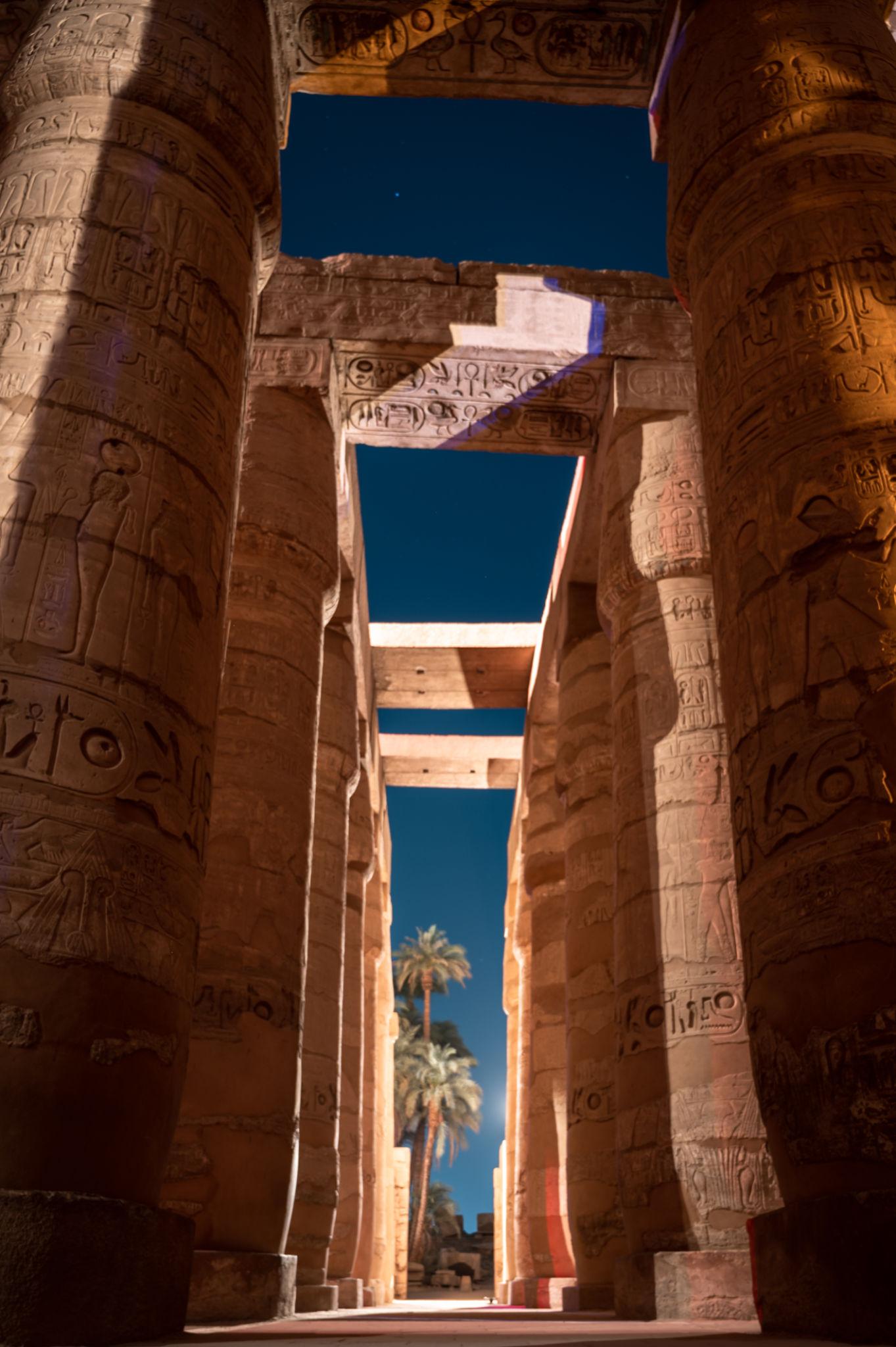
The pyramid does not stand alone. It sits inside a vast walled enclosure, roughly 545 by 277 metres, once ringed by a 10-metre limestone wall with a single working entrance among 14 false doors. You enter through a roofed colonnade of 40 ribbed columns, an architectural experiment in translating bundled-reed forms into permanent stone. Beyond it lies the Great South Court, the Heb-Sed court with its dummy chapels for the king's eternal jubilee, and the House of the South and House of the North. Give this complex a full hour; it is the genesis of Egyptian monumental design.
The Serapeum: Tombs of the Apis Bulls
The most atmospheric place in all of Saqqara is the Serapeum, the underground galleries where the sacred Apis bulls were entombed. Each bull was considered a living manifestation of the god Ptah; when one died it was mummified and buried with full royal honours. Walking the long, cool, vaulted tunnel, you pass enormous granite and basalt sarcophagi, each carved from a single block weighing up to 70-80 tonnes. How they were manoeuvred underground remains genuinely debated.
The Serapeum was rediscovered by Auguste Mariette in 1851 after he followed a half-buried sphinx avenue. It usually requires a separate ticket and is sometimes closed without notice, so confirm access before you build your day around it. Photography inside is permitted but the lighting is low; bring a steady hand rather than a flash.
The Painted Mastaba Tombs
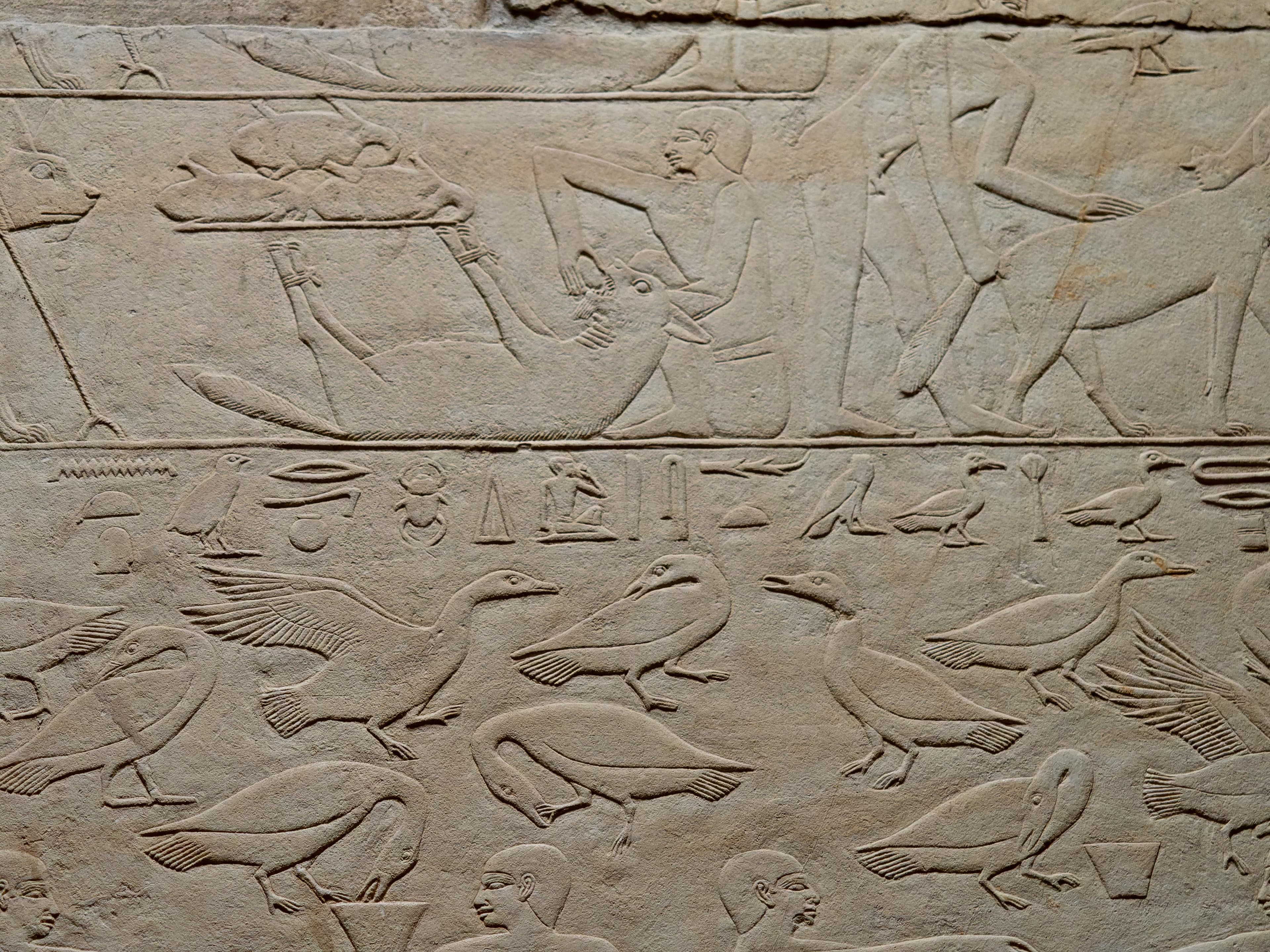
If the pyramids show ancient ambition, the nobles' tombs show ancient life. The standouts:
- **The Mastaba of Ti** (Fifth Dynasty): widely rated the finest Old Kingdom private tomb, with reliefs of cattle fording a canal, men building boats, and farmers at harvest.
- **The Tomb of Mereruka**: the largest non-royal tomb here, with 33 chambers and a famous statue of Mereruka striding from a false door.
- **The Tomb of Kagemni**: superb reliefs of dancers, acrobats, and force-fed hyenas.
- **The Twin Tomb of Niankhkhnum and Khnumhotep**: two royal manicurists shown in an unusually intimate embrace.
These chapels were carved 4,400 years ago, yet the pigments, ochres, blues, and greens, often survive. Some smaller tombs are rotated open by inspectors, so ask the ticket office which are accessible that day.
Recent Discoveries and the Imhotep Museum
Saqqara has dominated archaeology headlines since 2018, when a sealed Fifth Dynasty tomb belonging to a priest named Wahtye was found with vivid, near-perfect colour. Since then, missions have opened shafts at the Bubasteion (the cat-goddess sector) containing dozens of intact, brightly painted coffins, statues of the god Ptah-Sokar, gilded masks, and even mummified cats, cobras, and a lion cub. Some of these finds are displayed periodically on-site or moved to Cairo's museums, so ask your guide what is currently accessible.
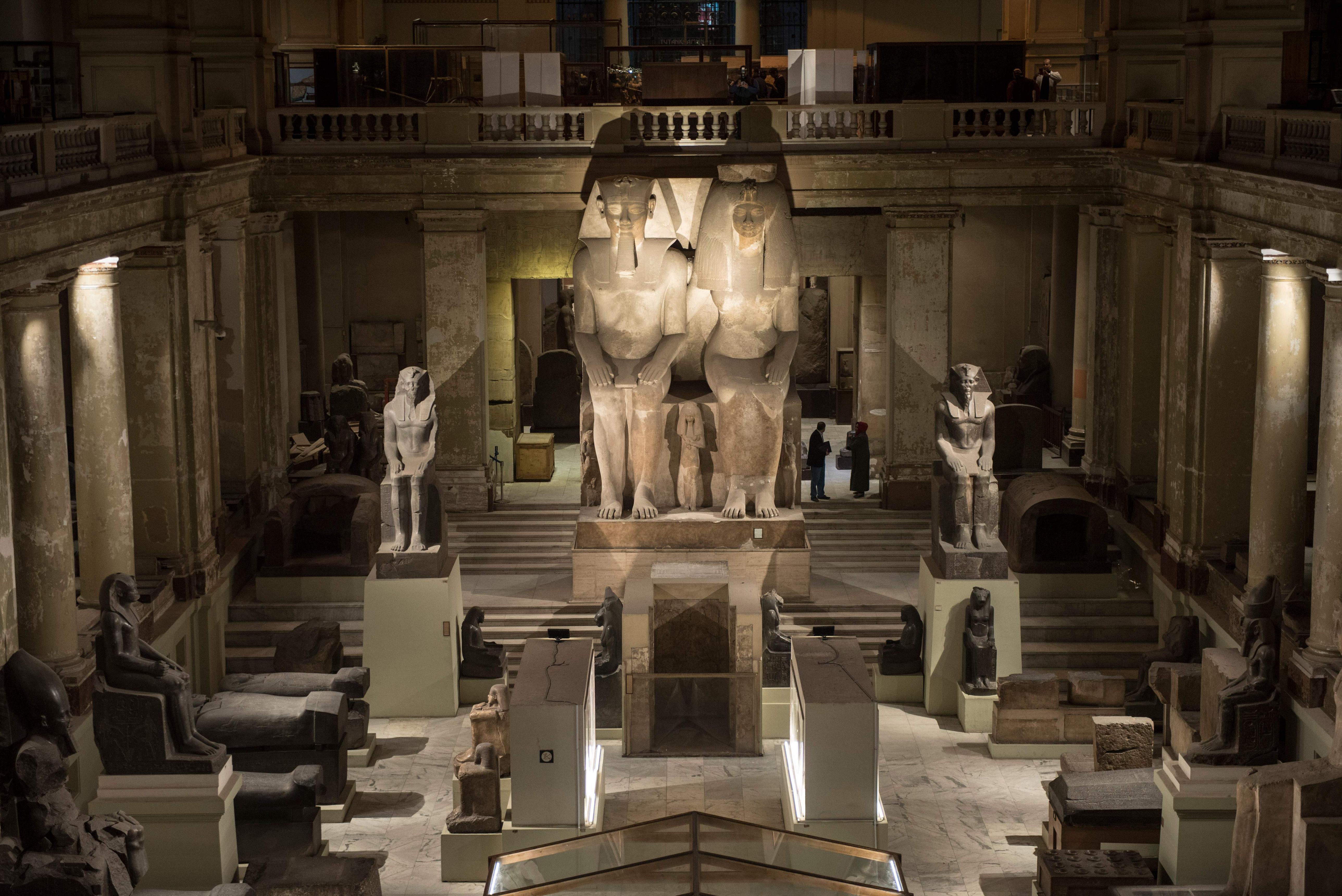
Before you enter the gate, the small but excellent **Imhotep Museum** (usually included or a nominal extra on your ticket) is worth 20-30 minutes. It displays statuary, the famous faience tiles from beneath the Step Pyramid, surgical and architectural artefacts, and a reconstruction that makes the complex far easier to read once you walk out into the sand.
Practical Information: Tickets, Hours, and Costs
Saqqara is open daily, generally from 8:00 to 16:00 or 17:00 depending on the season; arrive by opening to beat both heat and tour buses. As of 2026, expect the general site ticket to run roughly 450-600 EGP (about USD 9-12) for foreign adults, with separate add-on tickets for the Step Pyramid interior, the Serapeum, and certain tombs, often in the 100-200 EGP range each (roughly USD 2-4). Prices are revised periodically and rose noticeably in recent years, so treat these as ballpark figures.
Budget time honestly: a focused visit takes 2.5-3 hours, a thorough one closer to 4. Photography with a phone or camera is generally free across the open site; professional gear or tripods may incur a fee, and a handful of tomb interiors charge a small photo permit. There is little shade and almost no food on-site, so bring water, sun protection, and a hat.
Getting There from Cairo
Saqqara sits about 30 km south of central Cairo, typically a 50-75 minute drive depending on traffic. There is no practical public transport to the gate, so almost everyone arrives by private car, taxi, or organised tour. The classic itinerary pairs Saqqara with neighbouring Dahshur (the Bent and Red Pyramids) and the ruins of Memphis, all within a 15-20 minute drive of one another; together they make a superb full day away from Giza's crowds.
A common scam at the gate involves unofficial "guides" or camel touts attaching themselves to you; engage only the licensed guide you arrived with, and agree any camera or tip arrangements before, not after.
Saqqara vs Giza: Which and When
Giza has the scale and the Sphinx; Saqqara has the history and the calm. If you have only one day, you can combine the easy highlights of both, but if you care about the origins of pyramid-building, Saqqara deserves dedicated time. Crowds here are a fraction of Giza's, and on a quiet morning you may have a 4,000-year-old painted tomb entirely to yourself, an experience that simply doesn't happen at the Great Pyramid.
The best months are October to April, when daytime highs are comfortable; from June to August the open desert site can exceed 38 degrees C by midday. Mornings also have softer light for photography of the pale limestone, and the low sun rakes across the reliefs inside the tombs, throwing the carving into sharp relief.
### What to Skip and What Not to Miss
If time is tight, prioritise the Step Pyramid enclosure, one great noble's tomb (Ti or Mereruka), and the Serapeum; these three give you the full arc from royal architecture to daily life to sacred ritual. The numerous ruined Old Kingdom pyramids of Unas, Teti, and the Fifth and Sixth Dynasty kings are mostly collapsed rubble mounds and can be skipped by casual visitors, though the **Pyramid of Unas** is special: it contains the earliest known Pyramid Texts, columns of spells carved and painted blue on the burial chamber walls, the oldest religious writing of its kind on Earth. If it is open, do not miss it.
Plan Your Visit
Because Saqqara, Dahshur, and Memphis have no convenient public transport and reward an early start, the simplest way to see them well is with a private driver and guide. Our Cairo and Giza full-day transfer can be tailored to include the Saqqara necropolis, letting you stand where the world's first pyramid was raised, long before the Pharaohs of Giza were born.