There is no museum in Cairo that rivals simply walking through the medieval quarter the locals still call Islamic Cairo. For roughly a kilometre, the spine of the old city, Al-Muizz li-Din Allah Street, is lined with a thousand years of mosques, madrasas, fountains and merchant houses, most of them still standing exactly where the Fatimids, Mamluks and Ottomans left them. This guide walks you through the route section by section, with real prices, opening hours, dress codes and the timing tricks that separate a rushed photo stop from a genuinely memorable morning.
Why Islamic Cairo Matters
The district is a UNESCO World Heritage Site, and for good reason: it holds one of the densest concentrations of medieval Islamic architecture on Earth. The Fatimid dynasty founded the walled city of Al-Qahira (the origin of the name "Cairo") in 969 CE, and successive rulers, the Ayyubids, the Mamluks (1250–1517) and the Ottomans, each layered their own monuments on top. What you are walking through is not a reconstruction. The carved stone, the striped ablaq masonry, the stalactite muqarnas vaulting over doorways, all of it is original, weathered and lived-in.
The best place to anchor your visit is the broader Cairo old city, where Islamic, Coptic and modern Cairo press up against one another within a few square kilometres.
When to Go: Timing Is Everything
Heat and crowds are your two enemies. Aim to start by 8:30–9:00 am. Most mosques open around 9:00 am, the light on the stone facades is gorgeous, and you will have an hour or two before the tour groups and the midday sun arrive.
- **Best months:** October to April, when daytime highs sit around 20–26°C (68–79°F). Summer (June–August) regularly tops 38°C (100°F) and the unshaded street becomes punishing by noon.
- **Avoid Friday midday:** the main congregational prayer (roughly 12:00–1:30 pm) closes mosques to visitors and fills the lanes.
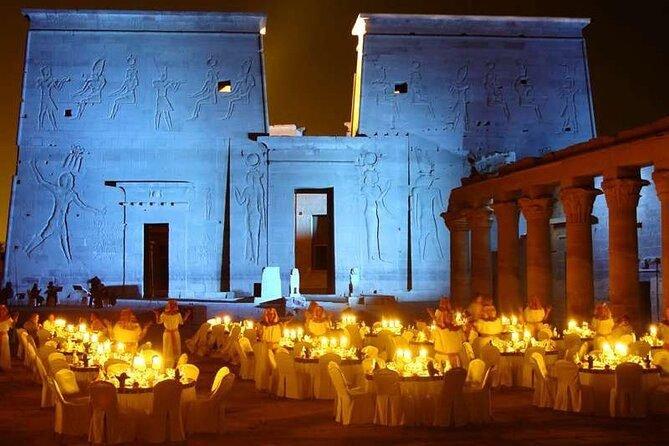
- **Golden hour:** Al-Muizz Street is pedestrianised in its central stretch and beautifully lit after dark, which is why a guided Cairo night city tour is such a popular alternative for those who would rather skip the heat entirely.
Dress Code and Etiquette
These are working places of worship, not just monuments. Both men and women should cover shoulders and knees; women should carry a scarf to cover the hair before entering prayer halls. You will remove your shoes at the entrance to every mosque (bring socks, the stone can be cold or hot). Many mosques keep shoe racks or hand out cloth bags; a small tip of 5–10 EGP to the shoe attendant is customary. Speak quietly, never walk in front of someone praying, and avoid visiting during the five daily prayer times if you want unhurried access.
Tickets, Costs and the Money Details
As of 2026, costs are modest by Western standards but add up across a full day. Figures below are approximate and change with Egypt's inflation, so treat them as a rough guide:
- Many street-level mosques and sabil-kuttabs along Al-Muizz are **free**, with a tip expected for the caretaker.
- Major ticketed sites run roughly **40–120 EGP** each (about USD 0.80–2.50).
- A **combined Al-Muizz Street ticket** has at times been sold for around 100–120 EGP, covering several restored monuments.
- **Camera/phone photography** is generally fine; tripods and professional rigs may incur a fee of 20–50 EGP or be refused.
Carry small cash in EGP. Card machines are essentially nonexistent here, and ATMs are a walk away near the main squares.
Starting Point: Bab al-Futuh and the Northern Walls
Begin at the northern gate, Bab al-Futuh ("Gate of Conquests"), built in 1087 under the Fatimid vizier Badr al-Jamali. Together with the nearby Bab al-Nasr, these massive stone gates anchored the original city wall. From here you walk south, and the entire route unfolds in front of you, so you never need to backtrack.
### Mosque of al-Hakim
Just inside the gate sits the Mosque of al-Hakim bi-Amr Allah, completed in 1013 and named for the famously eccentric Fatimid caliph. Its twin minarets, partly encased in stone "boxes," are among the oldest in the city. The vast, serene courtyard is a good place to acclimatise before the denser street ahead.
The Heart of the Walk: Al-Muizz Street
This is the showpiece. The central, pedestrianised section concentrates the masterpieces within a few hundred metres.
### The Qalawun Complex
The Mamluk sultan Qalawun built this complex in 1284–1285 in a startling thirteen months. It bundles a mausoleum, a madrasa and a hospital (maristan). The mausoleum's interior, with its inlaid marble, mother-of-pearl and a soaring dome on granite columns, is one of the most beautiful interiors in Cairo, often overlooked because visitors stop for photos of the exterior and move on. Step inside.
### Madrasa of al-Nasir Muhammad and the Barquq Complex
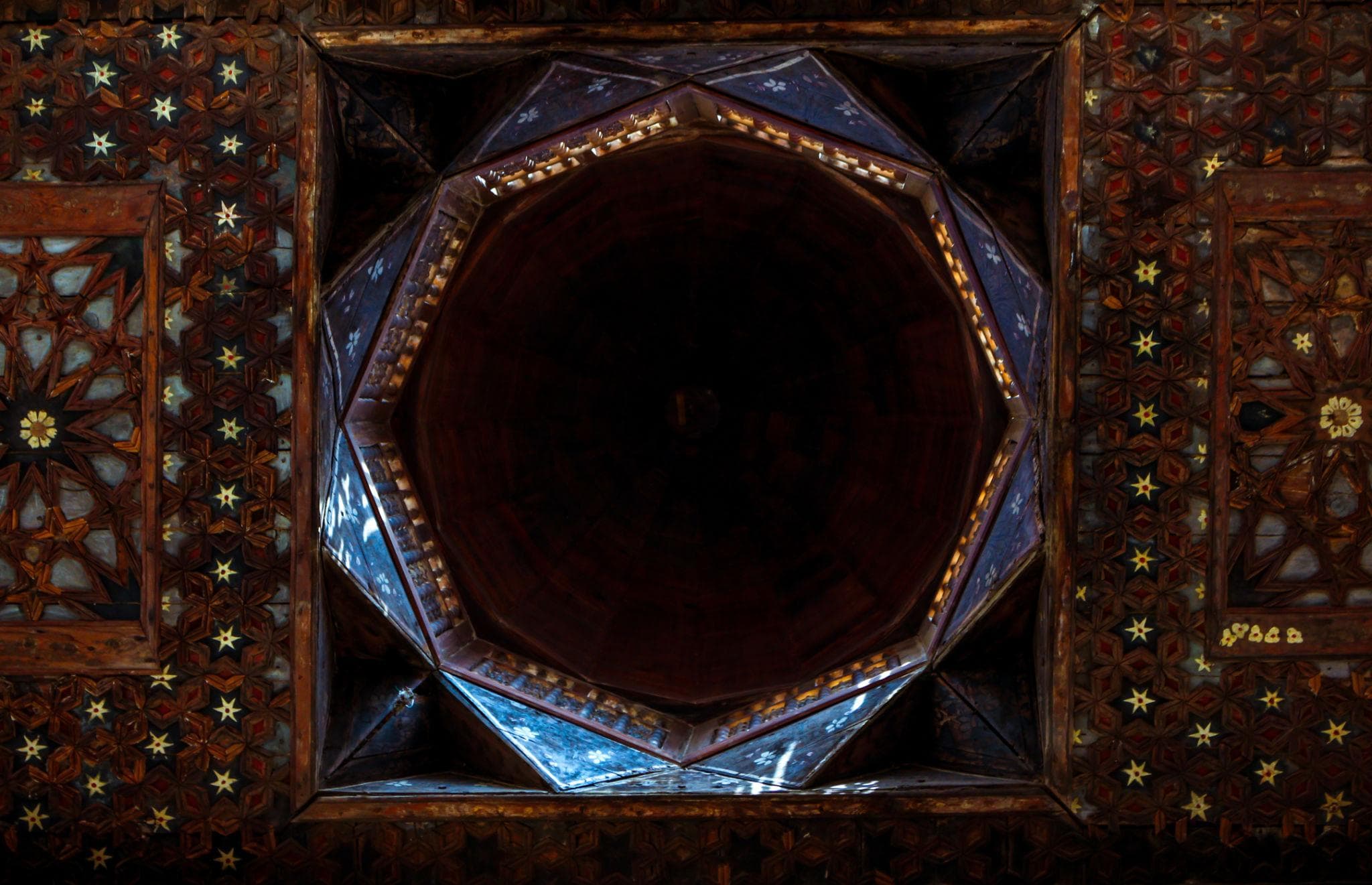
Next door, the madrasa of al-Nasir Muhammad (early 14th century) shows a Gothic doorway looted from a Crusader church in Acre, a vivid reminder of how interconnected the medieval Mediterranean was. A few steps on, the Madrasa-Khanqah of Sultan Barquq (1384–1386) rewards a look up: its painted and gilded ceiling over the prayer hall is spectacular.
### Bayt al-Suhaymi
Duck off the main street into a side lane to find Bayt al-Suhaymi, a perfectly preserved 17th-century merchant's house built around a green courtyard, complete with mashrabiya (carved wooden lattice) windows and a cool reception hall. Entry runs roughly 60 EGP. It is the best surviving example of how Cairo's wealthy actually lived, and a blessedly shaded rest stop.
Khan el-Khalili: The Great Bazaar
Al-Muizz spills toward Khan el-Khalili, the labyrinthine market founded in the 14th century. Coppersmiths, perfume sellers, lantern makers and spice merchants still trade here. A few survival rules:
- **Haggle.** Opening prices for tourists are often 2–3x the real value; counter at roughly a third and settle in the middle.
- **The fixed-price shops** (look for tagged prices) are a good way to learn fair rates before you bargain elsewhere.
- Pause at El Fishawy, the centuries-old café in the heart of the market, for a mint tea or a shisha and some serious people-watching.
- Watch for the gentle scams: "free" gifts that demand payment, and "my shop is just here" detours. A firm, friendly "la shukran" (no thank you) is all you need.
### The Mosque of al-Azhar
Facing the bazaar across a busy road stands al-Azhar Mosque, founded by the Fatimids in 970 and home to one of the world's oldest continuously operating universities. Entry is free; the open courtyard with its five minarets is a calm counterpoint to the market din. Look for the layered building history written into the walls: each dynasty added a gate, a minaret or a riwaq (arcade), so a single courtyard spans seven centuries of patrons. It remains a living seat of Islamic learning, and you may see students in quiet study around the perimeter.
A Detour South: Sultan Hassan and al-Rifa'i
If you have an extra hour, the area around Salah al-Din Square, between Al-Muizz and the Citadel, holds two giants facing each other across a plaza. The Mosque-Madrasa of Sultan Hassan (1356–1363) is arguably the masterpiece of Mamluk architecture: its scale is staggering, the entrance portal soars over 35 metres, and the cruciform interior with four vaulted iwans (halls) for the four schools of Sunni law leaves most visitors silent. Across the square, the al-Rifa'i Mosque (completed 1912) mirrors it deliberately and holds the tombs of Egypt's last royal family and, notably, the last Shah of Iran. A combined ticket for both runs roughly 60–120 EGP. These are far less crowded than Al-Muizz and reward the short taxi hop.
The Citadel: A Worthy Add-On
If your legs hold out, the Citadel of Saladin sits about 2.5 km south and crowns the whole quarter. Saladin began it in 1176 as a fortress against the Crusaders, and it served as the seat of Egypt's rulers for nearly 700 years. The Ottoman-era Mosque of Muhammad Ali, with its silver domes and Turkish-style pencil minarets, dominates the skyline. Entry is around 450 EGP (roughly USD 9) and includes several mosques and museums within the walls. Allow two to three hours, and go in the late afternoon for the panoramic view over Cairo and, on clear days, the distant Pyramids.
Practicalities: Getting There and Getting Around
The nearest metro stop, al-Azhar/Ataba, leaves a 10–15 minute walk to the bazaar. A ride-hailing app (Uber and Careem both work in Cairo) is the easiest way in, fare-fixed and air-conditioned; expect 60–120 EGP from downtown depending on traffic. The walk itself is flat but the street surfaces are uneven, sometimes cobbled or under repair, so wear sturdy shoes. There is little shade, so bring water, sunscreen and a hat. Public toilets are scarce; use the ones in mosques or cafés and tip the attendant.
Accessibility and Family Notes
Islamic Cairo is not an easy district for limited mobility. Pavements are uneven, many monuments have steps or raised thresholds, and a few minarets and upper galleries involve steep, narrow spiral staircases with no rails. Wheelchair access is patchy, though the main streets and ground-floor prayer halls are generally navigable with help. For families, the bazaar delights children but the heat, crowds and traffic at the edges demand a firm hand; bring a hat, water and a small reward to keep young legs going. Strollers struggle on the cobbles, so a baby carrier works better. Restrooms are limited, so plan around mosque facilities and café stops.
What to Skip If You Are Short on Time
If you only have two hours, skip the far northern gates and start at the Qalawun complex, do the central pedestrian stretch, then dive into Khan el-Khalili. You will see the architectural heavyweights and the bazaar without the long approach walk. Save the Citadel for a separate half-day; trying to cram both into one outing leaves you exhausted and rushed. If you are choosing between interiors, prioritise the Qalawun mausoleum and Sultan Barquq's painted ceiling over the smaller sabils, which are best appreciated from the street.
Plan It with a Guide
Islamic Cairo rewards context: a good guide unlocks the stories behind the stonework that you would otherwise walk straight past. To see the quarter at its most atmospheric, with the minarets lit and the day's heat gone, consider our Cairo night city tour. And if Egypt's deeper history has caught your imagination, read our guides to the pharaohs of Egypt and to Cleopatra before you travel.