Stand at the corner of Talaat Harb Square at nine in the morning and look up rather than ahead. Above the shoe shops, the mobile phone kiosks and the tangle of satellite dishes, the buildings of Downtown Cairo still wear what they were given in the age of the khedives: carved stone garlands, wrought-iron balconies, mansard roofs and corner domes that would not look out of place on a Paris boulevard. The traffic below is pure twenty-first-century Cairo. The skyline above is about 1900.
Most visitors cross this district only by car, on the way from a Giza hotel to the Egyptian Museum and back. That is a pity, because Downtown and the island of Zamalek across the river make one of the best walking days in the city: two hours of pharaohs at Tahrir, the coffee houses where Naguib Mahfouz argued, a bridge guarded by bronze lions, a lotus-shaped tower at sunset and an evening among the villas and embassies of Zamalek. This guide gives the history, a timed route, which old venues are worth checking before you go, and how to cross the streets without drama.
At a Glance
Route length: roughly 6 to 8 km (4 to 5 miles) on foot, with a taxi hop if legs flag
Time needed: a full day, from a 9am museum start to dinner in Zamalek
Egyptian Museum: 550 EGP for foreign adults, 275 EGP for students, as of autumn 2026 (about 10 USD or 9 EUR)
Cairo Tower: 350 EGP for foreigners after the January 2025 increase; check for later rises
Best months: October to April; in summer, do the museum by day and the walk after 5pm
Nearest metro: Sadat station under Tahrir Square, where Cairo's two main lines meet
Dress: comfortable shoes, shoulders and knees covered, a light layer for the river breeze after dark
Photography: fine on the streets, never of police, soldiers, embassies or government buildings
Pairs with: a Nile felucca at sunset, an evening dinner cruise, or Islamic Cairo the next day
Paris on the Nile: How Downtown Was Built
Until the 1860s, the land between the medieval city and the Nile was a patchwork of gardens, ponds and floodable ground. Khedive Ismail, who ruled from 1863 to 1879 and had seen Haussmann's rebuilt Paris for himself, wanted a capital that could receive European royalty for the opening of the Suez Canal in 1869. He commissioned French architects and planners, laid out broad streets radiating from squares, and named the new quarter Ismailia after himself. Today it is officially known as Khedivial Cairo, and many of its buildings are protected.
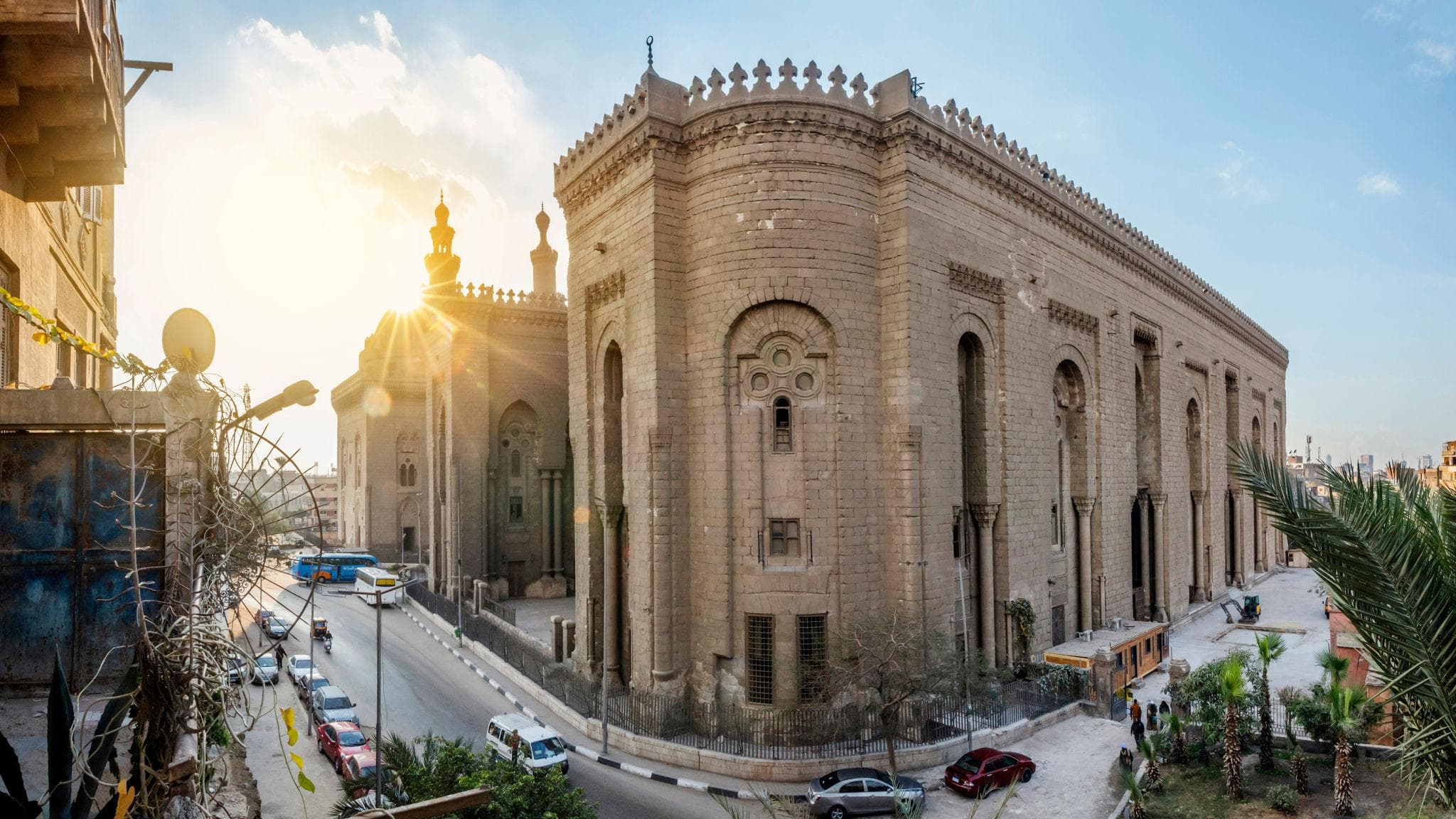
The building boom ran well into the twentieth century, and the styles pile up as you walk: Beaux-Arts apartment blocks, Italianate banks, Art Deco cinemas and a home-grown Neo-Islamic revival that put mashrabiya-style screens on European frames. After the Cairo fire of January 1952 and the revolution that followed, the foreign and aristocratic owners left, rents were frozen and decades of neglect set in. Since the 2000s there has been a slow revival, mostly cosmetic, and a state face-lift from around 2020 repainted many facades and tidied the shopfronts on the main streets.
The result is a district that is grand, dusty, noisy and very much lived in. It is where Cairenes come to buy shoes, file paperwork, see a film and sit in a coffee house, and that is exactly why it rewards a walk.
Start at Tahrir and the Egyptian Museum
Begin at Tahrir Square, the hinge of the modern city. It was laid out in 1867 as Ismailia Square and later renamed Tahrir, Liberation; for most of the world it is still the stage of the 2011 uprising. A redesign in 2020 placed an obelisk of Ramesses II, excavated at Tanis in the Delta, at its centre, ringed by four ram-headed sphinxes brought from Karnak, a decision some archaeologists criticised because soft sandstone and Downtown pollution are a poor match.
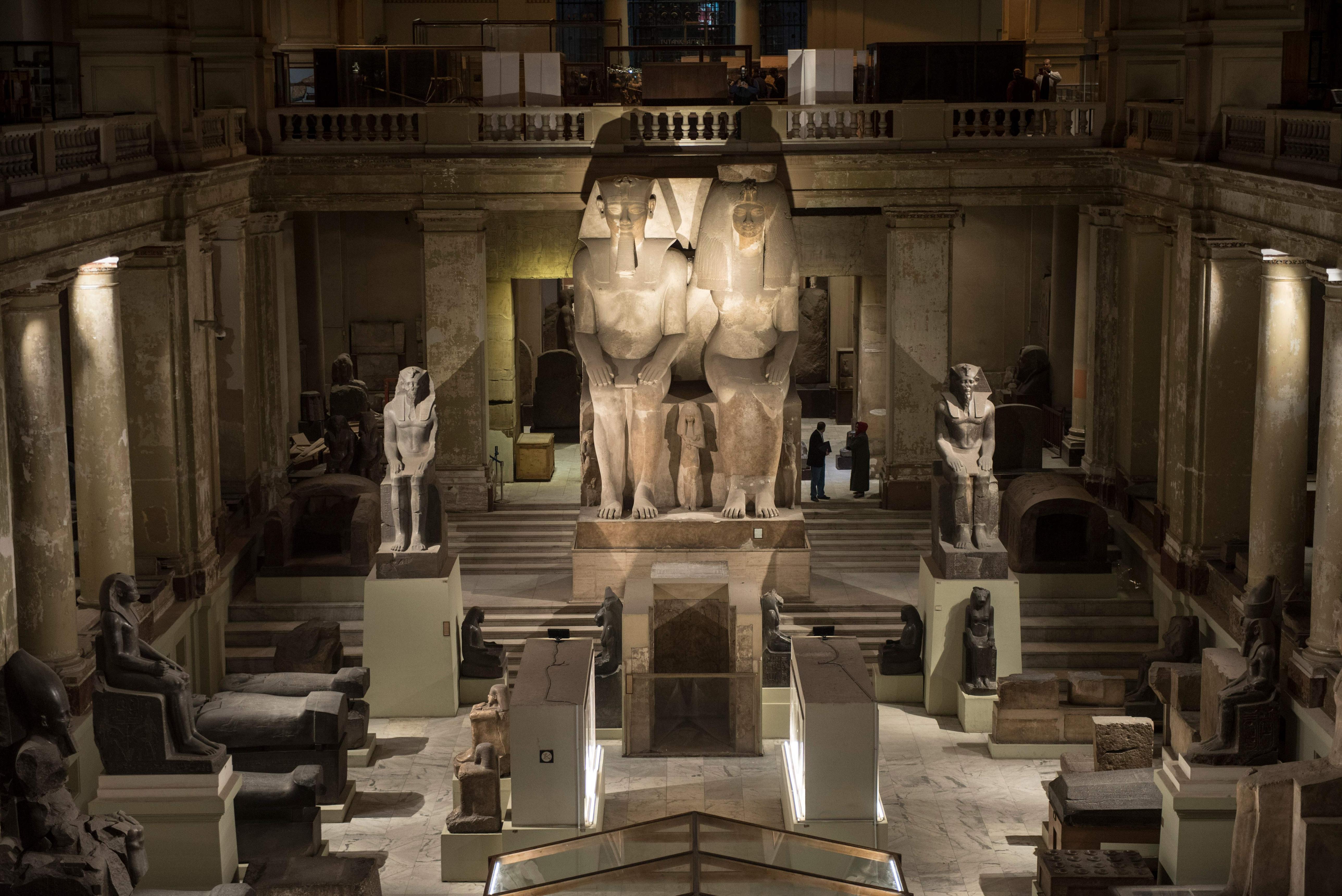
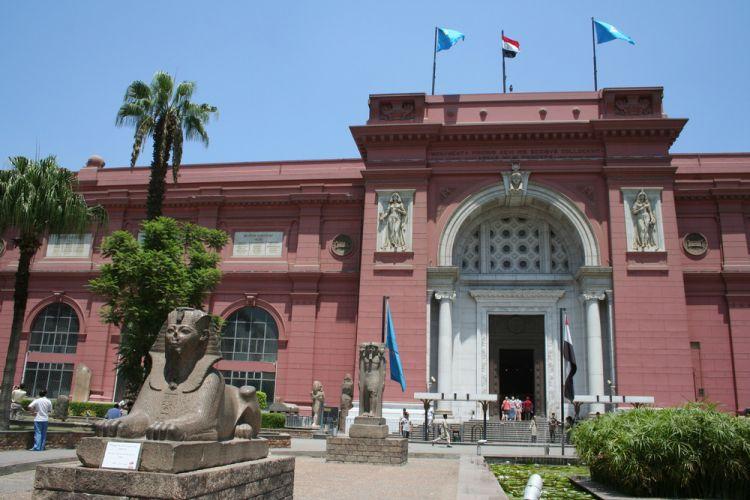
On the north side stands the rose-red Egyptian Museum, opened on 15 November 1902 to a design by the French architect Marcel Dourgnon. Tutankhamun's treasures now live at the Grand Egyptian Museum near Giza, but Tahrir still holds the Narmer Palette, the statues of Khafre and Menkaure, the Amarna galleries and the gold of Tanis, displayed in old wooden cases under a skylit atrium that feels like stepping into a museum's own memory. Our guide to whether the Egyptian Museum in Tahrir is still worth it covers the galleries room by room.
Tickets are 550 EGP for foreign adults and 275 EGP for students as of autumn 2026. The museum usually opens at 9am; give it two hours, three if you love the Old Kingdom, and go first thing, before the tour groups arrive from Giza.
Talaat Harb Street and Its Square
From the museum, walk east and pick up Talaat Harb Street, the spine of Downtown. It was originally Soliman Pasha Street, after a French-born officer who served Muhammad Ali, and was renamed in 1954 for Talaat Harb, the economist behind Banque Misr and a wave of Egyptian-owned companies, EgyptAir among them, in the 1920s and 1930s. His statue stands in the roundabout that also carries his name.
This is the stretch to walk slowly with your eyes above shop level. The square is ringed by some of the finest belle-époque buildings in the city, their corner turrets aligned so that each street opening has its own small piece of theatre. Side streets such as Qasr el-Nil and Sherif carry on the effect, with bank headquarters, arcades and passages where workshops, printers and cheap cafés still operate behind grand doorways.
Two of the most famous names in Downtown sit on or beside the square. Groppi, the confectioner founded by the Swiss-born Giacomo Groppi, began in Alexandria in the 1890s, opened its first Cairo cafés from 1909 and moved onto the square in the late 1920s; for decades it was the most celebrated tearoom in the region. A short walk away on Talaat Harb Street is Café Riche, which traces its history to 1908 and took its present name in 1914. During the 1919 revolution nationalists reportedly met and printed leaflets in its basement, and later it became a second home for Naguib Mahfouz and generations of Egyptian writers.
Good to Know: Check the Old Cafés Before You Go
Downtown's legendary venues are not museums, and their opening is less reliable than their reputations. Café Riche has a history of long closures, including almost a decade shut in the 1990s, and plans announced at the end of 2025 would turn its building into a boutique hotel, with the café kept on the ground floor. Groppi's tearoom on the square has been the subject of a renovation project announced in 2017; in 2025 officials were still discussing the steps to reopen it, and a local guide in February 2026 still listed it as closed for renovation. We could not confirm the current opening hours of either as of autumn 2026, so treat them as facades and stories first and as places to sit only if the door is open on the day.
The same applies to the Yacoubian Building at 34 Talaat Harb Street, the 1937 Art Deco block that gave its name to Alaa Al Aswany's 2002 novel and the 2006 film, although the film shot its exteriors on a larger building on the square. It is a working building of flats, shops and offices, not an attraction; admire it from the pavement. If you want a guaranteed sit-down coffee, the ordinary ahwas in the alleys around Bab el-Louk and Champollion Street never close, and our guide to Egyptian tea and coffee culture explains how to order in one.
Opera Square, Emad Eddin and Downtown Cairo at Night
North-east of Talaat Harb Square, the streets lead towards Opera Square and Azbakeya, the older heart of the nineteenth-century city. The Khedivial Opera House opened here on 1 November 1869 for the Suez Canal celebrations, and Verdi's Aida had its world premiere on its stage on 24 December 1871. The all-wooden building burned down on 28 October 1971, and in one of Cairo's sadder exchanges its site became a multi-storey car park. The square still carries its name.
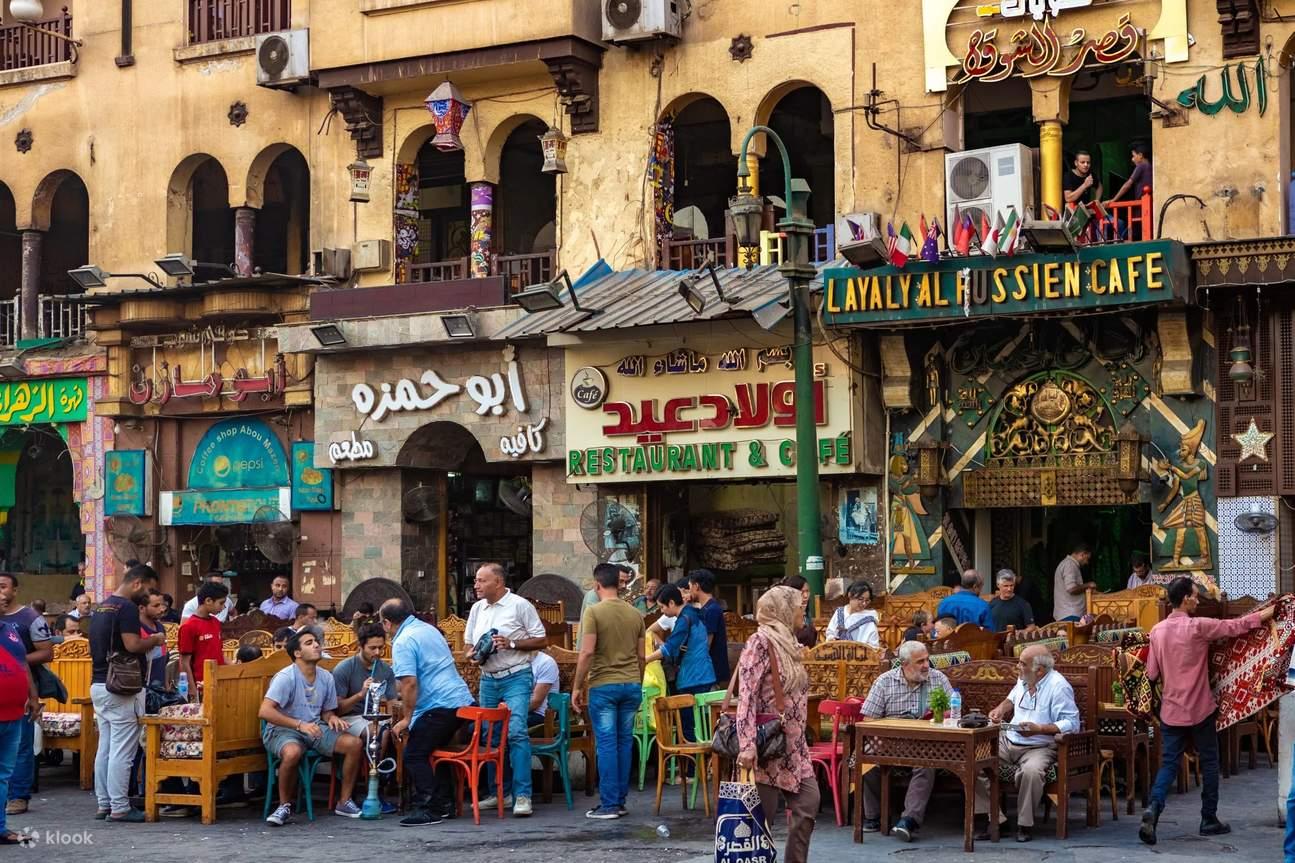
Between the two runs Emad Eddin Street, once Cairo's Broadway, lined with theatres, music halls and cinemas in the first half of the twentieth century. Several old cinemas and theatre facades survive along Emad Eddin and Talaat Harb, and some still screen Egyptian films. This is the side of Downtown Cairo that comes alive after dark, when families and young couples crowd the pavements, juice bars blaze with neon and the heat finally lets go. If you are in Cairo for one evening only, this is a better use of it than the hotel bar.
Crossing Qasr el-Nil Bridge to Gezira
Back at Tahrir, the walk turns west across Qasr el-Nil Bridge, the most famous of Cairo's Nile crossings. Bronze lions guard both ends, and the bridge itself has become the city's favourite free evening out: couples leaning on the rail, vendors selling grilled corn and tea, feluccas sliding underneath with music on board. The crossing takes ten minutes, longer if you stop, which you will.
The island on the far side is Gezira. Its northern third is the residential district of Zamalek; the green southern two-thirds hold sports clubs, gardens and Cairo's cultural quarter. Under Khedive Ismail the whole island was laid out as a botanical garden, the Jardin des Plantes, planted with exotic trees from around the world, and some of the old banyans and royal palms on the quieter streets are survivors of that scheme.
Cairo Tower and the Opera House
Straight ahead from the bridge stands the Cairo Opera House, opened in 1988 as the successor to the lost Khedivial opera, at the centre of a cultural precinct that includes the Museum of Modern Egyptian Art. If you plan a concert, note that the Main Hall enforces a formal dress code and men without a jacket are turned away; the smaller and open-air stages are relaxed.
A ten-minute walk north brings you to the Cairo Tower, 187 metres (614 feet) of concrete lattice designed by the Egyptian architect Naoum Shebib to suggest a lotus stem. It was built between 1956 and 1961 and was the tallest structure in Egypt for decades. A story, never fully confirmed, holds that it was paid for with money the United States had given Nasser, which he redirected into a monument the whole city could see; Cairenes nicknamed it accordingly. The observation deck gives the best panorama in central Cairo, and on a clear evening you can pick out the pyramids, the Citadel and the full sweep of the river.
Entry was 350 EGP for foreigners after the January 2025 increase, and it may have risen since. Go for the last hour of daylight and stay for the lights coming on. Expect a wait for the lift around sunset on Thursday and Friday evenings, Cairo's weekend nights.
Zamalek: Villas, Embassies and Galleries
North of the tower, Gezira becomes Zamalek, and the city changes key. The streets are shaded, the buildings are early twentieth-century villas and Art Deco apartment blocks, and more than 50 embassies and consulates are based here. It is the most walkable district in Cairo, and the one where many residents and long-stay foreigners choose to live.
The island's first great building was the Gezira Palace, completed in 1869 to house royal guests for the canal opening, Empress Eugénie of France among them. It now forms the centrepiece of the Cairo Marriott, and you can walk into its gardens for a drink beside the Nile. The Gezira Sporting Club, founded in 1882, fills the middle of the island behind it.
Further north are three quieter stops. The Aisha Fahmy Palace, an ornate mansion built in 1907 to designs by the Italian architect Antonio Lasciac, reopened in 2017 after a long restoration and now serves as the Zamalek Arts Center with changing exhibitions. The Museum of Islamic Ceramics occupies the palace of Prince Amr Ibrahim, built in the early 1920s, and reopened in October 2024 after a restoration that kept it shut for 14 years. And the Fish Garden, turned into a grotto aquarium under a British officer, Captain Stanley Flower, no longer holds fish but remains one of the oddest small parks in Cairo, all artificial caves and winding paths. Opening days for all three vary, so check before you build an afternoon around them. Between them lie commercial galleries, bookshops and the cafés of 26th of July Street, Zamalek's main artery.
A Suggested Downtown Cairo Walking Route
This is the order we would follow on a cool day, starting early and ending with dinner. Timings are generous, because the best parts of the walk are the unplanned ones.
- 9.00: Egyptian Museum, two hours, then a coffee on the edge of Tahrir
- 11.30: walk Talaat Harb Street to its square, about 10 minutes, then Qasr el-Nil and Sherif streets for the facades
- 12.30: see whether Groppi or Café Riche are open, then lunch at Felfela or a plate of koshari at Abou Tarek
- 14.00: Opera Square and Emad Eddin Street, then back to Tahrir, about 25 minutes
- 15.30: cross Qasr el-Nil Bridge, with time on the rail
- 16.00: Opera House grounds and the Museum of Modern Egyptian Art
- 17.00: Cairo Tower for the last light and the city coming on
- 18.30: walk or take a short taxi ride north into Zamalek for a drink and dinner on or near 26th of July Street
In summer, flip it: museum in the morning, a long lunch and a rest, then start the street walk at 5pm and finish on the tower after dark.
Warning: Crossing Streets and Photography Rules
Cairo traffic is the real hazard on this walk, and the technique is local rather than intuitive. Pedestrian signals are rare and widely ignored, so cross alongside a Cairene, at a steady pace, without sudden stops, letting cars flow around you. At Tahrir, where the roundabout is wide and fast, use the signalled crossings with a crowd or let a guide lead. Corniche crossings along the Nile are the fastest and least forgiving.
Do not photograph police, soldiers, embassies or government buildings, and expect guards in Zamalek to wave you on if a camera points at a gate. Downtown is generally safe by day and busy until late, but pickpockets work the crowds around Tahrir and on the metro, and a friendly stranger offering to show you to a papyrus or perfume shop is working for a commission. Women travelling alone will find the metro's women-only carriages useful; our solo female travel guide and Egypt safety guide cover the rest calmly.
Insider Tip: Where to Eat and Drink Along the Way
Downtown is an eating district for Cairenes on a budget. Felfela, a long-running institution on Hoda Shaarawi Street near Talaat Harb Street, is the traditional sit-down choice for ful, ta'ameya and grills, and Abou Tarek, on Champollion Street a few minutes' walk from Tahrir, has been serving koshari to the city for decades. Juice bars on almost every corner press sugarcane and mango for small change, and El Abd on Talaat Harb Street is where Cairenes queue for oriental sweets and Eid biscuits.
Zamalek is where to sit longer. The island's cafés and bakeries, from Simonds, a café-bakery founded in 1898, to the sweets counter of Mandarine Koueider on Shagaret El Dor Street, suit a mid-afternoon pause. For dinner with a view of the river, the hotel terraces at the southern end of Gezira are the most dependable choice, Kebabgy's Nile-side grill at the Sofitel Gezirah among them. For the sweet side of the walk, our guide to Egyptian desserts covers what to order and where.
Planning Your Walk
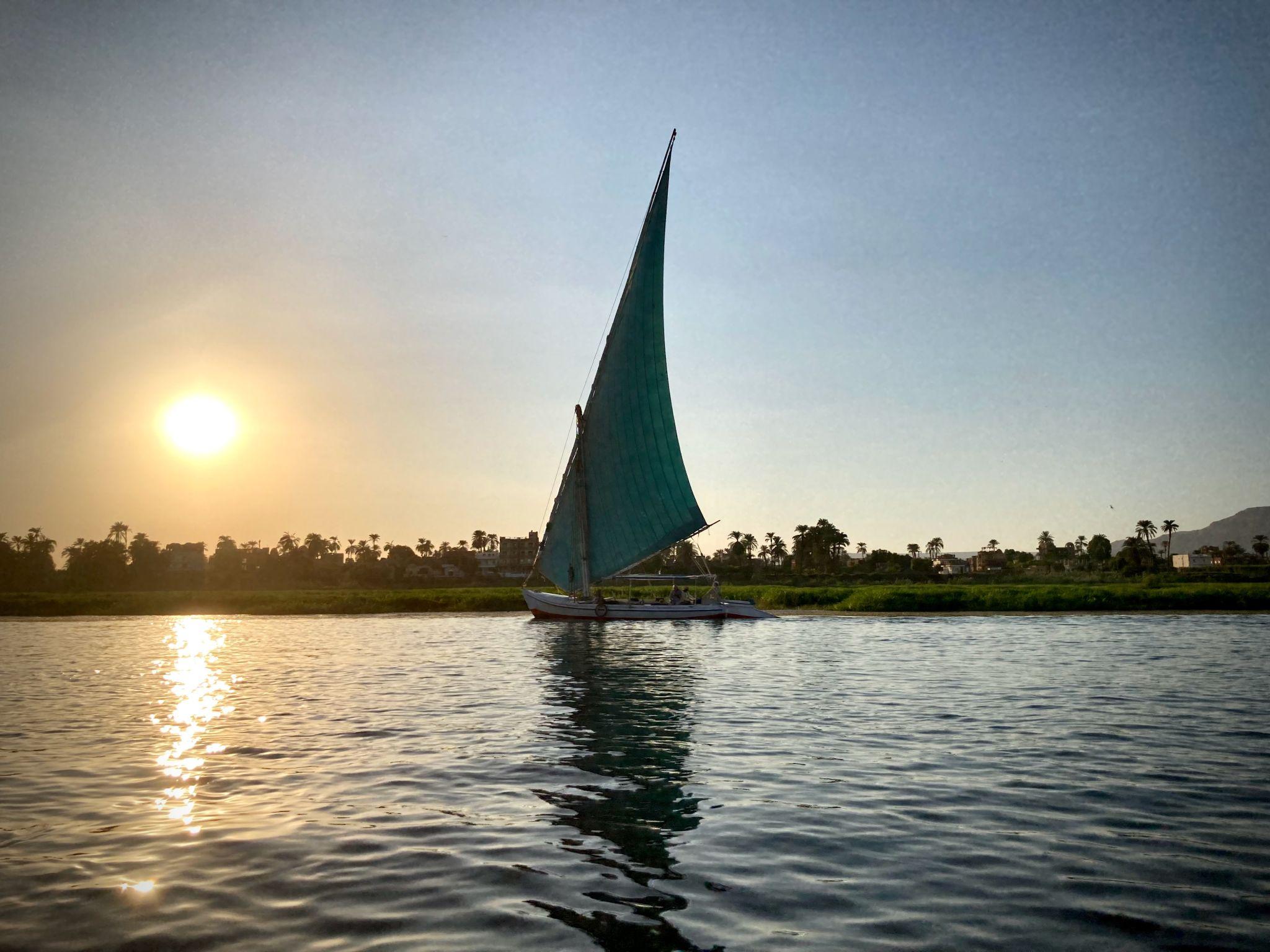
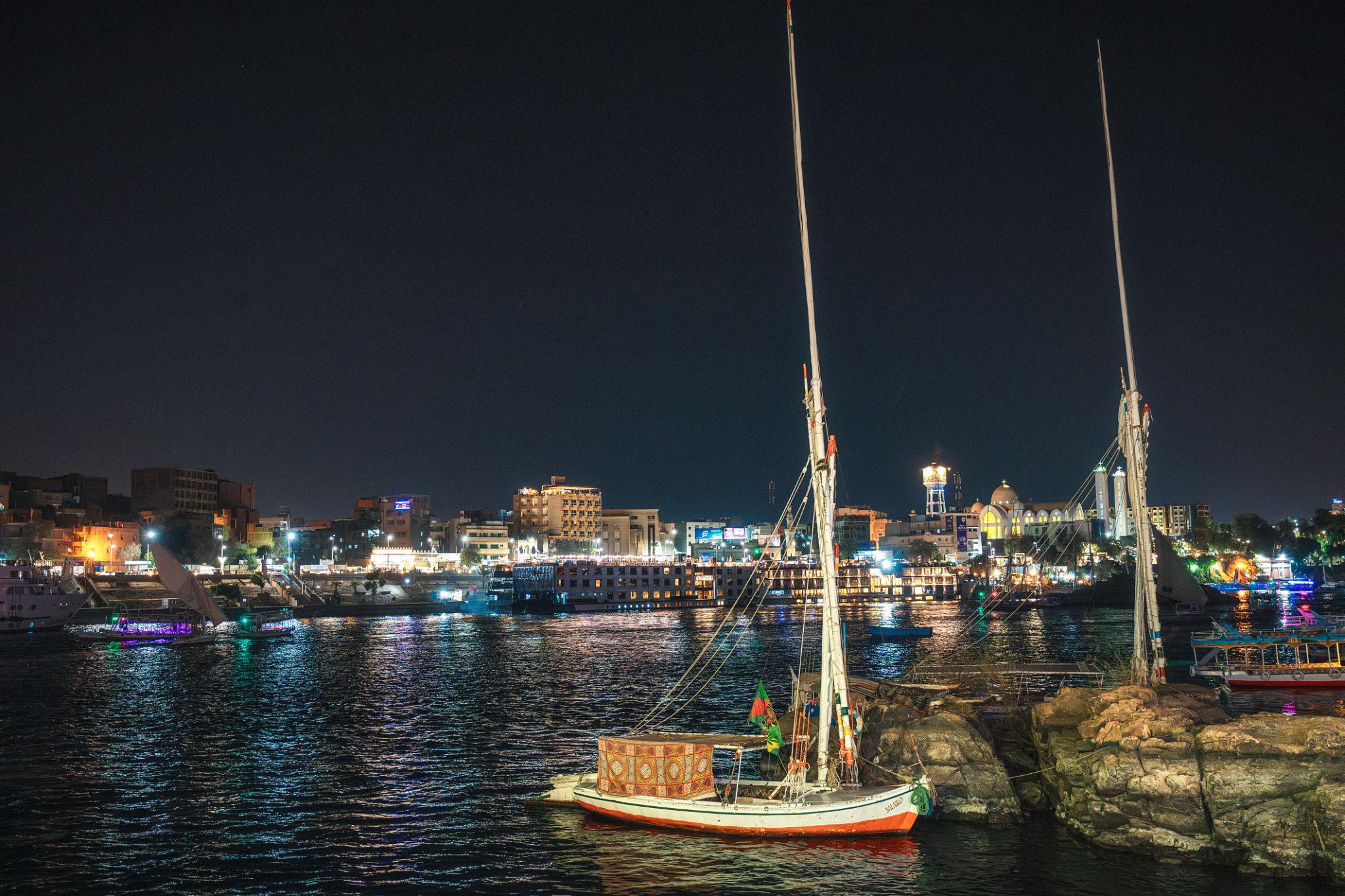
Downtown Cairo and Zamalek work well alone, but they shine in sequence with the rest of the city. A morning at the Egyptian Museum with an Egyptologist, on our Egyptian Museum guided tour, makes the afternoon walk richer, and the evening is the natural moment for a felucca or our Nile dinner cruise. Our three days in Cairo itinerary shows how this day sits between Giza and Islamic Cairo, and our guide to sailing the Nile by felucca covers the hour on the water.
If you would like a guide who can open the right doors, find the passage with the old printing press and steer you across the Corniche at the right moment, send us your dates and we will shape a day in Cairo around the way you like to walk.