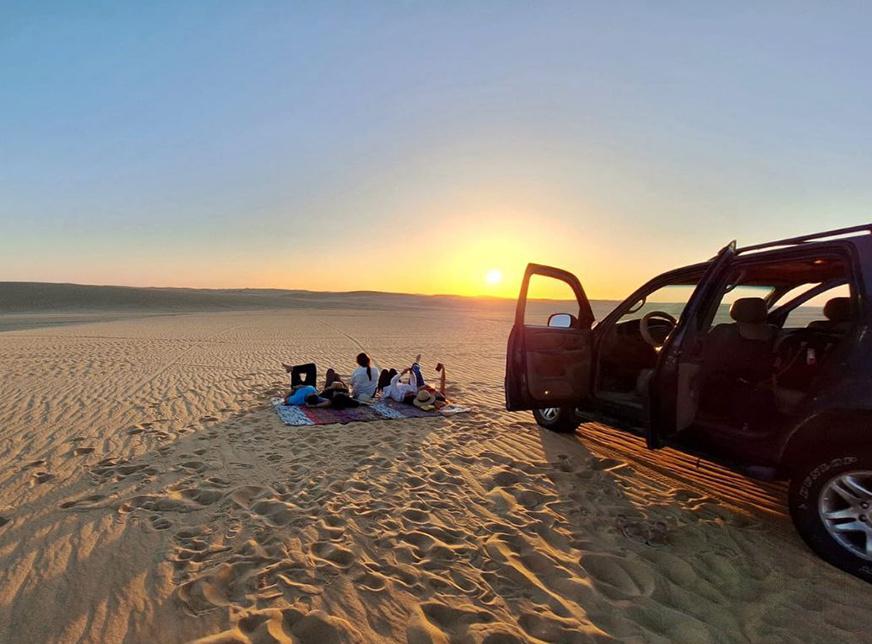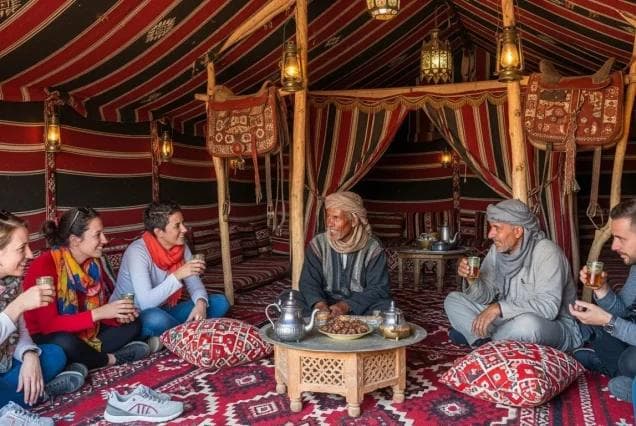
The tea always comes at the end. Your driver lets a fire burn down to embers, pushes a blackened kettle into the hot sand at its edge, and hands you a glass barely bigger than an egg cup, black and so sweet it coats the teeth. Then, before you have finished, he pours a second. Declining that second glass without a word of explanation is about the only real rudeness most visitors manage in an Egyptian desert camp, and almost nobody warns them in advance.
Egypt's deserts cover well over ninety percent of its land area, and they are not empty. They hold communities that differ from one another as much as any differs from Cairo: Bedouin tribes across Sinai, Beja peoples in the Eastern Desert whose ancestors were here long before Arabic arrived, Amazigh Siwans on the Libyan frontier speaking a language unrelated to Arabic, and settled oasis farmers who are not Bedouin in any strict sense and will politely tell you so.
Nearly every desert trip sold in Egypt is bought, at the sharp end, from one of them. This is a guide to who they are, what happens inside the tent, and how to behave so the evening is a meeting rather than a performance.
At a Glance
Who you will meet: Sinai Bedouin tribes (Jebeliya, Muzeina, Tarabin among others), the Ababda and Bisharin of the Eastern Desert, Siwi Amazigh in Siwa, and Wahati oasis families in Bahariya, Farafra, Dakhla and Kharga
Languages: Egyptian Arabic everywhere, distinct Bedouin dialects in Sinai and the Eastern Desert, and Siwi, an Eastern Berber language with roughly 15,000 to 21,000 speakers that UNESCO lists as definitely endangered
Core hospitality rule: accept the tea, take at least two glasses, eat with your right hand from the part of the platter nearest you
Photography: ask every time, and expect a firm no for women and often for children
Where a guide is compulsory: Mount Sinai, plus Bahariya, Farafra, the White Desert and the Black Desert, which also need a permit arranged in advance
Best months: October to April
Cash: small Egyptian pound notes only, as cards are useless in desert camps. Roughly 50 EGP to 1 USD as of August 2026, though the pound has moved sharply in recent years
Who Actually Lives in Egypt's Deserts
The word Bedouin comes from the Arabic badawi, desert-dweller, and has always been defined against its opposite, hadar, the settled. It describes a way of living as much as a bloodline. The Ababda of the Eastern Desert call themselves Arabs not as an ethnic claim but to mark their mobile life against that of the fellahin, the farmers of the Nile Valley.
Bedouin society nests in layers: the bayt, meaning both tent and household, sits inside a clan, which sits inside a tribe and then a confederation. The adage usually quoted to explain it runs, "I am against my brother, my brother and I are against my cousin, my cousin and I are against the stranger." Read it as a map of who owes what to whom.
What matters for travellers is that Bedouin is not a synonym for desert person here. The Nubians of the Aswan reach are a river people with a separate history, covered in our guide to Nubian culture in Aswan. The Siwans are Amazigh. The oasis Wahati are farmers whose families have worked the same springs for centuries.
The Bedouin Tribes of Sinai
South Sinai's tribes were historically grouped as the Towara, and three names recur on the tourist circuit. The Jebeliya, whose name means people of the mountain, live around Saint Catherine at 1,586 m, one of the coldest towns in Egypt, where snow falls occasionally in winter. Their own tradition holds that they descend from Byzantine soldiers sent by Justinian in the sixth century to serve the monastery built between 527 and 565 CE. Historians treat this as a foundation story rather than settled fact, and some Jebeliya lineages certainly arrived later from Arabia.
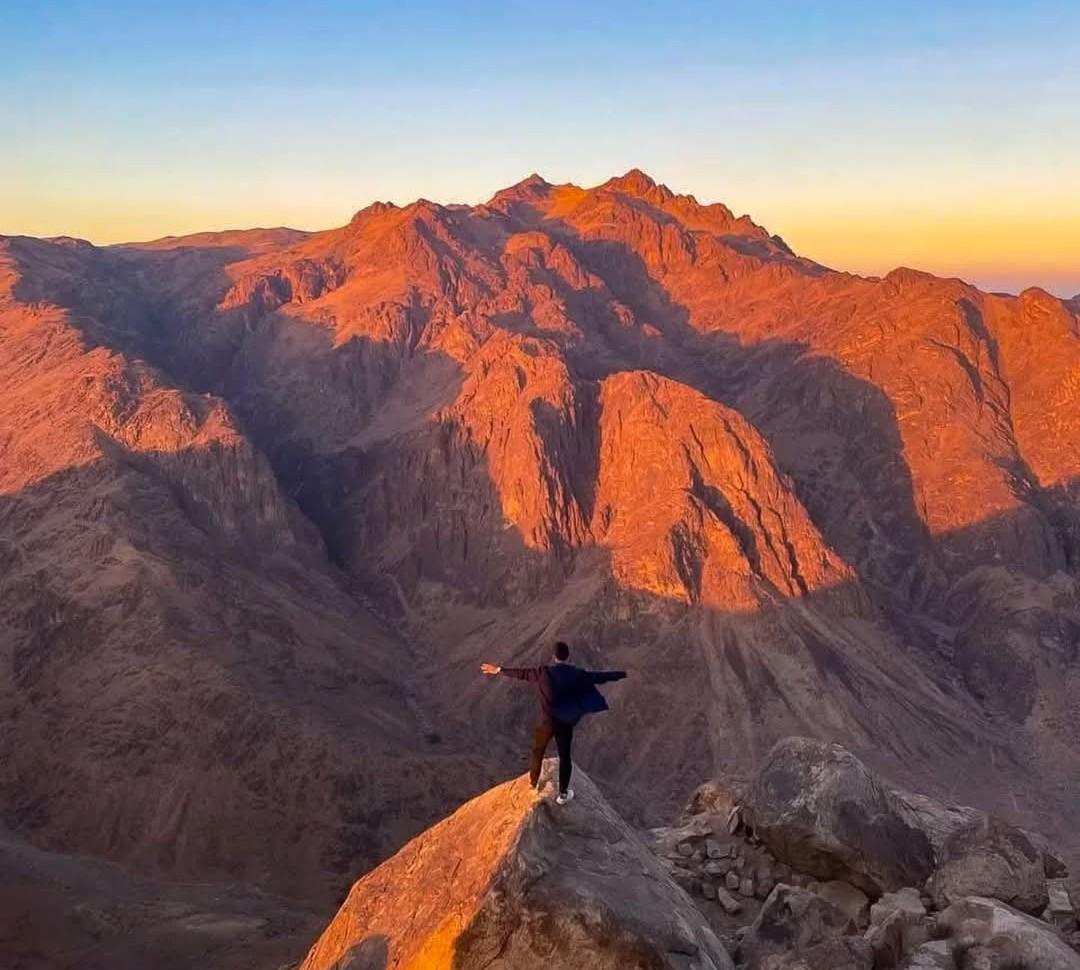
Whatever the origin, the bond with the monastery is unbroken. The Jebeliya built the walled high-altitude gardens known as bustan or karm, with the dams and channels feeding them, using methods that look strikingly Byzantine. In a 1994 count they made up roughly three quarters of Saint Catherine's population, 3,031 of 4,603 people; the town held 4,792 residents in 2021. Many of the same families now guide visitors up Gebel Musa, the 2,285 m peak known abroad as Mount Sinai, on a sunrise trek from Sharm that takes either the camel path or the 3,750 Steps of Repentance.
The Muzeina are associated with Dahab and the coast south of it. The Tarabin, whose Egyptian heartland is around Nuweiba, are among the largest Bedouin groups anywhere, numbering over 500,000 across Egypt, Israel, Jordan, Saudi Arabia and Gaza.
The uncomfortable part is land. Bedouin in Egypt historically held use rights rather than title, and from the mid-1980s the coastal strip they had grazed and fished was allocated to hotel developers. In 1999, Bedouin-run camps near Nuweiba were bulldozed for hotel construction. That history sits underneath every polite conversation about tourism you will have in Sinai.
The Ababda and Bisharin of the Eastern Desert
Between the Nile and the Red Sea live the Beja, whose presence here is measured in millennia rather than centuries. The two groups you may meet in Egypt are the Ababda and the Bisharin. The Ababda number over 250,000 and range historically from Qena on the Nile down into Sudan, and from Hurghada south along the coast towards Halayeb. They speak Arabic today, though sources record them as commonly bilingual in Bedawiyet, the Beja language, as recently as the nineteenth century.
Beja hospitality has its own signature: jabana, coffee roasted and brewed with ginger in a long-necked clay pot and drunk in tiny servings, alongside dance traditions including the shakreeb and hosheeb. Their territory takes in Wadi El Gemal National Park, established in 2003 and covering more than 4,700 square kilometres of land plus a marine zone south of Marsa Alam. If your trip is built around the Red Sea coast, this is the desert immediately behind the beach, and it is inhabited.
Siwa, the Amazigh West and the Oasis Wahati
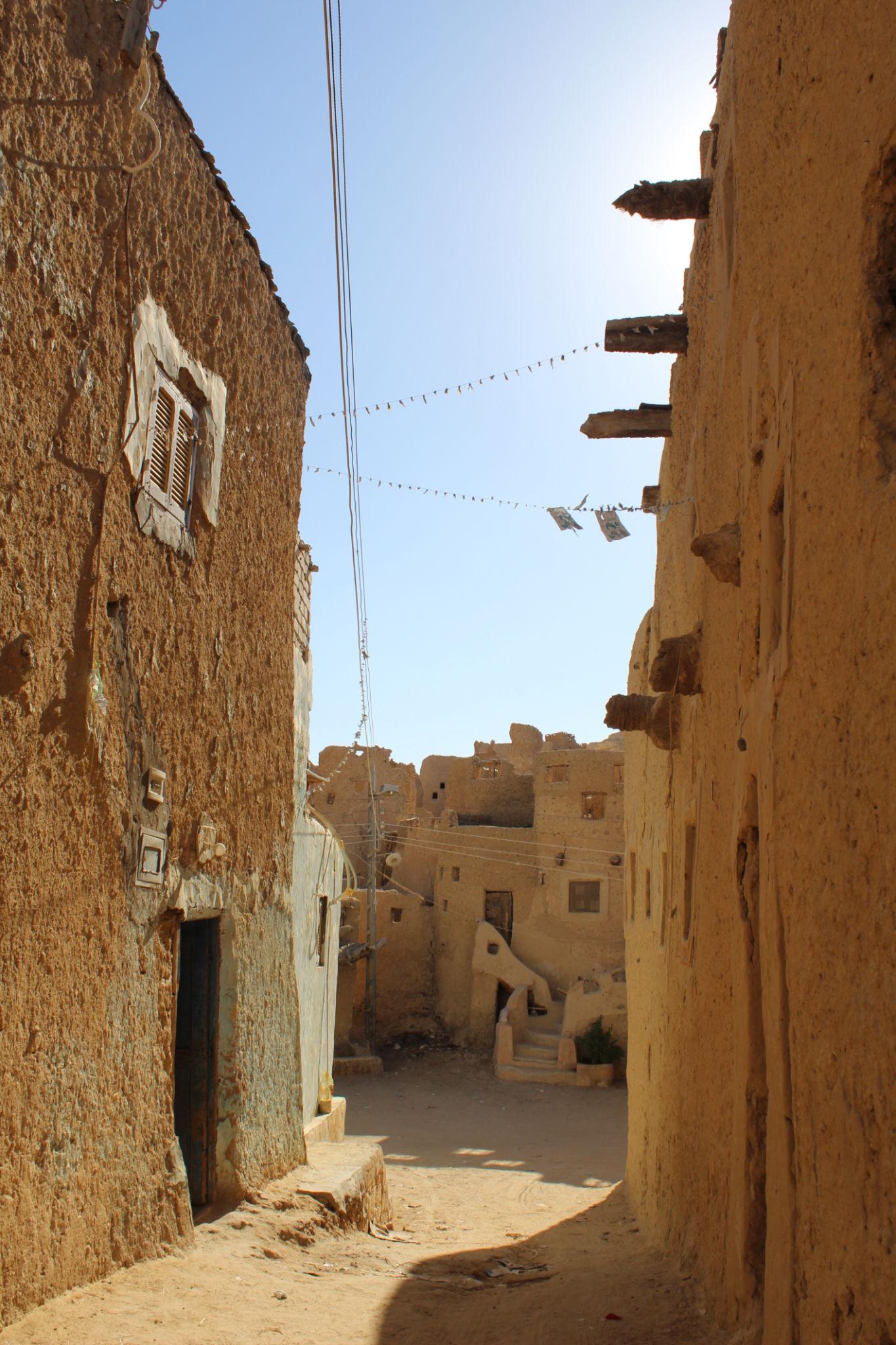
Siwa Oasis sits about 50 km from the Libyan border, roughly 750 km from Cairo by road although only around 560 km in a straight line. Its 25,000 or so residents are Amazigh, and Siwi is the easternmost surviving Berber language, with an estimated 15,000 to 21,000 speakers. It is not taught in schools and has no written standard, which is why UNESCO classes it as definitely endangered; every Siwan also speaks Egyptian Arabic. Walk the eroded mudbrick lanes of Shali Fortress at sunset and you will hear both within a hundred metres.
Siwa is markedly more conservative than the Nile Valley: shoulders and legs covered, no public affection, no alcohol in public, and men should not initiate conversation with local women. The oasis's great annual event, the Siyaha festival at the foot of Gebel Dakrur, is a three-day communal meal and reconciliation gathering honouring the local saint Sidi Sulayman, where men eat together on the mountain and women celebrate separately in town. An overnight Siwa safari will usually be crewed entirely by Siwans.
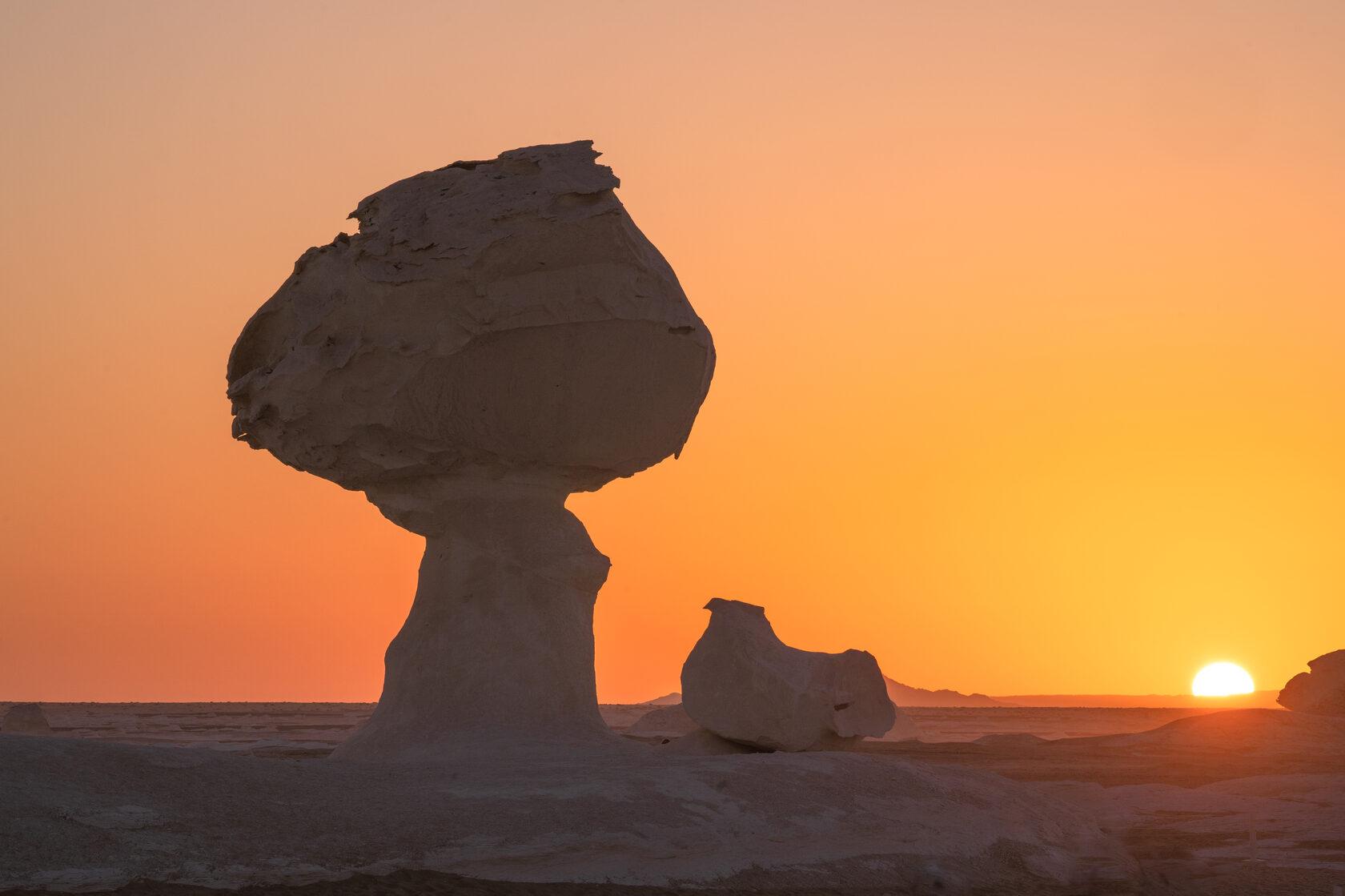
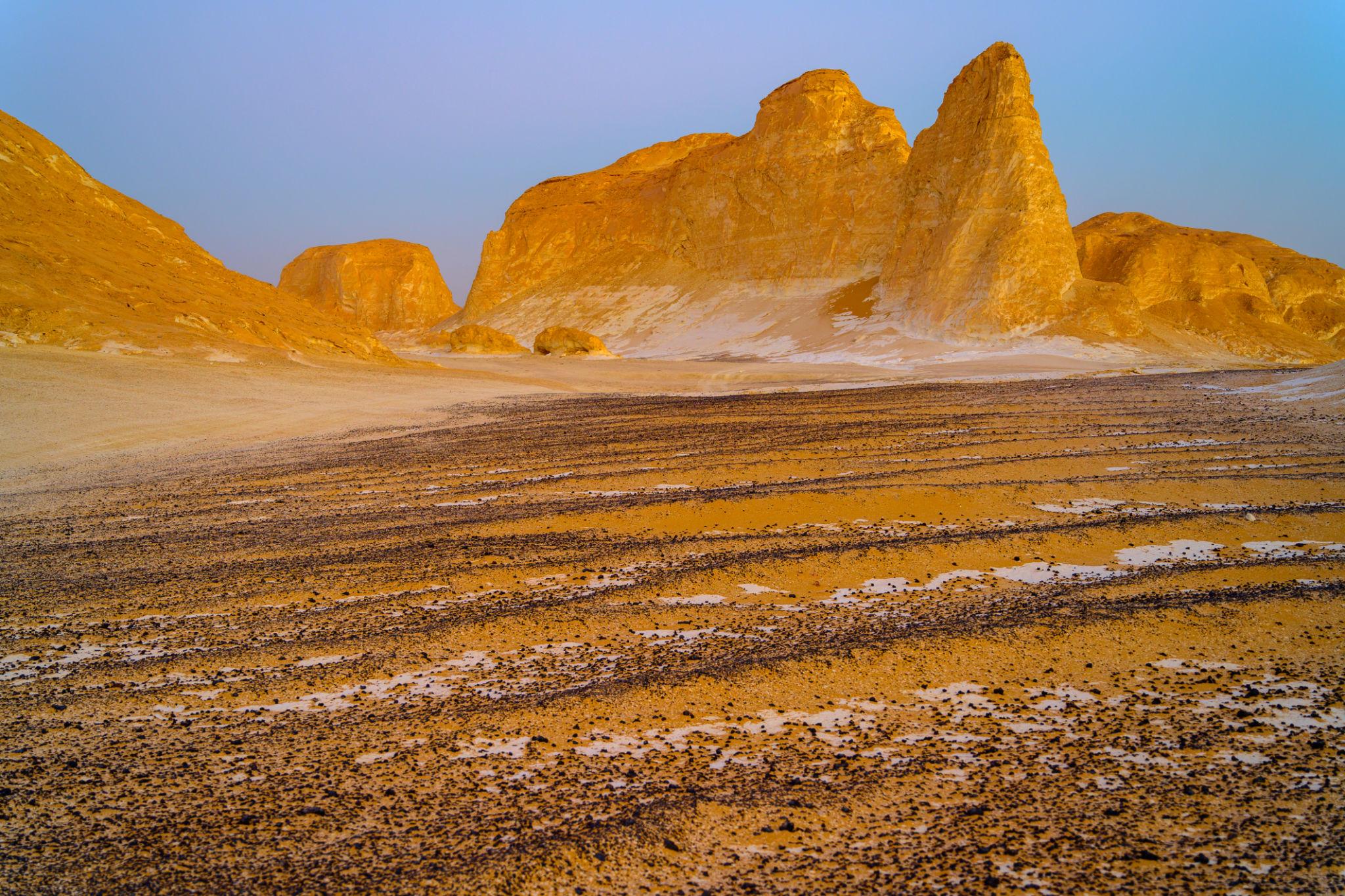
The Western Desert oases are different again. In Bahariya, about 370 km from Cairo, the roughly 33,000 residents are Wahati, people of the oasis, farming guava, mango, dates and olives around El Bawiti. A paved road only reached them in the 1970s. The crews who drive visitors out to the chalk towers on an overnight White Desert camping safari, or around the fossil beds and painted tombs on a Bahariya day tour, are typically Wahati men from these villages rather than Bedouin, whatever the brochure says.
The Tea, and What the Three Glasses Really Mean
Travellers arrive half-expecting the famous line about three glasses: the first bitter as life, the second sweet as love, the third gentle as death. It is a genuine formula, but a Saharan and Maghrebi one, most associated with Tuareg mint tea, and it has drifted eastward largely because visitors expect to hear it. Some Egyptian guides now quote it back with a straight face. It is not a Sinai tradition.
The three-serving rule that does belong here attaches to coffee. Arabic qahwa, inscribed on UNESCO's list of intangible cultural heritage, is poured only part way up the cup, three cups is the polite number, and you signal you have had enough with a small side-to-side shake of the cup as you hand it back. Nobody minds if you get this wrong, but they notice when you get it right.
Bedouin tea in Egypt is simpler and more relentless: strong black shai boiled hard over embers with a great deal of sugar, often with wild herbs thrown in, habak in Sinai and maramiya, wild sage, elsewhere. Two glasses is the minimum, three is normal, a fourth is a compliment. If you cannot manage the sugar, say so before the kettle goes on rather than leaving a full glass on the sand, because a full glass is the visible refusal.
Bread Baked in Sand
The set piece of a desert dinner is bread cooked without an oven. Dough is mixed on a metal tray, the fire raked aside, the flat round buried directly in scorching sand and embers, and twenty minutes later it is dug out, slapped hard between two hands to knock the grit off, and torn apart while still too hot to hold. In Sinai this is usually called libba; elsewhere in the Arab world the same technique produces a bread called arbud, and names shift from valley to valley, so ask rather than assume.
Etiquette around it is simple. Right hand only. Take from the wedge of the shared platter directly in front of you, not across it. Do not clear the dish, because the host eats after the guests and what remains is a message. If someone tears off bread and hands it to you directly, take it; that is the gesture, not a lapse in hygiene.
Good to Know: How a Bedouin Camp Actually Works
- Shoes come off at the edge of the carpet. Watch what your driver does and copy it.
- The fire and the kettle are the host's domain. Do not reach in unless invited, and never step over the hearth or between someone and the flames.
- Many camps have a guest side and a family side, and the line is invisible. Assume anything domestic is private and wait to be led.
- The traditional obligation runs to three days and a third of a day of hospitality, no questions asked. You will not need it, but it explains why offering cash for a glass of tea can land badly.
- Ask before bringing alcohol, and in most Bedouin and all Siwan settings, do not bring it at all.
- Carry your rubbish out. Desert camps have no waste collection, so what you leave gets burned or buried.
Gender, Space and Photography
In most desert settings men and women socialise separately, and the effect on visitors is asymmetric. A woman traveller is generally treated as a guest rather than as a local woman, which often means access to both the men's fire and the family side of the house. A male traveller has no equivalent access and should not seek it. Men should not photograph, approach or address local women, and in Siwa this is not a soft convention.
On cameras, ask out loud every time. "Mumkin sura", may I take a photo, is worth learning alongside shukran for thank you. Accept a refusal immediately, never offer money to convert a no into a yes, and do not photograph women's faces or the inside of anyone's home. Children need a parent's consent, not their own enthusiasm. Our Egypt photography guide covers the practicalities, and the broader culture and etiquette guide sets out the rules that apply nationwide.
Warning: Permits, Closed Areas and Why Your Guide Will Say No
Desert access in Egypt is controlled, and the controls are not negotiable at a checkpoint. As of 2026 the UK Foreign Office advises against all travel to North Sinai Governorate, and against all but essential travel to the interior of South Sinai beyond the Saint Catherine to Nuweiba road, excluding the coastal strips on both sides. It also advises against all but essential travel to the Western Desert west of the Nile Valley and Delta, with named exceptions including Luxor, Aswan, Abu Simbel, Fayoum and the oasis towns of Siwa, Bahariya, Farafra, Dakhla and Kharga, and to areas within 20 km of the Libyan border other than El Salloum.
Visitors to Bahariya, Farafra, the White Desert and the Black Desert must apply for permits in advance and travel with an official guide, and the far south-west towards the Sudanese and Libyan borders needs a Ministry of the Interior permit that is not a same-week arrangement. Travel insurance is frequently written against these same advisories, so an improvised detour can void your cover as well as end at a barrier. The mechanics are set out in our guide to desert safety and permits in Egypt.
Where the Tourism Money Actually Goes
Egypt received 15.7 million visitors in 2024 and a record 19.0 million in 2025, with the government targeting 30 million a year. Tourism accounts for roughly 4.7 percent of GDP and something near 12 percent of employment. Very little of that reaches a desert household directly, because the value sits in the parts of the chain furthest from the sand.
Consider a Mount Sinai trip bought at a Sharm hotel desk. The price covers a coach, a driver who may well be from the Nile Valley, an agency margin and a hotel commission. The Jebeliya guide who walks beside you for five hours in the dark receives the guide fee, set locally and repriced repeatedly as the pound has fallen; a figure that stood near 110 EGP a decade ago should be read as a historic floor rather than a current rate, so ask on the day. The monastery charges nothing to enter, opening only 9am to noon and closed Fridays, Sundays and Orthodox feast days.
The politics are live. In May 2025 Egypt's Ismailia Court of Appeal ruled that the monastery holds usufruct rights over property classified as public domain and antiquity, a decision that drew diplomatic concern from Greece. It landed alongside the Great Transfiguration Project, a large state tourism development reshaping the town the Jebeliya live in. None of this is a reason not to go. It is a reason to be deliberate about who you pay.
Pro Tip: Telling a Real Community Trip From a Staged One
Ask four questions before booking and the answers separate the two almost every time. Who owns the camp we sleep in. Are the driver, cook and guide from this community or brought in. Do we sleep outside, or is this a day visit with a dinner slot. And are we visiting a home, or a purpose-built Bedouin village that coaches rotate through on the hour.
A forty-five minute cultural show with a henna station and a row of stalls at the exit is a product; the money leaves with the operator. An overnight changes the economics, because you are buying a night of someone's labour, their vehicle, their fuel and their food, and they set the price. The long-distance walking routes in Sinai work on the same principle, including the 250 km through-hike from Nuweiba to Mount Catherine, run by the Bedouin communities along its length rather than an outside agency. Read our money and tipping guide before you go so you are not guessing at the fire.
Planning a Trip Around the People
The single change that turns sightseeing into contact is building in one overnight. A day trip gives you a photograph of a camel. A night out gives you the fire dying down, the second and third glass of tea, and the moment around 10pm when the performance ends and people start talking to each other in dialect. October to April is the window, with days around 22 to 28°C (72 to 82°F) in Siwa and the Western Desert and nights on the Sinai high ground that fall below freezing, so pack for both.
Learn five words of Arabic, carry small notes, ask before every photograph, and let your guide set the pace at checkpoints. If you would like help shaping an itinerary that puts a desert night at its centre rather than its edge, get in touch and tell us which desert draws you. The answer usually decides the rest of the trip.