The Nubians are among the oldest peoples of the Nile Valley, with roots reaching back more than 7,000 years to the kingdoms of Kerma, Kush and Meroë. In Aswan, around 900 km south of Cairo, their culture survives in cobalt-blue houses, drum-driven music, and a warmth of hospitality that many travelers remember long after the temples blur together. This guide takes you beyond the standard temple circuit into the living, breathing Nubian world.
Who Are the Nubians?
Nubia historically stretched along the Nile from Aswan in southern Egypt deep into what is now northern Sudan. For millennia it was a powerful civilization in its own right, trading gold, ivory and ebony, and at one point (the 25th Dynasty, around 744–656 BCE) Nubian kings ruled all of Egypt as pharaohs. The very word Nubia may derive from "nub," the ancient Egyptian word for gold.
Today roughly three to five million Nubians live in Egypt and Sudan combined. They speak their own languages — Nobiin and Kenzi (Mattokki) in Egypt — distinct from Arabic, alongside the Arabic spoken by all Egyptians. Their identity is fiercely held, and visiting their villages is the single best way to understand a culture that predates and outlasted the pharaohs.
Nubians were never simply a borderland people. Egyptian temple reliefs at Beit el-Wali and Abu Simbel depict Nubian princes bearing tribute, but the relationship ran both ways: Nubian archers were so prized in pharaonic armies that one ancient name for the region, Ta-Seti, means "Land of the Bow." When you stand in a Nubian living room today, you are in the presence of one of the longest continuous cultural lineages on the planet — a living link to the gold caravans, archer-kings and river traders of antiquity.
The Aswan High Dam and a Displaced People
You cannot understand modern Nubian culture without the dam. The Aswan High Dam, completed in 1970, created Lake Nasser, one of the world's largest reservoirs, stretching some 500 km south into Sudan. The rising water flooded around 45 traditional Nubian villages and displaced an estimated 50,000 to 100,000 Nubians from their ancestral homeland.
Many were resettled in purpose-built villages near Kom Ombo, far from the river they had always lived beside. Others rebuilt closer to Aswan, on the west bank and on islands such as Gharb Soheil and Heisa. This collective trauma — the loss of the old homeland now under the lake — is a defining theme in Nubian songs, art and storytelling. Knowing this history transforms a village visit from sightseeing into genuine cultural exchange.
Visiting a Nubian Village
The two villages most accessible to visitors are **Gharb Soheil** on the west bank of the Nile, and the village on **Elephantine Island** in the middle of the river opposite central Aswan. Gharb Soheil is the more developed and visited; Elephantine feels more lived-in and less staged.
The classic approach is by motorboat or felucca from Aswan. A return motorboat trip to Gharb Soheil typically runs around 400–700 EGP (roughly 8–14 USD) for the boat, which several people can share; a private felucca runs by the hour at perhaps 300–500 EGP. Always agree the price and the waiting time before you step aboard — boatmen will sometimes quote a low fare and then charge again for the return.
### What you will see
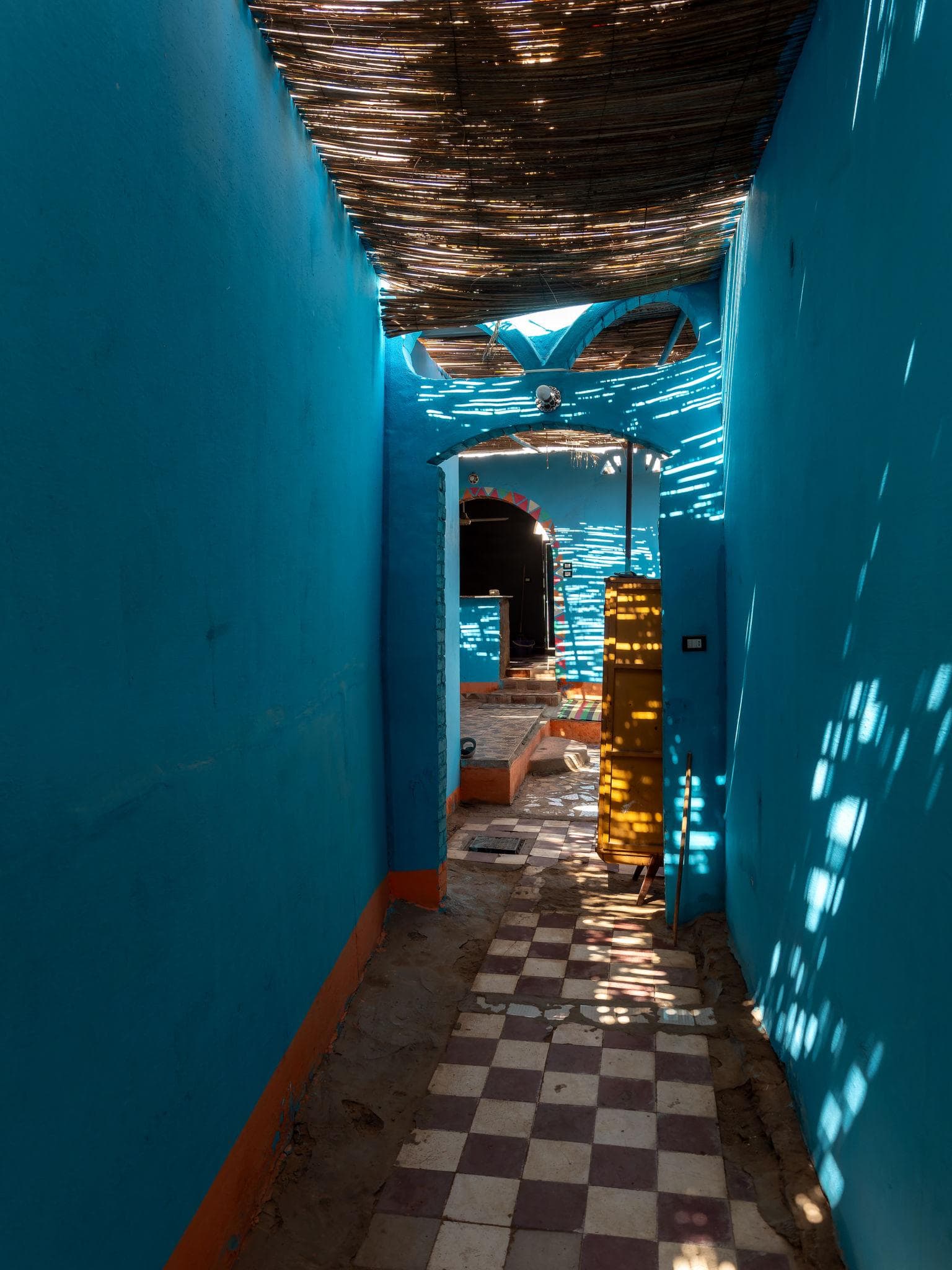
The houses are the first thing that strikes everyone: vivid blues, greens, ochres and pinks, often with domed or vaulted ceilings (an ingenious form of natural cooling) and façades painted with camels, palms, geometric motifs and sometimes scenes of the Hajj. Doorways are framed in bright color, and many homes welcome visitors in for tea.
### How long to spend, and avoiding the crowds
Gharb Soheil can feel busy by late morning when tour groups and cruise-boat day-trippers arrive together, with rows of stalls and souvenir touts along the main lane. Aim to arrive either soon after it opens (around 9am) or, better still, in the late afternoon, when the light turns the painted walls amber and the day groups have left. A leisurely village visit, including tea, henna and a wander among the houses, takes about two to three hours. If you want the quieter, more authentic experience, choose Elephantine Island or arrange to stay overnight in a Nubian guesthouse — waking to the call of the Nile at dawn is unforgettable.
Nubian Hospitality and Home Visits
Hospitality is the heart of Nubian culture. Many families open their homes to visitors, serving sweet hibiscus tea (karkadeh) or strong cinnamon-spiced coffee, and offering henna for the hands. Expect to be shown the family's pet crocodiles — a tradition rooted in the ancient reverence for the crocodile god Sobek, kept today in small tanks (a practice some travelers find uncomfortable; you are free to decline).
A home visit with tea and henna usually costs around 100–200 EGP per person (2–4 USD) as a contribution, sometimes included if you book through a guide. Tipping for henna or photos is expected and appreciated. A useful tip: learn a few words — "masara" (thank you) in Nobiin goes a long way and almost always brings a delighted smile.
A word on scams and pushy selling: Nubian villages are overwhelmingly safe and the hospitality is genuine, but the more touristed lanes of Gharb Soheil have their share of hard-sell vendors and "free" henna that turns out to expect a hefty tip. Clarify in advance whether tea and henna are a gift or a paid service, agree any price before accepting, and don't feel pressured into buying. Going with a reputable guide who has a long-standing relationship with a particular family sidesteps almost all of this and means your money supports the household directly rather than a middleman.
Nubian Music, Color and Crafts
Nubian music is instantly recognizable — hypnotic, percussion-driven, built on the tar (frame drum), the duff, hand-clapping and call-and-response singing. The late Hamza El Din and the band Salamat brought Nubian sound to the world; in the villages you'll often hear live drumming as boats arrive.
### What to buy
- **Beaded jewelry and skullcaps** in bright, geometric Nubian patterns
- **Woven baskets and palm-frond plates** with distinctive concentric designs
- **Spices** — especially hibiscus, karkadeh and natural henna
- **Hand-painted ceramics** and small camel-bone carvings
Bargaining is normal and expected; aim to pay roughly half to two-thirds of the opening price, always with good humor.
Nubian Food Worth Trying
Nubian cuisine is simpler and earthier than mainstream Egyptian food, built around the Nile and the date palm. Look out for:
- **Gorassa** — a thick, spongy flatbread eaten with stews
- **Tagine-style stews** of okra, fava beans or chicken slow-cooked in clay
- **Fresh Nile fish**, often perch (Nile bass) grilled simply
- **Dates and date syrup**, central to the local diet
Several guesthouses on Elephantine and in Gharb Soheil serve home-cooked meals for around 150–300 EGP (3–6 USD). Eating in a family home is far more memorable — and tastier — than any tourist restaurant on the corniche.
The Nubian Museum
Before or after a village visit, the **Nubian Museum** in central Aswan is essential context. Opened in 1997 and run with UNESCO support, it documents Nubian history from prehistory through the pharaonic, Christian and Islamic eras, with rescued artifacts, a full-scale reconstructed Nubian house, and moving exhibits on the displacement caused by the High Dam.
It's open roughly 9am–5pm (sometimes with an afternoon break in summer); admission is around 200–300 EGP for foreign visitors (4–6 USD), with extra fees for cameras. Budget at least 90 minutes. It is air-conditioned — a genuine relief in Aswan, where summer temperatures regularly exceed 40°C.
The museum's gardens are an attraction in their own right, with a re-created Nubian house, a small ancient cemetery and a reconstruction of a rock-cut tomb. Inside, the chronological galleries trace tools and pottery from the Stone Age, the gold-rich Kingdom of Kush, the Christian Nubian kingdoms with their distinctive frescoes, and finally the wrenching photographs and models documenting the villages lost beneath Lake Nasser. Reading the displacement section before visiting a village gives the warmth of the welcome a deeper, more poignant meaning — these families rebuilt their entire world from memory.
Combining Nubia With Aswan's Great Sites
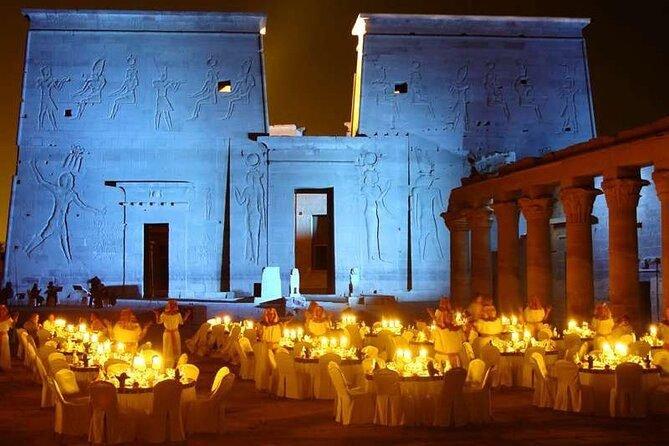
A Nubian village makes a perfect counterpoint to Aswan's ancient monuments. The most beautiful is Philae Temple, the island sanctuary of the goddess Isis, itself rescued from the rising waters and relocated stone by stone to Agilkia Island — a story that rhymes powerfully with the Nubian experience of displacement. Reach it by motorboat from Shellal jetty (around 200–400 EGP per boat round trip).
For more on the city, its souk, botanical island and surrounding desert, see our full guide to Aswan. The town itself is wonderfully relaxed, with the Nile at its most scenic — sandbanks, granite boulders, sailing feluccas and golden dunes meeting the water.
Best Time to Visit and Practical Tips
The ideal season is **October to April**, when daytime highs are a pleasant 22–28°C. Avoid June to August, when the heat is brutal. Aswan has its own small airport with frequent flights from Cairo (about 1 hour 40 minutes), and is the southern terminus of most Nile cruises.
- Dress modestly in villages — covered shoulders and knees show respect
- Always ask before photographing people; a small tip is courteous
- Carry small cash; cards are useless in the villages
- Decline the crocodile pools if they make you uneasy — no offense taken
Planning Your Aswan Adventure
The most rewarding way to experience Nubia is as part of a Nile journey, drifting south from Luxor and arriving in Aswan by water — the way travelers have approached this frontier for millennia. Our Nile Cruise from Luxor to Aswan pairs the great temples with time to explore Nubian culture at the journey's end. If you're flying in independently, a smooth Aswan airport transfer gets you from runway to riverbank without the haggling. Either way, set aside at least a full afternoon for the villages — it may become the highlight of your entire trip.