At half past four in the morning the Corniche in Aswan is empty except for the minibuses. They wait outside the hotels with their headlights on, collect sleepy passengers holding breakfast boxes, and turn out of town onto the road from Aswan to Abu Simbel, which runs almost dead straight across the desert for the next three hours. By the time the sky turns pink over the dunes to the east, the city is far behind, and for long stretches the only buildings are police checkpoints.
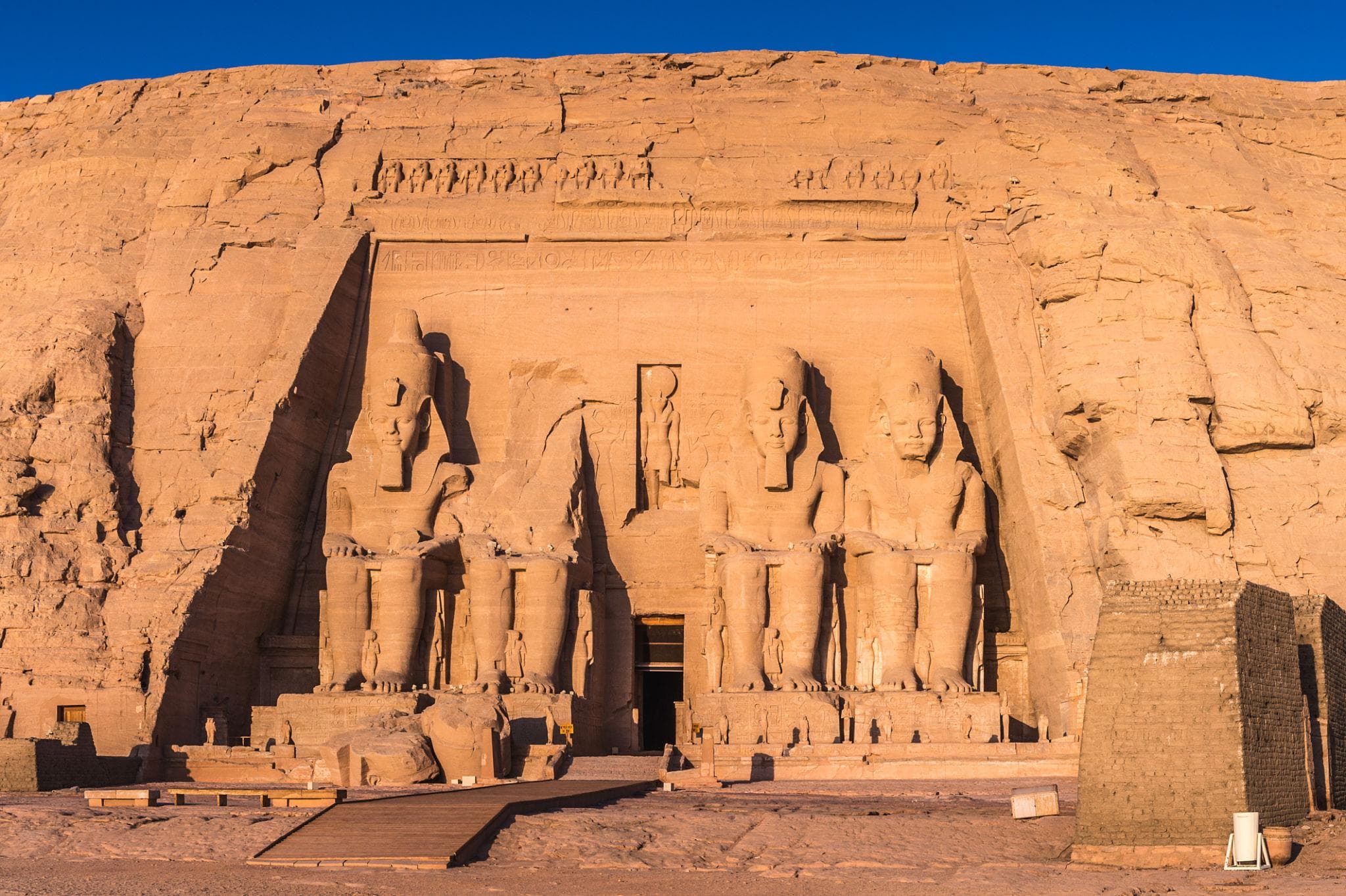
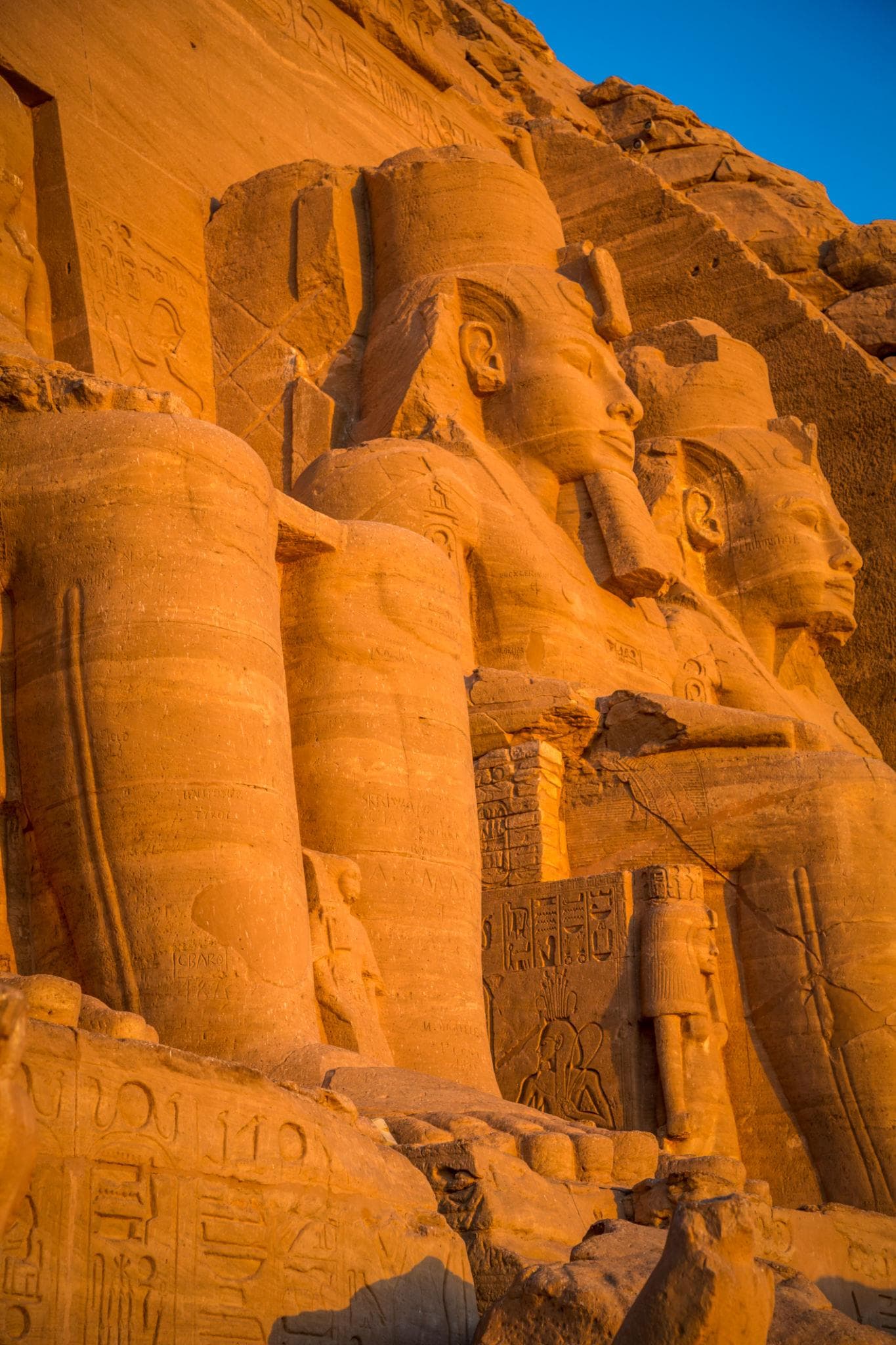
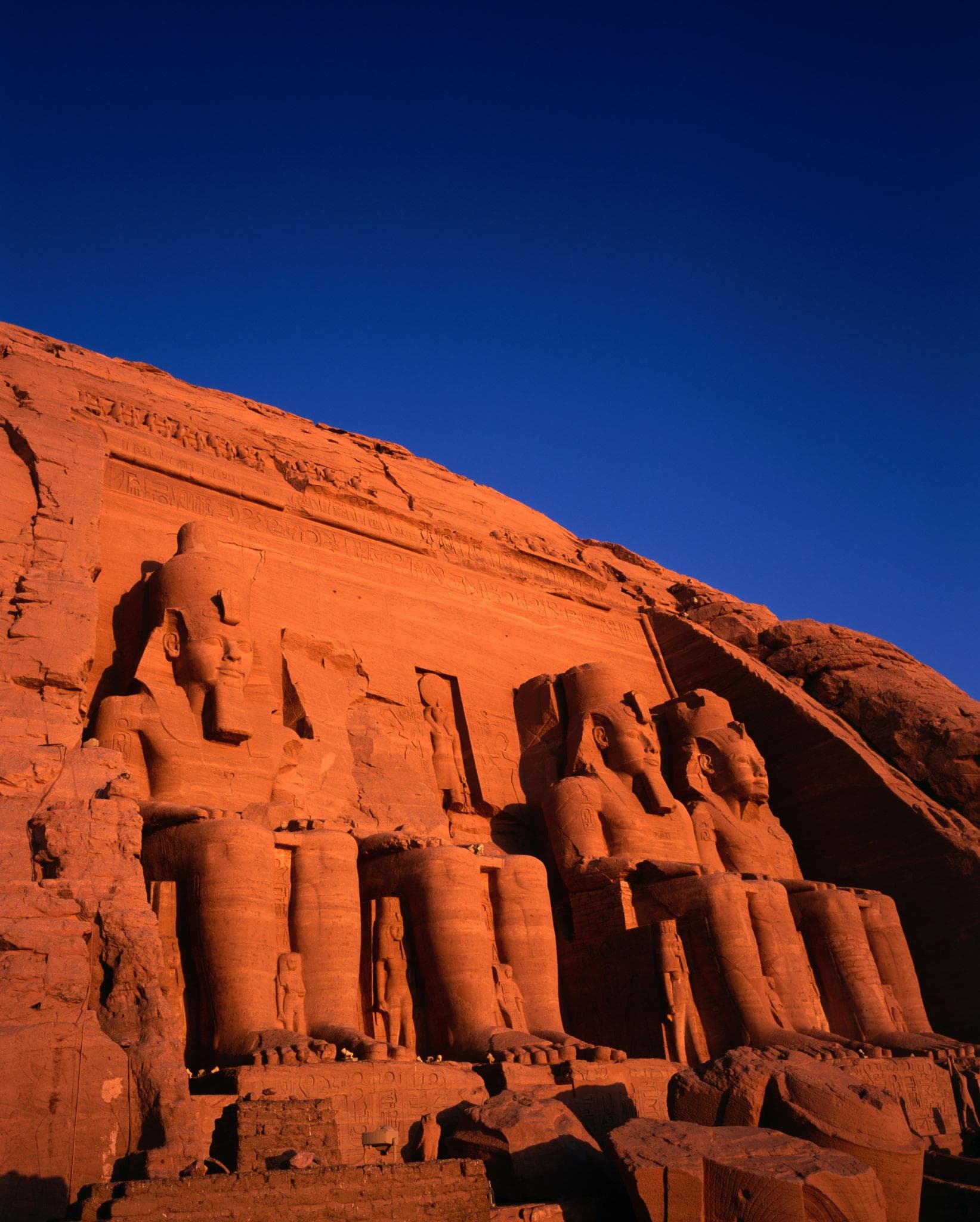
That drive is the price of one of the great sights of the ancient world: the two rock-cut temples of Ramesses II and Queen Nefertari, 280 km (175 miles) south of Aswan on the shore of Lake Nasser, some 40 km short of the Sudanese border. You can make the journey by road, by air, or slowly, with a night beside the lake, and each choice changes what you see.
This guide covers all three as of November 2026: the road and the end of the fixed police convoy, private car against shared minibus, the EgyptAir flight, a night in Abu Simbel village, tickets, the sun festival and the summer heat.
At a Glance
Distance: about 280 km (175 miles) by road, south-west of Aswan across the desert
By road: 3 to 3.5 hours each way; most vehicles leave Aswan between 4am and 5am
Convoy: the fixed police convoy is no longer compulsory, but checkpoints remain; carry your original passport
By air: about 45 minutes on EgyptAir, with a shuttle bus from the airport to the temples
Ticket: 750 EGP, students 375 EGP, about 14 USD (12 EUR), as of November 2026, card only
Opening hours: from 5am, closing around 5pm in winter and 6pm in summer
Time at the temples: two hours is comfortable; flight schedules usually allow 1.5 to 2
Sun festival: 22 February and 22 October, when tickets rise to 1,200 EGP
Overnight: sunset over the lake, the sound and light show after dark, near-empty temples at opening
Best months: October to April; in July and August expect around 41C (106F) by early afternoon
Aswan to Abu Simbel: Road, Air or a Night by the Lake
Most visitors make the Abu Simbel day trip from Aswan by road. You leave between 4am and 5am, reach the temples at around 8am, spend about two hours there and are back at your hotel between 1pm and 2pm. It is a long day, with six to seven hours in a vehicle, but it needs no flight booking and fits neatly into a Nile cruise, since most ships spend at least one full day moored in Aswan.
The flight takes about 45 minutes and turns the expedition into a morning. The catch is time on site: the schedule usually leaves an hour and a half to two hours at the temples, and flights are few and sometimes retimed at short notice. It suits travellers who dislike long drives, anyone with limited mobility, and most people visiting in the hottest months.
The third option is to stay. Abu Simbel is a small Nubian town with a handful of hotels and guesthouses. Arrive in the afternoon, watch the sun set over the lake, see the sound and light show, and walk back to the temples at opening the next morning, hours before the day-trippers. It costs an extra night, but it is the only way to see the façades in soft light with almost no one in front of them.
As a rule of thumb: the road for most people, the flight in summer, and the overnight stay for photographers. A slower fourth route, the Lake Nasser cruise, is covered below.
Abu Simbel by Road: How the Drive Works
The highway leaves Aswan to the south-west and crosses open desert almost the whole way. There is little to see beyond sand, low black outcrops and, in the first hour of sunlight, mirages hanging over the asphalt; Lake Nasser stays out of sight until near the end. Most drivers stop once, at a roadside rest house roughly halfway, for toilets, tea and a stretch.
By car or minibus the trip takes 3 to 3.5 hours each way, depending on the vehicle, the checkpoints and the length of the rest stop. The early start is not only about the heat. It puts you at the temples soon after 8am, with the low eastern sun still on the colossi, and it leaves time to be back before the road's daylight hours run out. Road travel for visitors is normally limited to daylight, so a late return is not an option.
At each checkpoint the driver hands over a list of passengers, and the police may ask to see passports. Carry the original, not a photocopy, and keep it in your day bag rather than in the boot.
Ask your hotel for a breakfast box the evening before, bring a fleece in December and January, when the desert is cold before sunrise, and carry small notes for the toilets.
Good to Know: The Convoy Rules in 2026
For many years, foreigners travelling by road between Aswan and Abu Simbel had to join a police convoy that left at fixed times, the main one before dawn and a second in the late morning. Hundreds of vehicles arrived together and crowded the temples together.
That fixed convoy has been relaxed. As of November 2026, private cars and tour minibuses pass a series of police checkpoints instead of travelling in a single escorted column. Vehicles still tend to leave in loose clusters between 4am and 5am, when the road opens, so you will not have it to yourself, but a private car can time its start to avoid the peak at the ticket office. Driving yourself is not an option: foreign visitors travel with a licensed driver or operator.
Two cautions. Security arrangements in southern Egypt can change at short notice and without public announcement, and travellers' reports often disagree, so check the current practice locally a day ahead. A public bus runs between the two towns, but whether foreigners may board it has varied, so ask locally first.
Private Car or Shared Minibus
The shared minibus is the economical choice. Agencies and hotels sell seats on vehicles of around 10 to 14 passengers that collect from several hotels from about 4am, which can mean an hour of pick-ups before the drive begins. The return time is fixed, typically late morning, and the price may or may not include a guide or the entry ticket, so read the details. On a three-hour drive, avoid the back seat over the wheels if you can.
A private car or minivan costs more, but the difference narrows quickly for three or four people. You choose the departure time, the vehicle collects only you, and the driver stops when you ask. A guide can talk through the history on the way and plan the visit around the crowds, which usually means seeing the temples in the opposite order to the coach groups. For families with young children and anyone prone to car sickness, the private option is often the difference between enjoying the day and enduring it.
Both use the same road and checkpoints. What a private car buys is control: the moment to leave, the moment to go in, and room to sleep on the way back.
The Abu Simbel Flight from Aswan
EgyptAir runs short flights between Aswan and Abu Simbel, and at times Air Cairo flies the route too. The flight takes about 45 minutes. Abu Simbel's airport lies a short drive from the temples, and EgyptAir tickets have traditionally included a shuttle bus that meets the flight and waits while you visit. Schedules shift with the season, so check the day you want before planning anything else around it.
Time on site is the real limitation. Travellers who take the first flight out and the return that follows usually report an hour and a half to two hours at the temples, enough to see both properly but not to linger. Add the drive to Aswan airport, about half an hour from the centre, plus security and the wait, and the flight saves less time than the arithmetic suggests. What it saves is fatigue: no 4am start and no six hours on a desert road.
The flight is also exposed to the weather: strong winds and sandstorms occasionally delay or cancel flights, and with few departures there may be no easy alternative, so do not book it for your last morning before an onward connection. Our Aswan travel guide explains how the airport fits into a wider stay in the city.
Pro Tip: See the Small Temple First
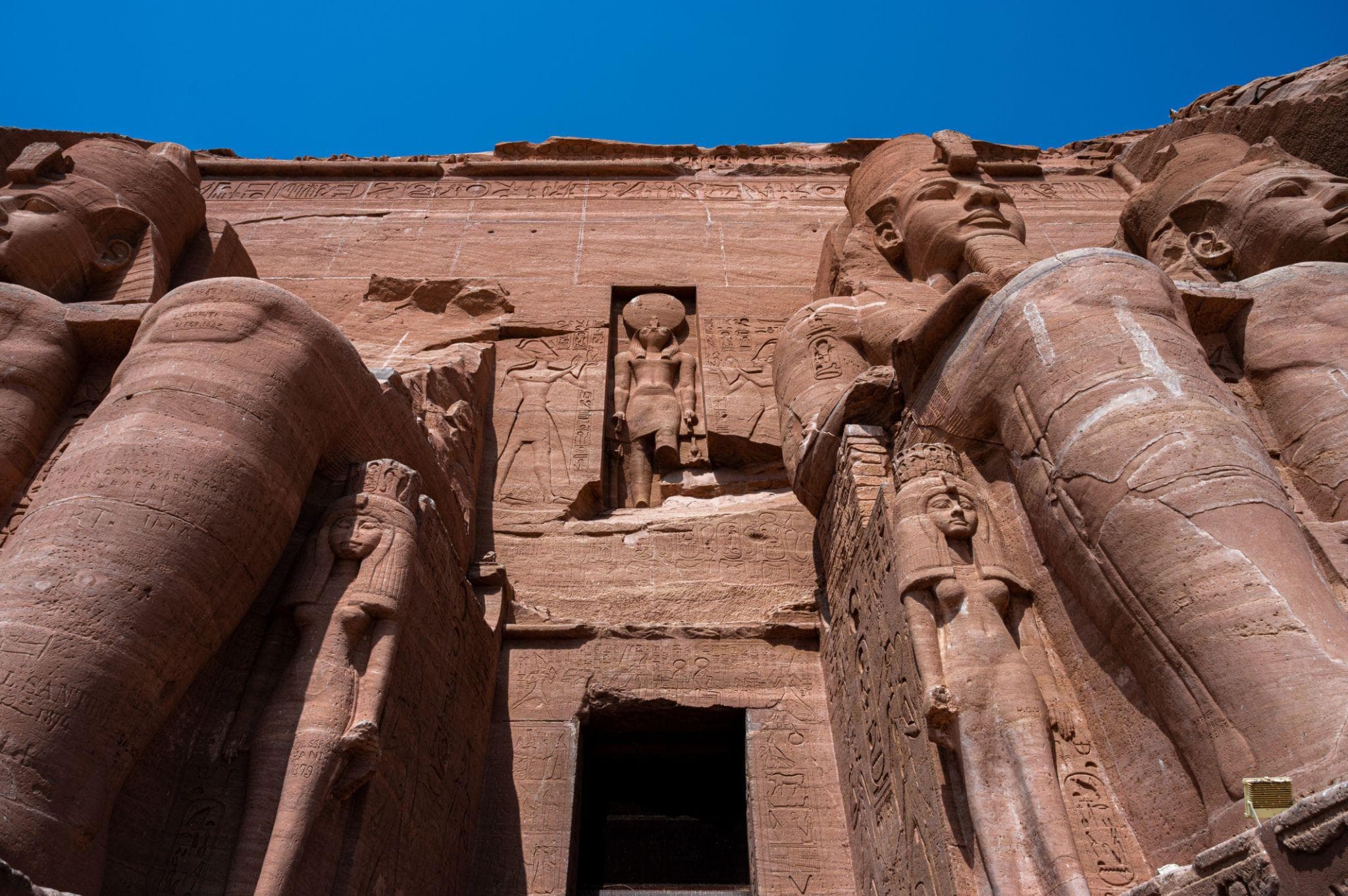
When the road groups arrive at around 8am, almost everyone walks straight into the Great Temple of Ramesses II, the first façade you reach on the path from the ticket office. Keep walking. A short distance along the shore stands the Small Temple, dedicated to the goddess Hathor and to Nefertari, the queen Ramesses honoured with colossal standing statues of her own.
Spend your first half hour there while it is quiet, then return to the Great Temple once the first wave has passed through its halls. In the inner sanctuary that is the difference between seeing the four seated gods and seeing the back of someone's head.
Both temples face east, towards the sunrise, so the light on the colossi is best early and flattens by midday. Our Abu Simbel temples guide explains what to look for inside, from the Battle of Kadesh reliefs to the Osiride pillars of the great hall.
Abu Simbel Overnight: Sunset, Sound and Light and an Empty Dawn
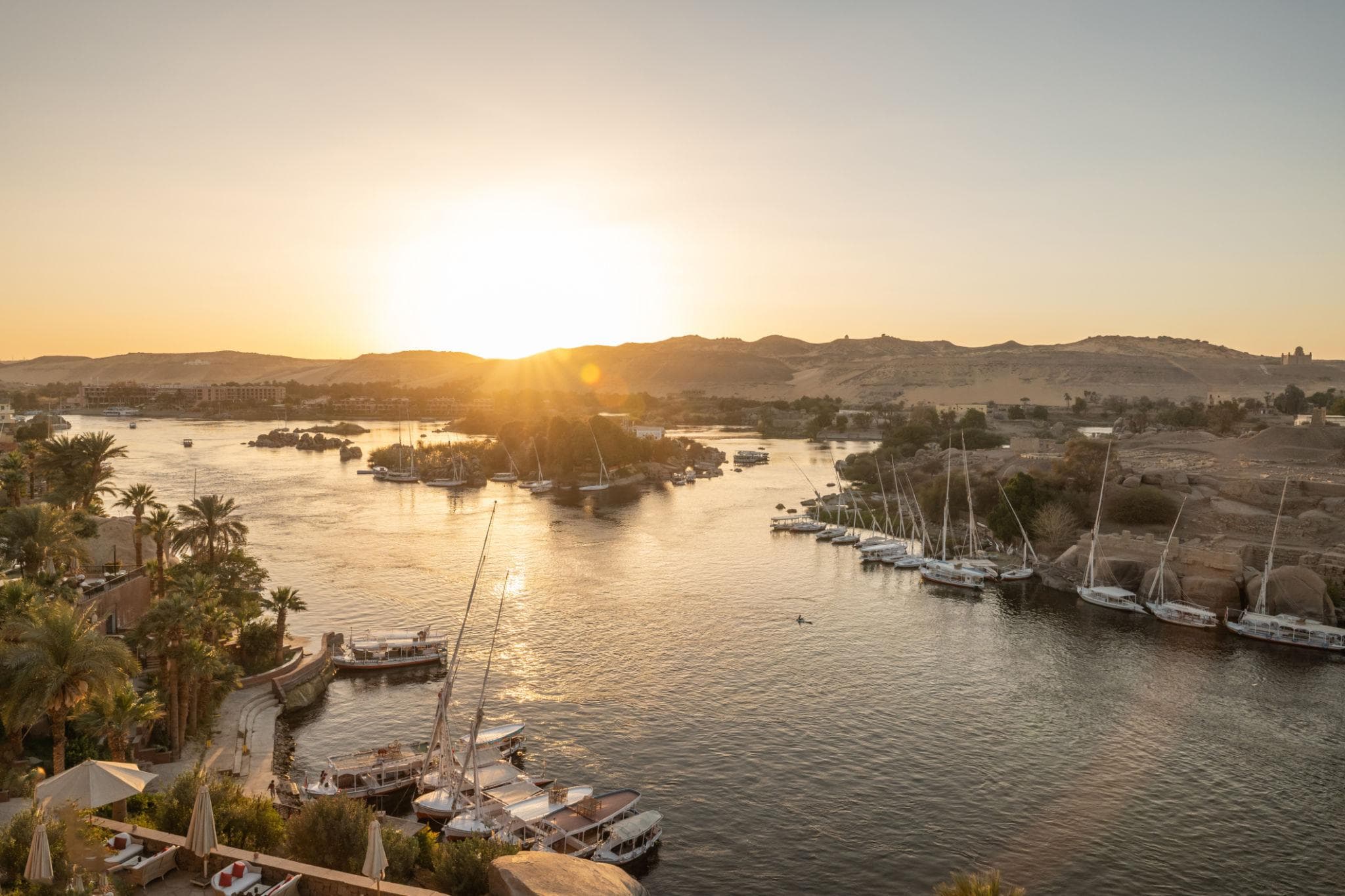
Staying the night changes the experience more than any other choice. Leave Aswan after lunch, and you reach Abu Simbel with time to check in and walk down to the water. Sunset over Lake Nasser is quiet: a few fishing boats and the desert turning copper on the far shore.
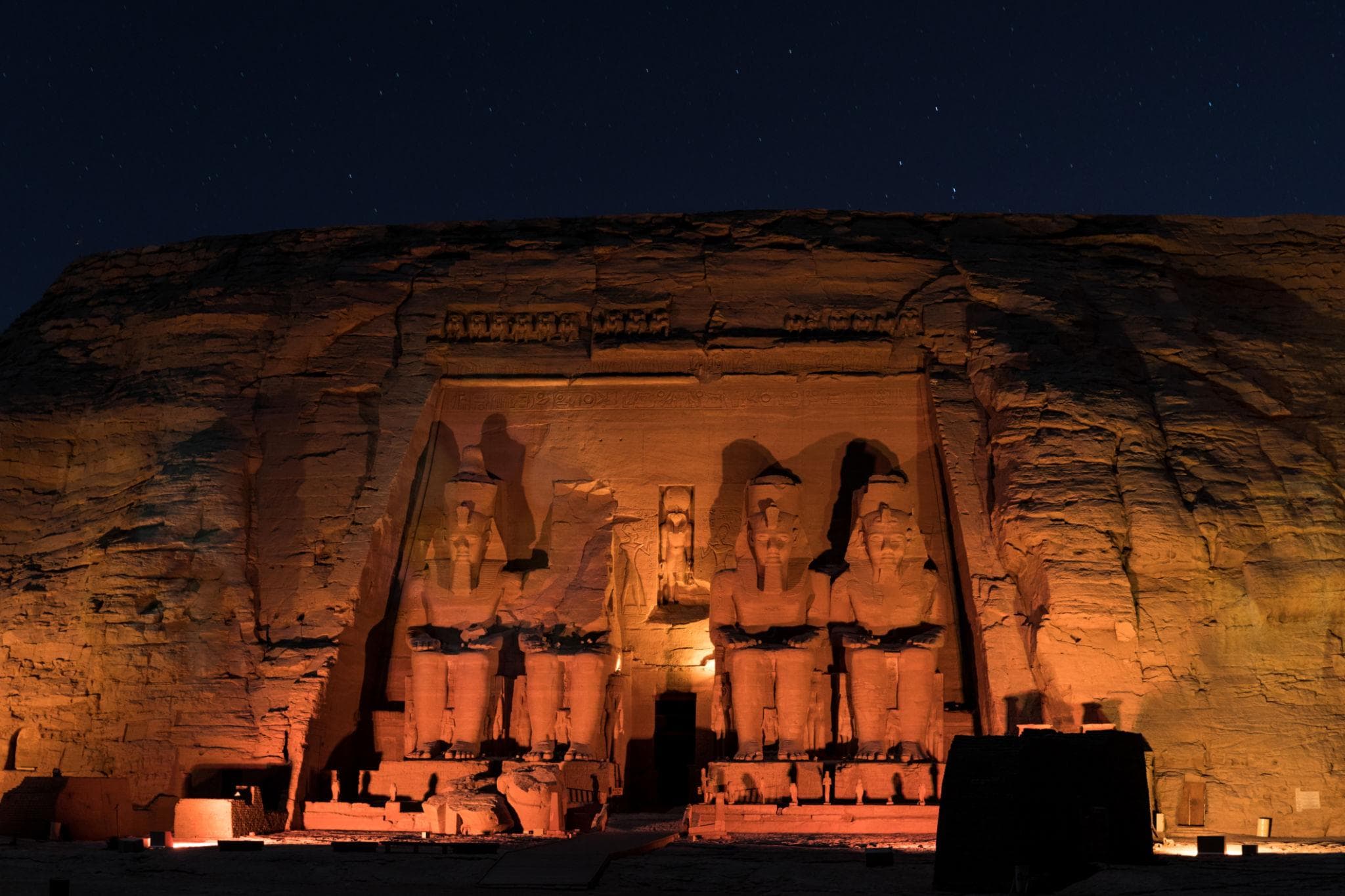
After dark comes the sound and light show, projected onto the façades of both temples, with commentary in several languages. It can be cancelled on very quiet nights, so book it through your hotel or guide rather than turning up on spec. It is theatrical rather than scholarly, and our guide to Egypt's sound and light shows compares it with the others.
The real reward comes next morning. The temples open at 5am, and road groups rarely arrive before 8am. The first hours, when the sun comes up over the lake and strikes the faces of the colossi, belong to the few people who slept in the village. Hotels in Abu Simbel are simple and few, so book ahead in winter and well ahead around the sun festival. Our Abu Simbel overnight tour from Aswan is built around a night in the village, so you can see the temples after dark and again at opening.
Abu Simbel Tickets and Opening Hours
A single ticket covers both temples. As of November 2026 it costs 750 EGP for foreign adults and 375 EGP for students with a valid international student card, about 14 USD (12 EUR). Buying online through the official ticket portal adds a small service charge, and at the ticket office payment is by bank card, so do not count on paying in cash.
The site opens at 5am and closes around 5pm in winter and 6pm in summer; confirm on the day, as hours shift during Ramadan. The sound and light show is ticketed separately. On the two sun festival days the price rises to 1,200 EGP for adults and 600 EGP for students.
Personal photography with a phone or camera is included, without flash inside the temples. From the ticket office a path curves around the artificial hill to the façades, a walk of about ten minutes, and the forecourt has very little shade.
Site prices in Egypt are reviewed from time to time, often with little notice, so check our Egypt ticket prices guide before you go, and see the Abu Simbel temples page for the history of the site.
The Sun Festival and the Moving of the Temples
Twice a year, on 22 February and 22 October, the rising sun reaches about 60 metres into the Great Temple and lights three of the four seated statues in the sanctuary: Amun-Ra, Ra-Horakhty and the deified Ramesses II. Ptah, a god linked with the underworld, stays in shadow. The light lasts roughly twenty minutes, and thousands come to see it. The next occasion is Monday 22 February 2027.
The temples are not quite where Ramesses built them. When the Aswan High Dam began to create Lake Nasser in the 1960s, the original site was doomed. Between 1964 and 1968, an international team working under the UNESCO campaign to save the monuments of Nubia cut both temples into more than a thousand blocks and rebuilt them about 65 metres higher and some 200 metres back from the old riverbank, against an artificial hill raised over a concrete dome. They were inaugurated in September 1968, and it is usually said that the move shifted the alignment by a day.
Festival mornings are crowded, so book transport and hotel nights early. Our Abu Simbel sun festival guide covers timings and queues, and our guide to the Aswan High Dam and the Unfinished Obelisk tells the story of the dam that made the rescue necessary.
Warning: Summer Heat on the Abu Simbel Road
Abu Simbel is one of the hottest places on the standard Egyptian itinerary. In July and August, daytime highs average around 41C (106F), and the forecourt in front of the temples offers almost no shade. The sandstone throws the heat back at you, and the walk from the ticket office feels much longer at 11am than at 8am.
Between May and September, leave Aswan as early as the road allows, carry at least 1.5 litres of water per person, and wear a brimmed hat and sunscreen even on a short visit. Check that the vehicle's air conditioning works before you set off, not halfway across the desert. In high summer the flight is worth considering, and the overnight stay is worth more still, because it puts you inside the temples in the coolest hour of the day.
Winter is a different place: in January daytime highs average around 23C (73F), and the pre-dawn desert can be cold enough for a jacket. Our guide to Egypt in summer has more on planning around the heat.
By Water: The Lake Nasser Cruise
The slowest way to reach Abu Simbel is across the lake that made its rescue necessary. A handful of cruise ships sail between the High Dam and Abu Simbel on itineraries of three or four nights, in one direction or the other. They stop at the rescued temples of Kalabsha, Wadi el-Seboua and Amada, pass the citadel of Qasr Ibrim, now an island usually viewed from the deck, and moor below Abu Simbel, so passengers normally see the temples both after dark and in the early morning.
The lake is unlike the Nile north of Aswan: almost no villages on its shores, few other boats and very dark skies at night. It is the only way to reach some of the Nubian monuments, but it needs three or four days, sailings are less frequent than on the Nile, and cabins can sell out in the cooler months. Our Lake Nasser cruise guide compares the itineraries and explains each stop.
Planning Your Abu Simbel Day Trip from Aswan
For most travellers the simplest plan is our Abu Simbel day trip from Aswan: an early start by private car and back in Aswan by early afternoon, with the rest of the day for a felucca or a long lunch by the river. If you have a spare night, the overnight version adds the sound and light show and the empty dawn, and it is the one we suggest to anyone who travels for photography.
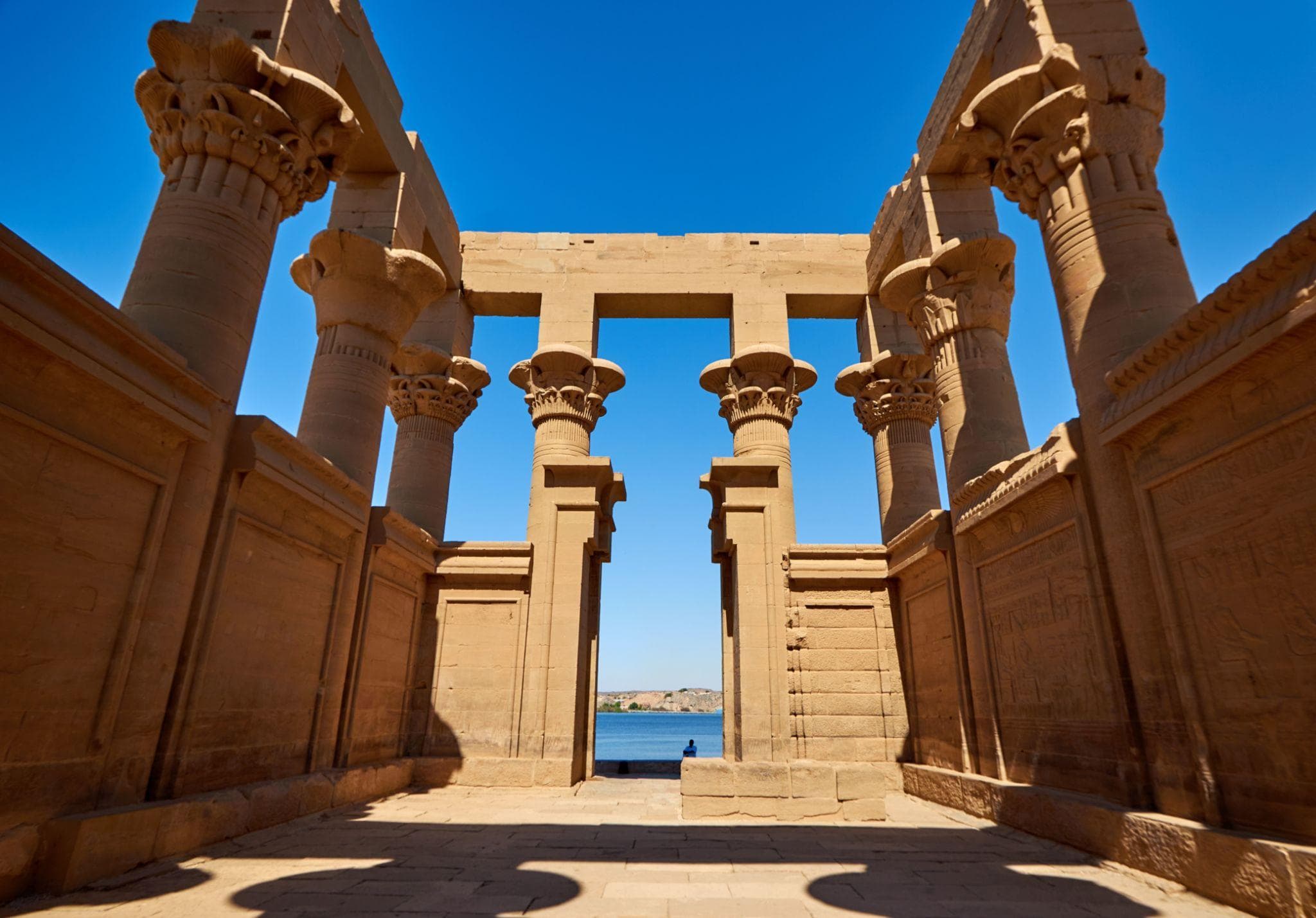
Keep a second day for Aswan itself. Our Aswan tour of Philae Temple and the High Dam covers the island temple of Philae and the dam in a single morning, the Unfinished Obelisk is easily added, and it pairs well with a day at Abu Simbel.
Tell us your dates, whether you are on a cruise, and how you feel about early starts through our contact page, and we will suggest the way from Aswan to Abu Simbel that suits you best.