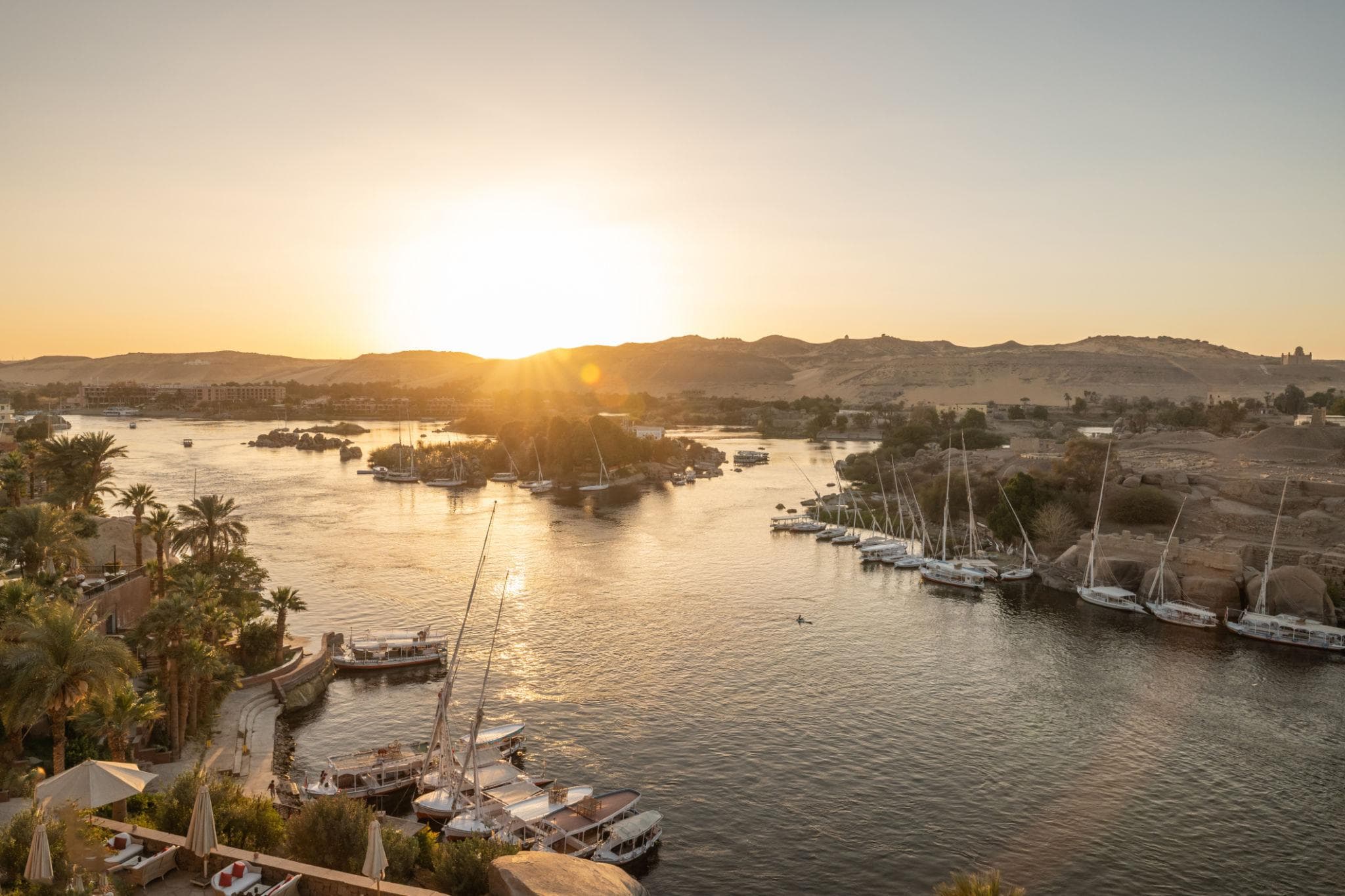
On the crest of the Aswan High Dam the wind never quite stops. A wide road runs along the top, soldiers keep an eye on the traffic, and on one side Lake Nasser stretches south to a flat horizon, a sheet of blue in a brown desert. On the other side, far below, the Nile looks almost modest, a river again rather than an inland sea. It is not beautiful, but few places explain modern Egypt so directly.
A few kilometres north, in a granite quarry on the edge of the city, lies a very different monument: an obelisk about 42 metres long, still attached to the bedrock on one side, abandoned some 3,500 years ago when the stone cracked. The two make up a standard morning of Aswan sightseeing, usually with Philae in between, and visitors often ask us whether they are worth the time.
This guide gives an honest answer: what you see at each site, the history behind them, tickets as of November 2026, how long each takes, the photography rules at the dam, and how to fit both into one morning with Philae and the Old Aswan Dam.
At a Glance
Aswan High Dam: built 1960 to 1970, about 3.8 km (2.4 miles) long and 111 m (364 ft) high, some 13 km south of the city centre
Unfinished Obelisk: a granite obelisk about 42 m (138 ft) long, abandoned in the quarry after it cracked, usually dated to Hatshepsut's reign
Obelisk ticket: 220 EGP, students 110 EGP, about 4 USD, as of November 2026
High Dam fee: a separate charge at the gate, most often reported at about 200 EGP; check on the day
Opening hours: the obelisk from 7am to about 4pm; the dam viewing area in daylight only
Time needed: 30 to 45 minutes at the obelisk, 20 to 30 minutes on the dam
Combine with: Philae Temple, on its island between the Old Dam and the High Dam
Photography: allowed from the dam viewpoint, never of soldiers, checkpoints or the power station
Best time: early morning, before the granite and the concrete heat up
Verdict: the obelisk is worth half an hour to almost anyone; the dam is worth it for the story
Are the Aswan High Dam and Unfinished Obelisk Worth It?
Yes, with different expectations for each. The Unfinished Obelisk is a small site that rewards a short visit. You look down into an open quarry at a huge granite shaft lying where the workers left it, with the marks of their tools still on the rock around it. It answers a question most visitors carry from Karnak and Luxor: how did anyone cut, and move, a single stone of that size? Half an hour is enough, and it is close to the centre of town.
The High Dam is a different kind of visit. There is no ancient carving, the viewpoint is a broad, windy embankment, and the stop rarely lasts more than twenty minutes. Visitors who expect a spectacle are often disappointed. Those who know what the dam did, to the Nile flood, to Nubia and its people, and to the temples moved out of the water's way, usually find it one of the more thought-provoking stops in Egypt.
Neither needs a day of its own. Both sit on the road to Philae, and most visitors see all three in a single morning. If you only have a few hours in Aswan and must choose, choose Philae. If you have the morning, the dam and the obelisk add context that makes the rest of Upper Egypt easier to understand.
The Aswan High Dam: Why Egypt Built It
For all of recorded history Egypt depended on the annual Nile flood, and a low flood meant hunger. The British built the first dam at Aswan in 1902 and raised it twice, but it could hold back only a fraction of the flood. After the 1952 revolution, Gamal Abdel Nasser's government planned something far larger: a dam that would store several years of floodwater, irrigate new land, end the risk of drought and flood, and generate electricity for industry.
Western finance was offered and then withdrawn in July 1956. Days later Nasser nationalised the Suez Canal, in part to pay for the dam, and the Suez Crisis followed. The Soviet Union stepped in with loans, engineers and heavy machinery. Construction began in January 1960, the river was diverted in 1964, and the dam was completed in 1970. Nasser died that September, and the dam was formally inaugurated on 15 January 1971.
The result is an embankment dam of rock and clay rather than a concrete wall: about 3.8 km long, 111 m high and almost a kilometre thick at the base. Its twelve turbines, with a combined capacity of about 2,100 megawatts, once supplied around half of Egypt's electricity. Their share is far smaller today, but the dam still controls the river for everyone downstream. The Aswan High Dam page sets out the key figures.
What You See on the High Dam Today
Vehicles stop at a viewing area on the crest, after a security check. From there you look south over Lake Nasser and north over the narrow river channel, with the power station and its high-voltage lines at the foot of the dam. The contrast between the two sides is the point of the visit, and it is clearest in the morning, before the haze builds.
At the western end stands the monument to Egyptian-Soviet friendship, a tall concrete structure of five petals shaped like a lotus flower, with inscriptions in Arabic and Russian. It is more interesting as a piece of Cold War history than as architecture; ask your driver to pass close by if it is not on the usual route.
On a clear day you may be able to make out, on the western shore of the lake, the Temple of Kalabsha, moved there block by block during the Nubian rescue campaign. It can be visited by boat from a small harbour near the dam, and it rarely sees more than a handful of visitors.
Be prepared for wind and sun: the crest has no shade, and twenty minutes is ample for most people.
Lake Nasser, Nubia and the Price of the Dam
The lake behind the dam stretches more than 500 km (310 miles) south, well into Sudan, where it is known as Lake Nubia. It drowned the valley of Lower Nubia, a homeland of villages, palm groves and monuments thousands of years old. Estimates of the number of Nubians resettled on both sides of the border range from about 80,000 to more than 100,000. In Egypt most were moved to new villages around Kom Ombo, away from the river. For many Nubian families the dam remains a loss as much as an achievement, and our guide to Nubian culture in Aswan explains what survived.
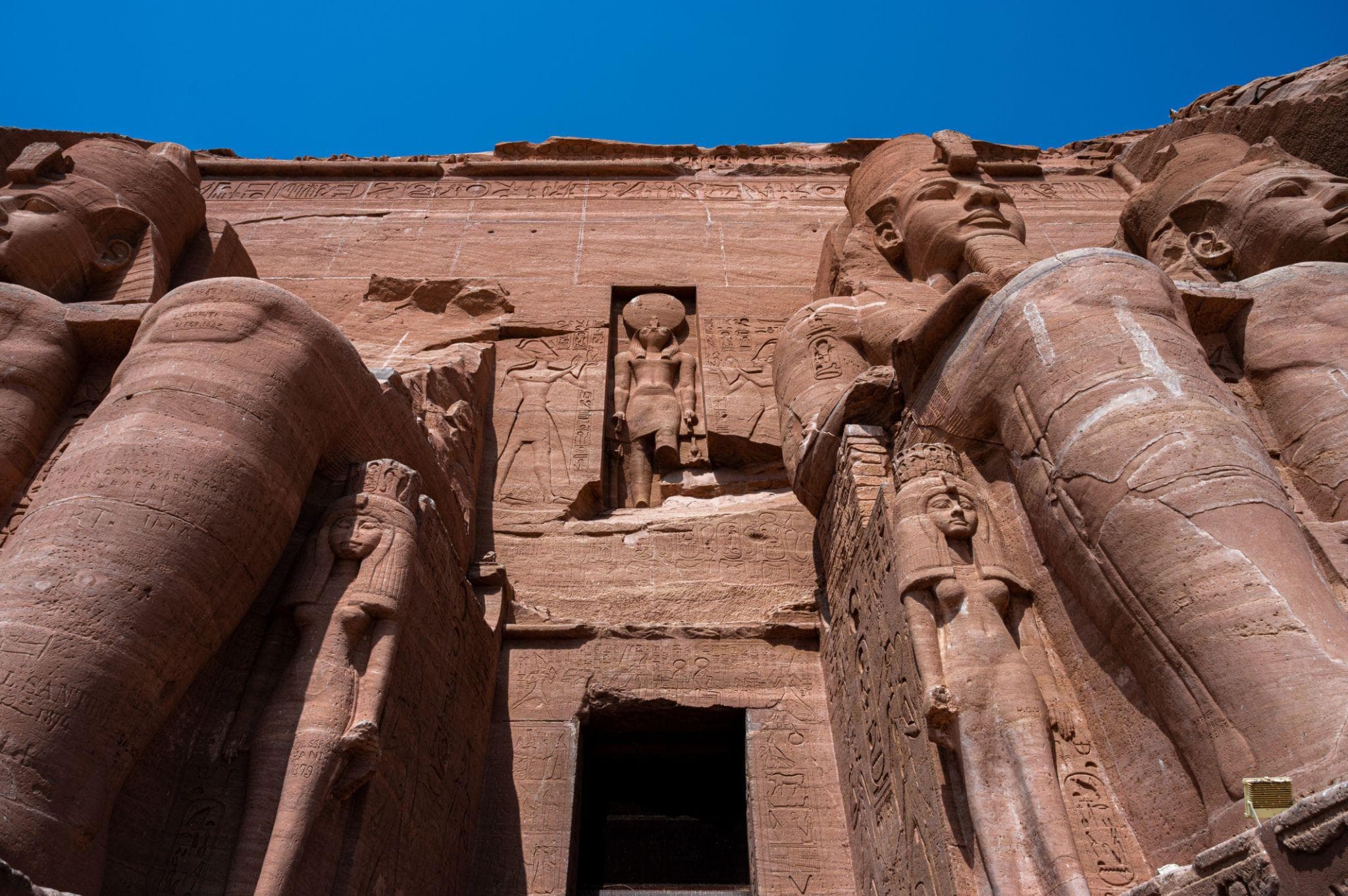
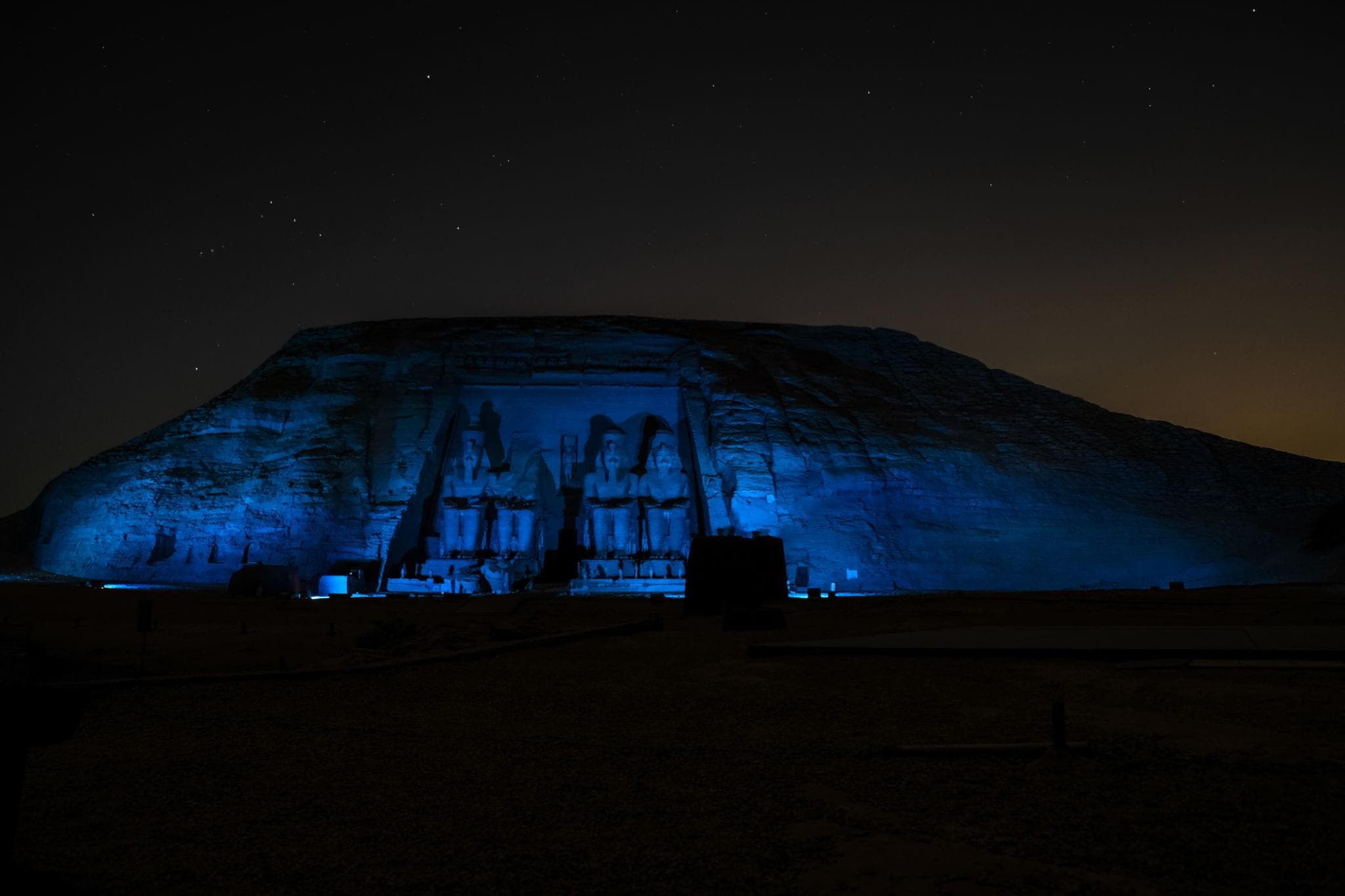
The monuments fared better than the villages. In 1960 UNESCO launched an international campaign to save the temples of Nubia, and over the next two decades more than twenty sites were dismantled and rebuilt above the waterline, the temples of Abu Simbel and Philae among them. Our guide to getting from Aswan to Abu Simbel tells how the most famous of them was moved.
There were other costs. The silt that once fertilised the fields now settles behind the dam, so farmers rely on chemical fertiliser, and the Delta coast is no longer replenished. Against that, Egypt has been spared both disastrous low floods and destructive high ones for over half a century. To see the lake from the water, read our Lake Nasser cruise guide.
Warning: Photography on the Dam
The dam is strategic infrastructure, guarded by the army and the police, and you will pass at least one checkpoint on the way. Keep your passport with you, as it may be checked.
Photographs of the lake, the river and the friendship monument from the official viewing area are normally fine. Do not photograph soldiers, checkpoints, the power station or the electrical installations, and do not wander away from the viewing area to look for a better angle. Leave long telephoto lenses in your bag, and leave drones at home altogether: flying a drone in Egypt without a permit is illegal, and customs at the airport can confiscate one on arrival. If a guard asks you to put the camera away, simply do so.
In practice most visitors take their photographs in a couple of minutes and never notice the restrictions. The same applies on the Old Aswan Dam, where stopping on the crest is not usually permitted.
The Unfinished Obelisk: The Biggest Obelisk Never Raised
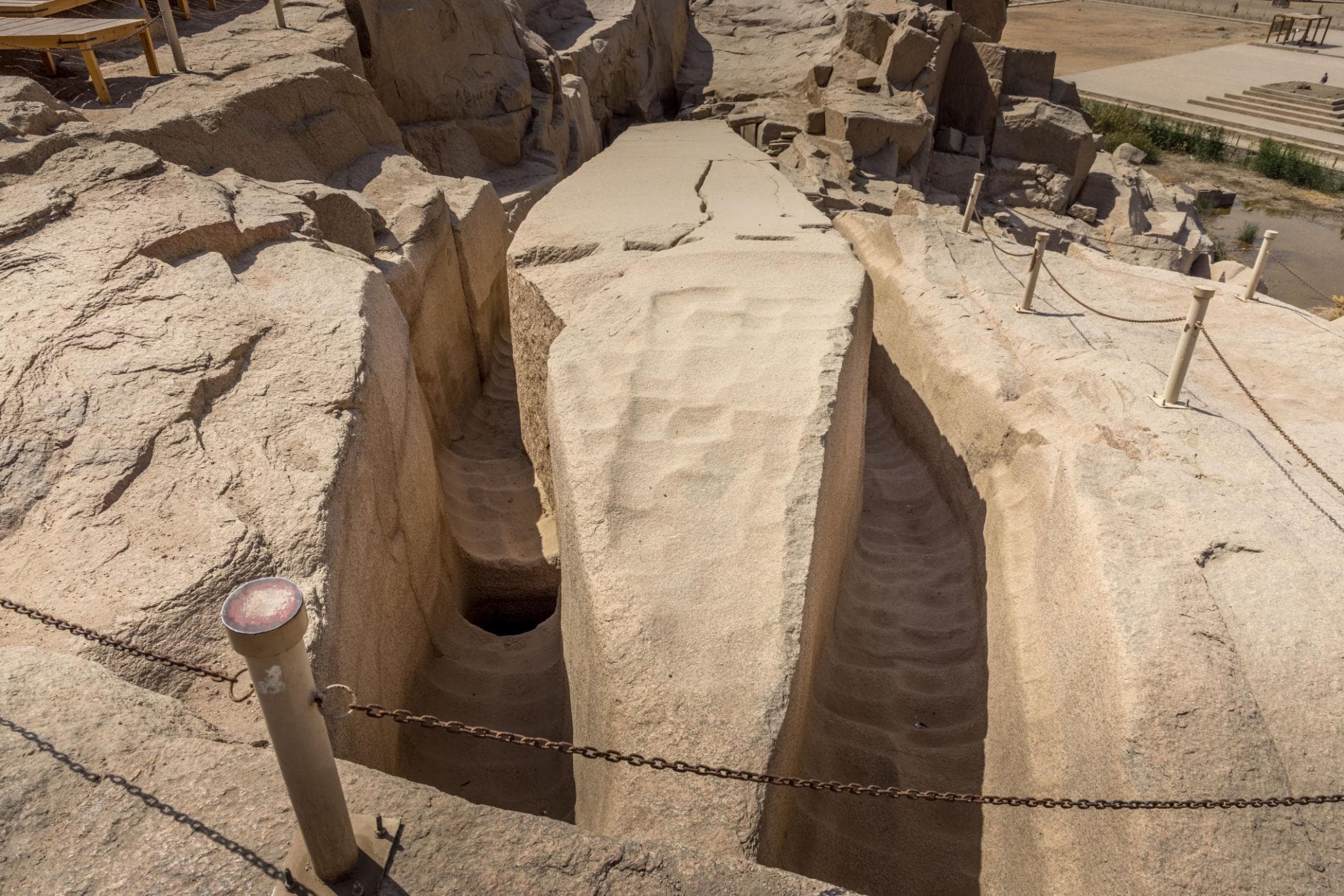
The Unfinished Obelisk lies in the ancient northern quarries, now surrounded by the southern districts of the modern city. Had it been finished, it would have been about 42 metres (138 ft) tall and weighed, by most estimates, between 1,100 and 1,200 tonnes, more than twice the weight of any obelisk known to have been raised. It is usually attributed to Hatshepsut's reign, in the fifteenth century BC, and is thought to have been meant for Karnak, though no inscription names its patron.
The quarrymen had already shaped three sides when the granite failed. Cracks ran across the shaft, and a stone that would have to be lifted, dragged and stood upright could not carry a flaw. The workers seem to have tried to salvage a smaller obelisk from the same block, then gave up. The shaft still lies in its trench, its underside joined to the bedrock, exactly where they left it.
What you see today is a broad, open quarry with steps and walkways around and above the obelisk. Looking along its length from the tip gives a sense of scale no photograph manages. Look too at the walls of the trench, where the curved marks of the pounding stones are still clear, and, in places, at the faint guide lines the workers drew in red ochre.
How the Quarrymen Worked
This is the best place in Egypt to see how hard stone was worked before iron tools. The site was cleared and studied in 1922 by the engineer Reginald Engelbach, who found balls of dolerite, a rock harder than granite, scattered in the quarry. Workers used them as pounders, crushing the granite into dust and slowly lowering a trench around the obelisk.
The trench is barely wider than a kneeling worker, and the work was presumably divided along its length, each team pounding its own section while the dust was carried away. The wavy pattern on the trench walls is the record of that work. The old story that workers split the granite with wooden wedges soaked in water is still repeated by some guides, but it is doubted for stone this hard.
The unanswered part is the next step. To free the obelisk, the workers would have had to tunnel underneath it, then move a block of more than a thousand tonnes to the river and float it more than 200 km (125 miles) downstream to Thebes. Reliefs at Hatshepsut's temple in Luxor show two of her obelisks travelling on a single great barge, and each of those weighed less than a third as much.
Did You Know: Aswan Granite Across Egypt
Aswan's pink and grey granite travelled the length of Egypt for three thousand years. Builders used it for the lining of the King's Chamber in the Great Pyramid at Giza, for colossal statues, for sarcophagi, and above all for obelisks. The obelisk of Hatshepsut that still stands at Karnak Temple, nearly 30 metres tall, came from these quarries, and it is one of the stops on our Karnak audio guide.
Ancient quarry marks, unfinished statues and abandoned blocks survive at several points around the city, on the islands and along both banks, though the Unfinished Obelisk is the only one most visitors see. Roman emperors later shipped Egyptian obelisks across the Mediterranean, and several of the ones now standing in Rome began their journey in Aswan granite.
Seeing the quarry before you travel north to Luxor makes a difference. The obelisks at Karnak and Luxor Temple stop being abstract monuments and become the end of a long, laborious chain that began in a trench like this one.
Tickets, Opening Hours and Time Needed
As of November 2026 the Unfinished Obelisk costs 220 EGP for foreign adults and 110 EGP for students with a valid international student card, about 4 USD. It opens at 7am and closes at around 4pm; check on the day during Ramadan and in summer. Payment is normally by bank card. Allow 30 to 45 minutes, and expect souvenir stalls at the entrance.
The High Dam is not an antiquities site, and its fee is collected separately on the approach to the viewing area. Most recent reports put it at about 200 EGP per person, though some quote less, and a further charge was reported in 2025 for the friendship monument. It is often included in a guided tour's price, so ask before you pay twice. The viewing area is open in daylight; allow 20 to 30 minutes.
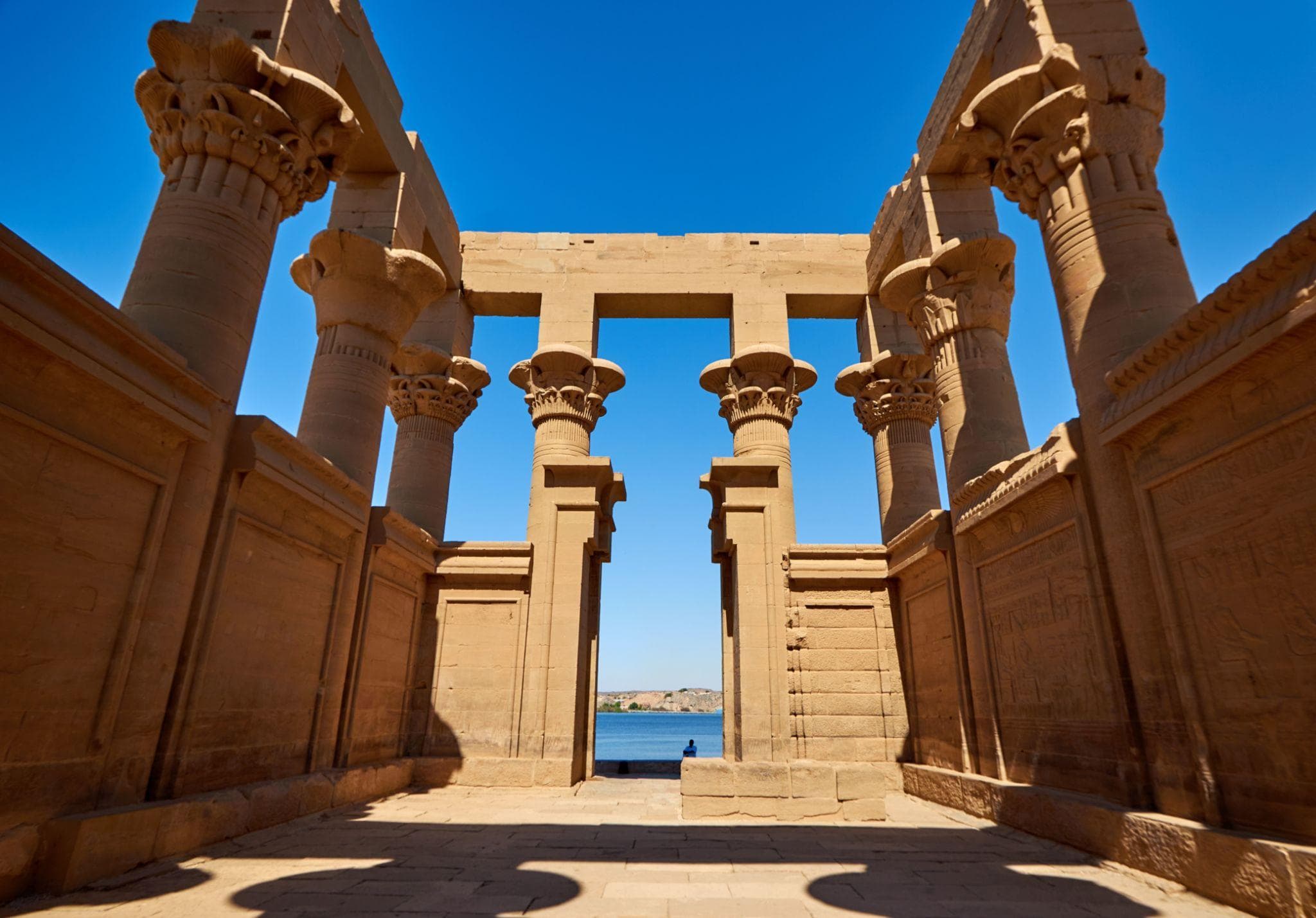
Philae, the obvious companion, costs 550 EGP for foreign adults and 275 EGP for students as of November 2026, plus a motorboat from the landing at Shellal, which is paid separately. Our Egypt ticket prices guide lists the other sites in and around the city.
Pro Tip: One Morning with Philae and the Old Aswan Dam
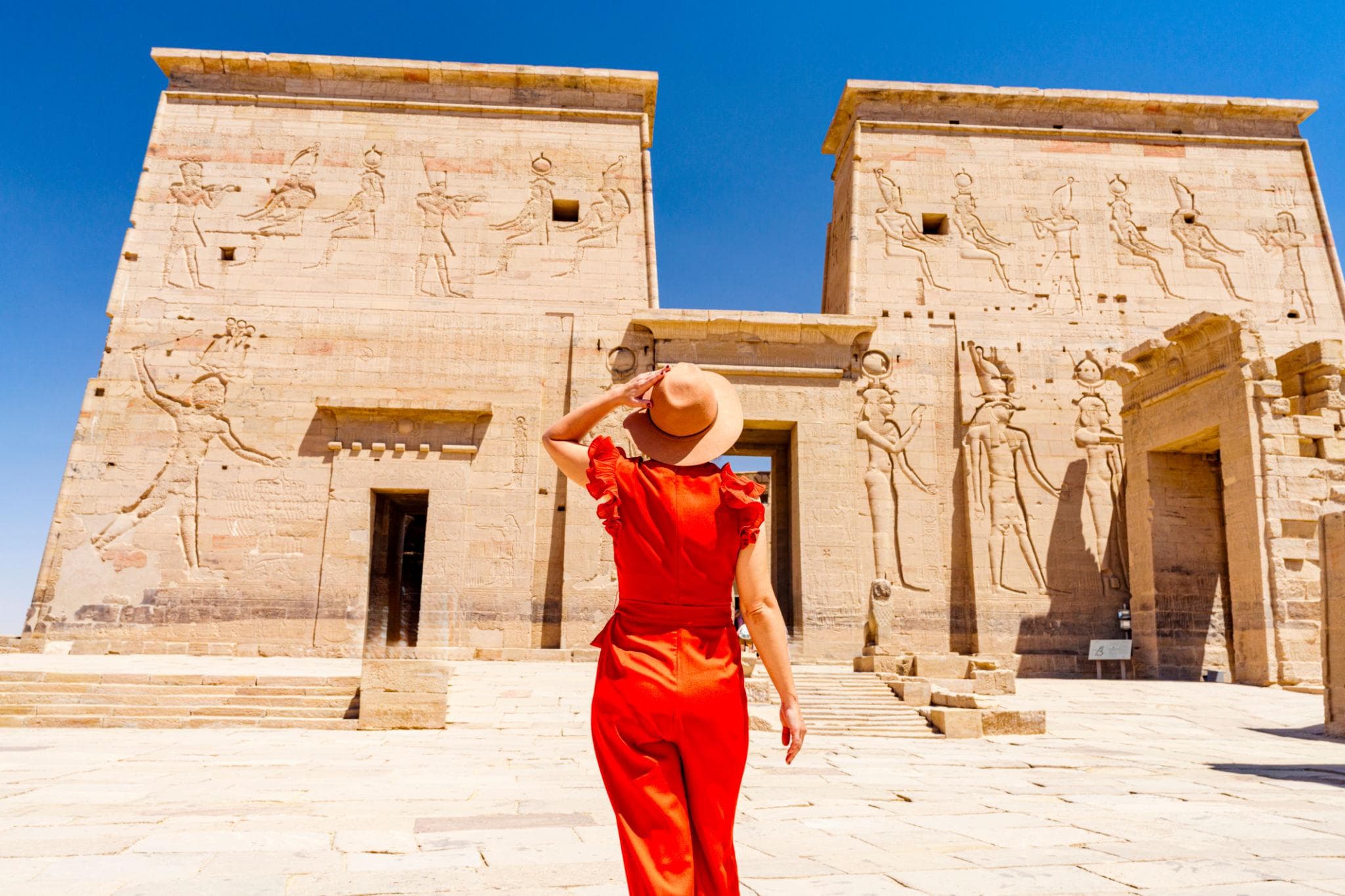
All three sights lie within about 15 km (9 miles) of each other on the southern side of the city, and a sensible loop takes four to five hours with a guide. Start at the Unfinished Obelisk at 7am opening, when the quarry is still in shade and nearly empty. From there it is a short drive south across the Old Aswan Dam, the British dam of 1902, whose crest carries the road, to the boat landing for Philae Temple.
Give Philae around two hours, including the boat ride to the island and back. Then continue south to the High Dam for the view over Lake Nasser, and return to town before the worst of the midday heat. Many cruise groups run the same sights the other way round, dam first, so this order often means a quieter obelisk.
If you prefer to finish at Philae, the island is lovely in the late afternoon light, and its own sound and light show runs in the evening. Our guide to Philae Temple and its island explains the temple of Isis and how it, too, was moved out of the rising water.
Aswan Sightseeing in the Heat
Aswan is the hottest city on the main Nile route. In June, July and August daytime highs regularly reach the low forties, around 41C to 42C (106F to 108F), and both of these sites are almost entirely exposed. By noon the granite of the quarry radiates heat, and the walk around the obelisk feels much longer than it is.
In summer, start at 7am, be back in the shade by 11am, carry water and wear a hat. From December to February the problem disappears: daytime highs average around 23C to 26C (73F to 79F), mornings are fresh, and the loop can be done at a gentler pace, with time for a felucca ride or the Nubia Museum in the afternoon.
Whatever the season, the morning light is better for both sites. The quarry is cooler and partly shaded early, and the lake behind the dam is at its bluest before the midday haze. Our Aswan travel guide covers the rest of the city and its seasons.
Planning Your Aswan Sightseeing Morning
Our Aswan tour of Philae Temple and the High Dam covers the island temple and the dam in a single morning, and the Unfinished Obelisk fits easily alongside them; we plan the order around the season and the crowds. It pairs naturally with our Abu Simbel day trip from Aswan on the following day, and both fit into the time most Nile cruise ships spend moored in Aswan, usually a day and a half or more.
If you are travelling north by road rather than by boat, our three-day Aswan to Luxor overland tour is a good way to continue, following the river towards the temples of Luxor and Karnak where the granite from these quarries ended its journey.
Tell us your dates and how much heat you are prepared to tolerate through our contact page, and we will suggest the best morning for the Aswan High Dam, the Unfinished Obelisk and Philae.