Abu Simbel is arguably the most dramatic archaeological site in Egypt. Two massive rock-cut temples, carved directly into a mountainside by Ramesses II over 3,000 years ago, stand guard on the western shore of Lake Nasser. The story of their creation — and their modern-day rescue — is one of the most remarkable in human history.
The Great Temple of Ramesses II
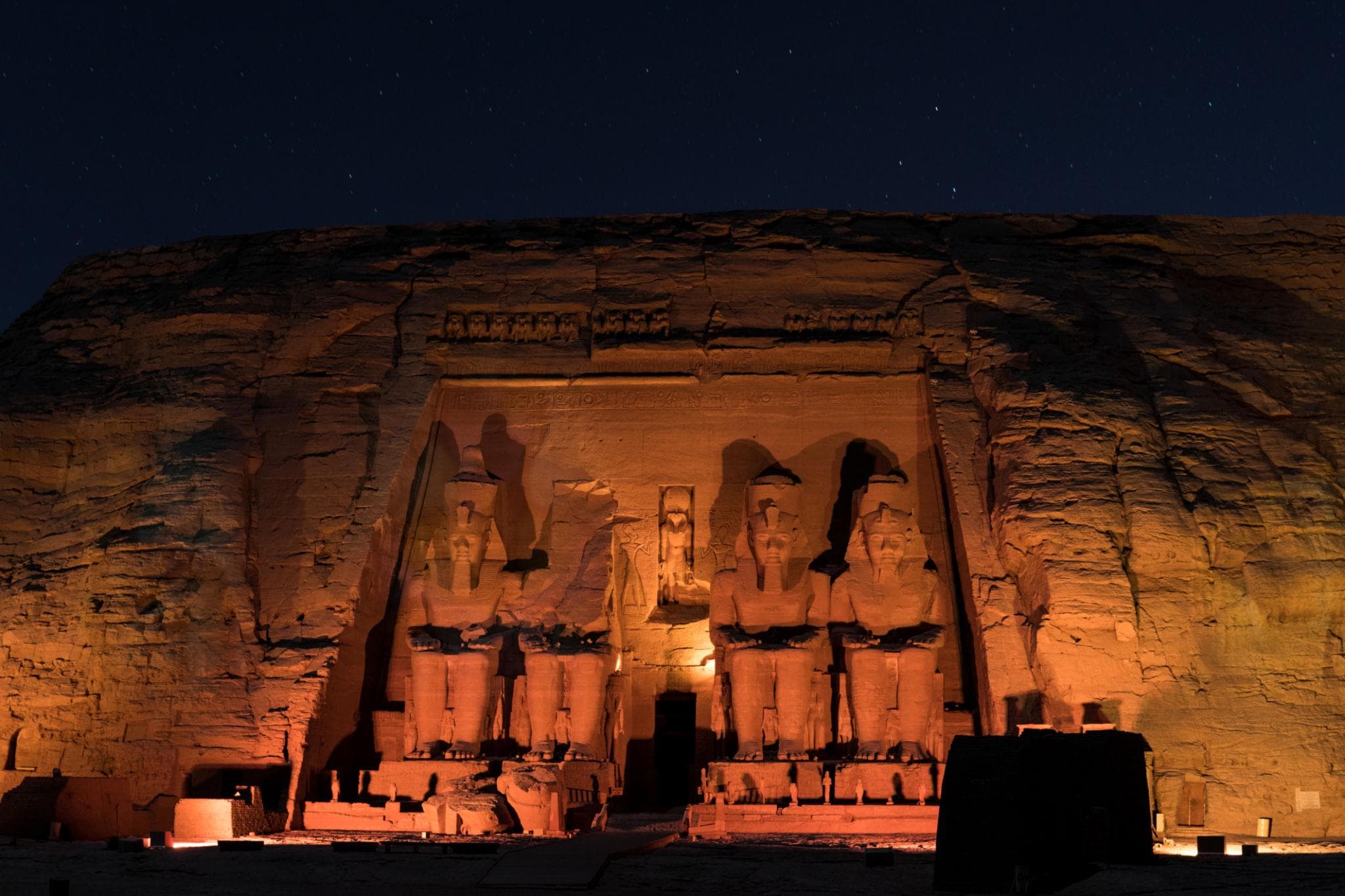
The facade of the main temple features four colossal seated statues of Ramesses II, each standing 20 meters tall. They're carved from the living rock of the cliff face, flanking the entrance to a temple that extends 56 meters into the mountain. Inside, eight 10-meter-tall Osiride pillars line the main hall, and the walls are covered with reliefs depicting Ramesses' military victories, particularly the Battle of Kadesh against the Hittites.
The inner sanctuary holds four seated statues: Ramesses II alongside the gods Amun-Ra, Ra-Horakhty, and Ptah. Twice a year — on February 22 and October 22 — the rising sun penetrates the entire length of the temple and illuminates three of the four statues. Ptah, the god of the underworld, remains in shadow. This solar alignment, engineered 3,200 years ago, is accurate to this day.
The Temple of Nefertari
The smaller temple, dedicated to Ramesses' beloved wife Nefertari and the goddess Hathor, is equally impressive in its own way. It's one of the very few temples in Egypt dedicated to a queen. The facade features six standing statues — four of Ramesses and two of Nefertari — each 10 meters tall. Inside, the hall is supported by Hathor-headed pillars, and the reliefs show Nefertari making offerings to the gods.
The UNESCO Rescue
In the 1960s, the construction of the Aswan High Dam threatened to submerge Abu Simbel under the waters of the newly formed Lake Nasser. In one of the greatest engineering projects of the 20th century, UNESCO coordinated the cutting of both temples into over 1,000 blocks (each weighing 20-30 tons) and their reassembly 65 meters higher and 200 meters further from the river. The project took four years (1964-1968), cost $40 million, and involved engineers from over 50 countries.
Getting There
Abu Simbel is 280 km south of Aswan. Most visitors take the 3-hour drive through the desert, departing around 3:30 AM to arrive at sunrise. Short flights from Aswan (45 minutes) are also available but less frequent. Our 5 Days Cairo, Luxor & Abu Simbel Tour includes the Abu Simbel visit with all transport arranged.
Tips for Your Visit
Arrive early for the best light and smallest crowds. Photography is allowed outside but prohibited inside the temples. The visitor center near the entrance has an excellent exhibition about the UNESCO rescue. Bring water and sun protection — there's limited shade. Allow at least 2 hours to see both temples thoroughly.
Sound and Light Show
Abu Simbel hosts an evening Sound and Light show that illuminates the temple facades while narrating their history. If you're staying overnight in Abu Simbel village (recommended to avoid the grueling early-morning drive from Aswan), the show is a magical experience under the stars.