The ticket for the Valley of the Kings tombs looks simple: one entry, three tombs. Then you reach the board at the gate listing what is open that day, with numbers instead of names, and a queue forms behind you while you try to remember whether KV11 was the one with the harpists. Most people pick the three nearest tombs and walk out without knowing what they missed.
The valley holds more than 60 tombs, cut into the Theban hills between about 1500 and 1070 BC for the kings of the New Kingdom, and about a dozen are open at any one time. Choosing among the Valley of the Kings tombs is the most important decision of your visit, and worth making before you arrive.
This guide explains how the tickets work as of November 2026, which tombs are usually open, our ranking by what you see and how hard each one is to reach, the extra tickets for Tutankhamun, Seti I and Ramesses VI, a route that follows the stops of our audio tour, and how to combine the valley with the Temple of Hatshepsut.
At a Glance
Standard ticket: 750 EGP, students 375 EGP, for any three of the tombs open that day, as of November 2026
Tutankhamun, KV62: 700 EGP extra, students 350 EGP
Seti I, KV17: 2,000 EGP extra, no student rate
Ramesses V and VI, KV9: 220 EGP extra, students 110 EGP
Open on the standard ticket: about ten tombs, in rotation, posted at the entrance
Opening hours: from 6am, closing around 5pm, earlier on some winter and Ramadan schedules
From the visitor centre: a small electric train, reported at around 20 EGP, or a short walk
Time needed: 2 to 3 hours for three tombs and one or two extras
Combine with: the Temple of Hatshepsut, about 20 minutes away by road
How the Valley of the Kings Ticket Works
The Valley of the Kings ticket for 2026 costs 750 EGP for foreign adults and 375 EGP for students with an ISIC card, about US$14, and it admits you to three tombs of your choice from those open that day. The guardian at each tomb door punches or tears the ticket, so once you have used three, you are done. Three tombs have separate tickets that do not count against your three: Tutankhamun (KV62) at 700 EGP, Ramesses V and VI (KV9) at 220 EGP, and Seti I (KV17) at 2,000 EGP, with no student reduction for Seti I.
Buy everything at once at the ticket office in the visitor centre at the bottom of the valley, where there are also self-service machines. Payment is by bank card only, as at all of Luxor's major sites. Tickets for the special tombs are not usually sold at the tomb doors, so decide before you walk up.
The Luxor Pass, at US$130 standard or US$250 premium for five days, covers the valley and almost every other site in Luxor; the premium version includes Seti I. It pays off only over three or more full days of sightseeing. The tomb of Ay in the Western Valley has its own ticket, reported at around 200 EGP, and needs a car. Prices are due to change at some Luxor sites from April 2027, so check our Egypt ticket prices guide close to your visit, and our main Valley of the Kings guide for the history of the valley.
Which Valley of the Kings Tombs Are Open
To limit damage from breath, humidity and touch, the antiquities authorities rotate the tombs, closing some for months while others open. The board at the entrance is the only reliable list for the day. As of November 2026, visitor reports agree on about ten tombs on the standard ticket: Ramesses VII (KV1), Ramesses IV (KV2), Ramesses IX (KV6), Merenptah (KV8), Ramesses III (KV11), Tausert and Setnakht (KV14), Seti II (KV15), Ramesses I (KV16), Thutmose IV (KV43) and Siptah (KV47), plus the three extra-ticket tombs.
Some well-known tombs are not on that list. The tomb of Thutmose III (KV34), high in a cleft at the far end of the valley, appears in the rotation only some years, so check the board. KV5, the vast tomb of the sons of Ramesses II with more than a hundred chambers, is not open to visitors. The tomb of Amenhotep III in the Western Valley reopened in October 2025 after two decades of restoration, but access remains very limited and it is not part of the standard ticket.
On the other side of the hills, the tomb of Nefertari in the Valley of the Queens has been closed through 2025 and 2026, with no reopening announced as of November 2026. If it reopens, it will be news, and our guide to Nefertari's tomb and the Valley of the Queens will carry it.
Our Pick: The Best Tombs in the Valley of the Kings
If the rotation allows, these are the best tombs in the Valley of the Kings, ranked by what you see for the effort and the money:
- Seti I (KV17, extra ticket): the finest decoration in the valley, but expensive
- Ramesses V and VI (KV9, extra ticket): astronomical ceilings and the best value of any special ticket
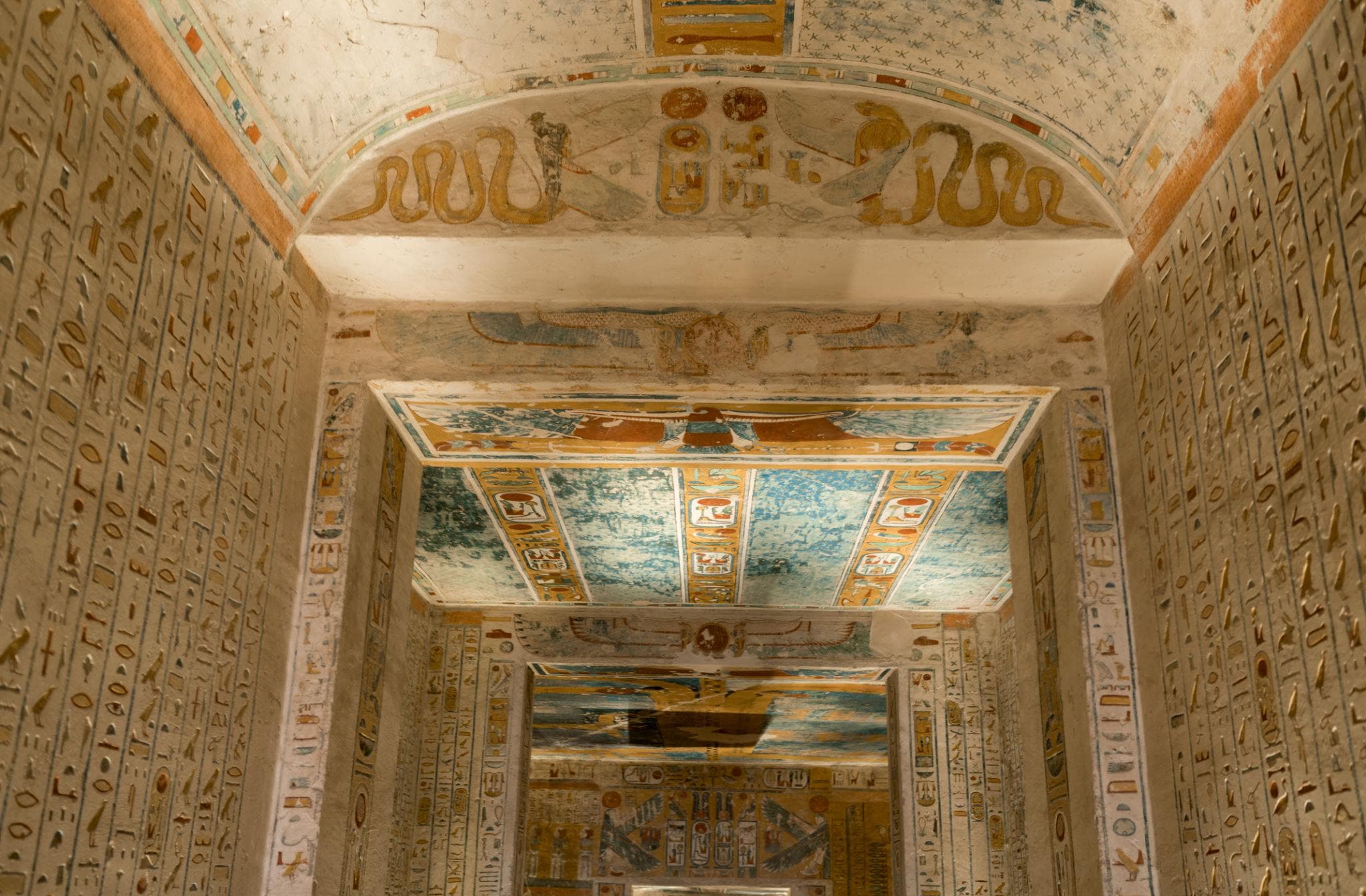
- Ramesses III (KV11, standard): long, colourful, with unusual scenes of daily life
- Ramesses IV (KV2, standard): bright colour, an easy walk, near the entrance
- Merenptah (KV8, standard): grand scale and a huge granite sarcophagus lid
- Tausert and Setnakht (KV14, standard): a queen's tomb taken over by a king, quieter than most
Tutankhamun belongs on a different list, explained below. For a first visit on a budget, take Ramesses IV, Ramesses III and Merenptah on the standard ticket and add Ramesses V and VI. For a once-in-a-lifetime visit, add Seti I as well. If any of these are closed, Ramesses IX (KV6) and Ramesses I (KV16) are the best substitutes: both are well painted and quick to visit.
The ranking is about decoration, not fame. The New Kingdom kings were buried with the same funerary books, guides to the underworld that the sun god travelled each night, but the craftsmen who carved and painted them varied in skill, time and budget, and so do the tombs.
Is the Tutankhamun Tomb Ticket Worth It
Tutankhamun's tomb, found by Howard Carter on 4 November 1922, is small and plain by the standards of its neighbours. A short stair and corridor lead to the antechamber and the burial chamber; only the burial chamber is painted, with the Opening of the Mouth ceremony performed by his successor Ay and a row of twelve baboons from the book of the underworld. The quartzite sarcophagus is still there, and so is the king himself: his mummy lies in a climate-controlled glass case, one of the very few royal mummies still in its own tomb.
Its treasures, more than 5,000 objects, now fill galleries at the Grand Egyptian Museum in Giza, described in our Tutankhamun treasures guide. So the Tutankhamun tomb ticket is 700 EGP for a ten-minute visit to a small, cramped space, often with a queue.
Is it worth it? For most people, yes, once. Seeing the face of the king where he was buried more than 3,300 years ago is a moment that the more spectacular tombs cannot give you, and the paintings, restored in a long conservation project completed in 2019, are crisp. If your budget only stretches to one extra, though, KV9 shows you far more for less.
Is the Tomb of Seti I Ticket Worth 2,000 EGP
The tomb of Seti I, father of Ramesses II, is the reason serious visitors come to the valley. Found by Giovanni Belzoni in 1817, it runs about 137 m (450 ft) into the hill and is decorated almost from end to end in raised relief of the highest quality, with colour that survives in long passages. Its burial chamber has an astronomical ceiling of constellations and the sky goddess, and the empty space where its alabaster sarcophagus stood is a reminder that the original is in a museum in London.
The tomb of Seti I ticket costs 2,000 EGP, about US$36, the most expensive single ticket in Luxor. There is no student reduction. Because of the price, it is usually quiet, which makes it one of the few places in the valley where you can stand in a decorated chamber alone.
It is also a steep tomb, with long flights of stairs and ramps down to the burial chamber, so allow 30 minutes and some effort on the way back up. If you love Egyptian art, it is worth every pound. If you are lukewarm about tombs or travelling with children, spend the money on KV9 and an extra hour at the Temple of Hatshepsut.
The Standard-Ticket Tombs Ranked by Climb
Effort varies enormously. The easiest tombs are close to the main path with gentle slopes: Ramesses IV (KV2), just inside the entrance, with Coptic graffiti from monks who later lived in it; Ramesses IX (KV6), with a wide, bright corridor; and Ramesses V and VI (KV9), whose long, gently sloping passages are among the most comfortable in the valley.
Middle effort means longer corridors and some stairs: Ramesses III (KV11), known as the Tomb of the Harpers for the musicians painted in a side chamber, and Tausert and Setnakht (KV14), about 110 m (360 ft) long, with two burial chambers. Ramesses I (KV16) is short but begins with a steep stair, and rewards you with a single brightly painted chamber.
The hardest are Merenptah (KV8), a long, steep descent to the burial chamber, and, when it is open, Thutmose III (KV34), reached by a steep metal staircase up a cleft in the cliff and then down a narrow shaft. Its oval burial chamber is painted like an unrolled papyrus with stick-like figures, unlike anything else in the valley. Inside every tomb the air is warm and humid, and wooden walkways and handrails cover the floors. Visitors with limited mobility should stick to KV2, KV6, KV9 and KV62.
A Self-Guided Route Through the Valley
Our Valley of the Kings audio guide has 13 stops and about 26 minutes of narration in English, and its order follows the path up the valley. Its stops are named after the tombs, so you can also listen at the doors of those you are not entering and still come away with the whole story.
Start at the visitor centre, where a model of the valley shows how the tombs run into the hill. From the train stop, stop 1 is a welcome, and stop 2 is Ramesses IV, close to the entrance. Stop 3 is the gated entrance to KV5 and the sons of Ramesses II, and stop 4 is Ramesses IX, whose reign saw the great tomb-robbery trials recorded on papyrus. Stop 5 is Tutankhamun, at the centre of the valley, and stop 6 is Ramesses V and VI beside it, whose builders' debris helped hide Tutankhamun's entrance for three thousand years.
Continue to Merenptah (stop 7) and Ramesses III (stop 8), then turn into the side valley to the south-west for Ramesses I (stop 9) and Seti I (stop 10), father and son side by side. Stop 11 is Tausert and Setnakht, and stop 12, Thutmose III, sits at the far southern end, worth the walk to the foot of its cleft if the path is open. Stop 13 is a farewell on the way back down. The whole loop is about 2 km (1.2 miles) of walking on a gentle slope, plus the stairs inside the tombs.
Warning: Photography Rules and the Tomb Guardians
Photography rules in the valley have changed several times, and they still change. As of late 2026, recent visitors report that photographs with a phone, without flash, are allowed inside the tombs at no extra charge. Dedicated cameras have needed a separate photography ticket, and photography in the special tombs has sometimes been restricted, so ask at the ticket office. Flash is forbidden everywhere, and tripods need a permit.
Guardians at the tomb doors check tickets and keep visitors moving. Some will offer, for a tip, to let you photograph a forbidden area, step behind a barrier or see a closed chamber. Do not accept: it breaks the rules that protect the paint, and the authorities have recently disciplined security staff in Luxor over unauthorised tomb access. A small tip for a guardian who points out a genuine detail is a different matter, and normal.
Do not touch the walls, and keep bags close when you squeeze past other people in the narrow corridors. Many of the worst scratches in the tombs come from backpacks.
Pro Tip: Heat, Timing and the Tuf-Tuf
The valley is a bowl of bare limestone that traps heat and reflects light, and it is several degrees hotter than the riverbank. In summer it passes 40C (104F) by late morning; in December and January highs are around 23C (73F), but the sun is still fierce. Be at the gate when it opens at 6am, see your chosen tombs before the coach groups arrive from around 8:30, and be out by late morning.
From the ticket office, the tuf-tuf, a small open electric train, runs the few hundred metres up to the valley entrance for a small fee, reported at around 20 EGP; bring small notes in case it is cash only. You can walk the same distance in about ten minutes. There is very little shade inside the valley apart from a few shelters, so bring a hat, sunglasses and at least a litre of water per person.
Charge your phone fully before a tomb day and carry a power bank: photographs, maps and an audio guide drain a battery fast, and the valley is no place to run out. Earbuds let you listen without holding the phone to your ear in a crowded corridor.
Combining the Valley With Hatshepsut and the Valley of the Queens
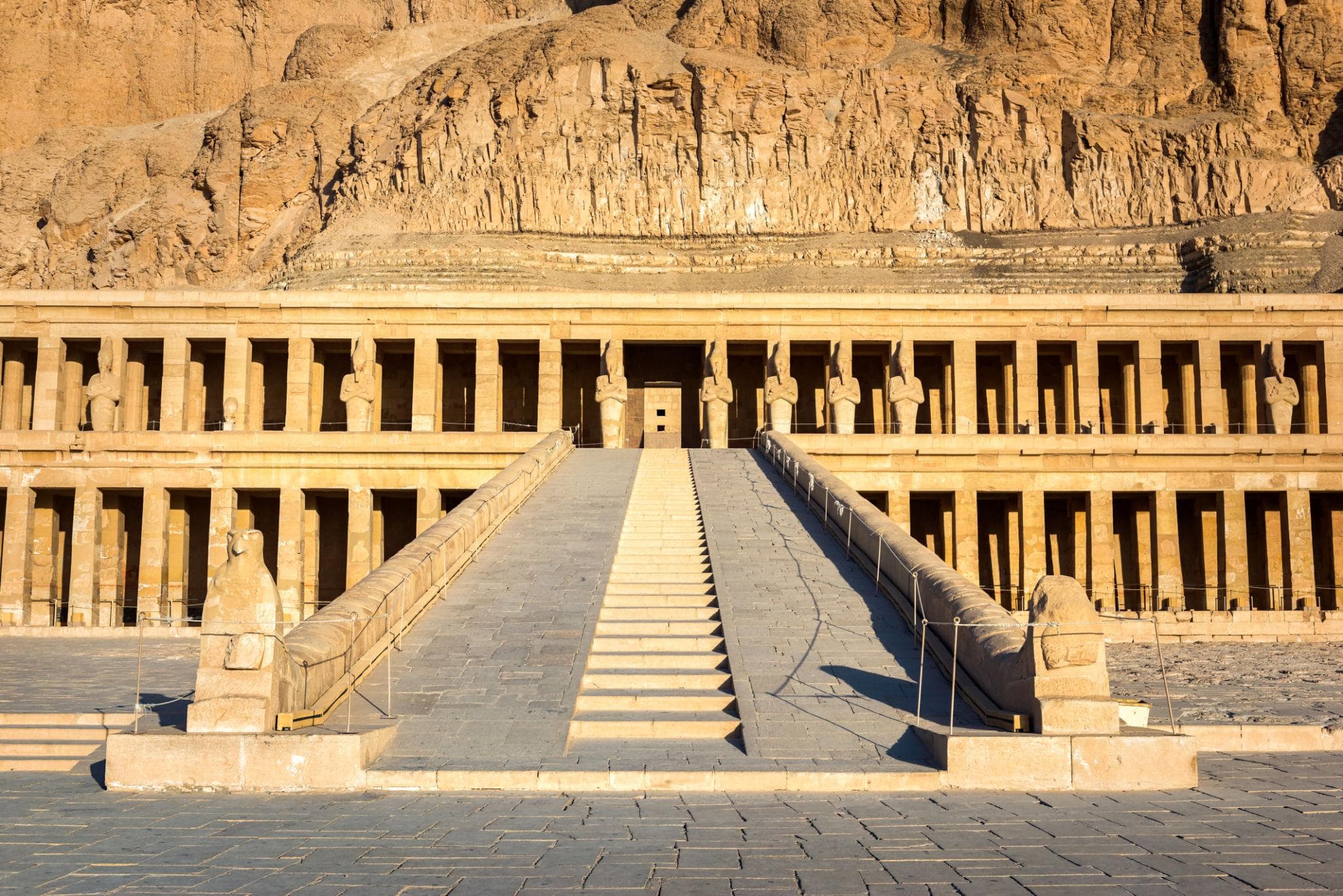
The Temple of Hatshepsut lies just over the ridge from the Valley of the Kings, about 20 minutes by road. Do the tombs first at opening, then the temple from around 10am, or reverse the order if you want the temple's façade in early light; our Temple of Hatshepsut guide covers its ticket, 440 EGP as of autumn 2026, and our Hatshepsut audio guide takes you through its three terraces in 12 stops.
With a full day, add the Valley of the Queens, where the painted tombs of royal princes are usually open even while Nefertari's is closed, and Medinet Habu, the best-preserved temple on the West Bank. Our guide to the Karnak and Luxor Temple self-guided route fills an East Bank day on either side.
Plan for roughly two to three hours in the valley, one to one and a half at Hatshepsut, and the drive between. A driver for the morning, booked through your hotel or arranged in advance, is the simplest way to link the sites, since taxis waiting at the valley set their own prices.
Planning Your Valley of the Kings Visit
For a self-guided visit, decide your tombs the night before, buy all your tickets at once at the visitor centre with a bank card, and be at the gate at 6am. Hear the first stop of the Valley of the Kings audio tour free before you buy; it costs US$7, one purchase covers all seven of its languages, and once opened on Wi-Fi it plays offline in the tombs, where there is often no signal. On site the map shows your position, so you can match each stop to the right door even when the numbers on the board blur together.
If you prefer an Egyptologist to choose the tombs and handle the logistics, our ultimate Luxor East and West Bank tour covers the valley, Hatshepsut and Karnak, our private Luxor tour from Hurghada with a balloon flight starts with sunrise over the West Bank, and our sleeper train tour from Cairo to Luxor brings you overnight to the valley's door.