The minibus leaves the hotel at a quarter to five, when the lobby lights are still on and a breakfast box on the seat is the only sign of the day ahead. The coast road runs south to Safaga, then turns inland into the Red Sea Mountains, bare ridges of red and grey rock without a tree. In the fourth hour the desert stops as if cut with a knife, and you drive into sugar cane and palm groves at Qena. That moment is half the reason so many beach holidays include a Luxor day trip from Hurghada. What waits an hour further south is the other half.
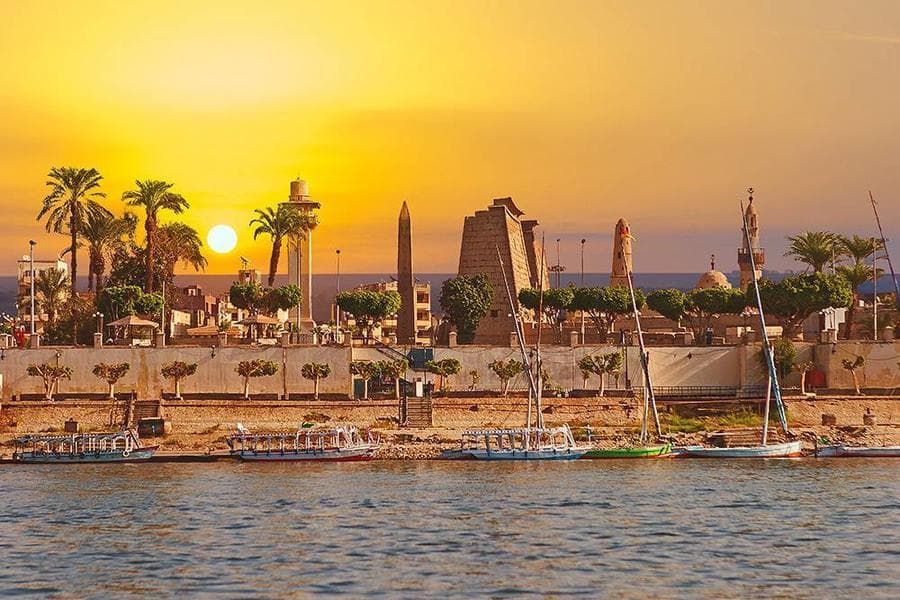
Luxor packs Karnak, Luxor Temple, the Valley of the Kings and the Temple of Hatshepsut into a few kilometres on both banks of the Nile, which is why a single day there is possible at all. It is also a long day: around eight hours on the road for perhaps seven in Luxor itself.
This guide covers the Hurghada to Luxor road as of November 2026, including the distance, realistic journey times and what has become of the old police convoy, what fits honestly into one day and when an overnight stay is the better choice, private versus group excursions, what you will pay at the ticket offices, and the mistakes we see most often.
At a Glance
Distance: about 290 km (180 miles) by road, via Safaga and Qena
Driving time: 3.5 to 4.5 hours each way, depending on your resort and the checkpoints
Typical departure: 4am to 5am from Hurghada hotels, back between 8pm and 10pm
Time in Luxor on a day trip: about six to seven hours
Convoy: no longer compulsory for private vehicles; police checkpoints remain, so carry your passport
Realistic in one day: Karnak, the Valley of the Kings and the Temple of Hatshepsut
Needs an overnight: a sunrise balloon flight, Luxor Temple after dark, a wider West Bank
Main tickets: Karnak 600 EGP, Valley of the Kings 750 EGP, Hatshepsut 440 EGP, card only, as of November 2026
Best months: October to April, with Luxor daytime highs of about 22C to 30C (72F to 86F)
Is a Luxor Day Trip from Hurghada Worth It
For most people with a week on the Red Sea, yes. Nothing on the coast compares with Karnak or the painted tombs of the Valley of the Kings, and the road is the only way to reach them without giving up a night at the beach. Go with clear expectations, though. A Luxor day trip from Hurghada is a sixteen-hour day with about eight hours in a vehicle, and the time on site is enough for three major monuments, not for Luxor as a whole.
The arithmetic is simple. Leave your hotel at 4:30 or 5am, arrive at Karnak on the East Bank by about 9am, spend the day on both banks of the river, and start back between 4pm and 5pm. With one rest stop each way, you will be back in Hurghada between 8:30pm and 10pm, earlier from the southern resorts and later from El Gouna.
It suits adults and older children who sleep well in a moving car and want the essentials in one go. It suits less well families with small children, travellers with back problems, and anyone who wants to fly in a balloon, see Luxor Temple lit at night or spend more than a morning on the West Bank. For them, the overnight version described below costs one night away from the beach and turns a marathon into a proper visit. If you are still deciding how to divide your holiday, our Hurghada travel guide covers the other excursions from the coast.
Hurghada to Luxor by Road: Route, Distance and Timing
There is one sensible route. From Hurghada the coast road runs about 55 km (35 miles) south to Safaga, where the highway turns west across the Eastern Desert to Qena on the Nile, a crossing of roughly 160 km (100 miles) through the Red Sea Mountains. At Qena you join the valley road south for the last 60 km or so to Luxor. In total it is about 290 km (180 miles) from central Hurghada, and the desert section has been largely renovated in recent years.
A private car usually needs three and a half to four hours of driving, plus a rest stop and the time spent at checkpoints. Larger coaches are slower. Your resort makes a difference: Makadi Bay, Sahl Hasheesh and Soma Bay lie south of Hurghada and closer to the turn-off at Safaga, so they save time, while El Gouna, north of town, adds about half an hour each way.
The road reaches Luxor from the north, which is convenient, because Karnak stands at the northern end of the town. The West Bank is reached by the bridge south of the centre, a detour of about 20 to 30 minutes, which is why most day trips see Karnak first and then cross the river.
Public buses run between the two cities in about four hours for a few dollars, but their timetables leave no useful time on site for a same-day return. There is no dependable direct flight either; connections usually run via Cairo. For a day trip, the road is the only practical way.
Good to Know: What Happened to the Convoy
For many years, tourist vehicles between the Red Sea and the Nile valley had to travel in police-escorted convoys that left at fixed times, often before dawn. The compulsory convoy system was formally ended years ago, and as of November 2026 private cars and minibuses with tourist licences drive independently, at a time that suits their passengers.
What remains is a series of police checkpoints along the route, typically at the edges of towns and at the junctions near Safaga and Qena. Drivers show their licence and the trip's paperwork, and officers sometimes ask to see passengers' passports, so carry yours, not a photocopy left in the hotel safe. The stops usually take a minute or two. Large coach excursions often still leave at much the same early hour and may be grouped for parts of the journey when the security services decide it is necessary, which has happened in the past, so ask your operator how its trip runs.
We do not recommend driving the route yourself in a rental car. The desert road is fast and lonely, trucks and unlit vehicles make it unpleasant after dark, and on a day trip in winter the return is always after sunset.
What Fits Into One Day in Luxor
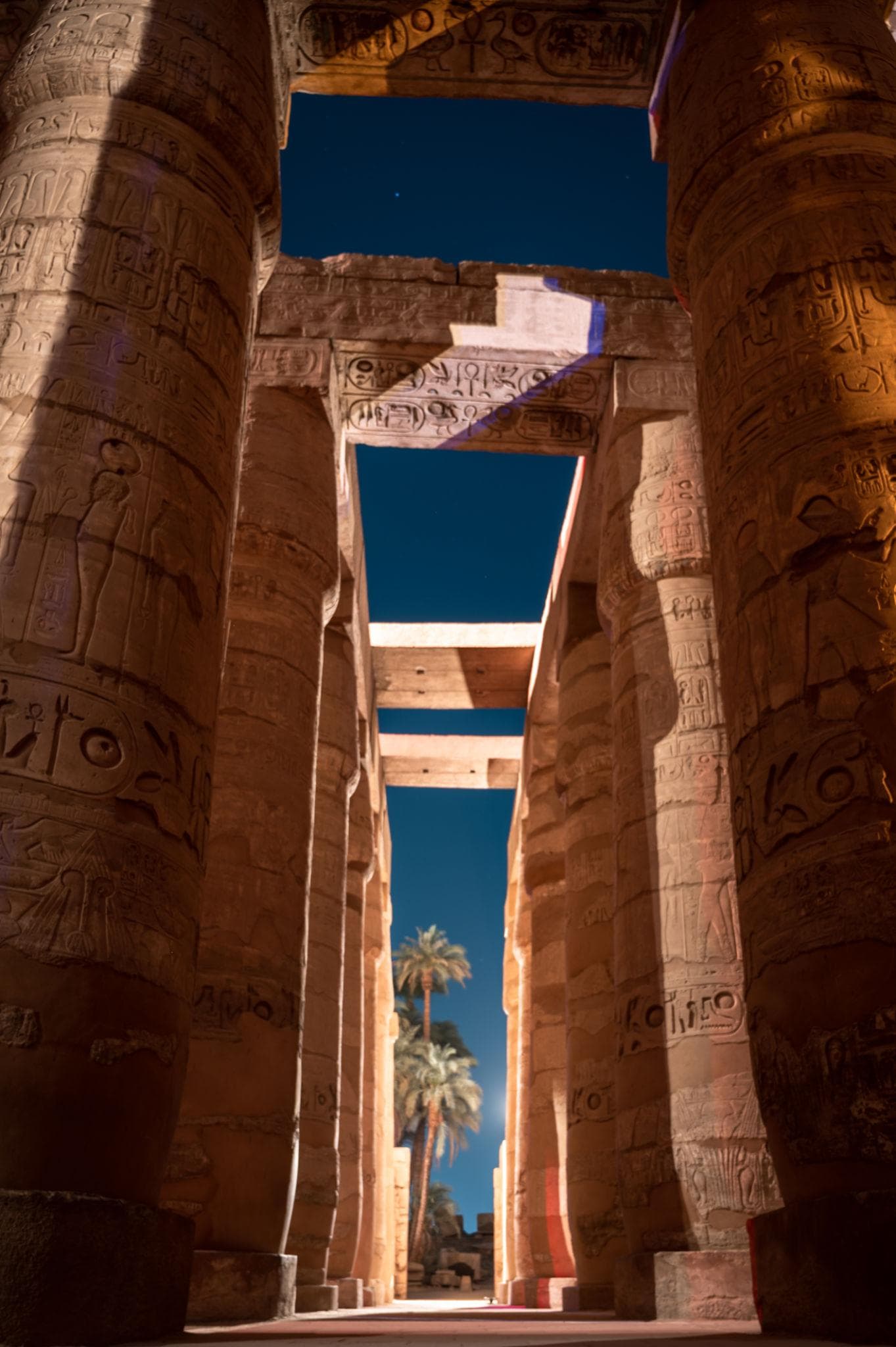
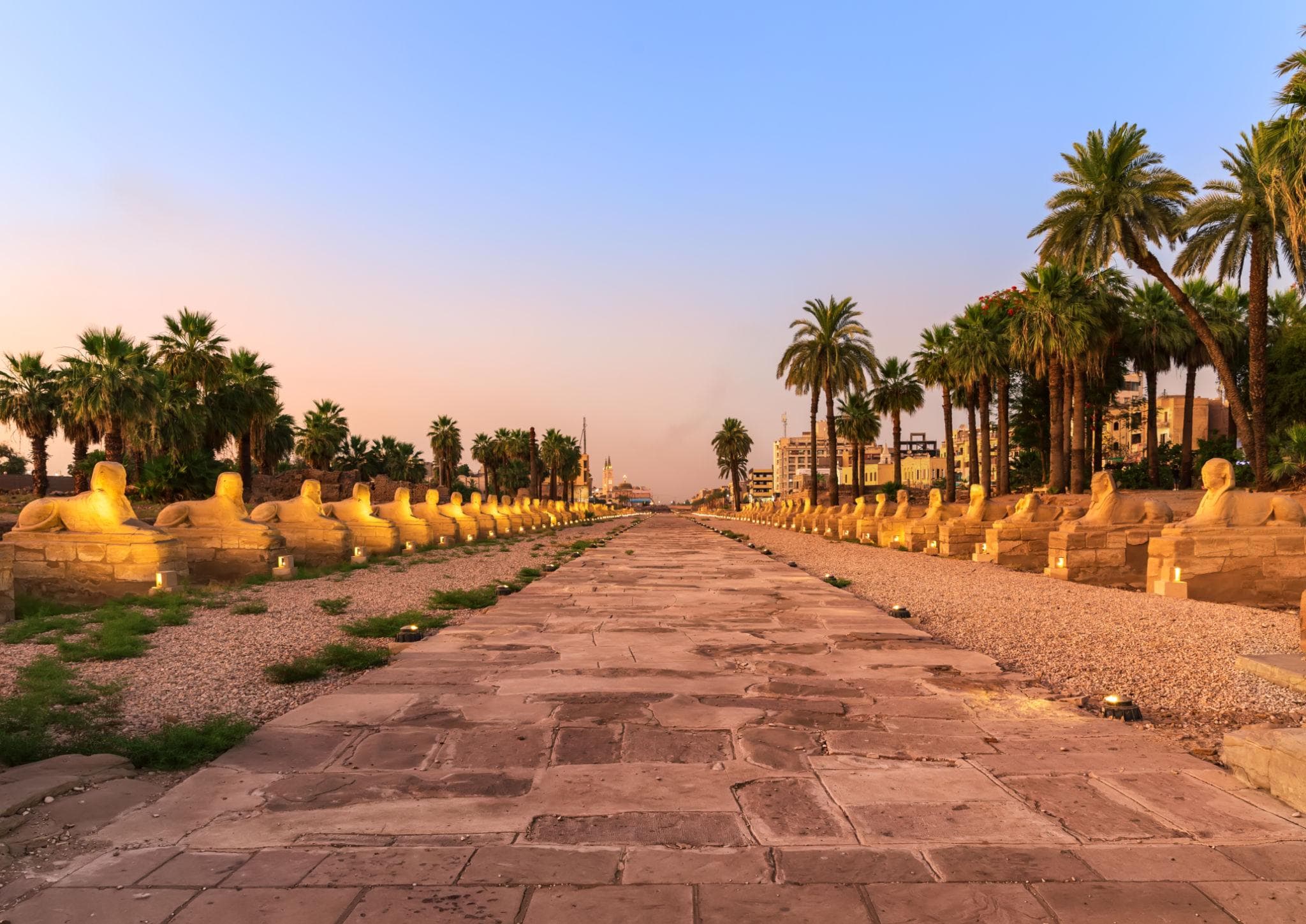
Think in terms of three major sites and a lunch, not more. The classic Luxor day trip from Hurghada begins with Karnak Temple, the largest temple complex of ancient Egypt, from about 9am to 11am: the avenue of rams, the great court, the Hypostyle Hall with its 134 columns, the obelisks and the sacred lake. Two hours is the minimum that does it justice.
Then cross to the West Bank for the Valley of the Kings, where the standard ticket opens three tombs from those open that day. Allow about an hour and a half on site, longer if you add Tutankhamun's tomb. The Temple of Hatshepsut lies just over the ridge, about fifteen minutes away by road, and takes an hour. A brief stop at the Colossi of Memnon, two seated giants beside the road, costs nothing and fits in on the way back to the bridge. Lunch is usually taken on the West Bank or on a boat between the two halves of the day.
That leaves something out. Luxor Temple, in the centre of town, is often seen only from outside on a day trip, or swapped for Hatshepsut if you prefer the East Bank. The Tombs of the Nobles, Medinet Habu, the Valley of the Queens and the Luxor Museum need another day. Our Luxor travel guide explains what each adds, and our guide to Karnak and Luxor Temple without a guide suggests routes through the two East Bank temples if you want to plan the morning yourself.
The Overnight Option: Two Days, the West Bank and a Balloon
A night in Luxor changes the character of the trip. On the first day you drive over, visit Karnak at a gentler pace and, after dark, walk through Luxor Temple when it is floodlit, the obelisk and the colossi of Ramesses II glowing against a black sky. Dinner by the Nile, a bed, and no return drive in the dark.
The second morning starts early for a different reason. Hot air balloons lift off from the West Bank around sunrise and drift over the fields, the temples and the edge of the desert for about 40 to 60 minutes. As of 2026, a place in a shared basket typically costs somewhere between about US$50 and US$130 per person, depending on season and operator, with private baskets several times that. Flights are cancelled when the wind is wrong, so an overnight trip gives you a chance a day trip never can: from Hurghada, even the earliest departure arrives hours after the balloons have landed. Our Luxor hot air balloon guide covers safety and how to choose an operator.
After landing, the West Bank is yours at opening time, when it is coolest and quietest: the Valley of the Kings first, then Hatshepsut, and Medinet Habu or the Tombs of the Nobles if energy allows, before an afternoon drive back to the coast. Our overnight Luxor trip from Hurghada follows this shape, and the private Luxor tour from Hurghada with a balloon flight builds the morning around the sunrise launch. With three days, you can continue south to Aswan.
Private Tour or Small Group Coach
Most hotels in Hurghada sell a coach excursion to Luxor, and it is the cheapest way to go. The trade-offs are predictable. A large coach collects passengers from several hotels, which can add an hour at the start; the programme is fixed; the guide works with forty or more people, sometimes in two languages at once; and lunch is at a set restaurant. Many coach trips also include a stop at an alabaster workshop or a papyrus shop, which takes time out of the sites.
A small-group minibus of eight to fourteen people is quicker at the checkpoints, more comfortable on the road and easier to keep together at the monuments. A private excursion from Hurghada to Luxor goes further: an air-conditioned car or van for your party alone, a driver and a licensed Egyptologist guide, a start time of your choosing, and the freedom to swap a site, linger in a tomb or skip the shops entirely. It costs more per person, but the difference narrows quickly for a family or a group of four to six.
Whichever you choose, ask four questions before paying. Are entry tickets included, and which ones? How many hotel pick-ups are there? Are there shopping stops? And who guides inside the sites? Inside the monuments, only licensed guides may lead visitors, so a driver cannot replace a guide, although a driver plus your own preparation can work well, as the tip on audio tours below explains.
Luxor Day Trip Costs: Tickets in November 2026
Entry tickets are the one cost that does not depend on how you travel. As of November 2026, foreign adults pay 600 EGP for Karnak, 750 EGP for the Valley of the Kings with three tombs, 440 EGP for the Temple of Hatshepsut and 500 EGP for Luxor Temple, with roughly half price for students holding a valid ISIC card. Tutankhamun's tomb is a separate ticket of about 700 EGP, bought at the Valley's ticket office. The Colossi of Memnon are free.
At around 54 EGP to the US dollar in November 2026, the classic trio of Karnak, the Valley of the Kings and Hatshepsut comes to 1,790 EGP, or about US$33, before any extras. Payment at the major Luxor ticket offices is by bank card only, so bring a Visa or Mastercard that works abroad. Keep a few small notes as well for the electric tram from the Valley of the Kings car park to the tombs, toilets, tips and drinks; the tram fare is small and has changed several times, so check on the day.
Egypt reviews its site prices periodically and the pound has moved a great deal in 2026, so treat these figures as a guide and check our Egypt ticket prices guide before you travel. Beyond tickets, budget for lunch, tips for your guide and driver, and the balloon if you stay the night.
Pro Tip: See the Temples at Your Own Pace
On a long transfer day, the hours inside the monuments are precious, and a shared group guide rarely lets you spend them where you want. If you travel with a driver only, or would like more depth than a coach guide can give, our self-guided audio tours run in your phone's browser with no app to install. The Karnak audio tour has 15 stops for about 90 minutes on site, and the Valley of the Kings audio tour explains the tombs most often open, from Ramesses IV to Seti I.
There are also tours for the Temple of Hatshepsut and for Luxor Temple, useful if you stay the night and visit it after dark. Each costs US$7, the first stop can be heard free, and German is one of seven languages. Open the tour once on hotel Wi-Fi the evening before, and it plays offline in Luxor without roaming. Bring earbuds and a charged phone; the tickets for the sites themselves are bought separately.
Mistakes to Avoid on the Hurghada to Luxor Trip
Most of the problems we hear about are avoidable, and they repeat themselves every season.
- Booking the cheapest excursion without asking about pick-up order, group size and shopping stops
- Leaving your passport in the hotel safe, then being held up at a checkpoint
- Bringing only cash for site tickets, which are card only, or only a card for tips and the tram
- Trying to see everything, and seeing nothing properly; choose three sites and give them time
- Dressing for the beach: the desert at 5am can be 10C (50F) in winter, and temples call for covered shoulders and knees
- Planning the trip for the day after arrival or the day before your flight home, when a delay or a long day costs most
One smaller point: eat a proper breakfast, or take the packed one seriously, because on most day trips lunch does not come before 1:30pm, and the drive back is long.
When to Go: Season, Heat and Daylight
October to April is the comfortable season. In November, Luxor reaches about 28C (82F) by day, and in December and January the afternoon highs fall to about 22C to 24C (72F to 75F), with cold early mornings that can drop to 6C (43F). From May to September the valley is a furnace: July often passes 40C (104F), and a day trip is possible but hard work, with the West Bank best finished before noon.
Daylight matters too. In midwinter the sun sets at around 5pm, close to the closing time of the main sites, so a day trip has little slack, and the drive home is entirely in darkness. Over Christmas, New Year and the Egyptian school holidays, the sites are at their busiest; arriving at Karnak by 9am, before many cruise groups, makes a visible difference. During Ramadan opening hours may be shorter. Our guide to the best time to visit Egypt covers the seasons across the whole country.
Planning Your Luxor Day Trip
If you have one free day and a good night's sleep behind you, a Luxor day trip from Hurghada is worth the early alarm. If you can spare a night, the overnight version is the better trip: Luxor Temple after dark, the chance of a balloon, and the West Bank at opening time. For more, our Luxor and Aswan three-day tour from Hurghada adds the temples and the Nile scenery further south.
Tell us your resort, your dates and how many people are travelling, and whether you would rather go private or join a small group, through our contact page. We will suggest the shape that fits, and tell you honestly if one day is not enough. The more you tell us about your interests, the better the plan: some travellers care most about the tombs, others about the great temples, and a few simply want to see the Nile once before they fly home.