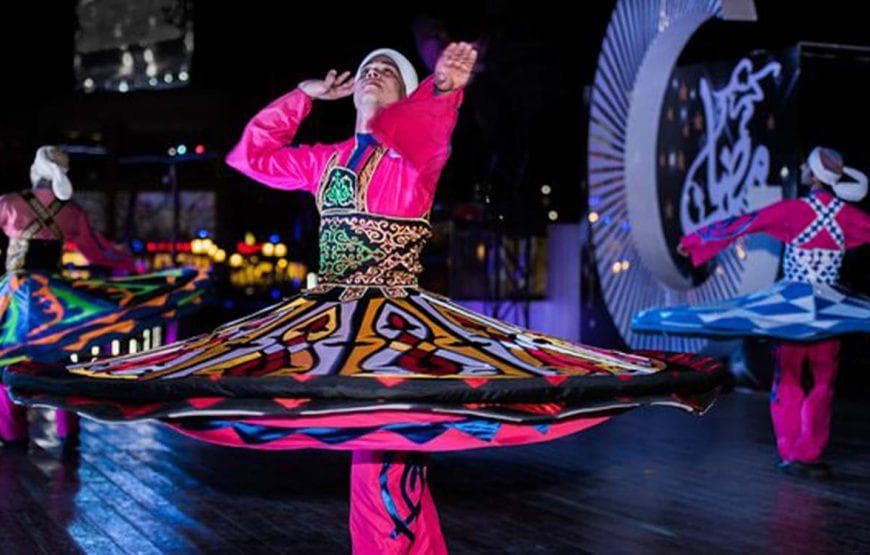
By half past six on a Monday evening, a queue has curled into the stone passage of the Wikala al-Ghuri, the five-storey merchants' inn that Sultan Qansuh al-Ghuri built in 1504 and 1505 a few steps east of al-Azhar. Nobody in the line is selling anything. A man in a Ministry of Culture windbreaker counts heads, because the courtyard seats roughly two hundred people and when they are gone, they are gone. An hour later a drummer starts a slow, lopsided pattern under the mashrabiya screens, three men in coloured skirts walk out, and one of them begins to turn.
This is the version of Egyptian music that most visitors meet, and it is worth knowing what you are watching. The spinning is real, the lineage is real, and the venue is a genuine Mamluk caravanserai. But a staged tanoura performance is one small, well-lit corner of a much larger living tradition: saints' festivals that draw crowds bigger than the hajj, a healing rite descended from nineteenth-century Ethiopian slavery, lyre music from the Suez Canal that UNESCO listed in 2024, and a singer who emptied streets across the Arab world on the first Thursday of every month for four decades.
Egypt keeps most of this out of theatres. It happens in mosque courtyards, on canal-side streets, in a rented hall in Mounira, in a Nubian house above the west bank of the Nile. Here is where each tradition genuinely lives, what it costs, and how to be a decent guest at something that is not a show.
At a Glance
Main Cairo tanoura venue: Wikala al-Ghuri (Wekalet el-Ghouri), off Sharia al-Azhar in Islamic Cairo
Show nights: Saturday, Monday and Wednesday, subject to change for holidays and Ramadan
Typical start: around 7.30pm, with the box office opening roughly an hour earlier
Ticket: nominal, reported by visitors at between 50 and 100 EGP (roughly 1 to 2 USD) as of 2026, with a much lower rate for Egyptians
Capacity: about 200 seats, first come first served
Zar in Cairo: the Mazaher ensemble at Makan in Mounira, Wednesday evenings, around 300 EGP (about 6 USD)
Biggest moulid: Sayyid Ahmad al-Badawi in Tanta, eight days each October, historically up to three million people
Prophet's birthday 2026: expected on or about 25 August, confirmed by moon sighting
Best months: November to March, when Cairo evenings are mild rather than 35C (95F)
What Tanoura Is, and What It Grew From
Tanoura is simply the Arabic word for the skirt. The dance grew out of the sama, the whirling meditation of the Mevlevi order founded on the teachings of the thirteenth-century poet Jalal al-Din Rumi, which reached Egypt with the Ottomans and kept a lodge below the Citadel. What Egypt did with it is characteristic: it kept the turn and threw out the austerity.
A Mevlevi semazen wears a plain white robe and a tall felt hat, and the whirling is worship, not display. The Egyptian tanoura dancer wears layered skirts in colours associated with the different Sufi orders, and over a set he will lift them overhead, spin them off his body, revolve tambourines and a lit disc above the crowd, and keep turning one way for ten or fifteen minutes without visible drift. Purists call this folklore rather than devotion. That is fair, and it is also true that the men doing it learned to turn somewhere, and that somewhere was usually a hadra.
The company you will see in Cairo is the Al-Tannoura Egyptian Heritage Dance Troupe, formed in 1988 and run under the Ministry of Culture's Cultural Development Fund. A performance lasts roughly ninety minutes and is only about half whirling: it opens with folk instrumental music, moves through Sufi chanting, and closes with the skirt work everybody photographs.
Wekalet el-Ghouri: The Show Most Visitors Mean
The wikala deserves attention before the lights go down. Wikalas were urban caravanserais, with stabling and storerooms at ground level, merchants' rooms above and rental apartments stacked on top. Al-Ghuri's was built to fund his mosque, madrasa and mausoleum across al-Muizz Street, was restored in the early 2000s, and now houses craft workshops around the courtyard where the troupe performs.
Practical detail matters here, because the show is state-run and casually organised. Performances are listed for Saturday, Monday and Wednesday. Start times reported by visitors range between 7pm and 8pm, and the box office opens an hour or so beforehand; the schedule shifts during Ramadan, which in 2027 begins around 8 February. Ticket prices reported over the past two years disagree with one another, running from about 50 EGP to around 75 EGP for foreign visitors with a token rate for Egyptians. Either way it is one to two US dollars, which is why the queue exists.
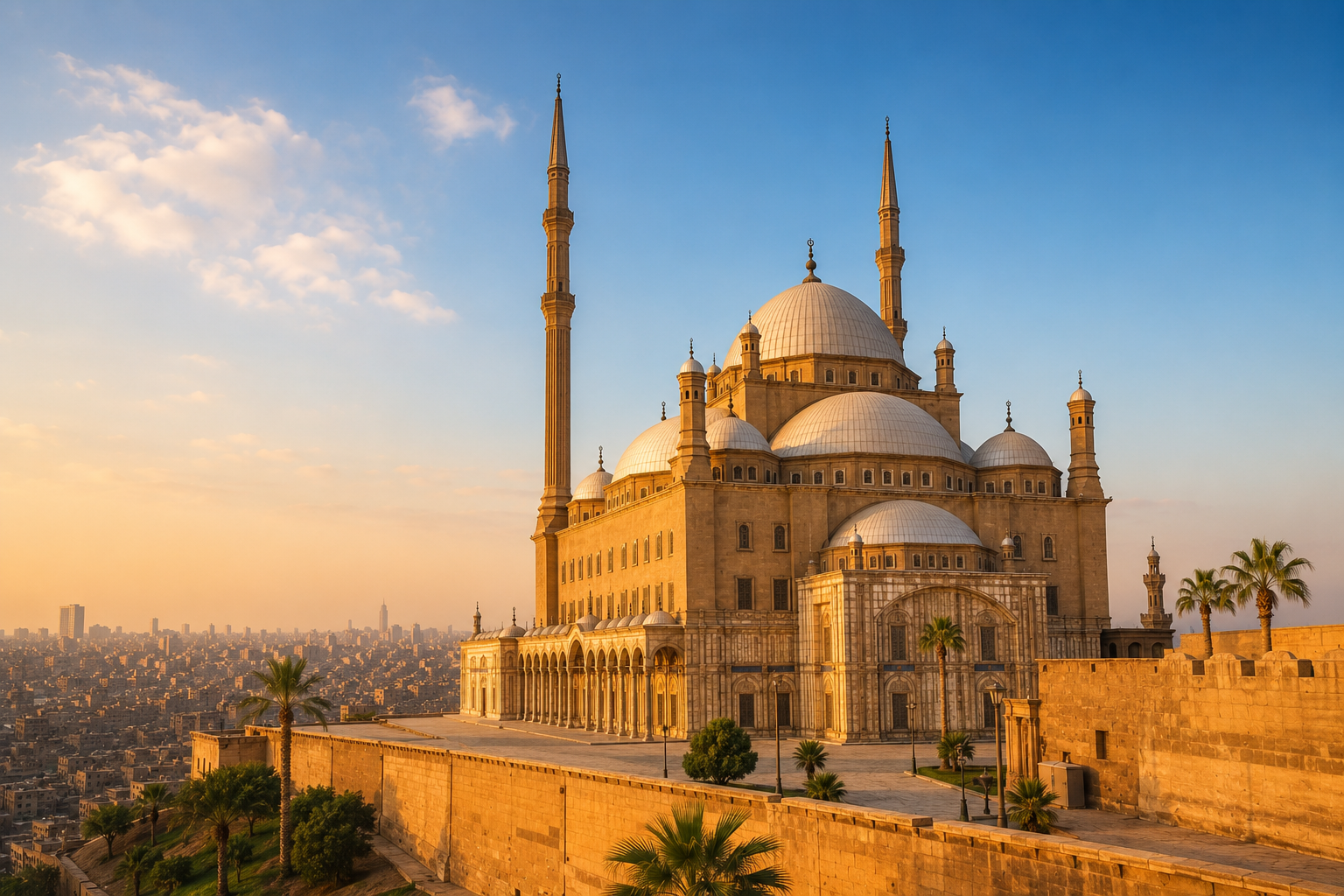
The venue sits about ten minutes' walk from Khan el-Khalili, so the natural shape of the evening is bazaar, then dinner, then the show. Our Islamic Cairo tour taking in the Citadel, the mosques and Khan el-Khalili covers the same quarter in daylight, which is a good way to learn the geography before coming back after dark.
Insider Tip: How to Actually Get a Seat
Arrive at least forty-five minutes before the advertised start, and an hour on a Saturday. Seating is unreserved wooden benches on three sides of the courtyard. The best seats are not the front row but the second or third row facing the musicians, where you can see the drummers' hands and still catch the skirts against the lamplight. The courtyard is open to the sky, so from December to February bring a layer; Cairo nights in midwinter drop into the low teens Celsius.
The Sufi Egypt Behind the Skirts
Sufism is not a fringe here. The state recognises 74 registered orders, or turuq, coordinated through a Supreme Council of Sufi Orders, and estimates of affiliation run to around fifteen million Egyptians, with some scholars suggesting at least a third of adult male Muslims have a tariqa connection. The Grand Imam of al-Azhar and Egypt's Grand Mufti have generally come from this tradition rather than against it.
The living form is the hadra, or dhikr: a gathering where men move in unison to the rhythm of the divine names while a munshid, a singer of religious poetry, improvises above them. You will hear these around the mosques of al-Hussein and Sayyida Zeinab, often on Thursday nights and Friday afternoons, and you will hear them for nothing. They are not staged, and nobody is collecting at the door.
Moulids: The Festivals of the Saints
A moulid is the birthday festival of a saint, and Egypt holds several thousand a year. They are part pilgrimage, part fairground, part all-night concert. The largest, for the thirteenth-century saint Sayyid Ahmad al-Badawi in Tanta in the Nile Delta, runs eight days each October, timed loosely to the end of the cotton harvest, and has historically drawn crowds estimated at up to three million, more than attend the hajj in a given year.
Cairo's own moulids cluster around the shrines of al-Hussein and Sayyida Zeinab and follow the lunar calendar, sliding about eleven days earlier each Gregorian year. Sources give conflicting dates for both, and the ones printed in guidebooks are often a year out; the reliable method is to ask locally in the week beforehand. Every moulid builds towards the leila kebira, the great night, when the tents, sweet stalls, Sufi processions and chanting run until dawn.
The Prophet's birthday, Mawlid al-Nabi, is the one fixed point most travellers can plan around. In 2026 it falls on or about 25 August, pending the official announcement, and the stalls selling arouset el-moulid sugar dolls appear on Cairo streets a fortnight beforehand.
Warning: A Moulid Is Not a Show
Go with your eyes open. The crowds are genuinely dense, the lanes are narrow, and crushes have happened at Egyptian religious gatherings. Pickpocketing at the big Delta moulids is well documented, so carry nothing you would mind losing. There are very few foreign faces, which means you will be conspicuous and, mostly, welcomed with startling generosity.
Two harder points. Moulids sit at the flashpoint of a long argument between Sufi practice and Salafi opinion, which holds that veneration at tombs is un-Islamic, and shrines have been vandalised. And while women attend moulids in large numbers, the density of the crowd on the great night is not comfortable for anyone travelling alone. Go with a guide who knows the ground, go early in the evening rather than at three in the morning, and treat the camera in your bag as optional.
Zar: The Ritual That Became a Concert
Zar is the strangest and most moving music in Egypt. It arrived in the nineteenth century with enslaved Ethiopians, particularly Oromo women, and became a women's healing rite: a spirit is not exorcised but negotiated with, appeased through its own rhythm over an evening that can run across several nights. The instruments are unlike anything else here, including the tanbura, a six-string bowl lyre, and the manjur, a leather belt sewn with goat hooves that a dancer shakes with his hips into a hissing roar.
Practising zar has been contested and semi-clandestine for decades, which makes the survival of the Mazaher ensemble remarkable. Led by women, it performs the Upper Egyptian, Abu el-Gheit and Sudanese repertoires at Makan, the Egyptian Center for Culture and Art, on Saad Zaghloul Street in Mounira. Performances are on Wednesday evenings, tickets have been around 300 EGP (roughly 6 USD), and photography is not permitted without permission. Book ahead, because the room is small. This is the best hour of live music a visitor can buy in Cairo, and it costs less than the taxi to the pyramids.
Nubian Music in Aswan
Eight hundred kilometres south, the sound changes completely. Nubian music is built on the tar frame drum, hand-clapping and call-and-response singing, with a lilting, cyclical feel closer to Sudan than to Cairo. It travelled: Hamza El Din carried the oud and Nubian song into Western concert halls, and Ali Hassan Kuban turned village wedding music into a brass-driven dance band that toured Europe in the 1990s.
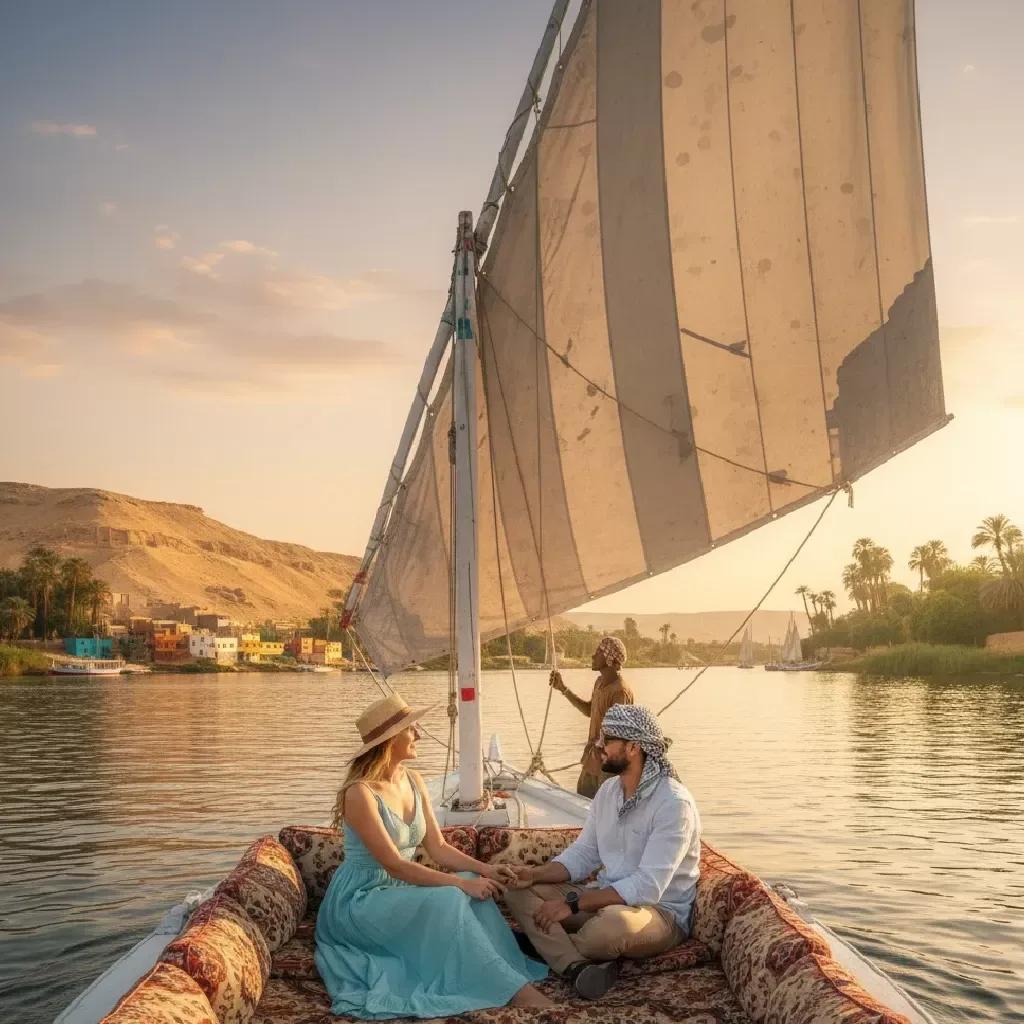
In Aswan you will hear it in Gharb Soheil and on Elephantine Island, where drumming greets arriving boats and continues long after dark, and at the Nubian Museum and the city's culture palace, which host the local folk troupe. A felucca crossing to a Nubian village is the usual way in, and the village itself is best understood as a displaced community rather than a photo stop. Our guide to Nubian culture in Aswan covers the flooding of the old homeland, the subject of a great many of the songs, and the wider Aswan picture sits alongside it.
The Simsimiyya and the Canal Towns
The most distinctively Egyptian instrument you have probably never heard is the simsimiyya, a plucked lyre strung across a triangular wooden frame and traditionally built by the player from whatever wood and metal came to hand. It belongs to Port Said, Ismailia and Suez, played by fishermen, dockers and canal workers, and it drives the bambouti, the swaggering dance of the port. In 2024 UNESCO inscribed the crafting and playing of the semsemiah on its Representative List of the Intangible Cultural Heritage of Humanity, in a joint nomination with Saudi Arabia. Egypt's earlier entries include the al-Sirah al-Hilaliyyah epic, added in 2008, the only major Arabic oral epic still performed complete to the scrape of the rababa fiddle.
The revival of canal music is largely one man's work. Zakaria Ibrahim founded the ensemble El Tanbura in Port Said in 1989 and the El Mastaba Center for Egyptian Folk Music in Cairo in 2000, which also brought the Sudanese-Egyptian rango tradition back from near-extinction. Ibrahim died in February 2024, and the associated El Dammah Theatre in Abdeen closed for a year before reopening on the first anniversary of his death. Programming has been intermittent since, so check before making the trip rather than assuming a weekly night is running.
Umm Kulthum and the Long Art of Tarab
No honest account of Egyptian music survives without Umm Kulthum. Born in a Delta village in 1904, taught by her father to recite the Quran and sent out to sing religious songs dressed as a boy, she became the voice of the Arab world until her death in 1975. For roughly forty years she gave a concert on the first Thursday of every month, broadcast live, and streets across the region emptied. A concert ran three to four hours and contained two or three songs; a single song might stretch from forty-five minutes to ninety, because she would repeat one line a dozen times, shifting the emphasis until the hall broke.
That overflow is tarab, and it follows the same logic as the hadra: repetition as a vehicle rather than a fault. Her funeral in Cairo drew an estimated four million mourners. The small museum devoted to her, opened in 2001 in a pavilion of the Manasterly Palace on the southern tip of Roda Island beside the Nilometer, holds her oud, her gowns, her sunglasses and a wall of archived press. Entry has traditionally been a token amount and a visit takes half an hour, though expect the ticket to have risen with everything else.
Where Else to Hear Live Music in Cairo
The Cairo Opera House in Zamalek programmes the Arab Music Ensemble and the Umm Kulthum Ensemble alongside its orchestra and ballet. The Main Hall enforces a formal dress code and men are turned away without a jacket, so check which theatre your ticket is for; the smaller and open-air stages are far more relaxed.
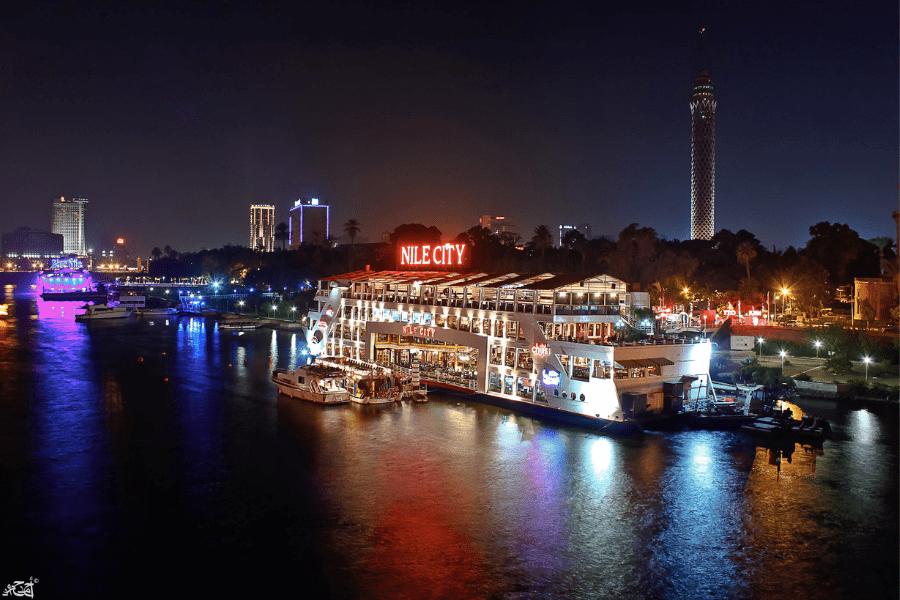
The historic houses along al-Muizz Street host Sufi chanting and folk ensembles irregularly, usually advertised only days ahead and often free. A Nile dinner cruise delivers a compressed, commercial version of the same repertoire, tanoura included, and there is no shame in that if your evenings are short. If you would rather eat your way through the same streets, our Cairo street food and market tour runs through neighbourhoods where this music is still simply background noise.
Good to Know: Attending Respectfully
Dress: cover shoulders and knees at any religious gathering, and carry a scarf for mosque courtyards.
Photography: always ask at a hadra, a zar or a moulid, and accept no as an answer. Staged performances are different.
Money: never tip a hadra, which is worship. Tipping a folkloric troupe or a village drummer is normal and welcome.
Timing: the great night of a moulid peaks between midnight and dawn. Arriving at nine gives you the atmosphere without the crush.
Ramadan: the calendar shifts entirely, with performances moving to after iftar and running very late, as our guide to visiting Egypt during Ramadan explains.
Language: a greeting of salaam aleikum before you raise a camera changes almost every interaction.
Building a Trip Around the Music
Three nights in Cairo will get you a tanoura performance, a Wednesday zar and a wander through the illuminated lanes of the medieval city, which our walk through Islamic Cairo maps out. Add Aswan at the southern end of a Nile itinerary and you have both poles of Egyptian sound, the Ottoman-Sufi north and the Nilotic-African south, in one fortnight. The ground rules for guest behaviour in our Egyptian culture and etiquette guide apply doubly here.
If you can choose your dates, aim for November to March, when courtyards are pleasant after dark and the Delta moulid season has just finished. If you are already in Egypt in late August 2026, the Prophet's birthday around the 25th will fill the streets with lights, sugar dolls and chanting for a week. Ask your guide where the local hadra meets, and go quietly.