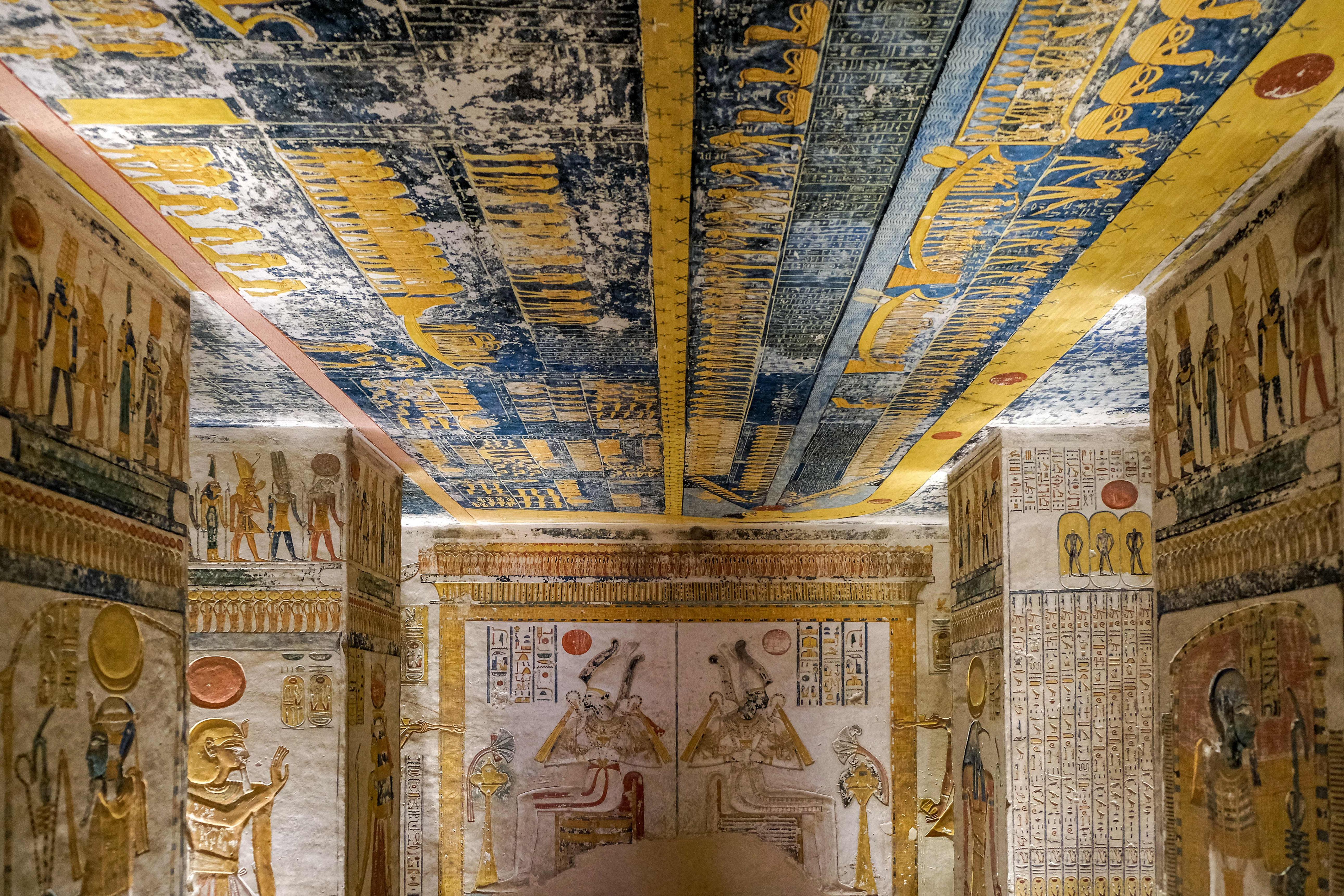
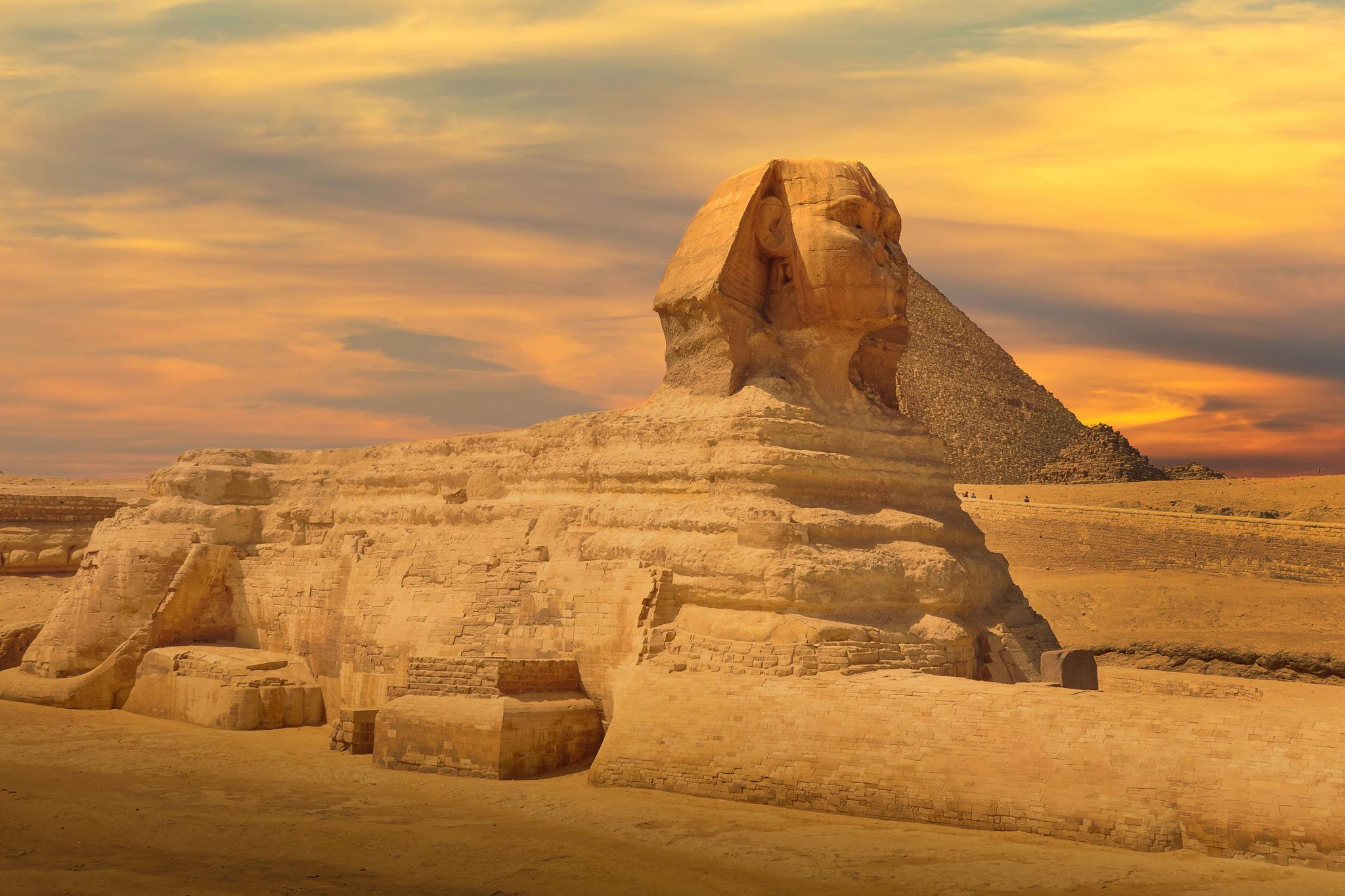
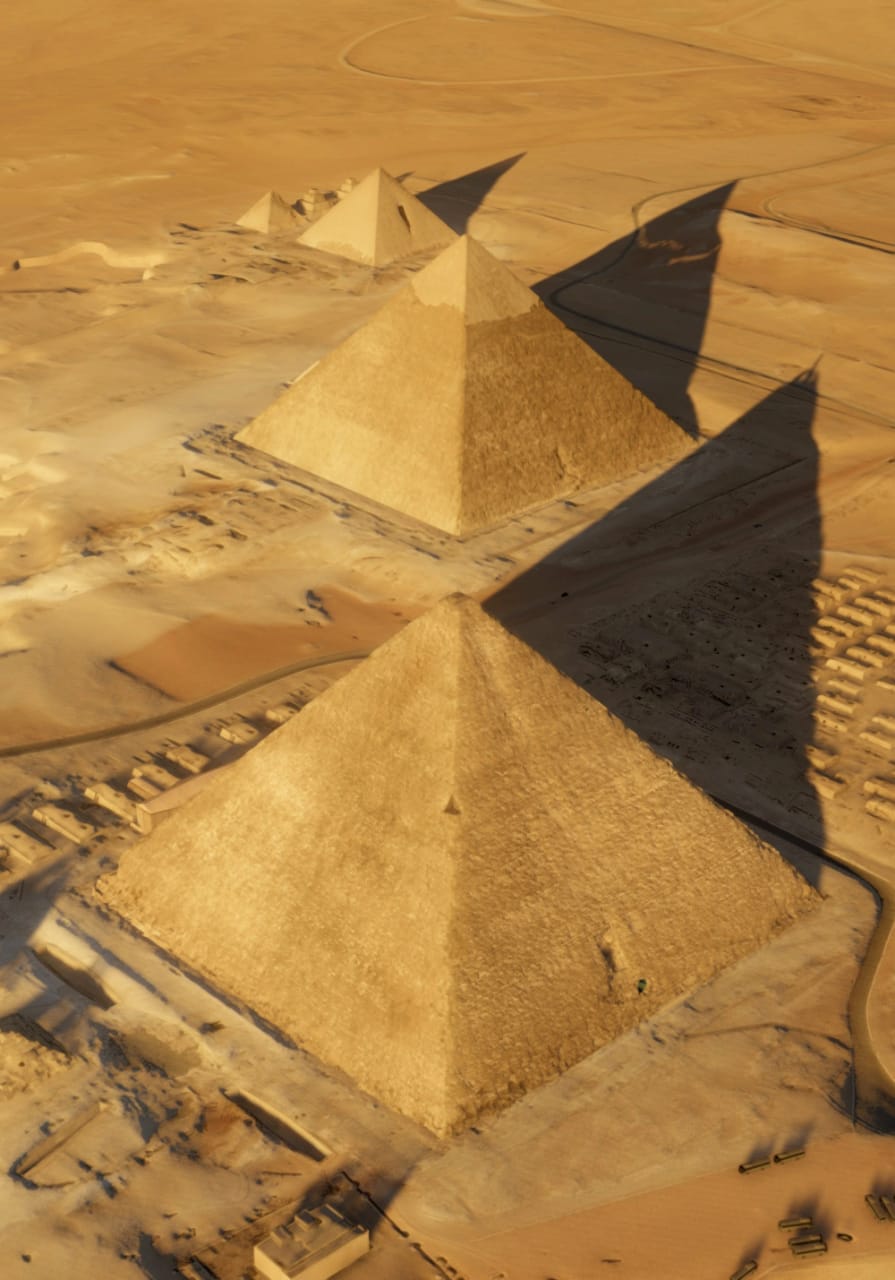
From a window seat on the afternoon flight out of Cairo, the case for this trip unrolls in little more than an hour: the last of Cairo's sprawl, the Suez Canal, the brown emptiness of Sinai, the blue slot of the Gulf of Aqaba, then the rose mountains of southern Jordan. The pyramids of Giza and the rock-cut tombs of Petra are only about 400 km (250 miles) apart as the crow flies, roughly half the distance from Cairo to Abu Simbel.
That is why an Egypt and Jordan itinerary is the most natural two-country trip in the region, and why it is so often planned badly. The distance is short; the crossing is not always simple. Over the past year the sea and land routes have seen fee rises, regional tension and patchy timetables, while the flights have stayed dependable.
This guide covers the crossing as of autumn 2026, what UK and US advice says about Sinai and the land route, visas and passes, two sample routes, and how to order the trip around heat, Fridays and Ramadan 2027.
At a Glance
Best months: October to November and March to April, when both countries are comfortable
Ideal length: 12 to 14 days, roughly a week in Egypt and five or six days in Jordan
Cairo to Amman: nonstop with EgyptAir, Royal Jordanian and Air Cairo, about 75 to 90 minutes in the air
Cairo to Aqaba: Royal Jordanian, around three nonstop flights a week on its late 2026 schedule
Nuweiba to Aqaba ferry: still listed as operating, but timetables are unreliable, so confirm before relying on it
Taba overland route: requires crossing Israel via Eilat, with two borders and an Israeli travel authorisation
Jordan Pass: 70, 75 or 80 JOD (about 99 to 113 USD) for one, two or three days at Petra, visa fee included
Jordan visa: 40 JOD single entry, waived by the Jordan Pass if you stay three nights or more
Egypt visa: e-visa in advance, or a visa on arrival listed by the FCDO at 30 USD
Ramadan 2027: expected from around 8 February to 9 March, subject to the sighting of the moon
Flying Between Cairo, Amman and Aqaba
For almost everyone, the right way to join the two countries is a short flight. Schedule data for autumn 2026 shows EgyptAir, Royal Jordanian and Air Cairo flying nonstop between Cairo and Amman's Queen Alia airport, around eight or nine departures a day between them. Queen Alia lies about 35 km south of central Amman, on the road towards the Dead Sea and Petra.
The more interesting option is Aqaba. Royal Jordanian's schedule from late September 2026 into January 2027 shows around three nonstop Cairo to Aqaba flights a week, of roughly 65 to 80 minutes. Other carriers have flown it in past seasons, a reminder that frequencies change. Landing in Aqaba puts you about an hour from Wadi Rum and two from Petra, so you can run Jordan south to north and fly home from Amman without doubling back.
Egypt's clocks go back at the end of October while Jordan has kept year-round summer time since 2022, so in winter Amman is an hour ahead. Price an open-jaw ticket, into Cairo and out of Amman or the reverse: it often spares a repeat leg.
The Nuweiba to Aqaba Ferry in 2026
The sea route is the romantic option and the least predictable. Arab Bridge Maritime, usually shortened to AB Maritime, holds the concession between Nuweiba on Sinai's east coast and Aqaba, about 60 km across the water. The UK Foreign Office's Egypt advice, as it stood in late summer 2026, says ferries operate between Aqaba and both Nuweiba and Taba Heights, and tells travellers to check schedules with the operators.
What nobody can give you is a dependable 2026 timetable. Guides published this year quote anything from about 90 minutes on a fast boat, at roughly 70 to 80 USD one way, to four to six hours on the slow ferry. Sailings are not reliably published, online booking is unreliable, and bad weather can cause delays. The FCDO also notes that overcrowding and poor safety standards have caused accidents on Red Sea ferries.
Nuweiba is also a long drive from Cairo or the Nile Valley, so the ferry only suits travellers already on the Sinai coast; our Sinai desert guide covers that side of the peninsula. If you cannot confirm a sailing a day or two ahead, fly.
Warning: The Taba Route Means Crossing Israel
On a map, Taba looks almost next door to Aqaba. It nearly is, but Eilat lies between them, and Egypt and Jordan share no land border. Going overland means leaving Egypt at Taba, entering Israel, crossing Eilat by taxi, leaving Israel at the Yitzhak Rabin crossing, which Jordan calls Wadi Araba, and entering Jordan beside Aqaba: four passport checks within a short taxi ride, with fees along the way.
Since January 2025, visa-exempt visitors to Israel, including British, American and EU citizens, have needed an ETA-IL electronic authorisation; check on the official portal how it applies to a land transit. The FCDO's Egypt advice warns that borders in Israel and the Palestinian territories, Taba included, could close at short notice, and that crossing charges at Taba have risen at short notice since March 2026. For anyone entering Egypt there, it suggests carrying at least 170 USD in cash per person, as cash machines are unreliable. The FCDO's Israel advice, updated in July 2026, adds that regional tensions may close land and air borders. The US advisory for Egypt says Americans arriving at Taba and travelling beyond Sinai need a visa in advance or an agency support letter. Travellers posting in September and October 2026 reported Wadi Araba working normally, with shorter weekend hours, but those are second-hand reports.
We would not route clients this way at present: once fees, taxis and queues are counted it rarely saves money over a flight, and it is exposed to closures nobody can forecast. If you are set on it, read the current advice for Egypt, Israel and Jordan in the week you travel.
What the Advisories Say About Sinai and Jordan
For a flight-linked itinerary the position is reassuring; the detail matters once you go overland. The FCDO's Egypt advice, in its late-summer 2026 version, warns against all travel to North Sinai, and against all but essential travel to the interior of South Sinai north of the St Catherine to Nuweiba road, with the coastal strips excepted. It calls southern Sinai's Red Sea resorts generally low risk. The US State Department keeps Egypt at Level 2, exercise increased caution, in an advisory reissued in July 2025. It lists northern and middle Sinai as do not travel, leaves Sharm el-Sheikh, Dahab, Taba and St Catherine under the general caution, and says travel to the border with Israel needs permission arranged through an agency.
Jordan had a harder spring. After hostilities between the United States and Iran began in late February 2026, the FCDO advised against all but essential travel there from early March until 3 June 2026; at that update it kept advice against all travel only within 3 km of the Syrian border, far from Petra, Wadi Rum and Aqaba. The US advisory, updated on 23 October 2026, stands at Level 3, reconsider travel, citing terrorism and armed conflict, with do not travel zones along the Syrian and Iraqi borders and a few named districts. No stop on these routes is in those zones, though it also asks travellers to reconsider Ma'an city and the strip of Ma'an Governorate along the Desert Highway, the usual road south from Amman. American readers should read it in full, and check their insurance, before booking.
Check the official pages in the week you travel; our Egypt travel safety guide covers the rest of the country.
Visas for Both Countries
Your route decides which Egyptian visa you need. Egypt sells an e-visa through its official portal, and visas on arrival at the airport bank counters: the FCDO lists the cash visa at 30 USD, and a card-paid digital version at Cairo, 36 USD including fees, piloted since August 2026. A route that starts in one country and ends in the other needs only a single-entry Egyptian visa; fly into Cairo, visit Jordan and return to Cairo for your flight home, and you need a multiple-entry visa or a second one on return. Our Egypt visa guide covers the portal and the look-alike sites.
Jordan's tourist visa costs 40 JOD (about 56 USD) for a single entry. It is issued on arrival at Queen Alia and Aqaba airports and most land and sea borders, though not at the King Hussein Bridge from the West Bank, and an e-visa is available from Jordan's Ministry of Interior. Arrivals into the Aqaba Special Economic Zone can have the fee waived under conditions, but the simpler answer is the Jordan Pass. Allow six months of passport validity.
Pro Tip: Buy the Jordan Pass Before You Land
The Jordan Pass pays for itself on almost any Egypt and Jordan itinerary. Its tiers differ only in time at Petra: the Jordan Wanderer at 70 JOD for one day, the Jordan Explorer at 75 JOD for two and the Jordan Expert at 80 JOD for three, about 99, 106 and 113 USD at the dinar's fixed peg. Each includes the visa fee and entry to more than 40 sites, among them Wadi Rum, Jerash and the Amman Citadel.
Without it you pay 40 JOD for the visa and 50 JOD for one day at Petra, so even the cheapest tier is ahead. Buy it online before you arrive, carry a printout, and stay at least three consecutive nights, or you may be charged the visa fee on departure. Take the Explorer: one day at Petra is a sprint. Petra by Night, about 17 JOD on set evenings, is not included.
Egypt First: A 14-Day Egypt and Jordan Itinerary
Our suggested route from November to April: the Nile while it is cool, then Jordan south to north.
- Day 1: arrive in Cairo and transfer to a hotel near Giza or on the Nile
- Day 2: the Pyramids of Giza at opening time, then the Grand Egyptian Museum
- Day 3: Saqqara, or Islamic and Old Cairo, then an evening flight to Aswan
- Days 4 to 7: Philae, then a Nile cruise from Aswan to Luxor via Kom Ombo and Edfu, with an optional dawn trip to Abu Simbel
- Day 8: the West Bank early, with the Valley of the Kings and Hatshepsut's temple, then Karnak in the late afternoon
- Day 9: fly Luxor to Cairo and on to Aqaba, or to Amman if the Aqaba days do not line up
- Day 10: Aqaba to Wadi Rum, about an hour, for a jeep afternoon and a night in camp
- Day 11: Wadi Rum to Petra, roughly two hours, and the Siq and Treasury in the late light
- Day 12: Petra all day, with an early climb of around 800 steps to the Monastery
- Day 13: Little Petra, then about three hours north to the Dead Sea
- Day 14: Madaba's mosaic map on the way to Queen Alia, and home
If the Aqaba flight does not fit, fly to Amman and run the loop in reverse, finishing with around four hours up the Desert Highway.
Jordan First: A 13-Day Route
Reverse the order in early autumn, while Upper Egypt is still hot. This version drives from Luxor to Aswan rather than cruising.
- Day 1: arrive at Queen Alia and overnight in Amman
- Day 2: Jerash in the morning, the Citadel and Roman Theatre in the afternoon
- Day 3: Madaba and Mount Nebo, then down to the Dead Sea
- Day 4: the King's Highway via Kerak Castle to Petra
- Day 5: Petra all day
- Day 6: the Monastery at opening time, then Wadi Rum for a jeep afternoon and a night in camp
- Day 7: Aqaba and fly to Cairo, or drive back to Amman for one of the frequent Cairo flights
- Day 8: Giza and the Grand Egyptian Museum, as on our pyramids and GEM day tour
- Day 9: Islamic Cairo and the Citadel, then an evening flight to Luxor
- Day 10: the complete West Bank tour, Karnak late in the day and Luxor Temple after dark
- Day 11: drive south to Aswan, stopping at Edfu and Kom Ombo
- Day 12: Philae and a felucca at sunset; add a day for a dawn trip to Abu Simbel
- Day 13: a Nubian village morning, then fly to Cairo for your connection home
Add a day and you can swap the drive for a cruise.
Which Way Round: Heat, Seasons and Sequencing
Order matters on any Egypt and Jordan itinerary, because the two countries' best seasons overlap rather than coincide. Southern Egypt is a winter destination: Luxor and Aswan are best from November to February, reach the mid-30s Celsius (mid-90s Fahrenheit) on some afternoons by late April, and average highs of 41 to 42C (106 to 108F) in July and August. Amman and Petra sit on high ground and have genuinely cold winters, with rain, frost and occasional snow; Wadi Rum nights in December and January can fall close to freezing.
Follow the comfort. In spring, go Egypt first while the Nile Valley is pleasant, and finish in Jordan as the hills warm. In autumn, reverse it: Jordan in October, when Petra's light and temperatures are at their best, then Egypt in November as the south cools. In deep winter, keep Jordan short and low: Aqaba, Wadi Rum by day and the Dead Sea, more than 400 metres below sea level. Our guide to Egypt in winter takes the Egyptian half month by month.
Keep a buffer night between the countries: a missed regional flight can unravel a cruise booking.
Good to Know: Fridays, Weekends and Ramadan 2027
Both countries take their weekend on Friday and Saturday, and Friday is the day to plan around. In Cairo, mosques close to visitors during the midday prayer and the bazaars wake late. In Jordan, downtown Amman is quiet until after prayers, Aqaba and the Dead Sea fill with weekenders, and some border posts open later. Use Fridays for long drives or a cruise day, and save the souks for midweek.
Ramadan 1448 is expected to begin on or around 8 February 2027 and run until around 9 March, with Eid al-Fitr on about 9 or 10 March, all subject to the moon. Sites stay open in both countries, but hours shorten, many restaurants close until sunset, and the hour before iftar is the worst time to be on the road. Jordan takes eating and drinking in public during fasting hours more seriously than Egypt, so keep snacks for the car and hotel. The Eid holiday that follows fills the resorts in both countries and pushes up regional fares. Our guide to Ramadan in Egypt explains the rhythm of the day.
What Two Weeks Costs
Jordan is the dearer half, day for day, and budgets go wrong by pricing it like Egypt. As of autumn 2026, comparison sites advertise fares on both routes from roughly 120 to 150 USD booked ahead, rising sharply over Christmas, New Year and Eid. The dinar is pegged at roughly 1.41 USD, so Jordan's prices do not drift the way Egypt's do.
- Jordan Pass: 70 to 80 JOD (about 99 to 113 USD), covering the visa, Petra and most sites
- Jordan exit fee: 10 JOD when you leave by land or sea
- Private car and driver: commonly 60 to 90 JOD (about 85 to 127 USD) a day
- Mid-range hotels in Amman: roughly 30 to 60 JOD a night, with Wadi Musa guesthouses from about 20 JOD
- Wadi Rum: glamping-style camps with meals from around 50 JOD a night
- Dead Sea resorts: published estimates start around 200 JOD a night, the costliest stop
Our Egypt trip cost guide breaks down the Egyptian days.
Planning Your Egypt and Jordan Itinerary
Start with the flights, because they set everything else. Then choose the order by season, buy the Jordan Pass, and get the Egyptian visa that matches the shape of the trip. If two weeks starts to feel like Egypt's alone, our two-week Egypt itinerary shows how we would use it.
We run the Egyptian half end to end, from airport transfer to cruise and Egyptologist, timed around your Jordan flights. Tell us your dates, which way round you are leaning and how much walking the group enjoys, and get in touch. That is usually enough for us to sketch the Egyptian days.