On a July afternoon at Soma Bay, one of the great arenas for kitesurfing in Egypt, the wind arrives like a switch being thrown. By two o'clock the flags on the kite centre are straight out, the shallow water inside the reef has gone from glass to a fine ripple, and riders on 9 m kites are crossing a lagoon the colour of a swimming pool with the desert mountains behind them. Published statistics put the chance of a kiteable day there at about 80 per cent through the summer, and the air is hot enough that most people ride in a lycra top.
That reliability is why kiting on the Red Sea has become a European winter and summer habit rather than a gamble. The Red Sea delivers a steady northerly wind for most of the year, warm water, shallow sandy lagoons where beginners can stand, and short flights from much of Europe. What it does not deliver is uniformity: the same wind is side-onshore and forgiving in El Gouna, offshore at Soma Bay, and cross-offshore in Dahab. This guide sets out the wind by month, the spots and who they suit, what to wear in each season, what lessons cost and the safety rules that catch visitors out.
At a Glance
Prevailing wind: north to north-north-west for most of the year, strongest in the afternoon
Windiest period: late May to early October; September has the highest average wind speed at Hurghada
Kiteable days: roughly 75 to 85 per cent in summer on the Hurghada coast, 40 to 55 per cent in December and January
Best beginner spots: El Gouna lagoons, Ras Sudr, Dahab's Kite Lagoon, Hamata
Most used kites: 9 m and 12 m, with a 7 m for lighter riders or strong days
Water temperature: about 21 to 22 C (70 to 72 F) in February and March, about 28 C (82 F) in August
Wetsuit: none or a shorty from June to September, a 4/3 mm full suit from December to February
Beginner course: 8 to 12 hours over several days, from about 465 EUR at international centres as of autumn 2026
Main airports: Hurghada, Sharm el-Sheikh and Marsa Alam, plus Cairo for Ras Sudr and Ain Sokhna
Why the Red Sea Works for Kiting
The Red Sea is a long, narrow trench between mountain ranges, and the prevailing wind blows down its length from the north-north-west. The high ground on either side channels it, so it is steadier and less gusty than wind blowing in off an open ocean, and in summer the heating of the desert adds a thermal boost that peaks in the afternoon. At Hurghada's airport, Windfinder's records from 2000 to 2026 give a year-round average of 12 knots from about 347 degrees, which is almost due north-north-west.
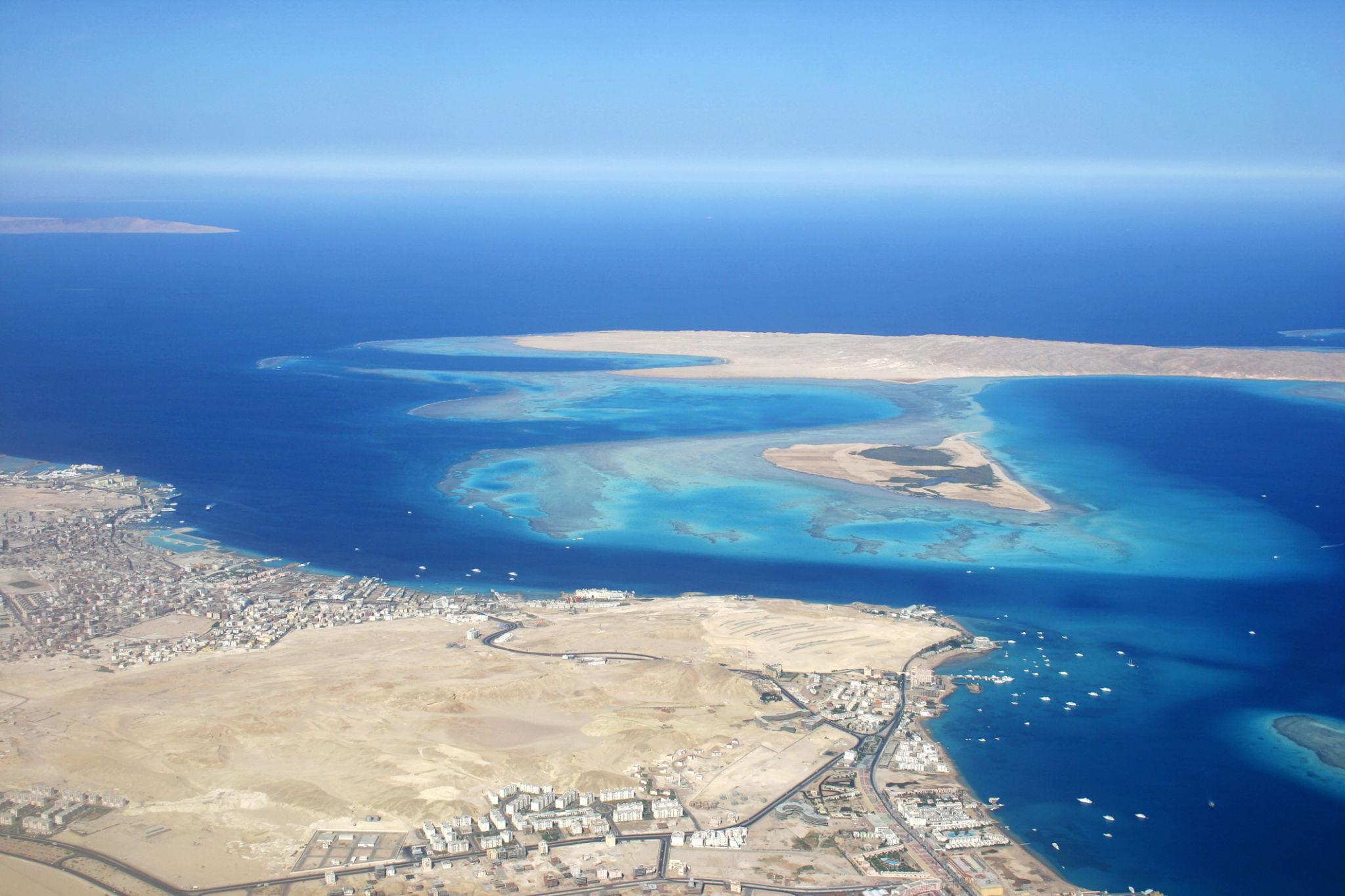
The second gift is geography. The African shore from El Gouna to Hamata runs roughly north-north-west to south-south-east, so that wind arrives side-shore or side-onshore from the left at most spots. If you lose your board or your nerve, you drift along or towards the beach rather than out to sea. Fringing reefs create wide, sandy, waist-deep lagoons inside them, and those lagoons are what make the Red Sea such a good place to learn.
Kitesurfing in Egypt Month by Month
The figures below are published windy-day probabilities, counting a day as windy when there are at least three consecutive daylight hours at force 4 (11 to 16 knots) or more. The first figure is Hurghada, the second Safaga and Soma Bay, roughly 50 to 60 km further south.
- January: 55 and 42 per cent
- February: 60 and 52 per cent
- March: 65 and 63 per cent
- April: 70 and 65 per cent
- May: 75 and 75 per cent
- June: 80 and 80 per cent
- July: 85 and 82 per cent
- August: 80 and 80 per cent
- September: 75 and 80 per cent
- October: 65 and 70 per cent
- November: 55 and 53 per cent
- December: 50 and 39 per cent
Long-term averages tell the same story from a different angle. The windier part of the year at Hurghada runs from about 23 May to 4 October, September is the windiest month, and November is the calmest. Those averages are over 24 hours, so they understate afternoon wind: in summer, 15 to 25 knots is normal, with 25 to 30 knots on many September afternoons at Soma Bay. In winter the pattern turns cyclical rather than daily, typically a few windy days followed by a few calm ones, though when the wind does blow it can blow hard. Our Egypt weather month by month guide covers the air temperatures that go with it.
Water Temperature and Wetsuit Thickness
The northern Red Sea is warmer than most kiters expect in summer and cooler than they expect in winter. Long-term averages for Hurghada give sea temperatures of about 21 to 23 C (70 to 73 F) from February to April, rising to 26 C (79 F) in June and 28 C (82 F) in August, then easing to about 25 to 26 C (77 to 79 F) in November and 23 to 24 C (73 to 75 F) in December. Some local stations record a degree or two lower in mid-winter, and the Gulf of Suez side, around Ras Sudr, runs cooler still.
The water is only half of it. A January afternoon at Hurghada averages around 21 to 22 C (70 to 72 F) in the air, the wind adds a real chill, and you are wet for two hours.
- June to September: no wetsuit; a lycra or a 1 mm top for sun and reef protection
- April, May, October and November: a shorty or a 3/2 mm suit, with a windproof layer for the beach
- December to March: a 4/3 mm full suit, with a hood or neoprene top on the coldest days
- All year: thin neoprene boots wherever there is coral, broken shell or rock underfoot
El Gouna: The Shallow-Water Classroom
El Gouna, about 25 km north of Hurghada, has the largest concentration of kite centres on the coast and the best case for beginners. At Buzzha Beach the main lagoon is shallow and covers more than 2 sq km, with a water level that varies by roughly 20 to 70 cm depending on the tide, and at Mangroovy the sandy shelf runs several hundred metres out before dropping off at a reef about 200 m offshore. The wind is side-onshore from the left, usually clean and gust-free.
Two quirks are worth knowing. The lagoons are tidal, and in summer, especially around the full moon, the biggest one can drain for several hours, pushing riders to the deeper water behind the reef where rescue boats operate. And the larger centres run strict zones: the first 50 m of beach is for launching and landing only, lesson areas are separate from the free-riding zone, and riders stay within a set radius of the station. Kite Power has been teaching here since 2004. Our El Gouna travel guide covers where to stay and what to do on a windless day.
Hurghada, Soma Bay and Safaga
Hurghada itself offers kiting from several hotel beaches and centres, some among the oldest on the coast. Magawish has a long history and gets crowded in peak season, while the shallow, sandy lagoon at Seahorse Bay in the north and several calm resort lagoons give beginners room to work. At low tide much of this water drops to knee height, which is easy to stand in and hard to ride in. Day-long boat trips to Tawila Island, offshore and flat, are popular with confident riders.
Soma Bay, a resort peninsula between Hurghada and Safaga, is the coast's freeride and foiling showcase: a vast, clear, shallow lagoon running out to a reef edge, with flat water and no shorebreak. The wind is offshore at the main launch, becoming cross-shore around the bend, which is why rescue boat cover is compulsory here and is usually sold as a package with storage. Safaga, just to the south, has a cluster of long-established centres, one of them a former windsurf base, and summer statistics as good as anywhere on the mainland coast. Our private Hurghada airport transfer covers both.
Dahab and the Sinai Lagoons
Dahab is the other half of Egyptian kiting: smaller, rougher at the edges and much loved. The north to north-west wind is thermal, often starting early in the morning, and on the Gulf of Aqaba coast it blows cross-offshore at the main spots. The Kite Lagoon is shallow and enclosed, with standing depth over most of it, which makes it the beginners' choice. Advanced riders launch from the public beach at the Lagoon, staying downwind of the windsurfers; kiting in the windsurfing area is not allowed between 9am and 3pm. Assalah, in town, has onshore wind, a reef and shorebreak, and is for experienced riders in boots.
The prize is the Blue Lagoon at Ras Abu Galum, mirror-flat with cross-shore wind, reached by camel or on foot north of the Blue Hole. Dahab's windiest months run from March to November, and the winter pattern is roughly three days on, three days off. It is about 80 km from Sharm el-Sheikh airport, roughly an hour and a quarter to an hour and a half by road on our Sharm el-Sheikh to Dahab transfer. Nabq, just north of Sharm, has a tidal lagoon but less room than it used to.
Ras Sudr and Ain Sokhna: Closest to Cairo
For a weekend from Cairo, the Gulf of Suez is the answer. Ras Sudr, on the Sinai side, is about two and a half hours by road from Cairo airport through the Suez tunnel, with side-on to onshore wind and shallow, flat water at low tide. At one of the main centres there is roughly 2 km of waist-deep water at low tide, and 9 m to 12 m kites cover most days. The windiest months run from March to November, peaking in late August and September, when gusts can top 30 knots.
Many Ras Sudr centres close between about November and March for maintenance, so winter visitors should check before driving out. Ain Sokhna, on the mainland side and under two hours from Cairo, has centres affiliated with IKO and is the closest kiting to the capital. Both are busier with Cairo weekenders on Fridays and Saturdays than midweek, and Ras Sudr has hosted a summer competition known as King of the Lagoon.
Hamata and Wadi Lahami: The Deep South
Far down the coast, roughly two and a half hours south of Marsa Alam airport, Hamata and Wadi Lahami have some of the best wind statistics in the country and a fraction of the crowds. There is one huge spot with a waist-deep area for beginners, a mangrove forest upwind and three reef-fringed islands further out for those who can ride upwind to them. The wind is cross-onshore from the left, often stronger in the morning, and there is no shorebreak.
The windiest months here are January to June and October to December, which makes it a good winter alternative, and the summer heat in this far south is the main reason not to come in July and August. The area borders Wadi El Gemal National Park, so kite days pair well with mangroves, turtles and desert valleys. Accommodation is mostly kite camps and resort hotels, with little nightlife and patchy wifi. Our Marsa Alam airport transfer gets you to the southern coast.
Our Pick: Matching the Spot to Your Level
- Complete beginners: El Gouna for choice and space, Hamata for quiet, Ras Sudr if you are based in Cairo
- Progressing riders learning to go upwind: El Gouna's outer zones, Soma Bay with rescue cover, or Dahab's Kite Lagoon
- Freestyle and foiling: Soma Bay's flat water, and the deep water outside the El Gouna reefs for foilers and wingers
- Wave riding: little of it on the Red Sea; Assalah in Dahab gives you a taste, while Egypt's Mediterranean north coast is the place for bigger waves
- Families with mixed abilities: El Gouna, where non-kiters have the most to do
Lessons, Licences and Costs
A beginner course is usually 8 to 12 hours of instruction spread across three or four days, which allows for a calm day or a sore body. Instruction is commonly organised in Egypt under one of two systems, IKO or the German VDWS, and both issue level cards that centres use to decide what you may rent. The biggest El Gouna centre, for example, will not rent kit without a VDWS level 3 or higher, and the exam is not included in its courses. If you already ride, bring your card or logbook.
The cost of kitesurfing in Egypt depends more on the centre than the region. As of autumn 2026, beginner courses at the largest El Gouna centre started from about 465 EUR (about 520 USD), while prices published in 2023 for other Red Sea centres ran from about 500 EUR to 750 EUR for a four-day course with rental days; expect those to have risen since. Egyptian-run centres near Cairo price in pounds and have historically been cheaper. Rescue and storage packages are extra at many centres and compulsory at offshore spots. Read what is included, private or group, and whether the price assumes wind.
Warning: Reefs, Offshore Wind and Late Sessions
Most kite accidents here happen at the same few points, and none of them is unique to kitesurfing in Egypt. Coral reefs fringe almost every spot, and a lagoon that is waist-deep at high tide can expose coral heads at low water, so learn the reef line before you ride and wear boots. Offshore and cross-offshore spots, including Soma Bay and parts of Dahab, are only safe with a rescue boat watching, and not every boat can enter a drained lagoon. Do not kite where centres have not designated a zone, never through a lesson area, and do not jump within 50 m of the beach.
There are also rules on timing. Egypt's coast guard restricts kiting late in the day, and some Hurghada sources cite a 5pm cut-off at hotels and resorts, while centres end sessions well before sunset. Travel insurance should name kitesurfing explicitly, since many standard policies exclude it; our guide to staying healthy in Egypt explains what else a policy should cover.
Pro Tip: Bring Two Sizes and a Windproof
In summer most riders need nothing bigger than a 9 m or 12 m, and a 7 m earns its place on the strongest September days. In winter the wind is less frequent and more variable, so a larger kite or a foil board turns marginal days into riding days. Whatever the month, pack a windproof jacket for the beach: a north wind off the desert at 4pm in February is colder than the numbers suggest, and you will spend as long on the sand as on the water.
Planning a Kite Trip to Egypt
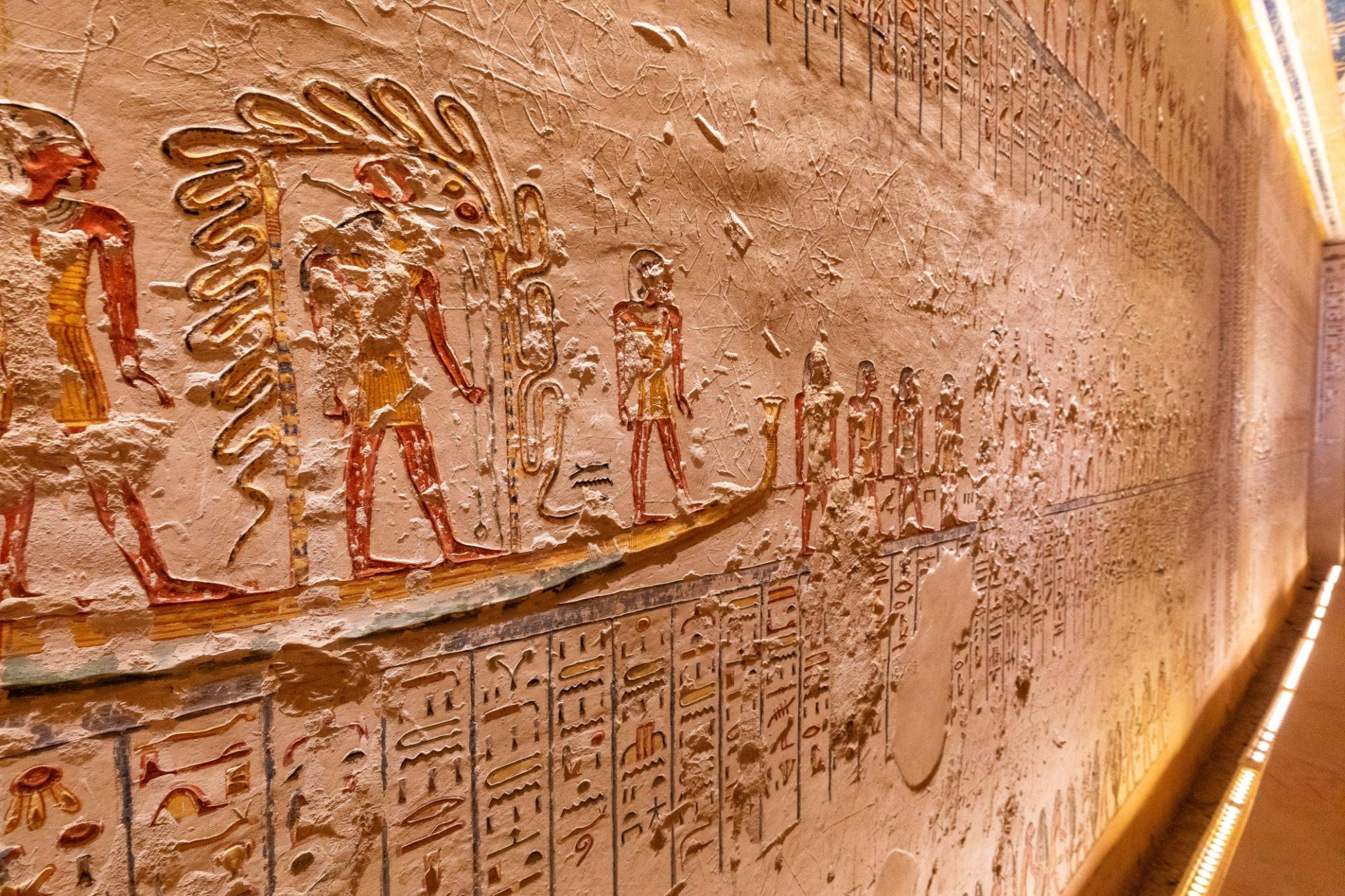
Most people planning kitesurfing in Egypt base themselves in one place for a week or ten days, which allows for a calm spell and a rest day. El Gouna and Soma Bay are the easiest to reach through Hurghada, Dahab through Sharm el-Sheikh, and Hamata through Marsa Alam. A short trip to Luxor works well as a windless-day plan, and our Hurghada to Luxor transfer puts the Valley of the Kings four to five hours from the beach. Our Red Sea resorts comparison helps if you are still choosing a base.
We do not run kite schools ourselves, but we arrange the pieces around them: transfers, hotels close to the right beach, and a few days of temples before or after. Tell us your level, your dates and who is travelling with you through our contact page, and we will suggest a spot and a shape for the trip.