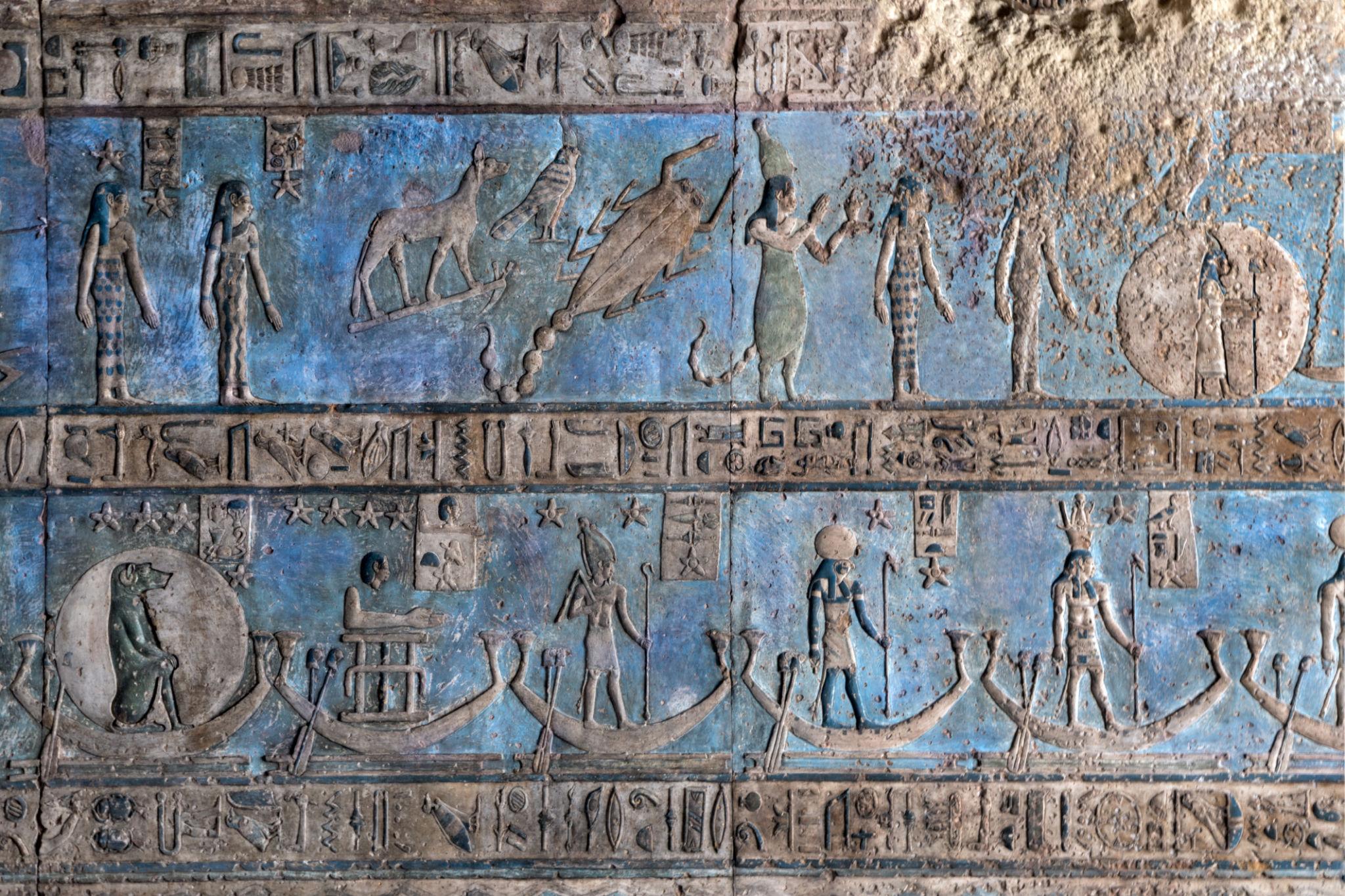
You reach Esna Temple by walking down. From the riverfront you pass through a covered market of tailors and fabric sellers, turn a corner, and the street simply stops at a railing. Nine metres below, in a pit cut through the modern town, stand the capitals of 24 columns holding up a stone roof. Until a few years ago that roof was almost black, coated in the soot of centuries of fires. Today, if you go down the stairs and look up, you see a deep blue sky crossed by gods in boats, a goddess stretched end to end swallowing the evening sun, and the twelve signs of the zodiac, painted in red, yellow and green roughly 2,000 years ago.
Esna Temple, the Temple of Khnum 55 km south of Luxor, has gone through one of the most striking restorations in modern Egypt. Since 2018 an Egyptian and German team has been lifting the grime away centimetre by centimetre, and what it has found has changed how Egyptologists read the building. This guide explains what the cleaning revealed, where the work stands in autumn 2026, how to visit from Luxor or from a Nile cruise, what tickets cost and how to fit in the lock and the old town around it.
At a Glance
Location: Esna, on the west bank of the Nile, about 55 km (34 miles) south of Luxor
What survives: the pronaos, a Roman-period columned hall of 24 columns, about 9 metres below street level
Dedicated to: Khnum, the ram-headed creator god, with the goddesses Neith and Menhit
Restoration: joint Egyptian and University of Tübingen project, running since 2018
Highlights: the cleaned astronomical ceiling with a full zodiac, painted column capitals, 46 eagles over the entrance
Tickets: 200 EGP for foreign adults, 100 EGP for students, about 4 USD, as of autumn 2026
Opening hours: roughly 7am or 8am to 4pm or 5pm; confirm locally, as published times differ
Time needed: 45 minutes to an hour, more if you add the old market and caravanserai
Access: stairs only into the pit; no step-free route as of 2026
Getting there: about an hour by road from Luxor, or on foot from the cruise moorings
A Temple Nine Metres Below the Street
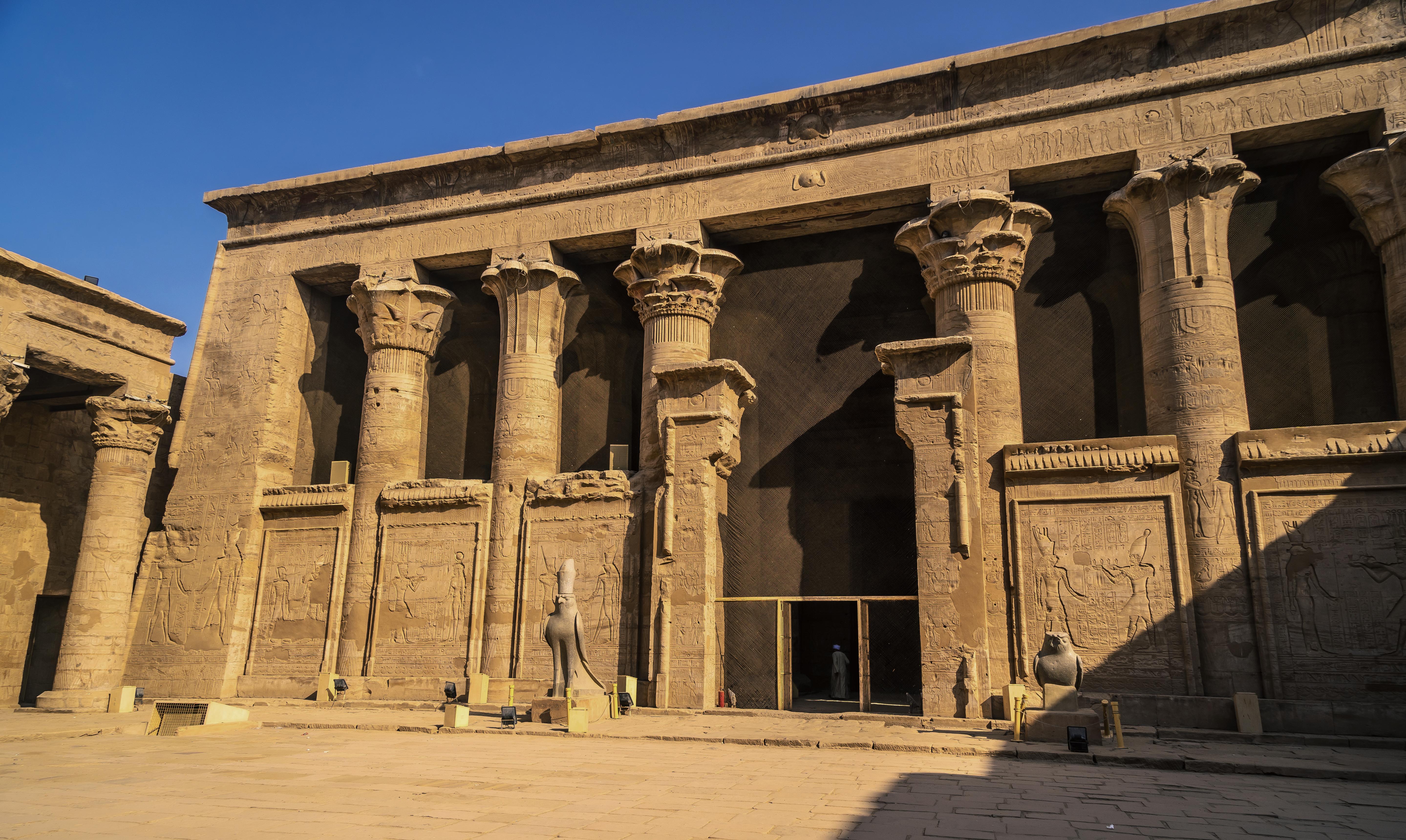
What you visit at Esna Temple is only the front porch of a much larger building. The Egyptians called this kind of hall a pronaos: a roofed, columned vestibule built against the facade of the main sanctuary. The sanctuary itself still lies under the houses of Esna, and the only part of it you can see is its back wall, which forms the rear of the hall and carries reliefs of the Ptolemaic kings Ptolemy VI and Ptolemy VIII from the 2nd century BC.
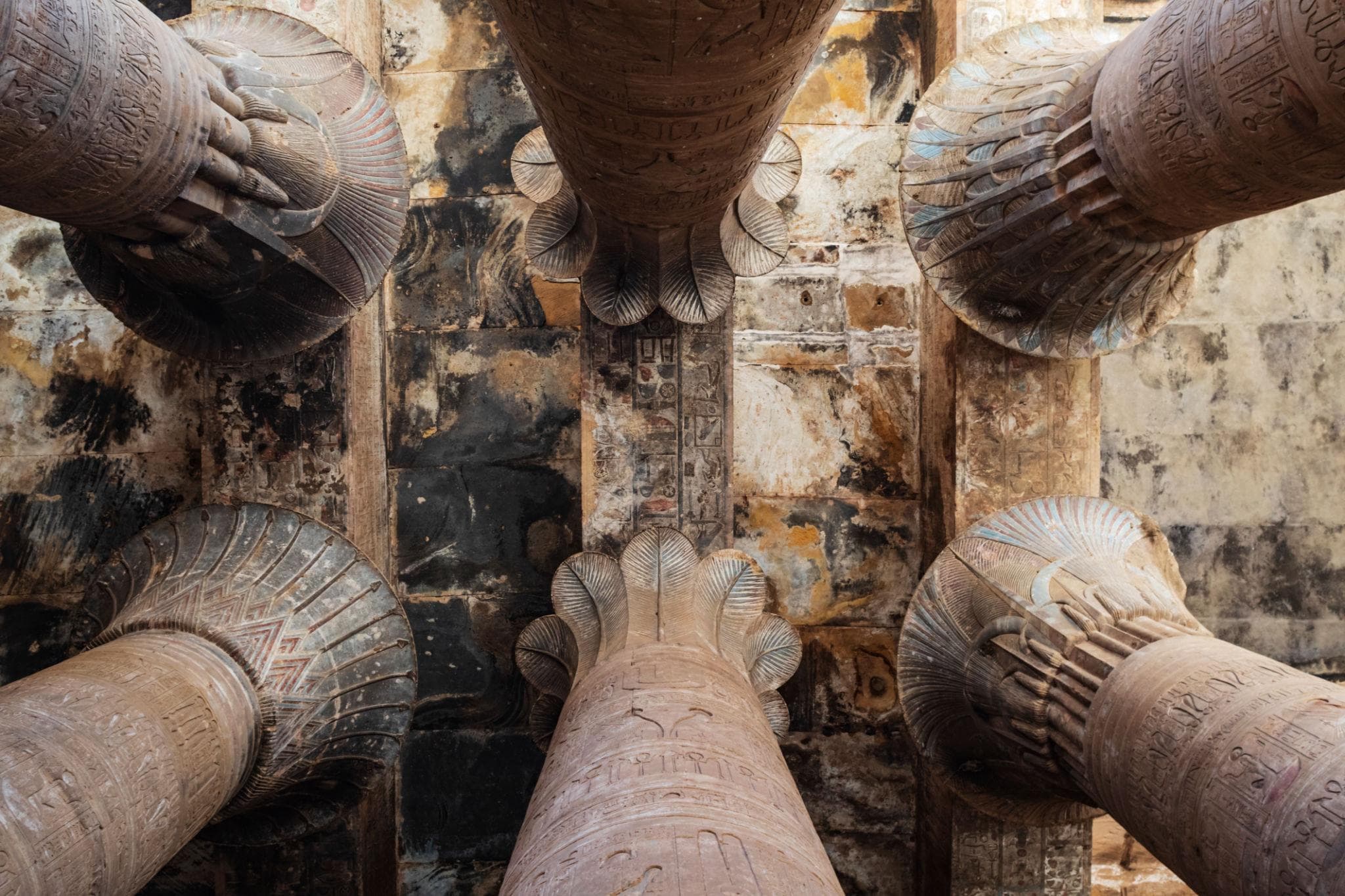
The hall in front of it was added in the early Roman period, under Tiberius or Claudius according to different accounts, and decorated over roughly the next two centuries. It measures about 37 metres by 20 and stands some 15 metres high, with 24 columns in six rows of four, crowned by floral capitals of palm fronds, papyrus and lotus in some 16 different designs.
The reason it sits in a pit is time. Over two thousand years, flood silt, collapsed mudbrick and rebuilding raised the ground level of Esna by about nine metres, until only the tops of the columns showed. In the 19th century the half-buried hall served as a cotton store, and its central position in town may well be why it escaped being quarried for stone, the fate of so many temples during Egypt's early industrial age.
Khnum, the Potter God of Esna
Khnum is one of the oldest gods in the Egyptian pantheon and one of the easiest to recognise: a man with the head of a ram, its horns spreading sideways. He was a creator. In the theology of Esna and of Elephantine at Aswan, he shaped gods, people and animals on a potter's wheel and set them in their mothers' wombs, and he was tied closely to the Nile flood, which was thought to rise from caverns in his keeping.
Esna had its own gods alongside him. Neith, an ancient creator goddess, was worshipped here as his partner, together with the lion-headed Menhit and a child god, Heka. The town also venerated the Nile perch, whose Greek name, lates, gave the place its classical title, Latopolis. Our guide to the ancient Egyptian gods sets Khnum in the wider family of deities you will meet along the river.
Did You Know: Roman Emperors Played Pharaoh Here
Every king who makes offerings on these walls is dressed as a pharaoh, and most of them were Roman emperors. Their names sit in cartouches beside them: among others Claudius, Vespasian, Domitian, Trajan and Commodus, who appears on the north wall helping Khnum and Horus haul a clap-net full of birds and fish, a scene about holding chaos in check.
The latest name in the hall is Decius, who reigned around AD 249 to 251. His cartouche here is usually cited as one of the last hieroglyphic royal names carved anywhere in Egypt, which makes Esna the place where you can watch the old pharaonic script being used for the last time on a royal monument, in honour of a ruler who probably never saw the Nile.
How the Soot Got There
The blackening was not one disaster but roughly 1,800 years of ordinary life. Once the temple fell out of use, people sheltered and cooked inside the hall, and the smoke of their fires rose and settled on the ceiling and the upper columns. Birds and bats nested in the capitals. Wasps built mud nests over the reliefs. Dust from the town above blew in for centuries.
The irony is that the grime protected what it hid. Under a crust of soot, the paint was sealed from light and from the hands of visitors. When the French Egyptologist Serge Sauneron published the hall's inscriptions between the 1960s and 1970s, in volumes that remain the standard edition, he was reading the carved signs alone; the colour, and a good deal of painted text, was invisible to him.
Esna Temple Restoration: 2018 to 2026
Egypt's own conservation department began cleaning parts of the hall years ago, and that work became the seed of the current project. In December 2018 the Ministry of Tourism and Antiquities and the University of Tübingen began a joint mission, led on the German side by the Egyptologist Christian Leitz and on the Egyptian side by Hisham El-Leithy. The hands-on cleaning is done by Egyptian conservators, a team of about thirty, with funding over the years from bodies including the American Research Center in Egypt's Antiquities Endowment Fund, the Ancient Egypt Foundation and the Gerda Henkel Foundation.
The method is slow by design. Soot comes off with sponges; nests, droppings and debris with brushes, scalpels and even toothpicks; and the surface is finished with cotton swabs dampened in distilled water. Metal spikes went onto the column capitals to stop birds roosting on the newly cleaned stone.
The milestones came steadily. Sections of the astronomical ceiling were revealed from 2022, and by early 2024 the ceiling and architraves were reported complete. In October 2024 the Ministry announced newly cleaned scenes on the walls and columns, with 18 of the 24 columns done and the six front columns next. In December 2025 Egyptian press reported that work had moved to the temple's facade, and through 2026 the town around the pit has been under works too, with new paving and facades planned for the surrounding streets.
What the Cleaning Revealed
The first surprise was the palette. Where the ceiling of Dendera Temple, the other great astronomical ceiling in Egypt, is dominated by pale blue and white, Esna's painters favoured strong reds and yellows set against deep blue and green. Professor Leitz has noted the contrast, and it gives the hall a warmer, almost autumnal feel.
The second was the texts. Cleaning brought up close to 200 painted inscriptions that had never been recorded, many of them ink annotations and details painted rather than carved, which means Sauneron's edition can now be corrected and completed. The team has also found places where errors in the carving were silently fixed in paint.
Then there were the scenes themselves. Above the entrance, 46 eagles fly in two rows, some with the head of Nekhbet, vulture goddess of Upper Egypt, and others with that of Wadjet, the cobra goddess of Lower Egypt. On the inner walls, royal robes, crowns and divine thrones emerged in full colour, along with priests carrying the sacred boat of Khnum in procession and four painted bows on a throne, possibly part of the traditional Nine Bows, the foreign peoples the king held in subjection.
Reading the Ceiling: The Zodiac and the Flood
Stand under the central aisle, let your eyes adjust and work outwards. The ceiling is divided into long bands between the architraves, and here you find the twelve zodiac signs, a set complete enough to pick out Aries the ram, Taurus and Scorpio, alongside the planets Jupiter, Saturn and Mars and the constellations the Egyptians used to tell the hours of the night.
The zodiac is not native to Egypt. It came from Babylon through the Greek world, and while it appears often in later private tombs, it is rare in temple decoration, which is why Esna and Dendera matter so much. Elsewhere the sky goddess Nut stretches the length of the ceiling, swallowing the sun at evening to give birth to it again at dawn.
The theme that ties it together is the flood. Scenes show Orion and Sothis, the star we call Sirius, whose return to the dawn sky after about 70 days of invisibility announced the rising of the Nile and the start of the Egyptian New Year. In a temple to the god of the flood, the ceiling is effectively a calendar. If you are curious about the signs themselves, our beginner's guide to hieroglyphics will help you pick out royal names and divine titles.
Pro Tip: Look Up First, Then Look Close
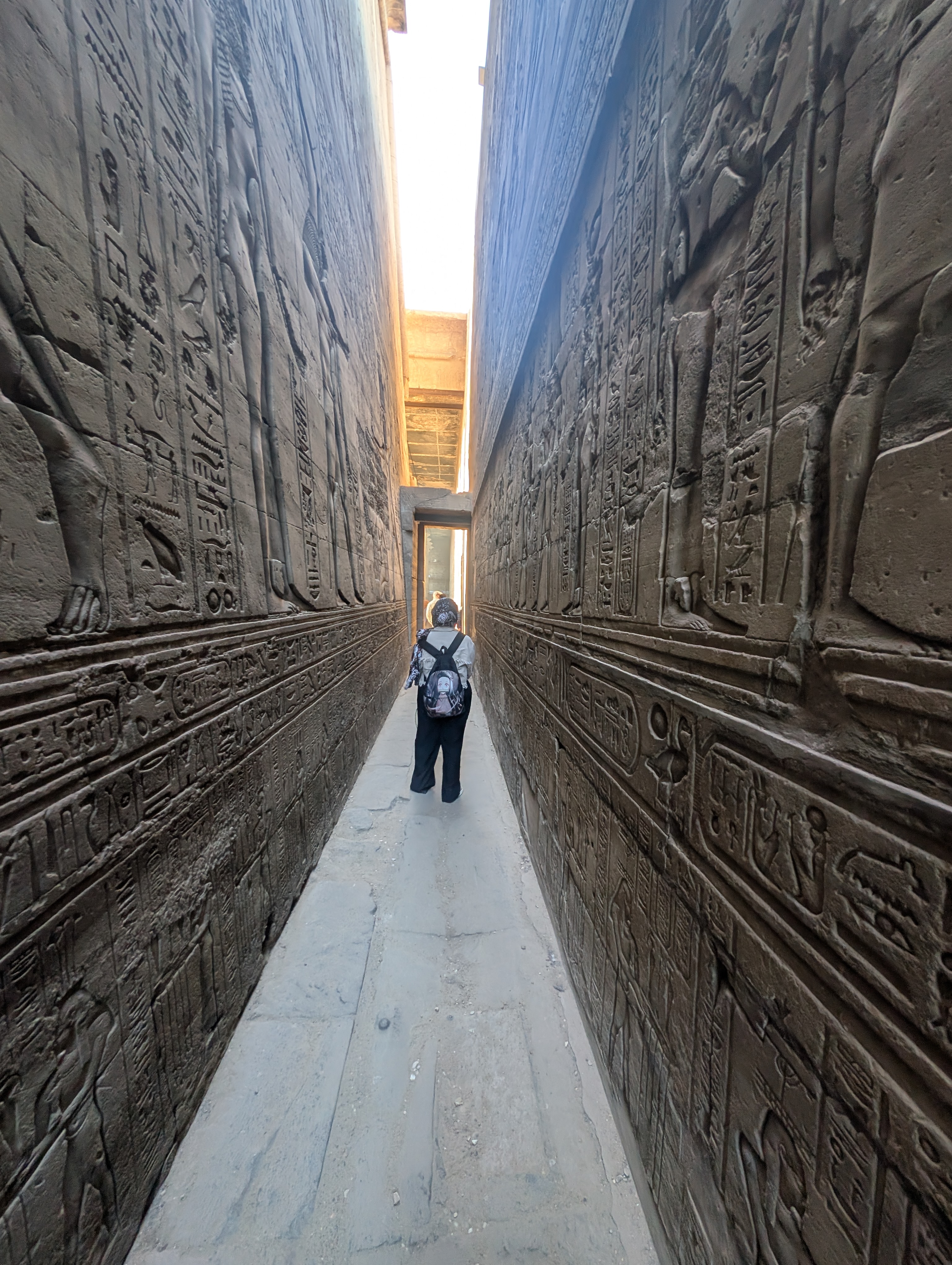
Most visitors walk straight to the middle of the hall and photograph the ceiling. Do that, then slow down. Walk the side aisles and study the capitals from across the hall; there are around 16 designs among the 24 columns, and spotting the repeats is half the fun. Look for the hymns carved on the columns themselves, among them texts for Esna's festivals, then go to the back wall to compare the older Ptolemaic reliefs with the Roman work in front.
The hall is dimmer than an open court, and the ceiling reads best once your eyes have had a minute to adjust. Flash is discouraged near the painted surfaces, and a phone in night mode does the job without it. Our Egypt photography tips cover shooting in dark temple halls.
Good to Know: Work Is Still Under Way
Esna Temple is a working conservation site, and that is part of its interest. In 2026 you may find scaffolding along one wall or round the front columns, and some surfaces still show the dark grime that once covered everything, which makes a useful before and after. Plans announced in 2024 include a renewed visitor area with shaded seating, toilets, better lighting and a lift for visitors who cannot manage stairs; check the current state before you go if access matters to you.
If you are in southern Germany this winter, the University of Tübingen's museum is staging an exhibition on the restoration, The Colours of the Cosmos, from 30 October 2026 to 31 January 2027.
Visiting Esna Temple: Tickets, Hours and Getting There
As of autumn 2026 a ticket costs 200 EGP (about 4 USD) for foreign adults and 100 EGP for students with a valid ISIC card. Recent visitor reports place the ticket office on the riverside corniche near the cruise moorings, from where the temple is a short walk through the covered market. Published opening hours vary between sources, from about 7am or 8am to 4pm or 5pm, so check on the day. Egypt has moved most site ticket offices to card payment, so bring a card as well as small notes. Prices are usually revised in the autumn, and our Egypt ticket prices guide has the full list.
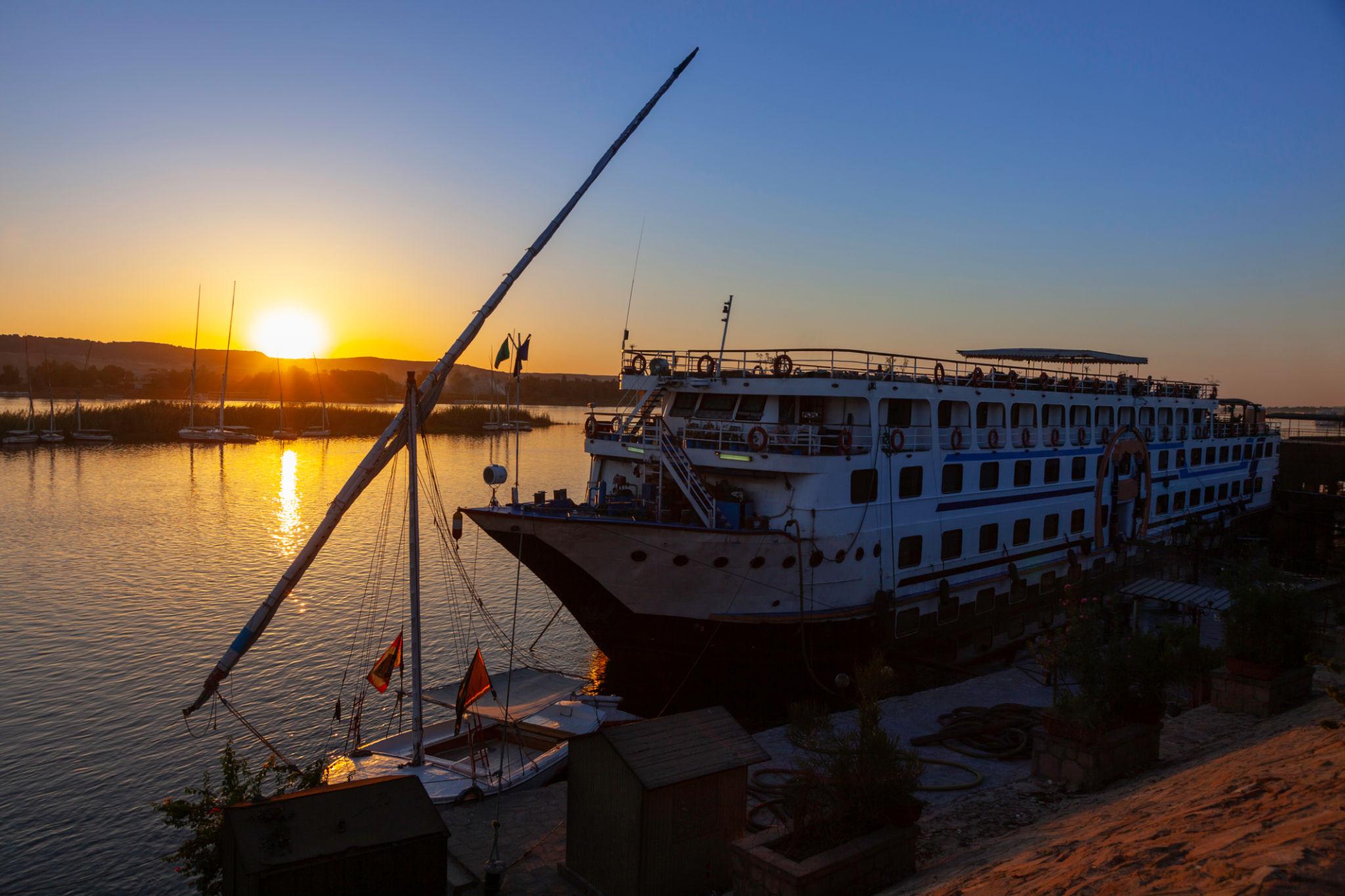
From Luxor, Esna is about 55 km by road, roughly an hour on the main road and longer on the slower riverside route. It makes a good half day from the city, or the first stop on a road transfer south to Aswan, followed by Edfu about 64 km further on and Kom Ombo after that. Every Luxor to Aswan cruise passes Esna, though not every ship stops at the temple, so check your itinerary. Allow 45 minutes to an hour for the hall itself.
The Lock, the Souk and Old Esna
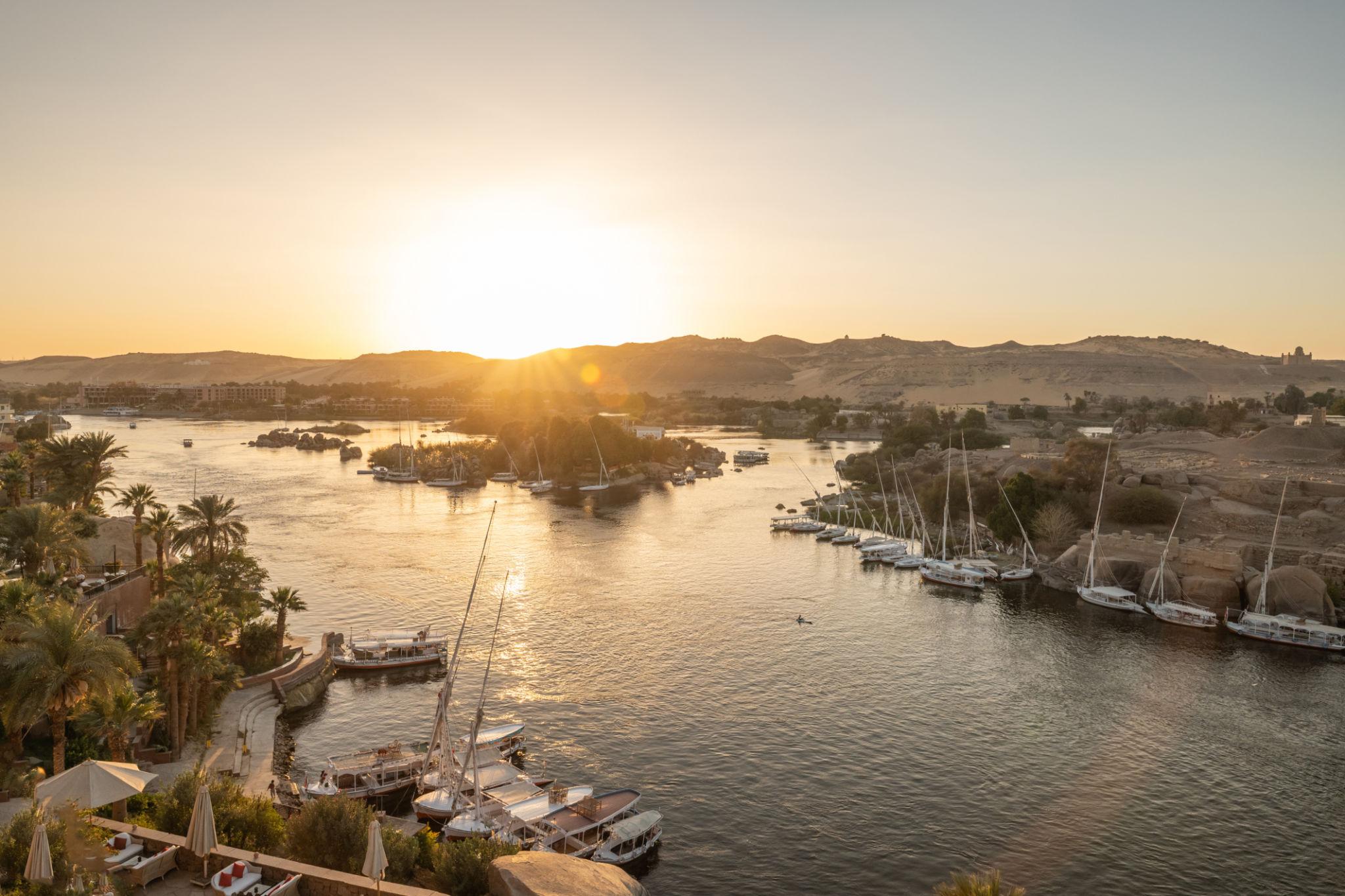
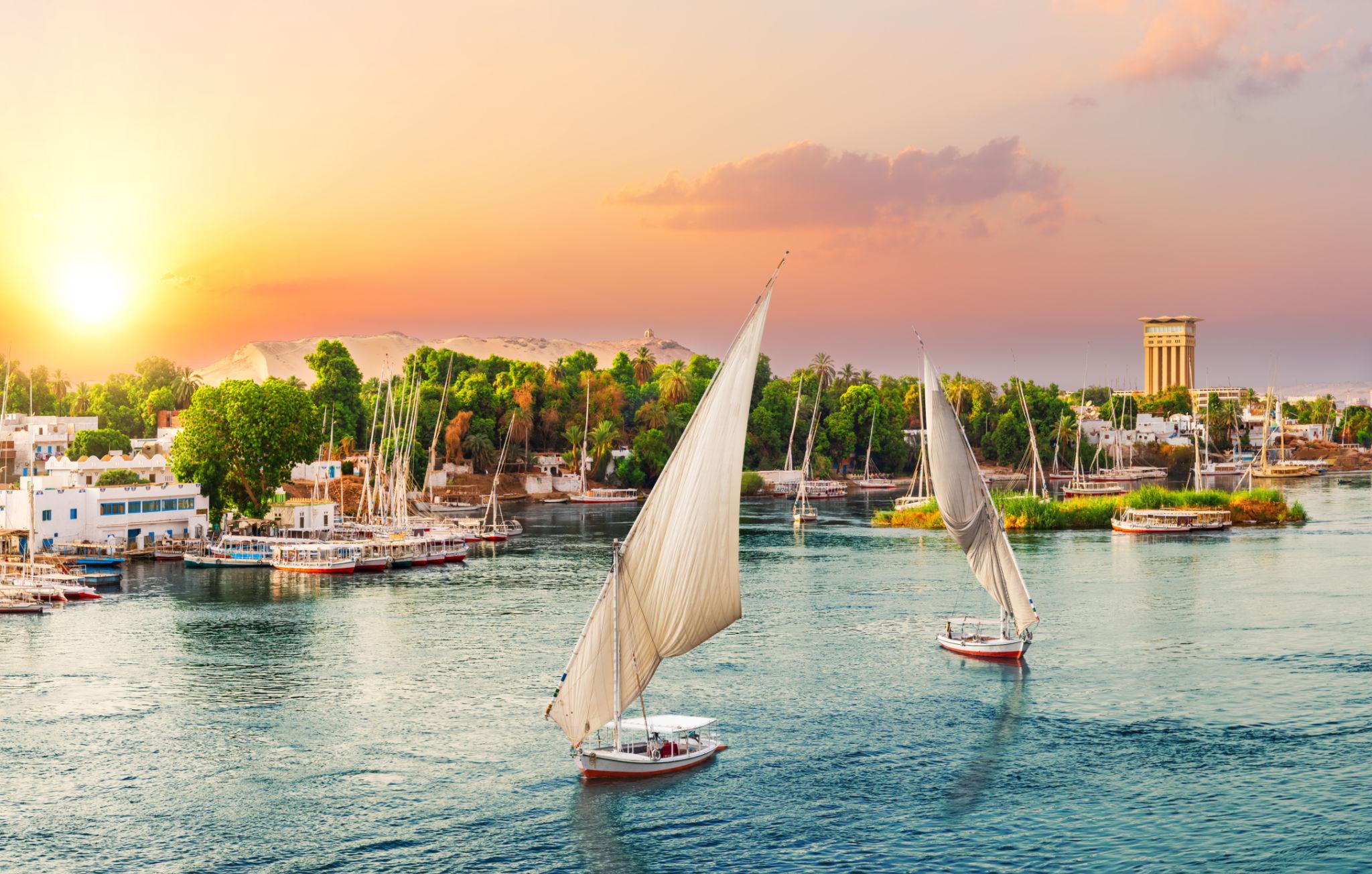
Most cruise passengers know Esna as a queue rather than a temple. The barrage across the Nile here carries the navigation locks every boat between Luxor and Aswan must pass. The current barrage dates from the 1990s, a second lock was added in 2008, and after recent rehabilitation a single lock cycle takes around a quarter of an hour, but the wait for a slot is unpredictable and in high season can take an hour or more. While you wait, vendors row alongside and throw galabiyas and tablecloths up to the deck in plastic bags; agree a price before you throw the money back.
Ashore, the old town repays an hour. The covered market, the Qisariya, leads from the river to the temple, and opposite the pit stands Wekalet al-Gedawi, a merchants' caravanserai built in 1792 and restored in 2021. Under the Revive Esna programme the market and several historic buildings, including an old oil press, have been restored since 2016, and visitor numbers have risen sharply as a result. This is still a working town, so ask before you photograph people.
Planning Your Visit
The simplest way to see Esna Temple properly is from the water. A dahabiya moors close to the town and gives you time ashore, which is why our dahabiya Nile cruise guide treats Esna as a starting point rather than an obstacle, and our five-day dahabiya cruise between Aswan and Luxor passes through it. If you prefer a larger ship, our Luxor to Aswan Nile cruise is the classic option, so ask whether the temple stop is included, and our complete Nile cruise guide explains how itineraries differ.
By road, Esna sits naturally on the drive between Luxor and Aswan, and our Edfu and Kom Ombo guide covers the temples further south, which our Edfu and Kom Ombo day tour visits from Aswan. Anyone in Upper Egypt on 2 August 2027 will see nearly six minutes of total eclipse at Esna, with the shaded hall a welcome refuge from the August heat before and after. If you tell us how you are travelling, we will suggest where Esna fits best.