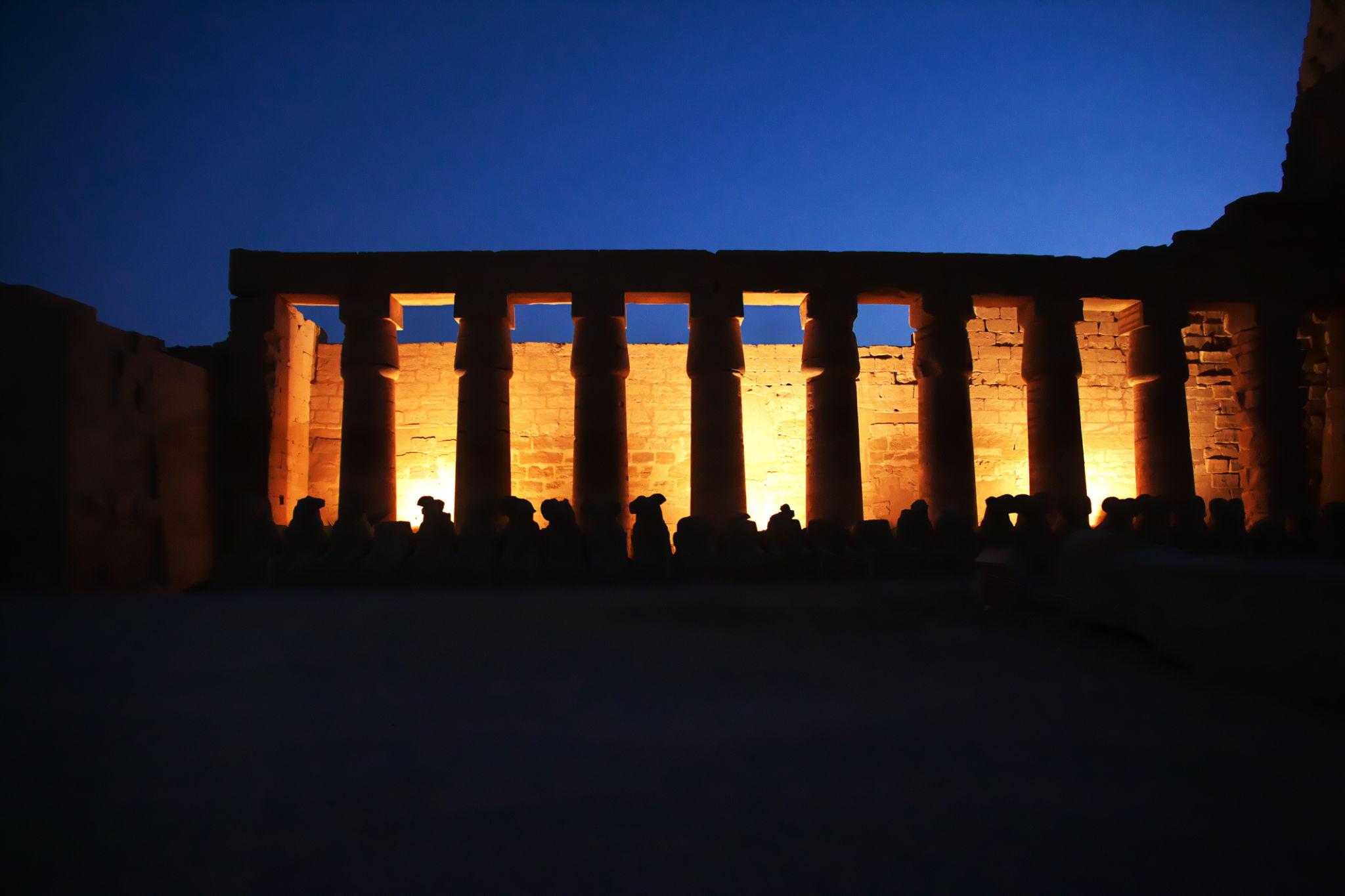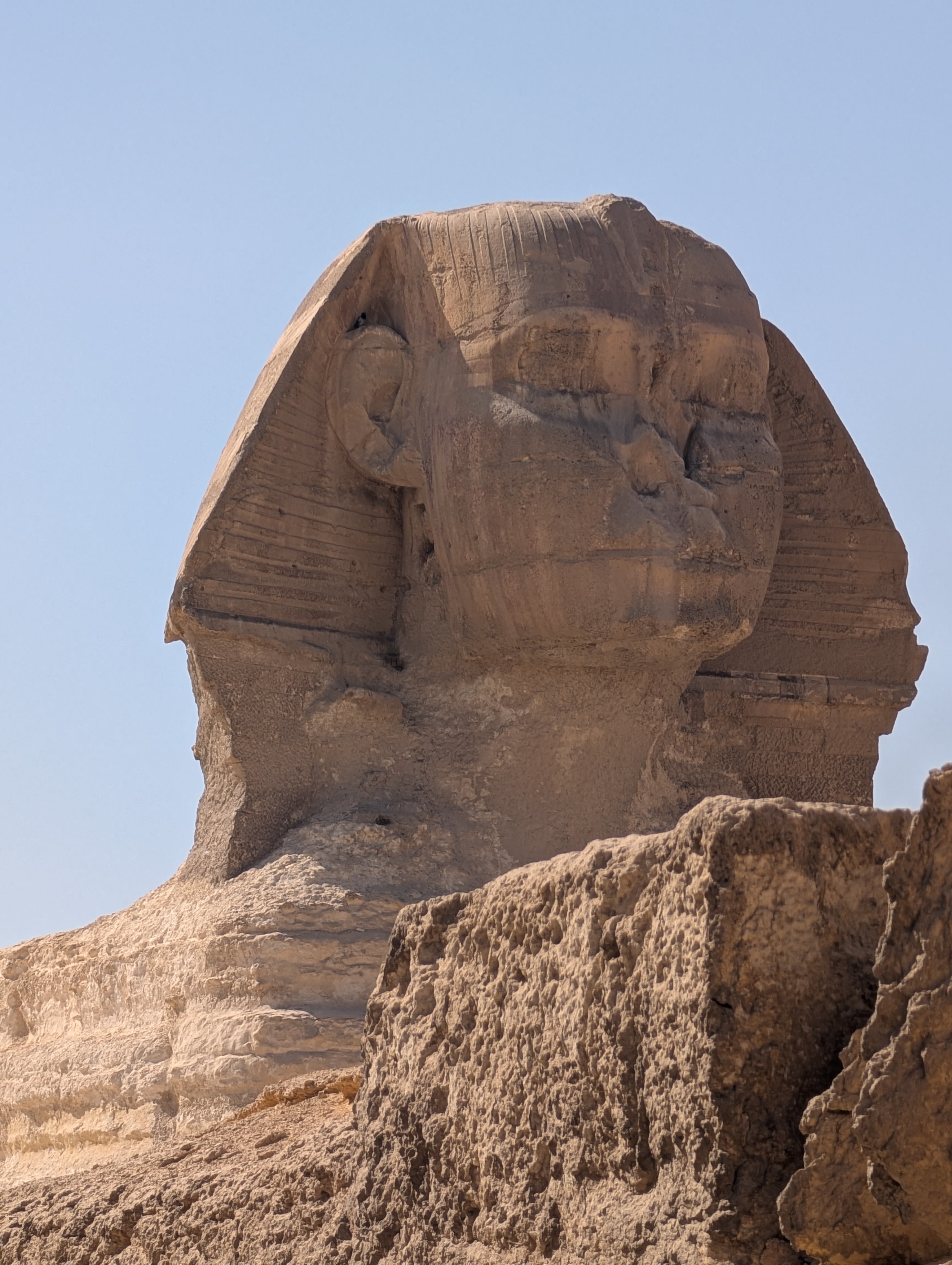
You can't visit an Egyptian temple without encountering the gods. They're carved on every wall, painted on every ceiling, and referenced in every guide's narration. Understanding who they are transforms a temple visit from "looking at old carvings" to following an epic mythological saga. Here's your guide to the gods you'll meet most often.
Ra (The Sun God)
The supreme deity for much of Egyptian history. Ra represented the sun and was believed to travel across the sky in a solar barque during the day and through the underworld at night. At Abu Simbel, the entire Great Temple is aligned so that sunlight reaches the inner sanctuary and illuminates Ra's statue twice a year.
Ra is typically depicted with a falcon head crowned by a sun disc. Over time, he merged with other gods — Amun-Ra became the king of the gods during the New Kingdom, and his cult center at Karnak Temple became the most powerful religious institution in Egypt.
Osiris (God of the Afterlife)
Osiris rules the underworld and judges the dead. His myth — murdered and dismembered by his brother Seth, then reassembled by his wife Isis — is the foundational story of Egyptian religion. You'll see him everywhere in funerary contexts: green-skinned, mummiform, holding the crook and flail of kingship.
The Abydos temple (north of Luxor) was his primary cult center. The ceiling paintings in the Valley of the Kings tombs frequently depict the pharaoh meeting Osiris in the afterlife.
Isis (Goddess of Magic and Motherhood)
Wife of Osiris and mother of Horus, Isis is perhaps the most beloved goddess of the ancient world. Her cult eventually spread throughout the Roman Empire. She's depicted wearing a throne-shaped headdress or cow horns with a sun disc.
Philae Temple in Aswan is dedicated to Isis and is one of the most beautiful temples in Egypt. The reliefs here tell her story in extraordinary detail.
Horus (The Falcon God)
Son of Isis and Osiris, Horus was the divine prototype for the living pharaoh. Every king was considered Horus incarnate. He's depicted as a falcon or a falcon-headed man, often wearing the double crown of Upper and Lower Egypt.
The Temple of Edfu (visited on the Nile Cruise) is dedicated to Horus and is the best-preserved temple in Egypt. The walls tell the story of Horus's battle against his uncle Seth to avenge his father Osiris.
Hathor (Goddess of Love and Joy)
Goddess of love, beauty, music, and dance. Hathor is depicted as a cow or a woman with cow ears. Her temple at Dendera (near Luxor) has the famous "Dendera Zodiac" ceiling and is one of the most colorful temples in Egypt.
At Abu Simbel, the smaller temple is dedicated to Hathor and to Ramesses II's wife Nefertari. Hathor-headed columns appear at many temples along the Nile.
Anubis (God of Mummification)
The jackal-headed god who oversaw mummification and guided souls to the afterlife. You'll see Anubis in nearly every tomb painting in the Valley of the Kings, often weighing the heart of the deceased against the feather of Ma'at (truth) in the judgment scene.
Thoth (God of Writing and Wisdom)
Depicted as an ibis-headed man, Thoth was the inventor of writing, the recorder of divine knowledge, and the mediator between good and evil. He appears in judgment scenes recording the verdict. His cult center at Hermopolis (modern Ashmunein) is less visited but historically significant.
Sobek (The Crocodile God)
God of the Nile, fertility, and military prowess. Kom Ombo temple (a stop on the Nile Cruise) is dedicated jointly to Sobek and Horus. The adjacent crocodile museum houses mummified crocodiles — ancient Egyptians bred and mummified them as offerings to Sobek.
Why It Matters
When you stand before a temple wall, you're not looking at random carvings — you're reading a visual language. The gods, their poses, the offerings being made, and the ritual scenes all tell specific stories. A guide who can decode these scenes transforms your temple visits from architectural appreciation into mythological storytelling.