Karnak Temple in Luxor is not a single temple — it's a vast complex of temples, chapels, pylons, and obelisks built over a period of 2,000 years by more than 30 pharaohs. It covers over 200 acres and was the most important religious center in ancient Egypt. No visit to Egypt is complete without walking through its monumental gateways.
The Great Hypostyle Hall
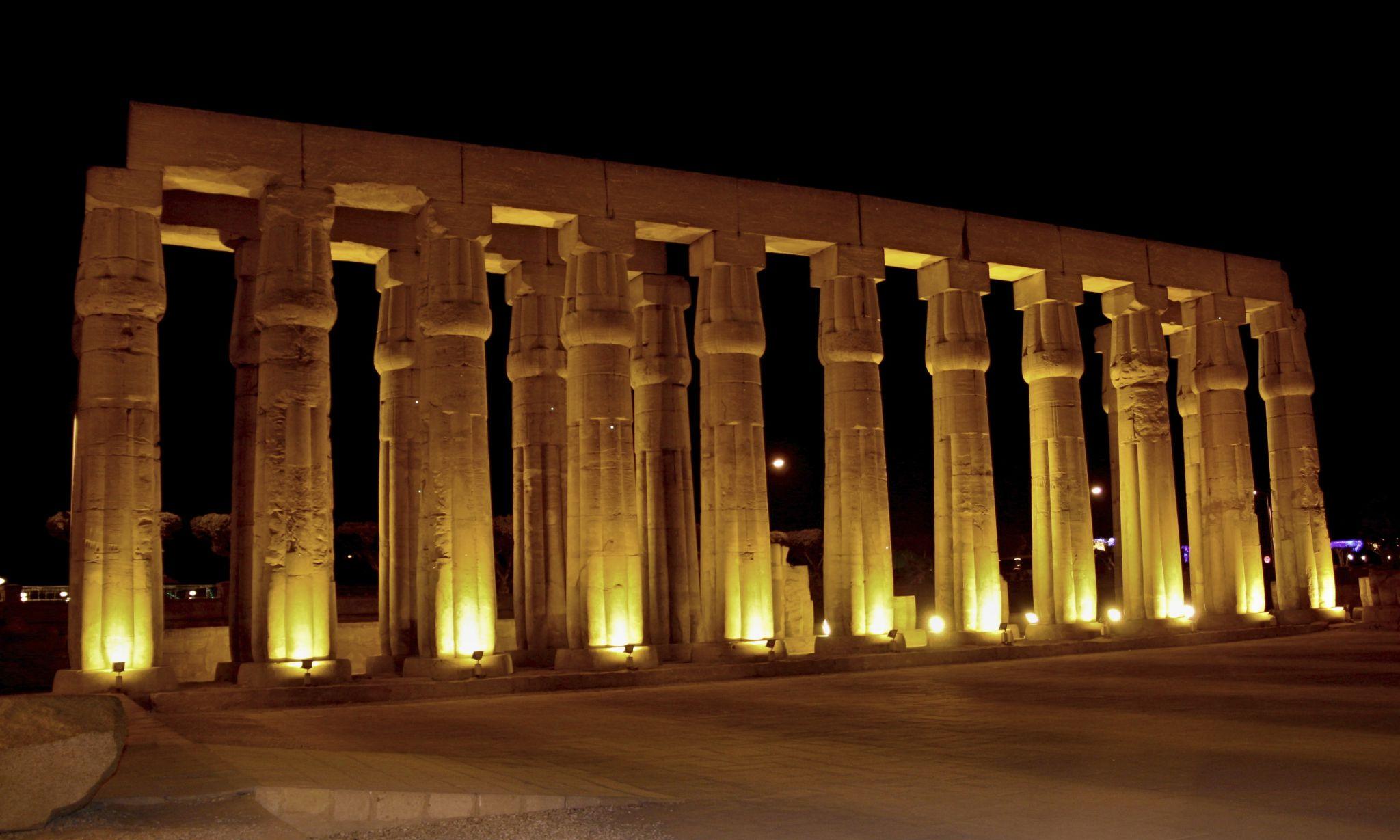
This is Karnak's most famous and awe-inspiring space. A forest of 134 massive sandstone columns arranged in 16 rows fills an area of 5,000 square meters. The central 12 columns stand 23 meters tall and are topped with open papyrus capitals wide enough for 50 people to stand on. The remaining columns are 15 meters tall with closed bud capitals.
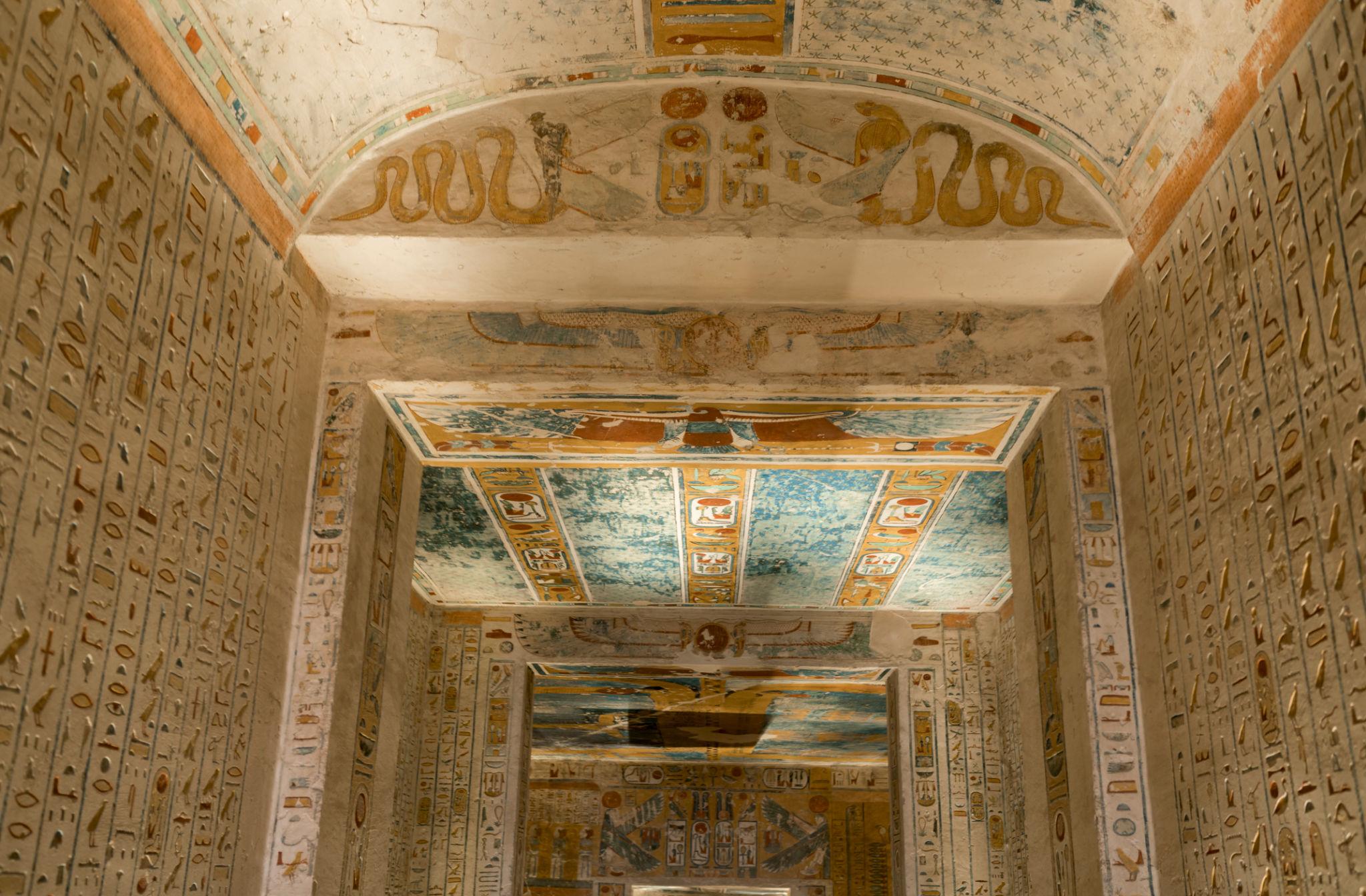
Every surface was once painted in vivid colors — traces of red, blue, and gold can still be seen in protected areas. The reliefs depict pharaohs making offerings to the gods, battle scenes, and religious rituals. Seti I carved the northern walls; Ramesses II completed the southern walls. The quality difference between the two is visible — Seti's reliefs are deeper and more refined.
The Sacred Lake
South of the main temple, the Sacred Lake covers 2.5 acres and was used by priests for ritual purification. The stone seating around it dates from a later period. A giant granite scarab beetle near the lake is dedicated to Khepri, the god of the morning sun. Legend says walking around it seven times counterclockwise brings good luck — you'll see tourists doing exactly this.
Avenue of Sphinxes
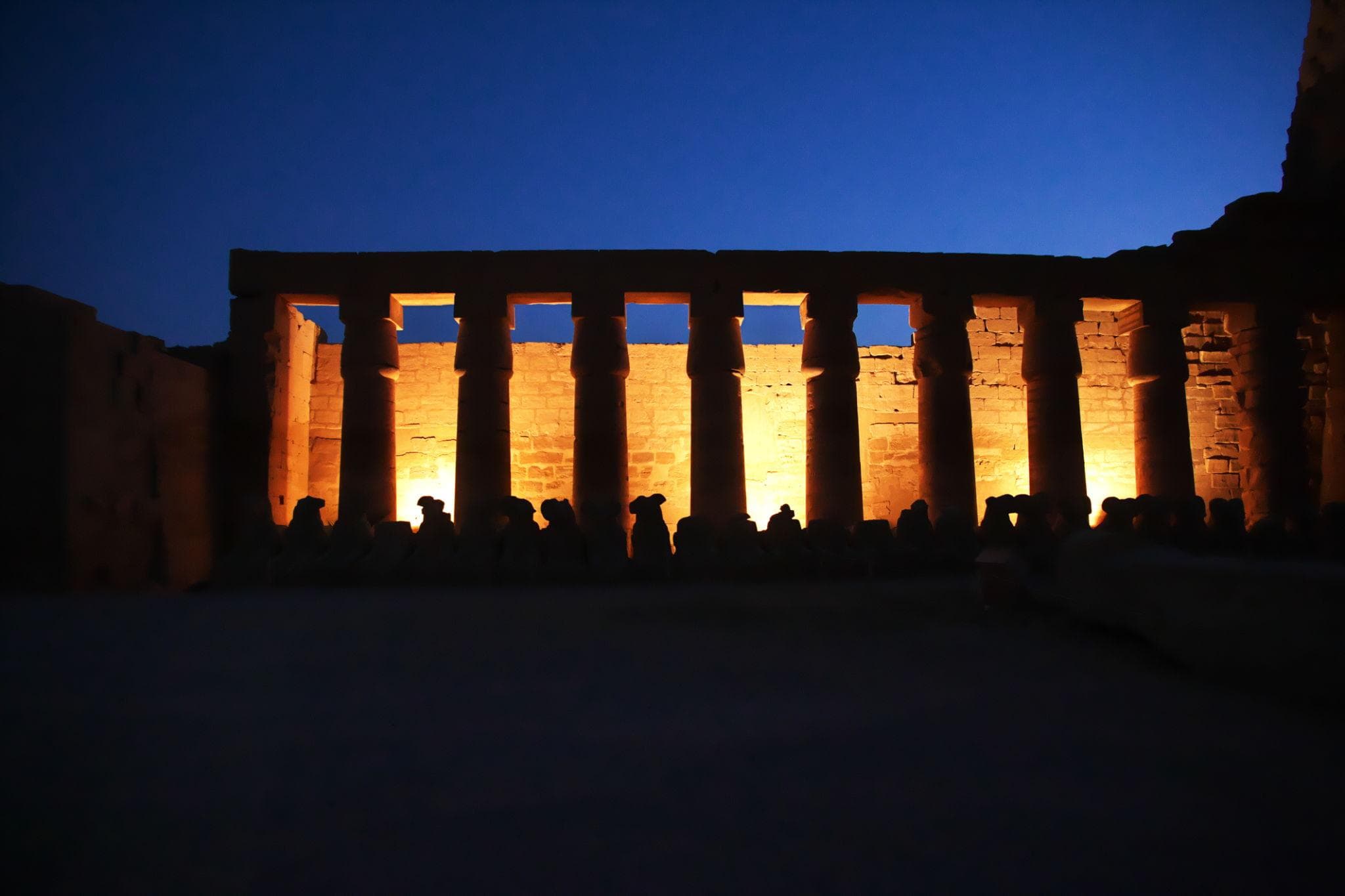
The 3-km-long avenue that once connected Karnak to Luxor Temple has been partially excavated and restored. Lined with ram-headed sphinxes (representing the god Amun) and human-headed sphinxes, it's now possible to walk portions of this ancient processional route. A full restoration was completed in recent years, and the evening opening with lighting is spectacular.
Obelisks
Two obelisks remain standing at Karnak. The Obelisk of Hatshepsut, at 29.5 meters, is the tallest surviving ancient obelisk in Egypt. Carved from a single piece of Aswan granite, it weighs approximately 323 tons. Hatshepsut's stepson, Thutmose III, later built a wall around it to hide it from view — an ancient attempt at damnatio memoriae.
When to Visit
Early morning (opening at 6 AM) offers the best light and fewest crowds. The temple faces east, so morning sun illuminates the Hypostyle Hall beautifully. Late afternoon is also excellent. Midday in summer is brutal — the stone reflects and amplifies the heat.
The Sound and Light Show at Karnak is one of Egypt's best. Held nightly, it walks you through the illuminated complex while narrating its history. Performances are in multiple languages — check the schedule for English showtimes.
Getting There
Karnak is located 3 km northeast of Luxor city center. A taxi costs about 50-80 EGP, or you can walk the riverside corniche in about 30 minutes. Our Luxor Day Trip from Cairo includes Karnak as a key stop, with flights and private transport included.
Practical Tips
Entry costs 200 EGP. Allow at least 2-3 hours. Bring water and sun protection. The site is large — comfortable shoes are essential. A guide is highly recommended here, as the complex's history spans so many periods that context makes an enormous difference to the experience.