If you sail the Nile between Luxor and Aswan, two temples will define the journey: Edfu, the most complete pharaonic temple in Egypt, and Kom Ombo, the strange double sanctuary perched right on the riverbank. Both date from the Ptolemaic era, both reward a slow, curious visit, and both are usually included on the classic three- or four-night cruise. This guide walks you through what to see, what each costs, when to go, and how to avoid the worst of the crowds.
Why These Two Temples Matter
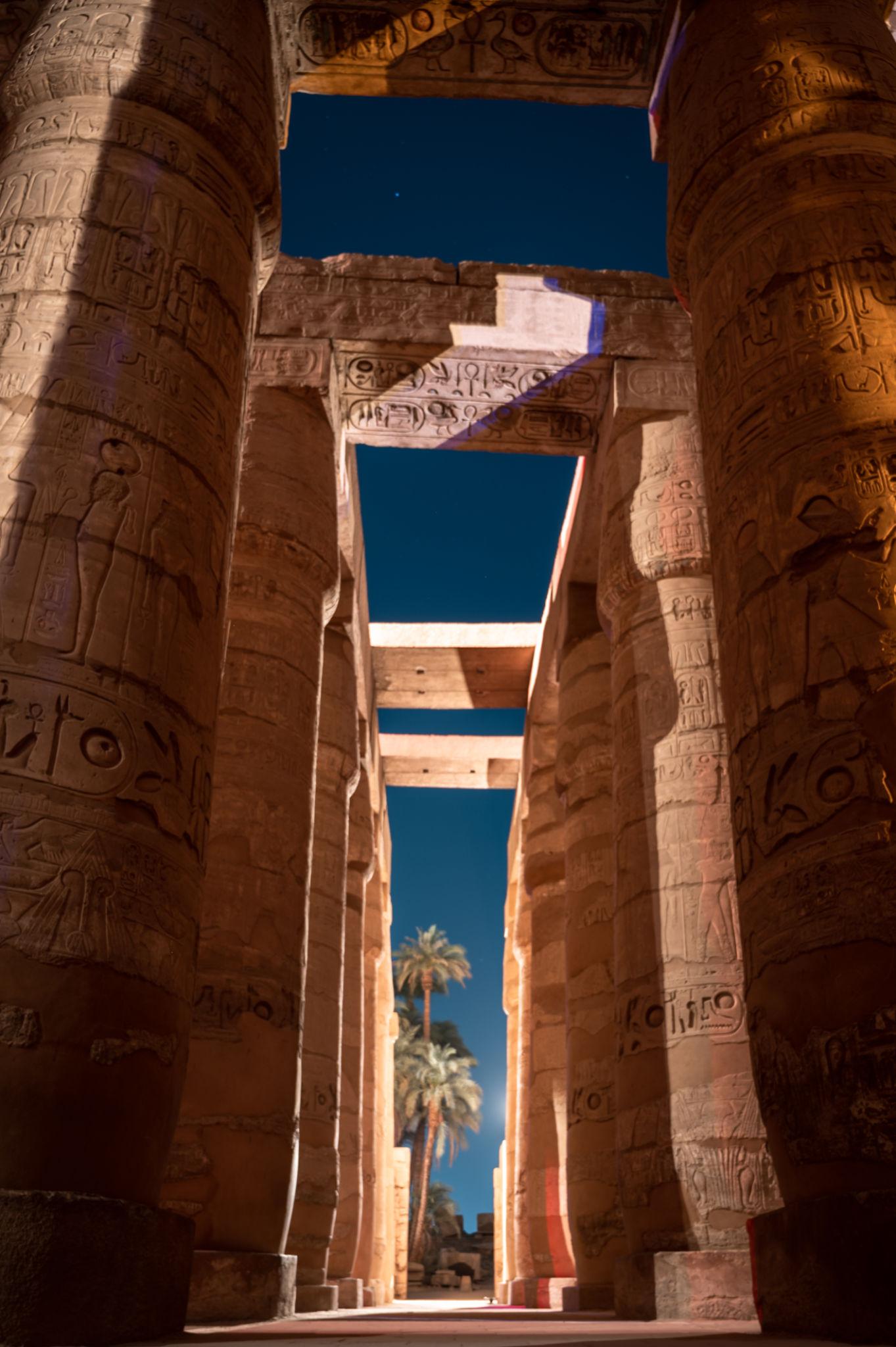
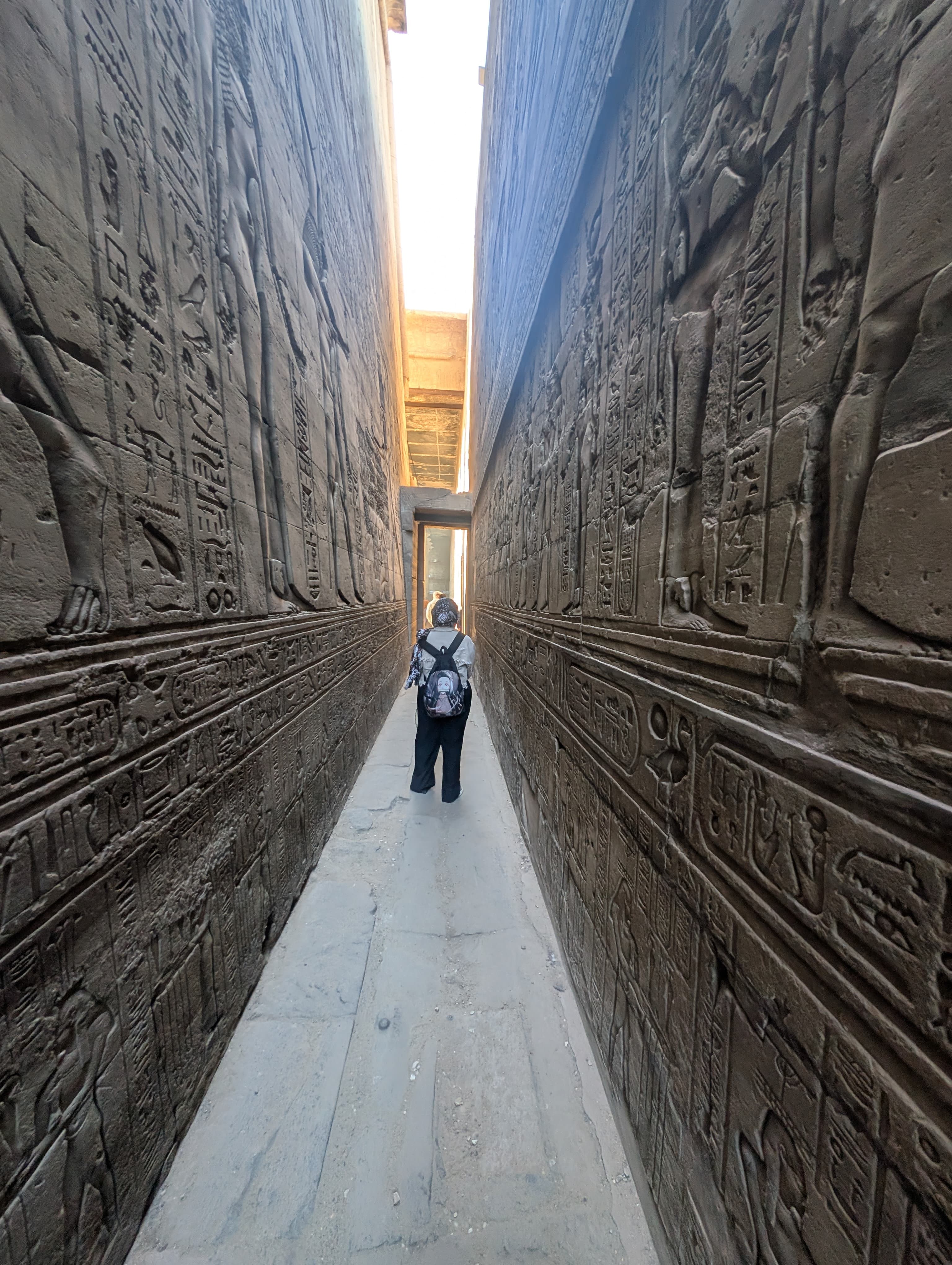
Most of Egypt's famous monuments are partly ruined. Karnak is a forest of half-fallen columns; the mortuary temples of the west bank are mostly foundations. Edfu and Kom Ombo are different. Because they were built relatively late, by the Greek-descended Ptolemy dynasty between roughly 237 and 47 BC, and because Edfu was buried under sand and a village for centuries, their roofs, walls, and carved decoration survived almost intact. Walking into Edfu's hypostyle hall is one of the few moments in Egypt where you genuinely feel what a working temple looked like 2,000 years ago, dim, enclosed, and covered floor to ceiling in text.
They also tell a layered story. The Ptolemies were foreigners ruling Egypt, and these temples were partly a political project: by building lavishly for Horus at Edfu and Sobek at Kom Ombo in flawless traditional style, the Greek kings advertised themselves as legitimate pharaohs. Look closely and you will see Cleopatra-era cartouches alongside ancient religious formulas.
Edfu: The Temple of Horus
The Temple of Horus at Edfu is dedicated to the falcon-headed sky god and is the second-largest temple in Egypt after Karnak. It took about 180 years to complete, begun under Ptolemy III in 237 BC and finished around 57 BC. What makes it extraordinary is its completeness: the towering pylon, the open courtyard, the granite falcon statues, the dark inner halls, and a roof you can still stand under.
### The Pylon and Courtyard
You approach through a 36-metre-high pylon carved with colossal scenes of the king smiting his enemies, classic propaganda imagery repeated across Egyptian temple fronts. Beyond it lies the Court of Offerings, ringed by 32 columns with varied floral capitals. Two black granite statues of Horus as a falcon flank the entrance to the temple proper; the surviving one, wearing the double crown, is one of the most photographed objects in Upper Egypt.
### The Inner Temple and the Falcon Sanctuary
Inside, the hypostyle halls grow progressively darker and lower, drawing you toward the holy of holies. At the heart of the temple stands a polished granite shrine, the naos, that once held the god's golden cult image, and in front of it a reconstructed wooden barque, the ceremonial boat in which Horus travelled. Don't miss the small chapels around the sanctuary and, especially, the carved wall scenes of the "Feast of the Beautiful Meeting," the annual reunion of Horus of Edfu with the goddess Hathor, who sailed upriver from Dendera. The outer corridor, or ambulatory, carries some of the temple's most violent and vivid reliefs: the mythical battle between Horus and Seth, shown as a hippopotamus being speared.
### Practical Visit: Edfu
- **Entry fee:** roughly 450 EGP (about 9 USD) as of 2026; prices rise most years, so confirm locally.
- **Hours:** generally 7am to about 5pm, slightly later in summer.
- **Getting there:** the temple sits about 2 km from the river. Cruise passengers are taken by horse-drawn carriage (caleche) or minibus; carriage drivers expect a tip of around 50 to 100 EGP and will haggle hard, agree the fare before you sit down.
- **Time needed:** 60 to 90 minutes is comfortable.
- **Photography:** allowed in most areas; a tripod or professional gear may require a separate permit.
Kom Ombo: The Double Temple
About 60 km north of Aswan and a short, scenic sail from Edfu, the temple of Kom Ombo sits dramatically on a bend in the Nile, so close that cruise boats moor almost at its steps. It is unique in Egypt because it is perfectly symmetrical and dedicated to two gods at once: Sobek, the crocodile deity of fertility and the Nile, on the right, and Haroeris (Horus the Elder), a falcon healing god, on the left. Everything, gateways, halls, sanctuaries, is doubled along a central axis.
### Twin Sanctuaries and Hidden Chambers
Walking through, notice that there are always two doorways where other temples have one. The two sanctuaries at the rear once held the cult images of each god. Between and beneath them runs a network of crypts and passages; guides love to point out a spot where priests may have hidden to deliver "divine" answers to worshippers. The temple is smaller and less complete than Edfu, much of the front was lost to the river and earthquakes, but its riverside setting at sunset is unforgettable.
### The Medical Relief
Kom Ombo's most talked-about carving is on the rear outer wall: a relief often described as showing surgical and medical instruments, scalpels, forceps, scales, suction cups, and what look like birthing stools. Whether it is a true "catalogue" of instruments is debated by scholars, but it is a remarkable testament to Egyptian medicine and a favourite stop for guides.
### The Crocodile Museum
Beside the temple, the small Crocodile Museum (opened 2012) displays around 20 to 40 mummified crocodiles excavated nearby, animals sacred to Sobek, along with crocodile coffins, amulets, and bronze figures. Entry is usually included with or sold alongside the temple ticket. It is air-conditioned and a welcome cool-down in the heat.
### Practical Visit: Kom Ombo
- **Entry fee:** roughly 360 EGP (about 7.50 USD) as of 2026; the Crocodile Museum may add a small extra charge.
- **Hours:** about 7am to 8pm, later than most sites because of evening cruise arrivals.
- **Getting there:** the temple is a two-minute walk from the cruise mooring, no transport needed. Independent travellers can reach it by service taxi or microbus from Aswan in roughly an hour.
- **Time needed:** 45 to 60 minutes, plus the museum.
The Rediscovery of Edfu
For most of the modern era, Edfu was invisible. Over the centuries after the temple closed, blown sand and the rubbish of a growing village buried it almost to the tops of its columns; mudbrick houses were built right on the roof. When the French Egyptologist Auguste Mariette began clearing it in the 1860s, only the upper pylon poked above the debris. That long burial is the reason Edfu is so complete today, the sand protected the carved walls from weather, vandalism, and the lime-burners who destroyed so many other monuments. As you walk the inner halls, look for the soot-blackened ceilings, traces of the cooking fires of the villagers who once lived inside. It is a vivid reminder that these temples have had many lives.
Esna: The Stop in Between
Between Luxor and Edfu, most cruises pause at Esna to pass through its lock, the only navigational lock on this stretch of the Nile, which can take an hour or more as boats queue. Esna also has its own small but exquisite temple of Khnum, the ram-headed creator god, recently the subject of a dramatic cleaning project that has revealed astonishingly vivid colour on its ceiling. It sits in a pit several metres below the modern town. Not all cruises stop long enough to visit, but if yours offers it, the freshly conserved astronomical ceiling is worth the short walk from the mooring.
When to Go and How to Beat the Crowds
The best months are October to April, when daytime temperatures are pleasant; May to September can exceed 40 C, making midday visits brutal. The temples follow the rhythm of the cruise fleet, which means both can be packed when several boats arrive together. At Edfu, the early-morning slot before the bulk of cruises disembark is calmest. Kom Ombo is famously beautiful at dusk, and many cruises time their stop for late afternoon or early evening, when the floodlights come on and the river glows, well worth experiencing even if it is busier.
How Most Travellers Visit
The overwhelming majority of visitors reach Edfu and Kom Ombo as part of a Nile cruise. The standard itinerary sails Luxor to Aswan over three to four nights, stopping at both temples plus Esna lock, with Aswan as the gateway to Philae and Abu Simbel. Cruising removes all the transport hassle: you wake up, walk or ride a short way, and a guide explains the reliefs. If you are based in Aswan, it is also possible to visit Kom Ombo as a half-day road trip, but Edfu is awkward to reach without a cruise or a long taxi day.
What to Bring and Insider Tips
- Carry small EGP notes for carriage drivers, guards, and the inevitable photo tips.
- Bring a small torch or use your phone light, the inner halls at Edfu are genuinely dark and reward looking up at the ceiling astronomy.
- Sun protection and water are essential; there is little shade in the courtyards.
- Tip: at Edfu, slip to the rear ambulatory while the crowd clusters in the courtyard, the Horus-and-Seth reliefs there are the highlight and often empty.
- Modest clothing is appreciated but not strictly required at these sites.
Plan Your Temple Journey
Edfu and Kom Ombo are best enjoyed without logistics on your mind, which is exactly what a river cruise delivers. Our Nile Cruise from Luxor to Aswan includes guided visits to both temples alongside Karnak, the Valley of the Kings, Philae, and more, with all transfers, meals, and expert Egyptologists handling the details. It is the most rewarding, and most relaxing, way to see these two riverside masterpieces.