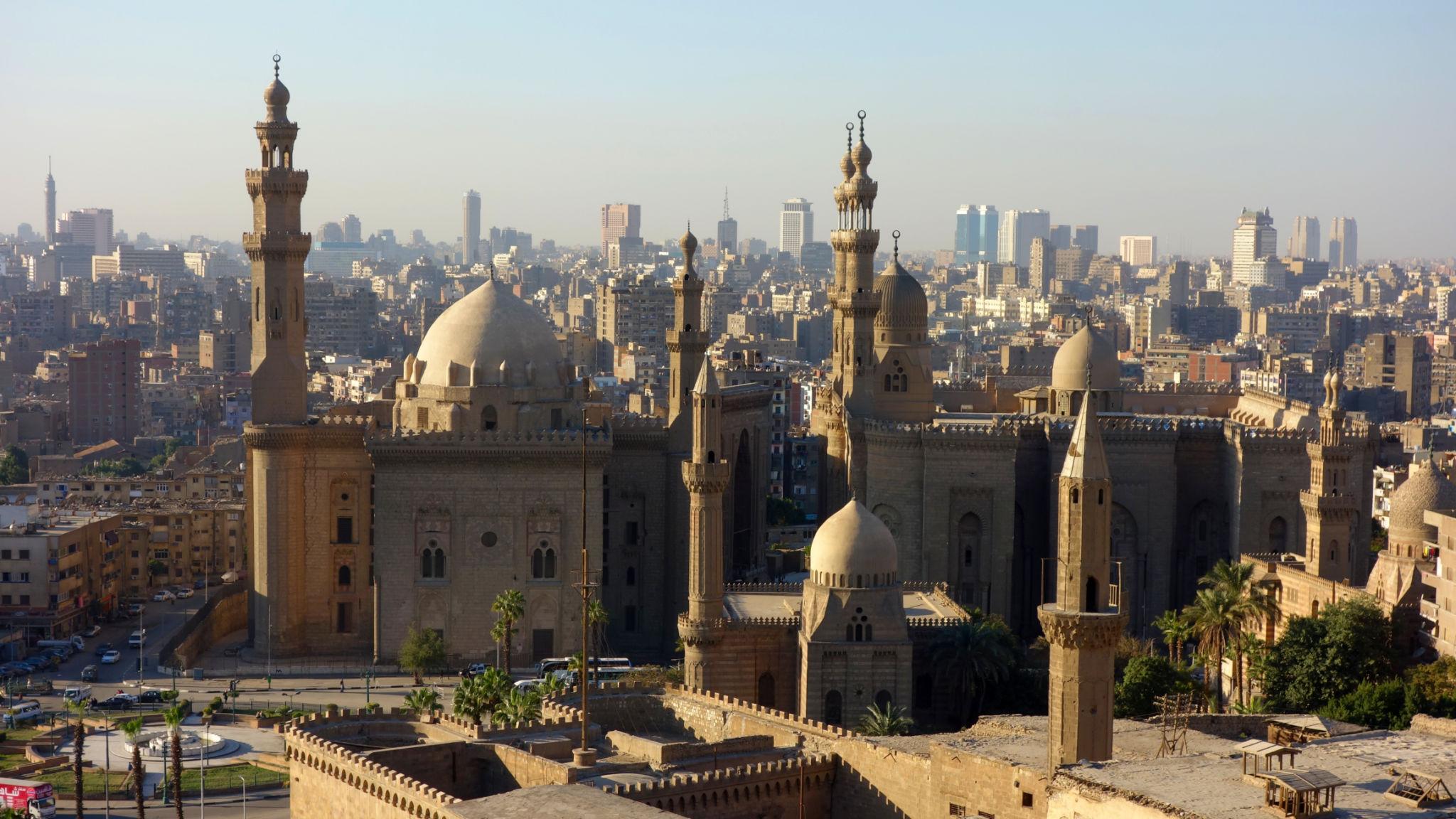
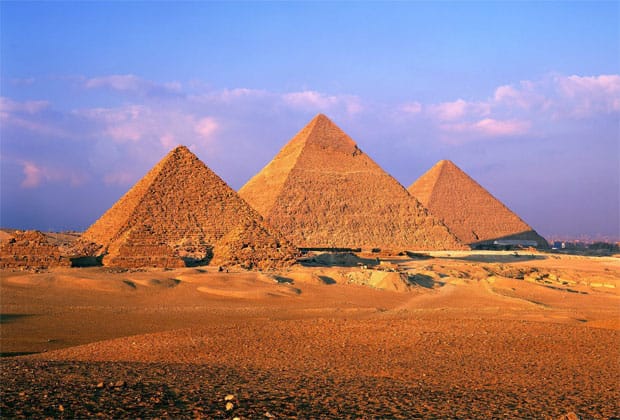
From the terrace beside the Mosque of Muhammad Ali, high on the Cairo Citadel, the city stops being a traffic problem and becomes a map. The domes of Sultan Hassan and Al-Rifai sit directly below like two pieces left on a board, the minarets of the medieval city run north in a ragged line towards Al-Azhar, and on a clear winter morning, after wind has scrubbed the haze away, the pyramids show as pale notches on the western horizon. For nearly seven hundred years Egypt was governed from this hill, and it still feels built for looking down.
It is also one of the most rushed visits in Cairo. Most people photograph the Alabaster Mosque, lean over the wall and leave within the hour, missing a Mamluk mosque with Persian-style tilework, two towers that reopened only in 2024, and the lane where Muhammad Ali settled who ruled Egypt in a single morning in 1811. This guide covers what is inside the walls, tickets as of autumn 2026, opening hours, what to wear, the best light and how to pair the visit with the great mosques below.
At a Glance
Location: a spur of the Muqattam Hills, about 3 km (2 miles) south-east of Tahrir Square as the crow flies
Founded: by Salah ad-Din (Saladin) in 1176, completed under Sultan al-Kamil around 1207
Opening hours: daily 8am to 5pm, last entry around 4pm, with shorter hours reported in Ramadan
Tickets: 550 EGP for foreign adults and 275 EGP for students, as of autumn 2026 (about 10 USD or 9 EUR for adults)
Time needed: two hours for the main sights, half a day with the museums and the mosques below
Dress code: shoulders and knees covered, shoes off in the mosques, a scarf for women
Best time: at opening, before the coaches and the heat; clear days after wind or rain for the pyramid view
Pair it with: the Sultan Hassan and Al-Rifai mosques at the foot of the hill, 220 EGP on the Ministry's last published list
Status: part of the Historic Cairo UNESCO World Heritage Site since 1979
A Fortress Built Against the Crusaders
Salah ad-Din began the fortress in 1176, a few years after ending Fatimid rule, with the Crusader states still a live threat and Cairo lacking a defensible core. The work was run by his trusted official Baha al-Din Qaraqush. Most of the stone came from the Muqattam Hills, some was reportedly taken from the small pyramids at Giza, and Frankish prisoners of war supplied much of the labour. Saladin, away campaigning in Syria and Palestine, barely lived here.
What he did leave is a well. Bir Yusuf, usually explained as named after Saladin, whose given name was Yusuf, rather than the biblical Joseph, was cut about 85 metres (280 feet) down through the rock to reach groundwater, with a spiral passage designed so that oxen could work the water-lifting wheels. Even if you see no more than its head, it explains how a waterless hilltop could hold out under siege.
The fortress was finished under his nephew Sultan al-Kamil, who moved the court up the hill early in the thirteenth century. From then until Khedive Ismail moved the seat of government to Abdeen Palace in the nineteenth century, the Citadel of Saladin was where Egypt was ruled from: Ayyubids, Mamluks, Ottoman governors and the dynasty of Muhammad Ali. British troops garrisoned it during the occupation until 1946, the Egyptian military used it after that, and it has been opened up to visitors in stages since the early 1980s.
The Mamluk Centuries
The Mamluk sultans, who ruled from 1250 to 1517, turned a military base into a royal city. The walls divide into a northern enclosure, always the military quarter, and a southern enclosure that held the palaces, joined by the gate of Bab al-Qulla. The greatest builder of all was al-Nasir Muhammad ibn Qalawun in the fourteenth century, when Cairo was the pre-eminent city of the Islamic world and the palaces on this hill were its showpiece.
Little of that survives. When the Ottomans took Egypt in 1517, Sultan Selim I had marble and decoration stripped from the Mamluk buildings, and three centuries later Muhammad Ali cleared most of what remained, including the great audience hall, to make room for his own mosque and palaces.
The Ottoman period's main legacy is the Mosque of Sulayman Pasha in the northern enclosure, completed in 1528, one of the earliest Ottoman-style mosques in Cairo, with a slim minaret capped by a pointed cone. Recently restored and often close to empty, it is one of the calmest interiors on the hill.
The Mosque of Muhammad Ali
The Alabaster Mosque is the silhouette of Cairo on a thousand postcards, and it is deliberately foreign. Muhammad Ali, an Ottoman officer of Albanian origin who had made himself master of Egypt, chose the imperial architecture of Istanbul over the local Mamluk style, a statement of rank aimed as much at the Sultan as at his own subjects. The mosque was founded in 1830, building got properly under way in 1832, and the decoration was not finished until 1857, eight years after his death. Who designed it is disputed: some sources credit Yusuf Bushnak, an architect from Istanbul, while others say the final designer is unknown.
The numbers are imperial too. The central dome is 21 metres (69 feet) across and rises to 52 metres (171 feet), and the two needle minarets each top 80 metres (262 feet). The lower walls and the courtyard are faced in alabaster, which gives the building its nickname and the courtyard its soft glow late in the day.
Look for two details most visitors walk past. Muhammad Ali's tomb lies inside the prayer hall, behind a bronze screen; his body was moved here in 1857. And in the courtyard stands an ornate clock tower, a gift from King Louis-Philippe of France in the mid-1840s, given in return for the obelisk from Luxor Temple that now stands in the Place de la Concorde in Paris. France arguably had the better of that exchange. The dome itself is a rebuild: structural problems led to its dismantling from 1935, and King Farouk reopened the mosque for Friday prayers in February 1939.
The Mosque of al-Nasir Muhammad
Opposite the Alabaster Mosque, with a fraction of its crowds, stands the building that shows what the Citadel used to be. Al-Nasir Muhammad built it in 1318 as the royal mosque where the sultans attended Friday prayer, then rebuilt and heightened it in 1335. Its two stone minarets are unlike anything else in Cairo: bulbous tops once sheathed in green glazed tiles, work scholars link to a craftsman from Tabriz in north-west Iran.
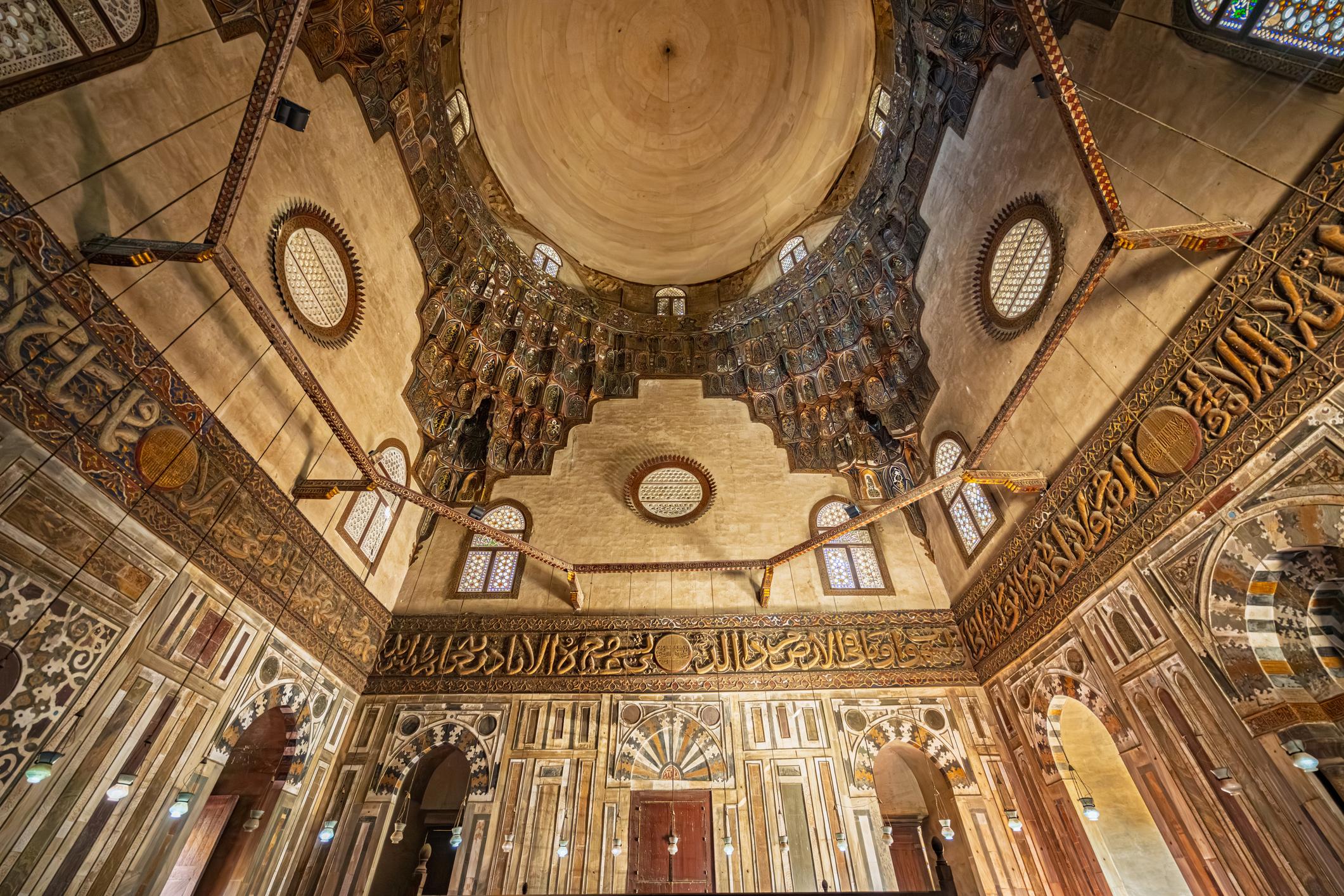
Inside is an arcaded courtyard carried on reused columns, including red granite shafts taken from ancient temples. Selim I's men stripped its marble panelling, and during the British occupation it served as a store and a prison before a restoration in 1948. Today it is quiet and atmospheric, and the best place on the hill to understand why the Mamluk period is regarded as Cairo's golden age, the thread running through our walk through Islamic Cairo.
Insider Tip: Walk Out to the Eastern Towers
Most groups never reach the far side of the northern enclosure, which is exactly why it is worth the walk. In early 2024 the Ministry of Tourism and Antiquities opened two restored towers at the north-eastern corner of the eastern rampart, Burg al-Ramla and Burg al-Haddad, each about 20.8 metres (68 feet) high on a three-quarter-round plan.
Burg al-Haddad carries four projecting stone balconies with open floors, built so defenders could pour burning liquids on anyone at the foot of the wall. It makes the Citadel feel like a fortress again rather than a mosque with a car park. Take in the Sulayman Pasha mosque on the way back.
The 1811 Massacre of the Mamluks
On 1 March 1811 Muhammad Ali invited the leading Mamluk beys, around 500 of them by most accounts, to a ceremony at the Citadel. They were received with coffee and courtesy, then formed up to ride out in procession down the steep, walled lane that leads to the gate of Bab al-Azab. Once they were strung out in the passage, the gates at either end were shut and Muhammad Ali's Albanian troops opened fire from the walls above. Almost no one in the lane survived, and the killing continued across Cairo and the provinces for days afterwards, with estimates of the total dead reaching around 3,000.
It ended the Mamluks as a political force after five and a half centuries and cleared the way for a dynasty that ruled until 1952. Guides like to tell of a single horseman who escaped by leaping his horse from the wall; it is a good story and best enjoyed as one. Bab al-Azab, rebuilt in 1754, faces Midan Salah al-Din at the bottom of the hill and is not the visitor entrance today, so ask your guide to point out the line of the lane from above.
Palaces and Museums Inside the Walls
The Gawhara Palace, built for Muhammad Ali in 1814 on ground beside where his mosque would later rise, was gutted by fire in 1822 and damaged again in 1824, after which Muhammad Ali imported Italian marble for a new vestibule, staircase and corridors. It later became a museum of the dynasty's furniture and court life. Its opening has been intermittent over the years, so treat it as a bonus rather than a reason to come.
The National Military Museum fills the former Harem Palace in the northern enclosure, where it has been since 1949, and reopened after renovation in 1993. Inside are uniforms, weapons, models and dioramas from the pharaohs to the twentieth century; outside stand tanks and aircraft from the October 1973 war. The Ministry's listing gives it its own entry of 200 EGP for foreign adults and an earlier 4pm closing, but arrangements vary and at least one recent visitor found it shut, so check on the day.
The small National Police Museum, opened in 1986 in the north-west corner, is worth it mainly for the terrace outside, the cleanest view down onto the Sultan Hassan and Al-Rifai mosques.
Cairo Citadel Tickets, Hours and Getting There
As of autumn 2026, the official Ministry listing puts the Cairo Citadel at 550 EGP for foreign adults and 275 EGP for foreign students with a valid ISIC card, and children under six enter free. The site opens daily from 8am to 5pm, last entry is usually an hour before closing, and visitors report a 3pm close during Ramadan. Visitors report small extra charges for the electric carts inside (around 10 EGP) and for parking a car (around 25 EGP). Ticket offices at the major Egyptian sites are now largely card-only, so carry a card, plus small notes for the shoe attendants.
Two changes matter for 2026 and 2027. Since 1 January 2026, visitors of Arab nationality pay the foreigner rate at Supreme Council of Antiquities sites rather than the Egyptian one. And prices tend to be revised in the autumn: the Grand Egyptian Museum raises its tickets on 1 November 2026, and other sites may follow. Our guide to Egypt ticket prices tracks the latest figures. The five-day Cairo Pass, which covers the Citadel and most Cairo and Giza sites but reportedly not the Grand Egyptian Museum, is reported at about 130 USD, is sold at the Citadel itself and needs a passport copy and a photo; it pays off only on a dense, site-heavy week.
No metro station is close enough to be useful. A taxi or ride-hailing car from Downtown or Zamalek takes roughly 15 minutes at dawn and can take 45 in late-morning traffic. The walk up from the mosques below looks short on a map but loops round the walls, so most people drive to the visitor car park.
Warning: Dress Code, Prayer Times and Touts
The Cairo Citadel holds working mosques, and the dress code is enforced at the mosque doors rather than the main gate. Cover shoulders and knees. Women should carry a scarf for their hair, which is expected rather than demanded inside the Muhammad Ali Mosque. Shoes come off at the entrance, or you can pay a few pounds for cloth overshoes. Enter through the courtyard with the ablution fountain; the other doors are exits.
Steer clear of Friday around the midday prayer, when the mosque closes to visitors for an hour or two and the courtyard fills with worshippers. Expect unofficial guides at the car park offering to show you round, and the occasional attendant who suggests a photograph from a roped-off ledge in return for a few pounds: a polite no is enough. Drones are banned in Egypt without a permit and will be confiscated. Our guide to Egyptian culture and etiquette covers mosque manners in more depth, and our money and baksheesh guide explains the small-change economy.
Best Light, Best Season and the View
October to April is the comfortable window. From May the stone terraces throw heat back at you by mid-morning, and in July and August the Citadel is a dawn visit or not at all. The view west is the reason many people come, and it rewards timing. In the morning the sun is behind you and lights the city evenly, which suits photographs of the mosques below and the long line of minarets. The pyramids, about 13 km (8 miles) away, appear only on genuinely clear days, most often in winter after wind or a rare shower has cleared the dust.
Afternoon is kinder inside the Muhammad Ali courtyard, when low sun warms the alabaster, but by then the haze usually thickens and the coach groups have arrived. With a 5pm close, sunset from the walls is possible only in the short days of December and early January. Our Egypt photography tips cover haze and backlight.
Pairing the Citadel With Sultan Hassan and Al-Rifai
The two great mosques at the foot of the hill complete the visit, and they face each other across a narrow street like a conversation across five centuries. The Mosque-Madrasa of Sultan Hassan, built between 1356 and 1363 for a son of al-Nasir Muhammad, is one of the largest medieval mosques anywhere, its courtyard framed by four vaulted halls of extraordinary scale. Al-Rifai, begun in 1869 for Khushyar Hanim, mother of Khedive Ismail, and finished in 1912, was designed to answer it and holds the tombs of Khedive Ismail, King Fuad, King Farouk and the last Shah of Iran. A combined ticket for the pair was 220 EGP for foreign adults on the Ministry's last published list, with hours of 9am to 5pm.
The order that works is the Citadel at 8am, then down to the mosques by late morning, when the Citadel is filling up. With energy left, the Mosque of Ibn Tulun and the Gayer-Anderson Museum, 100 EGP on the same list, are about 15 minutes away on foot. The evening belongs to Khan el-Khalili and Al-Muizz Street, where the medieval city is at its liveliest after dark. Our three days in Cairo itinerary shows how this day fits around Giza and Old Cairo.
Good to Know: The Citadel Festival in August
Each August the Cairo Opera House stages the Citadel Festival for Music and Singing in the fortress's open-air theatre, and it is one of the best-value nights out in the city. The 2026 edition, the 34th, ran from 15 to 24 August with 23 concerts, and tickets of around 100 EGP covered two concerts on the same night plus entry to the Citadel. The audience is mostly Egyptian families, the line-up draws on Egyptian and Arab singers, and by the first act the worst of the heat has gone. If your summer dates line up, build an evening around it.
Planning Your Visit
The Cairo Citadel works best as the anchor of a full day in medieval Cairo rather than a stop squeezed between Giza and the airport. Our Islamic Cairo, Citadel and Khan el-Khalili tour is built around that shape, with an Egyptologist guide who can put the sultans back into the empty courtyards. It pairs well with our Old Cairo and Coptic quarter tour on another day, since between them they cover more than a thousand years of Cairo that many visitors never see.
If you would rather go independently, go early, dress for the mosques, carry a card and give it two hours rather than one. And if you want a day that strings the Citadel, Sultan Hassan, Ibn Tulun and the evening bazaar together without thinking about taxis, tell us your dates and we will suggest the order that suits your pace.