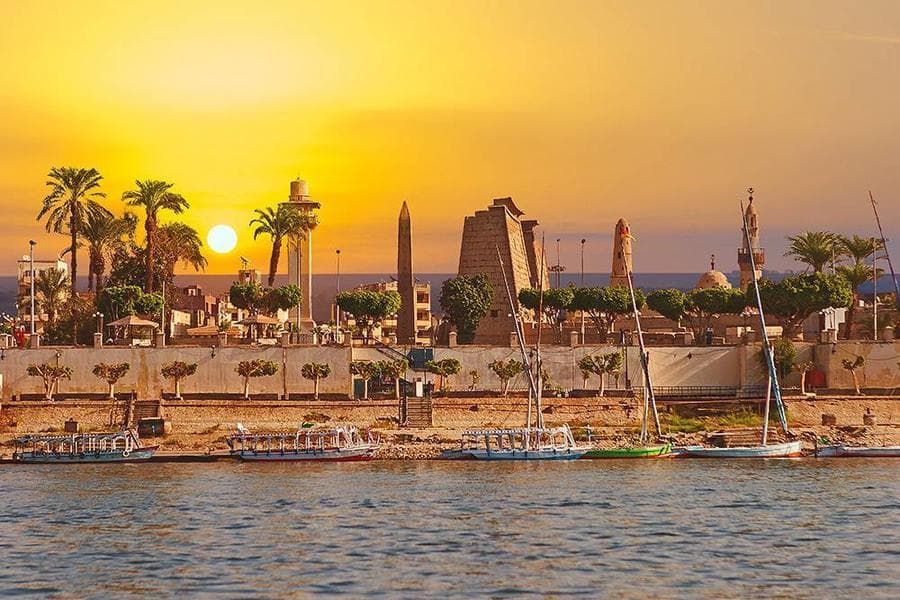
The platform is busy at eight in the evening: porters with trolleys, families with bundles, travellers checking their tickets against the numbers on a long line of sleeping cars. This is the Cairo to Luxor train at its best. An attendant finds your name on his list, shows you to a compartment with two seats and a washbasin, and an hour later knocks with a dinner tray. When you next look out, it is just after five in the morning, the sky is pale over the palms and sugar cane, and the train is slowing into Luxor. No other way to travel turns a journey of some 650 km (400 miles) into a night's sleep.
The sleeping cars are still widely known as the Watania train, although the operator changed in 2023, and that alone causes confusion when people try to book. Day trains, flights and buses complicate the choice further.
This guide covers the sleeper as of November 2026: who runs it, the stations and timings, the cabins and the meals, what foreigners pay in US dollars and how to book, how it compares with the alternatives, and what to do when you step off the train in Luxor at dawn.
At a Glance
Operator: Abela Egypt, which took over the former Watania sleeping trains in 2023
Cairo stations: the new Upper Egypt Station, sometimes called Bashtil, and Giza; check which your ticket names
Departure: in the evening, with several trains a night in the main season
Arrival in Luxor: around dawn, after roughly 9 to 10 hours
Cabins: two-berth compartments with a washbasin, made up as beds after dinner
Foreigners' fares: about US$90 to US$100 per person sharing a cabin, more for sole use, as of late 2026
Included: dinner and breakfast served in the cabin
Booking: on the operator's website or at its station office, opening several months ahead
Alternatives: a flight of about an hour, a day train of around 10 hours, or an overnight bus
The Cairo to Luxor Train: Which One to Take
There are two kinds of train on the line. The sleeper, run under contract by a private operator, is the one most visitors mean when they search for a train from Cairo to Luxor: a dedicated train of sleeping cars, with private two-berth compartments, an attendant in each car and meals included, leaving Cairo in the evening and reaching Luxor around dawn before continuing to Aswan. Foreigners pay for it in US dollars.
The second kind is the ordinary service of Egyptian National Railways, the state operator: day and night trains with reclining seats in air-conditioned first and second class, including its newer Talgo and VIP services. They are much cheaper, take around ten hours, and give you a long look at the Nile valley through the window, but they do not offer a bed.
For most travellers, the sleeper train from Cairo to Luxor is the better choice. It saves a hotel night, it saves a day of sightseeing time, and it arrives early enough to reach the West Bank as the sites open. A flight is faster, and the costs and trade-offs of each option are compared further down. Our overview of getting around Egypt puts the train in the context of the whole country.
The Sleeper Train: From Watania to Abela
For many years the sleeping cars between Cairo, Luxor and Aswan were operated by Ernst Watania, and many guidebooks, forum threads and reseller sites still call the service the Watania sleeping train. In 2023 the contract passed to Abela Egypt, which now runs the trains, sells the tickets and staffs the cars. The route, the format and most of the rolling stock stayed the same, so a trip report written under the old name still describes the experience fairly, but the old booking sites do not.
The cars are not new, and their condition varies. Abela has been refurbishing sleeping cars into a renewed class it calls Elite, with around a dozen completed by early 2026, so you may travel in a freshly fitted compartment or in one that shows its age. Both have the same basic layout and the same service.
Foreign passengers have separate allocations of berths from Egyptian passengers, and are usually placed in separate cars. Egyptian and Arab nationals pay lower fares in Egyptian pounds. That split is the reason you should always book as a foreign passenger with your own passport details, even if an Egyptian friend offers to buy the ticket for you: the name and nationality are checked when you board.
Stations, Timetable and Journey Time
In Cairo, most travellers now board at the new Upper Egypt Station, built for long-distance trains to the south and sometimes referred to by the name of its district, Bashtil. Giza station is the alternative boarding point and is often more convenient for hotels near the pyramids. Older guides send you to Ramses Station, the historic central station, but the sleeper now normally uses the new station or Giza. Your ticket names the station, so check it twice, and allow plenty of time for Cairo's evening traffic.
The southbound trains leave in the evening, and in the main season there are usually several a night, with extra departures added when demand requires. Exact times change from one timetable to the next, so we give ranges rather than minutes: expect a departure in the evening, between about 7pm and 9pm, and an arrival in Luxor around dawn, roughly between 5am and 6:30am, after a journey of about nine to ten hours. The train then continues to Aswan, about three hours further south. Delays of an hour or so are not unusual.
Northbound, the trains leave Luxor in the evening and reach Cairo in the early morning, which makes the night train equally useful in the other direction. Always check the current times on the operator's site when you book, because a timetable copied from an old blog can be wrong by an hour or more.
Cabins, Dinner and Breakfast on the Night Train
Each compartment has two berths. By day it is a small sitting room with two wide seats facing the window; after dinner the attendant turns the seats into a lower bed and folds down an upper bunk, with sheets, a blanket and a pillow already provided. There is a washbasin in the compartment, with soap and a towel, and the toilets are at the end of the car. Luggage goes under the lower berth or on the rack above the door, so a medium suitcase fits, but two large ones make the cabin tight.
Dinner is served in the cabin on a tray, airline style, not long after departure: a simple hot meal, usually meat or chicken with rice and vegetables, with bread and a small dessert. Breakfast arrives before Luxor, typically bread, cheese, jam and something hot to drink. Neither is a reason to take the train, but both are included in the fare, and most travellers find them perfectly adequate. Vegetarians should mention it when booking. Bring your own water and snacks for the evening, as supplies on board can be limited.
The ride is not silent. The track is old in places, the cars rock and jolt, and the train stops at several stations in the night. Most people sleep reasonably well; light sleepers should bring earplugs and an eye mask. Solo travellers normally pay for sole use of the compartment, so you will not find a stranger in the upper bunk.
Cairo to Luxor Sleeper Train Price and How to Book
Foreign passengers pay in US dollars, and the sleeper is the most expensive Cairo to Luxor train by some distance. As of late 2026, a berth in a shared two-berth cabin costs roughly US$90 to US$100 per person each way, and a solo traveller who wants the compartment alone pays considerably more, in the region of the price of the whole cabin. Third-party sellers often charge more than the operator. Treat these figures as approximate and confirm the current fare when you book; refurbished Elite cars may be priced differently.
Tickets are sold on the operator's own website and at its booking offices at the stations. Booking usually opens four to five months ahead. Summer is quieter, but the cars fill up from November to March and over Christmas, New Year and Easter. Book as soon as your dates are firm, and at least ten days ahead in the high season. You will need the name and passport number of each passenger, and payment is by card online.
If you prefer not to handle the booking yourself, our sleeper train tour from Cairo to Luxor includes the tickets, the transfers at both ends and the sightseeing in Luxor, and the two-day Luxor tour from Cairo by train adds a night in a hotel so that you see both banks of the Nile without hurrying.
Warning: Buy From the Operator or a Known Agent
Because the service is still searched under its old name, a number of websites present themselves as the official sleeping train booking site, with prices well above the operator's. Some are legitimate resellers with a mark-up, and some are not. Before paying, check that the site names Abela as the operator, shows the train numbers and the cabin type clearly, and issues a ticket in your name with your passport number.
Be equally careful at the stations. Touts sometimes approach travellers with offers of berths on a supposedly full train. A ticket bought this way may be for the wrong date, for a seat in an ordinary train rather than a sleeper berth, or not valid at all. Buy at the operator's office or through an agency you know, and keep a printed copy of the ticket as well as the one on your phone; the attendant checks names against his list before you board.
The Best Way to Travel From Cairo to Luxor
The flight is the fastest option. EgyptAir flies between Cairo and Luxor several times a day, and the flight takes about an hour; with the drive to Cairo airport, security and the transfer at Luxor, the door-to-door time is closer to four or five hours, and fares vary with demand. Our Luxor day trip from Cairo by plane uses early and late flights to fit the main sites into a single day.
The ordinary day train is the cheapest comfortable option and the most scenic: around ten hours along the Nile, through villages, fields and the towns of Middle Egypt, with reclining seats and air conditioning. Foreign passengers pay a separate tariff, higher than the Egyptian fare, but still well below the sleeper.
Long-distance buses run between Cairo and Luxor too, usually overnight, in about nine to eleven hours. They are cheaper than the train but less comfortable for sleeping, and the road is long.
Which is the best way to travel from Cairo to Luxor? If time is short, fly. If you want to save a hotel night and arrive ready for the sites, take the sleeper. If you have a day to spare and enjoy watching the country go by, the day train is rewarding. Many travellers combine two: the sleeper south, a flight back.
Pro Tip: Comfort and Safety on the Night Train
Pack a small overnight bag so that the main suitcase can stay closed under the berth: a toothbrush, a change of clothes, a warm layer and your medication. Air conditioning in the cars can be strong, and winter nights in the desert are cold, so a fleece or a light jumper is welcome even when Cairo felt warm.
The compartment door locks from the inside. Lock it when you sleep and when you both leave the cabin, and keep your passport, phone and money with you rather than in an open bag. The attendants are attentive, but this is simple common sense on any night train.
Do not count on power sockets or Wi-Fi; charge your phone before boarding and bring a power bank. The upper bunk is reached by a small ladder, and older travellers usually prefer the lower bed. Finally, set an alarm for about an hour before the scheduled arrival in Luxor: breakfast usually comes then, but trains stop only briefly, and Aswan is the next station.
Arriving in Luxor at Dawn: What to Do First
The train arrives at Luxor station in the centre of the East Bank, about ten minutes' walk from Luxor Temple. Hotel rooms are rarely ready before the early afternoon, so plan the first morning around the sites rather than around a bed. Ask your hotel in advance to store your luggage, or travel with a driver who keeps it in the car.
The sensible move is to head straight for the West Bank, across the bridge south of town, while it is cool. The Valley of the Kings opens at about 6am, and arriving early means the tombs before the coach groups and the Temple of Hatshepsut in the soft morning light. Our guide to the best tombs in the Valley of the Kings helps you choose the three on the standard ticket, which costs 750 EGP as of November 2026, and the Valley of the Kings audio tour explains them stop by stop if you go without a guide.
After a late breakfast or lunch and a rest at the hotel, the East Bank suits the afternoon and evening: Karnak Temple until it closes, then Luxor Temple after dark, when the floodlights make it one of the finest sights in Egypt. The Karnak audio tour covers 15 stops if you would like to explore at your own pace. A sunrise balloon flight is usually not possible on the morning you arrive by train, so keep it for the next day; our Luxor hot air balloon guide explains how to choose a flight.
Planning Your Trip From Cairo to Luxor
Taken at night, the Cairo to Luxor train is one of the most satisfying ways to reach the city: an evening departure, a night's sleep, and a sunrise over the Nile valley. Book through the operator or a trusted agent, check your station and times twice, pack a small overnight bag and plan your first morning on the West Bank. Our Luxor travel guide covers where to stay and how many days the city deserves.
If you would rather leave the logistics to us, we can book the sleeper, meet you at the station in Cairo and at the platform in Luxor, and arrange the sightseeing with an Egyptologist guide. Send us your dates, the number of travellers and whether you would like to return by train or by air through our contact page, and we will put together a plan that fits. For a longer stay, the sleeper also connects well with a Nile cruise from Luxor to Aswan, or with a few days in Aswan itself, since the same train continues south in the morning. Tell us how many nights you have, and we will suggest how to divide them.