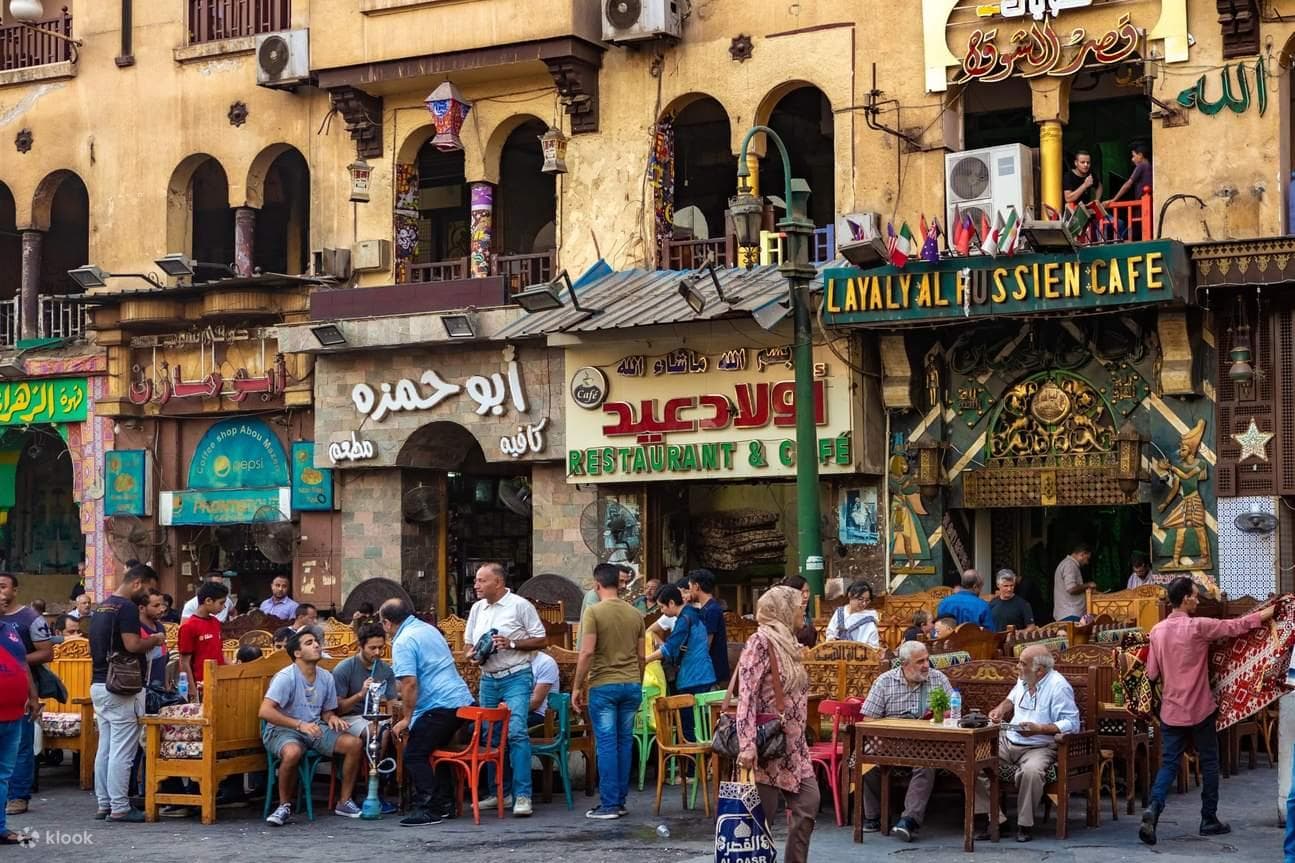
At eight in the morning, in a side street off Talaat Harb in Downtown, a cart is already doing brisk business. A dented copper pot of fava beans has been simmering since before dawn, a man at the next stall drops green-flecked patties into a vat of oil, and a stack of round baladi loaves goes down as fast as it comes in. Office workers eat standing up, in under five minutes, and pay less than the price of a bottle of water at a hotel.
This is Cairo street food at its most everyday, and it is one of the best things about the city. This guide covers what to eat and roughly what it costs as of November 2026, from koshari, ful medames and taameya to hawawshi, liver sandwiches, feteer and sugarcane juice. It names long-running places that are worth the trip, explains which neighbourhoods to head for, and covers stomach-friendly habits, vegetarian options, Ramadan nights and how to order in Egyptian Arabic.
For the wider picture of Egyptian cooking at home and in restaurants, see our guide to the best Egyptian food.
At a Glance
Ful and taameya: sandwiches from around EGP 10 to 30 each, the cheapest meal in Cairo
Koshari: roughly EGP 30 to 70 a bowl, depending on size and shop
Hawawshi: about EGP 65 to 130, depending on size and filling
Liver sandwiches: around EGP 40 to 50 for a small roll
Sugarcane juice: about EGP 20 to 40 a glass
Where: Downtown, Islamic Cairo around Al-Azhar and Al-Hussein, Sayeda Zeinab; Zamalek for sit-down versions
When: ful and taameya at breakfast, koshari at lunch, grills and liver late into the night
Vegetarians: much traditional Egyptian food is meat-free, and a lot of it is vegan
Payment: cash in small notes almost everywhere; cards only at a few larger places
Exchange rate: about EGP 53 to 54 to the US dollar in mid-November 2026
Cairo Street Food in a Nutshell
If you eat only four things, make them these. Ful medames and taameya for breakfast, from a cart or a small shop with a queue. Koshari for lunch, in a bowl, at one of the specialist shops in Downtown. A hawawshi, hot from the oven, when you need something more substantial. And a glass of fresh sugarcane juice in the afternoon heat.
Egyptian street food is cheap even by the standards of the region, filling and mostly cooked to order in front of you. Prices have risen sharply with inflation in recent years, but a full meal at a local shop still rarely costs more than EGP 100 to 150 (around US$2 to 3) per person. Sit-down places in Zamalek or hotel districts charge several times that for the same dishes.
The best areas are Downtown, where specialist shops line Champollion, Talaat Harb and the streets around Tahrir Square, and Islamic Cairo, where the lanes around Al-Azhar Mosque and Khan el-Khalili have fed travellers for centuries. Most of what follows can be found in both.
Koshari in Cairo: Abou Tarek and Its Rivals
Koshari is the dish Egyptians call their own: rice, brown lentils, short macaroni and vermicelli, topped with chickpeas, a spiced tomato sauce, a sharp garlic and vinegar dressing called da'a, crisp fried onions and, if you ask, chilli. It is filling, usually vegan and costs very little, and every Cairene has a favourite shop.
The best known is Abou Tarek, on Champollion Street in Downtown. It began as a cart, with accounts of the start date ranging from the 1950s to 1963, and has grown into a multi-storey restaurant devoted almost entirely to koshari, which is still made and served with the speed of a street stall. It is busy with visitors as well as locals, and it is one of the few koshari shops that accepts cards. A bowl costs roughly EGP 30 to 60 depending on size, as of 2026.
Its great rival is Koshary El Tahrir, a chain that started near Tahrir Square and now has branches across Egypt; locals argue happily about which is better. Smaller neighbourhood shops all over Cairo serve koshari that is just as good, and cheaper still.
Order at the counter, pay, then hand your receipt to the server. The sauces arrive in small jugs or bottles so you can add as much as you like: go easy on the da'a and the chilli until you know how strong they are. Koshari in Cairo is lunch food; most shops are busiest from midday to mid-afternoon.
Ful Medames and Taameya: The Cairo Breakfast
Ful medames is fava beans cooked slowly in a tall pot, a qidra, until soft, then mashed and dressed to order with oil, cumin, lemon, salt and sometimes tahini, tomato or chilli. It is eaten from a plate with baladi bread, the round wholemeal flatbread whose Egyptian name, aish, also means life, or stuffed into a small loaf as a sandwich. It is the traditional Egyptian food of working mornings.
Taameya is Egypt's falafel, but made with fava beans instead of chickpeas, mixed with herbs such as parsley, coriander and dill, which turn it green inside, and often coated in sesame seeds before frying. Freshly fried, it is crisp outside and soft within, and it is usually eaten in a sandwich with salad, tahini and pickles.
The two are sold together, from carts on street corners and from small shops, mostly in the morning. In August 2026 NPR profiled Nasser Al Fayoumi, a cart and small shop in Downtown that fries more than 4,000 taameya a day and charged EGP 10 for an order of ful and taameya. Elsewhere expect EGP 15 to 30 a sandwich. Felfela, in Downtown, and the long-running Gad chain serve both in sit-down surroundings.
Eat taameya straight from the fryer: it is never as good ten minutes later. And look for a busy cart, where the oil is hot and the beans are fresh.
Hawawshi, Liver and the Late-Night Grills
Hawawshi is Cairo's answer to a meat pie: baladi bread split and stuffed with minced beef or lamb, spiced with onion, pepper and chilli, then baked until the bread is crisp and the meat cooked through. It is usually credited to a Cairo butcher named Ahmed al-Hawawsh in the early 1970s, though some say the idea is older. It comes with tahini and pickles and costs roughly EGP 65 to 130, depending on size.
Liver sandwiches, kebda, are the other great Cairo street meal. Strips of beef liver are fried fast on a griddle with garlic, green chilli and cumin, in the Alexandrian style, and served in small soft rolls with tahini and lemon, at around EGP 40 to 50 each. They are a late-night food, sold from carts and small shops long after midnight. One of the most famous names, El Prince in Imbaba, closed its street-side original in 2022 because of road works and reopened in a new building in Sheikh Zayed City in December 2025.
Sayeda Zeinab, south of Downtown, is the district for grills: kofta, kebab and tarb, minced meat wrapped in a thin layer of fat and grilled over charcoal. El Refaay is one of the best-known names, and like most grills here it does its best business after dark, with meat ordered by weight.
Feteer, Sugarcane Juice and Something Sweet
Feteer is a layered pastry, stretched by hand until almost transparent, folded with butter or ghee and baked in a very hot oven. It comes savoury, with cheese, egg, minced meat or sausage, or sweet, with honey, sugar, cream or custard. The plain version, feteer meshaltet, is often eaten with honey and old cheese. In Islamic Cairo, Fatatry El Hussein, also known as the Egyptian Pancake House, on Al-Azhar Street, is a long-standing stop for visitors to the bazaar; one large feteer is enough for two.
For a drink, look for the juice shops with stacks of sugarcane outside and a pressing machine at the front. The juice, asab, is pressed while you wait, cold and very sweet, and costs around EGP 20 to 40 a glass. The same shops often sell mango, guava and orange juice in season.
Cairo's sweets are a subject of their own: basbousa, konafa, rice pudding and the pastries of El Abd on Talaat Harb Street, which is rarely quiet. Our guide to Egyptian desserts and sweets covers them, from the classics to the Ramadan specialities.
Did You Know: Koshari Is on UNESCO's List
In December 2025 koshari became the first Egyptian dish inscribed on UNESCO's Representative List of the Intangible Cultural Heritage of Humanity, under the title "Koshary, daily life dish and practices associated with it". It was Egypt's eleventh element on UNESCO's intangible heritage lists, and the nomination grew out of a public initiative before the Ministry of Culture prepared the file.
Its origins are argued over. The most popular theory links the name and the idea to the Indian dish khichri, brought to Egypt by soldiers during the British occupation, between 1882 and the First World War. Others point to much earlier references to a similar breakfast in Egypt, including one by the traveller Richard Burton in 1853, or to local lentil and rice dishes. The pasta and tomato sauce are generally thought to be later additions, which may explain why the dish feels like a meeting point of several kitchens.
Some Egyptians worry that the UNESCO listing will push up the price of one of the country's cheapest meals.
Where to Eat: Downtown, Islamic Cairo and Zamalek
**Downtown** is the easiest place to start, and our Downtown and Zamalek walk covers the neighbourhood itself. Abou Tarek is on Champollion Street, Koshary El Tahrir is close to the square, and Felfela, on Hoda Shaarawi Street since 1959, began as a small kiosk and is now a rambling sit-down restaurant serving taameya, ful and grills to visitors and Cairenes alike. Branches of Gad, a fast-food chain known for ful and taameya, are scattered across the centre.
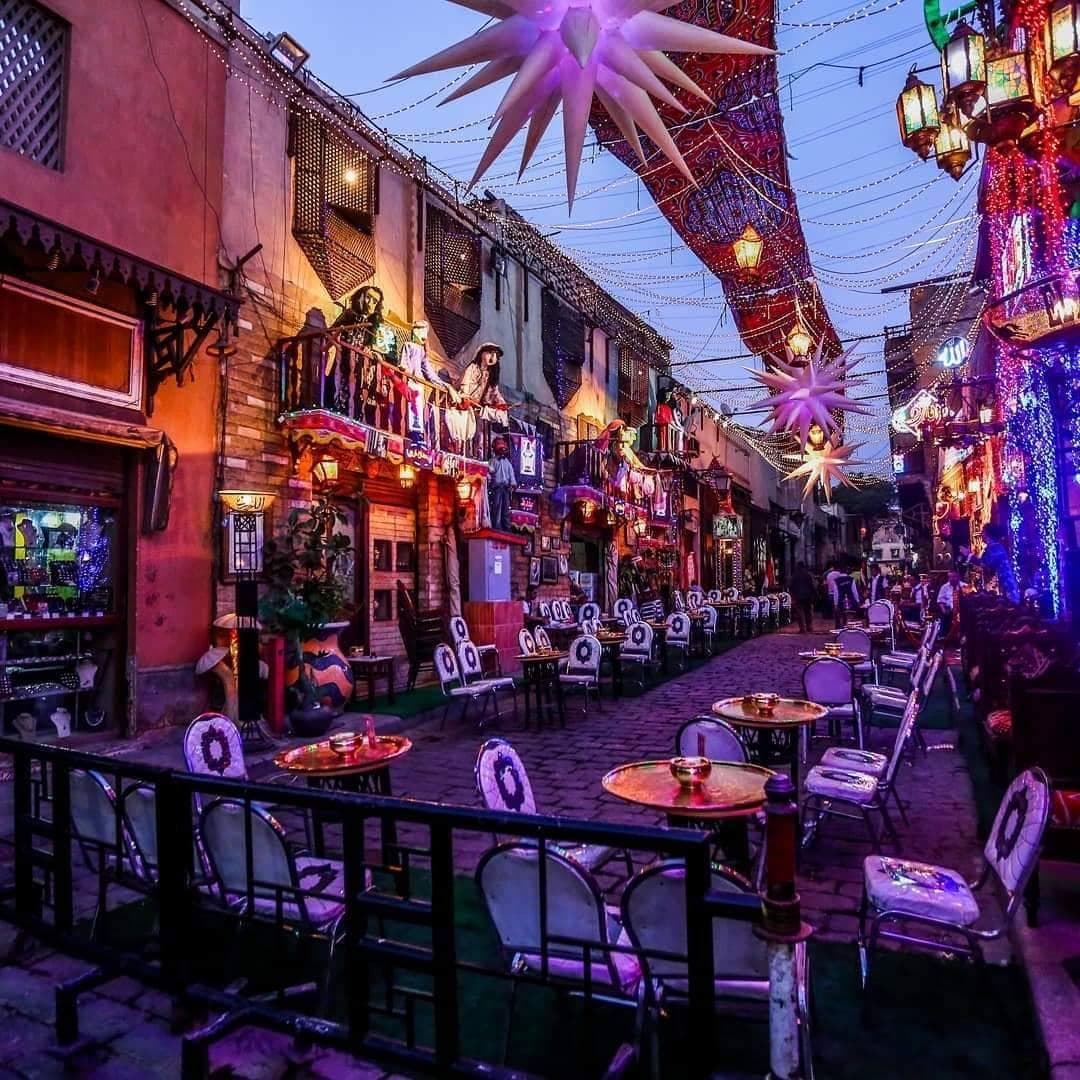
**Islamic Cairo** is the place to eat between monuments. The streets around Al-Azhar Mosque and Midan al-Hussein, at the edge of Khan el-Khalili, have feteer, koshari, ful and grills within a few minutes' walk. This is also where you stop for tea: El Fishawy, in a lane of the bazaar, has been serving tea and coffee since 1797 by most accounts, is run by the same family and is open around the clock. Our article on Egyptian tea and coffee culture explains what to order.
**Zamalek** offers the modern take. Zooba, which opened on 26th of July Street in 2012, reinvented Egyptian street food for a younger crowd, with taameya, koshari and hawawshi in a bright, café setting; it has since appeared on the Middle East and North Africa's 50 Best Restaurants list and opened abroad. It costs more than a street stall but is a gentle introduction if you are nervous about carts.
Further afield, Cairo has a good food street in almost every district; ask your hotel or guide which one is nearest.
Pro Tip: Eating Safely on the Street
Most travellers who get an upset stomach in Egypt blame the street food, and most of the time it is something else: salad, tap water or ice. A few habits keep the risk low without missing out.
Eat where the queue is. A busy cart or shop has a fast turnover, fresh oil and food that has not been sitting around. Choose things that are cooked hot in front of you: taameya straight from the fryer, liver from the griddle, hawawshi from the oven, koshari from a pot that is constantly refilled. Be more careful with raw salads, herbs and pickles in your first few days, and with anything that has been washed in tap water.
Drink bottled water, and ask for juice without ice if you are unsure where the ice comes from. Carry hand sanitiser or wipes, since few stalls have a sink. Start gently, especially with chilli and the garlic dressing on koshari, and give your stomach a day or two to adjust before you try everything at once.
If you do fall ill, oral rehydration salts from any pharmacy are the first remedy, and Egyptian pharmacists are used to advising travellers. Our Egypt health guide covers what to pack and when to see a doctor.
Vegetarian and Vegan Street Food
Cairo is one of the easiest cities in the region for vegetarians, and a surprisingly good one for vegans. Koshari, ful, taameya and most of the salads and dips that come with them contain no animal products at all. The reason is partly economic and partly religious: Egypt's Coptic Christians observe long fasts during which they eat no meat, fish, eggs or dairy, so meat-free versions of everyday dishes are part of the national diet.
A few things to watch. Rice can be cooked with meat stock or ghee, and some koshari shops use ghee for frying the onions; ask if you are strict. Feteer is usually made with butter or ghee. Taameya is fried in oil that may be shared with other foods. Liver, hawawshi and the grills are obviously off the menu.
The phrase "ana nabati" means "I am vegetarian", and most cooks will understand what you mean, though the idea of vegan may need explaining as "no meat, no milk, no eggs". In practice, a koshari lunch and a ful and taameya breakfast will see a vegan through most of a day in Cairo without any explanation at all.
Good to Know: Ramadan Nights
If you visit during Ramadan, the next one expected to begin around 8 February 2027, Cairo's food rhythm turns upside down. During the day many street stalls and small restaurants are closed or quiet, and eating in the street is best done discreetly. In the last hour before sunset the city rushes home, and at the call to prayer that ends the fast, iftar, the streets go quiet as everyone eats.
Then the night begins. From an hour or two after iftar until the early morning, Islamic Cairo comes alive: the area around Al-Hussein Mosque and Al-Muizz Street fills with families, cafés spill into the lanes, and stalls sell Ramadan sweets such as qatayef, small stuffed pancakes, and konafa. Before dawn, suhoor, the last meal before the fast, often means ful, eaten at the same carts that serve breakfast the rest of the year. You will also see long charity tables set out in the street for anyone who needs a free iftar.
It is a wonderful time to experience the city's food culture, as long as you plan your days around it. Our guide to Ramadan travel in Egypt covers opening hours, etiquette and what changes at the sites.
Ordering Street Food in Arabic
You can point and smile your way through most Cairo street food, but a few words of Egyptian Arabic make it easier and are always appreciated. Numbers come first: wahed (one), itnein (two), talata (three). Sizes for koshari are soghayyar (small), wasat (medium) and kebir (large), so "wahed koshari wasat" gets you a medium bowl.
For sandwiches, ask for "sandawitch ful" or "sandawitch ta'meya". "Min gheir shatta" means without chilli, "kifaya" means enough, useful when the sauce keeps coming, and "bi kam?" means how much. When you want to pay in a sit-down place, "el hesab, law samaht" asks for the bill, and "shukran" (thank you) goes a long way.
In most small shops you pay first at a cashier's desk, then hand your receipt to the person serving. Carry small notes: change for a EGP 200 note can be a struggle at a taameya cart. Our list of Egyptian Arabic phrases has more.
Planning a Cairo Street Food Day
Street food fits naturally into a day of sightseeing. Go hungry, share plates and leave room for juice. Start with ful and taameya near your hotel, spend the morning at the monuments, and break for koshari or feteer in the lanes of the old city. Our Islamic Cairo, Citadel and Khan el-Khalili tour passes through some of the city's best eating streets, and our tour of the National Museum of Egyptian Civilization and historic Cairo is another day where good street food is never far away. The two-day Cairo highlights tour leaves room for both.
If you are exploring on your own at the pyramids or Saqqara, our audio guides let you set your own pace, so lunch can be wherever you like. For a day planned around food, with a guide who can take you to well-run carts and shops in several neighbourhoods, ask us for a custom Cairo food tour.