A Cairo layover looks generous on a booking screen and shrinks fast on the ground. Eight hours between flights becomes four once you subtract the visa kiosk, passport control and the three hours the return demands, and four becomes two and a half once the city's traffic has had its say. None of that is a reason to sit in the terminal. It is a reason to plan the hours before you land.
Cairo International sits on the north-eastern edge of the city, beside the garden suburb of Heliopolis, about 15 km from Downtown and some 30 km as the crow flies from the pyramids, which stand on the far side of the Nile. That geography decides almost everything below: what you can reach in eight hours, what twelve buys you, and why a full day is what Giza and the Grand Egyptian Museum really need.
This guide covers the visa question, the timing rules we use when planning stops for our own travellers, realistic plans for eight, twelve and twenty-four hours, and what to do about bags, sleep and money in between.
At a Glance
Airport: Cairo International (CAI), Heliopolis, about 15 km north-east of central Cairo
Staying airside: normally no Egyptian visa needed on a through ticket
Leaving the airport: a visa for most nationalities, US$30 single entry as an e-visa or on arrival, as of autumn 2026
Worth leaving for: about seven hours or more between flights
Back at the terminal: three hours before an international departure
To Baron Empain Palace, Heliopolis: about 8 km in a straight line, often 20 to 30 minutes
To Khan el-Khalili: 40 to 60 minutes by road
To the pyramids and GEM: about 30 km in a straight line, 40 to 45 km by road, usually 1 to 1.5 hours
Airport hotel: Le Méridien Cairo Airport, linked to Terminal 3 by a skybridge
Free transit visa: up to 96 hours for eligible passengers on Egyptian airlines, extended to April 2027
Can You Leave Cairo Airport on a Layover
Yes, if you can enter Egypt. Passengers on a single ticket who stay in the international transfer area do not pass immigration and normally do not need an Egyptian visa. The moment you want to step outside, you are entering the country like any other visitor, and for British, EU, American, Canadian, Australian and many other passports that means the standard single-entry tourist visa, unless you are connecting on an Egyptian airline and qualify for the free transit visa described below.
There are several ways to get it. The e-visa, from the official Visa2Egypt government portal, costs US$30 for a single entry as of autumn 2026, plus a small card or service charge, and should be applied for at least a week ahead. The visa on arrival rose to US$30 on 1 March 2026 and is still sold as a paper sticker at the bank counters in the arrivals hall, before passport control, in cash, with clean US dollar notes causing the least trouble. Since August 2026 Cairo International has also been piloting a digital visa on arrival with a QR code, paid by Visa or Mastercard, at US$36 including a US$6 service charge. A multiple-entry e-visa costs US$65 and only pays off if you will pass through Cairo twice and leave the airport both times. A further small rise has been reported for January 2027 but not confirmed, so check the official portal before you pay. Our Egypt visa guide covers eligibility in detail.
Some passports are visa-exempt, and some nationalities cannot use either the e-visa or the arrival visa and must apply through an embassy. Transit rules can also differ by nationality and itinerary, so confirm with your airline, which checks entry rules against the IATA Timatic database, rather than relying on a forum post.
Good to Know: EgyptAir and the Free Transit Visa
Several Gulf and Turkish airlines sell stopover packages with discounted or free hotel nights in their hub cities. As of autumn 2026 we could not confirm an equivalent EgyptAir package with a hotel bundled in. What Egypt does offer is a free transit visa: passengers connecting through Cairo on Egyptian airlines can be granted up to 96 hours in the country without paying for a visa. Before passport control you go to the EgyptAir transit office, fill in a short form, show your passport and onward ticket, and receive the stamp. In December 2025 the Cabinet extended the scheme until April 2027.
Read the conditions before relying on it. Reports agree on a layover of at least eight hours, a passport valid for at least six months and a nationality eligible for Egypt's visa on arrival, and several outlets add that both flights must be on EgyptAir, Air Cairo or Nile Air. EgyptAir does not publish a full list of rules, so confirm with the airline when you book. Beyond the visa, EgyptAir's network makes the self-built stopover easy: a multi-city booking that breaks a journey to Africa, the Gulf or Asia in Cairo for a night or two. Compare the fare against a simple return before deciding.
If your connection is long because the airline had no earlier option, ask whether a transit hotel is included. Policies vary by airline, fare and connection time, and the answer is far easier to get before you fly than at a transfer desk at 2am.
The Arithmetic of a Cairo Layover
The rule we use is simple. Allow 60 to 90 minutes from touchdown to the kerb, more if you need to collect bags or buy a visa behind two wide-body arrivals. Be back at the terminal three hours before an international departure: there is a security screening at the terminal door, check-in or document checks, passport control and a second screening at the gate. What remains, minus the drive each way, is your time in the city.
- Eight hours between flights: just under four hours outside, up to one and a half of them in a car
- Twelve hours: about seven and a half hours outside, enough for Giza with a sensible margin
- Twenty-four hours: a proper short visit, with a bed
Below about seven hours, stay in the terminal. The numbers stop working once anything goes wrong, and at Cairo something small usually does: a slow passport queue, a bag that comes out last, an accident on the Ring Road.
Traffic, Distances and the Time of Day
Cairo's traffic moves in tides rather than at a constant crawl. Weekday mornings from about 8am to 10am and the long afternoon peak from about 3pm into the evening are the slow hours. The Egyptian weekend falls on Friday and Saturday, and Friday morning has the emptiest roads of the week. Late at night, the run from the airport to Giza that can take 90 minutes at 5pm may take 45.
Heliopolis is the near option. Baron Empain Palace is about 8 km from Terminal 3 in a straight line and stands on Orouba Road, the main artery between the airport and the city, so it is often 20 to 30 minutes away. Islamic Cairo, Khan el-Khalili and the Citadel are 16 to 17 km in a straight line, usually 40 to 60 minutes by road. The pyramids and the Grand Egyptian Museum lie on the far side of the river, about 30 km in a straight line and 40 to 45 km by road: around 45 minutes on empty roads, usually 1 to 1.5 hours by day and up to 2 hours in the afternoon peak.
Uber operates at Cairo International, though the pickup zones can be confusing and driver cancellations happen. White metered taxis and fixed-price limousine desks work from the kerb, and an airport entry or parking charge may be added to the fare. A driver booked in advance and waiting in arrivals with your name is the only option that also waits for you when passport control is slow.
Eight Hours: Heliopolis or Islamic Cairo
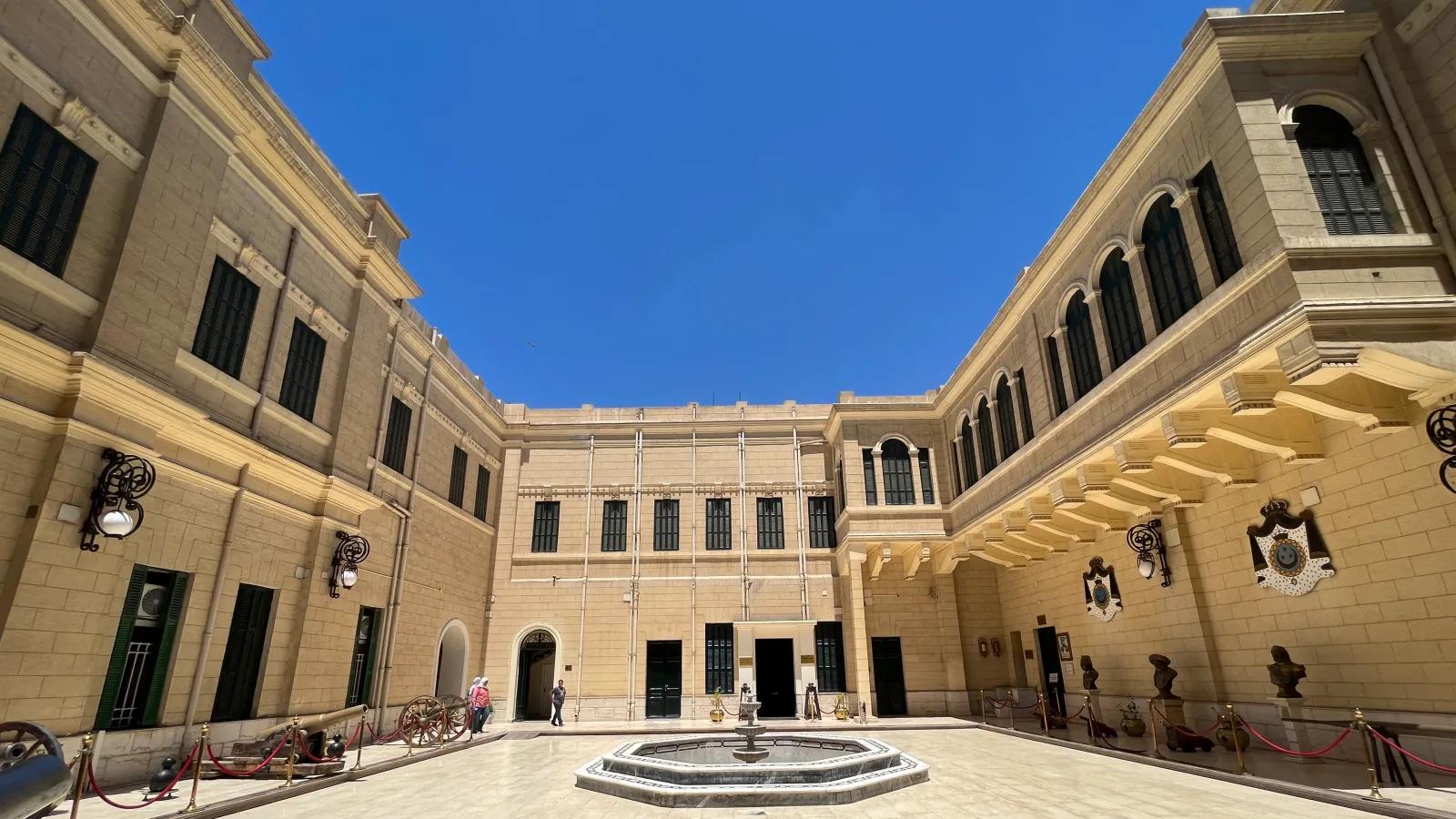
With roughly four hours outside, choose the side of the city closest to the airport. The easiest plan is Heliopolis: Baron Empain Palace, the Belgian industrialist's Hindu-temple-style mansion completed in 1911 and since restored by the state, then a walk through the arcaded streets of Korba and a coffee before the drive back. It shows a Cairo almost no layover passenger sees, and it is close enough that traffic cannot ruin it.
The second option is medieval Cairo. Khan el-Khalili, the bazaar that has traded on this spot since the late fourteenth century, and Al-Muizz Street beyond it can be walked in two hours, with mint tea in a café in the lanes. It is further out, and a midday arrival with an afternoon departure can lose its margin to traffic; at night or on a Friday morning it is comfortably done.
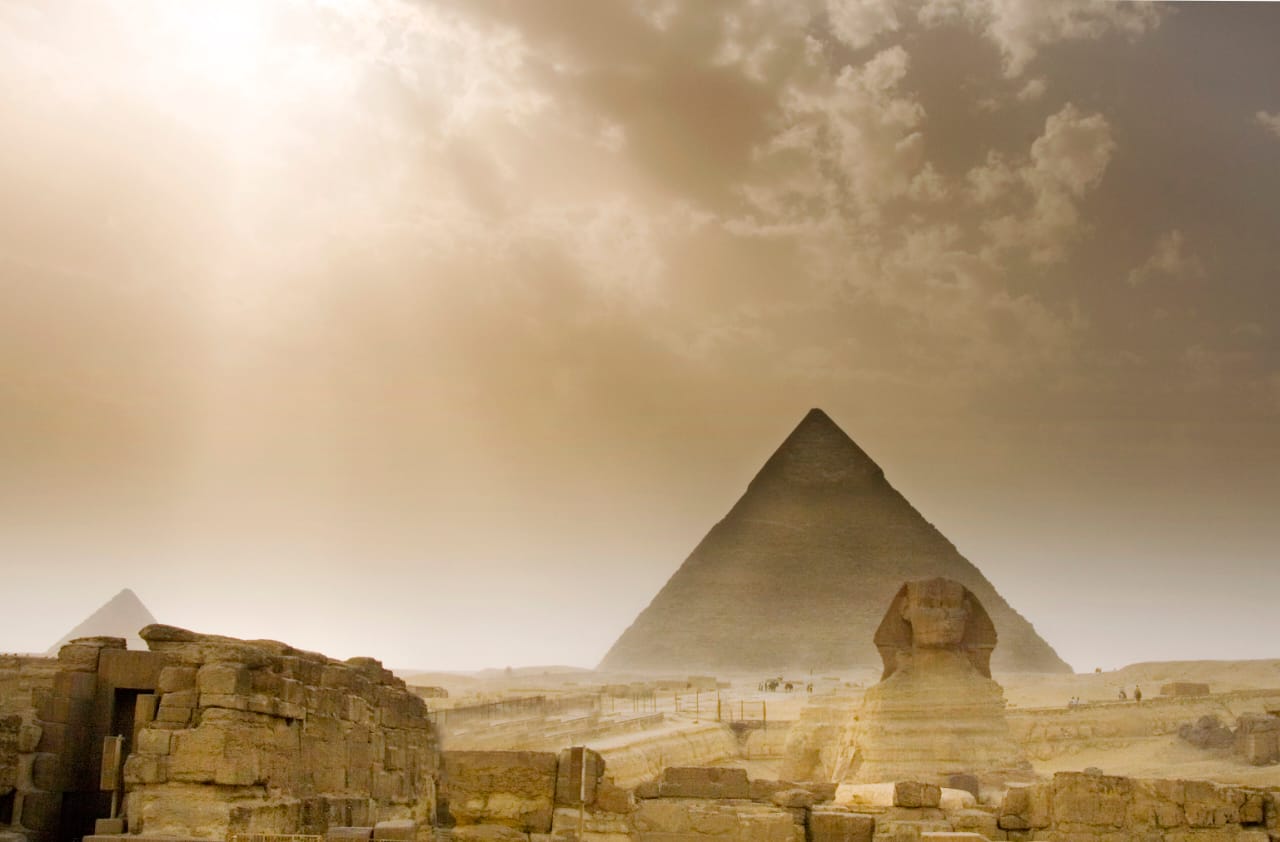
The pyramids in eight hours are possible only when the roads are empty, and even then you get an hour or so on the plateau. Unless your eight hours begin before dawn and the plateau's morning opening falls in the middle of them, keep Giza for a longer stop.
Twelve Hours: The Pyramids and the Grand Egyptian Museum
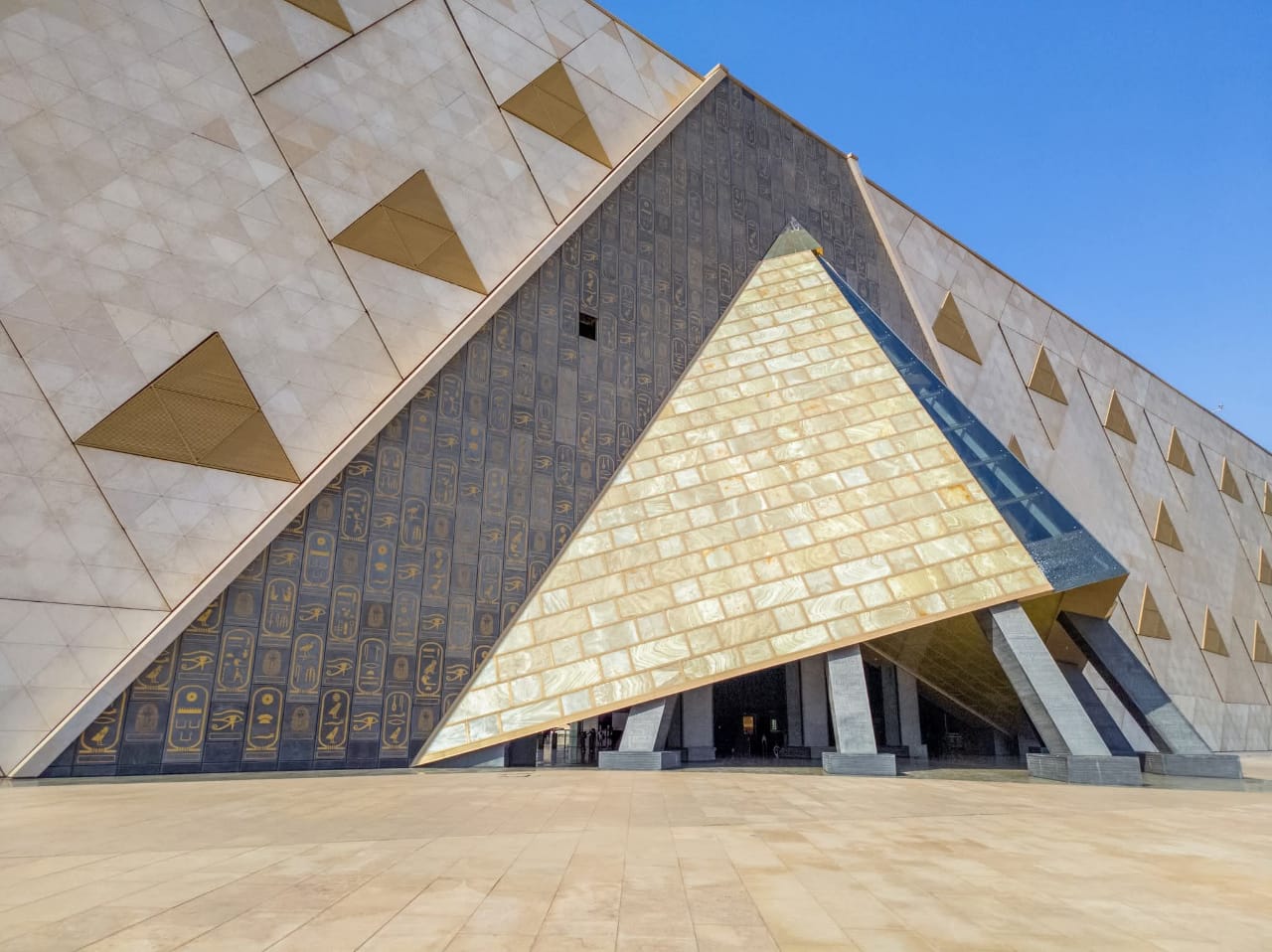
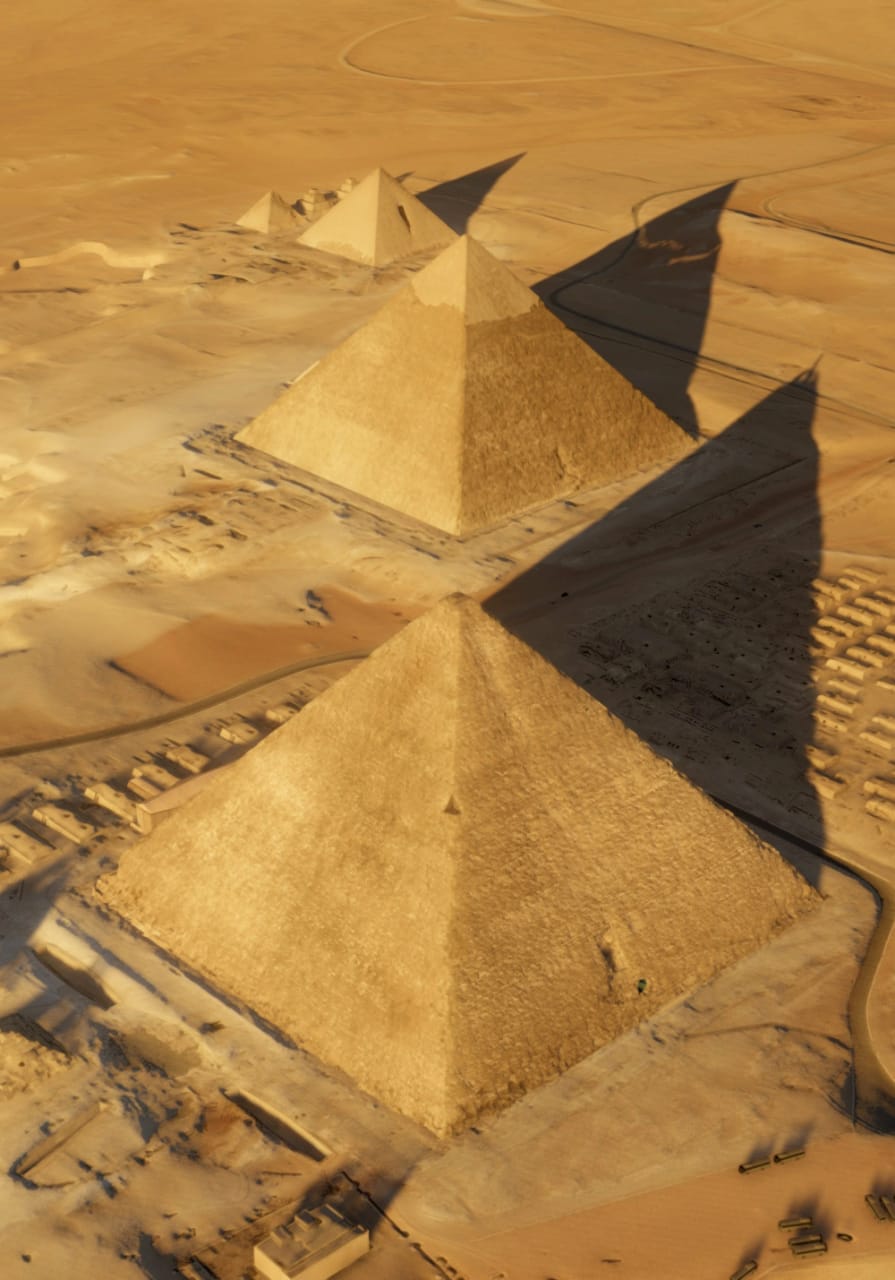
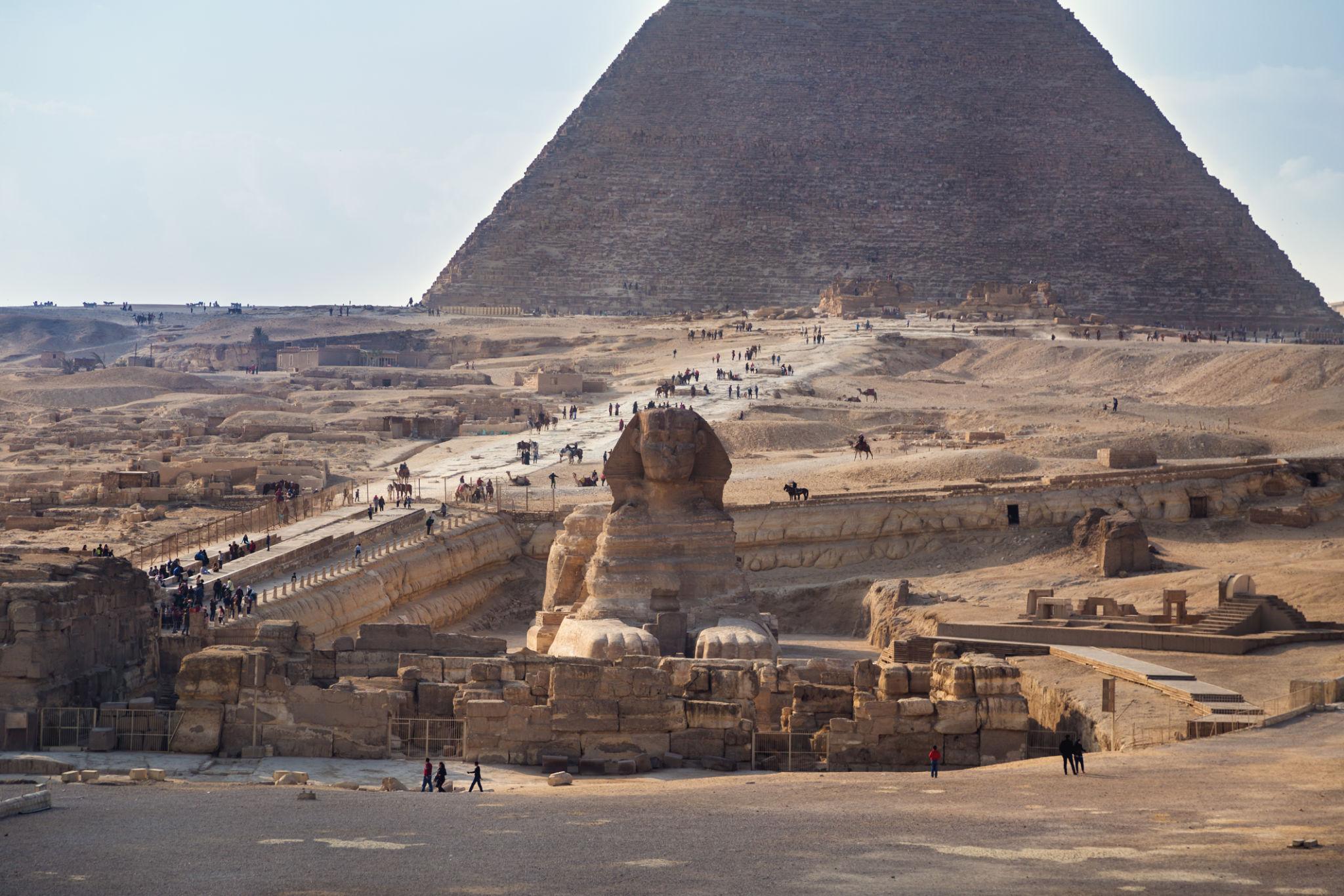
Twelve hours is the classic Cairo layover, and the one at which Giza becomes realistic. With about seven and a half hours outside and up to three of them in a car, you get roughly four on the ground: enough for the pyramids of Giza and the Sphinx, or for a focused visit to the Grand Egyptian Museum beside the plateau. Doing both properly takes a full day.
Choose by interest. The plateau is open air, hot from late morning for much of the year and best early; the museum is air-conditioned, vast and best with a plan, since the Tutankhamun galleries alone can absorb two hours. Our pyramids and Grand Egyptian Museum day combines the two for travellers with the time, and for layovers we trim it around the flight times.
A useful twelve-hour shape for a morning arrival: out of the terminal by 9am, at Giza by about 10:30, the plateau and Sphinx until 1pm, lunch with a pyramid view, back on the road by 2:30 to stay ahead of the worst of the afternoon peak, and at the terminal by 4pm for a 7pm departure. An evening arrival with a dawn departure works too: dinner and the sound and light show at the pyramids, then the drive back on emptier roads.
Twenty-Four Hours: A Night in Cairo
A full day turns a layover into a short visit. Sleep near the airport or in Heliopolis if your onward flight is early, or near the pyramids if you want Giza at opening time, but not both: crossing Cairo twice for the sake of a hotel wastes the margin you gained.
- Afternoon arrival: Heliopolis and Baron Empain Palace, then Khan el-Khalili and dinner in the old city, or a Nile dinner cruise
- Next morning: the Giza plateau at opening, then the Grand Egyptian Museum until early afternoon
- Late afternoon: a late lunch, the drive back, and the terminal three hours before departure
With a little more time, the Citadel and the mosques below it can replace Heliopolis on the first afternoon. The weekend shape in our three days in Cairo shows how a longer stop fills out.
Pro Tip: Check Your Bags All the Way Through
On a single ticket your checked luggage goes straight to the next flight, and you leave the airport with only a day bag. On separate tickets you collect everything, clear customs and need somewhere to put it. Cairo Airport's own list of passenger facilities does not include a left-luggage office and reports conflict, so do not count on one; a driver who keeps your cases locked in the vehicle all day, or a day room at a hotel, is the dependable answer.
Either way, keep your passport, your onward boarding pass or e-ticket and your printed visa approval on you, not in the car. Staff at the terminal entrance may ask to see proof of a flight before letting you back into the building.
Bags, Day Rooms and Airport Hotels
The one hotel physically attached to the airport is Le Méridien Cairo Airport, a hotel of about 350 rooms that opened in 2013 at Terminal 3 and is reached by a skybridge from the arrivals hall. It lies beyond immigration and customs, so you will need to enter Egypt, with a visa or the free transit visa, to use it. For a long overnight connection with an early departure, ask the hotel directly whether it will sell a day-use room for a few hours' sleep and a shower; we could not find a published day-use rate.
Beyond that, a cluster of international chain hotels lines the roads between the airport and Heliopolis, generally 10 to 20 minutes from the terminals. They suit a twenty-four-hour stop where sleep and an easy return matter most. If the priority is Giza at dawn, stay near the pyramids instead and accept the longer drive back the next afternoon.
Changing terminals belongs in the calculation too. An automated people mover links the terminals, with a shuttle bus as back-up, but if you arrive in one on one ticket and leave from another on a separate ticket, you will pass through immigration and security again, so allow an extra hour.
Warning: Separate Tickets and the Second Airport
Greater Cairo now has more than one airport with scheduled international flights. Low-cost carriers from Britain and Europe increasingly use Sphinx International Airport on the Giza side, about 50 km from Cairo International in a straight line. A self-made connection from an easyJet or Wizz Air arrival there to a long-haul departure from Cairo International means a cross-city drive and a second check-in. Allow at least six hours for that transfer, and do not book it on the same day if a missed flight would be expensive.
The other common trap is a self-transfer on separate tickets within Cairo International. If the first flight is late, the second airline owes you nothing. Build in a margin you could afford to lose, and buy travel insurance that covers missed connections.
Money, SIM Cards and the Arrivals Hall
ATMs, exchange counters and mobile network desks sit in the arrivals areas, and at Cairo International they operate around the clock. Take out a modest amount in Egyptian pounds for tolls, tips, tea and anything sold in cash; ticket offices at the major sites, the pyramids and the Grand Egyptian Museum among them, are largely card-only these days. Our money and tipping guide explains which small notes are worth carrying.
A local SIM, or an eSIM bought before you fly, keeps ride-hailing apps, maps and your airline's app working, which matters more on a layover than on any other day of a trip. Our SIM and eSIM guide compares the options.
Planning Your Cairo Layover
A layover works best when someone else watches the clock. For a short stop, a Cairo airport transfer with a driver who stays with you through the day is often all you need; for a longer one, our full-day Cairo and Giza transfer can be cut to fit the gap between flights, with an Egyptologist guide added at the pyramids or the museum if you want one.
Send us your arrival and departure times, the terminals if you know them, and whether your bags are checked through. That is usually enough for us to tell you honestly whether leaving the airport is worth it on your Cairo layover, and what to see if it is. Get in touch whenever your flights are booked.