Arriving in Egypt with a dead phone is one of the most stressful ways to start a trip, especially when your ride-hailing app, your hotel map and your boarding-pass screenshot all live in the same device. The good news is that Egypt is cheap and easy to get connected in, with strong 4G across the Nile Valley and the Red Sea resorts, plus a growing eSIM market that lets you skip the shop counter entirely. This guide walks through every realistic option, what it costs as of 2026, and the small traps that catch first-timers.
The Four Mobile Networks at a Glance
Egypt has four operators, and the differences matter depending on where you are going.
- **Vodafone Egypt** — the largest network, with the widest coverage in cities, Upper Egypt and remote desert routes. The default recommendation for most tourists.
- **Orange Egypt** — strong in Cairo, Alexandria and the Red Sea; comparable speeds to Vodafone in urban areas.
- **Etisalat by e&** — competitive pricing and good city coverage, slightly thinner in the deep south.
- **WE (Telecom Egypt)** — the state operator, decent in cities but generally the weakest for travelers heading off the beaten track.
For a trip that mixes Cairo, Luxor, Aswan and the coast, Vodafone is the safe choice. If you are staying purely in Cairo and Red Sea resorts, Orange is an equally good pick.
What It Costs in 2026
Prices shift with Egypt's currency, so treat these as approximate. As of early 2026, the Egyptian pound trades at roughly 48-50 EGP to the US dollar.
- **Tourist SIM bundles** at the airport: roughly 500-800 EGP (about USD 10-16) for a package with 15-30 GB of data valid for 28 days, sometimes bundled with local minutes.
- **In-city SIM from an official store**: a starter SIM is often 100-200 EGP (USD 2-4), then you add a data bundle separately, which can work out cheaper than the airport package.
- **Data top-ups**: a 10-20 GB monthly bundle typically runs 200-400 EGP (USD 4-8).
The airport convenience premium is real but modest. If you value an hour of your time more than a few dollars, buy at arrivals; if you want the best value, buy in town the next day.
Buying a SIM at Cairo Airport
Vodafone, Orange and Etisalat all run kiosks in the arrivals hall at Cairo International Airport (CAI), typically open during all major flight banks and often 24/7 in Terminal 3. The process takes about 10-15 minutes: you hand over your passport, the agent registers the SIM to you (this is legally required), inserts and activates it, and you walk away connected.
### What to bring and check
- Your **passport** — registration is mandatory and the agent keeps a scan or photo.
- Confirm the agent actually **activates data** before you leave the counter, and test it on the spot.
- Ask them to set the **APN** if mobile data does not come alive automatically.
- Keep your **receipt**; you will need the phone number for top-ups.
Kiosks at Hurghada (HRG) and Sharm El-Sheikh (SSH) airports work the same way, though hours can be patchier on late-night arrivals. If you would rather not queue at all on arrival, you can sort connectivity later in town and book a Cairo airport transfer so a driver is already waiting for you.
The eSIM Option: Skip the Counter
If your phone supports eSIM (most iPhones from the XS onward and recent Samsung, Google Pixel and other Android flagships), you can be online the moment you land without speaking to anyone. You buy a plan online before you travel, scan a QR code, and the data activates when you connect to an Egyptian tower.
### Pros and cons
- **Pros**: instant setup, no passport handover at a kiosk, keep your home number active for calls and banking SMS, easy to top up from an app.
- **Cons**: usually data-only (no local Egyptian phone number), priced in USD/EUR rather than cheap local rates, and a few apps that demand an Egyptian number for verification will not work.
- **Typical prices**: a tourist eSIM with 10-20 GB for 15-30 days runs roughly USD 15-30 depending on the provider, more than a local SIM but far simpler.
A practical hybrid many travelers use: an eSIM for instant data on arrival, then a cheap local Vodafone SIM bought in town a day or two later if they need a local number.
Coverage Reality by Region
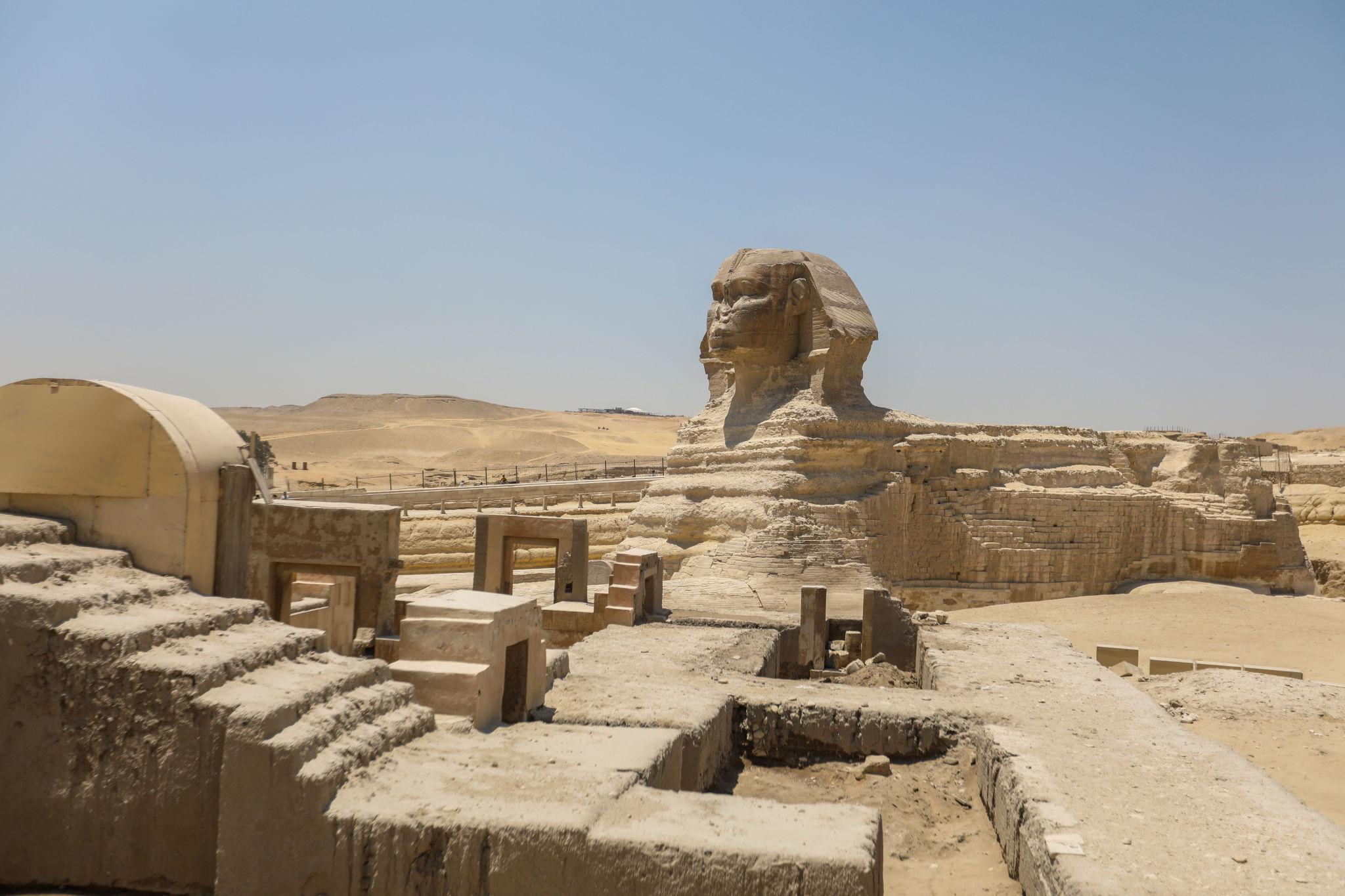
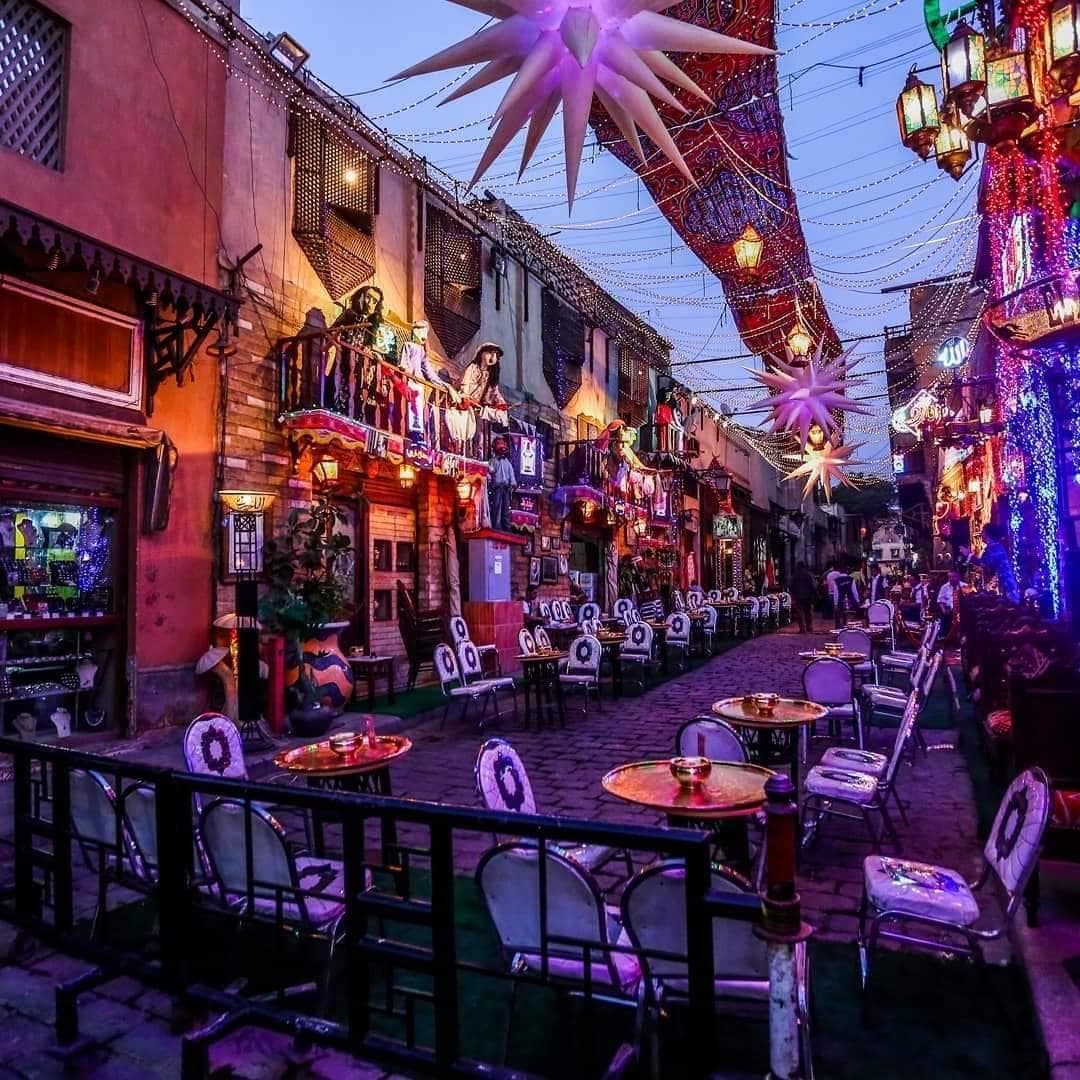
- **Cairo and Giza**: excellent 4G everywhere a tourist goes, including out at the Pyramids plateau. Speeds dip in crowded areas like Khan el-Khalili at peak times. Even in the busy downtown lanes of Cairo, you will rarely lose signal.
- **Luxor and Aswan**: solid 4G in the towns and at the main temple sites.
- **Nile cruises**: coverage follows the riverbank towns and is generally fine near Edfu, Kom Ombo and Esna locks, but expect dead zones on long open stretches.
- **Red Sea resorts (Hurghada, Sharm, Marsa Alam)**: strong in town and at hotels.
- **Western Desert and Sinai interior**: patchy to nonexistent once you leave the main roads. On a White Desert or remote Sinai trip, assume you will be offline.
- **Abu Simbel**: coverage at the site is workable but can be slow given its remoteness, about 280 km south of Aswan.
Hotel and Cafe Wi-Fi: Manage Your Expectations
Nearly every hotel, from budget hostels in downtown Cairo to five-star Nile-view properties, advertises free Wi-Fi. The reality varies enormously. Big international chains usually deliver reliable speeds; smaller and mid-range hotels often have one weak router shared across the building, so it slows to a crawl in the evening when everyone is back in their rooms.
Cafe Wi-Fi in Cairo and the resort towns is common and usually free with a purchase, but speeds are modest. The lesson is simple: do not rely on Wi-Fi for anything time-sensitive like checking in for a flight. A mobile data bundle is your reliable backbone, and Wi-Fi is the bonus.
Calls, WhatsApp and the VoIP Situation
Most travelers never make a traditional phone call in Egypt; everything happens over WhatsApp, which is the default messaging and calling app for tour operators, drivers and hotels alike. WhatsApp text, voice notes and calls all work normally over data.
One historical wrinkle worth knowing: voice and video calls over apps like WhatsApp, Messenger and FaceTime have at times been throttled or unreliable on Egyptian networks. In 2026 this is inconsistent rather than a hard block, and text messaging always works. If a WhatsApp call drops, switch to voice notes or try again on Wi-Fi.
Staying Safe: Scams and Smart Habits
- **Buy from official kiosks or branded stores**, not from a random person offering to sell you a pre-loaded SIM on the street. Unregistered SIMs can be deactivated.
- **Confirm the data allowance and expiry** in writing or on screen before paying, so there is no surprise that your bundle was only valid for a week.
- **Avoid sensitive logins on open cafe Wi-Fi**; use your mobile data for banking.
- **Photograph your SIM packaging** so you have the phone number and PUK code if your phone is lost.
How Much Data Do You Actually Need?
For a typical two-week trip with daily mapping, messaging, photo backups and some social posting, **15-20 GB** is comfortable. If you plan to video-call home often or stream, lean toward 30 GB or a plan you can top up. Maps and WhatsApp use surprisingly little; uploading hundreds of high-resolution Pyramid photos to the cloud is what burns through an allowance, so set backups to Wi-Fi-only if you are watching usage.
Should You Just Use Home Roaming Instead?
For very short trips, roaming on your home plan can occasionally make sense, but in Egypt it is usually the most expensive route. Pay-as-you-go roaming rates can run several dollars per megabyte, and even a roaming day-pass at USD 10-12 per day adds up fast over a two-week trip, far more than a local SIM or eSIM. The exceptions are travelers from carriers with a genuine free or flat-rate international plan, or those on a one-night layover who simply need maps and WhatsApp for a few hours. For everyone else, a local SIM or eSIM pays for itself within the first day. If you do roam, turn off automatic app updates and cloud photo backup so a single overnight sync does not produce a shocking bill.
A Few Practical FAQs
### Can I use a SIM in an unlocked Wi-Fi hotspot device?
Yes. A pocket Wi-Fi router with a local data SIM is a great solution for families or groups, letting several phones, tablets and laptops share one bundle. Buy the data-only allowance and pop the SIM into the hotspot.
### Will my phone work at all on Egyptian networks?
Almost certainly. Egyptian operators use standard GSM and 4G LTE bands that virtually all modern phones support. The only requirement is that your handset is carrier-unlocked to accept a foreign SIM.
### How do I top up when my bundle runs out?
You can recharge through the operator's app, at any small kiosk or grocery shop displaying the network logo, or via scratch cards. Staff at hotels are usually happy to help you load credit if the app menus are in Arabic.
Getting Online from the Moment You Land
The smoothest arrival is the one where connectivity is already sorted. Many travelers activate an eSIM on the plane so it connects the instant they switch off airplane mode, then meet their pre-booked driver outside without scrambling for Wi-Fi. If you would rather have a friendly face handle the airport chaos while you sort your phone, a private Cairo airport transfer takes the pressure off: your driver waits with a name board, you connect at leisure, and you skip the taxi-line negotiations entirely. Pair that with a SIM or eSIM and you will be navigating Egypt like a local before you reach your hotel.