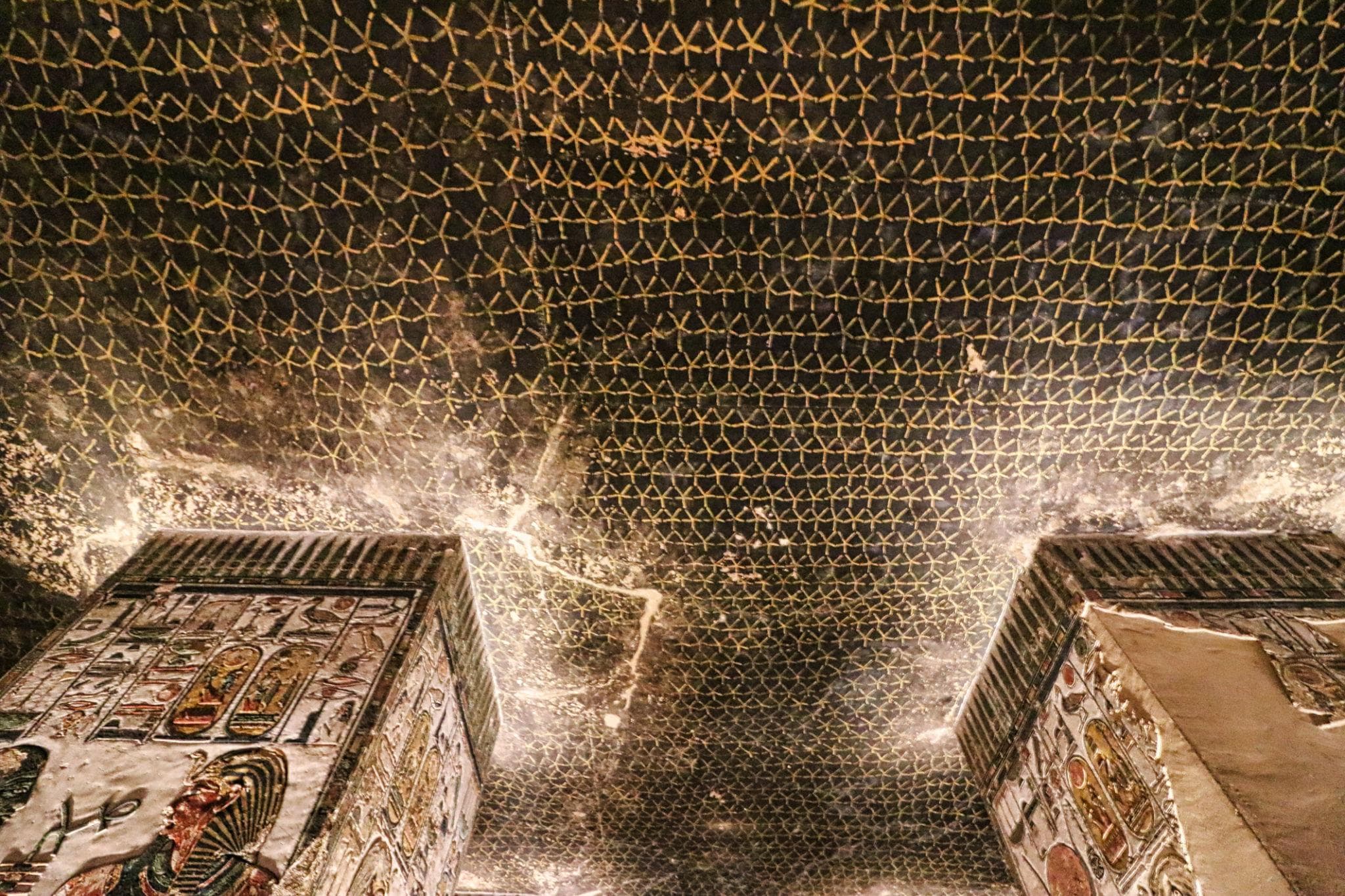
At the back of Luxor Temple stands a small shrine where a Macedonian king appears in the crown and kilt of a pharaoh, making offerings to Amun. Alexander the Great spoke no Egyptian and may never have travelled this far south, but the priests who decorated the walls still had to write his name. They did it the way you will write yours: by sound, one sign at a time, inside an oval loop of rope.
Writing your name in hieroglyphs is easier than it looks, because you need only a small part of the script. Around two dozen signs stood for single sounds, and with them the Egyptians spelled foreign names such as Alexander, Ptolemy and Cleopatra. The catch is that they spelled sounds, not letters, and did not write vowels the way we do.
This guide sets out the hieroglyphic alphabet sign by sign, shows how to turn a name into signs and a cartouche, works through names in several languages, and ends with where to see real cartouches and how to buy a silver one.
At a Glance
What you need: about 25 sound signs, often called the hieroglyphic alphabet
Signs in the full script: more than 700 in classical Middle Egyptian, several thousand by Roman times
Vowels: not written; the vulture, the reed and the quail chick stand in for a, i and u
Direction: right to left, left to right or in columns; read towards the faces
Cartouche: the oval rope loop around royal names, common from the reign of Sneferu, about 2600 BC
Closing sign: a seated man or seated woman after a personal name
Best places to see cartouches: Karnak, Luxor Temple, Abydos and Saqqara
Oldest inscribed pyramid: Unas at Saqqara, about 2350 BC
Souvenir: silver cartouche pendants in Khan el-Khalili, priced mainly by weight
How Hieroglyphs Work: Sounds, Not Letters
Hieroglyphs are neither an alphabet nor picture-writing. The script mixes three kinds of sign. Some are word signs: a drawing of a house can simply mean house. Most are sound signs, standing for one, two or three consonants. The third group, the determinatives, are silent. They sit at the end of a word and tell the reader what kind of thing it is, so a verb of motion might end with a pair of walking legs, and a personal name with a seated man or a seated woman.
Alan Gardiner's standard sign list, published in the late 1920s, describes 763 signs of classical Middle Egyptian, and by Roman times temple priests had invented thousands more. Nobody needs all of that to write a name.
What you need are the uniliterals, the signs that each stand for a single consonant. Egyptologists often call this set the hieroglyphic alphabet, though the Egyptians never used it as one: in ordinary texts these signs appear alongside the larger sound signs and determinatives. But when scribes had to write a foreign name, with no Egyptian word to borrow, they fell back on single sound signs, as you will. Our introduction to Egyptian hieroglyphics explains the wider system.
The Hieroglyphic Alphabet: 25 Sound Signs
Here are the single-consonant signs in the order Egyptologists use in dictionaries, with the sound each carried and the letters it usually covers in a modern name. Special transliteration letters are given as sounds.
- **Egyptian vulture** (a): a glottal stop in Egyptian, the usual sign for A
- **Flowering reed** (i): a short i or y sound, used for I and E
- **Two reeds**, or two diagonal strokes (y): used for Y and a final -ie or -y
- **Forearm** (ayin): a deep throat sound like Arabic ayn, an alternative for A
- **Quail chick**, or its shorthand, a small coil (w): used for W, U and O
- **Foot** (b): B
- **Stool** (p): P
- **Horned viper** (f): F, and also V
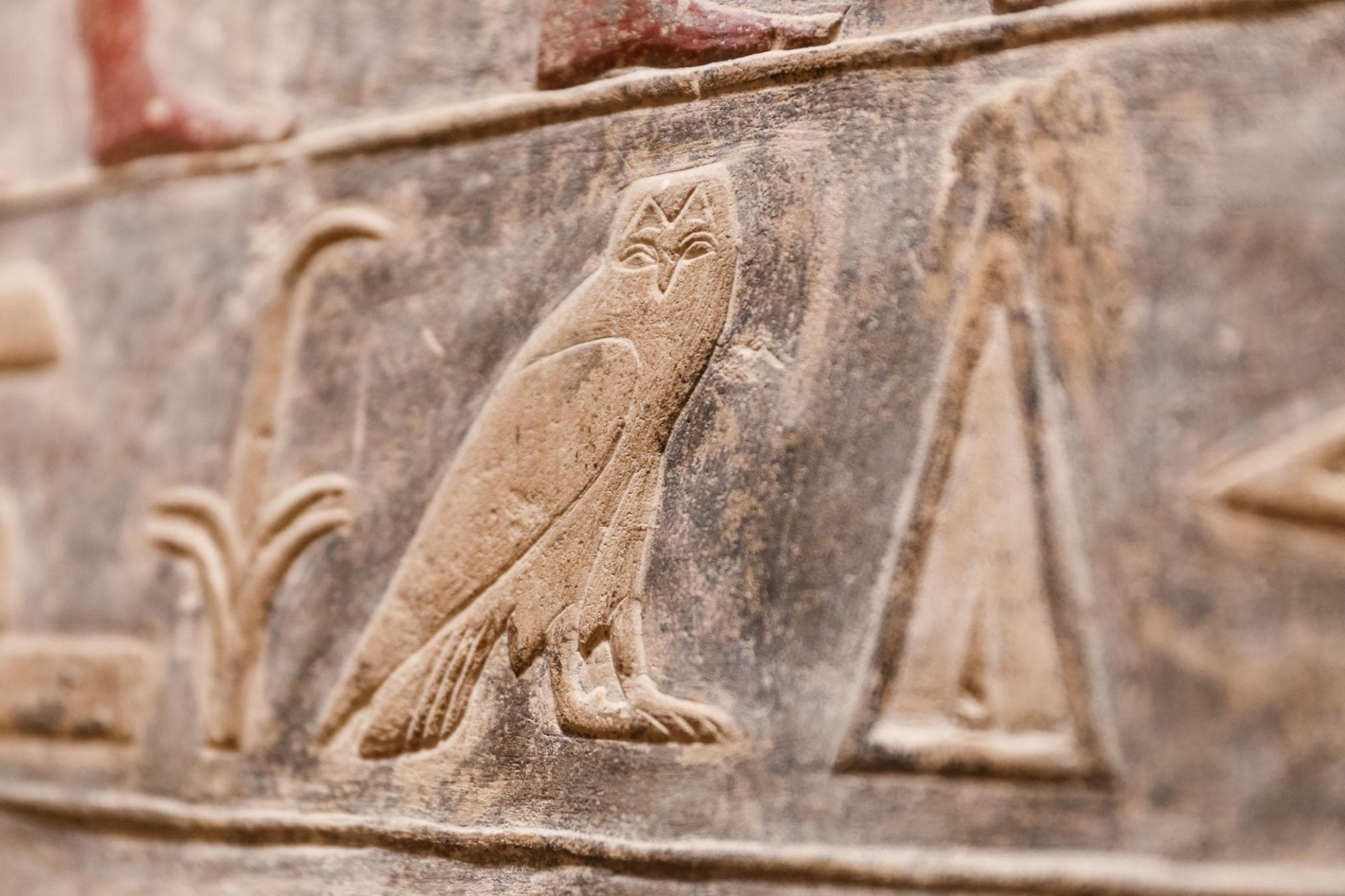
- **Owl** (m): M
- **Water**, a zigzag ripple (n): N
- **Mouth** (r): R, and L in earlier periods
- **Reed shelter** (h): H as in hat
- **Twisted flax wick** (emphatic h): a stronger h from the throat
- **Placenta** or sieve, a circle with horizontal lines (kh): as in Scottish loch or Spanish jota
- **Animal belly with teats** (soft kh): as in German ich
- **Folded cloth** (s): S, and soft C
- **Door bolt** (z or s): originally a z, later another s, so use it for Z
- **Pool** (sh): SH
- **Hill slope** (q): a k from further back in the throat, used for Q
- **Basket with handle** (k): K and hard C
- **Jar stand** (g): hard G
- **Bread loaf** (t): T
- **Tethering rope** (tj): CH as in church
- **Hand** (d): D
- **Cobra** (dj): J as in jam, and Italian soft G
- **Lion** (l, strictly rw): added in Greek and Roman times for the L of names such as Cleopatra
No Vowels: Spelling a Name by Ear
Egyptian writing recorded consonants and left the vowels to the reader, much as Arabic and Hebrew often do. Egyptologists insert a neutral e simply to make words pronounceable: the word written nfr, meaning good or beautiful, is said "nefer" in lecture halls.
Three signs make modern names possible. The vulture, the reed and the quail chick were consonants in Egyptian, a glottal stop, a y and a w, but close enough to vowels that scribes used them for the a, i and u of Greek and Latin names. You can do the same: vulture for a, reed for e and i, quail chick for o and u.
The rule that matters most is to listen rather than look. Say your name aloud, slowly, and write down the sounds you hear. Silent letters disappear, so the h in John and the final e in Charlotte are not written. Double letters become one sign, because you hear one sound. Letters that sound different in different languages are written by sound: the J of Spanish Juan is a kh, the J of English John is a dj, and the G of Italian Giulia is a dj as well.
How to Write in Hieroglyphs, Step by Step
Step one: say the name aloud in your own language and split it into sounds. Maria is m-a-r-i-a; Charlotte is sh-a-r-l-o-t.
Step two: choose a sign for each sound from the list above. Where there is a choice, as with the two signs for a, pick one and stay consistent.
Step three: arrange the signs in tidy groups. Scribes fitted signs into imaginary squares, stacking flat signs such as the water ripple or the mouth, and setting tall signs such as the reed or the cobra side by side, so the result looks balanced.
Step four: decide the direction. Hieroglyphs can run from right to left, the most common arrangement, from left to right, or in columns read from the top. The animals and people face the beginning of the line, so you read towards their faces: if the owl and the vulture look to the left, start at the left. There are no spaces between words and no punctuation.
Step five: finish with a determinative, a seated man for a male name and a seated woman for a female one.
Step six: for the royal treatment, draw a cartouche around the whole name, with the short tied bar at the end where the line finishes. Our guide to the great pharaohs of Egypt introduces the kings whose cartouches you will meet most often.
The Cartouche: A Rope Around a Royal Name
The oval around royal names represents a loop of rope with its ends tied at the base. The Egyptians called it shenu, from a word meaning to encircle, and it is a stretched version of the shen ring, a symbol of eternity and protection: the king's name was enclosed and guarded. Cartouches became a regular part of royal names from the reign of Sneferu, at the start of the Fourth Dynasty, about 2600 BC.
By the Middle Kingdom a pharaoh carried five names, and two went inside cartouches: the throne name taken at coronation, and the birth name, introduced by the title Son of Ra. Ramesses II appears on monuments both as Usermaatre Setepenre and as Ramesses Meryamun, each in its own cartouche, often side by side.
The modern word is French. Soldiers and scholars on Napoleon's expedition of 1798 to 1801 thought the oval looked like the paper cartridge, the cartouche, they loaded into their muskets. Those ovals then unlocked the script: by comparing the cartouches of Ptolemy and Cleopatra, known from Greek texts on the Rosetta Stone and an obelisk from Philae, scholars could match sign to sound. In 1822 Jean-François Champollion showed that the shared signs, among them the lion for l, were read by sound.
Strictly, a cartouche was reserved for kings, queens and a few gods, so putting your own name in one is a modern indulgence. Nobody in Egypt will mind.
Your Name in Hieroglyphs: Worked Examples
Here is how several common names come out when spelled by sound. Add the seated man or woman at the end.
- **Maria**: owl, vulture, mouth, reed, vulture
- **Juan**: placenta (the Spanish jota), quail chick, vulture, water
- **Anna**: vulture, water, vulture, with the n written once because you hear it once
- **Luca**: lion, quail chick, basket, vulture
- **Sofia**: folded cloth, quail chick, horned viper, reed, vulture
- **Carmen**: basket, vulture, mouth, owl, reed, water
- **Giulia**: cobra, quail chick, lion, two reeds, vulture
- **John**: cobra, quail chick, water, with the silent h dropped
- **Charlotte**: pool, vulture, mouth, lion, quail chick, bread loaf
- **David**: hand, vulture, horned viper, reed, hand
Notice what happens to the C. In Luca and Carmen it is a hard k, so it becomes the basket; in Lucía, said with an s in Latin America, it becomes the folded cloth. If your name has a sound Egyptian lacked, such as the English th or a French nasal vowel, use the nearest sign. The Egyptians made the same compromises with Greek names.
Did You Know: The Last Hieroglyphs Were Carved in AD 394
The script was in use for well over three thousand years, from before 3000 BC into the Roman era. Its end came on the island of Philae, near Aswan, where the temple of Isis stayed active long after Christianity had become the religion of the Roman Empire. On a gateway there a priest carved a figure of the god Mandulis and a short hieroglyphic text dated 24 August AD 394, the last dated hieroglyphic inscription known. Demotic graffiti continued there for some sixty years more, and then the knowledge died out.
For some fourteen centuries afterwards nobody could read the signs at all. Renaissance scholars took them for mystical symbols of ideas, not sounds. It took the Rosetta Stone, found in 1799, the cartouches of the Ptolemies and Champollion's command of Coptic, the last stage of the Egyptian language, written mainly in Greek letters, to show that most hieroglyphs simply spelled words.
Where to See Real Cartouches in Egypt
At Karnak Temple the cartouches of Seti I and Ramesses II repeat by the hundred on the columns of the Great Hypostyle Hall, some cut deep enough to fit your fingers inside. At Luxor Temple the names of Ramesses II fill the pylon and the colossal statues of his court, and Alexander's shrine shows a foreign name spelled out sound by sound. Our Karnak audio tour has a stop in the Hypostyle Hall, and the Luxor Temple audio tour one at Alexander's Shrine.
The finest single wall of cartouches is at Abydos, in the temple of Seti I. The Abydos King List shows Seti and his son honouring their predecessors in 76 crisp cartouches, from Menes at the dawn of Egyptian history to Seti himself. Note who is left out: Hatshepsut, Akhenaten, Tutankhamun and Ay.
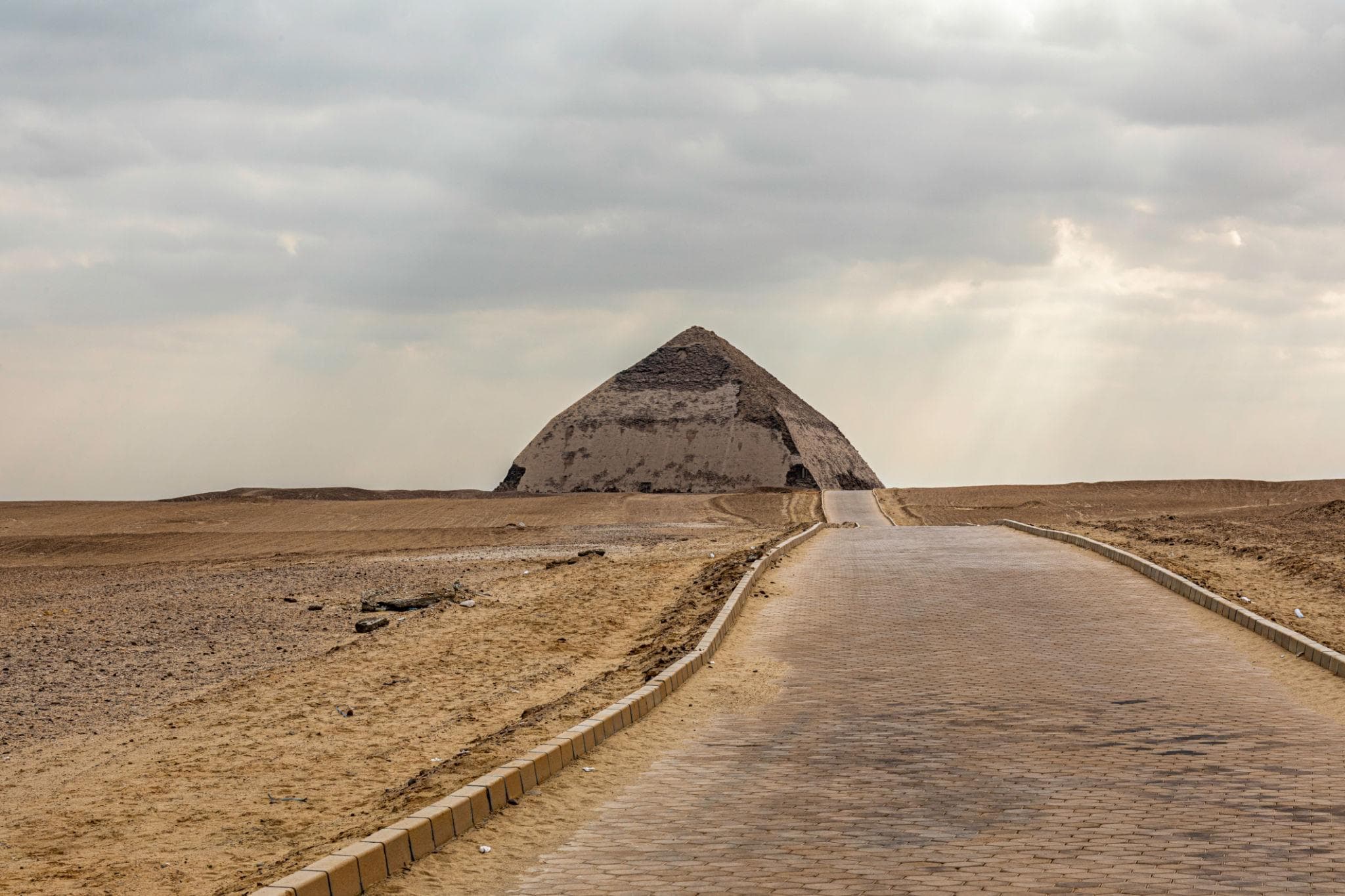
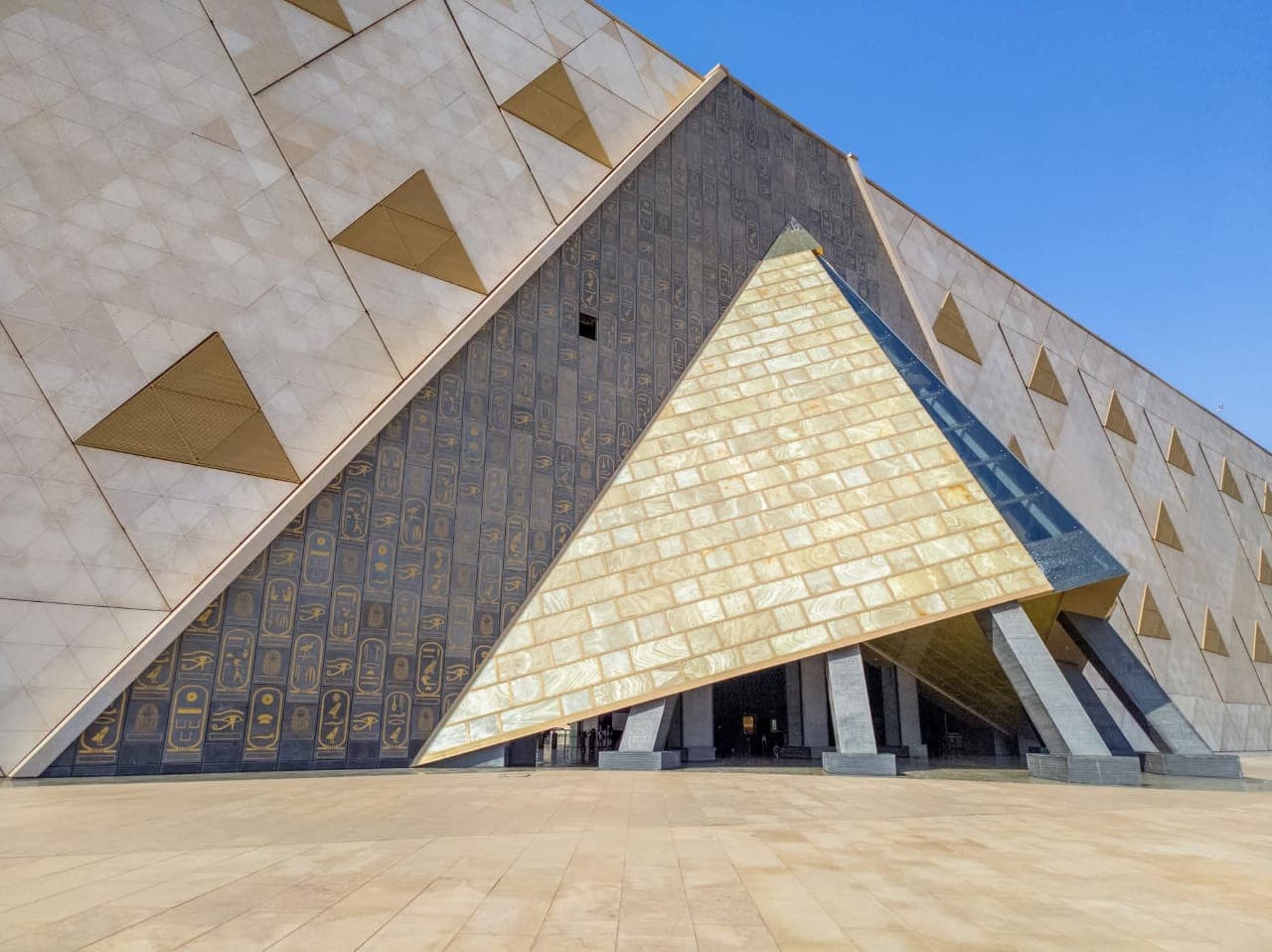
Near Cairo, the Pyramid of Unas at Saqqara, built about 2350 BC, holds the Pyramid Texts, the oldest religious writings carved inside a royal tomb, with the king's cartouche repeated in the burial chamber. Access to the interior has varied over the years, so check on the day. Our Saqqara audio tour includes the Pyramid of Unas among its stops. At the Grand Egyptian Museum, Tutankhamun's two names appear on almost every object from his tomb.
Insider Tip: Look for Erased and Recut Names
The Egyptians believed that the name, the ren, was part of a person, and that as long as it was spoken and written its owner lived on. That made the cartouche a target, and once you recognise a few signs you will see the scars of ancient arguments on the walls.
Thutmose III eventually had many of Hatshepsut's names and figures chiselled away, and in places a neat, empty oval remains where a cartouche once stood. After Akhenaten's reign, his name and that of his god, the Aten, were hacked out across the country. Ramesses II took the opposite approach: he had his own cartouches carved unusually deep, so they would be hard to erase, and he had earlier kings' names on statues and walls replaced with his own.
A cartouche that looks crowded, uneven or sunk deeper than the carving around it may be a recut name, sometimes with traces of the original beneath, best seen in low morning or evening light. Our guide to the gods of ancient Egypt introduces the gods whose names and images you will meet on the same walls.
Cartouche Souvenirs and Silver Pendants
A pendant with your name in hieroglyphs is one of the most popular souvenirs in Egypt. The best-known place to order one is Khan el-Khalili in Cairo, where jewellers in the lanes around the bazaar have engraved names for generations; you will find the same service in Luxor and Aswan. Most pieces are made to order within a day or two.
Silver is the usual choice. Look for a fineness stamp such as 925, meaning 92.5 per cent silver, and ask for a receipt that states the purity and the weight. Pendants are priced mainly by weight plus a charge for workmanship, so a thicker piece costs more, and so does a cartouche engraved on both sides, a good way to fit a long name or two names. Gold, usually 18 or 21 carat, works the same way at a much higher price per gram. Agree the total before work begins.
Hand-cut signs with crisp edges look far better than shallow laser-etched ones, so ask to see finished examples. Our guide to souvenir shopping in Egypt covers the other classic souvenirs and how to buy them.
Pro Tip: Check the Spelling Before It Is Engraved
Most jewellers work from a printed chart that matches each Latin letter to a sign, A to Z. It is quick and consistent, but it spells letters rather than sounds, so John keeps his silent h, Juan gets a cobra instead of a kh, and a double n is written twice. Some people prefer that version; others want the name as a scribe would have written it. Decide before the silver is cut.
Write your name in hieroglyphs using the list in this guide, take the paper to the shop, and ask the jeweller to draw the signs before engraving. Check the order, the direction the animals face and whether you want the seated figure at the end. Shop charts often have their own conventions for letters Egyptian never had, such as a lasso for O, so make sure you understand each sign. It takes five minutes, and it is the difference between a souvenir you are glad to wear and one you have to explain.
Planning Your Visit to Egypt's Great Inscriptions
The best way to learn hieroglyphs is in front of them. Our Luxor East and West Bank tour covers Karnak, Luxor Temple and the royal tombs in a day, and our Saqqara, Memphis and Dahshur day tour reaches the oldest inscribed pyramids near Cairo. Our pyramids and Grand Egyptian Museum day pairs Giza with Tutankhamun's treasures, where his cartouches appear in almost every case.
Bring your name written out on a slip of paper. A guide who reads the script will happily point out its signs on the walls, and once you can find a vulture, an owl and a quail chick, every temple becomes a little more legible. Children in particular enjoy the hunt. Self-guided visitors can do the same with an audio tour and this list in hand. If you would like a trip built around inscriptions, from Abydos to Philae, tell us your dates and interests through our contact page.