The spiral staircase at Kom el-Shoqafa winds down around a round, open shaft, and with each turn the street noise of Alexandria fades. The air grows cool and damp. At the bottom, lit by electric lamps, stands a tomb doorway framed by two figures of Anubis, the jackal-headed god of embalming, dressed not as an Egyptian but as a Roman legionary, with breastplate, shield and spear. Nowhere in Egypt shows so clearly what happened when two civilisations shared a city.
The Catacombs of Kom el-Shoqafa are the best place to start in Roman Alexandria, because so little of the ancient city survives above ground. The Alexandria of the Ptolemies and Cleopatra lies under the modern streets or beneath the waters of the Eastern Harbour. What remains of its Roman phase is scattered across a cemetery, a column, a theatre, a museum and a fort on the site of the Pharos.
This guide follows a route through all of them: Kom el-Shoqafa, Pompey's Pillar and the site of the Serapeum, the theatre and mosaics of Kom el-Dikka, the Greco-Roman Museum, Qaitbay and the Bibliotheca, with timings, tickets and how to reach Alexandria from Cairo.
At a Glance
Catacombs of Kom el-Shoqafa: three levels of rock-cut tombs of the 2nd century AD, rediscovered in 1900
Pompey's Pillar: a red granite column about 27 m (88 ft) high, raised around AD 298 for Diocletian on the site of the Serapeum
Kom el-Dikka: a small Roman theatre with marble seating, baths, lecture halls and the Villa of the Birds mosaics
Greco-Roman Museum: reopened in 2023 after almost two decades of renovation
Qaitbay Citadel: a 15th-century fort on the site of the Pharos lighthouse
Time needed: half a day for the three Roman sites; a full day with the museum and seafront
Tickets: 200 EGP each for the catacombs, Pompey's Pillar, Kom el-Dikka and Qaitbay, 400 EGP for the Greco-Roman Museum, as of November 2026
Opening hours: about 9am to 5pm, Qaitbay into the evening; shorter in Ramadan
From Cairo: about 220 km (135 miles), 2.5 to 3 hours by road, or a similar time by train
Best months: October to May; in summer the coast is milder than Cairo but humid
Roman Alexandria: What Survives and Where
Alexander the Great founded the city in 331 BC, and under the Ptolemies it became the greatest city of the Greek world, with the Library, the Museion and the Pharos lighthouse. After Cleopatra's death in 30 BC it passed to Rome and remained, for some three centuries, the second city of the empire, a port of Greeks, Egyptians, Jews and Romans living side by side. Our Cleopatra history guide covers the end of the dynasty.
Very little of this is visible. The city has been rebuilt over itself for more than two thousand years, and earthquakes and a subsiding coastline sent the royal quarter into the sea. The surviving Roman sites are islands in the modern city, close enough to be seen in a day, and for anyone interested in history they are the most rewarding things to do in Alexandria.
For a focused visit, the core is three sites in the south and centre of Alexandria: the catacombs and Pompey's Pillar, a short walk apart in the old district of Karmouz, and Kom el-Dikka near the main railway station. The Greco-Roman Museum lies a short distance from Kom el-Dikka, and Qaitbay and the Bibliotheca are on the seafront. Our Alexandria day trip guide covers the city more broadly; this guide concentrates on its ancient layers.
The Catacombs of Kom el-Shoqafa
Kom el-Shoqafa means the mound of shards, after the broken pottery that once covered the hill. The tombs beneath it were cut into the rock in the 2nd century AD, apparently for one wealthy family at first, and then enlarged into a cemetery used for a couple of centuries. They were forgotten until 1900, when, according to the story every guide tells, a donkey pulling a cart fell through the ground into the shaft.
The layout is clear once you are inside. The spiral staircase descends around a circular shaft, down which the bodies were probably lowered on ropes. It leads into a domed rotunda with a central well, and off it opens the triclinium, a banqueting hall with stone benches where relatives gathered for funeral meals on the anniversary of a death. Beyond lie the main tomb and long galleries lined with hundreds of burial niches, cut in rows like shelves, with space for whole families.
The catacombs extend over three levels. A groundwater-lowering project completed in 2019 protects the upper two, but the lowest is still flooded and closed. Even so, the scale is surprising, and the Kom el-Shoqafa catacombs page shows the plan in more detail. Allow about an hour, more if you want to look closely at the carving.
Egyptian Gods in Roman Armour
The main tomb is the reason the catacombs are famous. Its façade is a small temple front: two columns with Egyptian papyrus and lotus capitals carrying a Greek pediment. On either side of the doorway, carved serpents representing Agathodaimon, the good spirit of the city, wear the double crown of Egypt and hold the staff of Hermes and the thyrsus of Dionysus. Above them, shields carry the head of Medusa. In niches in the vestibule stand statues of a man and a woman, probably the tomb's owners, with Egyptian bodies and Roman hairstyles.
Inside the burial chamber the mixture becomes deliberate. Three sarcophagi sit in niches, carved in the Roman manner with garlands and bulls' heads. On the walls above them, the scenes are purely Egyptian in subject: a mummy on a lion-shaped bed attended by Anubis, Horus and Thoth, and a priest offering to the Apis bull. But many of the figures are drawn with Roman proportions and clothing, and the Anubis at the door wears a legionary's armour, while his twin on the other side has the tail of a serpent.
None of this was confusion. It was how Roman Alexandrians thought about death: Egyptian gods for the afterlife, Greek and Roman forms for the living, and no contradiction between them.
The Hall of Caracalla and the Smaller Tombs
A breach in one wall leads into a separate burial complex, long known as the Hall of Caracalla. When cleared, it held the bones of men and horses buried together. The name links them to the Roman emperor Caracalla, who visited Alexandria in AD 215 and, angered by the city's mockery, ordered the massacre of large numbers of its young men. The connection is an attractive story rather than an established fact, and archaeologists have suggested other explanations for the horse burials, but the chamber is a strange and memorable place.
Above ground, in the open-air area around the entrance, stand smaller tombs moved here from other parts of the city: the painted Tigrane tomb, found in 1952 and reinstalled here, and the Wardian tombs, among the oldest of their kind in Alexandria. Their paintings give a sense of the colour that has vanished from the larger tombs below. Look too at the sarcophagi and carved blocks displayed in the open air near the ticket office.
The site is in a dense, working neighbourhood, and on the short walk to Pompey's Pillar you see more of everyday Alexandria than on the seafront.
Good to Know: Visiting the Catacombs
The spiral staircase has many steps and no lift, and the lower galleries are humid and can feel close. Visitors with limited mobility or a fear of confined spaces may prefer to see the rotunda and the main tomb and leave the deeper galleries aside. Wear shoes with grip, as the rock floors can be damp.
Personal photography is now generally permitted at Egyptian sites once you have a ticket, but the rules here have changed in the past, and at times cameras were not allowed below ground, so follow what the guardians tell you on the day. Flash and tripods are not appropriate on the carved and painted surfaces.
Go early or in the late afternoon if you can. Coach groups from Cairo usually arrive in the late morning, and the narrow galleries fill quickly. In summer the coolness below ground is welcome. Bring a small bottle of water, keep children close on the staircase, and allow time to let your eyes adjust to the dim light before the main tomb.
Pompey's Pillar and the Serapeum
A few minutes' walk from the catacombs, on a low hill, stands Pompey's Pillar, a single column of red Aswan granite 26.85 metres (88 ft) tall including its base and Corinthian capital. It has nothing to do with Pompey. Crusaders and medieval travellers believed his ashes lay on top, and the name stuck. A Greek inscription on the base dedicates it to the emperor Diocletian, who besieged and took the city in 297 and 298 after a revolt, and the column was raised in his honour by the Roman prefect of Egypt in the last years of the century.
The hill was once crowned by the Serapeum, the temple of Serapis, the Greco-Egyptian god created under the Ptolemies to unite their Greek and Egyptian subjects. It was one of the great sanctuaries of the ancient world, and it may have housed part of the city's library. In AD 391, as Christianity became the religion of the empire, a Christian crowd led by the bishop Theophilus destroyed it.
Today the site is a scatter of foundations, two granite sphinxes and rock-cut underground passages, usually open to visitors. The space is open and largely unshaded, and the visit takes 30 to 45 minutes. The finest object found here, a statue of the Apis bull in black granite from the Roman period, is now in the Greco-Roman Museum.
The Roman Amphitheatre at Kom el-Dikka
Kom el-Dikka, near Misr railway station in the centre of the city, is often signposted and searched for as the Roman amphitheatre of Alexandria. Strictly it is a small theatre or odeon, a U-shaped curve of 13 rows of white marble seats, rather than an amphitheatre built for games. The mound was a slum until the late 1950s, and a Polish-Egyptian mission has excavated it since 1960.
The theatre takes a few minutes, but the site repays an hour. Beyond it lie the remains of Roman baths and a row of more than twenty lecture halls of the 5th to 7th centuries AD, small rooms with tiers of benches facing a raised seat for the teacher. The excavators now see the theatre itself as the largest hall of this teaching complex, where Alexandria's scholars still taught in late antiquity.
Under a modern shelter is the Villa of the Birds, a Roman house whose floor mosaics show birds in square panels, among them a peacock, a pigeon, a quail and a moorhen, in marble, limestone and glass. It is one of the best mosaic floors in Egypt, and it has usually needed a separate ticket, so ask at the entrance.
The Greco-Roman Museum
The Greco-Roman Museum is the place to see what Alexandria's lost buildings once contained. Opened in the 1890s in a neoclassical building in the city centre, it closed for restoration in 2005 and reopened in October 2023, after almost eighteen years, with new galleries, lighting and labels.
Its collections cover the Ptolemaic and Roman city: portraits of the Ptolemies and of Roman emperors, statues and heads of Serapis, the Apis bull from the Serapeum, delicate terracotta figurines, glass, coins and funerary objects. Seeing the museum after the sites rather than before often works best: the objects then fall into places you have already walked.
Allow one and a half to two hours. The museum is a short distance from Kom el-Dikka, so the two fit naturally together. In Arabic it is al-Mathaf al-Yunani al-Romani, worth knowing when asking directions. It opens from 9am to 5pm, with the ticket window closing at 4:30pm; Friday hours differ, so check before you go.
Did You Know: Where the Pharos Stood
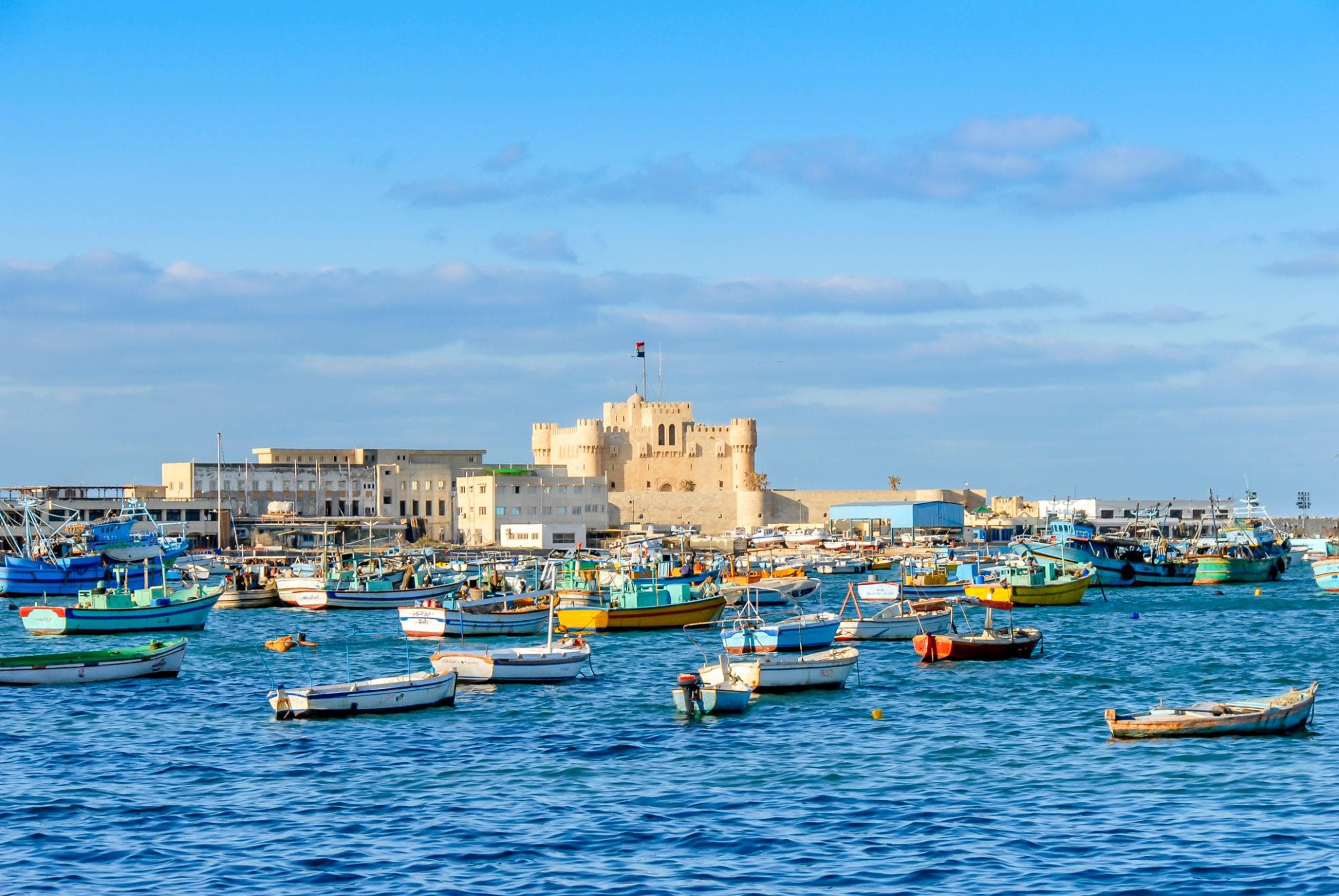
At the tip of the peninsula that closes the Eastern Harbour stands the Qaitbay Citadel, a stone fort built in the late fifteenth century by the Mamluk sultan Qaitbay. It occupies the site of the Pharos, the lighthouse completed under the early Ptolemies in the third century BC, over 100 metres tall by most estimates and one of the Seven Wonders of the ancient world. Earthquakes brought it down in stages during the Middle Ages, and the sultan's builders are said to have reused some of its stone.
Blocks and statues from the lighthouse and the royal quarter still lie on the seabed beside the fort, where divers have mapped them since the 1990s. From the citadel walls you look across the harbour to the Corniche and, further east, to the Bibliotheca Alexandrina, the modern library inaugurated in 2002 near the site of its ancient predecessor. Its tilted disc of a roof and granite wall carved with scripts from around the world make it the city's one great modern building, and it has its own small antiquities museum.
A Walking and Driving Route Through Ancient Alexandria
The Roman sites are spread across a few kilometres, too far to walk comfortably between them all, but a car makes the route easy. Start at Kom el-Shoqafa at opening, before the coach groups arrive. Walk the few minutes to Pompey's Pillar, then drive to Kom el-Dikka, about 15 minutes away in normal traffic.
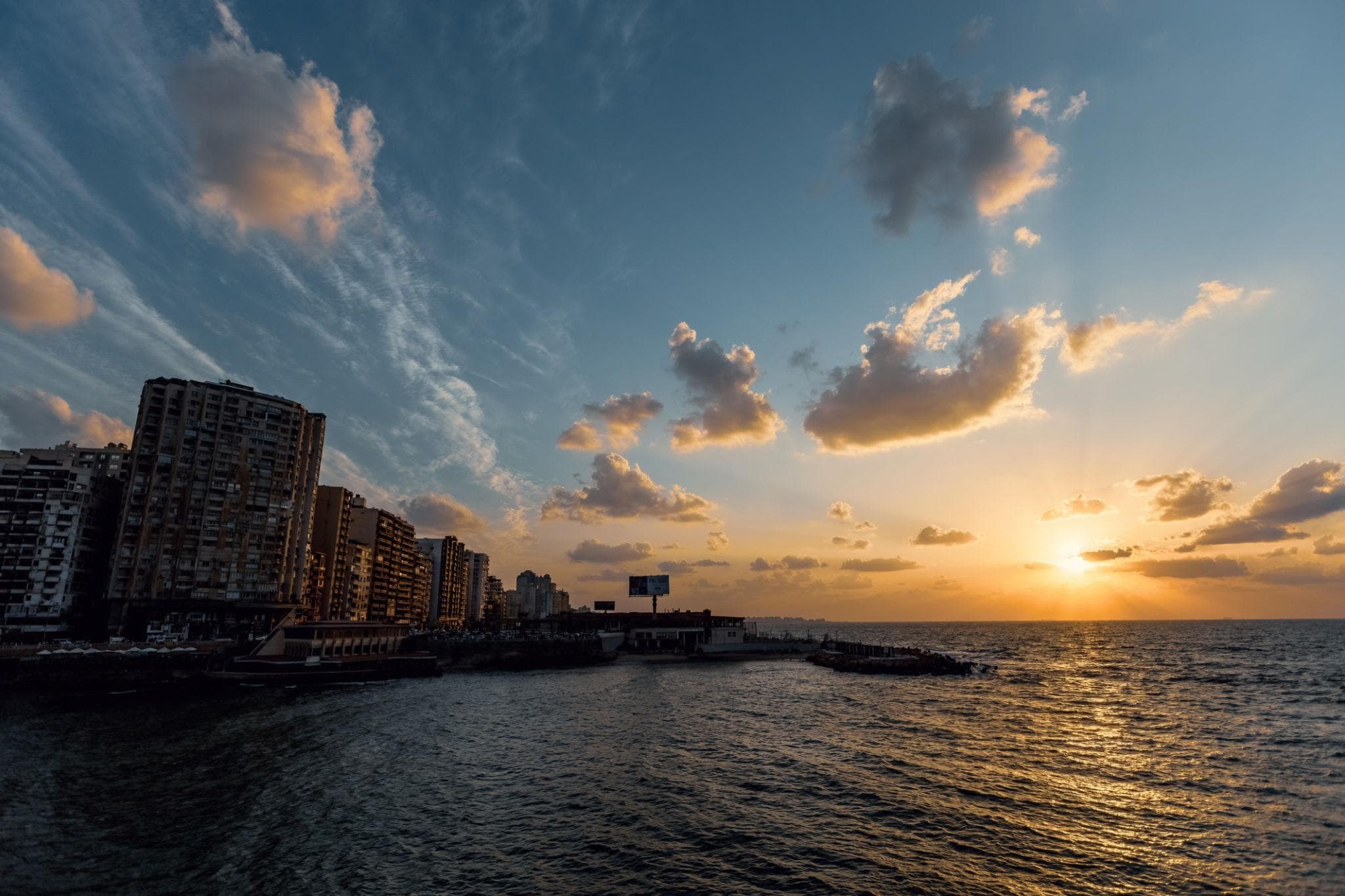
From Kom el-Dikka it is a short hop to the Greco-Roman Museum. By then it will be early afternoon, time for lunch: Alexandria is known for its fish, chosen from the counter and grilled or fried, and the restaurants along the Corniche and in the old Anfushi district near Qaitbay are the obvious choice. In the afternoon, drive along the Corniche to Qaitbay for the sea air and the view, and finish at the Bibliotheca if it is open.
That is a full day. With half a day, keep to the catacombs, the pillar and Kom el-Dikka. Travellers continuing west along the coast can combine Alexandria with the war cemeteries and museum at El Alamein, covered in our El Alamein battlefield guide, though doing both properly takes two days.
Tickets, Hours and Getting There from Cairo
Each site sells its own ticket. As of November 2026 the catacombs, Pompey's Pillar, Kom el-Dikka and Qaitbay each cost 200 EGP for foreign adults and 100 EGP for students with an international student card, and the Greco-Roman Museum 400 EGP and 200 EGP: about 1,200 EGP, or 22 USD (19 EUR), for all five. Payment is generally by bank card. The Roman sites open from 9am to 5pm, and Qaitbay stays open into the evening. Prices are revised periodically, so check our Egypt ticket prices guide before you travel.
Alexandria is about 220 km (135 miles) north-west of Cairo. By road, on the Desert Road, the drive takes 2.5 to 3 hours each way, longer at peak times leaving Cairo. A private transfer from Cairo to Alexandria is the most flexible option and lets you start at the catacombs soon after arrival. Trains from Ramses Station in Cairo take a similar time and arrive at Misr Station, a short distance from Kom el-Dikka, but leave you to arrange taxis between the sites.
The coast is milder than Cairo in summer, though humid, and in winter it can be wet and windy, with occasional storms. October, November and spring are the most comfortable months.
Planning Your Day in Roman Alexandria
Our Alexandria day trip from Cairo is the simplest way to see the city in a day by private car: tell us which of the sites in this guide matter most to you, and we will shape the order around opening times and the traffic. For travellers who want Alexandria as part of a longer stay, our two-day Cairo highlights tour and our ten-day Egypt grand tour can be arranged to include it.
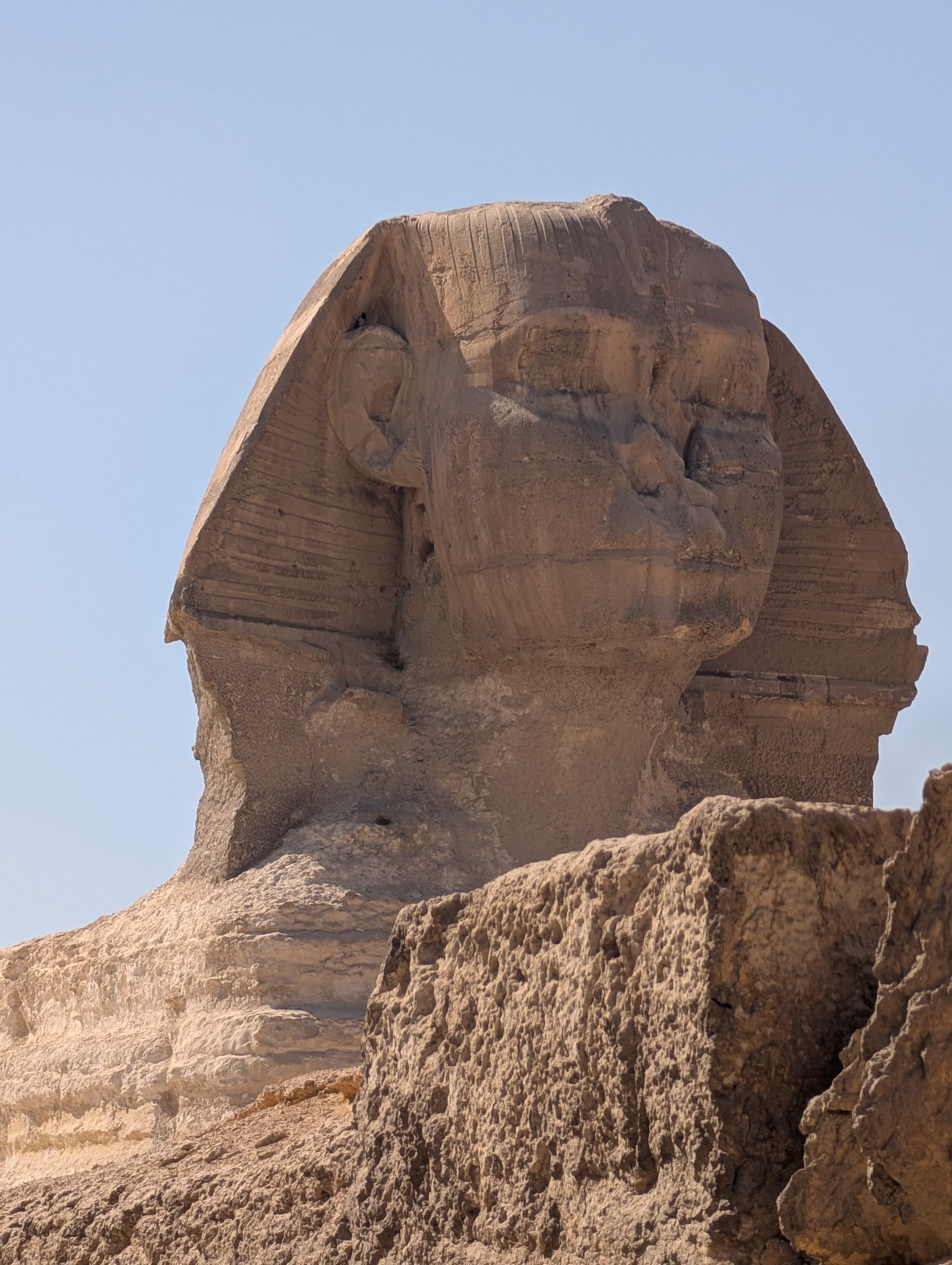
If you spend the following day at Giza, our Giza Plateau audio guide lets you explore the pyramids and the Sphinx at your own pace, a useful complement to a guided day in Alexandria. It plays in your phone's browser, with a map of every stop, and can be saved for offline use before you leave the hotel.
Tell us your dates and what interests you most, Roman tombs, museums or the sea, through our contact page, and we will plan a day around the Catacombs of Kom el-Shoqafa and the rest of Roman Alexandria.