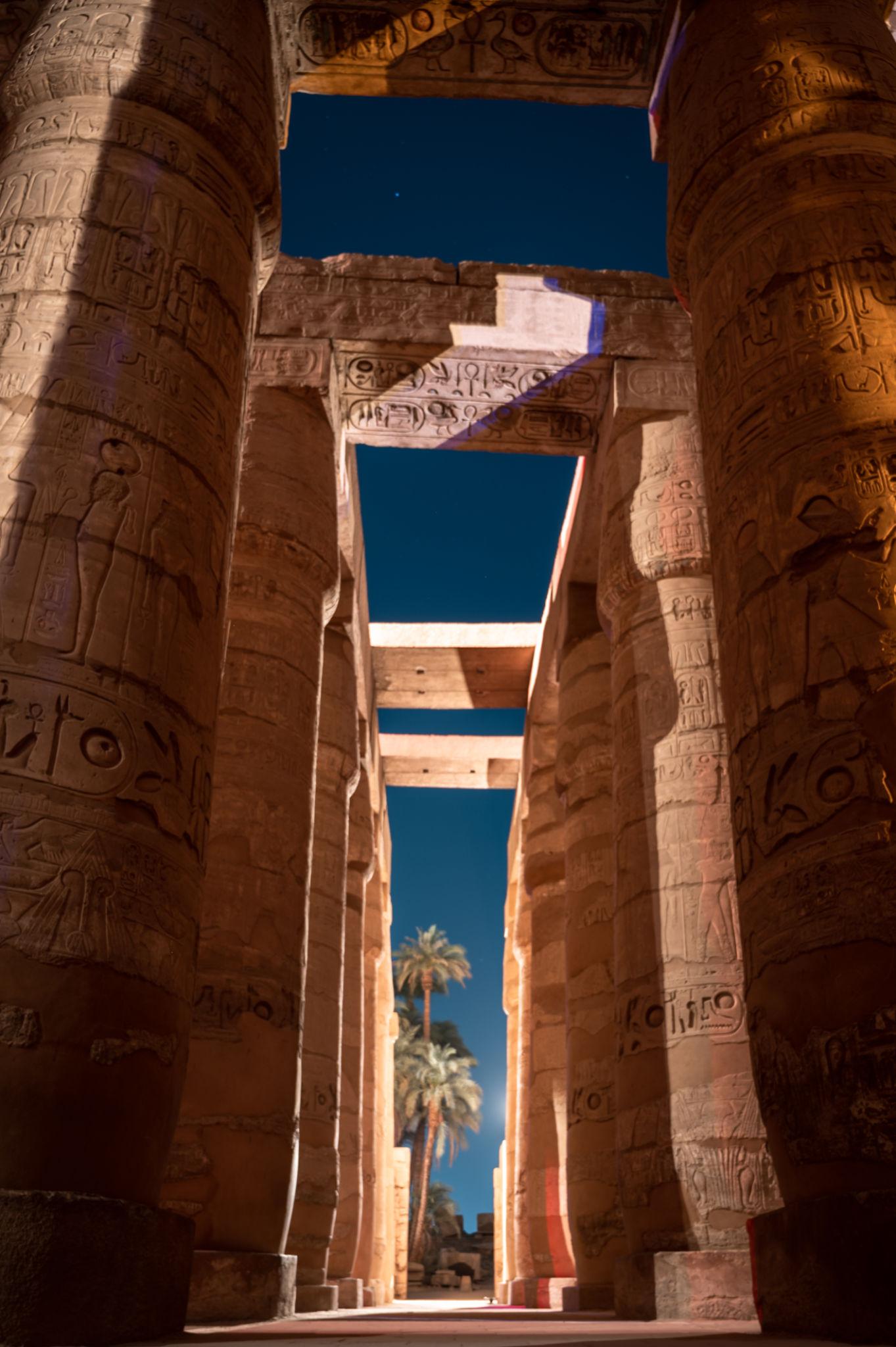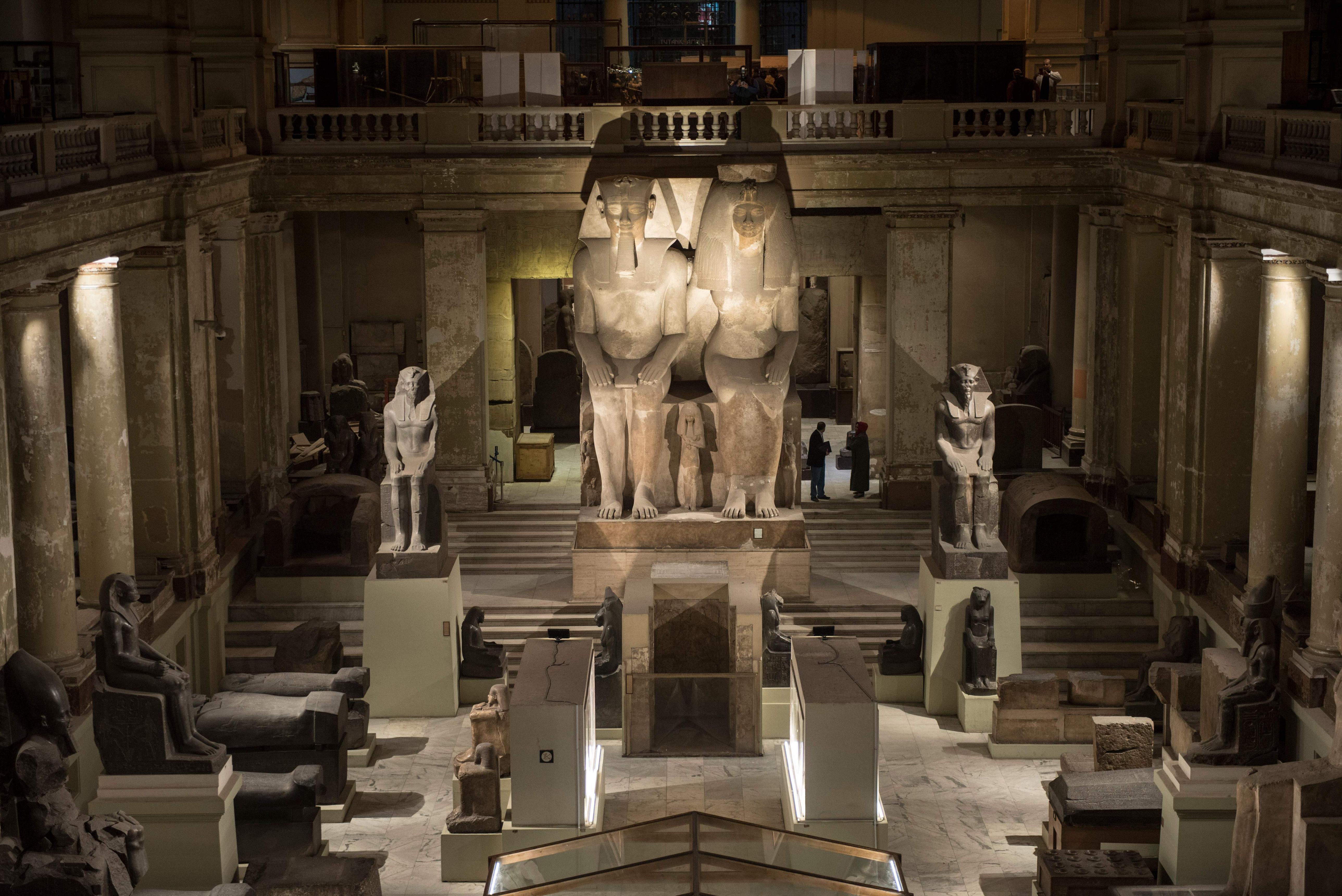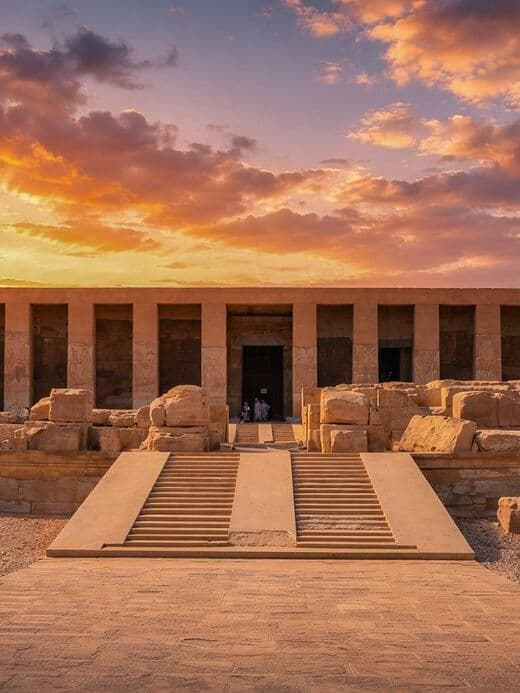
Three hours north of Luxor, far from the cruise crowds, the temple of Seti I at Abydos hides some of the most beautiful and best-preserved reliefs in all of Egypt. This was one of the holiest places in the ancient world, the cult centre of Osiris and the gateway to the afterlife. For travellers willing to make the drive, it rewards with delicate carvings, original colour, and the celebrated King List, a stone genealogy of 76 pharaohs. Here is everything you need to plan the trip.
Why Abydos Was Sacred
Abydos was no ordinary temple town. For thousands of years it was believed to be the burial place of Osiris, god of the dead and resurrection, and every devout Egyptian hoped to be buried there or at least to have a memorial stele set up nearby. The early kings of Egypt's First Dynasty (around 3000 BC) were buried in the desert behind the temple at a site called Umm el-Qaab. By the New Kingdom, pilgrims came from across the country to take part in the annual "Mysteries of Osiris," a passion-play re-enacting the god's death and rebirth. To build here was to anchor your own name to eternity, which is exactly why pharaoh Seti I chose Abydos for one of his grandest projects.
Seti I: The King Behind the Temple
Seti I ruled around 1290 to 1279 BC, early in the 19th Dynasty, and was the father of Ramesses II, Egypt's most famous builder. Seti was a formidable warrior and an even more discerning patron of art. The reliefs commissioned under him at Abydos and in his tomb in the Valley of the Kings are widely considered the high point of Egyptian carving, low raised relief so fine it looks almost photographic, much of it still bearing the original paint. He did not live to finish the temple; his son Ramesses II completed the outer sections, and you can clearly see the drop in quality between Seti's exquisite work and his son's cruder, deep-sunk style.
The Seven Chapels
The heart of the Abydos temple is unusual: instead of one sanctuary, it has seven, arranged side by side. Each was dedicated to a different deity, Horus, Isis, Osiris, Amun-Ra, Ra-Horakhty, Ptah, and the deified Seti I himself. This unusual plan, and a second L-shaped wing behind, make the temple's layout one of the most complex in Egypt.
### Reliefs to Look For
Walk slowly through the chapels and study the walls. The carving shows the king before the gods, offering incense, embracing deities, receiving the symbols of life and kingship. The colours, ochres, deep reds, blues, are remarkably intact because the temple was sheltered and partly buried for long periods. Look for the scenes of Seti making offerings to Osiris in the Osiris chapel, and the tender image of the king before Isis. These are not just religious propaganda; they are masterworks of line and proportion that artists still study today.
The King List of Abydos
In a corridor often called the Gallery of the Kings, you will find the temple's most famous feature: a long wall carved with 76 cartouches naming the pharaohs of Egypt in order, from Menes (the legendary first king) down to Seti I himself, shown with his young son Ramesses. It is one of the most important documents in Egyptology, a near-complete official king list that helped scholars reconstruct the sequence of dynasties.
It is also fascinating for what it leaves out. The list deliberately omits "illegitimate" or unwelcome rulers, the female pharaoh Hatshepsut, the heretic king Akhenaten, his successors Smenkhkare, Tutankhamun, and Ay, all erased from the official record. Standing before this wall, you are looking at ancient politics in stone: history rewritten by those who controlled the chisel.
The "Abydos Helicopter" and Other Myths
You may have seen viral photos of a ceiling relief at Abydos that supposedly shows a helicopter, submarine, and aircraft. The real explanation is mundane but interesting: it is a case of palimpsest. Seti I's original hieroglyphs were filled with plaster and recarved by Ramesses II with different signs; over the centuries the plaster fell away, leaving the two overlapping inscriptions that, by coincidence, resemble modern machines. Any guide worth their salt will explain this, but it remains a fun stop and a lesson in how easily images can be misread.
The Osireion
Behind the main temple lies a strange, sunken structure called the Osireion, a symbolic tomb of Osiris built of massive granite blocks, partly flooded with groundwater. Its austere, megalithic style looks far older than the temple in front of it and has fuelled endless speculation, though most Egyptologists date it to Seti I's reign as a deliberate archaism. It is usually viewed from above; access into it may be restricted, so check on arrival.
How to Get to Abydos
Abydos lies near the modern town of El-Balyana, roughly 160 km (about 3 hours by road) north of Luxor. Most visitors come on a day trip from Luxor, often combined with the temple of Dendera, which lies on the way back. Options:
- **Private car with driver and guide:** the most comfortable and common choice; a full-day Abydos-and-Dendera tour typically runs about 1,500 to 3,000 EGP per car (roughly 30 to 60 USD) plus tips and tickets, depending on negotiation and group size.
- **Convoy / tour group:** historically tourist traffic to Abydos travelled in escorted convoys; check current security arrangements with your operator.
- **Train:** trains from Luxor to El-Balyana exist but are slow and leave you needing a taxi for the final stretch, not recommended for a tight schedule.
### Practical Details
- **Entry fee:** roughly 200 EGP (about 4 USD) as of 2026; bring cash, card payment is unreliable here.
- **Hours:** about 8am to 5pm.
- **Time on site:** 1.5 to 2 hours for the temple and Osireion; add an hour or more if combining with Dendera.
- **Photography:** generally permitted; a separate fee may apply for flash or professional equipment.
- **Facilities:** limited, bring water and snacks; toilets are basic.
Best Time to Visit and Crowds
Abydos is gloriously uncrowded compared with Luxor's big sites. Even in high season (October to April) you may share the chapels with only a handful of others, a rare luxury in Egypt. Go in the cooler months and aim for morning to beat both the heat and the small mid-day tour groups. The long drive means an early start; leaving Luxor by 6 to 7am makes a comfortable round trip with Dendera.
Combining Abydos with Dendera
The smartest way to use the long drive is to pair Abydos with the Temple of Hathor at Dendera, which lies roughly 60 km north of Luxor, conveniently on the route home. Where Abydos dazzles with delicate New Kingdom relief, Dendera is a riot of late Ptolemaic and Roman colour: a hypostyle hall whose ceiling, recently cleaned, glows with deep blues and golds, columns crowned with the face of Hathor, and a rooftop chapel famous for the Dendera Zodiac (the original is in the Louvre; a cast is in place). A typical full-day tour visits Abydos first thing in the morning, then Dendera in the early afternoon, returning to Luxor by evening. Budget about 10 to 12 hours door to door. The two temples could hardly be more different, and seeing them back to back is a crash course in how Egyptian temple art evolved across a thousand years.
Practical Tips for the Journey
- Bring plenty of small banknotes for tips, custodians at quieter sites like Abydos often expect a few EGP to point out details or open a gate.
- Pack a torch; some of the inner chapels are dim and the painted detail rewards good light.
- Carry water, snacks, and sun protection; the drive is long and roadside facilities are limited.
- Confirm your guide is a licensed Egyptologist, the King List and the palimpsest "helicopter" really come alive with proper explanation.
- Start early. Beyond beating the heat, an early departure gives you a relaxed pace at both temples rather than a rushed dash.
Is It Worth the Detour?
For anyone who loves ancient art, absolutely. Abydos offers something Karnak and the Valley of the Kings cannot: intimacy. You can stand inches from 3,200-year-old reliefs in near silence and trace the original brushstrokes of colour. Combined with Dendera's astonishing ceiling, it makes one of the most rewarding day trips in all of Egypt, and one that most package tourists never make.
Plan Your Visit
Because Abydos sits off the standard cruise route, the easiest way to include it is to base yourself in Luxor and add a private day excursion, or to extend a Nile journey with land touring. Our Nile Cruise from Luxor to Aswan covers the classic temples of the river, and our team can arrange a guided Abydos-and-Dendera day trip as an add-on before or after your cruise, complete with expert Egyptologist, private transport, and all the context that turns these astonishing walls into a story you will not forget.