Medinet Habu (Temple of Ramesses III)
Luxor's most underrated temple — massive walls covered in dramatic battle scenes and vivid original paint.
6 AM – 5 PM220 EGP (foreign visitor)25.7189, 32.6019
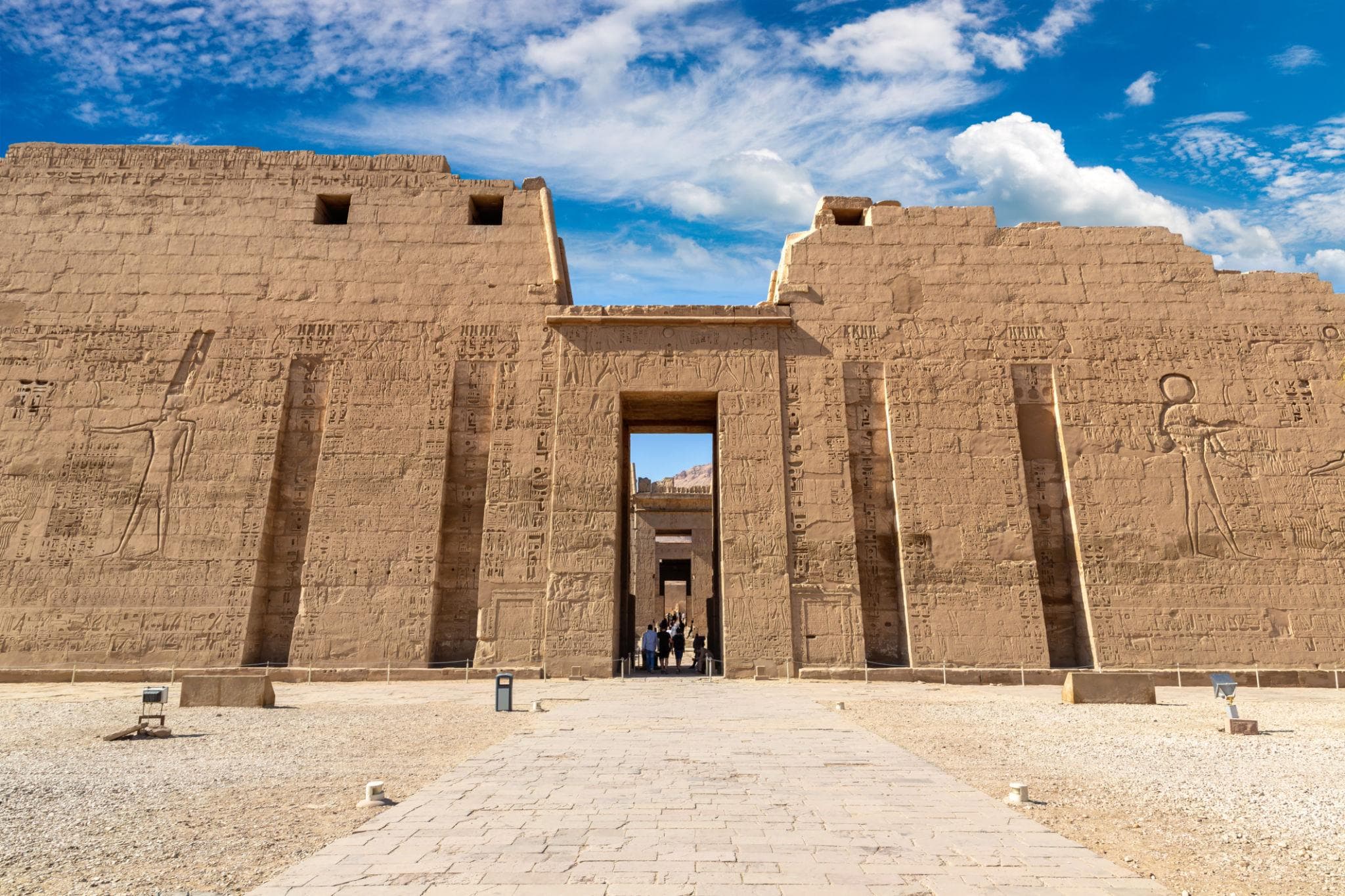
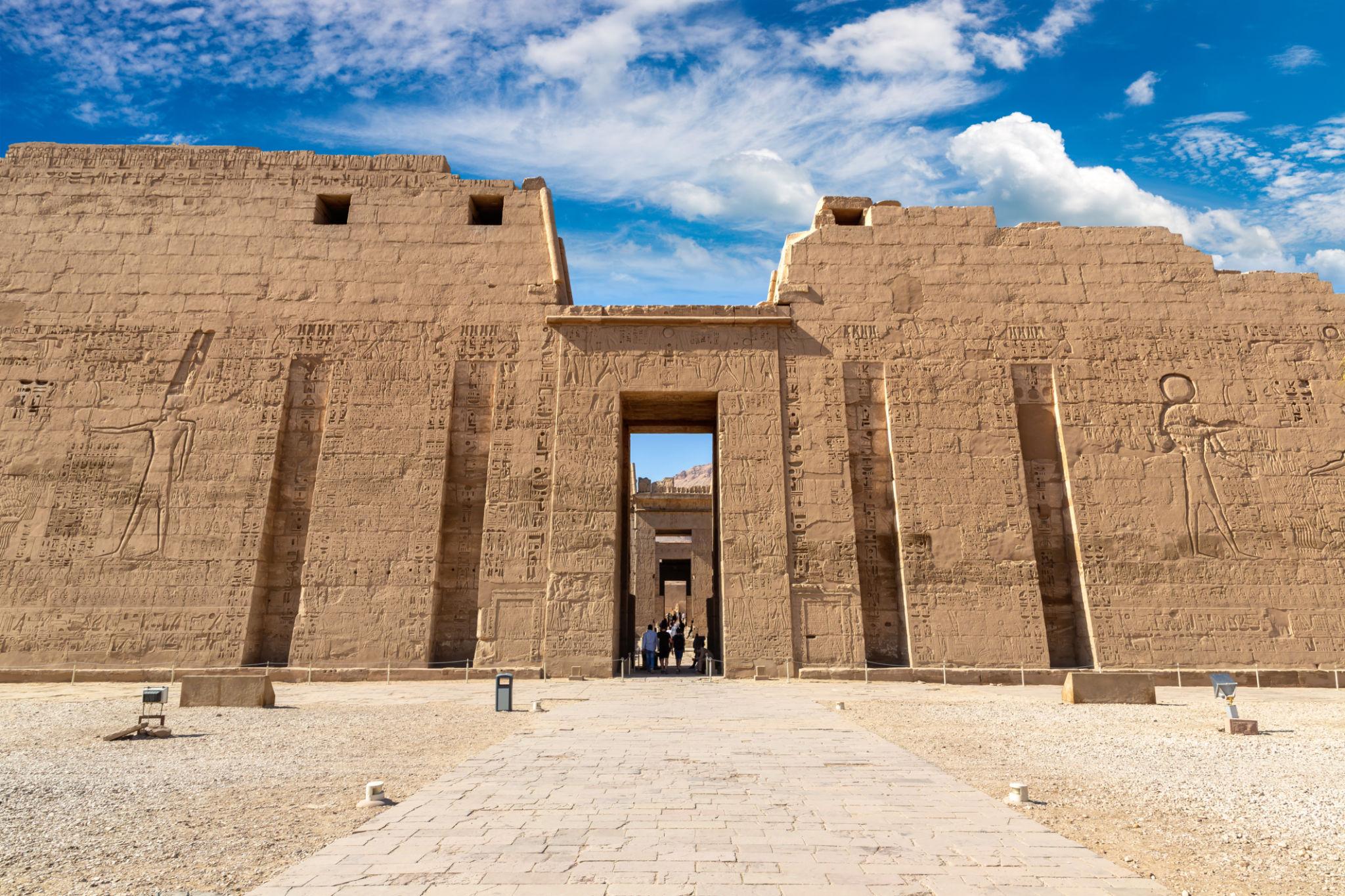
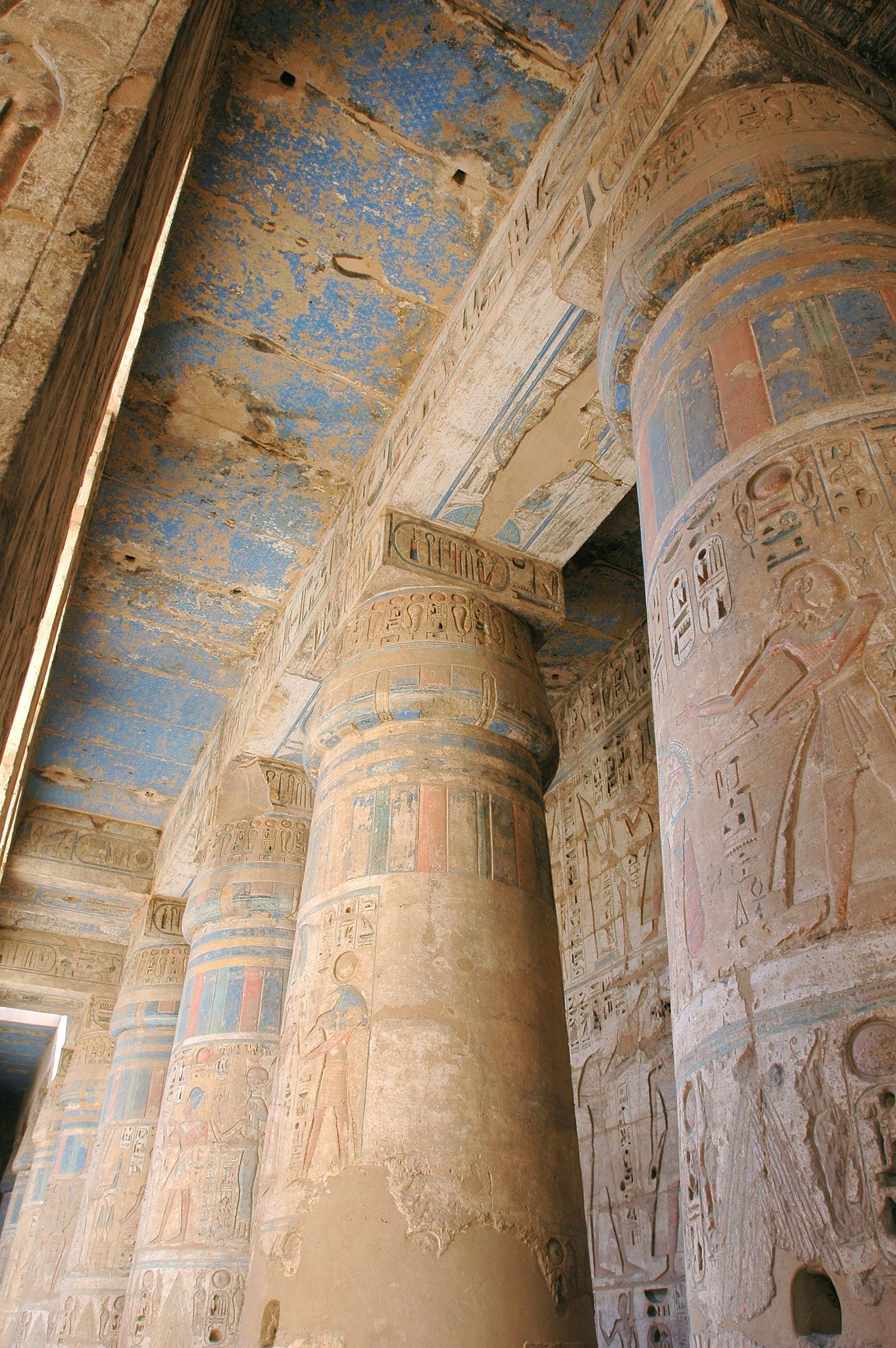
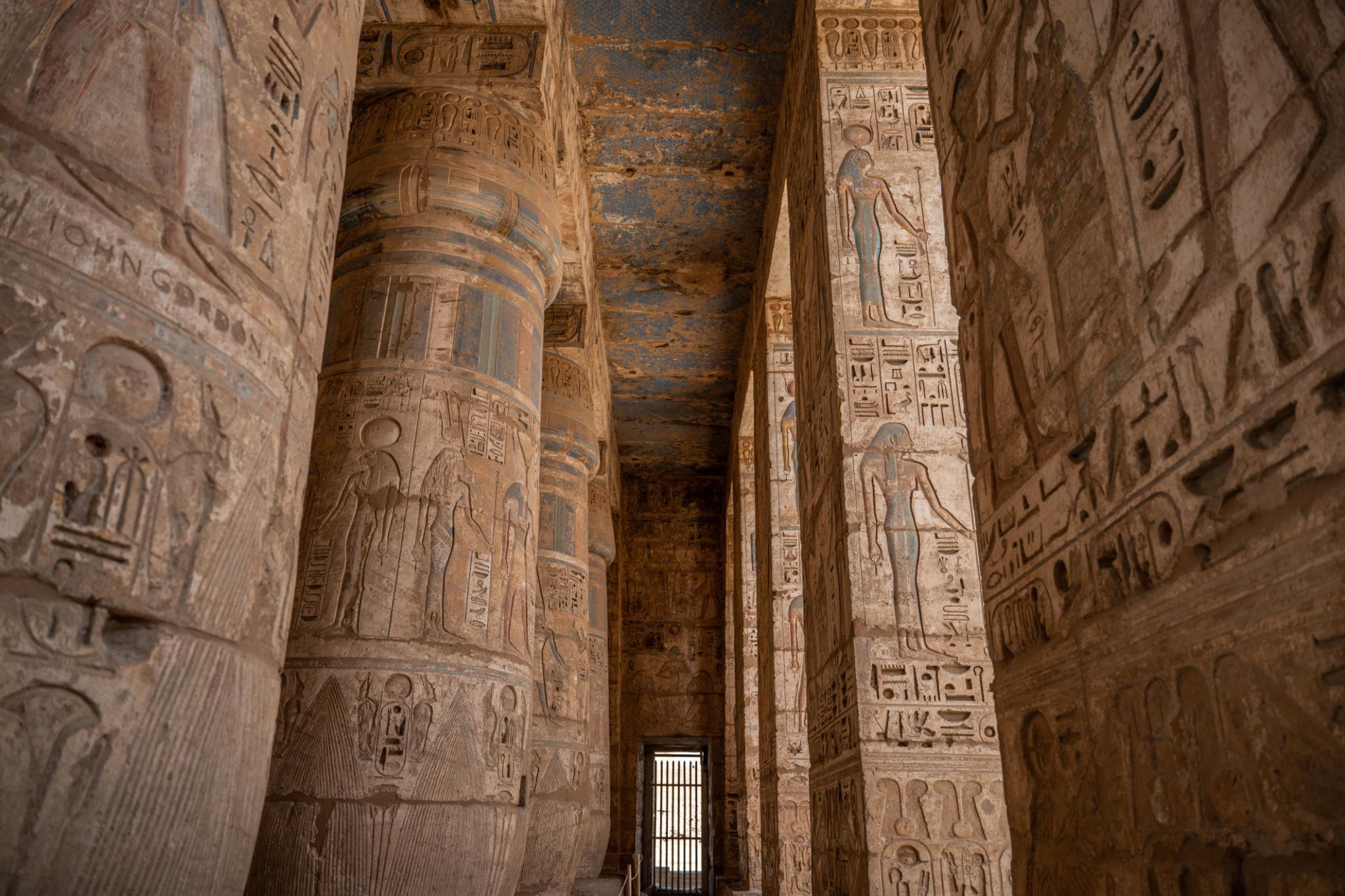
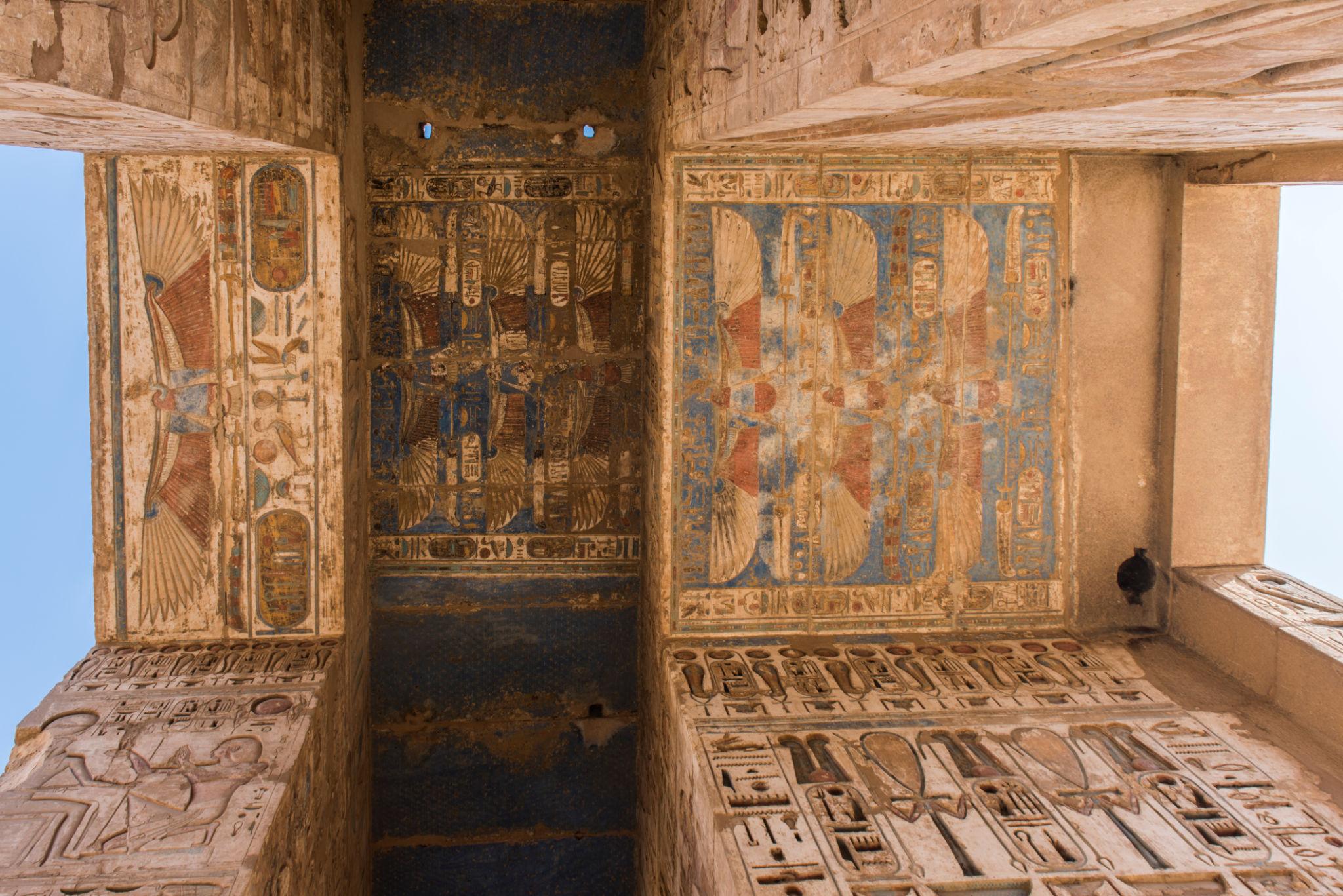
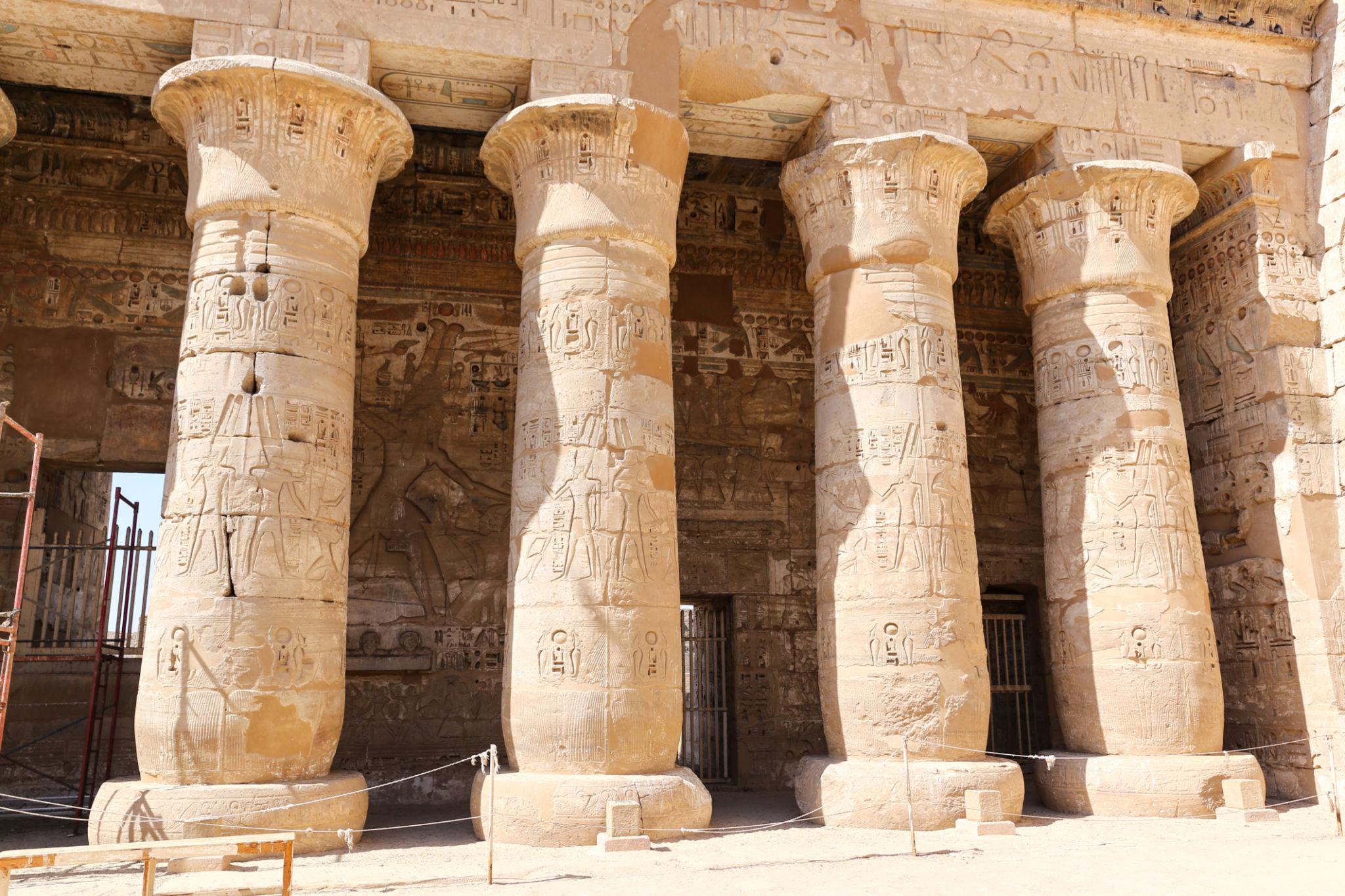
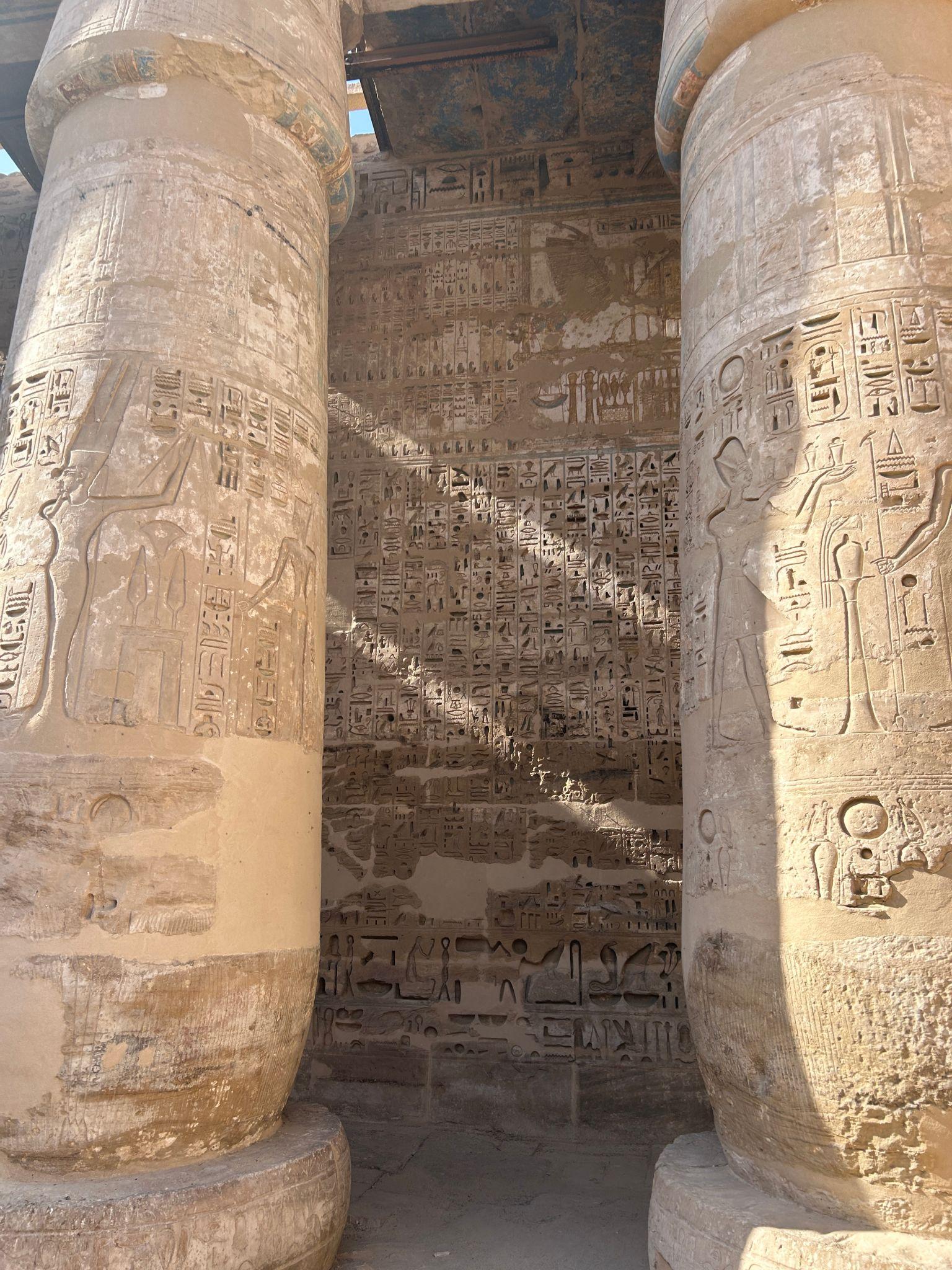
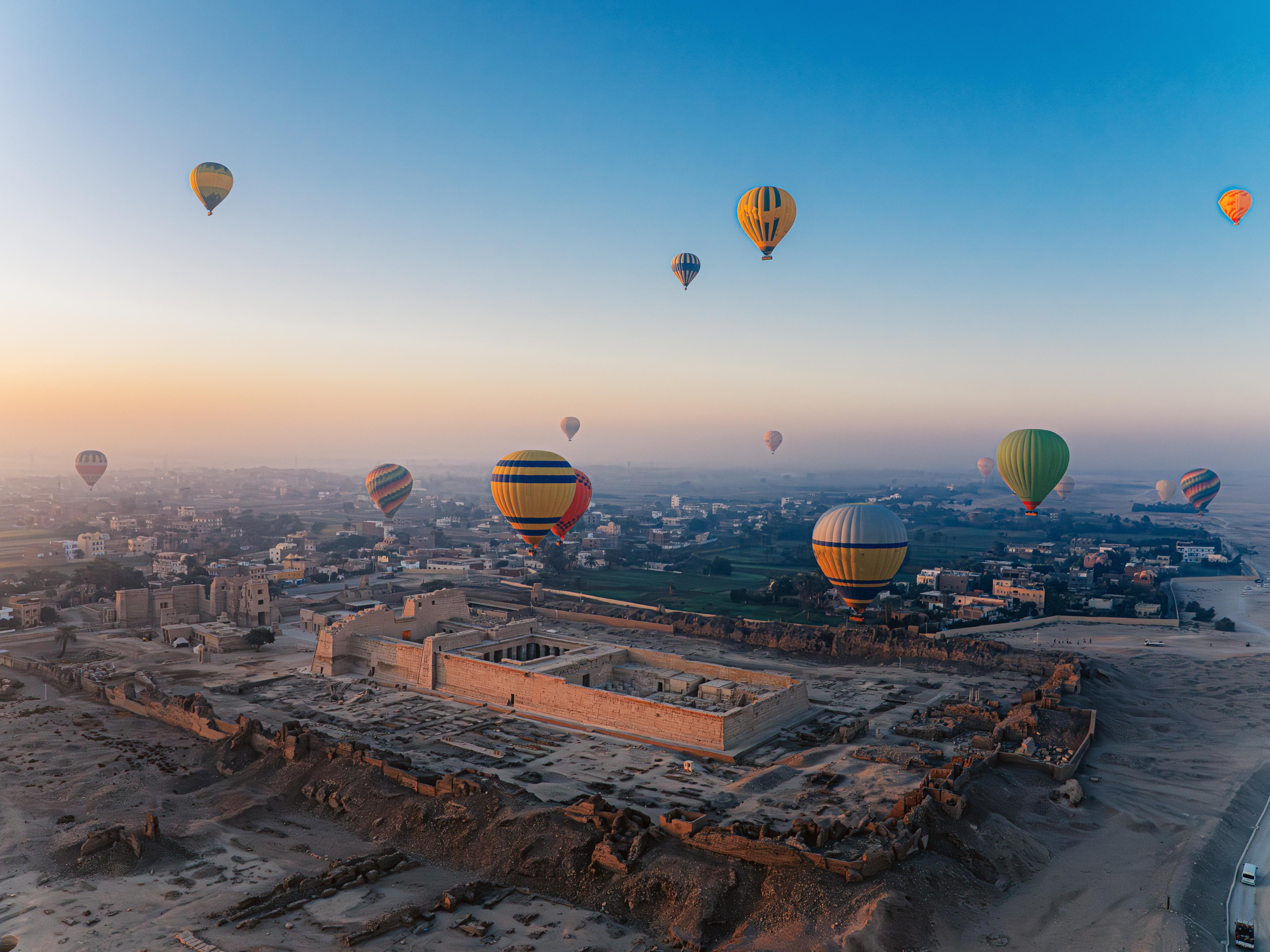
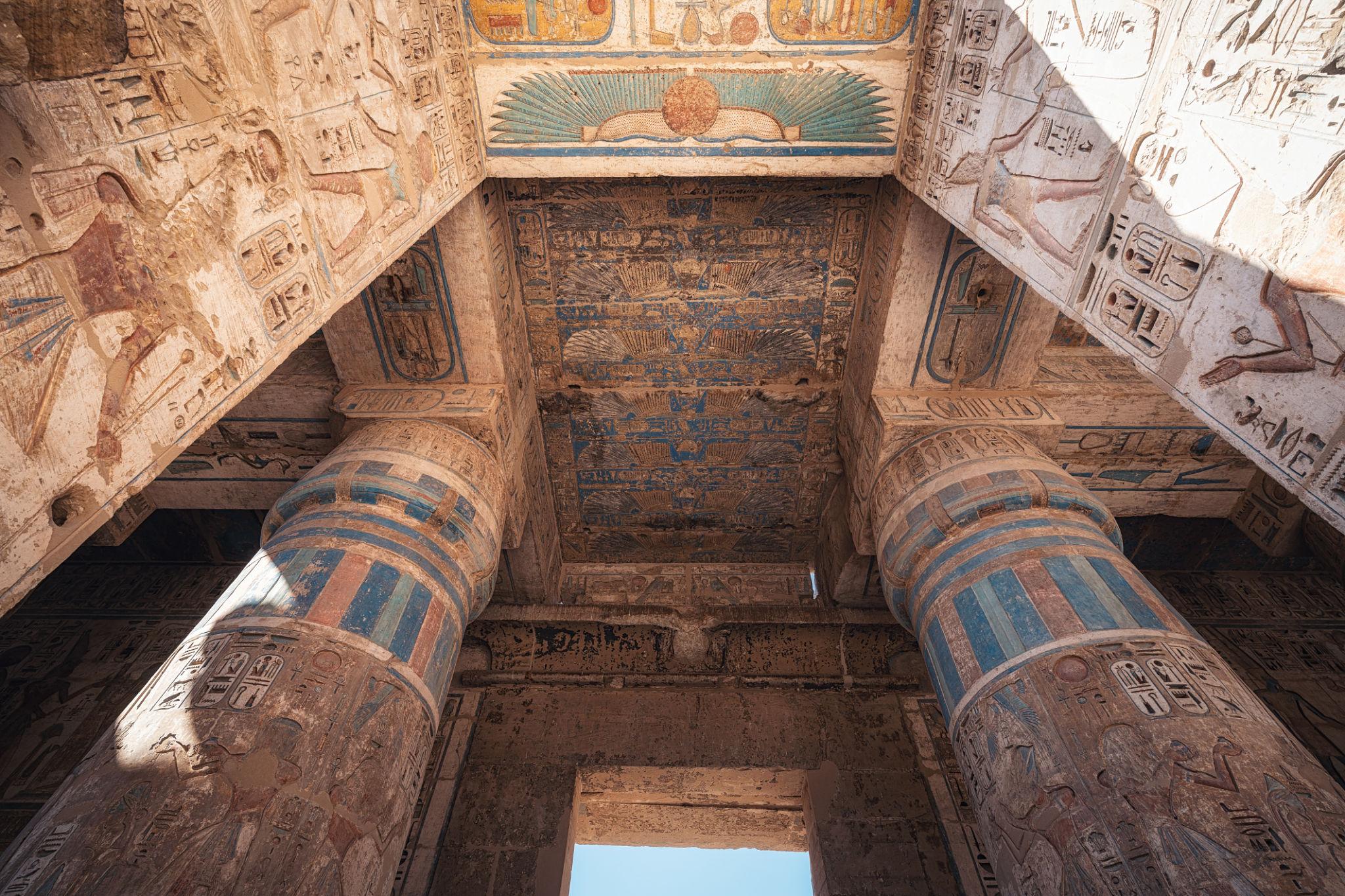
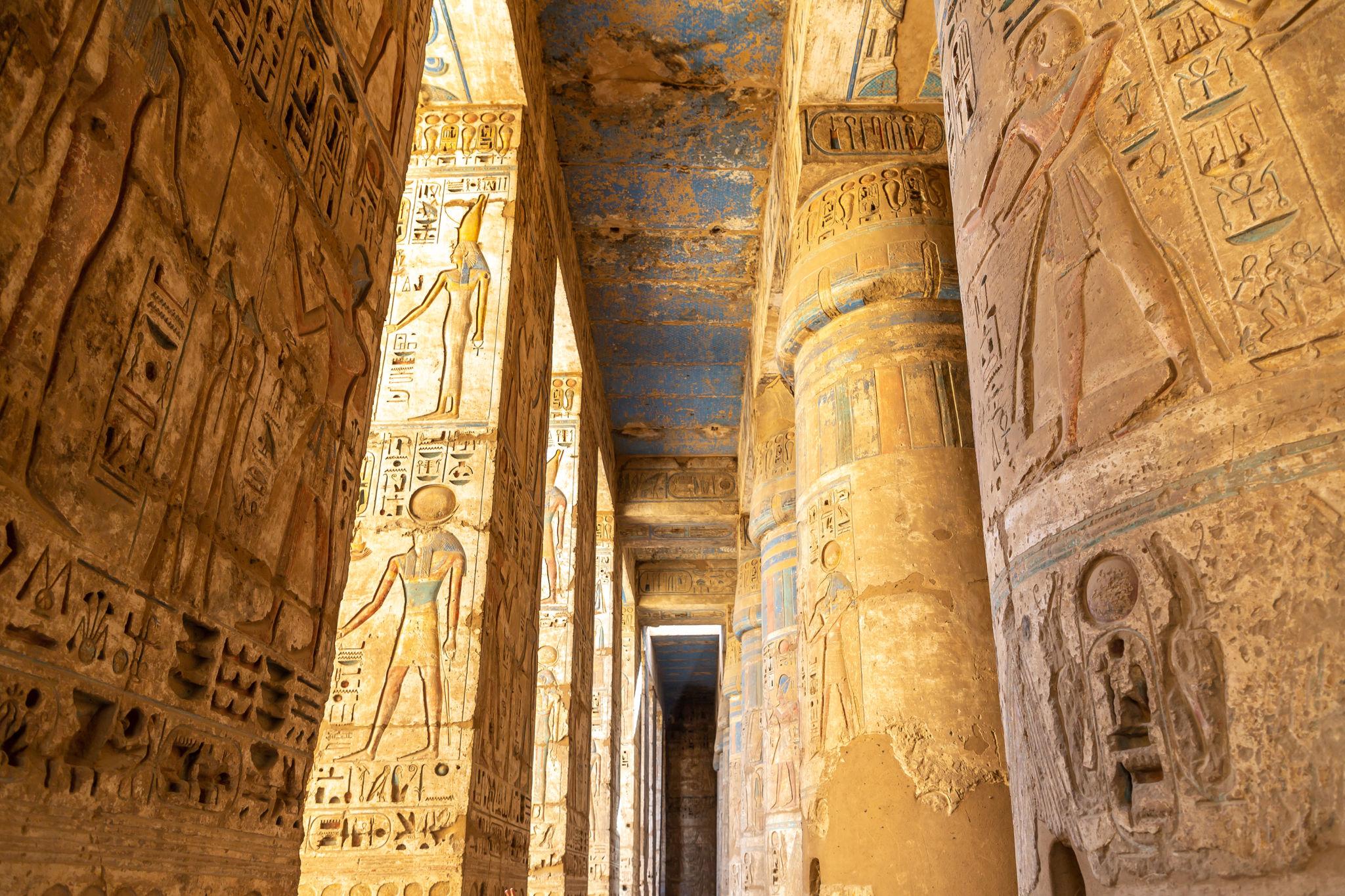
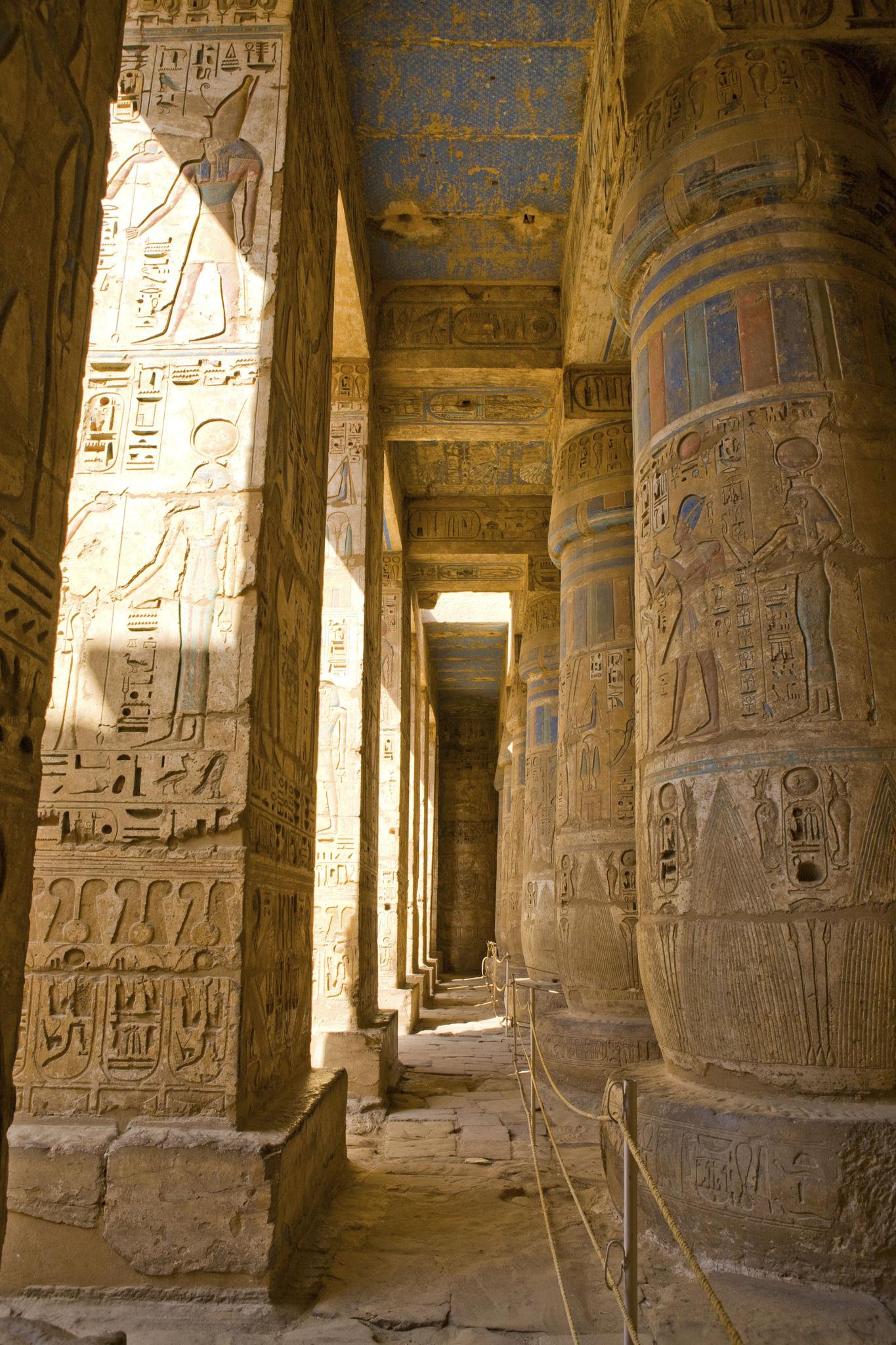
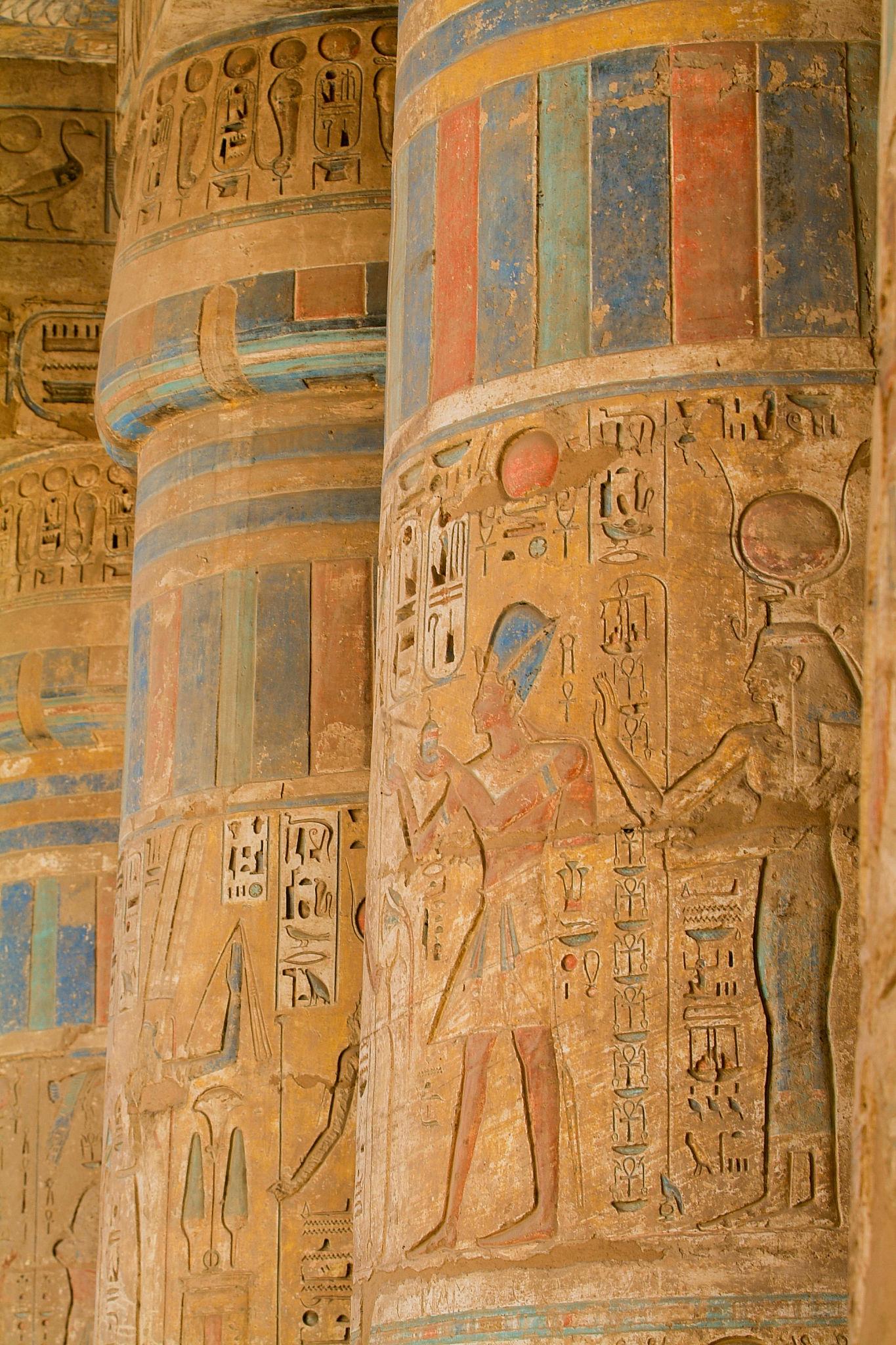
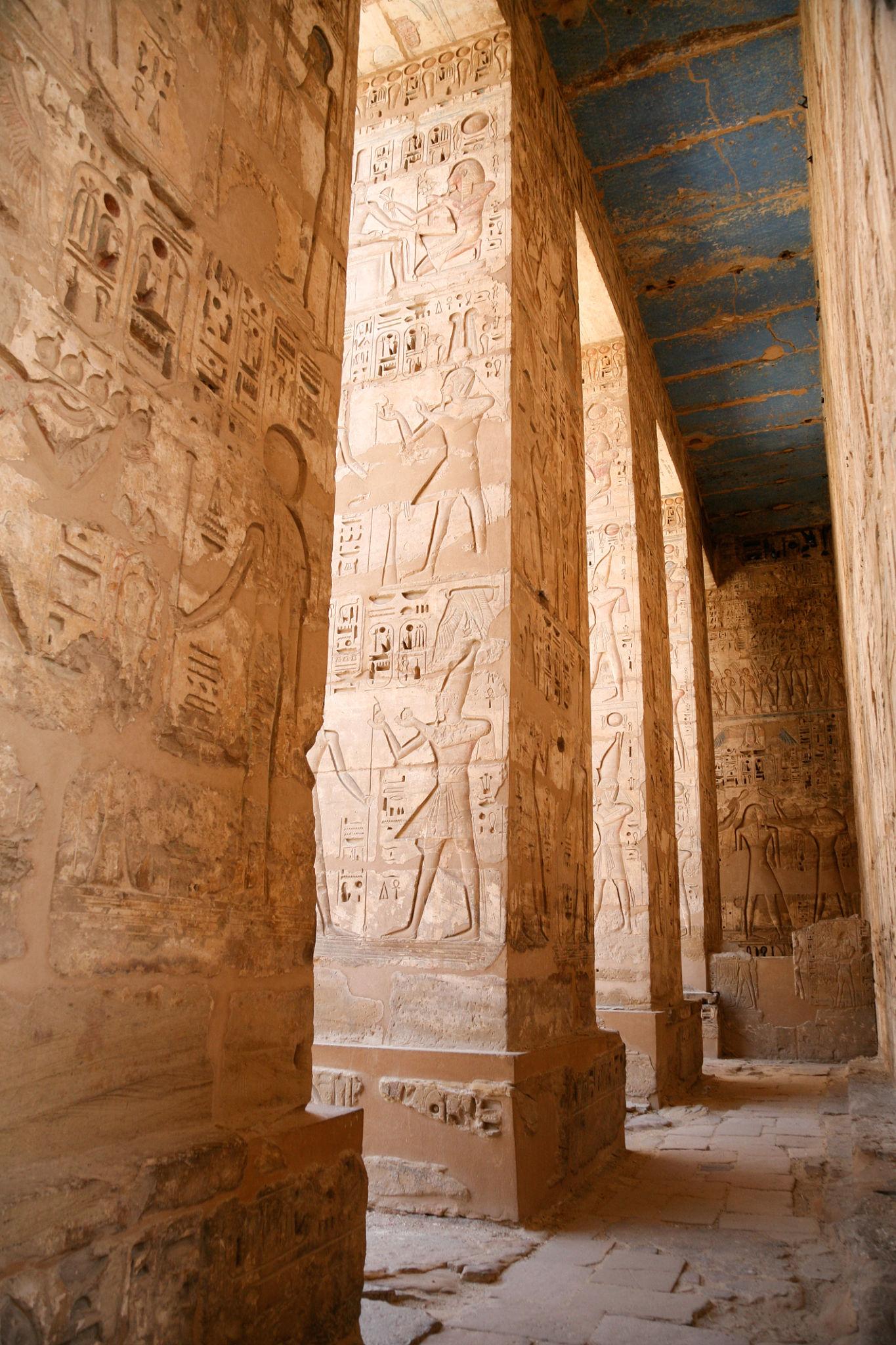
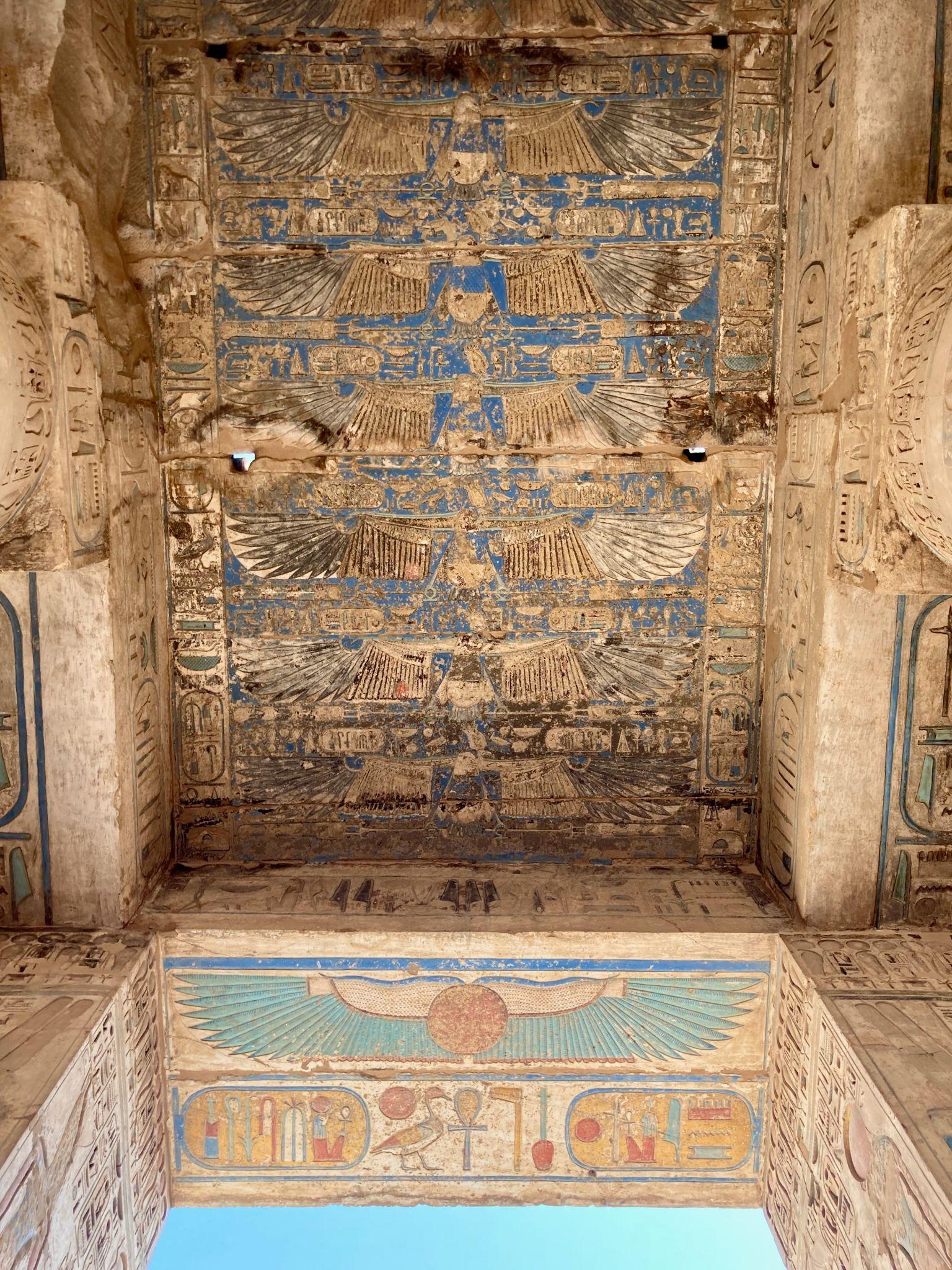
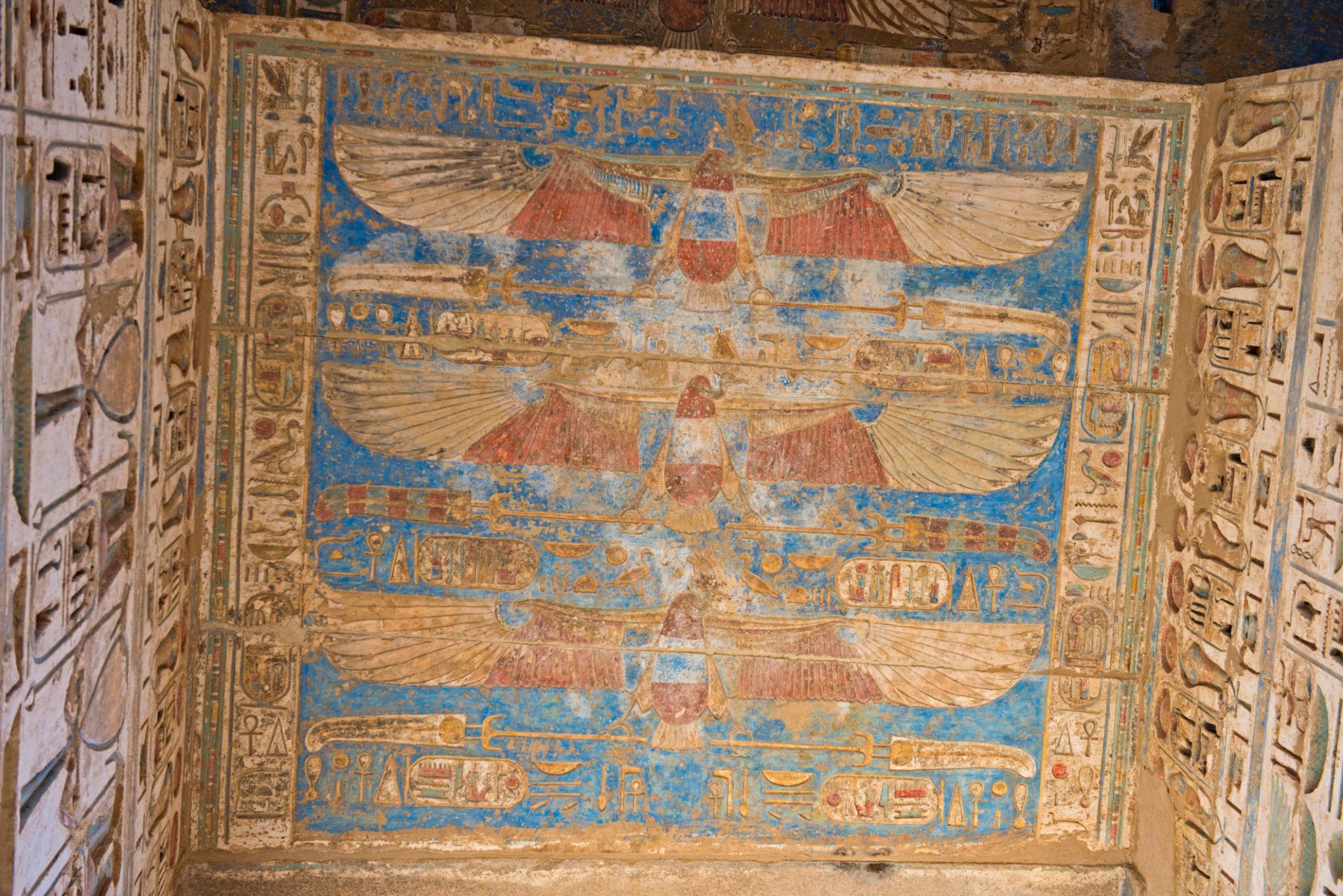
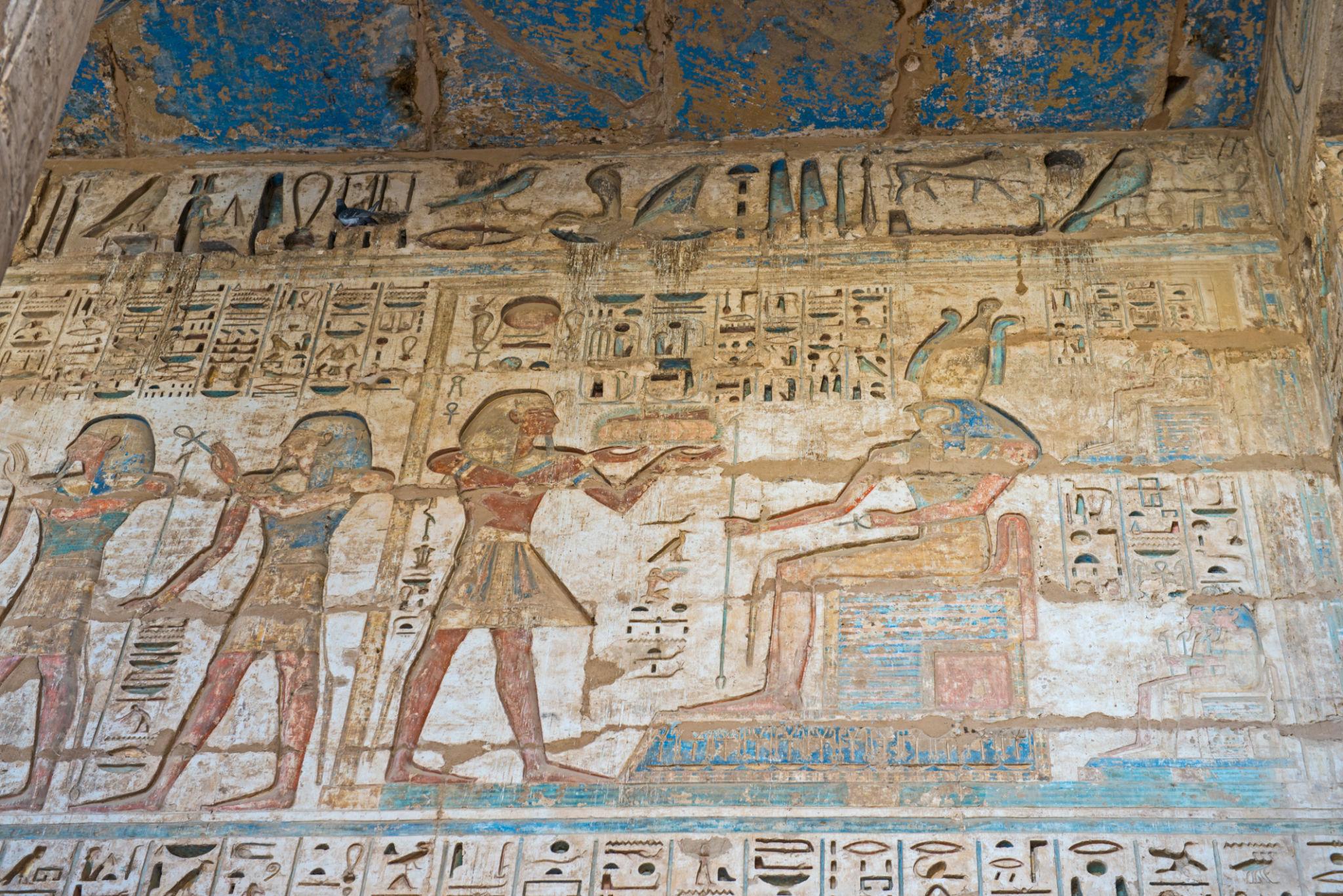
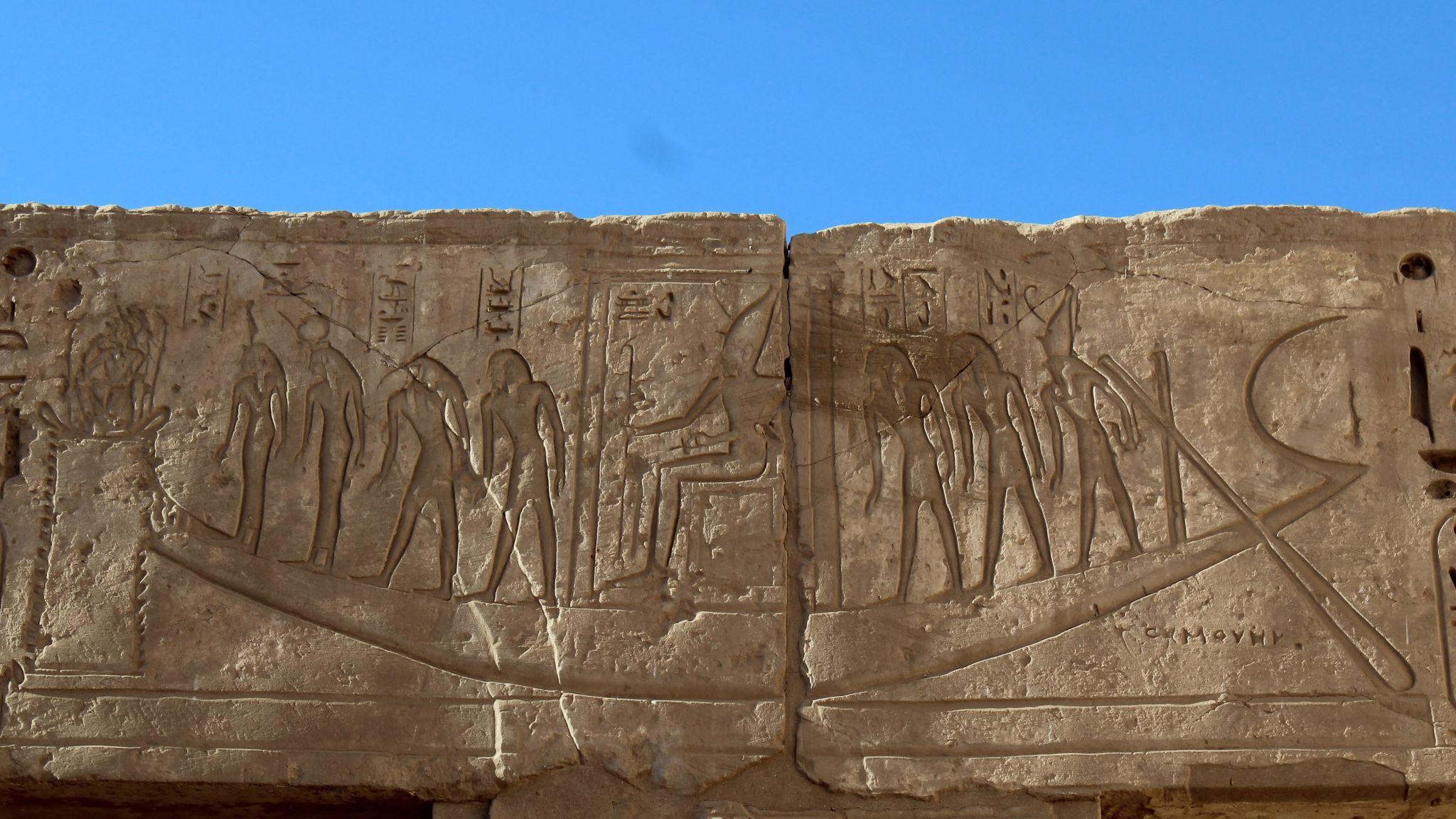
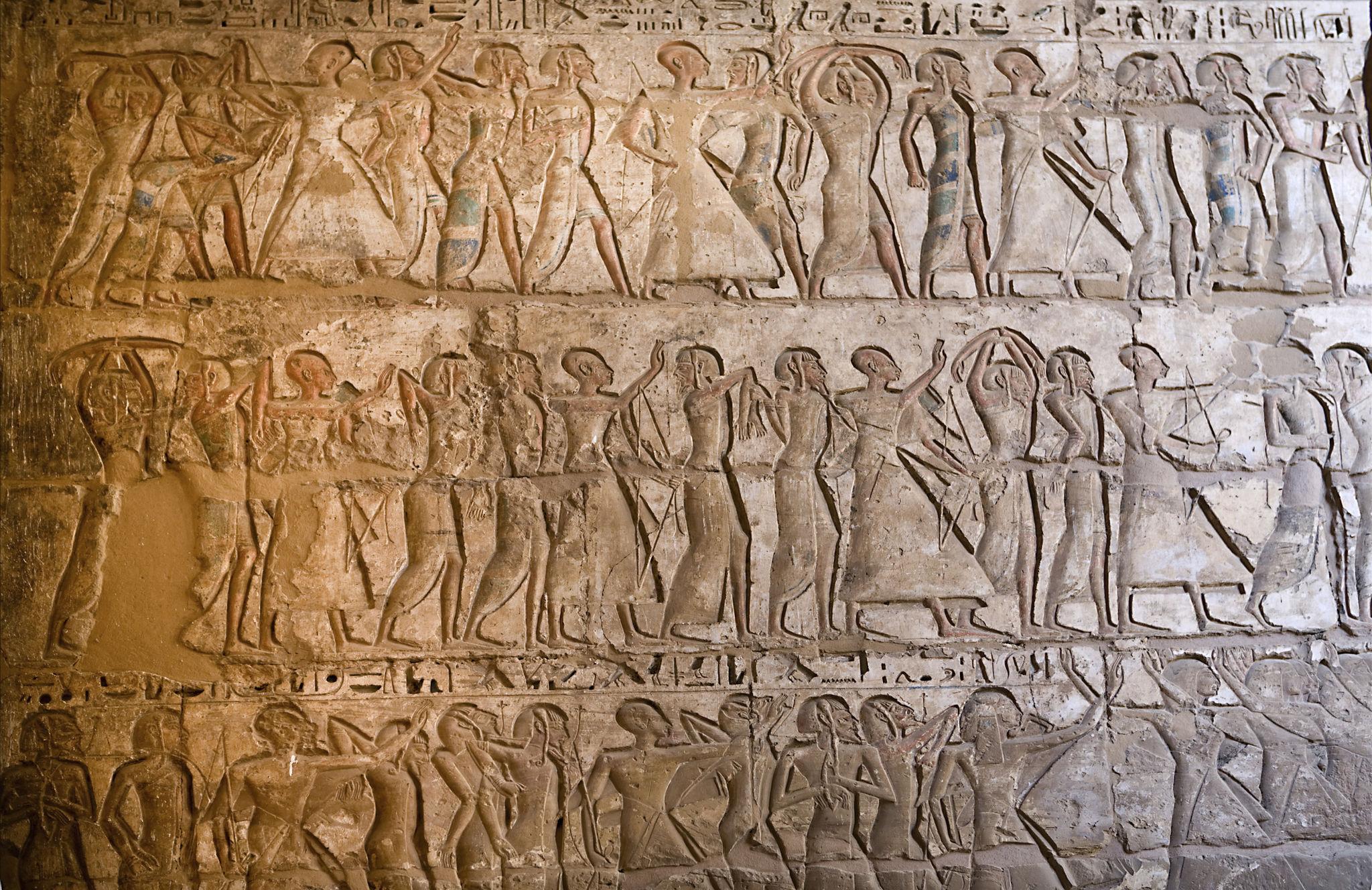
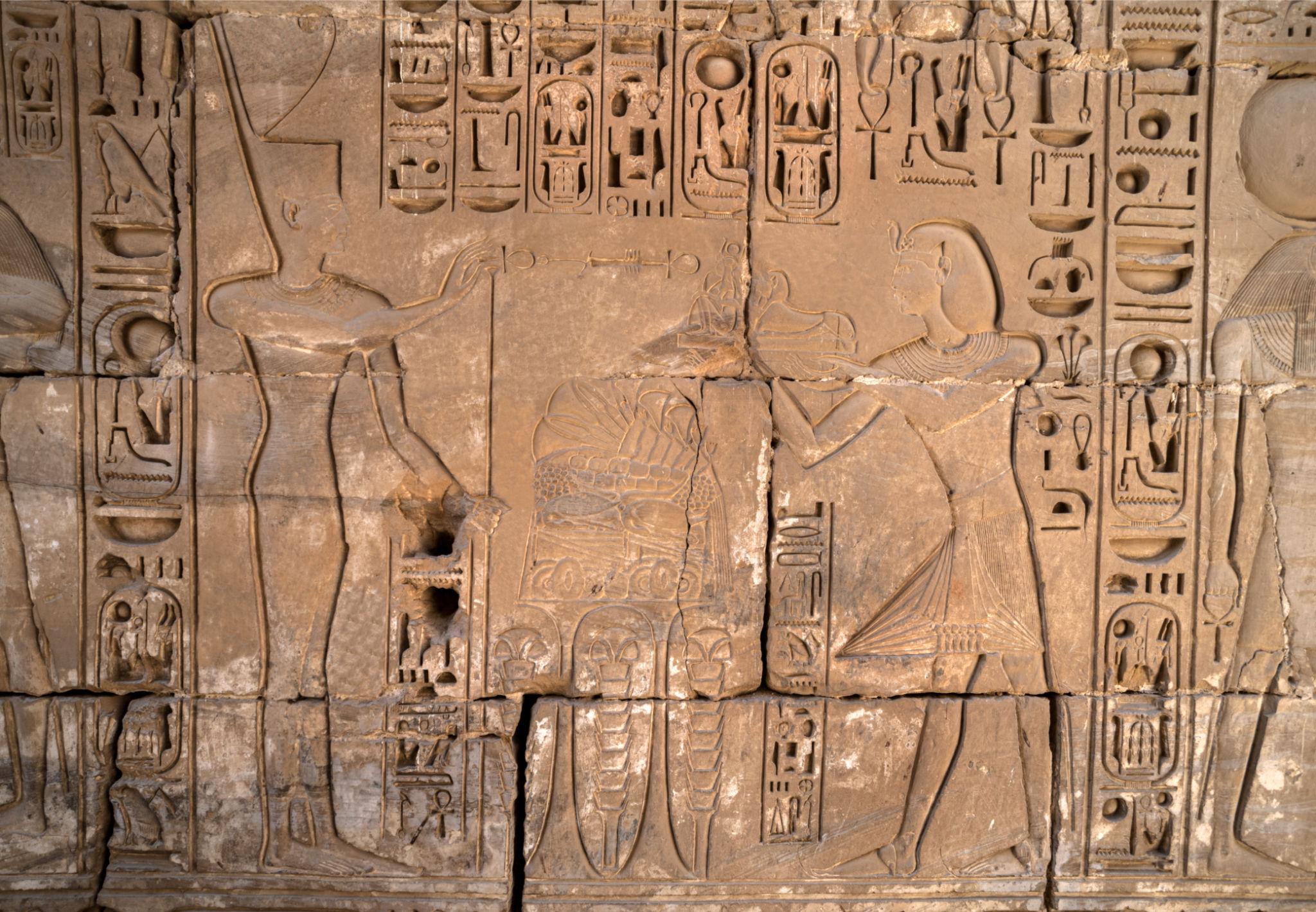
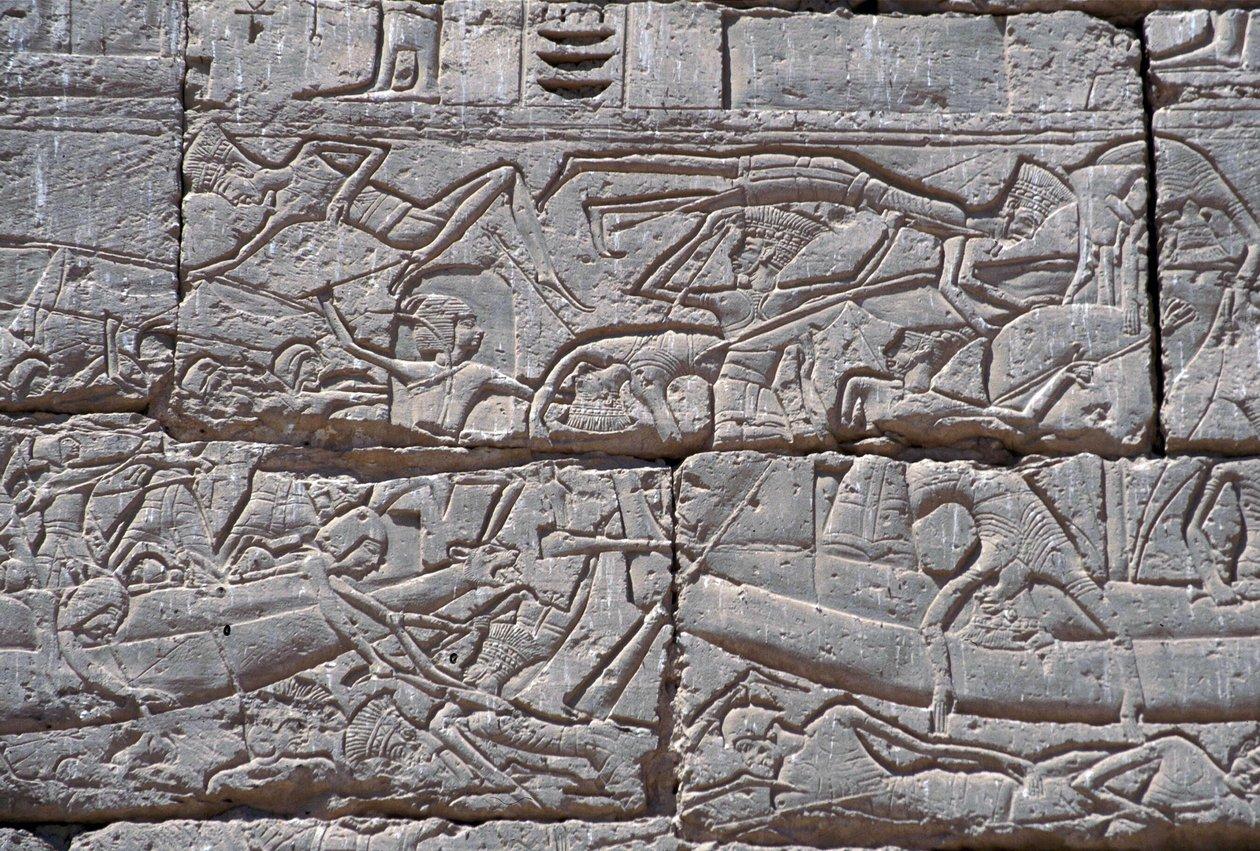
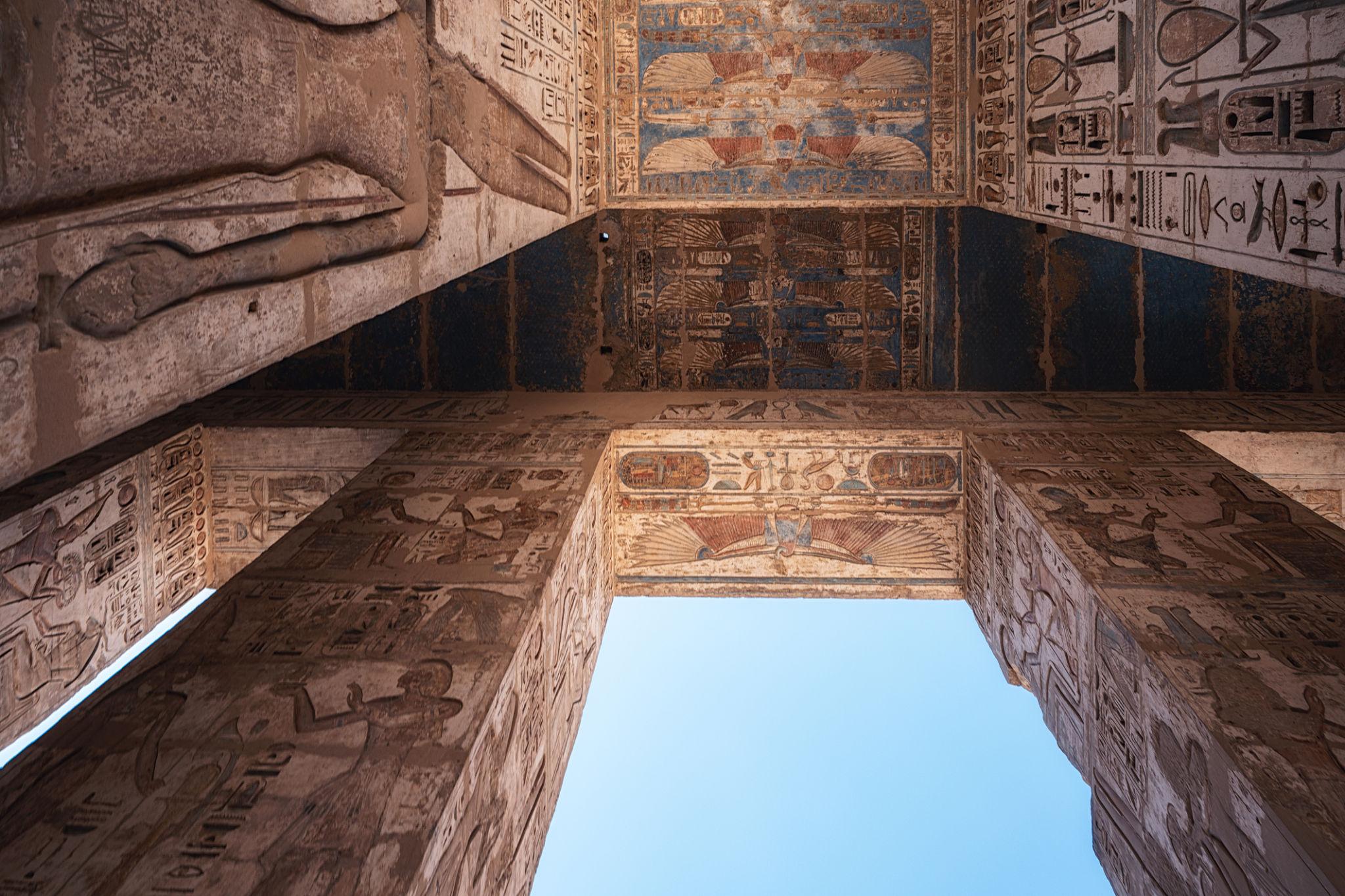
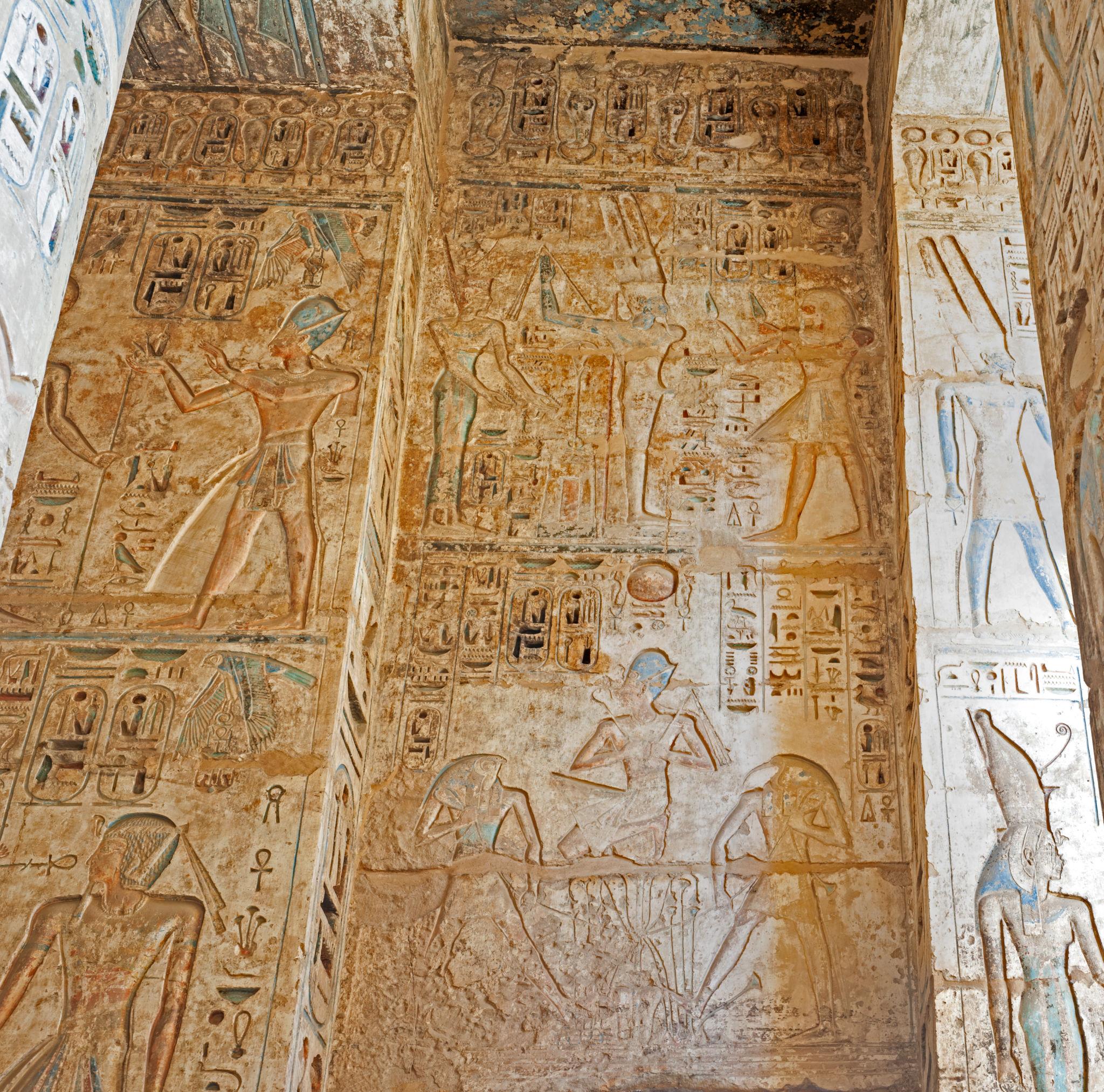
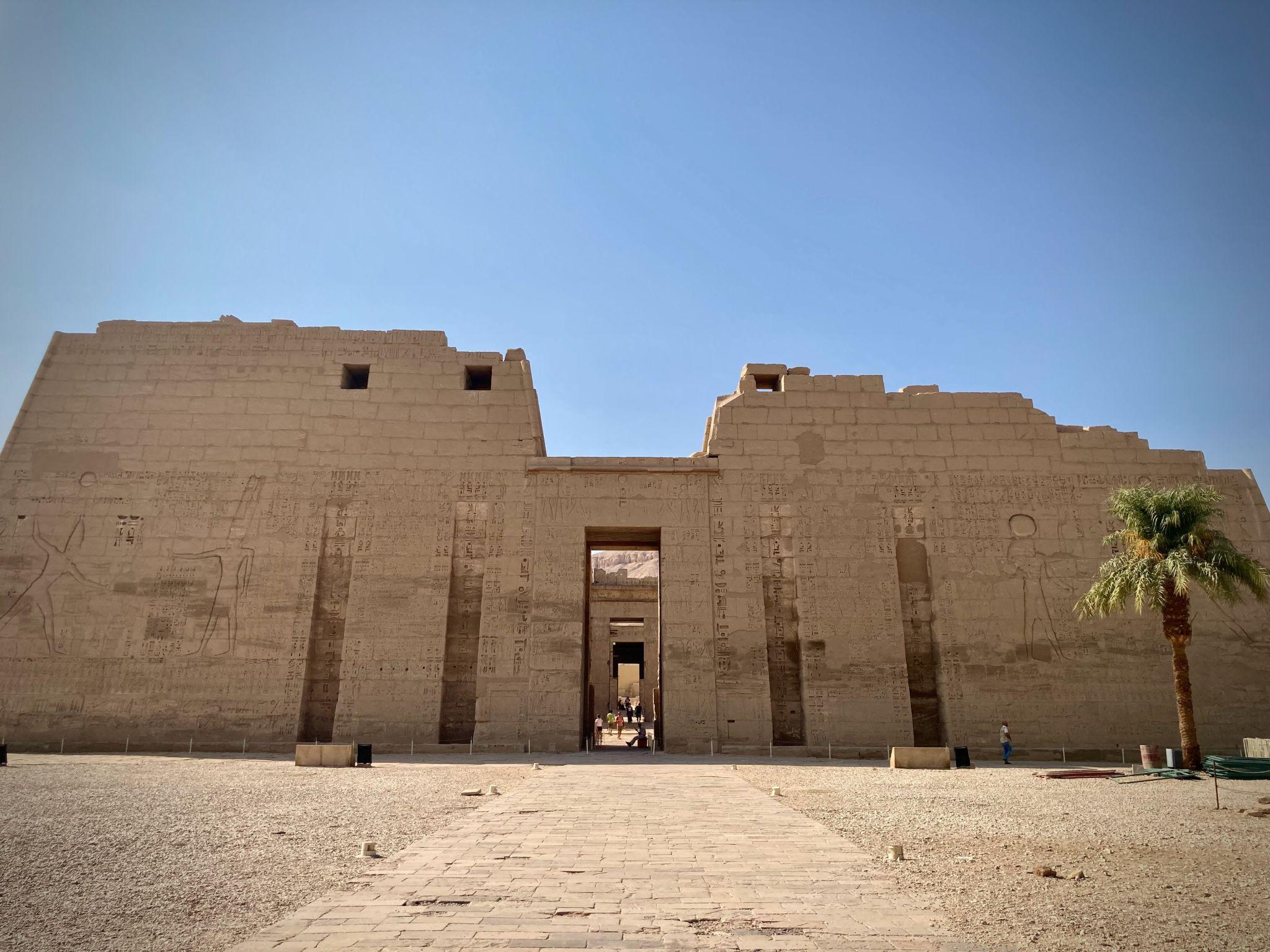
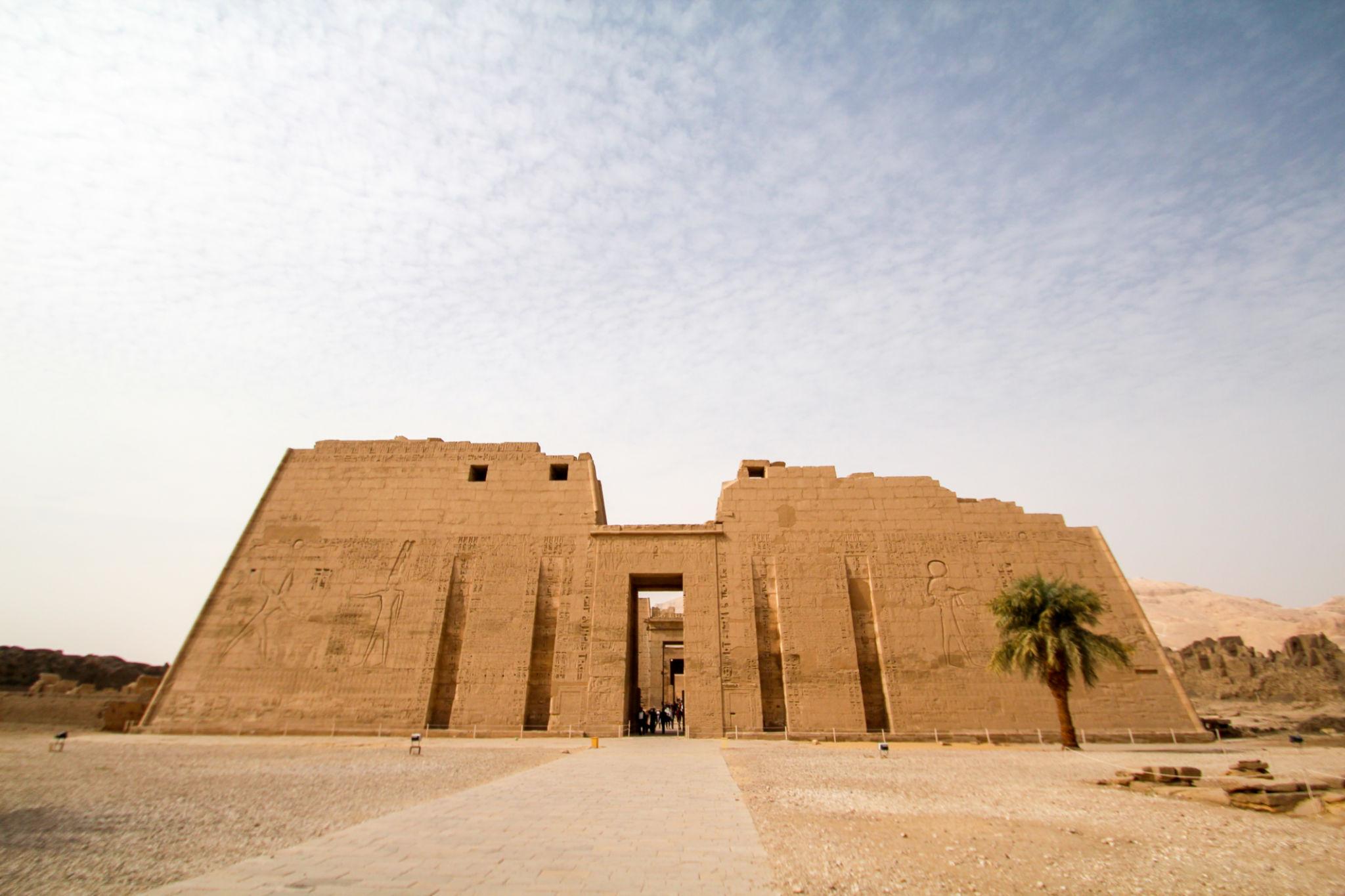
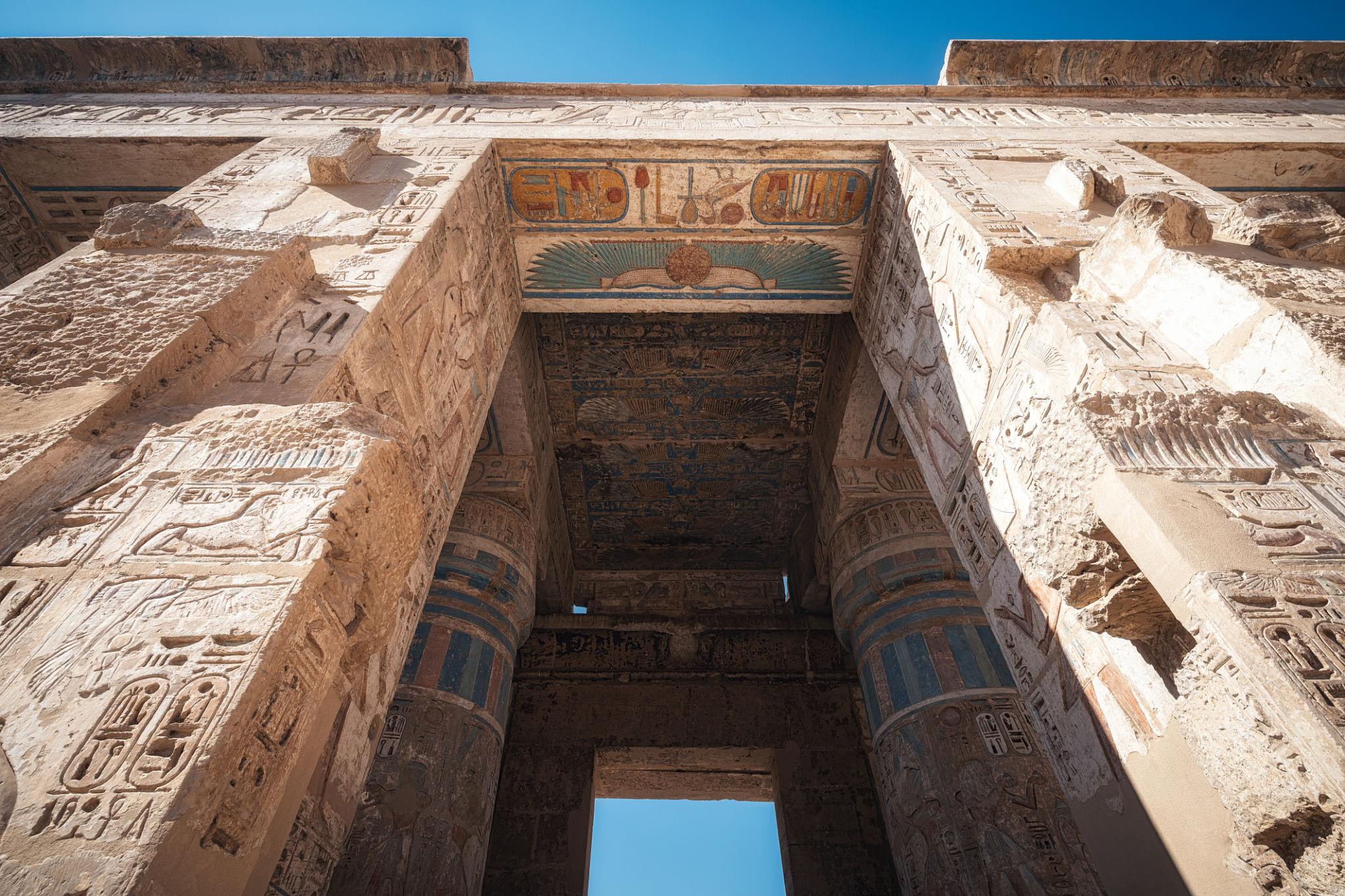
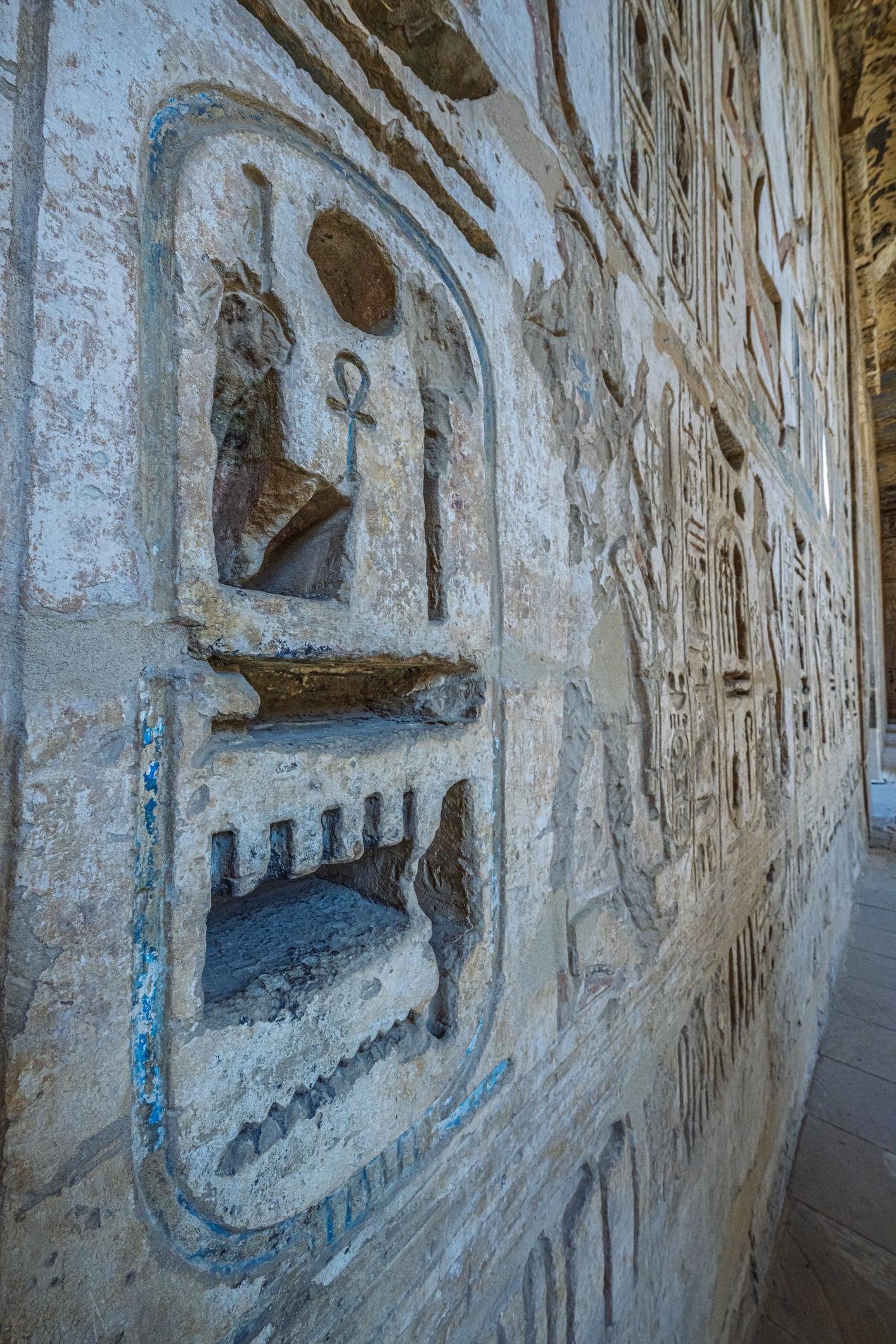
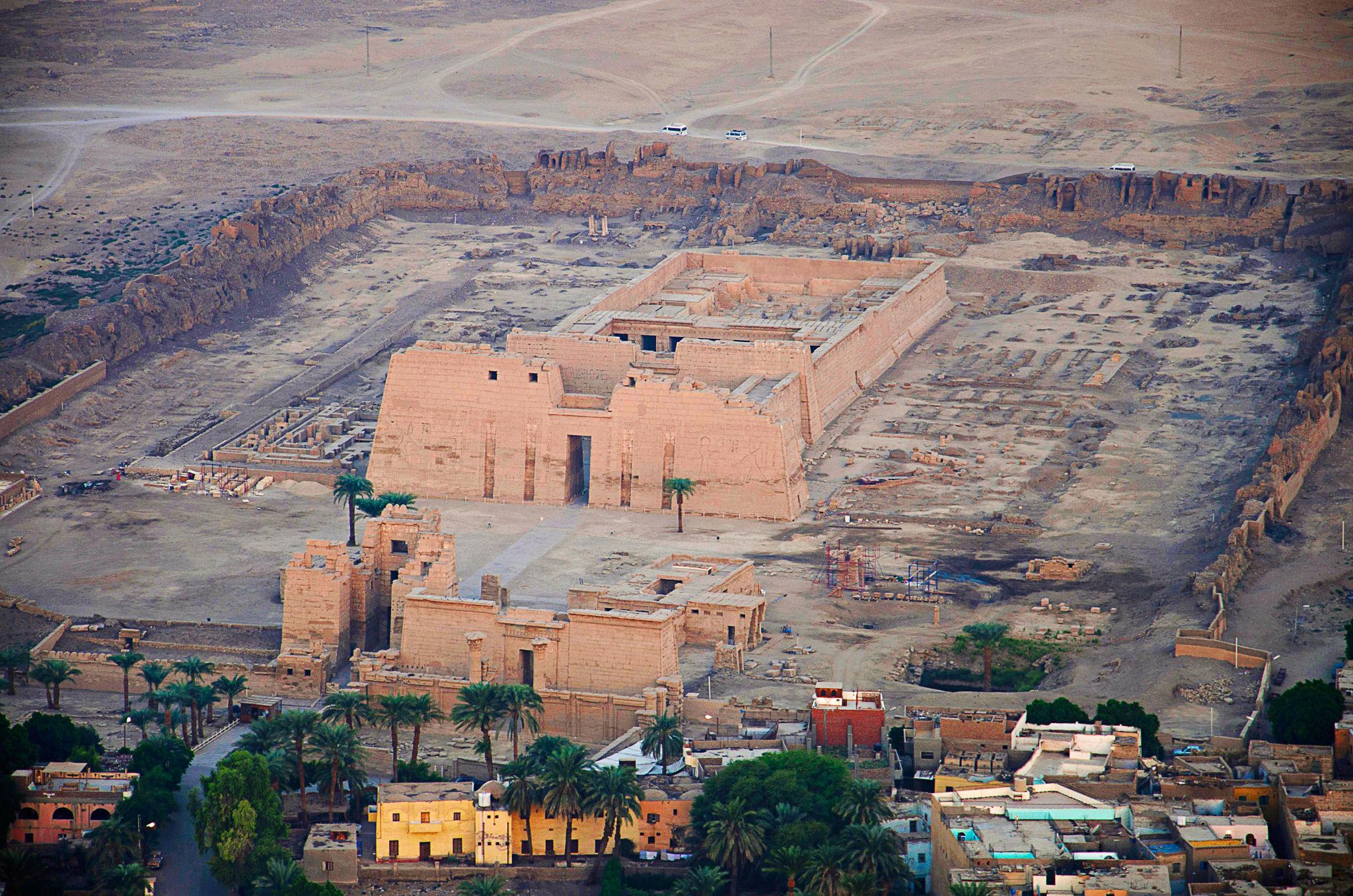
Medinet Habu is the mortuary temple of Ramesses III on Luxor's West Bank, and it is one of the largest and best-preserved temples in Egypt. Built around 1150 BC, its towering walls are covered in dramatic reliefs depicting Ramesses III's military victories, including the famous battle against the Sea Peoples. The temple retains more of its original painted color than almost any other temple in Egypt, and its massive fortified gateway — unique in Egyptian architecture — gives it the feel of a medieval fortress.
Gallery
Why Visit
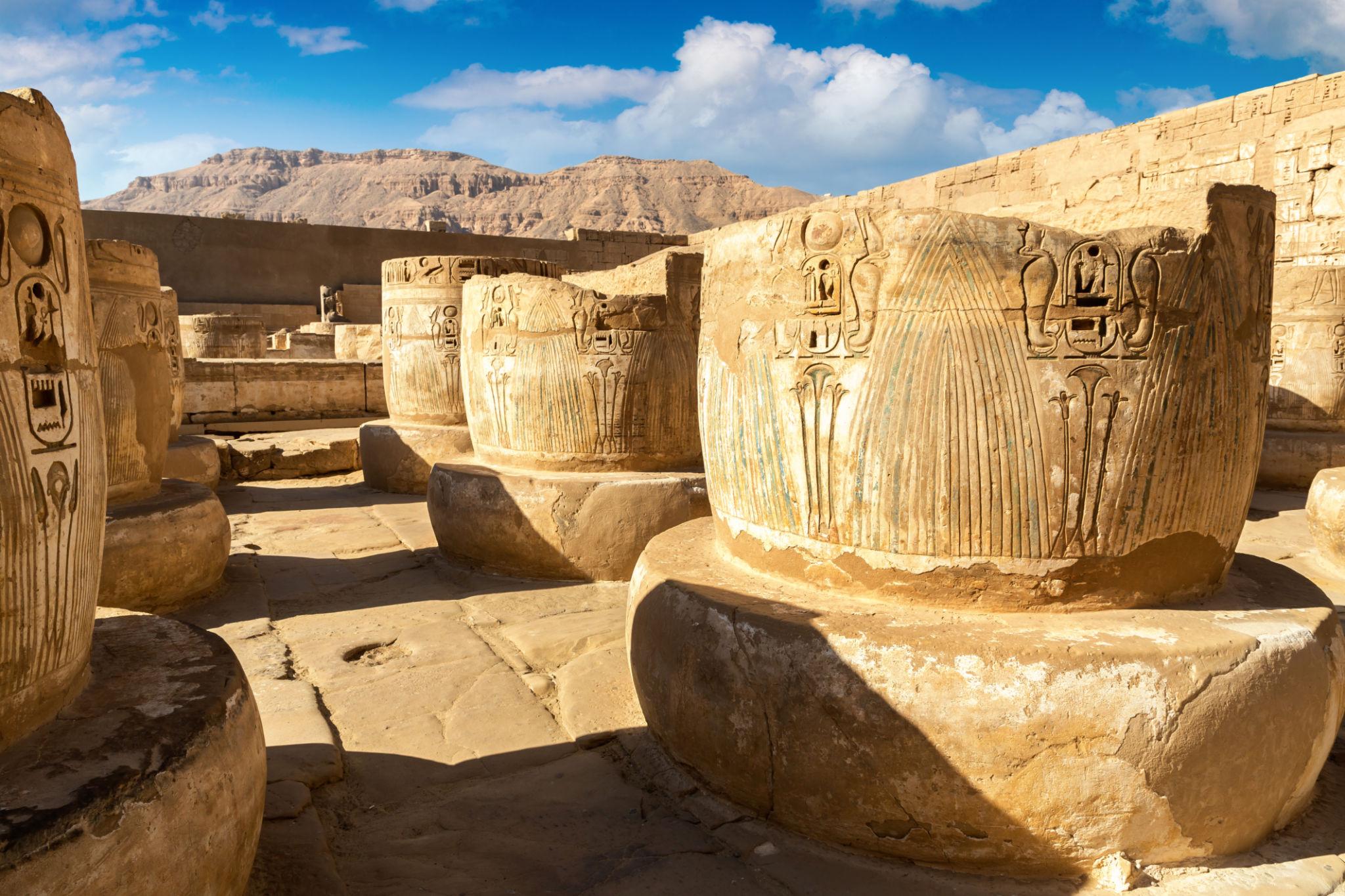
Some of the most vivid original paint surviving on any Egyptian temple
Dramatic battle reliefs including the famous Sea Peoples campaign
One of the largest temples in Egypt, yet blissfully uncrowded
What to See
Migdol Gateway
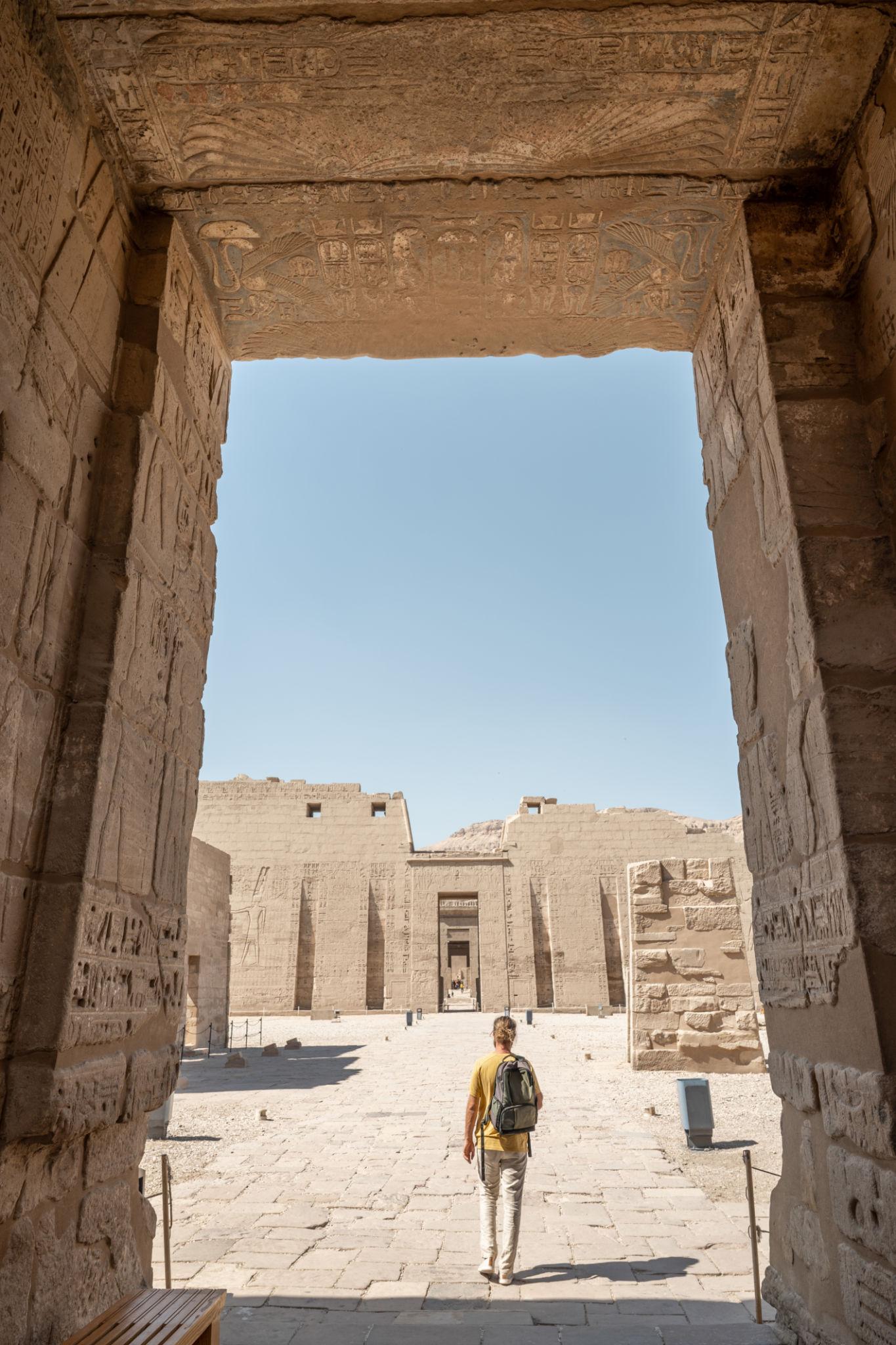
A unique fortified gateway inspired by the migdol fortresses Ramesses III encountered during his campaigns in Syria-Palestine, its high walls and crenellated towers giving the temple entrance a distinctly military character found nowhere else in Egyptian temple architecture. The upper rooms served as Ramesses III's private retreat, decorated with remarkably intimate scenes of the pharaoh relaxing with royal women — playing board games, receiving flowers, and being attended in domestic settings quite unlike the heroic battle scenes on the exterior walls. These private chambers provide one of the rarest glimpses into the personal life of a pharaoh that survives anywhere in Egypt, showing the human being behind the divine facade. The gateway's defensive design also proved practical — it served as a refuge during times of unrest, and the Coptic town that later occupied the temple used it as a fortified entrance for centuries.
Battle Reliefs
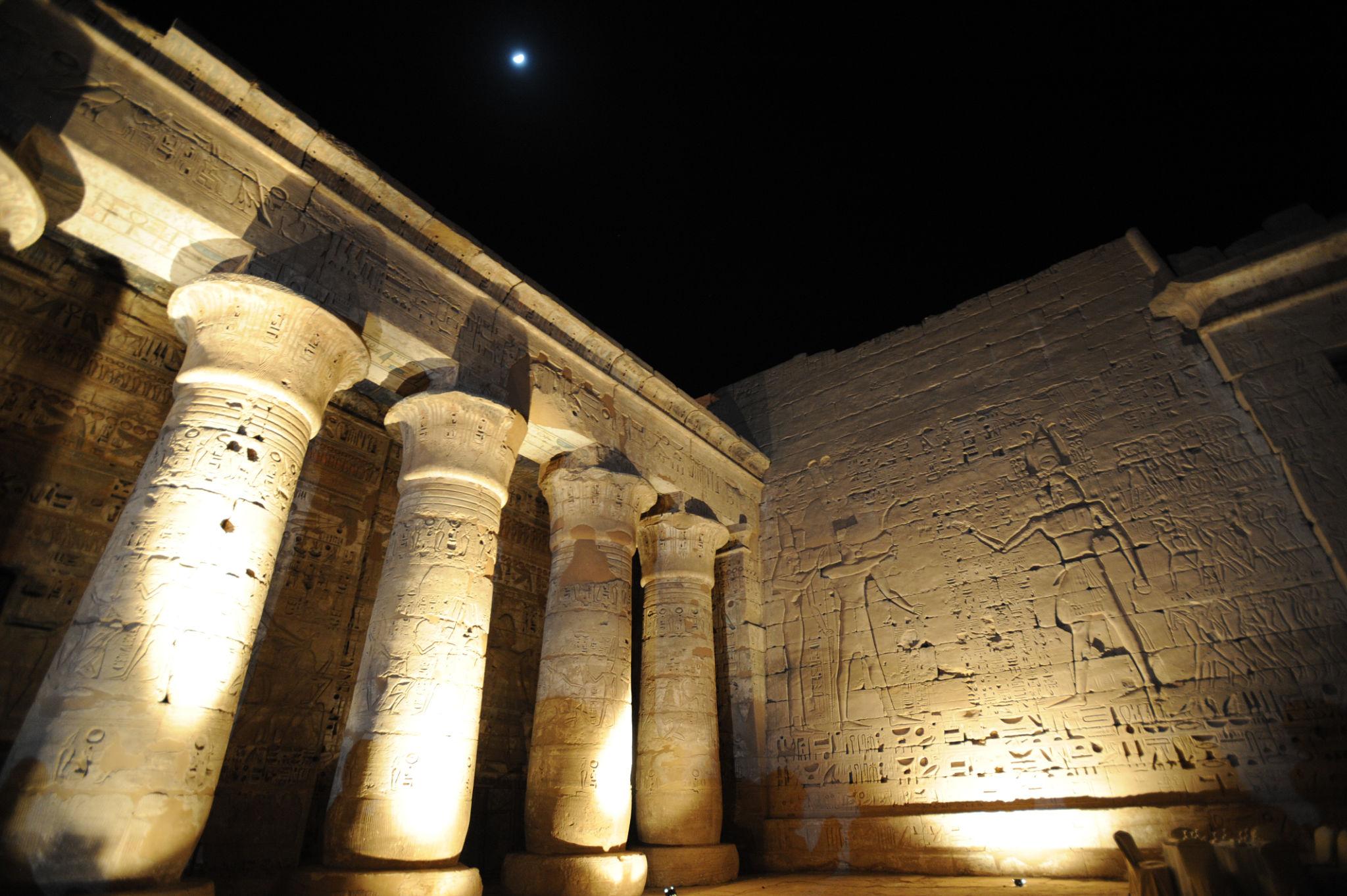
The outer walls are covered in enormous, cinematically composed reliefs showing Ramesses III's military campaigns in extraordinary detail — including the decisive naval and land battles against the Sea Peoples (c. 1178 BC), a mysterious coalition of seaborne invaders who had already toppled the Hittite Empire and devastated the eastern Mediterranean. The naval battle scene is one of the most dynamic compositions in all of Egyptian art, showing Egyptian and enemy ships locked in combat, warriors falling into the Nile, and bound captives being hauled aboard — it is the earliest detailed depiction of a naval engagement in human history. The land battle reliefs are equally vivid, with Egyptian chariots crashing into enemy lines, piles of severed hands being counted for bounty, and captured prisoners paraded before the pharaoh. These scenes document one of the most consequential military engagements in ancient history — a battle that may have saved Egyptian civilization from the collapse that engulfed the rest of the Bronze Age world.
First & Second Courts
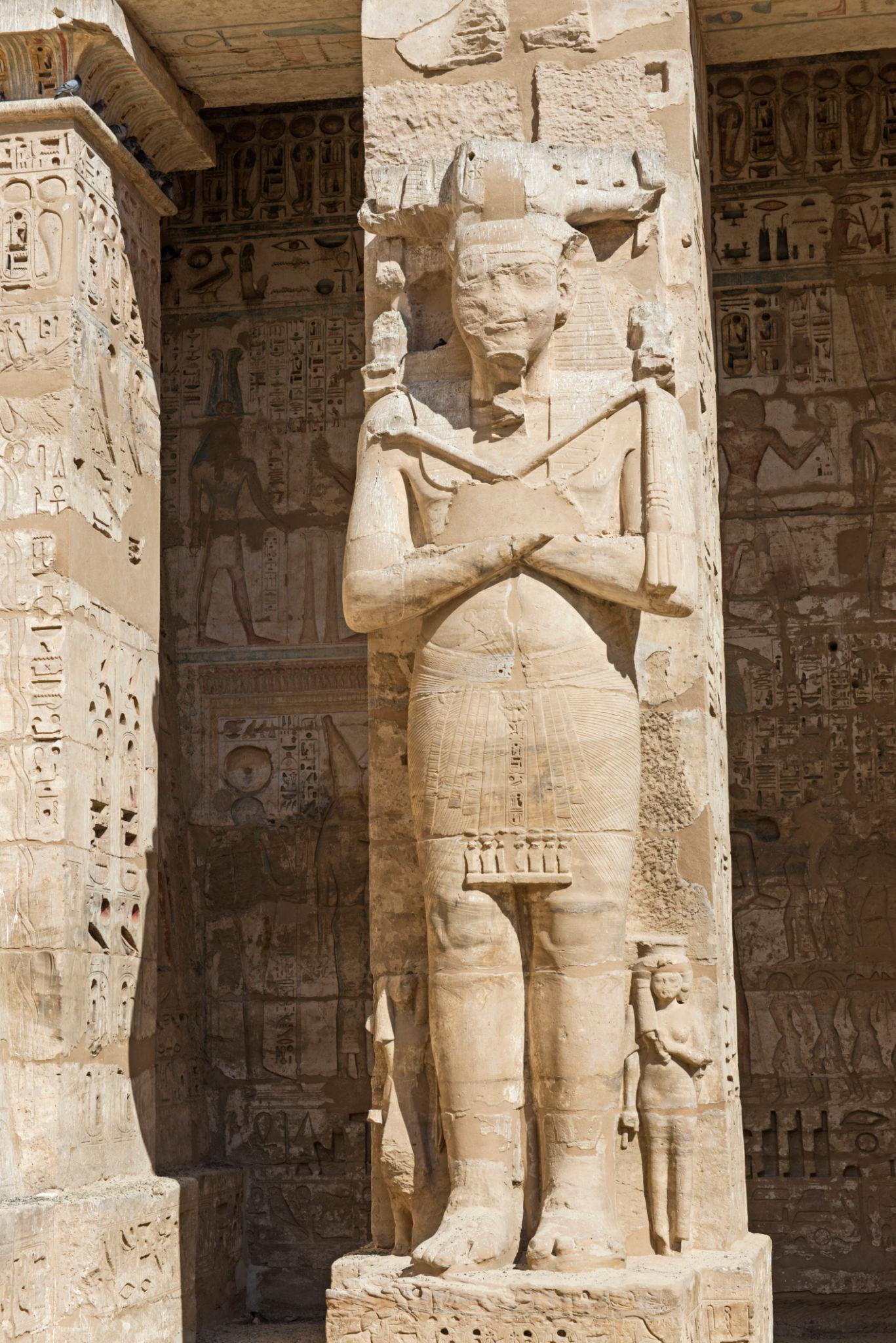
Two grand colonnaded courtyards featuring massive Osirid pillars — colossal figures of Ramesses III in the mummiform pose of Osiris, arms crossed with crook and flail, gazing down from the columns with serene authority. The ceilings of the covered sections between the courts preserve some of the most remarkable patches of original painted decoration in any Egyptian temple — vivid blues representing the sky, bright reds and golds on the divine figures, and intricate geometric patterns that demonstrate the dazzling polychrome appearance these structures had when new. Most visitors to Egypt never see original temple paint this vivid, making Medinet Habu's colors an unexpected revelation that transforms one's understanding of how these monuments originally looked. The first court also contains the remains of a 'Window of Appearances' where the pharaoh appeared before his subjects — a feature borrowed from palace architecture.
Palace Ruins
Attached to the south side of the first court are the remains of a small royal palace — one of the very few pharaonic palace structures to survive anywhere in Egypt, since palaces were built of mud brick while temples used stone. The palace included a throne room, private chambers, a bathroom with a stone drainage system, and a window connecting to the temple's first court through which the pharaoh could appear during ceremonies. The floor plan reveals a building that was functional rather than vast — a working residence for the king during visits to the temple complex rather than the grand palatial complex one might expect. The palace's survival, though fragmentary, provides invaluable archaeological evidence about royal domestic architecture that is almost entirely lost elsewhere in Egypt.
Historical Details
Ramesses III
Often called the last great pharaoh of Egypt, Ramesses III (ruled c. 1186–1155 BC) defended his kingdom against three major invasion attempts during a period when the entire Bronze Age Mediterranean world was collapsing around him. His defeat of the Sea Peoples around 1178 BC — recorded in extraordinary detail on these temple walls — is considered one of the most significant military engagements in ancient history and one of the earliest recorded naval battles. The Sea Peoples had already destroyed the Hittite Empire, devastated Cyprus and the Levantine city-states, and threatened to overwhelm Egypt itself before Ramesses stopped them at the borders. Despite his military triumphs, Ramesses III was eventually assassinated in a harem conspiracy led by a minor wife seeking to place her son on the throne — the plot, its trial, and the execution of the conspirators are documented in the remarkable Judicial Papyrus of Turin and the 'Screaming Mummy' found among the royal mummies.
Later Use
After the fall of the New Kingdom and the decline of pharaonic power, Medinet Habu's massive enclosure walls — up to 18 meters high and 10 meters thick — made it an ideal refuge, and a thriving Coptic Christian town called Djeme grew up inside the temple complex between the 1st and 9th centuries AD. The town used the temple's halls as houses and workshops, built churches within the courtyards, and relied on the ancient walls for defense against raids. Traces of Coptic-era construction — plastered walls, blocked doorways, and domestic alterations — can still be seen throughout the complex, creating a fascinating palimpsest of pharaonic and early Christian occupation. The town was eventually abandoned in the 9th century when the local bishop moved to Luxor, leaving the temple to the desert sand that preserved it until European explorers rediscovered it in the 18th century.
Visitor Tips
- Visit early morning or late afternoon — the low sun makes the reliefs come alive
- Medinet Habu sees far fewer visitors than Valley of the Kings or Hatshepsut Temple — enjoy the space
- Look up at the ceilings in covered areas for spectacular original painted decoration
- Can be combined with Valley of the Kings and Hatshepsut Temple in a full West Bank morning
Opening Hours
6 AM – 5 PM
Entry Fee
220 EGP (foreign visitor)
Period
New Kingdom, c. 1150 BC (20th Dynasty)
Built By
Pharaoh Ramesses III