A week is the most common length for a first Egypt trip, and it is enough to cover the essentials without feeling rushed: the pyramids of Cairo, the temples and tombs of Luxor, and a short Nile cruise down to Aswan. This itinerary skips the Red Sea and lesser detours to keep the focus on the ancient highlights, using a domestic flight and a cruise to move efficiently between them.
How to Use This Itinerary
The plan covers two days in Cairo, a flight to Luxor, a three-night Nile cruise to Aswan, and a final travel day home. It is deliberately tight; seven days does not allow for both a beach extension and the full classic route, so this version prioritizes monuments. If you have more time, our separate ten-day plan adds Abu Simbel and the Red Sea.
Budget roughly. A mid-range version, as of 2026, costs around 950 to 1,600 USD per person excluding international flights, covering three- and four-star hotels, a standard cruise cabin, the Cairo-to-Luxor flight, guiding at the major sites, and most transfers. The biggest single variable is the cruise category.
### Best time to go
October to April is the comfortable window, with peak crowds and prices over Christmas and New Year. Summer (May to September) is hot, often above 40 C in Luxor and Aswan, but cheaper and quieter if you sightsee at dawn and rest at midday.
Day 1: Arrive in Cairo
Fly into Cairo International Airport and take a pre-booked private transfer (roughly 15 to 25 USD) rather than negotiating with taxi touts. Sort your visa in advance with the Egypt e-visa (about 25 USD) or buy the visa-on-arrival sticker at the bank kiosk before immigration, also around 25 USD in cash.
Check into your hotel in Cairo. For a one-week trip, staying in Giza near the pyramids saves morning travel time, though Zamalek and Downtown have more restaurants and atmosphere. Rest; tomorrow starts early.
Day 2: Pyramids, Sphinx, and the Grand Egyptian Museum
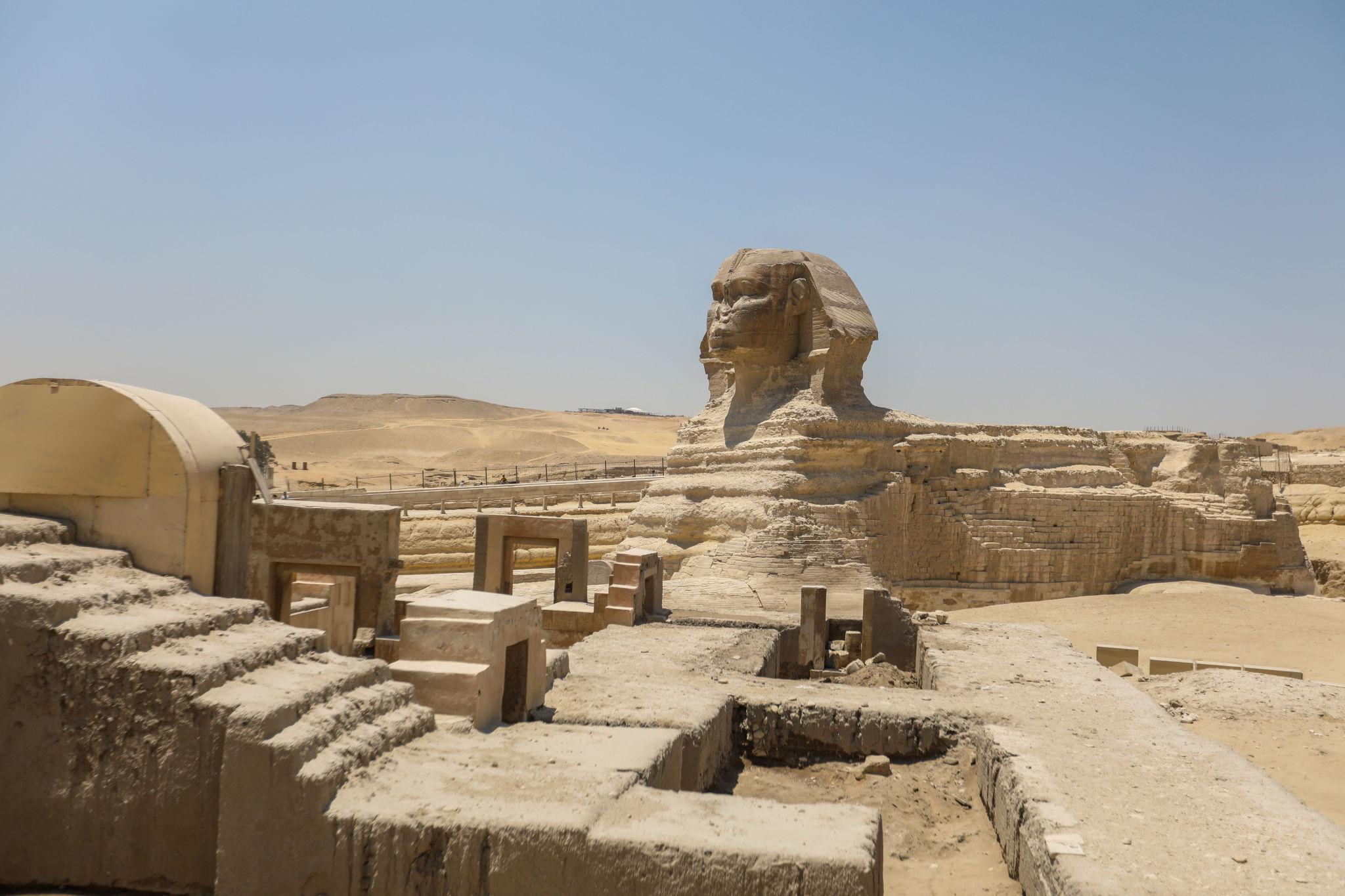
Be at the Giza plateau for the 8 a.m. opening to beat both heat and tour buses. The general ticket is around 700 EGP (roughly 14 USD as of 2026, subject to revision). Entering the Great Pyramid of Khufu is a separate ticket of about 900 EGP and a hot, cramped climb to a bare chamber, so it is optional. Walk to the panorama point for the three-pyramids shot, then see the Sphinx and the Valley Temple.
### The Grand Egyptian Museum
In the afternoon, visit the Grand Egyptian Museum beside the plateau, now home to the complete Tutankhamun collection. Allow three hours minimum; foreign adult tickets run around 1,200 EGP. With limited time, the GEM is the single most worthwhile indoor stop in Cairo.
### Optional add-on
If you are an early riser and want more, Saqqara and the Step Pyramid of Djoser (the world's oldest stone pyramid, built around 2670 BC by the architect Imhotep) are a 40-minute drive south and can be combined with Giza on a long day, though it makes for a tiring start. Nearby Memphis, the ancient capital, has a reclining colossus of Ramesses II and an open-air museum, and the entry there is modest, around 200 EGP. Most travelers on a tight week skip Saqqara and save it for a return trip, but if pyramids are your single biggest draw it is the one add-on worth the early alarm.
### Avoiding the worst crowds and scams
Giza is the most aggressively touristed site in Egypt, and a few habits save real money and hassle. Buy tickets only at the official booths, never from anyone who approaches you. Decline unsolicited "guides" who attach themselves at the gate; a polite but firm no works. If you want a camel photo, the going rate is a few hundred Egyptian pounds for a short ride, not the inflated figure first quoted, and the most common trick is a low price to get on and a high price to get off. A reputable operator with a licensed Egyptologist guide removes nearly all of this friction and adds the context that turns a pile of stone into a story.
Day 3: Fly to Luxor and the East Bank
Take a morning domestic flight to Luxor (about 75 minutes; one-way fares typically 60 to 130 USD, so book early). The overland alternative is a long overnight train or a 9- to 10-hour drive, which eats a full day each way and is rarely worth it on a one-week trip. Drop your bags and head straight to Luxor's east bank, the side of the river the ancient Egyptians associated with the living and the rising sun.
### Karnak and Luxor Temple
Visit Karnak Temple, the largest religious complex ever built, where the Great Hypostyle Hall's 134 columns dwarf every visitor; entry is around 600 EGP. In the late afternoon and evening, the elegant Luxor Temple is floodlit and atmospheric, with its avenue of sphinxes recently re-excavated. Overnight in Luxor.
Day 4: Luxor's West Bank and Board the Cruise
Start at dawn on the west bank, the city of the dead. The Valley of the Kings standard ticket (around 750 EGP) covers three tombs; the tombs of Tutankhamun (KV62), Seti I, and Nefertari each require pricier separate tickets but are the best-preserved. Photography inside usually needs a paid permit.
Add the Temple of Hatshepsut, rising in three colonnaded terraces against the sheer Theban cliffs and dedicated to Egypt's most powerful female pharaoh, and the Colossi of Memnon, the two 18-meter quartzite statues that once guarded a now-vanished mortuary temple. In the afternoon, board your Nile cruise ship; most three-night sailings to Aswan depart Luxor on this schedule. Settle in and enjoy the sundeck as the boat casts off.
### Choosing a cruise
Nile cruise quality varies enormously, and it is the part of this trip where paying a little more changes the experience most. A standard four- or five-star boat has a pool, a sundeck, and full board, but cabin size, food, and crowding differ sharply between operators. Sailing south (upstream) from Luxor to Aswan, as here, is the more common direction and lines up neatly with the temple stops. Ask whether shore excursions, guiding, and site tickets are included, as some budget fares quietly exclude them and the extras add up.
Day 5: Cruising to Edfu and Kom Ombo
This is the most relaxed day of the week, and many travelers say it is their favorite. The ship sails slowly upstream past farmland, water buffalo, and palm villages largely unchanged for centuries. You will visit the superbly preserved Temple of Horus at Edfu, built over 180 years during the Ptolemaic era and one of the most complete temples in Egypt, its towering pylon and reliefs almost intact (it is often reached by horse-drawn caleche from the dock, so agree the fare first). Toward sunset comes the unusual double Temple of Kom Ombo, perched right on the riverbank and uniquely split down the middle between the crocodile god Sobek and the falcon god Horus, with a small museum of mummified crocodiles beside it. Site entries are usually bundled into the cruise fare, but confirm in advance, and bring small notes for tipping the crew, which is customary at the end of the cruise.
Day 6: Aswan
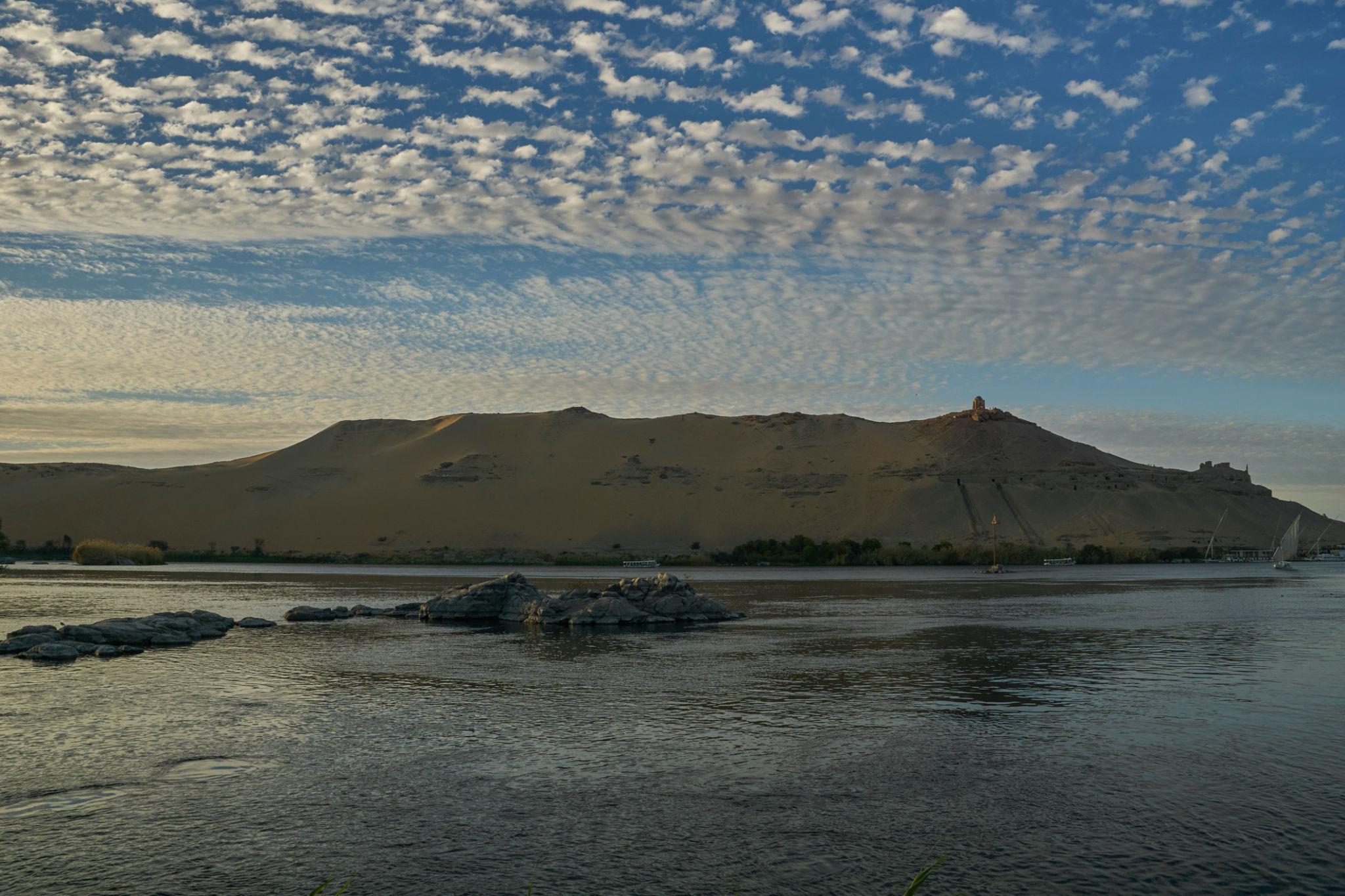
Arrive in Aswan, the most relaxed of Egypt's major cities, where the Nile is at its most scenic. Visit the Philae Temple, beautifully sited on its island and reached by motorboat (ticket plus boat roughly 500 to 700 EGP combined), the towering High Dam, and the giant unfinished obelisk in the ancient granite quarries. End the day with a felucca sail around Elephantine Island at sunset, a quintessential Aswan experience for a few hundred pounds per boat.
### Optional Abu Simbel
If you can spare an extra early start, Abu Simbel is a long but unforgettable day trip from Aswan (about three hours' drive each way, or a 45-minute flight). With only seven days it is a stretch, but many travelers add it by sacrificing the felucca afternoon.
Day 7: Departure
Disembark in Aswan and fly back to Cairo (usually the only routing) to connect with your international flight. Because nearly everything funnels through Cairo, build in a generous connection buffer; domestic delays are not uncommon and Cairo's airport is large and busy. If your international flight is late at night, a day room or a short city tour can fill the gap.
What This Itinerary Skips
Seven days is efficient but it does leave things out. You will not see the Red Sea coral reefs, Alexandria's Greco-Roman sites, the Western Desert oases, or Saqqara unless you squeeze it into Day 2. If any of those are priorities, consider a ten-day plan instead. The trade-off here is depth on the core ancient sites versus breadth across the country.
Practical Tips
- Carry small banknotes for tips (baksheesh), which are expected for drivers, guides, housekeeping, and restroom attendants.
- Dress modestly, especially at mosques and churches; women should carry a scarf.
- Drink only sealed bottled water and start each day before the heat builds.
- Bring cash; smaller sites, feluccas, and tips are cash-only, and rural ATMs are unreliable.
- Book the Cairo-Luxor flight and the cruise early in high season, as both sell out.
Booking This Trip
A week leaves no slack for missed flights or sold-out cruises, so this is a route where a good operator pays for itself in smooth logistics. Our 5 Days Cairo, Luxor and Abu Simbel tour is a ready-made core you can extend, and the Nile Cruise from Luxor to Aswan is the heart of the second half of this itinerary. Before you go, read our guides on the most common Egypt travel mistakes to avoid and on getting around Egypt.