Great Pyramid of Giza
The last remaining Wonder of the Ancient World — built over 4,500 years ago.
8 AM – 5 PM700 EGP (foreign visitor, Giza plateau); Great Pyramid interior +1,500 EGP extra29.9792, 31.1342
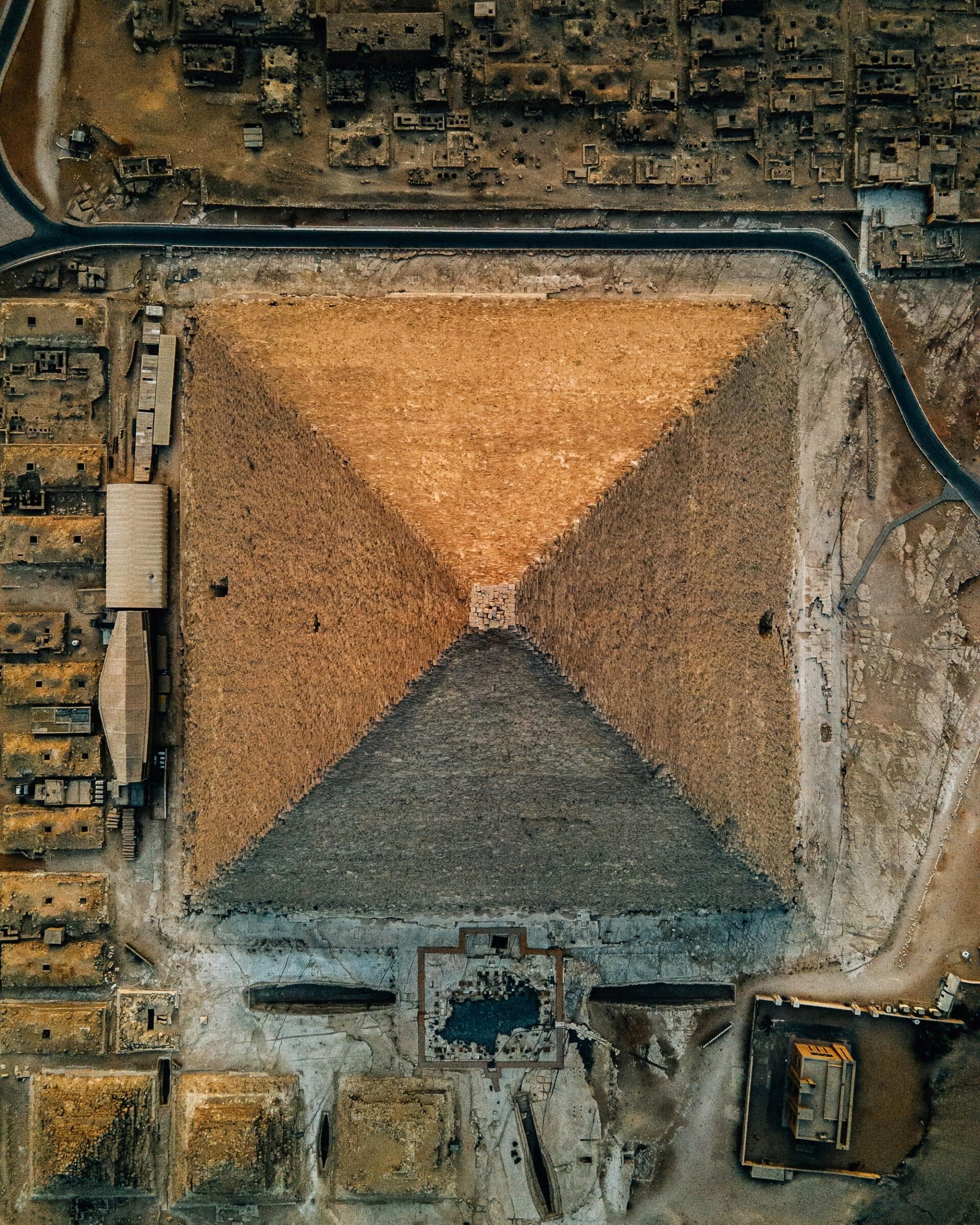
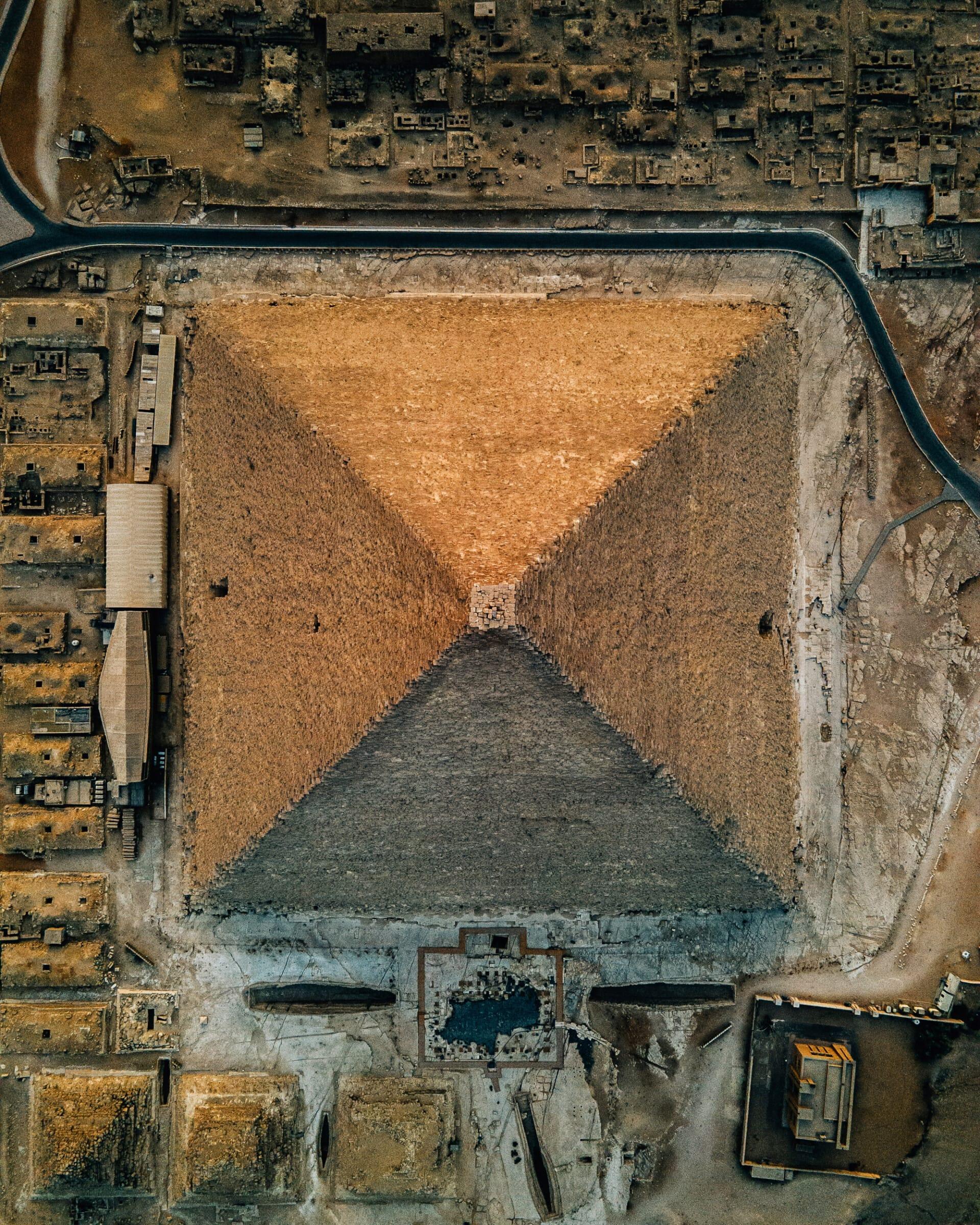
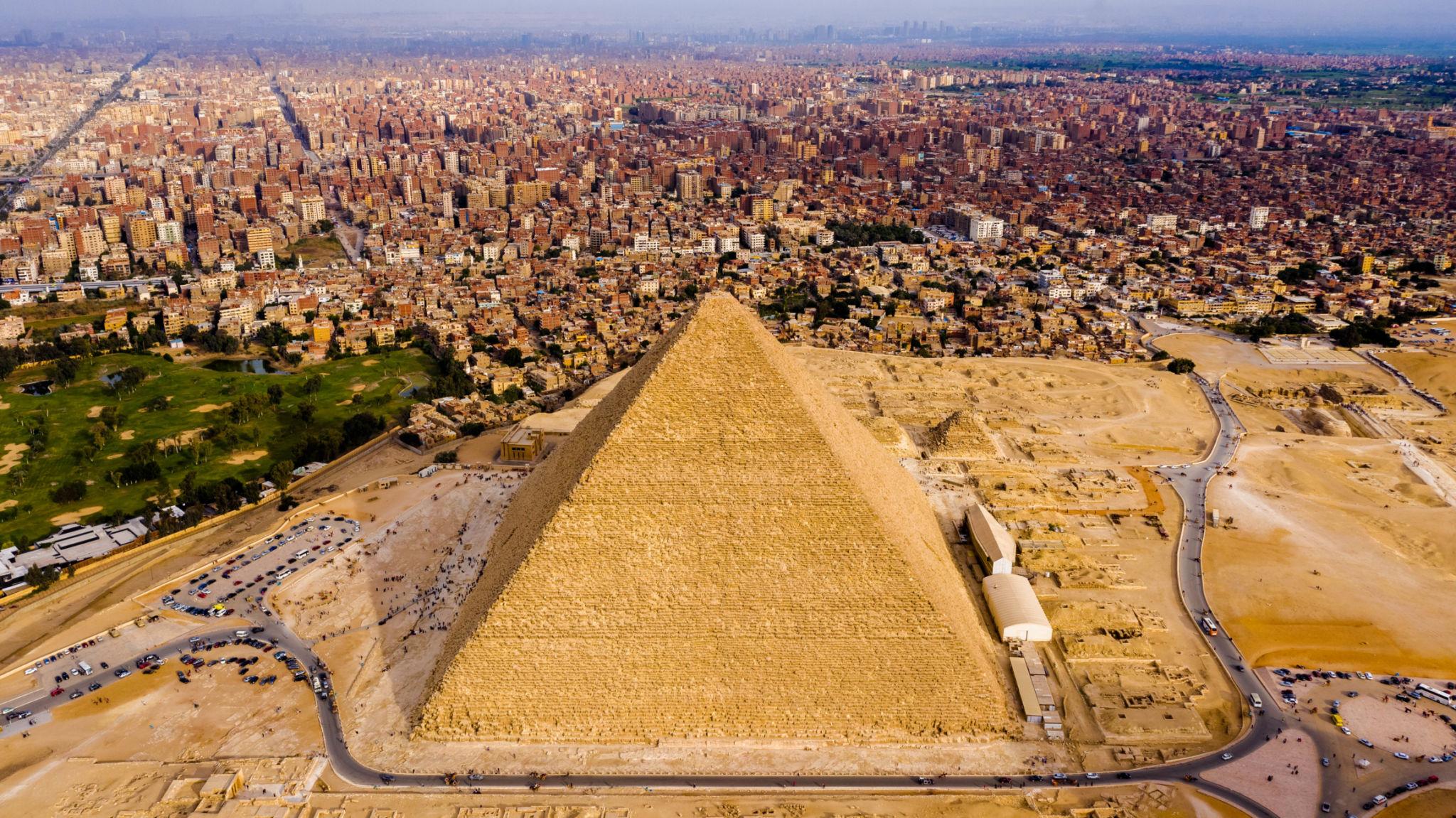
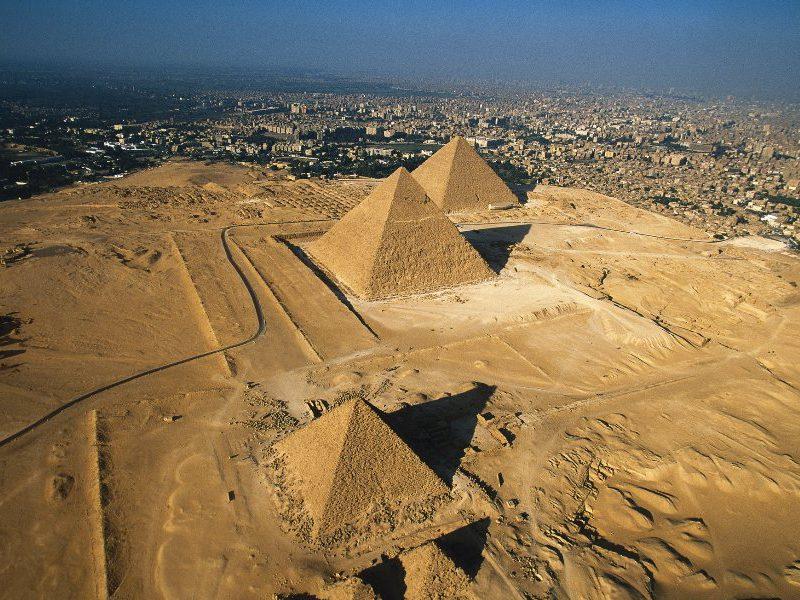
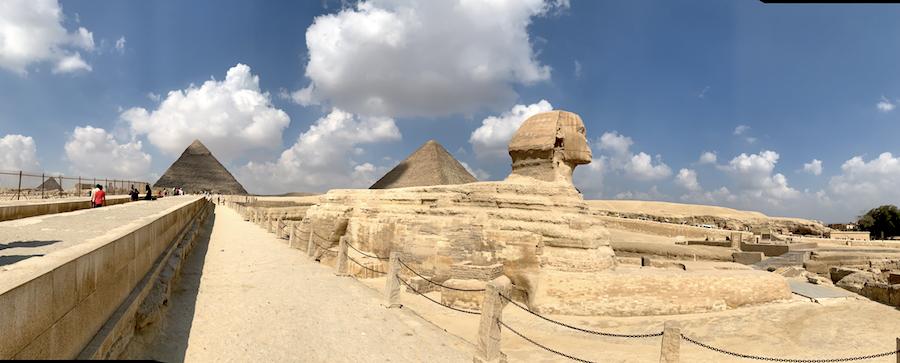
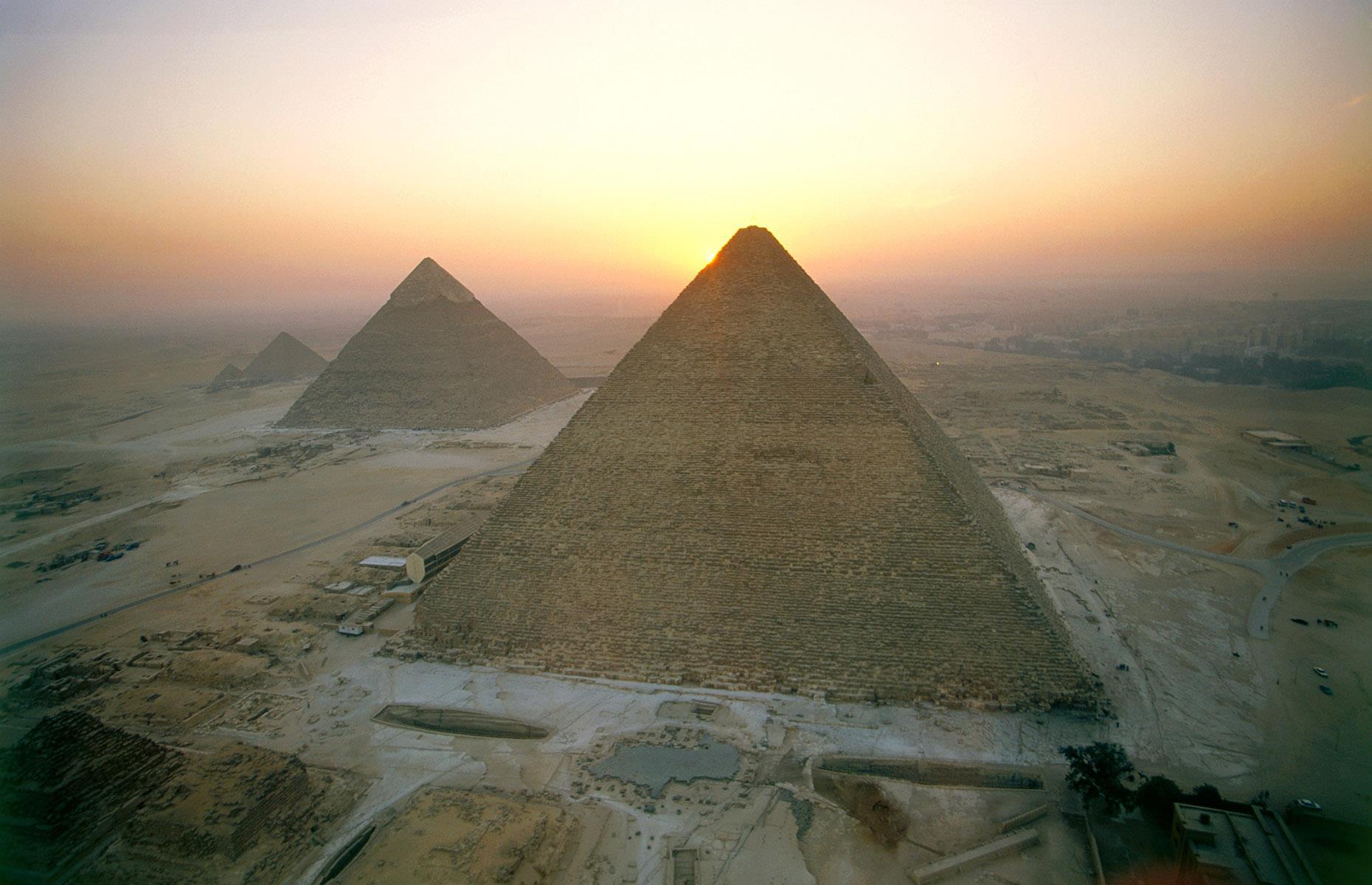
The Great Pyramid of Giza is the oldest and largest of the three pyramids on the Giza plateau. Built around 2560 BC as a tomb for Pharaoh Khufu, it originally stood 146.6 meters tall and was the tallest man-made structure for over 3,800 years. It consists of approximately 2.3 million limestone blocks, each weighing an average of 2.5 tons. Despite millennia of study, the exact construction methods remain one of history's greatest mysteries.
Gallery
Why Visit
It's the last surviving Wonder of the Ancient World
The sheer scale is something you have to experience in person
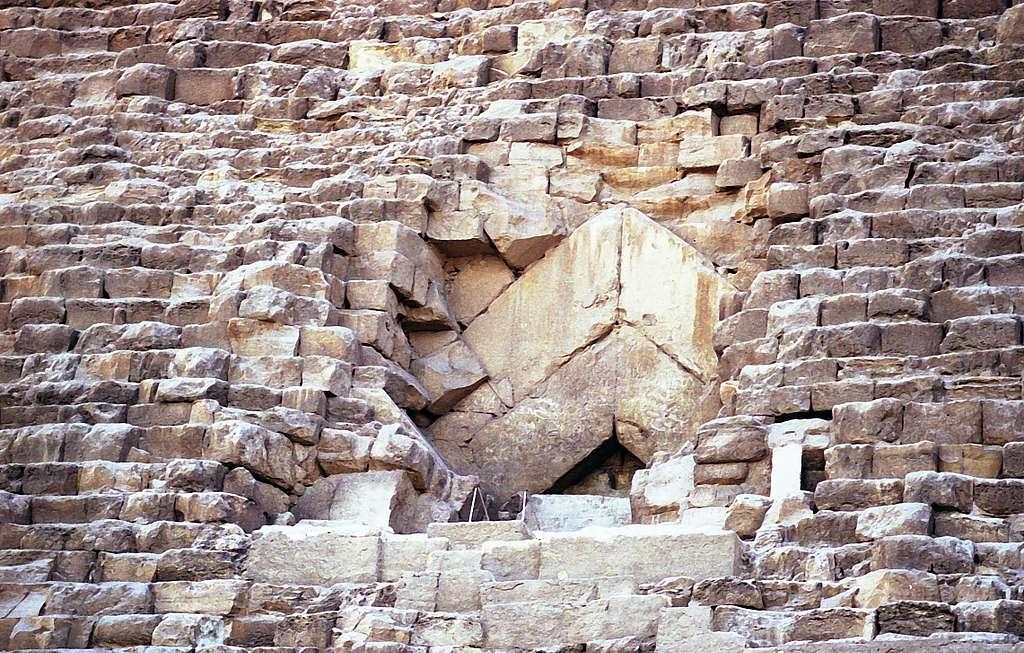
Explore the interior chambers and ascending passages
What to See
King's Chamber
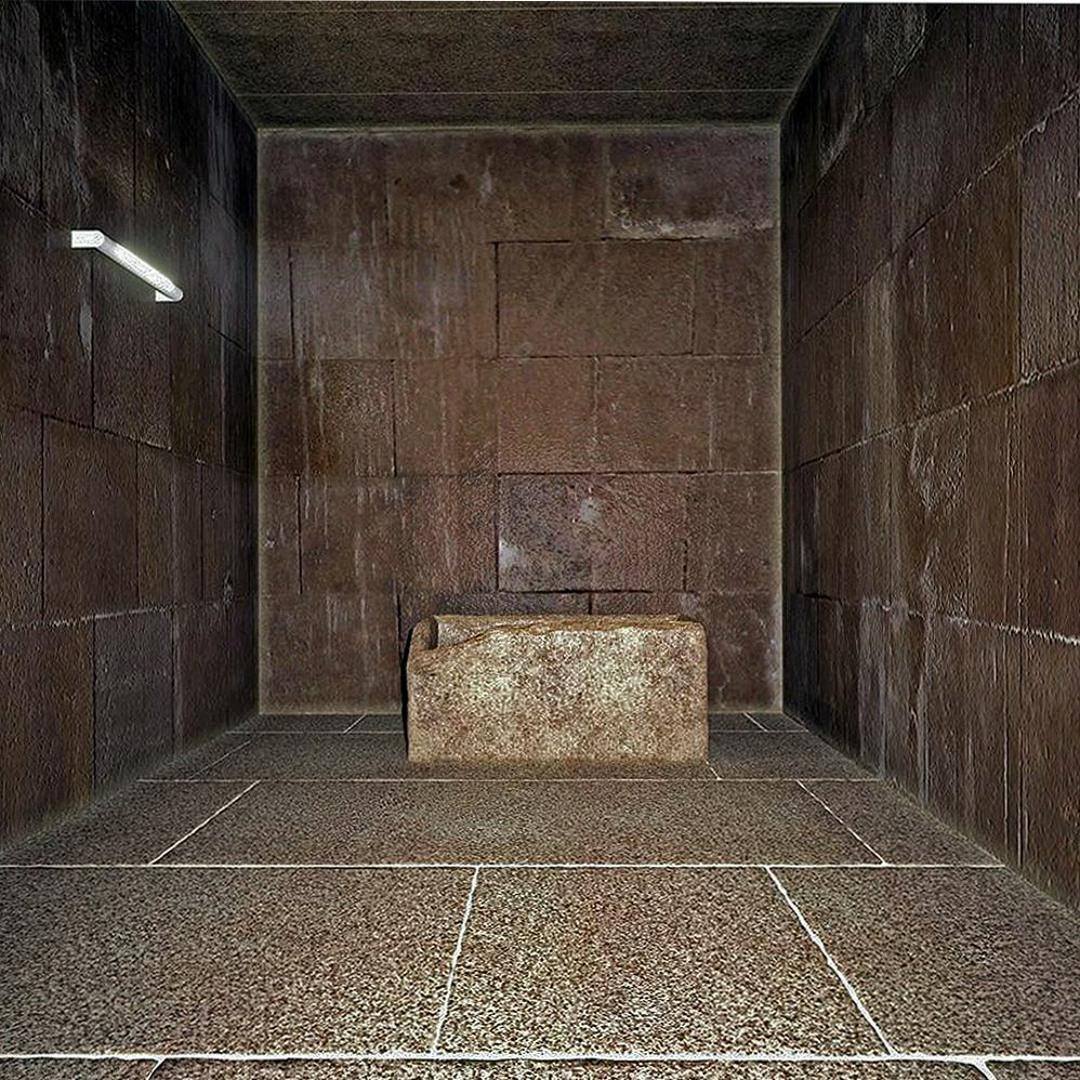
The main burial chamber lies deep inside the pyramid at the end of the ascending passage system, containing a large granite sarcophagus believed to have been placed during construction since it is too large to fit through the passages. The chamber is built entirely of polished Aswan granite — walls, floor, and ceiling — with massive stress-relieving chambers stacked above it to distribute the weight of the millions of tons of stone overhead. Reaching it requires climbing the Grand Gallery, a 47-meter ascending corridor with an extraordinary corbelled ceiling rising 8.6 meters high. The chamber's austere grandeur, combined with the knowledge that you are standing in the heart of a 4,500-year-old monument, makes this one of the most profound experiences in Egypt.
Queen's Chamber
A smaller chamber situated below the King's Chamber, misleadingly named by Arab explorers who assumed the pyramid contained separate rooms for the king and queen. Its original purpose remains hotly debated among Egyptologists — it may have served as a serdab to house a ka statue of the pharaoh, a sealed representation meant to provide a resting place for his spirit. The chamber features a distinctive pointed limestone ceiling and a large niche in its eastern wall that may once have held a statue or offering. Two narrow shafts extend from the chamber into the body of the pyramid, discovered in the 19th century, which some researchers believe had a ritual function related to the pharaoh's afterlife journey to the stars.
Grand Gallery
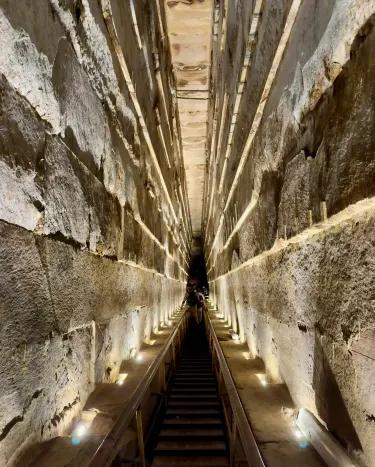
An awe-inspiring 47-meter-long ascending passage with a corbelled ceiling that rises to a height of 8.6 meters, the Grand Gallery is one of the most remarkable feats of engineering in the ancient world. The walls narrow in seven steps as they rise, creating a soaring corridor of precisely fitted limestone blocks that has survived intact for over four millennia. Along the base of each wall runs a low stone bench with regularly spaced slots whose purpose remains debated — they may have been used to support wooden beams during construction. Walking up the gallery's steep incline, with the polished stone walls closing in above you, gives an overwhelming sense of the precision and ambition of the Old Kingdom builders.
Solar Boat Museum
This purpose-built museum houses a fully reconstructed 43-meter cedar-wood boat discovered in a hermetically sealed pit beside the pyramid in 1954 by Egyptian archaeologist Kamal el-Mallah. The vessel, made from 1,224 individual pieces of Lebanese cedar painstakingly reassembled over 14 years, is one of the oldest and largest intact ancient boats ever found. It is believed to have been a solar barque intended to carry the pharaoh's soul alongside the sun god Ra across the heavens for eternity. The craftsmanship is extraordinary — the planks are stitched together with rope rather than nailed, and the boat still bears faint traces of its original woodwork patterns. Note that this vessel is being relocated to the Grand Egyptian Museum, so check current availability before planning your visit.
Sound & Light Show
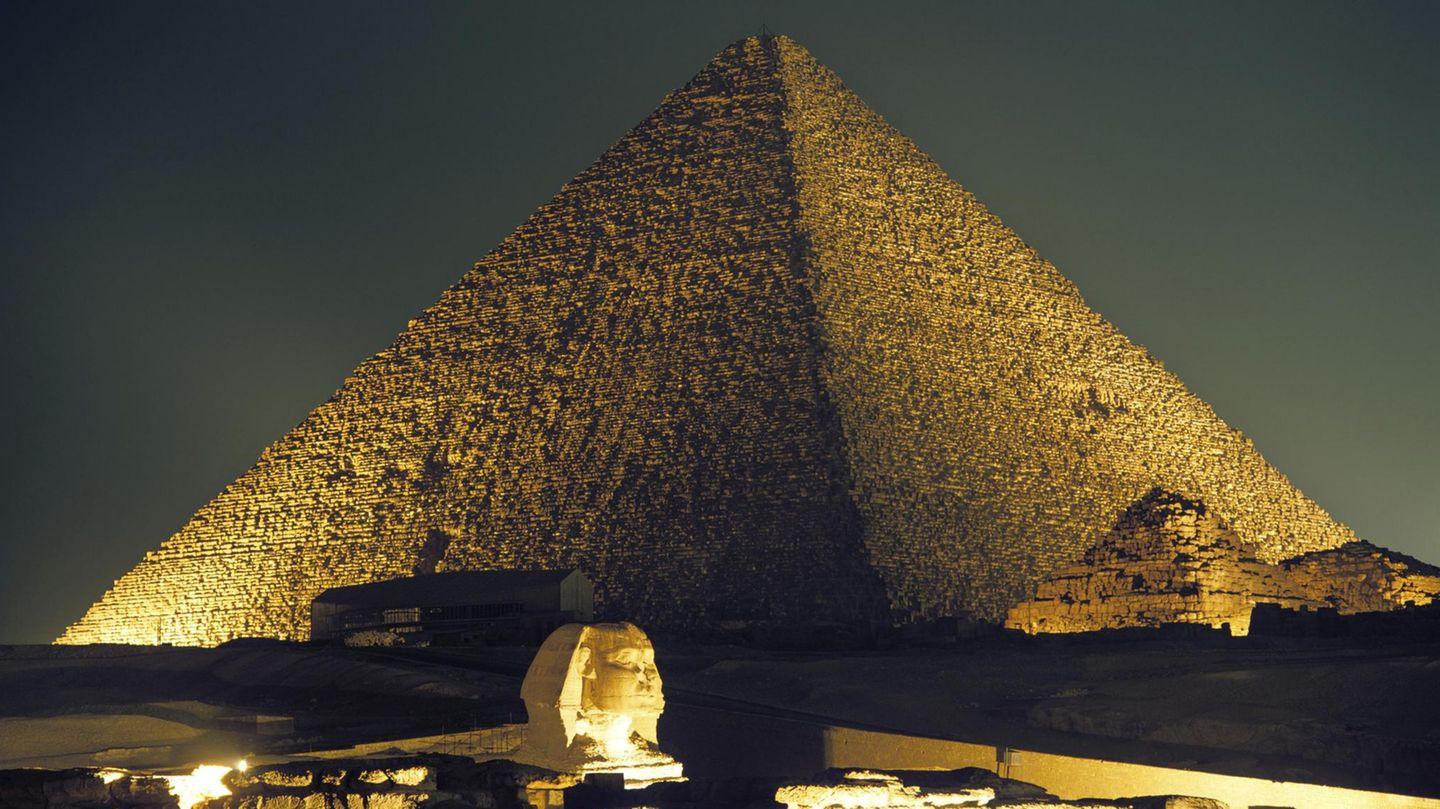
An evening spectacle that transforms the entire Giza plateau into a dramatic open-air theater, with colored lights, laser projections, and orchestral music illuminating the pyramids and Sphinx against the night sky. The narration, available in multiple languages, weaves together the story of the pharaohs and the construction of the pyramids over the course of a 45-minute performance. Watching the Great Pyramid glow against the desert darkness while the Sphinx appears to speak is genuinely atmospheric, even for skeptics. The show runs nightly with varying language schedules — check the evening's language before booking. Arrive early to secure a good seat in the open-air amphitheater, and bring a light layer as desert evenings can be surprisingly cool.
Historical Details
Construction
The pyramid took an estimated 20 years to build and employed a rotating workforce of around 20,000–30,000 workers organized into competing teams, whose graffiti — playful names like 'Friends of Khufu' and 'Drunkards of Menkaure' — can still be found on blocks deep inside the structure. Contrary to the persistent popular myth of slave labor, modern archaeological evidence from the workers' village at Giza reveals that these were skilled, well-fed laborers who received medical care, ate beef and bread, and were buried with honor near the pyramids they built. The logistics of the operation were staggering: quarrying, transporting, and placing roughly 2.3 million limestone blocks — some weighing up to 80 tons — required sophisticated ramp systems, copper tools, and an organizational infrastructure that rivaled any modern construction project.
Original Appearance
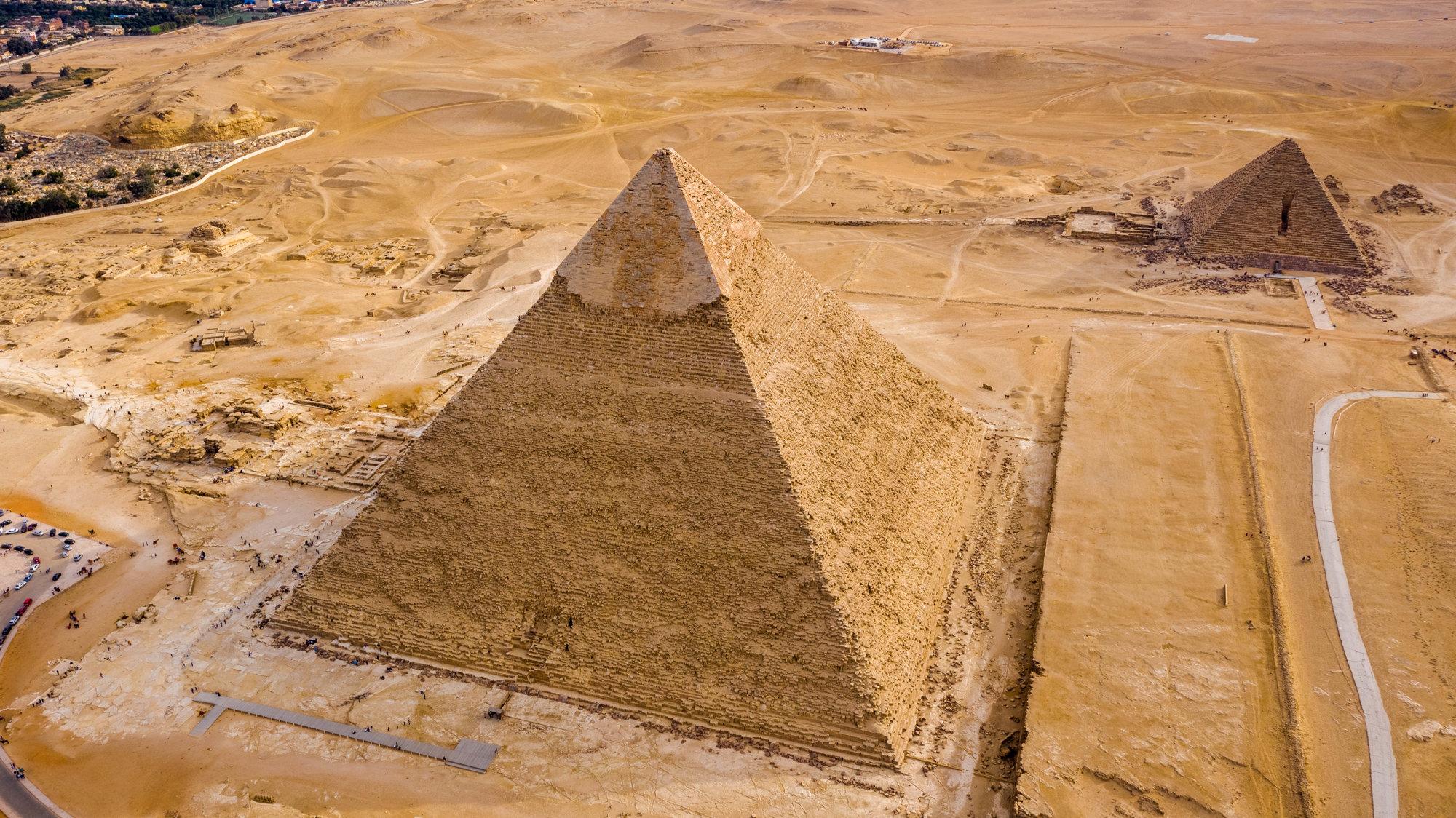
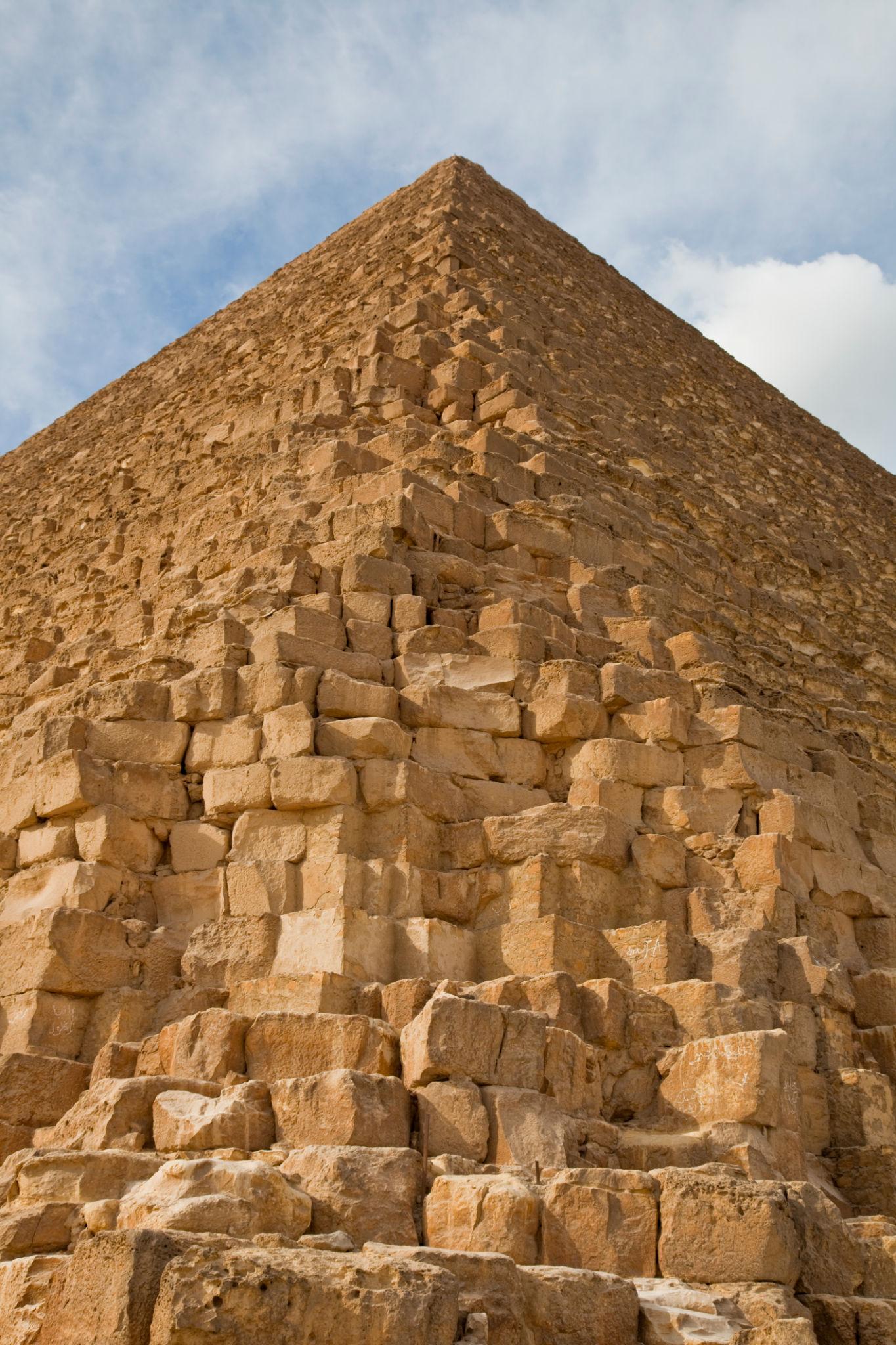
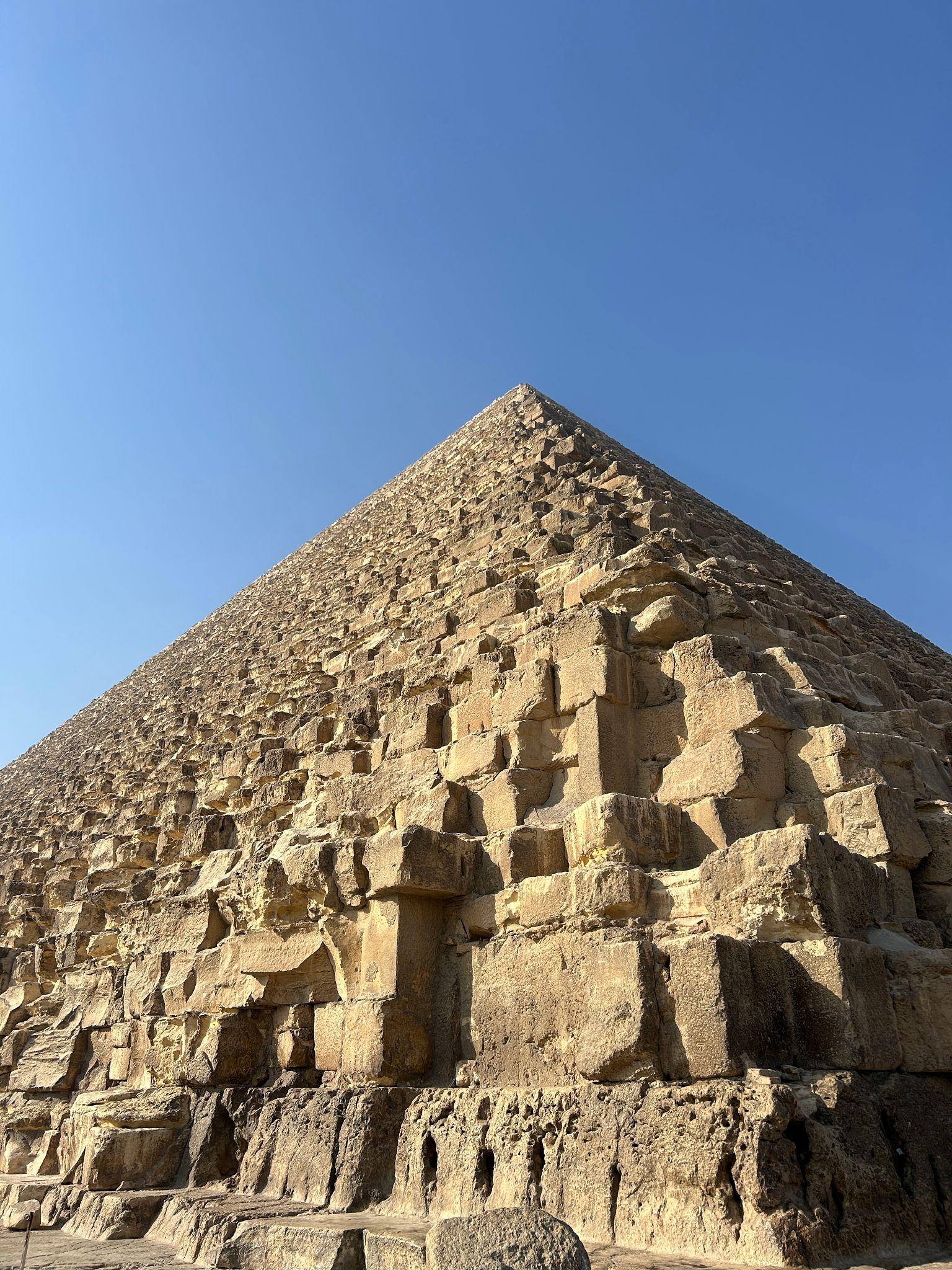
When newly completed, the Great Pyramid was sheathed in a dazzling layer of polished white Tura limestone casing stones that would have reflected sunlight so brilliantly the structure could be seen from the mountains of Israel, earning it the ancient name 'Ikhet' — the Glorious Light. The smooth, angled surface gave the pyramid a sleek geometric perfection quite unlike the stepped, rough appearance visitors see today. A few casing stones survive at the very base of the pyramid and near the apex of the neighboring Pyramid of Khafre, giving a hint of the original effect. Most were stripped away after a 14th-century earthquake loosened them, and they were carted off to build mosques and fortifications in medieval Cairo — including parts of the Citadel of Saladin.
Alignment
The Great Pyramid is aligned to true north with a precision of just 3/60th of a degree — more accurate than the Royal Observatory in Greenwich, which was built with the benefit of modern instruments over 4,000 years later. The base is also remarkably level, with a variation of just 2.1 centimeters across the entire 230-meter foundation, a feat that would challenge modern surveyors. Researchers have proposed various theories for how this precision was achieved, including sighting on circumpolar stars and using the sun's shadow at the equinox. This extraordinary accuracy suggests the ancient Egyptians possessed a sophisticated understanding of astronomy and mathematics far beyond what their surviving texts reveal.
Visitor Tips
- Arrive early in the morning to avoid crowds and the midday heat
- Interior tickets are limited — buy them first thing at the ticket office
- Wear comfortable shoes and light clothing; the interior is hot and humid
- Bring plenty of water — shade is scarce on the plateau
- Hiring a licensed guide at the entrance is recommended for context
Opening Hours
8 AM – 5 PM
Entry Fee
700 EGP (foreign visitor, Giza plateau); Great Pyramid interior +1,500 EGP extra
Period
Old Kingdom, c. 2560 BC
Built By
Pharaoh Khufu (Cheops)